Cop Doesn’t Understand How Law Works, Arrests Guy Who Does For Something Totally Legal.
Month: January 2015


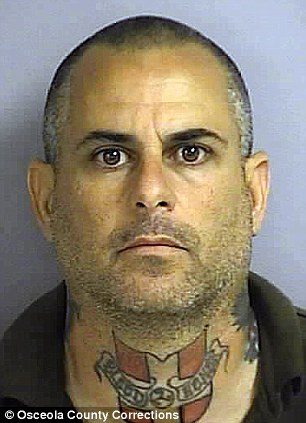
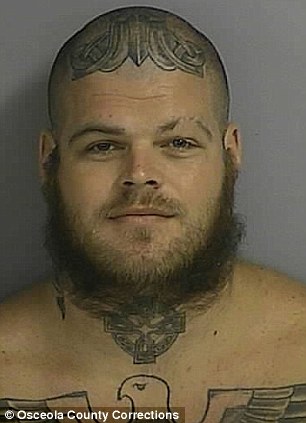
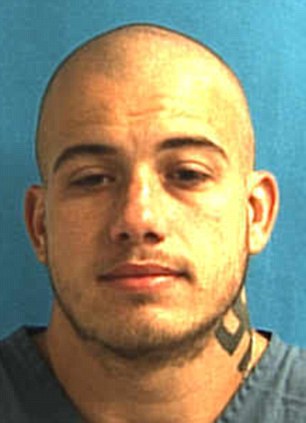
ORLANDO-Citizens of the “Sunshine State” were left stunned this week after federal law enforcement agents took time off from drug-interdiction duties long enough to round up a group of miscreants in central Florida’s Osceola County. In a shocking deviation from the norm, federal agents participated in a well planned and effective sting operation that netted around a dozen members of a white supremacist group, “The American Front.”
The U.S. Justice Department has long considered central Florida a hotbed for white supremacist recruiting. A spokesman for the FBI, Corporal Robert ‘Bat’ Guano, stated that “We keep a close eye on central and northwest Florida because of the low average IQ of its citizenry. It’s really easy for a charismatic leader to convince these idiots that all sorts of weird conspiracy theories are actually true. Combine that with the native population’s hatred of minorities and love of firearms and you have a volatile combination.”
Over the weekend FBI and ATF agents posed as rodeo clowns in an operation code-named “Roundup” that took place at a barbecue and picnic held at the American Front HQ in rural Osceola County. The headquarters consists of a modified 1986 vintage mobile home and an above ground swimming pool (stocked with catfish) resting at the center of around ten acres of partially wooded property.
The agents cleverly ingratiated themselves by entertaining kids at the event while the adults were attending mandatory automatic-weapons drills and a grenade-toss contest. The miscreant offspring were treated to traditional Cretonian children’s games such as “pin the crime on the nigger,” “kick the Jew into the minefield,” and “beat on the fag with a baseball bat.”
After a laid back afternoon of barbecue, draft beer, and plotting the overthrow of the U.S. government, the group members were surprised to learn the clowns they had hired to entertain the kiddies were actually highly trained undercover agents from the FBI, DEA, and ATF.
“We certainly did surprise them,” said Special Agent Matt Helm, of the Orlando Field Office of the FBI. “We recovered AK-47’s, grenades, night vision equipment, and a lab apparently set up to manufacture the nerve agent ricin, among other things.” Agent Helm was quick to point out that there was no threat of a chemical weapons stockpile in the area because all the group had managed to manufacture so far was a particularly impure batch of methamphetamine.
Local law enforcement officials were not surprised at the haul of illegal weapons and drugs. They have expressed concerns about the group and had plans to infiltrate it. However, they have been consistently thwarted by county and state elected officials who depend on under-the-table cash donations from the American Front and other right-wing groups for both their campaigns and vacations to Bangkok. It seems the Justice Department had to get involved to get anything done, as is so often the case in Florida.
Arrested were Marcus and Patricia Faella, Christopher Brooks, Richard Stockdale, Kent McLellan, Diane Stevens, and ten other group members. They have been charged with a wide variety of crimes ranging from plotting to overthrow the federal government to bestiality involving unwilling miniature goats.

According to court documents the group had planned to cause “some kind of disturbance” at the Orlando city hall building, and were also looking forward to the yearly counter-protest of May Day activities this spring.
The property on which the American Front headquarters stands was found to be honey-combed with mysterious tunnels leading nowhere. Sandbags and railroad ties were stacked in defensive positions around the trailer and swimming pool area. The trailer itself was riddled with holes caused by inaccurate machine gun fire from the mandatory weapons training sessions. There were also gaping holes in the walls of the trailer that authorities believe are meant to be rifle ports but could just be caused by rats.
Marcus and Patricia Faella were released after posting one million dollars bond. As is usually the case, their henchmen were left to rot in jail.


American politics are dominated by those with money. As such, America’s tax debate is dominated by voices that insist the rich are unduly persecuted by high taxes and that low-income folks are living the high life. Indeed, a new survey by the Pew Research Center recently found that the most financially secure Americans believe “poor people today have it easy.”
The rich are certainly entitled to their own opinions—but, as the old saying goes, nobody is entitled to his or her own facts. With that in mind, here’s a set of tax facts that’s worth considering: Middle- and low-income Americans are facing far higher state and local tax rates than the wealthy. In all, a comprehensive analysis by the nonpartisan Institute on Taxation and Economic Policy finds that the poorest 20 percent of households pay on average more than twice the effective state and local tax rate (10.9 percent) as the richest 1 percent of taxpayers (5.4 percent).
ITEP researchers say the incongruity derives from state and local governments’ reliance on sales, excise and property taxes rather than on more progressively structured income taxes that increase rates on higher earnings. They argue that the tax disconnect is helping create the largest wealth gap between the rich and middle class in American history.
“In recent years, multiple studies have revealed the growing chasm between the wealthy and everyone else,” Matt Gardner, executive director of ITEP, said. “Upside-down state tax systems didn’t cause the growing income divide, but they certainly exacerbate the problem. State policymakers shouldn’t wring their hands or ignore the problem. They should thoroughly explore and enact tax reform policies that will make their tax systems fairer.
The 10 states with the largest gap between tax rates on the rich and poor are a politically and geographically diverse group—from traditional Republican bastions such as Texas and Arizona to Democratic strongholds such as Illinois and Washington.
The latter state, reports ITEP, is the most regressive of all. Four years after billionaire moguls such as Amazon’s Jeff Bezos and Microsoft’s Steve Ballmer funded a campaign to defeat an income tax ballot measure, Washington now makes low-income families pay seven times the effective tax rate that the rich pay. That’s right, those in the poorest 20 percent of Washington households pay on average 16.8 percent of their income in state and local taxes, while Washington’s 1-percenters pay just 2.4 percent of their income. Like many of the other regressive tax states, Washington imposes no personal income tax all.
“The problem with our state tax systems is that we are asking far more of those who can afford the least,” concludes ITEM’s state director Wiehe.
By contrast, the states identified as having the smallest gap in effective tax rates are California, Delaware, Minnesota, Oregon and Vermont—all Democratic strongholds and all relying more heavily on progressively structured income taxes. Montana is the only Republican-leaning state ITEP researchers identify among the states with the least regressive tax rates.
Of course, if you aren’t poor, you may be reading this and thinking that these trends have no real-world impact on your life. But think again: In September, Standard & Poor’s released a study showing that increasing economic inequality hurts economic growth and subsequently reduces public revenue. As important, the report found that the correlation between high inequality and low economic growth was highest in states that relied most heavily on regressive levies such as sales taxes.
In other words, regressive state and local tax policies don’t just harm the poor—they end up harming entire economies. So if altruism doesn’t prompt you to care about unfair tax rates and economic inequality, then it seems self-interest should.


I’m not usually one to #regram photos I didn’t take of people I don’t know- but I took exception to this ripper of a sentiment. If anyone knows this man’s name, please post it or tag him, so he knows he’s definitely gone viral! I’ll spend today out on the road heading home thinking about how I can consider Australia Day as a positive force toward remembering and remaking this country, after so many years of being a hater of everything this day celebrates. #lestweforget #straya #optimism
Bo Wong Wha! Abdul-rahman Abdullah He’s one of my favourite artists! This is good news indeed!
Best t-shirts ever, I’ve got one like the guy in the picture. Go to this link http://www.darkanddisturbing.com.au/product…/proppanow/ and order something appropriate for today!

Four men were suddenly returned to detention centres on Manus Island and Nauru after being brought to Australia for medical treatment
Four asylum seekers have been forcibly removed from a Darwin detention centre where they were receiving medical treatment, and returned to Manus Island and Nauru in the middle of the night.
The men had been brought over from Manus Island and Nauru for medical treatment but their level of recovery before being returned is not know. It is believed one man suffers chronic pancreatitis.
Two asylum seekers were returned to Nauru and two to Manus Island. Guardian Australia has had the removal confirmed by separate sources, but multiple calls over several days to the office of immigration minister Peter Dutton have not been returned.
It is understood at least one detainee was able to alert advocates on Friday that he had been called for an impromptu meeting with his case officer – roundly considered a signal that he will be put on a flight that night and sent to the offshore facilities, often with no opportunity to contact legal representatives. The forced removals have occurred several times over recent months according to advocates.
Guardian Australia was told a man returned to Papua New Guinea two weeks ago had a medical condition which meant he could require immediate emergency care at some point. It’s not known if he has been returned to the Manus Island facility or is being housed in Port Moresby.
Greens senator Sarah Hanson-Young said Manus Island “is in the midst of a humanitarian crisis” and no one else should be sent there.
“These four people had been sent to mainland Australia because of medical concerns, none of them deserve to be sent back to the hellholes of detention on Manus or Nauru,” she told Guardian Australia.
Advertisement
“These offshore detention camps are making people sick. They are dangerous and inhumane and must be closed.”
Darwin-based lawyer John Lawrence, who has been representing an Iranian man, referred to as Martin, who has been on hunger strike for more than two months, told Guardian Australia the forced removals are “typical of the arbitrary nature which this department deals with human beings”.
Lawrence also described the transfers to Manus Island as “lunacy” considering the volatile current environment after protests saw more than 500 detainees refuse food and water, some sewing their lips together, others swallowing razor blades.
Fifty-eight detainees were forcibly removed from the facility by security and allege they were beaten. The men are now being housed in a windowless cell, despite facing no charges.
Both the Australian and PNG governments have denied using improper force.
Guardian Australia was also told some men – including two who allegedly witnessed the murder of Reza Barati during unrest in February – were placed in solitary confinement.
At least 15 more Iranian detainees inside Darwin’s Wickham Point detention centre have embarked on hunger strike protests in the last two weeks. They have all been refused refugee status but cannot be sent back as Iran will not accept involuntary returns.
“The only choice left to him is to go back voluntarily and he’s steadfastly refused to do that for the same reasons as [Martin],” Lawrence said of one 28-year-old detainee he had spoken with.
Calls to Dutton’s office about the hunger-striking detainees have also gone unanswered.

NAIROBI (CT&P) – In a remarkable turn of events, drones are apparently going be used to do something other than recruit new terrorists, spot illegal growers of the “Evil Weed,” and incinerate Yemeni wedding parties.
Kenyan government officials have announced that drones will be deployed in all 52 of its national parks in an attempt to monitor and stop poachers from murdering innocent elephants and rhinos.
The announcement came after a pilot drone project was concluded in which poaching was reduced by 96% in an unnamed protected wildlife area.
Paul Udoto, spokesman for the Kenya Wildlife Service, said: “Use of drones has shown that we can prevent poaching and arrest many poachers in their tracks. The pilot project has been a success and we are working with many partners including the Kenya police, the National Intelligence Service, and a lot of international partners such as Interpol, and the Ugandan and Tanzanian governments.”
Kenya has lost more than 435 elephants and around 400 rhinos to poachers since 2012, driven by demand for illegal wildlife products by bat shit crazy people in Asia and elsewhere. Poachers have killed 18 rhinos and 51 elephants in 2014 so far.
This is one instance where we at the Times think that no one in their right mind would object to using fully armed drones instead of the surveillance models the Kenyan government is set to employ. Blowing a few poachers to “Kingdom Come” would no doubt go a long way in curbing the urge to go out and make few bucks by using a chain saw to remove a rhino horn and leaving the corpse to be eaten by hyenas. Hellfire missiles can be a great deterrent if the object of the deterrence does not have a mind consumed by religious hatred.
At least the Kenyans have come up with a righteous use of those horrible inventions. Thank God someone on this miserable planet has got the good sense to use technology in a productive way. Maybe the U.S. government should hire some Kenyan bureaucrats to replace those currently on the payroll. Maybe the new employees could use surveillance drones to prevent sheriff’s deputies from murdering family pets. That would be a good start.

Governments must be open-minded and listening to win public support for reform, but the Abbott government has been neither
Are we really back there again? Ministers putting on their best serious face and declaring their leader is not electoral poison. Colleagues “backgrounding” the obvious fact that he is. A government paralysed by policies it cannot legislate and a backlog of big ideas but no political capital to push them through.
Yep, we are back there. But let’s forget this horribly familiar scenario for a second and imagine that a new prime minister dropped in from outer space and delivered the agenda-setting press club speech Tony Abbott has scheduled for 2 February.
In my view, he or she would probably raise at least some of the same things Abbott intends to. Australia does need to reduce spending over time. We do need to overhaul the tax system, since much of our budget dilemma is due to declining revenue. Our population is ageing and that fact does raise big policy questions. Our federal system is dysfunctional.
But Abbott has a major disadvantage compared with the imaginary alien leader. He has already squandered the most important commodity to achieve any change at all – trust. Voters have to believe a government is open-minded and listening before a major policy can be debated. The government has to actually BE open-minded and listening to win public support for reform. The Abbott government has been neither.
The consequences are clear in the response to the Productivity Commission review into workplace relations. The employment minister, Eric Abetz, is now reassuring everyone it will be fair and factual and listen to the views of “all parties”. But his government responded to allegations of corruption in some unions not by referring them to the police, but by launching a sweeping royal commission into all unions. It has happily ignored recommendations it doesn’t like from other evidence-based Productivity Commission inquiries (like the need to conduct proper cost benefit analyses before promising huge amounts of money to infrastructure projects). It has made its views on industrial laws abundantly clear. Of course the unions don’t trust the process. And it’s not clear the government will have the authority to convince the public to trust it either.
Abbott will use his speech to lay out his plan for the year. He’ll talk about the “families package” in the budget, taking money from his paid parental leave scheme and using it to pay for more flexible childcare subsidies. He’ll talk about the soon-to-be-released tax paper, which will open every can of worms – superannuation tax breaks, broadening or raising the GST and the prospect of personal income tax cuts. He’ll probably talk about the intergenerational report, also out soon, and all the challenges as the population ages.
But his government already ambushed Australian voters with previously-unmentioned health, education and welfare changes in last year’s budget which were decisively judged to be unfair.
And he and his ministers have spent the past year ignoring, defunding and sidelining groups that advocate for the poor, the sick, the disabled and disadvantaged.
The Australian Council of Social Service wrote to Abbott early last year proposing that he set up a welfare advisory body, similar to the business advisory group headed by Maurice Newman that was up and running within three months of the election. It still hasn’t received a response.
The government abolished the Social Inclusion Board, the National Housing Supply Council, the Prime Minister’s Council on Homelessness, the National Policy Commission on Indigenous Housing, the National Children and Family Roundtable, the Advisory Panel on Positive Ageing and the Immigration Health Advisory Group, citing “red tape”. It has cut $270m in funding to other community organisations over four years, including from groups that advocate for the homeless, refugees, youth and the disabled.
It has abolished the Climate Commission and rewritten funding agreements with community legal services to prevent them from advocating for changes to laws that affect their clients.
To political warriors, refusing to hear or offer assistance to those who might challenge your ideas and arguments probably seems an obvious course. But for a leader who really wants to have a debate, rather than just impose an outcome, it’s dumb. It leads to bad policies and an erosion of the confidence and trust that are necessary for lasting political success.
It also lets political opponents off the hook. Just as Abbott used former prime minister Julia Gillard’s carbon tax “lie” to delegitimise all she undertook and stood for, Bill Shorten is using the electorate’s disillusionment and suspicion of Tony Abbott and this government’s broken promises to undermine the prime minister’s standing on whatever new subject he touches.
Debating big, necessary questions – like tax, or workplace laws or federalism – and taking the result to the next election is the right thing for a government to do, if it is willing to listen to all sides of the argument.
But Coalition MPs are worried that their government will be fighting rather than debating, and on too many fronts, and in front of an electorate that has already stopped listening.
They can see that last year’s “reboot” was just spin. The prime minister has made it clear he thinks the problem is not the policy but the sales job – he just needs to “skite” more.
Some are despairing, and are increasingly willing to say so to any journalist who calls (anonymously of course). But they don’t know what comes next. If pressed they mutter something about how things have to get better soon, or after the budget, or by later this year.
This is not dissent fuelled by rival leadership contenders, and the two most likely alternatives – Julie Bishop and Malcolm Turnbull – are politically close. There is no plotting, although there are “what if it came to that?” conversations, and some careful bridge-building between former factional rivals in case the time does come.
Overwhelmingly, Liberal MPs are trying to send the prime minister a message because they are still willing him to restore the government’s fortunes, and his own.
They want him to know they are dismayed by the policy flip-flops, for example over the Medicare copayment. They remain resentful of the influence and control exercised by Abbott’s chief of staff, Peta Credlin, and the narrow sources of advice reaching the prime minister’s ears directly. They want him to outline a 2015 agenda he can actually deliver.
But to achieve any of it, he can’t “crash through”, he has to rebuild trust. And that requires an approach this government may really find alien.

“Daddy, why are dogs so much better than human beings?”
“Because son, dogs aren’t raised to look down on other dogs or people because they are of a different race, religion, social status, or because they are poor. Besides, dogs are able to lick their own genitals, which reduces stress and makes life much less complex.”
“Thanks Dad. That makes perfect sense.”
“Anytime, son.”


There is no law and order solution to the high rates of Indigenous incarceration in Australia. The solution lies in an examination of our common humanity
The curtains closed bleakly on 2014. The rallying of the nation behind the Cairns community following the murder of eight children, and the #I’llRideWithYou Twitter campaign following the Sydney siege, showed once again that as a nation we are good at letting the overall goodness of our humanity prevail after a dramatic crisis.
I won’t diminish or undermine our sense of goodwill and humanity here, but I will challenge us to wonder about how much better we could be if we let the goodness of our humanity prevail in times when there is no dramatic crisis, but rather we are confronted by a toxic and enduring circumstance.
A case in point here is Aboriginal levels of incarceration. We represent only 2.4% of the Australian population yet account for more than 25% of the prison population, making us statistically among the most incarcerated peoples in the world. As a society, Australia does better at keeping a young Aboriginal person in prison than in school or university. The Aboriginal re-imprisonment rate is actually higher than the Aboriginal school retention rate from year 7 to year 12.
It is difficult to argue with Antony Loewenstein who says this is Australia’s greatest outrage, and a filthy stain on our projected global image as an egalitarian state with justice for all. Politicians in both Liberal and Labor parties wilfully ignore deeply measured recommendations to treat Aboriginal men and women as equals.
For those not directly affected by such devastating statistics it is difficult to imagine this as some kind of crisis, much less a dramatic crisis. Yet it does leave room to question the extent to which the goodness of our humanity prevails. Is this what we mean by being a tolerant society?
This toxic circumstance is made more tolerable if we cling to the negative stereotypes of Indigenous Australians as a form of “other”. There are mainstream Australians, and then there are the “other” Australians. Casting Indigenous Australians as a negative and despised form of “other” explains how we can tolerate or completely ignore such dreadful incarceration rates. Against this background it is very simple to make such pious and ill-considered statements as, “If they don’t want to go to jail, they shouldn’t break the law!”
deaths in custody protest
Facebook Twitter Pinterest
‘We represent only 2.4% of the Australian population yet account for more than 25% of the prison population.’ Photograph: AAP
Against this background, it is very simple to impose policies for Indigenous Australians that do not signal any sense of belief in our humanity and own capacity to rise above the challenges we are confronted by. We are also mistaken if we assume that just because a particular policy approach is developed and driven by handpicked Aboriginal “leaders”, then it somehow signals a belief in the humanity of “other” Indigenous people. We’ve all seen the handsome rewards for those who sink the boot into their own people.
I have no problem with being “other” but I should get to decide, not you, about what type of “other” I am as an Aboriginal man. Like many Indigenous Australians, I refuse to be cast as a negative and stereotypical “other”, but rather as a strong, smart “other”. Notwithstanding, I have no problem with the sense of being the “same” as mainstream Australians. Ultimately this sameness is what connects us. This sameness is our humanity. Our cultural heritage is a layer upon this humanity.
Advertisement
And here lies the key!
If mainstream Australia can acknowledge and embrace the humanity of Indigenous Australians, and understand and appreciate that cultural layer, then we could no longer be silent about the dreadful statistics that are a stain on our society. It also offers a fundamental key to seriously addressing the challenges we face together.
If policies acknowledge and embrace our humanity and culture, then programs can be designed to do the same. If programs are designed in a way that acknowledge and embrace our humanity and culture, then the people involved in those programs necessarily must do the same. With this kind of policy, programs, people alignment, sustainable transformation can be achieved.
So what does this actually mean in a practical sense?
Dealing directly with the anti-social and delinquent behaviour of Indigenous children is complex, especially when crimes are perpetrated. Some years ago when I was the principal at Cherbourg State School in rural Queensland, I recall being furious when the school tuckshop had been broken into three times within four nights. At wits’ end, I met with the local magistrate and argued with considerable intensity that there had to be consequences.
“Chris, I can’t just throw these kids in jail for this,” she said.
Once I had put aside my hurt ego, and let go of my “There must be consequences!” mantra, I realised that of course she was right. It was probably true they were breaking in because they were starving. It is also possible they were breaking in because they were off their heads from sniffing petrol.
“So what would you do if it was your house they were breaking into?” I asked her.
We then got into a more purposeful conversation about the deeper complexities of the situation, understanding that yes, there must be consequences, but also understanding that a hardline and politically attractive response would be expensive, ineffective, and more likely turn potentially good kids into adult criminals.
For the young boys involved, intervention could either get them back on track to a good future, or fast track them down the punitive prison pipeline. In the end it got down to getting the balance right between humanity, justice and good sense. It would never be helpful to violate the humanity of the boys in question. As hurt or as angry as we were, it was worth remembering that if we undermined their humanity, we undermined our own.
I had a respectful and positive relationship with the mother of one of the boys. We agreed that a good consequence for him might be to own responsibility for his behaviour, front up to school assembly and apologise to the children for breaking into their tuckshop. Some people suggested this approach would cause great harm to the boy, but in reality he fronted up to school assembly and apologised. He never caused trouble at the school again. Incidentally, some 14 years later that same lad now works on the Sunshine Coast with young Aboriginal children, helping them to understand and embrace the importance of their cultural identity in order to be smart citizens in a modern world.

aboriginal kids in school
Facebook Twitter Pinterest
‘As a society, Australia does better at keeping a young Aboriginal person in prison than in school or university.’ Photograph: AAP
This approach sounds easy enough and it was a strategy that cost nothing to execute. The truth is, however, we could never have executed this strategy without a strong and positive relationship in which we were connected by our humanity and our passion to have a school that built strong and smart children.
Building those relationships presents the toughest challenge for all of us because it means we have to confront our own long-held beliefs and prejudices about each other. For anyone, this is hard.
As taxpayers, it is worth questioning why governments think they can fix complex and wicked problems with simplistic “big stick”, hardline approaches. The zero tolerance approach might be politically rewarding to many politicians, but if we take the time to analyse this in an intelligent way, we realise that on most empirical measures it is proven to be expensive and ineffective. While some argue that zero tolerance is driven by high expectations, it is an approach that can never deliver the substance of a high expectations relationship – that is, a relationship in which we demonstrate the compassion to be fair, while also having the courage to be firm.
An overabundance of “compassion” on its own has not served us well as Aboriginal people and it often sees us rendered victims for whom people feel sorry. On the other hand, the compassionless “firm” or so-called “tough love” approach on its own clearly does not work either.
The central ingredient to a high expectations relationship between Aboriginal and non-Aboriginal Australia is one’s ability to acknowledge and embrace the humanity of others. It provides the fundamental basis upon which we are challenged at a policy level, at a programs level, and at a people level. Current policies on Indigenous affairs often do not acknowledge and honour the humanity of Aboriginal Australians. Basics cards and threats to sanction wages and welfare payments might spew the rhetoric of “empowerment”, but in reality they do not signal a belief in the humanity and capacity of Aboriginal people.
Substantial cuts to grassroots Indigenous programs also leave room to question the extent to which the humanity and capacity of Aboriginal people is acknowledged. There is room to question those people who will readily see tens of millions of dollars spent on punitive measures that entrench a sense of despair and stigmatise Aboriginal Australians, while at the same time erupting at the thought of tens of thousands being spent on programs that are designed to nurture honourable partnerships.
Punitive approaches to such problems are expensive and ineffective. Restorative justice programs are a proven method of addressing crime and anti-social behaviour in communities, which by design enable the humanity of both victims and perpetrators to be acknowledged. They may involve diverting offenders away from court, conferencing for both young and adult offenders, circle sentencing or victim–offender mediation programs.
To those raving to see us “get tough on crime”, and lacking ability to acknowledge the humanity of others, or comprehend the complexities at play here, let me urge you to calm down and analyse this through an economic lens.
In Australia it costs an average of around $120,000 to keep someone in prison for one year, and twice as much to keep a young person in juvenile detention. There are therefore huge economic benefits, as well as social benefits, in redirecting government spending away from prisons and towards community-based initiatives aimed at addressing the underlying causes of crime that are just a fraction of the cost of prisons.
Ultimately, prisons are ineffective, harmful and an extremely expensive way to combat crime. Research strongly indicates that early intervention programs targeting at-risk children, education attainment, providing stable housing and employment opportunities, and court sentencing programs that address the underlying causes of crime are the most effective – and economically efficient – ways to prevent crime and reduce re-offending.
The end of 2014 brought us many dramatic challenges, causing us to reflect more deeply on who we are as a nation, and the extent to which we are connected by our humanity. As we venture into 2015, let’s not wait for the next crisis to reflect on such things. Let’s let the goodness of our humanity manifest in a way that sees us more deeply connected day to day, and together committed to changing what needs to change, letting us be the nation we want to believe we are.

The flag on the Sydney Harbour Bridge was at half-mast today. Source: News Corp Australia
US PRESIDENT Barack Obama called him courageous. A prominent UK paper has slammed him as a “tyrant”.
But Australia has joined the UK in paying tribute to this controversial leader today on our most iconic landmarks.
Flags at government buildings and official landmarks — including the Sydney Opera House and Parliament House in Canberra — flew at half-mast today as a tribute to the late Saudi Arabian King.
A Transport for NSW spokesman confirmed to news.com.au this afternoon that the flags were lowered “as a mark of respect” to Saudi Arabian King Abdullah bin Abdulaziz Al-Saud, who died on Friday.
RELATED: Saudi King dies at 90
He died at age 90 after being admitted to hospital suffering from pneumonia and a lung infection.
King Abdullah, who ascended to the throne in 2005, was one of the 45 sons of the first monarch of Saudi Arabia, Ibn Saud, and amassed a US$18billion fortune from the country’s rich oil reserves.
Former Liberal prime minister Malcolm Fraser is among those who have criticised Australia’s decision mark King Abdullah’s death in this way.
In response to a tweet from NSW Greens MP Lee Rhiannon, Mr Fraser tweeted that the half-mast tribute “should not have happened”.
The Transport spokesman said flag notices were usually issued by the Department of Premier and Cabinet’s protocol office and that the flags were due to be returned to their normal position about 3pm today.
Similar tributes have been made on official landmarks in the UK.
The UK Government has been criticised by MPs for flying the Union Jack at half-mast at government buildings, including Whitehall and Buckingham Palace.
UK paper The Independent ran with the headline, “Britain mourns a tyrant”.
Elsewhere, UKIP MP Douglas Carwell slammed the move as an “extraordinary misjudgement” due to Saudi Arabia’s human rights record, according to The Guardian.

A picture from October 20, 1987, in Washington shows then Crown Prince Abdullah bin Abdul Aziz of Saudi Arabia listening to then US president George Bush. Picture: AFP/Chris Wilkins Source: AFP
However, Mr Obama has released an official statement paying tribute to King Abdullah as a “candid” leader who had the “courage of his convictions”.
King Abdullah is considered a relatively liberal leader in the context of the conservative kingdom, but it is still a country in which women have been forbidden from voting, driving and being in public unaccompanied.
Recently, flags on at sites such as the Sydney Harbour Bridge, Anzac Bridge and Central railway station have also been flown at half-mast to commemorate the victims of the Martin Place siege, the death of cricketer Phillip Hughes in November and Remembrance Day.
http://www.democracynow.org/2015/1/23/remembering_saudis_king_abdullah_he_was
Dead at age 90, King Abdullah of Saudi Arabia was praised by President Obama “as a force for stability and security in the Middle East and beyond.” But analysts accuse him of turning the Syrian uprising into a proxy war with Iran, and U.S. diplomatic cables identified the country as the world’s largest funder of militant Islamist groups.
“Democracy Now!” discusses Abdullah with Toby Jones, director of Middle Eastern studies at Rutgers University and the author of “Desert Kingdom: How Oil and Water Forged Modern Saudi Arabia.”
—Posted by Alexander Reed Kelly.

As the 2014 gubernatorial race starts to heat up, a bill is working its way through the Florida legislature that would make it a felony offense to earn less than $25,000.00 per year. The bill will also place those with minority racial status on probation.
In 2011, Florida effectively disenfranchised 1.5 million citizens with a new restrictive voting law. The law prohibits anyone ever convicted of a felony from voting in local, state or federal elections. Commenting on the situation, Governor Rick Scott stated “We really got on the right track in 2011, and this new bill should put us over the top.” When asked what he meant, Scott replied “Well, we certainly don’t want to risk uncertainty in the election process by allowing criminals to vote, and since most crime is committed by the poor and minorities, this new law just takes the next logical step. The bill will prevent undesirables from participating in the election process.”
One of the chief sponsors of the bill, Representative Billy Bob McSneed, a Republican from Panama City, stated “All these minorities, many of them illegal, are taking our jobs and threatening our way of life down here. By placing them on probation, we can better control ‘em and stop all the election fraud. Hell, it’s bad enough that we let ‘em drive.”
Election fraud in Florida has reached enormous proportions in Florida over the last decade, according to the Florida Republican Central Committee. McSneed supplied us with documents proving beyond a shadow of a doubt that there have been at least three dozen cases of individuals voting illegally in Florida over the last ten years.
“We live in state where 36 votes could tip the balance, McSneed said. The only logical thing to do is attack the root of the disease, not the symptoms, and the root of the disease is poor people, minorities, and poor minorities.”
When asked how many citizens of the state that this bill would disenfranchise, Governor Scott replied, “We have no idea, but the vast majority of them will be Democrats, and that’s all that matters.”
Challenges to the new bill’s constitutionality will no doubt be numerous. However, given the current glut of challenges in Florida’s courts challenging other demented laws passed by the legislature, any decision will be slow in coming and probably will occur post-election.
Reached for comment was Representative Barbara Hernandez, Democrat from Miami. She stated, “I am currently trying to decide whether to hang myself or move to a more open society. Maybe Cuba or North Korea.”


Karen Wells never thought she would be a whistleblower. She had spent 11 years working in the prison industry and two years at the Woomera and Curtin detention centres before taking a position as a guard on Manus Island.
“In corrections,” she says, “we just didn’t dob on anyone.”
But after the violent clashes in February 2014 on Manus Island, during which asylum seeker Reza Barati was killed, Wells contacted refugee advocate and lawyer Ben Pynt to speak out about what she described as the “complete mishandling” of the situation.
Pynt, the founder and director of advocacy group Humanitarian Research Partners, has set up an encrypted mailbox on the centre’s website to deal with the “steady leaks” he says he has been receiving over the past 12 months. He has also established an “onion site”, a hidden service reachable via the Tor network, to minimise the risk for those wishing to share information anonymously.
Wells is one of dozens of guards, caseworkers and medical staff who have worked at the Nauru and Manus Island detention centres and contacted lawyers, professional medical bodies and human rights groups, wanting to speak out about what they’ve witnessed. Lawyers and refugee advocates say that over the past year calls from workers and former workers have been steadily increasing.
Pynt adds that since the start of the most recent asylum seeker hunger strike on Manus, he’s had an “explosion of contact” from the island, receiving dozens of messages, emails and calls in the last ten days from both new and existing sources.
Barrister and human rights advocate Julian Burnside says he receives frequent calls from workers and former workers. The calls have “significantly increased since the legislative regime has harshened”, he says.
The potential whistleblowers have been keen to share information about alleged incidents of abuse and medical neglect, and to report what they see as the general mistreatment of asylum seekers detained at the offshore facilities. They have also sought advice about what would likely happen to them should they choose to speak out.
“The situation is becoming more desperate for asylum seekers in those facilities,” says Graeme McGregor, who heads Amnesty International’s refugee campaign in Australia.
“Conditions are worsening and people are reaching a point where they can’t not speak out.”.
Steve Kilburn, who served in the navy for 20 years and had been a firefighter for a decade before working on Manus Island, recalls signing his confidentiality agreement with security contractor G4S without giving it much thought.
“It was like the ‘I agree’ box when you download something from iTunes,” he says. “I read it and I thought, ‘Well, what does it matter? Who am I going to talk to?’ ”
For Kilburn, the tipping point was witnessing force used during the Manus Island riots that he believes was “way above what was required”. In April 2014, he appeared on the ABC’s Four Corners, recounting what had happened to a group of asylum seekers who had sought to escape the centre:
“When they saw the hiding they were getting, the belting that they were getting, some of them thought actually this is not, you know, what we expected and tried to climb back over the fence to get back into their compound. They were dragged off the fence and beaten.”
“After the riots, when I was looking after injured guys, it started to sink in about how bad it was,” he told me. “There was a young Sudanese guy with his head smashed in and he couldn’t speak and he couldn’t eat and I sat there looking at him, thinking, Who’s going to stand up for this guy? Who’s going to say this is not right? No one is.”
Salvation Army employees Chris Iacono, 25, and Nicole Judge, 24, employed as caseworkers between 2012 and 2014, first on Nauru, then on Manus Island. Before he worked offshore, Iacono “didn’t think anything about politics” and “didn’t know anything about asylum seekers or refugees”.
A former McDonalds manager, he heard about the work from Judge, who saw a job ad on Facebook after she joined the ‘Salvos’ student group at university.
“They were advertising the jobs as kinds of working holidays,” Judge says. “It was like when you see trips to Africa and it’s a really cool safari and everyone has a great time. I had a quick phone chat with the recruiter and then got an email saying, ‘Yay! You’re going to Nauru. Bring all your friends!’ ”
Judge and Iacono arrived on Nauru three days after the detention centre had opened in August 2012.
“I was sitting on the floor of the half-built office, and one of the only posters on the wall was about ‘cut-down procedures’. It was describing a technique with a ‘Hoffman knife’, which is training to be issued on how to cut the rope for someone who had hanged himself,” Says Judge.
Official sources’ apparent misrepresentation of the violent events that occurred on Nauru in July 2013 made them first consider coming forward.
“Once there were attacks on the centre and no news got out that it was the locals that had been threatening everybody, we were like, ‘Why isn’t anybody telling people back in Australia what’s going on?’ And we decided [that] maybe that’s supposed to be us [speaking out] because we’re here,” Judge says.
In June 2014, and Judge and Iacono testified before the Senate inquiry into the riots on Manus Island. In her testimony, Judge spoke about what she saw as the “mistreatment, abuse, and degrading treatment that asylum seekers transferred to Manus Island endure on a daily basis”.
She also laid out plainly what she thought would follow: “The attacks, whilst brutal and utterly devastating, did not surprise myself or my colleagues . . . I believe whilst the centre remains open more deaths and serious injuries are inevitable.”
In October 2014, former immigration minister Scott Morrison used Section 70, an anti-whistleblowing provision, of the Commonwealth Crimes Act to remove ten Save the Children staff from Nauru for “misusing privileged information”. The section prohibits any person employed by the Commonwealth from sending information to a non-government officer. The maximum penalty is two years’ imprisonment.
Lawyers and advocates are concerned that this action might have had a silencing effect on workers, eliminating a key source of information about the already secretive facilities.
“What you don’t want is a situation where staff are afraid to report a rape or an instance of child abuse because they’re afraid of legal action [against them] by the government,” says Amnesty’s McGregor. “There is a genuine risk of self-censorship.”
A senior associate at Maurice Blackburn, Lizzie O’Shea reports taking a dozen calls in the past year from potential whistleblowers, but confirms there is a “real risk at law” for those who choose to breach confidentiality agreements.
“No one I know of has been prosecuted for breaching these provisions but it’s a risk people have to be aware of because, if at some point the Commonwealth does get concerned about the amount or breadth of disclosures and decides to do something about it, you don’t want to be in the firing line.”
A kind of “whistleblower protection”, known as the Public Interest Disclosure Act, was introduced into law in 2013.
However, O’Shea says that because the act has not been tested, it’s difficult to predict what would happen if a whistleblower was taken to court.
“Obviously, it is problematic if people who have evidence of serious wrongdoing feel that they are at significant risk of civil and criminal liability if they disclose that information externally, for example to the media,” she says. “A healthy democracy requires that power be exercised transparently and in a manner that is accountable. Silencing whistleblowers is the opposite of this.”
Pynt acknowledges that workers who feel an obligation to share information that they believe is in the public interest are currently forced to put themselves at legal risk. But, he adds, that as well as the fear about the legal consequences, workers also contend with the threat that they will lose their jobs. Those speaking out all describe a “culture of secrecy and intimidation” at their respective organisations aimed at curbing leaks.
Dr Suelette Dreyfus of the University of Melbourne has conducted research into Australians’ attitudes to whistleblowers. Dreyfus says studies show that more than 80% of whistleblowers try to report wrongdoing internally first. She says that reporting externally is an extremely difficult step that most whistleblowers take when they see it as the only way to get action to address the wrongdoing they have witnessed.
Former G4S guard Karen Wells says she tried many times to report serious issues to her managers.
“They would read your reports in front of you and say, ‘You’re getting soft in your old age. You need to harden up’,” she reflects.
“Whether I agree with asylum seekers being here or not, whether I agree with them getting visas, you can’t treat a human being like that.”
Kilburn and Wells say that after the February 2014 riots they were repeatedly sent emails from G4S reminding them of the confidentiality provisions of their contracts and of the legal consequences of speaking out.
“A lot of people there are in security . . . That’s their livelihood and that’s what their future is based on,” Kilburn says. “These are people with young families and mortgages, so they’re not going to risk it. I had people ringing me saying ‘I really wish I could speak out, but I can’t’.”
Security workers are not the only ones whose jobs are at risk for those who choose to speak out.
Dr Robert Adler, a Melbourne-based paediatric psychiatrist who visited Nauru on behalf of International Health and Medical Services (IHMS), claims that he was told his services were no longer required after he wrote letters expressing concerns about detention.
Adler, who describes himself as “apolitical”, says he was appalled by what he saw on Nauru.
“Families were living under a marquee, separated from one another with plastic sheets, with no easily accessible toilet or kitchen facilities, no privacy and no air-conditioning in 40 degree heat . . . I couldn’t provide health services in a situation that I found deeply concerning and [then] remain silent.”
A few days into his trip, Adler drafted a letter to Tony Abbott, objecting to Australia’s detention policies. On his return home, he sent the letter off, along with copies to Bill Shorten and both leaders’ deputies, before emailing copies to a number of his colleagues and contacts, including the head of psychiatry at IHMS.
Not long after, according to Adler, despite his letter containing no confidential or direct clinical information, IHMS’ chiefs called him in for a meeting and told him that he would not be returning to work at the detention centre.
A co-founder of the advocacy group Doctors for Refugees, Richard Kidd, says that his organisation has received calls from doctors and nurses who have worked offshore, enquiring about their legal obligations, and the risks posed by speaking publicly.
He says there was a spike in the number of calls he received both after the Manus Island riots last February and the death last September of Iranian asylum seeker Hamid Kehazaei, who died in a Brisbane hospital after being transferred from Manus Island with septicaemia.
Kidd says the incidents highlighted that “asylum seekers do not have safe, timely and appropriate access to an Australian standard of health care”.
As a result, health professionals working with IHMS have come to believe that “working within their contracts may put them in breach of the medical board and the Australian Medical Association’s code of ethics, thus putting their registration at risk”.
The Monthly’s questions to IHMS were forwarded onto the Department of Immigration and Border Protection, but they had not been answered at the time of publication.
Dr David Isaacs, a professor of paediatric infectious diseases at University of Sydney, returned from working with IHMS on Nauru in early December 2014 and has since decided to use his experience offshore to advocate against current detention policies.
“People have often said if you ignore things and don’t speak out when there’s undue trauma being caused to people than you’re in a way colluding with it,” Isaacs says.
“And, after being there, I feel that to not speak out would be appalling.”
Isaacs believes the clauses in his contract that say he’s not allowed to speak about specific patients are “fair enough”, but that “any doctor ought to be able to speak out against behaviour that’s causing illness”.
While on Nauru, Isaacs says he saw “extraordinarily high rates of psychological problems in children and adults”, which he feels were directly related to the condition of their detention.
According to Dreyfus’s research, half of all Australians believe there is too much secrecy in our public institutions, while four in every five agree that whistleblowers should be protected, and 87% support whistleblowers being able to turn to the media, even if it means revealing inside information.
“I think if most people got to spend some time on Manus Island and saw what was going on, most fair people would say, ‘This is not right’,” says Steve Kilburn.
“We all need rules and parameters and ways to work, but nothing should be above scrutiny. If you take away that ability then what you’re left with is unaccountability, and that’s a dangerous place.”
Reporting on this story was made possible with an independently awarded grant from GetUp’s Shipping News project
About the author Bec Zajac
Bec Zajac works for Overland magazine and broadcasts on 3CR community radio.

The reports coming out of Manus Island right now should be enough to shock us, but they aren’t. What will it take? Barrister Julian Burnside has some ideas.
Reports about what is happening on Manus Island are mixed. According to inside sources, hundreds of asylum seekers are on a hunger strike, many have sewn their lips together, and tensions are high. According to Immigration Minister Peter Dutton, security levels have been high, as a precaution, and the hunger strike and lip sewing are the result of urging by refugee advocates. There has been little apparent public concern.
Some of the hunger strikers have said they are willing to die, and want to donate their organs to Australians. The public, in its post-Christmas torpor, was unmoved. Letters sent from Manus have been published, but this has provoked outrage only in that minority of Australians who are concerned about refugees. The public remain unmoved.
In February 2014, Reza Berati was murdered inside the Manus detention facility, allegedly by members of the staff who were supposedly keeping the detainees safe. I have been informed that eyewitnesses to the murder are still being held in solitary confinement. No one has yet been brought to trial for the murder. In September 2014, Hamid Kehazaei died of septicaemia after an infected foot was inadequately treated. Nobody has been held to account for his death in what looks like significant medical negligence.
Public reaction to these things has been minimal.
There are a few facts we all know, or should know. First (and arguably the most significant fact): the asylum seekers held on Manus and in other detention centres are not “illegal”. They have committed no offence by coming to Australia seeking protection.
They are held in captivity without charge and without trial, because their conduct in seeking asylum is not an offence under Australian law. The government of Australia, and parts of the media, refer to them as “illegals” because it makes locking them up look faintly respectable. When they arrive in Australia asking to be protected from persecution, Australia takes them forcibly, against their will, to Manus. There they are held in uncomfortable, unhygienic conditions in tropical heat. They wait until their claims for refugee status are determined. Some of them have been there for about two years.
It should shock us to know how comprehensively the government has lied to us about Manus. It lies to us by calling asylum seekers “illegal”. It lies to us about the conditions in which they are held. Maybe it would shock us to know that the people who are being mistreated by our government (and at vast expense to the taxpayer) are just ordinary people: human beings who have the same hopes and desires, the same frailties and fears as most of us.
Second: It is very clear that, if you lock up an innocent person in circumstances where they do not know how long it will be before they are released, they fall into hopelessness and despair after about 12 or 18 months. One very well-documented response to this despair is self-harm. Typically, they will cut themselves, or sew their lips together, or try to starve themselves to death.
Third: conditions in Manus are very harsh. In October 2013, the UNHCR reported on conditions on Manus. It noted:
Overall, UNHCR was deeply troubled to observe that the current policies, operational approaches and harsh physical conditions at the [detention centre] do not comply with international standards and in particular …constitute arbitrary and mandatory detention under international law; …and do not provide safe and humane conditions of treatment in detention…
There is not much doubt that our treatment of asylum seekers in Manus constitutes a crime against humanity. This is a matter of legal analysis, not political rhetoric. The hard facts about the horrific conditions on Manus Island that I’ve outlined above may not be enough to shock us, but the one thing that really might shock us is to see Abbott, Morrison and Dutton prosecuted in the International Criminal Court for those crimes. That’s a pro bono case I would gladly prosecute.
Julian Burnside AO QC is an Australian barrister and an advocate for human rights and fair treatment of refugees.


There is no doubt the Abbott Government initiated their productivity commission inquiry into workplace laws as a tool to pursue its obsession with workplace relations and issues like penalty rates and individual contracts.
Since coming to office the Abbott Government has been focussed on cutting the living standards of all Australians, whether through the GP co-payment or higher university fees. This inquiry looks like more of the same.


Chatter among well-heeled Liberal voters on their annual New Year’s pilgrimage to the ski slopes of Europe and North America tells the story. This time last year, on her yearly trip to Aspen, one typical Liberal from Sydney’s north shore put it this way: “He’s not doing very well, is he?” A small businesswoman married to a partner in a legal firm, with teenage children at a good private school, she was disappointed but prepared to cut Tony Abbott some slack. Back at Aspen this year, sentiment had turned sharply for the worse. “Oh, he’s just hopeless,” she said. “Hopelessly bad. He’s an embarrassment.”
Abbott was already under pressure. The person who this week leaked the story that Joe Hockey and Peter Dutton argued strenuously against his proposed $20 Medicare rebate cut for short consultations upped it. The fact of the leak, rather than its content, got journalistic pulses racing, because there’s nothing press gallery journalists like more than a leadership stoush, and it seemed to presage the beginning of a good old-fashioned destabilisation campaign. The melancholy truth for Liberals is, however, that Abbott is going nowhere fast – good news for Labor and bad news for marginal Coalition seat-holders observing their own slow ride into electoral oblivion on Abbott’s coat-tails.
Does anyone see Loughnane bowling into the PMO and getting the staffer most accountable for the prime minister’s performance, namely his spouse, sacked?
Abbott’s reversal of fortune between opposition and government is a deep mystery, perplexing Liberal politicians, staffers and supporters alike. Not that there is a lot of open discussion about it in Canberra. “Everyone has to talk in whispers,” says one Liberal staffer. “Criticism is forbidden. It’s like being in East Germany and worrying the Stasi is listening.” Comparisons with Julia Gillard’s lack of political touch are becoming commonplace for Abbott but, as this comment shows, comparisons with the oppressive atmospherics of the early Rudd government, which ran on fear and humiliation, are more apt. This is reinforced by even a casual glance at the Abbott government’s staff retinue – “full of teenagers”, notes one close observer.
Just how did opposition leader Abbott, so sure of political touch, become the clunking Prime Minister Abbott even many rusted on Liberal voters now scorn?
First, hindsight makes clear that the effectiveness of Abbott’s simple “stop the boats, axe the tax and fix the budget” attack was underwritten by the political terrorism Kevin Rudd wrought on prime minister Julia Gillard in office. Rudd making Gillard look bad helped make Abbott look good by comparison. Abbott’s leadership talent may have been overestimated in the process. His three-pronged slogan may have sounded like a simpleton’s rant in the context of a Gillard government not subject to internal Rudd strafing.
Second, Abbott did not warn anyone, including his own colleagues, that he would move the Coalition policy agenda sharply to the right in office, beyond – industrial relations excepted – the boundaries established by his conservative prime ministerial predecessor, the four-election-winning John Howard. Abbott would have posed a bigger risk to Labor had he pursued the soft and subsidising economic thrust of his original spiritual and political home in politics, B. A. Santamaria’s National Civic Council. Given his political kitchen cabinet are all moderate Catholics – Chris Pyne, George Brandis and, until they fell out, Joe Hockey – this looked like a good bet when Abbott won office. But no, Abbott’s untrammelled inner right-winger, without Howard to sit on it, burst forth. The rest is polling history.
Third, Abbott’s chief of staff, Peta Credlin, has morphed from the flexible and pragmatic political operator of opposition to someone reputedly applying the hardest of hard right policy tests to ministerial initiatives crossing her desk – and every single one does. Both Credlin and her husband, Liberal Party federal director Brian Loughnane, are historically Liberal middle-of-the-roaders, not right-wing ideologues. “I’ve always highly rated Peta Credlin politically, and she’s really dropped the ball,” says one Liberal. “Normally she’d come in and say, ‘Tony, this political co-payment thing is killing us. We’ve got to drop it.’ But it’s not happening.” Says another: “She never showed any ideological interest. She was a total fucking pragmatist. Neither she nor Brian have ever been ideological.” There is no apparent explanation for this development, beyond Credlin being in Abbott’s orbit so closely for so long. But it is costing the government dearly. The political filter is gone.
Fourth, in the entire history of the Australian federation, there has never been such a conflicted troika of prime minister, chief of staff and party director as Abbott, Credlin and Loughnane. Credlin being a woman is not the issue. It could be Peter Credlin in a future Australia where marriage equality is achieved, and the issue would be the same. Loughnane is responsible for commissioning polling for the Liberal Party and using it judiciously to get the government re-elected. The polling is telling him that Abbott and his operation is dragging the Coalition steadily towards likely defeat. Normally a party director in this situation would move to either make sure the Prime Minister’s Office (PMO) is revamped and/or provide subtle assistance to an electorally saleable alternative capable of dislodging the prime minister and winning the election the incumbent cannot. But in the current formation, that cannot happen.
“It’s a huge weakness,” according to one Liberal. “Having the chief of staff married to the party director is a disaster. You need the party director to be able to say, ‘You’re dying out there in the electorate.’ ” But honestly, does anyone see Loughnane bowling into the PMO and getting the staffer most accountable for the prime minister’s performance, namely his spouse, sacked? No. Nor is it any more likely, given Credlin’s awesome persona, that Loughnane would cross her by providing the subtle assistance usually given by party directors in such circumstances to attractive potential prime ministerial successors – the kind capable of winning the 2016 election.
So it is that the Liberals are stuck with Tony Abbott. The received wisdom is that the party’s internal polling has always suggested – including before Abbott became opposition leader – that he was capable of winning an election only in the case of dire Labor dysfunction, but not in more normal political circumstances. Nothing has changed since, except that Abbott’s polling has become more dire.
But as one minister poses, “Who is running against him who could win?” Julie Bishop’s star is ascendant. Joe Hockey still has hopes. Malcolm Turnbull’s baton is within ready reach in his knapsack. Boat blitzer Scott Morrison is a party room darling. Abbott loyalist Chris Pyne, the other potential candidate, won’t run while Abbott is around. In any case, as a well-placed staffer says, “There’s no appetite among any of the key contenders – not Hockey, Bishop, Turnbull or Morrison – for a fight. They’re unhappy, yes. Very unhappy. But not the unhappiness like, ‘Now we’ve really, really got to do something.’ ”
Part of the reason is “the Gillard/Rudd problem”, as it is known – a reference to the awful political costs visibly incurred by Labor in protracted prime ministerial struggles between 2007 and 2013, the conspicuous part of ugly leadership doings that date back to the late 1990s. No Liberal MP in their right mind wants to go through that. Memories of the days when knives were sharp and flashed readily against Liberal prime ministers are long gone. There is no one much around who recalls Malcolm Fraser’s lethal manoeuvres against prime minister John Gorton, for example, or Gorton’s revenge gestures against the man who white-anted him and went on to the prime ministership, Billy McMahon.
What used to be practised with fine but bloody virtuosity in federal Liberal ranks is now a lost art. The ALP, enjoying its first leadership stability for a third of a century, is the big beneficiary. One of its now best-loved former prime ministers, Paul Keating, once characterised his own derring-do political style as “downhill, one ski, no poles”. Abbott is more like the alpine park ranger who lays the charges for planned avalanches, only to bury himself in the blast. Liberal backbenchers worry they are going to be buried with him

WASHINGTON, D.C. (CT&P) – Sources close to Senator James Inhofe are telling the Washington Post that the politician from Oklahoma is so stupid that he cannot find his ass even when he utilizes both hands.

“The man is as dumb as a box of rocks,” said an aide to the senator, on the condition that he remain anonymous. “He has roughly the same IQ as a tapir running around in a South American rain forest. I’m relatively new to the staff, so I don’t know how long he’s been like this, but let me tell you, the man has trouble crossing the fucking street by himself. It’s a classic case of ‘lights on-nobody home.’”
The revelation is all the more alarming because as a result of the November elections Senator Inhofe has assumed the chairmanship of the Senate Environment and Public Works Committee.
“It’s like making Barney Fife secretary of defense,” said Dr. Frank Black of the Banzai Institute in Holland Township, New Jersey. “This guy actually believes that the Bible somehow refutes man-made climate change. He’s as bad as those savages in the Middle East that want to take us back to the 7th Century. He belongs in a mental institution or a third grade science class or anywhere other than the U.S. Senate. The man is a menace.”

Senator Inhofe has become famous for his idiotic statements in the past, such as the time he compared the rise of gay rights to the sinking of the Titanic. Most Americans have up to this point considered him another Tea Party type clown with the native intelligence of cement block, but many are now alarmed that he is chairman of an important committee.
Inhofe’s first act as committee chairman was to take the floor and drone on and on about how anthropologic climate change is a giant hoax perpetrated by scientists who just want funding to continue their lavish lifestyles.
“Man made climate change is just a giant conspiracy like the moon landings and the JFK assassination,” said Inhofe. “We can’t trust these scientists at all, they’re just like doctors. Everyone knows it’s better to pray to God to be healed rather than see a doctor,” raved the moron from Oklahoma.

The senator used a video made in his garage to support his arguments. The video began with a list of people who don’t agree with the vast majority of climate scientists who say human-caused carbon emissions are contributing to climate change. Inhofe said he has compiled a list of 4,000 “renowned scientists” who disagree with the 97% of climate scientists who actually have looked at the data. Inhofe’s list actually has 650 people-not 4,000, and some of whom are television meteorologists, amateur gynecologists, pizza delivery dudes, and fry cooks at McDonalds.

Conversely, one of the most recent peer-reviewed studies on the state of climate science showed that out of 4000 abstracts from peer-reviewed papers published in the past 21 years that stated a position on the cause of global warming — 97 percent of these endorsed the point that it was human-caused.
In the video, Inhofe says this is “just not true.” “Whoever heard of someone reviewing a paper on a pier?” said Inhofe. “Piers are for fishing.”
“With people as dumb as Inhofe in positions of power in the federal government, well, things don’t bode well for any meaningful action on climate change for at least the next two years,” said Dr. Black. “It really cements the image of the U.S. Senate as being ‘old, white, male, and stupid.’ One thing about it though, with guys like this and those idiots in the Tea Party on television every week, the Democrats are sure to do well in 2016.”


Washington: Citing unchecked climate change and the ongoing threat of nuclear weapons, scientists on Thursday moved the hands of the Doomsday Clock two minutes closer to midnight.
The scientists created the clock in 1947 using the imagery of apocalypse (midnight) and the contemporary idiom of nuclear explosion (countdown to zero), to convey threats to humanity and the Earth.
“It is now three minutes to midnight,” said Kennette Benedict, the executive director and publisher of the Bulletin of the Atomic Scientists at a news conference in Washington, DC. “The probability of global catastrophe is very high. This is about the end of civilization as we know it.”
Three minutes is the closest to midnight the clock has been since 1984 during the Cold War. The closest it has ever been to midnight — two minutes– was in 1953, when the hydrogen bomb was first tested. The closer to a setting of midnight it gets, the closer it’s estimated that a global disaster will occur.
“In 2015, unchecked climate change, global nuclear weapons modernisations and outsised nuclear weapons arsenals pose extraordinary and undeniable threats to the continued existence of humanity,” the Bulletin of the Atomic Scientists said in a statement.
“World leaders have failed to act with the speed or on the scale required to protect citizens from potential catastrophe. These failures of political leadership endanger every person on Earth.”
The clock is symbolic and has been maintained by the Bulletin of the Atomic Scientists since 1947. The group was founded in 1945 by University of Chicago scientists who had helped develop the first nuclear weapons in the Manhattan Project.
Before Thursday, the Doomsday Clock was most recently moved ahead from six to five minutes to midnight in 2012, also in a response to nuclear proliferation and climate change.
“Human influence on the climate system is clear,” Richard Somerville of the Bulletin said at the conference on Thursday. “Each of the last three decades has been successively warmer than any preceding on record.”

![Peshmerga forces have succeeded in regaining several towns and villages from ISIL [Getty Images]](https://i0.wp.com/www.aljazeera.com/mritems/imagecache/mbdxxlarge/mritems/Images/2015/1/21/201512110104968734_20.jpg "Iraqi Kurds in major offensive against ISIL")

The world’s “humblest” president, the “poorest president” in terms of personal wealth, the “most radical.” How did one man earn so many superlative epithets?
The 79-year-old Uruguayan President José Mujica—who leaves office at the end of next month—is at first glance an unlikely head of state. In keeping with the approach he developed while imprisoned for 14 years as a leftist Tupamaro urban guerrilla, Mujica repudiates materialism. Although the Broad Front party leader has been president of the now booming Latin American country since 2010, you won’t see him boasting the trappings of power that other world leaders embrace. His clothes are simple, his home is a “ramshackle” flower farm he refused to leave for the fully staffed presidential palace. His car, which for a long time was his only physical asset, is a plain 1987 Volkswagen Beetle. But while these superficial facts may have indeed earned “El Pepe” a superlative or two, it’s what he’s done during his five-year term that has won him the hearts of his people as well as other nations’ respect.
The act that gained him the title “the poorest president in the world” was his decision to donate 90 percent of his monthly $12,000 presidential salary to charities, largely organizations that assist single mothers. His donations, which have totaled $550,000, brought his salary down to the Uruguayan average of roughly $775 per month. Though there are ways Mujica could make a bit of spare change, such as charging rent to the 14 other people who live on his farmland, he’s simply uninterested in doing so. “I’m called ‘the poorest president,’ ” he says, “but I don’t feel poor. Poor people are those who only work to try to keep an expensive lifestyle, and always want more and more.
“This is a matter of freedom,” he continues. “If you don’t have many possessions then you don’t need to work all your life like a slave to sustain them, and therefore you have more time for yourself.” And yet, the once revolutionary militant says he doesn’t reject capitalism—on the contrary, he “needs [it] to work.” In a move that some of his former compañeros on the left criticize him for, Mujica has become a democratic socialist. But his reason for embracing the economic system that has been blamed for growing wealth gaps across the globe is based on noble and pragmatic reasons in the president’s mind. “I have to levy taxes,” Mujica told The Guardian in a recent interview, “to attend to the serious problems we have. Trying to overcome it all too abruptly condemns the people you are fighting for to suffering, so that instead of more bread, you have less bread.”
Under Mujica and his predecessor, Tabaré Vásquez, who not only also belongs to the Broad Front party but will replace Mujica when he finishes his term March 1, the nation has witnessed an economic boom fueled by the agricultural industry and a dramatic decrease in poverty from 40 to 12 percent in the past 10 years. The minimum wage has increased by 50 percent and the Uruguayan wealth gap has narrowed. Moreover, the 75 percent increase in the economy has allowed for social spending to expand, money that has gone in part toward funding education and has, for example, allowed every schoolchild to have his or her own laptop computer. Mujica has also focused on enacting environmentally friendly policies and limiting consumption, an approach consistent with the speech he gave at the 2012 Rio+20 Summit in which he stated, “We can almost recycle everything now. If we lived within our means—by being prudent—the 7 billion people in the world could have everything they needed. Global politics should be moving in that direction.”
But not all of the Broad Front leader’s policies have been as welcome as free laptops. Mujica has also approved controversial legislation, such as the legalization of gay marriage and of abortions during the first 12 weeks of pregnancy. Perhaps most controversially, under his rule Uruguay became the first country to legalize the production and sale of marijuana. Mujica explains that in his view the true dangers of drugs lie in trafficking, not consumption. The quixotic president, who says he has never smoked cannabis, explains that the approach to narcotics in Latin America for the past 80 years has failed and that his government has instead decided to regulate marijuana sales, which “naturally, has to be done by the state.” He adds, “We want to take users out of hiding and create a situation where we can say: ‘You are overdoing it. You have to deal with that.’ It is a question of limits.”
Despite the waves the marijuana law has caused in his own country, Mujica has pressed more developed nations to follow in Uruguay’s footsteps and adjust their drug policies. This bold advice isn’t the only instance in which the “world’s most radical president,” as he’s been called, has stood up to his counterparts and demanded a sweeping change. Mujica, in fact, played a crucial role in the recent shift in relations between the United States and Cuba, having urged several times that President Barack Obama revise American policy toward Cuba; the Uruguayan has also offered to take in a number of detainees held in Guantanamo Bay to speed up the detention center’s closure. Mujica doesn’t stop at dealing forthrightly with fellow presidents. He has continued to be a vocal critic of tobacco, calling it a “killer,” despite the fact that cigarette giant Philip Morris is suing Uruguay over its legislation requiring warning labels on tobacco products and prohibiting smoking in public areas. As far as other international disagreements go, despite his once militant approach to politics the Uruguayan president “professes a hatred for modern war, but also scorns ‘beatific pacifism.’ ” In this sense, he has come a long way from the past that shaped him, although, evidenced by his sometimes colorful use of language and his propensity to stand up to bullies, he hasn’t lost the revolutionary spunk that inspired him to join the Tupamaro guerrilla movement (also known as the Movimiento de Liberación Nacional, or MLN) in the 1960s when his country was turning increasingly corrupt.
Though Mujica says he avoided violence whenever possible, the MLN, once called “Robin Hood guerrillas” for their history of hijacking food delivery trucks to distribute their loot to slums, eventually became intensely violent when faced with an aggressive government response. The movement went from robbing banks to expose corruption to leading what was described as a terrorist campaign of kidnappings and even targeted bombings. Some critics have gone so far as to blame the rise of the Uruguayan dictatorship in the 1970s on the Tupamaros. In the eyes of these critics, it was the government’s knee-jerk response to guerrilla violence that caused authorities to call on the military and ultimately led to a military coup. Today Mujica, who was shot six times by police, was tortured and spent the entire dictatorship in solitary confinement, has no regrets about his actions. He says he didn’t hide his past during his presidential campaign nor does he turn away from it now, and though he says he wasn’t elected for being a Tupamaro he also admits, “I wouldn’t be the person I am if I hadn’t lived through those years [in prison].” He expresses a similarly philosophical sentiment about his torturers, saying he holds no hard feelings against them, because they were merely “instruments in other people’s hands.”
Under Uruguayan law presidents cannot serve a second consecutive five-year term, but Mujica says this limitation is no source of displeasure for him. After he leaves the presidency he plans to spend more time with his wife, former Tupamaro fighter Lucía Topolansky, and Manuela, his three-legged dog, while resuming his seat in the country’s senate. After Mujica leaves office it will be easy for his admirers to give in to nostalgia and obsess about his plucky and progressive presidency, but that’s not what the “world’s humblest president” wants. Just last week, after thousands of his fans planned to organize an homage to the outgoing president, “El Pepe” publicly pleaded that they refrain because, in his words, this is a time to look “forwards, not backwards.” He asked his supporters to share their addresses with him via social media so he could arrange to meet with them under different circumstances; after all, he said, “I like smaller reunions better.” For his continued humility, his courageous efforts in the fight against inequality and his eccentric yet sincere approach to leadership, José Mujica is our Truthdigger of the Week.
What Does Pegida Say About Germany?

very Monday. Since the terror attacks in Paris, the movement has grown: The police counted 25,000 demonstrators on Jan. 12, the Monday after the attacks, a 7,500 jump from the week before. (It canceled its Jan. 19 protest over security concerns.)
Known by its German acronym, Pegida, the group has inflicted great harm on the country’s international reputation. Our neighbors and allies are asking whether Germany is stumbling back into the darkness of xenophobia, and rightfully so. Many Germans are asking the same question these days.
There are two ways to look at the situation. The optimistic take is to note that, for all the attention Pegida gets inside of Germany and abroad, Germany has never been as liberal, culturally diverse and open toward minorities as it is today.
Last year a biennial poll conducted by the Friedrich Ebert Foundation, a foundation associated with the left-wing Social Democrats (and thus unlikely to underestimate the problem), found that anti-foreigner attitudes were at a historic low. While its 2012 poll found that about a quarter of Germans reported hostile views toward foreigners, only 7.5 percent did in 2014. And anti-Semitism, which is on the rise elsewhere in Europe, has dropped significantly, to 4.1 percent from 8.6.
Apart from the polls, there is quite a bit of evidence for a new openness. On Jan. 12, 100,000 people went to the streets nationwide in counterdemonstrations against Pegida, showing their solidarity with German Muslims. In Leipzig, 4,800 pro-Pegida protesters were met by 30,000 counterprotesters.
Meanwhile, all over Germany, private initiatives are popping up to help refugees. In Duisburg, a local politician has collected 100 bicycles for refugee children. In Zirndorf, doctors are providing refugees with free medication. Even in Dresden, Pegida’s stronghold, groups are helping refugees with the hard tasks of getting settled, like providing translation services at appointments with authorities.
Still, the enormous support for Pegida requires us to consider another, darker reading of the situation, as evidence of troubling developments within German society.
One is the failure of mainstream politics. There is a tendency among the major parties to move toward the center of the political spectrum, creating an ideological void at its far right and left ends. The far right in particular has lacked political representation in the past years, which helps explain why a new populist party, Alternative für Deutschland, had such enormous success in European and state elections last year. While leaders of the Alternative, as it’s called, claim to be primarily anti-European Union, many have also expressed support for Pegida.
Another change revolves around the Internet. In this view, the Pegida people are just the usual frustrated lot looming at the edges of society. Now, emboldened by the reinforcement they find in like-minded communities online, they’re taking to the streets.
And a third is the persistence of regional differences. Though Pegida has drawn support in western Germany, it is strongest in the former East Germany. In the East, xenophobic attitudes are still more common than in the West, for a complex mix of reasons, including higher unemployment rates, but also because of feelings of inferiority.
We also have to ask what Pegida says about Germany, whatever its causes. It certainly indicates that the relative social peace we are experiencing right now is fragile. But it also shows how the country, still new to the multiethnic game, is struggling with its identity. It wasn’t until the 1950s that the first waves of immigrants arrived, the “Gastarbeiter” (guest workers) from Turkey and Italy who came to fill the labor gap in the country’s prospering postwar economy.
For decades, Germany was able to pretend that the guest workers were just that, guests. But the third generation of Turkish immigrants is now reaching adulthood. At the same time, immigration numbers are rising: Germany’s immigrant population grew by about 430,000 last year. Many came from the Southern European countries that still suffer from the euro crisis, but last year Germany also welcomed some 220,000 refugees, mostly from Syria, Eritrea, Serbia and Afghanistan.
The white face of German society is changing at a rapid pace. In this context, the Pegida protests are getting such attention because they act as a weekly checkup of German society. It’s as if every Monday, the news media are putting a trembling hand to the country’s forehead, checking its temperature, wondering whether our ugly, xenophobic past is taking over again. And we don’t have to look back to the 1930s to find that past; in the early 1990s, when the country last saw similar numbers of refugees, an irrational fear of foreigners taking the jobs of “real Germans” gripped the country, culminating in anti-immigrant riots in several cities, with several deaths, many wounded and thousands scared.
Last week, a 20-year-old refugee from Eritrea was found stabbed to death near his apartment in Dresden. Neighbors reported that swastikas had been painted onto the door of his apartment. Germans held their breath. Was this a neo-Nazi murder? Was there a connection to the Pegida rallies? Then, on Thursday, authorities arrested one of the victim’s roommates, another asylum seeker, who they say has admitted to the attack. Still, we don’t trust ourselves. Why should our neighbors? Why should you?
However the investigation turns out, I am an optimist, believing that we will not see history repeated. Germany has come a long way since even the early ’90s. And rather than causing violence, Pegida has set off a public debate on Germany’s national identity. This is long overdue. Prominent conservative politicians like Peter Tauber, the secretary general of the Christian Democratic Party, have demanded a new, clearer framework for immigration. Last week, Chancellor Angela Merkel declared that “Islam is part of Germany.” It was an assessment, rather than an ideological statement. It was the simple acknowledgment of a simple reality.

Ensaf Haidar (centre) the wife of Saudi blogger Raif Badawi, at a vigil in Montreal on January 13.

Washington: We’re all braced for another grotesque video clip from the fundamentalist nutters of the so-called Islamic State, because they’ve released a primer on the likely beheading of two Japanese hostages – unless Tokyo will hand over a $US200 million ransom in the coming days.
IS’s video production values are sickeningly creepy – the prisoners in orange jumpsuits; their would-be executioner in black, wielding a knife and spewing bile.
But in matters of jurisprudence, the Saudis are every bit as sickening as IS. They share the same Saudi-sponsored, ultra-conservative strain of Sunni Islam. And they think alike on crime and punishment – they both want to kill, kill, kill.
 A protest by Amnesty International in support of Raif Badawi in front of the Saudi Embassy in The Hague on January 15. Photo: AFP
Homosexuals? Kill them! Adulterers? If they’re married, stone them to death; if they are unmarried, a lashing will do. A thief? Chop off a hand or a foot.
But best of all, both the Saudis and IS get off on a good beheading. According to Human Rights Watch, there were 87 beheadings in Saudi Arabia last year – and they’re off to a great start this year, with 11 beheadings already and still two Fridays left in January.
Those silly Saudis think they can kid us into believing that they are not like that, but in recent weeks we have had a wondrous display of Riyadh’s hypocrisy.
They dispatched Minister of State for Foreign Affairs Nizar Madani to Paris for the leaders-linking-arms rally in the wake of the Charlie Hebdo massacre – which was as much for freedom of speech as it was against terrorism. But back in Saudi Arabia, they were calling for crowds to assemble for the first in a series of 20 lashings for 31-year-old Raif Badawi, whose crime was to express himself freely.
Badawi is, or was, a blogger before they shut him down in 2012, because of his criticism and questioning of the religious establishment – for which his punishment was fixed at 1000 lashes, 10 years in jail and a fine of more than $US260,000.
 Gruesome punishment: Raif Badawi at home in Saudi Arabia in 2012. Photo: AFP
In many ways Badawi is quite conservative. Urging a separation between church and state is not exactly radical; he rebuked the Muslims who lobbied for the right to open a mosque near New York’s Ground Zero.
And never mind the ballyhoo in the post-Charlie Hebdo world, with constant demands for Muslims to seriously debate the use and abuse of their religion. That’s precisely what Badawi was doing – and look where it got him.
On January 9, the slight-framed Badawi was hauled from a bus in a square outside a mosque as Friday prayers ended in the port city of Jeddah – and dealt the first 50 of his 1000 lashes, by a uniformed man brandishing a wooden cane.
The Saudis would have us believe that this punishment is administered caringly – the caner is required to move up and down the victim’s back and to take care not to break the skin. But come last Friday, when Badawi was to get another 50 of the best, a doctor declared that his “wounds [from the previous week] had not yet healed properly and that he would not be able to withstand another round of lashes at this time”.
That was too much for Said Boumedouha, Amnesty International‘s deputy director for the Middle East and North Africa. He retorted: “The notion that Raif Badawi must be allowed to heal so that he can suffer this cruel punishment again and again, is macabre and outrageous.”
When IS throws accused homosexuals to their death from the top of a tall building, it tweets pictures and uploads video to social media. But not those Saudi killjoys – when a policeman last week videoed the mediaeval beheading of a female migrant worker in the holy city of Mecca and exercised his freedom of expression by uploading the clip on YouTube, he was arrested and has apparently disappeared into the maw of the Saudi security system, reportedly to face unspecified charges in two courts – one military, the other religious.
IS would have given him a medal. The Burmese woman, named as Laila bint Abdul Muttalib Basim in one report, was dragged through the streets and held down by four policemen, while it took three blows from the executioner’s sword to sever her head – and as he hacked away, she used her last breath to scream: “I didn’t kill. I didn’t kill.”
How strange it is, then, that we’re at war with IS, but the Saudis are our allies. We don’t hear Barack Obama or John Kerry threatening to bomb the Saudis or even rebuking them. That’s left to an eminently forgettable spokesperson at the State Department who utters a few words of criticism – you know the drill, always enough to say the US has been critical; but never enough for the Saudis to be seriously offended.
And where is the crusading Tony Abbott when he’s needed? There’s a man who will go halfway around the world to bray at IS as a death cult, as he did in Baghdad recently. But just a stone’s throw to the south of the Iraqi capital is Riyadh – Beheading Central – and Abbott has nothing to say about the royals whose robes never get bloodied despite all the killing, because they’ve contracted all that nasty stuff out to the Wahhabi clerics – of whom they live in fear.

You really do have to be kind of crazy to do all the bowing, scraping and ring-kissing that goes with getting a presidential nomination — especially in the fringes of the far-right Republican extremists! Anyway, happy anniversary to the Koch brothers, who are even crazier than the candidates if they think their support is a plus with voters:
Four leading Republican presidential prospects are expected to appear this weekend in the California desert before an exclusive gathering of rich conservatives convened by the Koch brothers’ political operation, several sources tell POLITICO.
Sens. Ted Cruz of Texas, Rand Paul of Kentucky and Marco Rubio of Florida, and Gov. Scott Walker of Wisconsin received coveted invitations to speak to the vaunted network assembled by the billionaire industrialist megadonors Charles and David Koch, the sources said.
The meeting, set to be held at a Palm Springs hotel, is the annual winter gathering of Freedom Partners Chamber of Commerce, the nonprofit group that oversees the network of fiscally conservative groups formed with help from the Kochs and their operatives.
None of the White House prospects invited to the meeting this weekend responded to questions about whether they planned to attend and, if so, what they planned to discuss. A spokesman for Freedom Partners declined to comment on the function, which is closed to the press.
It comes at a pivotal time for both the Koch network, which has become increasingly involved in partisan politics, and for the sprawling Republican presidential field, which some party insiders fear could be headed for a chaotic and costly primary.
Jeb Bush and Mitt Romney, both of whom are eyeing runs of their own, are considered the favorites of rich Republican donors from the party’s establishment wing, who traditionally have exerted great sway over presidential nominating fights.
But neither is necessarily a perfect fit for the donors and operatives in the Kochs’ expanding donor network, where small government, free-market policies tend to be valued over aggressive stances on military intervention or social issues. That could present an opening for prospective presidential hopefuls who have emphasized fiscal issues more than foreign policy, like Paul, Walker and Indiana Gov. Mike Pence.
Pence is not expected in Palm Springs this weekend. But he has spoken at past gatherings and is considered a favorite of the Kochs’ allies, as is Walker, whose fight against his state’s public employee unions over collective-bargaining rights made him something of a test case for the expansion of the Koch network and its most robust political arm, Americans for Prosperity.

THE CABIN ANTHRAX, MURPHY, N.C. (CT&P) – Sources within the Bush Campaign have informed several media outlets that the former governor of Florida and presidential candidate will be touring the United States in what pundits have dubbed “The Short Bus Express.” Although official tour dates have not yet been set, an aide to the former governor told reporters at the Tallahassee Cretin Gazette that a bus had already been purchased and was in the process of being repainted and prepared for travel.

“The Governor feels that he needs to connect face to face with the citizens of this great country so he can deliver his message to Americans in a personal way,” said an aide in an interview with the Gazette. “We plan on traveling from state to state like a troop of reactionary right-wing gypsies spreading the ‘good news’ of the Republican vision for America.”
All of the archaic and antiquated policies of the standard Republican platform will be stressed, according to the aide.
“Tax breaks for the 1%, white male domination in all areas of society, denial of a woman’s right to choose under any circumstances, ignoring climate change and dangerous environmental pollutants, special compensation for giant corporations, making gay marriage illegal once and for all, suppression of minority civil rights, and destruction of our national parks through mining and oil exploration are just a few of the policies that Mr. Bush will be touting,” said the aide.

“Mr. Bush is solidly behind the Republican agenda of returning America to a pre-Enlightenment society. We firmly believe that if we can just return to a medieval culture and economic system where aristocrats and the church have total control over everyone’s lives, we’ll be much better off.”
Although the bus that the campaign has purchased is rather small, there will room for three Fox News pundits and Mr. Bush’s NRA minder to travel along with the candidate.
One of the most important functions of the Fox News personnel will be to convince poor and weak minded white Americans to vote against their economic interests by playing on racial prejudice and religious beliefs leftover from the Middle Ages.
The NRA operative will be at Jeb’s side 24/7 to insure firearms manufacturers are represented and to make sure Mr. Bush supports the right of every American to be killed by an accidental gunshot wound.
Although this will be the first time Mr. Bush has sought national office, it is by no means the first time he has used a short bus for transportation, and he looks forward to the trip with great glee.
“I just can’t wait to get out there and take the pulse of the American people so I can go to Washington and completely ignore it,” said an excited Mr. Bush. “I really want to do for the whole country what I did for the great state of Florida!”
God help us all.


Harsher penalties for intelligence whistleblowers in Australia will deter future whistleblowers like Edward Snowden from speaking about Australia’s surveillance and intelligence gathering.’
The referral to the federal police of journalists covering asylum seeker policy raises serious questions about the freedom of the press in Australia
Journalism in Australia is not a crime. Despite this, journalists who have reported on immigration and asylum seeker issues have been referred to the Australian Federal Police for investigation in a series of attempts to prosecute confidential sources and whistleblowers.
This is a move that should alarm all citizens. It’s not an attack on any particular news outlet. It’s an attack on those who have reported on matters of significant public interest in the increasingly secretive area of asylum seeker policy.
Journalists from Guardian Australia, News.com.au and the West Australian have all had their stories sent to the AFP by customs, the immigration department and the defence department to ask the AFP to track down their sources. There may be journalists from other news outlets involved.
All journalists have confidential sources to help gather information and build their stories. Sometimes those sources speak out at great risk, and that confidentiality must be protected. The free flow of information is the bedrock of a journalist’s work.
These kind of attacks severely damage the confidence between reporters and their sources and pose a grave threat to effective and responsible journalism. When the federal police go knocking on the doors of a reporter’s sources, sources will soon dry up. People will be scared. And that is exactly the point.
Part of the problem is that the laws surrounding leaks are so broad. The Commonwealth Crimes Act criminalises essentially any disclosure of government information, regardless of the seriousness, regardless of the intent, and regardless of the public interest. Despite recommendations by the Australian Law Reform Commission to amend these laws, we have yet to see any change.
The whistleblower protection scheme introduced in 2013 under the previous Labor government provides limited protections for disclosures to the world at large, and favours protected disclosures internally or to oversight agencies instead. This means that whistleblowers who provide information to journalists can still be left with little protection from the law.
This can’t be viewed in isolation. There is a much broader series of measures at play that all point towards an increasing overreach by the federal government into legitimate reporting and public interest disclosures.
Any of the journalists that are listed in the AFP referrals could have had their phone and web records accessed. It doesn’t take a warrant, just a short one-page form. And there is no privilege or special protection for journalists, a consideration that is being debated right now in the UK. The looming mandatory data retention legislation will compound the problem by ensuring a much greater range of web data is consistently available to government agencies for up to two years.
The insertion of a new offence into the Asio Act that criminalises any form of disclosure about “special intelligence operations” could see journalists jailed for reporting on important intelligence related stories. Harsher penalties for intelligence whistleblowers in Australia will also attempt to deter future whistleblowers like Edward Snowden from speaking about Australia’s surveillance and intelligence gathering.
The Australian government has shown great concern for the awful plight of Peter Greste and his Al Jazeera colleagues who have been jailed in Egypt. They have shown great concern for freedom of the press in the wake of the terrible Charlie Hebdo attacks in France.
That concern must extend to the work of serious public interest reporting in Australia.

It’s 150 years in the future and this is your Undersea Medispace Hyperclinic


The scenes of social collapse in movies of a decade ago are now everyday scenes in allegedly democratic countries, writes Melissa Frost in this letter to The AIMN.
I watched the movie “Children of Men” again the other night and walked away with a renewed feeling of dread. A sinking feeling of doom came over me. Right in my chest. Had I just witnessed a glimpse of the future? Our future. Our future here on Earth. Was this how it ends? Are we imploding as a species? “No, no, no”, I said to myself. It can’t be, as I slipped onto the comfort of my massive mattress pulling the crisp European duvet over my head. But as I restlessly tossed around in bed that night I started to analyse what is happening here in Australia.
There are a lot of similarities between the movie and the ideology of our present government in Australia. We have a government that is anti-immigration, totalitarian and fascist. Refugees coming to our shores are classified as illegal immigrants, hunted down by our border patrols, made to sit on navy decks in neat little rows of confinement and then transferred to prisons where they spend an eternity of misery. These scenes we view hourly on the 24hour news channels we also see in the movie. A universal battleground of military control, security zones, refugee camps and warring tribal and religious identities.
The world of “Children of Men” is in absolute turmoil and anguish. The media are filled with headlines about religious fundamentalism – based terrorist attacks, mosques being put under surveillance, allegations of tortures of journalists, backlash against refugees and immigrants and political powerplays enveloped in pollution and poverty. The scenes of the two hour movie are a world of social collapse and desperation redolent of the hourly scenes on our screens of Iraq, Syria, Gaza or closer to home the 105,000 homeless of Australia. Which brings me to the story of the residents of a luxury apartment block in the UK installing spikes outside “their” reception area to deter a somewhat sheltered slumber for the homeless of Southward, South London. Mark Hicks, a resident of the building, said it was a “very good idea” as he was seeing “drunk homeless people” in his doorway which is “not very nice at all and if it stops that, its great”.
Where has our humanity gone? Are we so desensitised to these hourly visions that our subconsciousness is now immune? Yes, yes I think we are. “Children of Men” is based in the UK and it is interesting that the film makers decided on the UK. The UK is one of the oldest democracies in the world. Democracy means a government by the people. That is all the people have a say in the running of their lives. So for Brits to witness their government developing fascist ideologies and terror-invoking methods is tyrannical and oppressive.
And this is exactly what is happening in Australia. We are witnessing a government led by Tony Abbott who is backed by conglomerates such as the Rinehart empire and the Murdoch empire thrusting 24 hour fascist ideology and terror-invoking commentary on the Australian people. Its time for Australians to read the signs and demand Democracy.

Fairfax Media has called on a Sydney Liberal Party fundraising forum to provide all documents regarding any involvement by federal Treasurer Joe Hockey in its activities as part of the defamation action brought by Mr Hockey.
The Treasurer is suing Fairfax for defamation in the Federal Court, claiming a series of articles published in The Sydney Morning Herald, The Age and The Canberra Times last year conveyed a series of defamatory meanings, including that he “accepted bribes paid to influence the decisions he made as Treasurer”.
Among the articles was a front-page story in May last year that carried the headline “Treasurer for sale”, about Mr Hockey’s alleged involvement in a Liberal Party Fundraising group known as the North Sydney Forum.
Fairfax is defending the case, saying it was reasonable to publish details about the North Sydney Forum, which allegedly offered access to Mr Hockey in exchange for donations to the forum of thousands of dollars, as it was information concerning government and political matters
The Federal Court heard on Wednesday that Fairfax has issued the North Sydney Forum with a subpoena effectively requesting any and all documents relating to Mr Hockey’s involvement in its activities, as well as documents about the activities of the forum more generally.
The subpoena includes a request for any documents relating to:
- Any involvement by Mr Hockey in the establishment of the North Sydney Forum.
- Any involvement by Mr Hockey in the forum’s fundraising activities between 2009 and May last year.
- Any policy directive that the identity of members of the forum should be kept secret.
- The use of funds by the forum, including any involvement by Mr Hockey in these decisions.
- The process by which the National Australia Bank, the Financial Services Council, Restaurant and Catering Australia, Servcorp, Metcash and Australian Water Holdings allegedly became members of the forum, and
- The alleged return of North Sydney Forum membership fees to Australian Water Holdings and any involvement by Mr Hockey in this alleged process.
It is possible that the forum will object to at least part of the subpoena, but it is yet to formally do so.
The court also heard on Wednesday that Mr Hockey has issued a subpoena to Pagemasters – the company which undertakes some sub-editing work for Fairfax Media.
It is understood that Mr Hockey is requesting all communications between Fairfax Media and Pagemasters in relation to the allegedly defamatory stories.
Mr Hockey is claiming that, as a result of articles published on May 5 under the headline “Treasurer for sale” he has been “greatly injured, shunned and avoided and his reputation has been and will be brought into disrepute, odium, ridicule and contempt”.
But Fairfax Media denies the articles and the headlines, including “Treasurer for sale”, are capable of defaming Mr Hockey in the way that he claims.
Further, it says the Australian public has a legitimate and significant interest in the implications of senior government ministers using the authority of their position to assist in fund-raising for a political party.
Mr Hockey said Fairfax Media’s “over-sensational, extravagant and unfair presentation” of the articles indicated an “intent to injure” him.
He is claiming aggravated damages, interest and costs.
Fairfax Media says the articles were based upon information obtained responsibly and fairly.
On Wednesday, Federal Court Registrar Michael Wall gave the North Sydney Forum until January 30 to formally object to the subpoena issued by Fairfax and ordered the parties to return to court on February 4.
 olddogthoughts
You must be logged in to post a comment.