
Tag: asylum seekers
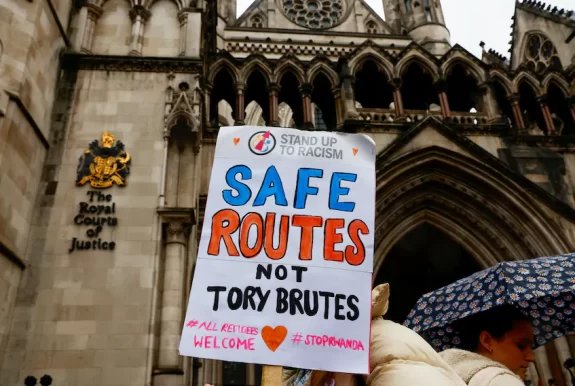
All the way with Australia fails the pub test in Britain. But then we didn’t listen to Constitutional Recognition or Treaties. Yet we claim to be in step with the crown. How does that work?
In a unanimous decision, the Supreme Court in the UK has ruled that sending asylum seekers to Rwanda for their refugee status to be assessed, is unlawful.
A bit of advice for PM Sunak : offshore detention is not a solution it is a nightmare for all concerned although some host countries and dodgy politicians will make a nice little earner out of unsuspecting British taxpayers.
Source: Pass the Parcel is not a solution ! – » The Australian Independent Media Network

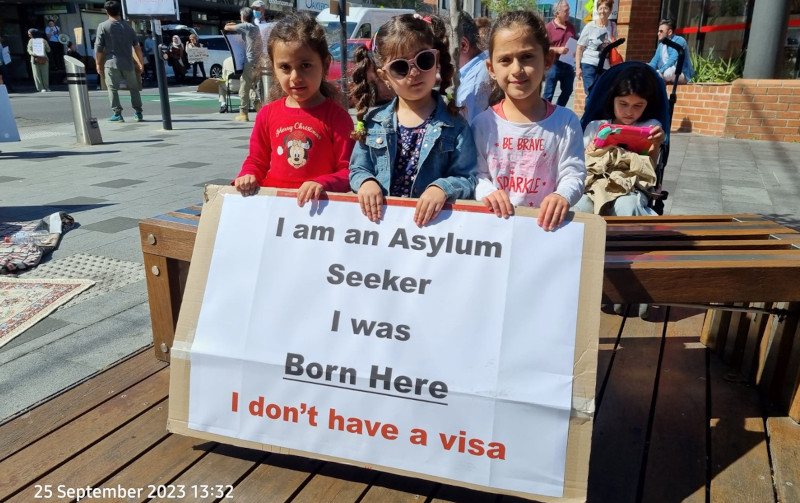
If stress has its own Richter scale, the people standing outside political offices of late seem to be under massive pressure.
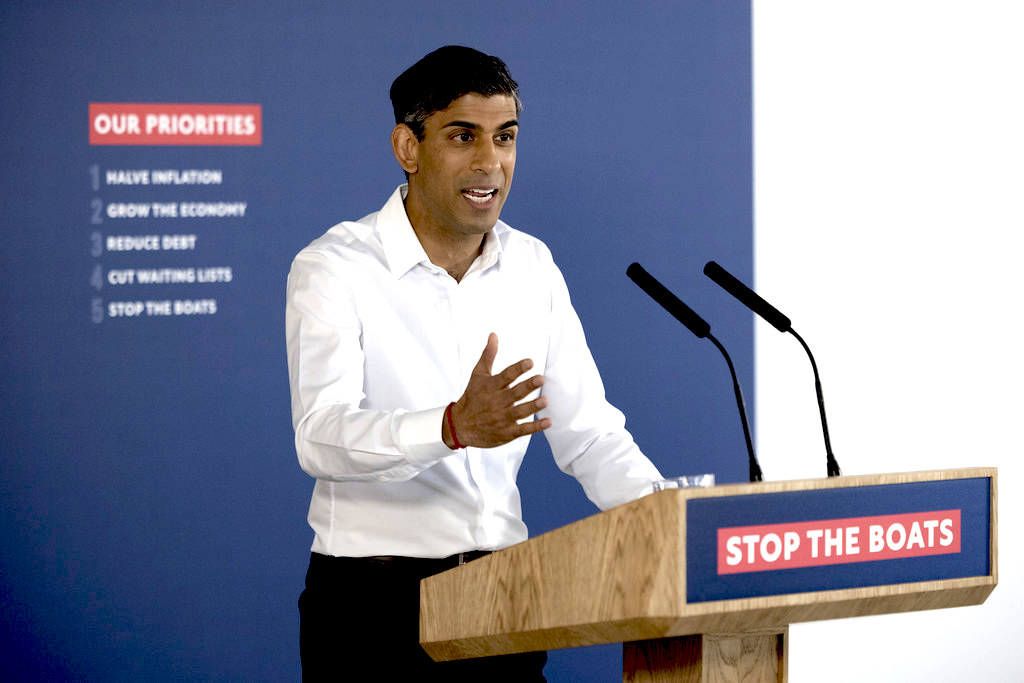
Been there done that Abbott’s Australian Shame has been spread the work has been done
A pair of United Nations commissioners have accused the United Kingdom of violating its international human rights and refugee law obligations after the country’s Conservative Party-led Parliament approved legislation cracking down on asylum-seekers.
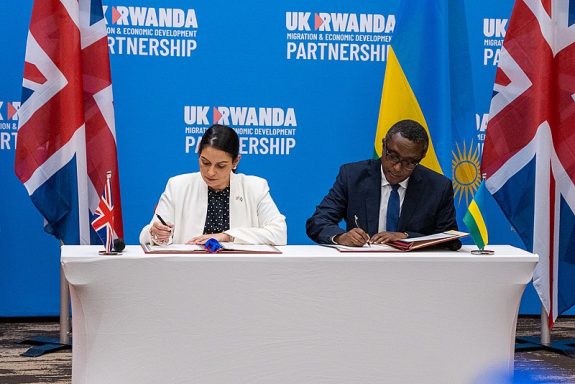
Abbott and Downer Shame us
Since 2022, Rwanda has been very much on the mind of British policy makers, a dark option of retreat from the irritating intrusions of international refugee law. The English Channel has become something of a polemical resource, with those seeking to cross it demonised as undermining Britannia’s sacred sovereignty.
Giddy with the dusty advice of Australian advisors – the crude offerings of wisdom from former foreign minister Alexander Downer, and former Prime Minister Tony Abbott stand out – respective Tory governments have been pondering how to stem the arrival of irregular migrants and asylum seekers.
The use of third states as a means of deferring obligations of protection towards refugees has become an attractive, brutal way of snuffing out the right to asylum. The UN Refugee Convention of 1951 is treated as a dead letter, and options such as the “Australian model” in repelling unwanted arrivals thrill populist politicians.
Source: Cruel Arrangements: The UK-Rwanda Refugee Deal Falters – » The Australian Independent Media Network

The Worst Health, Immigration and Home Affairs Minister on record. Facts vs Political point scoring.
it seems sufficient time has passed since the biggest labour trafficking scam in Australia’s history, a scam that started when Peter Dutton was Immigration Minister, for the Murdoch press to start agitating about asylum seekers who have arrived by plane.
Source: Coalition and Murdoch media distort truth about asylum seekers

This sadistic letter (see letter at the bottom of this article) is doing the rounds of Medevac survivors on Bridging Visas. It shows that Labor have yet to end the abuse meted out to those held offshore since 2013. This outrageous immigration stance reduces Labor to the low moral level of Dutton, Morrison and Abbott who used refugees as mere deterrents. Labor’s position is an electoral bonus for the Greens and Teal Independents.
My response:
Source: Farhad Bandesh gets the letter – » The Australian Independent Media Network
It is heartwarming to watch the stories of people embracing the Canadian nation which has worked so efficiently to grant them safe haven, to reunite them with their family, to make them part of community. As an Australian, it hurts to see our failures thrown into stark relief by the contrast.
Source: Asylum seekers languish through the job summit – » The Australian Independent Media Network
Howard,Abbott, and Morrison’s legacy lowered the bar on how refugees and asylum seekers should be treated globally. They inspired Trump’s wall and Australia has never been seen in the same light ever since. It’s certainly not the place of a “fair go”. Abbott was still promoting his inhumane policies in the UK even recently while in the guise of a ” unpaid trade advisor”. These national leaders raised the bar on Australia’s shame, and lowered the one on our our pride, and international image in the worst of all possible ways.
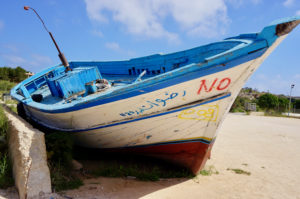
At the end of September, nearly 700 migrants and refugees were rescued from an overloaded 50-foot boat limping in off the coast of Lampedusa. And just three weeks ago, 75 people drowned in those blinding turquoise waters. As long as wars continue to displace people and repressive governments deny them basic rights like freedom of thought, protection from torture, and an education, they will continue to risk everything for a chance at a better life.
Source: Migrants Are Increasingly Crossing the English Channel—and Dying Along the Way | Washington Monthly
In 2021, the refugees who are still exiled to PNG are again abandoned and remain without any future. They are the only side of this story that is continually damaged – it is their lives that have been destroyed and it is their dreams that have been extinguished. This policy of exile has been exposed as an abject failure in a myriad of ways and it is the Australian public’s choice as to whether they want to be manipulated again or not.
“I think if the Australian government was sensible, it would bite the bullet and allow the people who are in Australia to stay,” Thom says, describing it as the most obvious solution – particularly in light of the halt to migration caused by Covid-19. “But given Australia has a policy of never allowing these people to stay permanently, then it has to accept other offers that are being made in good faith, like the New Zealand offer.” The home affairs department says Australia remains committed to its regional processing policy and is establishing an enduring regional processing capability in Nauru. “The Australian government’s policy remains steadfast: no one under regional processing arrangements will be settled in Australia,” it says.
Lives in limbo: more than 1,500 asylum seekers still face uncertain future | Australia news | The Guardian


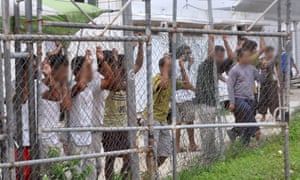
Offshore processing has caused extreme trauma and cost billions that could have gone towards more effective, humane alternatives
Australia’s offshore asylum centres have been a cruel disaster. They must not be replicated by the UK | Jane McAdam and Madeline Gleeson | Opinion | The Guardian
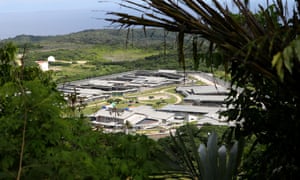
“From Alex’s point of view, he’s succeeded in a court proceeding, and yet nothing has happened, that’s a particularly hopeless situation to be in, when you win and your life doesn’t change.”
Sri Lankan refugee detained by Australia for 11 years despite government ruling he’s owed protection | Australia news | The Guardian
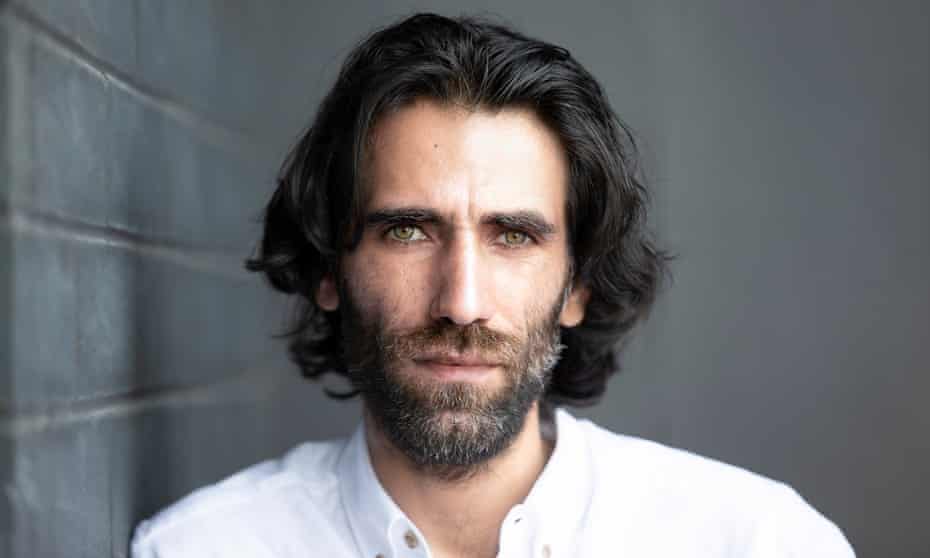
![Immigration New Zealand said Boochani's application had been successful, which means he has the right to stay in the South Pacific nation indefinitely [File: Kai Schwoerer/Getty Images]](https://www.aljazeera.com/mritems/imagecache/mbdxxlarge/mritems/Images/2020/7/24/65e048ce8da84a4f9cc3803a3f21999d_18.jpg "Behrouz Boochani granted refugee status in New Zealand")
Howard’s/Abbott’s/Morrison’s/Dutton’s SHAME (ODT)
via Behrouz Boochani granted refugee status in New Zealand | Australia News | Al Jazeera
The LNP disinformation task force has been active the whole of this century (ODT)
How can we do this to our fellow humans? Even pets are allowed sunshine and a run in the park. So much for “health” care under Medevac. These are people kept hostage to “deter boats” for over 2,524 days (almost seven years).

Key points:
There have been a number of high-profile racist incidents in Australia targeting Asians during the coronavirus pandemic
Nevertheless, analysts say that China’s travel warning is the latest attempt to pressure Australia into cooperation
Incidents of xenophobia and harassment of foreigners have also been recorded in China during COVID-19

Australia says China travel warning ‘unhelpful’ amid escalating diplomatic row – ABC News
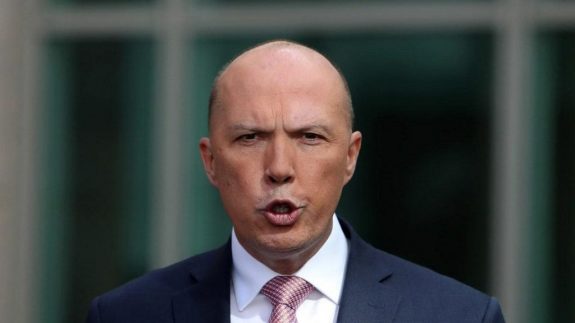
Australia’s Idiot Minister
The Eagles in their classic Hotel California – and now part of settled Australian asylum seeker law :
‘You can check out any time you like, But you can never leave!’
Fast forward to Melbourne today and we find that there are around 45 asylum seekers who had previously been detained in PNG but who had, under the Medevac Laws, been brought to Australia for urgent medical attention. The men are currently, following their medical treatment, detained on one floor of the $180-a-night Mantra on Bell in Preston, which is off-limits to other guests and patrolled by private security guards.
The difficulty facing Spud Dutton is that he cannot easily return these folk to detention in PNG as – unlike Australia – it is unconstitutional under PNG law to hold people against their will unless they have been charged and convicted of a crime and sentenced in a properly constituted court of law; always remembering that seeking asylum is not a crime. So PNG is unlikely to take them back, as to issue them with a tourist visa would be taking migration law into the realms of Monty Python.
So, in between cameo appearances on 2GB and Sky and television ads with uniformed AFP personnel, minister Dutton is pondering his next move having effectively painted himself into a corner with little room to maneuver.
via That’s another Fine Mess you’ve gotten us into, Spud! – » The Australian Independent Media Network
When Javed Badyari was 19 years old, the prime minister at the time, Kevin Rudd, announced that no asylum-seeker who tried to reach Australia by boat would ever be allowed to settle in the country.
In the years since then, Badyari, now 26, has studied medicine, moved from Sydney down to the seaside city of Wollongong, started work as a doctor, and become engaged to medical student Hannah Clements.
While Badyari was finding his feet as a young adult, hundreds of people spent the same six years in a state of permanent uncertainty, held in detention camps on small Pacific islands.
The conservative government that unseated Rudd in 2013 built on his hardline policy, leaving hundreds of asylum-seekers in indefinite detention on Papua New Guinea’s Manus Island and the tiny nation of Nauru. Hundreds remain there today, unsure what their future holds and increasingly suffering ill health.
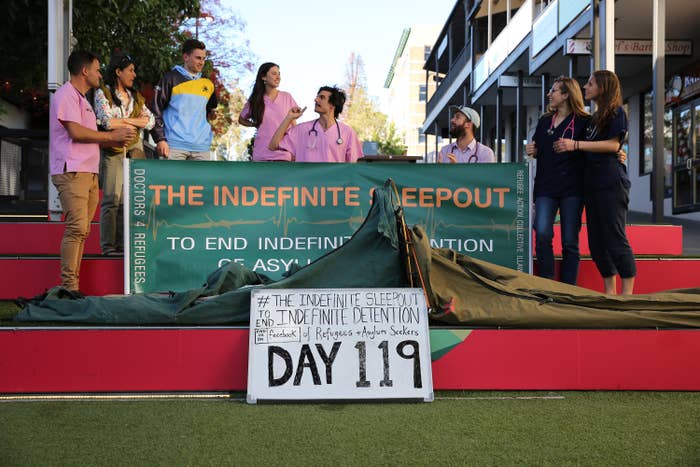
![Screenshot_2019-08-27 The asylum seekers held in a PNG prison have a choice return to death or literally rot in jail First [...].png](https://olddogthoughts.com/wp-content/uploads/2019/08/screenshot_2019-08-27-the-asylum-seekers-held-in-a-png-prison-have-a-choice-return-to-death-or-literally-rot-in-jail-first-....png) via
via 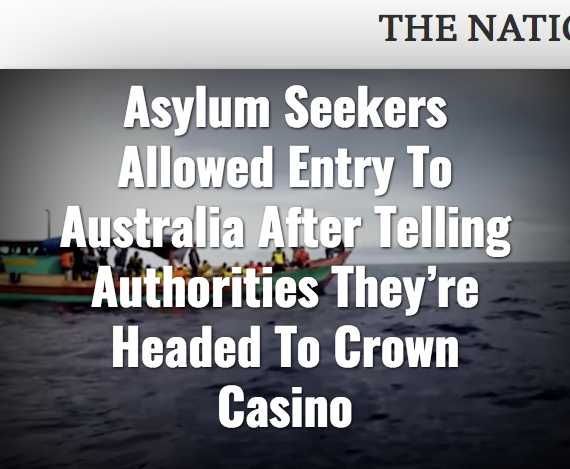

Never say Never arbitrary politics. The untrustable Minister (ODT)
and

How Trump treats ASYLUM SEEKERS
“This is insane. Not only can they not move, they can’t breathe, they can’t eat, they can’t do anything like this. Children have died and will continue to die if this is not stopped now.”
A not-yet released report by the Department of Homeland Security’s Inspector General, reported CNN on Friday, has found “dangerous overcrowding” and unsanitary conditions at an El Paso, Texas, Border Patrol processing facility following an unannounced inspection. (Photo: Department of Homeland Security/IG Office/via CNN)A federal immigrant detention facility in El Paso, Texas is so unsanitary and overcrowded that migrants held by the Trump administration were forced to wear “soiled clothing for days or weeks” at a time and stand on toilets to find breathing space in their cells.

Attorney General William Barr has just banned bail for migrants seeking asylum…which by the way, is not a crime..and they need somewhere to keep these people, to concentrate them if you will.
Dictionary.com defines a concentration camp as: “a guarded compound or imprisonment of aliens, members of ethnic minorities, political opponents … for the confinement and persecution of prisoners.”
Well guess what, America?!
We are now officially building and maintaining concentration camps for migrant families who have come to our borders seeking asylum. Even though the mainstream media is reporting that the Trump Administration is “considering” tent concentration camps, the truth is that they have already been erected. As The Daily Beast published just two days ago, these camps already exist in El Paso, TX. These camps are former military hospital facilities converted to prison camps. Representative Nanette Barragan (D-CA) said after visiting the camp that it was “filthy” and “heartbreaking.”

via Concentration Camp Tents Ordered By Trump Administration | Crooks and Liars
A certain literature – and to that, a good deal of ghastly celluloid – has been produced on the subject. All are, in essence, in violation of the United Nations Refugee Convention. No mention on the right to asylum is ever made; nor to the right not to be prejudiced against as an asylum seeker in terms of means of arrival. And that’s merely the start. In gazing at these amateurish compilations of self-entitled guff, one is left with the conclusion that no one involved in this process has ever consulted a human rights manual, let alone familiarised themselves with the hideous post-Second World War period. There was a time when the term Displaced Person was not entirely revolting.
Prime Minister Scott Morrison, the hardened advertising man of the government, has retreated into something he knows best: the shallow, bucket swilling call of the advert. This is interesting in a way: the same man condemned his opponents for doing something similar when they got on the anti-refugee video show. When Labor, then in government, introduced material to justify its “PNG solution” in July 2013, Morrison claimed that the party was “ramraiding the taxpayer’s ATM”. The then coalition opposition snortingly dismissed the effort by Labor as “propaganda”.
Shortened memories prevail. A two-minute video message is now ambling its way through 10 countries, though it will have to be translated, however accurately, on its crooked journey. “Make no mistake, if you attempt to come to Australia illegally by boat, you will not succeed.” Spare your pennies, insists Morrison. “So do not waste your money or risk your life, or anyone else’s life, for nothing.” Such is the awareness of a person who has never had to consider the throbbing, genuine feeling human rights conjures up in the breast of the oppressed.
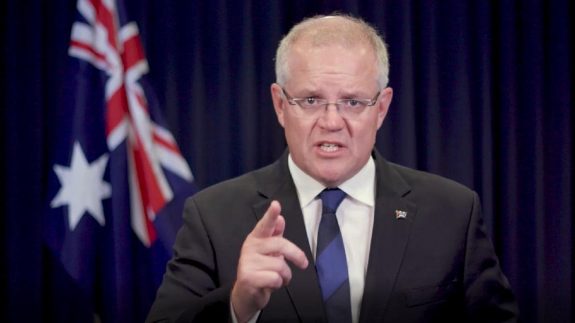
via Death by Video: Morrison Combats Refugees by Film – » The Australian Independent Media Network

Neither Murdoch Media nor the Government made any effort to correct the misrepresentation put out. Fake News Sure was (ODT)
via ‘Seriously damaging’: ASIO says advice on border security was misrepresented
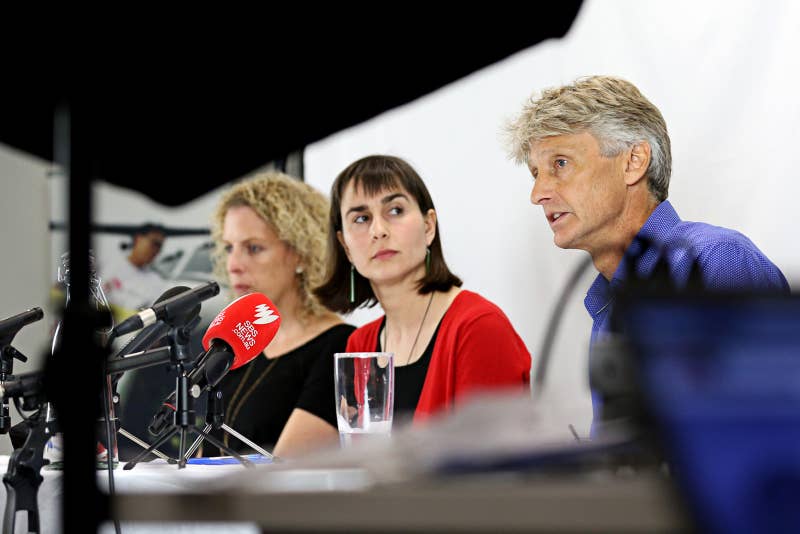

Immigration Minister Peter Dutton has opened the door to a potential refugee resettlement deal between Papua New Guinea and New Zealand, acknowledging it is a decision for the two sovereign states that Australia could not block.
But he warned any arrangement would be against Australia’s wishes and would run the risk of souring both countries’ diplomatic relationships with Australia – making it unlikely without Canberra’s blessing.

Peter Dutton opens door to New Zealand refugee deal with Papua New Guinea, but warns of risks
‘Waste of money’: Dutton rubbishes NZ’s plan to upgrade services on Manus

A year or so ago I met with a very senior official in the Turnbull government’s Border Force. We discussed the fact that the lives of 32,000 people who had sought asylum after July 2013 were slowly being destroyed despite the fact that not even one asylum seeker boat had reached our shores during the previous two years. More than 2000 people were marooned on Nauru and Manus Island. Thirty thousand or more were living in Australia, but in a permanent state of fear and existential insecurity.
Source: Yes, Virginia, there is a solution to Australia’s asylum-seeker problem | The Monthly
My dear friends, I am writing this because I want to say … We are sorry that when you needed us, instead of helping we threw you into hell

Iran’s Foreign Minister has criticised Australia’s treatment of asylum seekers, describing their living conditions as unconscionable.

Anders Breivik, who killed 77 people in 2011, sues Norway for violating his human rights.

Papua New Guinea’s PM clarifies comments to Canberra’s media that he wants the Manus Island centre to eventually close.

The actual cost for Australia to have a more humane immigration policy isn’t as high as you might think.
Source: $190 a head: the price of a more humane immigration policy

The former prime minister needs to be told: Fortress Europe and Fortress Australia are anachronistic, unjust and odious concepts.


The Government is allowing rape, torture, assault, and in some cases murder in immigration detention centres, the public presumed today after being left with no choice but to use their imaginations.
With reports of reality now banned, citizens have been forced to assume the worst possible atrocities are being carried out in their name.
“It’s pretty horrific what’s happening there. Sexual assault, solitary confinement, torture – it’s all possible. But I don’t really know for sure,” one man said.
The Government released a statement saying, “If you have nothing to hide you have nothing to fear. And we certainly wouldn’t want nothing to fear”.
![Greek PM Alexis Tsipras attends a wreath-laying ceremony at the Tomb of the Unknown soldier in Moscow, Russia [EPA]](https://i0.wp.com/www.aljazeera.com/mritems/imagecache/mbdxxlarge/mritems/Images/2015/4/8/bd698a83023c414cbbd1d32ac36641b0_18.jpg "Greece's overtures to Russia may not be a sideshow")
Greek Prime Minister Alexis Tsipras’ visit to Moscow this week for talks with President Vladimir Putin has fuelled wild speculations about the real intentions of the Greek government.
The visit is taking place while bailout talks between Greece and Europe have reached a very critical juncture.
Greece is again on the verge of bankruptcy, but its euro partners insist that the government stay the course with its austerity programme and the neoliberal structural reforms before they unlock more aid.
While it is hard to say what the Greek prime minister hopes to achieve from his talks with Putin, his overtures towards Russia may represent a sincere attempt on his part to reorient the country’s strategic interests as well as reflect a sense of deep frustration with Greece’s euro partners.
And for good reason.
Catastrophe
The financial bailouts by the European Union and the International Monetary Fund have created an economic and social catastrophe of unprecedented proportions for an advanced western nation in peacetime conditions.
Greece’s GDP has sunk by 20 percent since 2010, its level of sovereign debt has risen as a share of GDP to 176 percent, the unemployment rate has exceeded the 25 percent mark, and one out of three Greeks live near or below the poverty line.
The general explanation on the part of Greece’s euro partners and in much of the western media for this dramatic situation is that Greek authorities have been slow in introducing structural reforms while hinting at the same time that the Greek people are lazy.
However, the facts on the ground tell a different story. First, major reform policies have been fully implemented across the private sector labour market, which include increasing labour market flexibility and substantially reducing wages and salaries.
Second, the number of public sector employees has been slashed by over 30 percent since 2009, with corresponding salary cuts ranging anywhere from 28 percent to 35 percent.
Third, public education, public healthcare, transportation, and social services have experienced sharp annual budget cuts since 2010 to the point that Greece may now qualify as a failed state.
| Securing a preferential trade agreement with Russia, and possibly some direct financial aid, will help the country’s beleaguered economy and may force its euro partners to adopt a more flexible approach towards an EU member state which seems to be driven directly into the arms of Moscow. |
Fourth, most state-owned assets have been privatised, and those that still remain under public ownership (certain airports for example) may soon get privatised under pressure by Greece’s main creditors.
Finally, as the ultimate proof of how misguided and culturally biased the prevailing story is about Greece’s current misfortunes, every major study shows that Greeks work more hours than anyone else in Europe.
‘Excessive austerity’
Interestingly enough, the question of why Greece’s economy is in such a mess was pointedly answered by Peter Bofinger, a member on the German Chancellor’s Council of Economic Advisers, in a recent interview on German radio: “excessive austerity”.
In fact, in a private dinner conversation back in late November 2014, Bofinger stated to the author that Greece should have pulled out of the euro when the crisis broke out in May 2010 because he could see the disastrous effects that the bailout plan was going to have on the economy and its people.
The IMF has also admitted on various occasions in the past that it underestimated the negative impact of the austerity measures on the Greek economy, but that did not stop its officials overseeing the bailout of Greece from insisting on more and more of the same deadly medicine.
Today, Greece’s situation is exponentially more dire than it was a few years ago. Liquidity has dried up completely and the debt crisis is no longer confined to the public sector but has expanded into the private sector as well.
The new Syriza-led government has done a lot of screaming about the adverse effects of austerity since it came to power two months ago, but it has failed to convince Greece’s euro partners about the economic and moral merit of its case.
Indeed, both Europe and the IMF insist on the continuation of a failed programme that has caused massive economic damage and untold social pain.
As the eurozone’s unquestionable master, Germany has also refused to consider any talk of a Greek debt write-off, forgetting rather conveniently that its own economic recovery after the war would not have been possible if it was not for the London Debt Agreement of 1953, which cancelled a great portion of German debt.
Germany also impugns the claims of Greece about war reparations. Greece has never been repaid for the hundreds of millions of reichsmarks that the Greek National Bank was forced to give to Nazi Germany during the war or for the atrocities committed on the local population by the German forces during the occupation.
Under these circumstances, it is no wonder why Greece’s leftist government is making overtures towards Russia.
During his talks with Putin, the Greek prime minister may or may not request direct economic assistance from Moscow. He will certainly try, though, to strengthen economic ties between the two nations, especially in the area of energy.
Parallel financial system
In the meantime, the Greek government should not hesitate to introduce a parallel financial system (a “double currency”) in order to address the lack of liquidity and help to boost growth.
And, in the end, if all efforts to convince Greece’s euro partners that the social welfare of a nation’s citizens must take priority over any obligations to creditors fail, an orderly exit from the euro may be the only option left.
It could very well be then that the new Greek government’s overtures towards Russia are in anticipation of an uncertain future regarding Greece’s place in the eurozone, even though its expressed desire is for Greece to remain in the euro.
Securing a preferential trade agreement with Russia, and possibly some direct financial aid, will help the country’s beleaguered economy and may force its euro partners to adopt a more flexible approach towards an EU member state which seems to be driven directly into the arms of Moscow.
As for Russia, it might be willing to provide whatever assistance it can (and without necessarily making financial costs and benefits a priority in its decision-making process) to financially beleaguered Greece in order to have an EU member state on its side.
Greece has already expressed its disagreement over EU sanctions against Russia, and it takes only one EU member to veto sanctions.
In sum, if talks between Greece and Russia lead to a fruitful collaboration between the two countries, the EU will have a hard time keeping Russia in check and may even lose a vital political partner in its quest of a unified Europe.
C J Polychroniou is a research associate and policy fellow at the Levy Economics Institute of Bard College and a contributor to Truthout.org.
The views expressed in this article are the author’s own and do not necessarily reflect Al Jazeera’s editorial policy.


Harsher penalties for intelligence whistleblowers in Australia will deter future whistleblowers like Edward Snowden from speaking about Australia’s surveillance and intelligence gathering.’
The referral to the federal police of journalists covering asylum seeker policy raises serious questions about the freedom of the press in Australia
Journalism in Australia is not a crime. Despite this, journalists who have reported on immigration and asylum seeker issues have been referred to the Australian Federal Police for investigation in a series of attempts to prosecute confidential sources and whistleblowers.
This is a move that should alarm all citizens. It’s not an attack on any particular news outlet. It’s an attack on those who have reported on matters of significant public interest in the increasingly secretive area of asylum seeker policy.
Journalists from Guardian Australia, News.com.au and the West Australian have all had their stories sent to the AFP by customs, the immigration department and the defence department to ask the AFP to track down their sources. There may be journalists from other news outlets involved.
All journalists have confidential sources to help gather information and build their stories. Sometimes those sources speak out at great risk, and that confidentiality must be protected. The free flow of information is the bedrock of a journalist’s work.
These kind of attacks severely damage the confidence between reporters and their sources and pose a grave threat to effective and responsible journalism. When the federal police go knocking on the doors of a reporter’s sources, sources will soon dry up. People will be scared. And that is exactly the point.
Part of the problem is that the laws surrounding leaks are so broad. The Commonwealth Crimes Act criminalises essentially any disclosure of government information, regardless of the seriousness, regardless of the intent, and regardless of the public interest. Despite recommendations by the Australian Law Reform Commission to amend these laws, we have yet to see any change.
The whistleblower protection scheme introduced in 2013 under the previous Labor government provides limited protections for disclosures to the world at large, and favours protected disclosures internally or to oversight agencies instead. This means that whistleblowers who provide information to journalists can still be left with little protection from the law.
This can’t be viewed in isolation. There is a much broader series of measures at play that all point towards an increasing overreach by the federal government into legitimate reporting and public interest disclosures.
Any of the journalists that are listed in the AFP referrals could have had their phone and web records accessed. It doesn’t take a warrant, just a short one-page form. And there is no privilege or special protection for journalists, a consideration that is being debated right now in the UK. The looming mandatory data retention legislation will compound the problem by ensuring a much greater range of web data is consistently available to government agencies for up to two years.
The insertion of a new offence into the Asio Act that criminalises any form of disclosure about “special intelligence operations” could see journalists jailed for reporting on important intelligence related stories. Harsher penalties for intelligence whistleblowers in Australia will also attempt to deter future whistleblowers like Edward Snowden from speaking about Australia’s surveillance and intelligence gathering.
The Australian government has shown great concern for the awful plight of Peter Greste and his Al Jazeera colleagues who have been jailed in Egypt. They have shown great concern for freedom of the press in the wake of the terrible Charlie Hebdo attacks in France.
That concern must extend to the work of serious public interest reporting in Australia.


It is time for all Australians to recognise that stopping the boats is not the answer to the refugee problem.
The issue of refugees is a global one deserving better than the shallow policies developed by successive Australian governments. History will not be any kinder to present Australians than to those of former eras in respect of their racist policies towards Aboriginal and Asian people.
Australian attitudes are curious since most of us, with the exception of the first Australians, are descended from refugees of one sort or another.
Unfortunately, most politicians think that stopping the boats resolves the matter.
The government’s latest legislation makes superficial concessions that hide an outrageous scheme that shuts out the rule of law, confers worrying powers on the Immigration Minister, unilaterally amends the Refugee Convention and trashes Australia’s former reputation as a good international citizen. Its passage was achieved by Scott Morrison using refugee children as hostages, offering a trivial increase in the number of humanitarian refugees accepted by Australia and making minor changes while leaving most asylum seekers in limbo with temporary protection visas or so-called safe haven visas.
At the end of 2013 an estimated 52 million people around the world were displaced, representing the greatest disruption of peoples since World War II. Overall, 50 per cent of these refugees are children.
In 2013, 100,000 people crossed the Mediterranean to Europe, mainly to Italy and about 2000 drowned. This year 140,000 people have crossed from North Africa to Italy and while drownings have continued, they have been ameliorated by the magnificent rescue work of the Italian navy. At least 3 million refugees have come from Syria and more from Iraq
Many have witnessed or suffered atrocities including the targeting of women and children and their use as human shields.
Getting closer to us, there are over three million refugees in the South East Asian region, mainly from Iraq and Afghanistan who are in Malaysia/ Indonesia. Some 500,000 Rohingya are refugees from Myanmar, mainly in Thailand and Bangladesh. The latter have come by boat and many have been ransomed or killed in smuggler camps. Some have made it to Malaysia and Indonesia and a few to Christmas Island, where we continue their persecution.
Our government claims to save lives while the fact is that its policies and those of its predecessors created the situation where many other lives have been lost or damaged. The more successful we are in stopping boats and allegedly saving lives, increased numbers remain living in appalling conditions in countries where they are extremely vulnerable to disease and death or are killed attempting to escape to other places. Their conditions are bad because they are not able to work and cannot legally support themselves. They have no legal or political rights and are extremely vulnerable to exploitation.
If our government was to significantly increase its humanitarian intake and negotiate a regional solution with countries like Malaysia and Indonesia, there would be little need to stop the boats.
Since the Gillard Government’s attempted Malaysian solution nothing has been done to achieve a regional solution. Our government treats Asian countries with arrogance as is evidenced by Morrison’s recent announcement preventing further refugee applications from Indonesia. They also want solutions but to achieve them expect us to give as well as take. We must indicate a willingness to greatly increase our humanitarian intake and work with them towards compassionate and real solutions rather than attempting to fence off Australia.
The dreadful conditions in our overseas detention centres would not be tolerated in a prison in any civilised country and this is made worse in that children, some unaccompanied, are held there as well.
There are some myths about asylum seekers. Contrary to popular belief they represent a minor percentage of Australia’s overall humanitarian intake of migrants.
There is no queue to jump and never has been. Applications to UNHCR are not dealt with in the order in which they are received but applications are assessed upon the basis of the urgency of need. In fact 1.1 million people have made these applications to UNHCR in South East Asia and it will probably take two generations before these applications are assessed and longer to be successful. Most asylum seekers come from countries where it is impossible to make an application in any event.
There are few economic migrants. The fact that people risk their lives and those of their children in dangerous boats on the open ocean is a mark of their desperation rather than their wealth. They are generally the poorest of the poor escaping terrifying situations.
No horde will descend upon Australia if our policy is relaxed. Most people want to remain close to their home country, hoping to return and any increase could easily be controlled. The reason why people resort to boats is because there is no other reasonable hope left to them.
The fact that many arrive without papers is no surprise. Under many regimes an application for travel documents would be suicidal.
Australia’s position is despicable. No other country behaves as we do. We discriminate on the basis of their mode of arrival and target the poorest and most desperate.
We ignore important principles of international law and breach treaties we have ratified. We treat guiltless asylum seekers with cruelty that would be unacceptable if applied to criminals. We abuse children by depriving them of freedom, education and health care and frequently separate them from parents and relatives.
We hold them in secrecy, politicians incite prejudice against them, we send them to client states like Nauru, Papua New Guinea and Cambodia and wash our hands of them.
It is time for all Australians to recognise that we are a wealthy country that is not pulling its weight in dealing with a global problem. Otherwise our treatment of refugees and asylum seekers will be a further dark stain upon our history.
Alastair Nicholson is a former chief justice of the Family Court, a University of Melbourne law professor and chairman of Children’s Rights International

The Abbott government knows full well that it won’t be able to support the refugees that it dumps in Cambodia.’
The Abbott government plans to send hundreds of refugees to Cambodia. Ironically, many poor Cambodians are displaced refugees in their own country
Like many five-year-olds in Cambodia, Samang must work for a living. He spends his days collecting drink cans from the rubbish dump that doubles as his home and then takes them to his grandmother, who crushes them with a brick. His grandmother does her best to care for him after his mother left Cambodia to find work in Thailand because there are no jobs in Phnom Penh. He is HIV positive.
I travelled to Cambodia to see what life will be like for the refugees the Abbott government plans to send there. Ironically, Cambodians like Samang have become refugees in their own country. Slum dwellers in the capital, Phnom Penh, have had their land and homes grabbed from under them by developers, and are pushed out onto the streets without any compensation.
Samang’s story is tragic, but it’s also common in a country that has been destroyed by brutal civil war, poverty and decades of endemic corruption. Human rights abuses are on the rise as the government cracks down on those who challenge the corrupt justice system and public services. Only last week, seven local mothers were jailed for a year for peacefully protesting the government’s inaction over sewage that floods their homes and children’s school on a regular basis.
Most of all, I fear for the young women and girls who Australia will send here. The sex trade is rife in Cambodia and young women are almost without protection. Orphanages in Cambodia are still full of young girls and boys, taken from poor homes with the promise of food and education, who are then exploited and sold for sex and labour. Clearly it is no place for Australia to be sending families who came to us asking for protection.
I met a young Rohingyan refugee named Tayab who has lived in Phnom Penh for several years. He has no officially recognised residency or citizenship and, therefore, none of the basic human rights that come with it. He cannot travel, get a job or own a vehicle. He survives by cooking roti every morning and selling it to passers-by on the street. Without official identification papers, it’s the best he can do.
“There is no future for me here,” he told me as we sat in in his cramped flat, “I want to leave but I can’t. Without papers, if I do leave, I will have to do it illegally.”
After a long pause, he added: “This deal, with Australia, it is very bad luck for the refugees.”

The Cambodian and Australian governments have been tight-lipped about the details of the refugee deal. At a farcical signing ceremony in September, the media snapped photos of the immigration ministers clinking champagne glasses but were ignored when they tried to ask questions about the new arrangement. What we do know, largely from Senate estimates questioning, is that refugees will be sent there by the end of the year. Australia will pay $40m plus costs for the privilege and, after a short time spent in the country’s capital, refugees will be dumped in regional Cambodia and told to get on with their lives.
Regional Cambodia’s rice fields and stunning natural beauty are interposed with scenes of stark destitution. The vast majority of Cambodians work in low paying, unstable and informal jobs – and this is especially true in the regions.
While visiting one of the villages in the rural province of Battambang, I spoke to parents at the local school. The overwhelming majority of them told me they had to travel to Thailand to work (often illegally) to earn enough money to survive. Unless you already own land and can grow rice, there are no jobs in the regional areas. What jobs will the refugees Australia sends here actually be able to perform? None, as far as I can see. There’s no work in Phnom Penh either – many are likely to take the locals’ advice and head across the border, where the wages are better.
Right now, there are 63 refugees and 21 asylum seekers in Cambodia. That’s a mere 84 potential refugees in the whole country. NGOs told me that they can’t care adequately for even that small number. There are more than 1,200 asylum seekers on Nauru, including families and children. All will be sent to Cambodia if the Australian government gets its way. The Abbott government is willing to pay to set this deal up, but the country clearly can’t cope with such a significant influx of vulnerable people.
While the politicians in Canberra might have decided to condemn the refugees on Nauru to a life of poverty and hardship, Australians deserve to know about the realities of life in Cambodia. They need to know about Tayab, poor young Samang and they need to know the truth: this dirty deal with Cambodia will condemn hundreds of families to a life of senseless and cruel destitution.
The Abbott government knows full well that it won’t be able to support the refugees that it dumps in Cambodia. Alarmingly, it doesn’t care.
- Names in this article have been changed.

Protesters in Phnom Penh hold signs during a demonstration against Cambodia’s plans to resettle intercepted refugees. Photo: Reuters
Bangkok: Cambodian authorities frequently extort money from asylum seekers living in the impoverished nation, according to an investigation that raises new concerns about Australia’s plan to send refugees there.
Asylum seekers have also told of how they are targets of discrimination in the country, often paying inflated prices for food, work equipment and basic necessities because they are not Cambodian.
“There is a foreigner price and a local price,” a refugee told Human Rights Watch investigators. “But we can’t afford the foreigner price.”
A Sri Lankan refugee said people call him a terrorist and use offensive words against him because he is an ethnic Tamil
Human Rights Watch has released a report detailing how asylum seekers and refugees living in Cambodia face hardships including difficulties obtaining employment, denial of access to education, substandard access to health services, extortion and corruption by local officials.
Refugees said fear of mistreatment by Cambodian authorities kept them from speaking out or joining organisations to bring complaints.
The report’s release follows similar claims by Australian Greens senator Sarah Hanson-Young during a visit to the Cambodian capital Phnom Penh this week.
Ms Hanson-Young described sending refugees to Cambodia as “madness”, saying what she had seen in Phnom Penh’s slums had hardened her opposition to the plan, which has been condemned by human rights groups, refugee advocates and Cambodia’s opposition MPs.
The Abbott government is paying almost $40 million in additional aid over four years to Cambodia in return for the country accepting an unstated number of refugees who volunteer to resettle outside Phnom Penh.
They will be offered accommodation, training, food and loans to start small businesses over their first 12 months in the country.
Human Rights Watch called on the Australian government to press Cambodian authorities to implement key reforms to improve treatment of refugees in Cambodia before transferring any people from the tiny Pacific island of Nauru who are being encouraged to take up the Cambodian option.
“The Australian government shouldn’t make the refugees in Nauru suffer further by dumping them in a place unable to adequately resettle or reintegrate them,” said Elaine Pearson, Human Rights Watch’s Australian director.
Human Rights Watch interviewed 10 of 63 refugees living in Cambodia and spoke to refugee and migrant support organisations, human rights groups and United Nations agencies.
Years after arriving in Cambodia – one of Asia’s poorest nations – not one refugee had received a Cambodian residence card or citizenship, depriving them of availability to basic services.
The refugees are issued only a “parkas” proclamation by the Ministry of Interior that confirms their right to stay in Cambodia.
But the proclamation cannot be used for many official purposes.
“This piece of paper is absolutely useless,” a refugee told Human Rights Watch.
“To get a job, a driver’s licence, open a bank account, buy a motorbike or even receive a wire transfer, you need to show a passport, not this piece of paper.”
Some refugees said they are in a dire financial situation and would be unable to survive in Cambodia without support of the Jesuit Refugee Service.
Refugees told of how they rarely go outside because when they do they often face extortion, bribery and corruption.
A self-employed street bread seller said: “We have to pay bribes just to be able to sell food.”
Another refugee said the main problem in Cambodia was discrimination and mistreatment based on a person’s financial status.
“But it is also worse if you are a refugee with the wrong skin colour and not the right religion,” one said.
“Money will buy you everything, but if you haven’t got money then you can’t protect yourself and can’t protest about discrimination and mistreatment.”
One refugee had advice for refugees on Nauru: “This is a corrupt country. You will not find jobs. We have been here more than two years and we have no money and not enough to eat. It’s better to wait in Nauru. It’s a very, very bad life here in Cambodia … there is no future.”
 olddogthoughts
You must be logged in to post a comment.