Month: November 2014

Abbott the chump cut ABC’s 40 year broadcasting tie with the Pacific Island Nations. We had a serious sphere of influence. Abbott handed it to China on a platter.

Xi Jinping shakes hands with Fijian Prime Minister Josaia Voreqe Bainimarama

Chinese president Xi Jinping signs five agreements with Fiji as part of China’s Pacific engagement strategy

Chinese president Xi Jinping has signed five agreements with Fiji’s prime minister Frank Bainimarama, with the aim of strengthening economic and strategic ties with Pacific island nations.

Five memorandums of understanding (MOU) were signed following a meeting between Mr Xi and Mr Bainimarama.

They cover increased economic and defence cooperation, the “provision of goods to address climate change”, and visa exemptions for Fijians travelling to China.

One of the MOUs includes the establishment of a Chinese cultural centre in Fiji.

Mr Xi is also hosting bilateral meetings with leaders from Samoa, Vanuatu, Niue, Tonga, Papua New Guinea and the Federated States of Micronesia, and a round-table discussion with all the Pacific leaders.

Pacific a diplomatic focus for China and India

His visit comes after Indian prime minister Narendra Modi stopped over in Fiji also to court regional leaders, who form one of the largest voting blocs at the United Nations.

Both leaders targeted the Pacific as a vital stop on their way home from the recent G20 summit in Australia.

During a traditional welcoming ceremony in the tourist town of Nadi last night, Mr Bainimarama said Fiji wanted China to be fully engaged in the Pacific.

In a thinly veiled swipe at Australia and New Zealand, he said China had been “a true friend of Fiji” and had never interfered in Fiji’s internal politics.

Australia and New Zealand loudly criticised Mr Bainimarama and imposed sanctions on Fiji after he seized power in a military coup in 2006.

Mr Xi said that Fiji is the first Pacific island country to establish diplomatic relations with China and the two countries have witnessed ever-deepening political mutual trust and fruitful practical cooperation over the past 39 years.

“China views Fiji as a cordial friend and an important partner'” Mr Xi said.

“China supports the people of Fiji in choosing their own development path and improving livelihoods.”

Before his arrival in Fiji, Mr Xi released a statement saying he would meet the leaders of all Pacific island countries that have diplomatic ties with China to draw what he called a blueprint for future mutually beneficial cooperation.

“The friendly exchanges between the people of China and Pacific Island countries date back to a long time ago,” he said.

“We feel a natural kinship with each other.”

This week Andrew Bolt Attacked Michael Leunig and King suggesting they were Jew Haters.The man is unhinged

image

Getting the balance right on ISIL videos – Al Jazeera Blogs

Getting the balance right on ISIL videos – Al Jazeera Blogs.

Humanitarian intervention or imperialism? Video Oxford Debate Head to head.

http://aje.me/1xeSZh9

Mehdi Hasan challenges former French FM Bernard Kouchner on whether interventions are a facade for Western imperialism.

Humanitarian intervention or imperialism?

But can a military campaign ever be strictly humanitarian? Or is the defence of human rights just a facade for imperialist agendas?

In this episode of Head to Head, Mehdi Hasan challenges Kouchner on Western involvement in conflicts such as Mali, Libya, Kosovo and Rwanda, and asks whether France’s recent interventions mark a return to its colonial past.

In the middle of a heated exchange and when pressed by Mehdi Hasan, Bernard Kouchner agreed in part that France should apologise for its role in the Rwandan genocide. This is the first time a senior French official, and former member of the government, has made such a public admission.

Kouchner is one of the architects of the concept of the right to interfere. On the ground in Rwanda and Kosovo, the French doctor has always argued that the West has a responsibility to protect human life, regardless of international borders.

Joining the discussion are Lindsey German, convenor of the Stop the War Coalition and former editor of the Socialist Review; Barak Seener, associate fellow at the Royal United Services Institute think-tank in London and founder of Strategic Intelligentia, a humanitarian and security consultancy firm; and Hamza Hamouchene, campaigner, activist and president of the Algerian Solidarity Campaign.


ISIL launches fierce assault on Iraq’s Ramadi

ISIL have seized most of Anbar province which borders Saudi Arabia, Jordan, Syria and the Baghdad governorate.

The Islamic State in Iraq and Levant (ISIL) has launched a major attack on the Iraqi city of Ramadi, capital of the troubled western province of Anbar, security officials have said, resulting in the killing of at least 20 soldiers.

The assault came as Joe Biden, the US vice-president, arrived in Istanbul on Friday with a view to push Turkey to step up its role in the international coalition’s fight against the ISIL.

Al Jazeera’s Imran Khan, reporting from Baghdad, said pro-government forces had called in reinforcements to push back the offensive on Ramadi that was coming from four sides.

“Ramadi is a crucial city for ISIL as it attempts to consolidate its grip over all of Anbar province,” Khan said.

Sources told Al Jazeera tens of Iraqi soldiers had been abducted near Ramadi while at least 20 Iraqi soldiers and eight ISIL fighters had been killed in the fighting.

“Clashes are ongoing around the city. A series of mortar attacks have targeted areas inside the city, including provincial council buildings and a police post,” a security official told the AFP news agency said.

Adhal al-Fahdawi, a member of the Anbar provincial council, said on Friday that ISIL had managed to capture part of an eastern district called Mudhiq but pro-government forces had stopped their advance and were encircling the fighters there.

“The security forces need support because we have not received any back-up from the army’s air force or the coalition,” Fahdawi said, referring to the US-led air campaign launched in August.

Parts of the restive province, which borders Saudi Arabia, Jordan, Syria and the Baghdad governorate, have been out of government control since January.

ISIL, which also controls large parts of Syria, spearheaded a major offensive in Iraq in June, seizing territory, including much of Anbar.

A fresh spate of attacks in recent weeks has seen the armed group extend their grip over the province, where only a handful of pockets remain under the control of Iraqi security forces backed by Shia armed groups and Sunni tribal fighters.

US-Turkey talks

Biden met the Turkish Prime Minister Ahmet Davutogulu on Friday and will hold talks with the President Recep Tayyip Erdogan on Saturday.

Biden’s visit follows weeks of public bickering between the two NATO allies. The Turkish president insists if the US wants his help, it must focus less on fighting the ISIL and more on toppling Syrian President Bashar Assad. Erdogan wants the US-led coalition to set up a security zone in northern Syria to give moderate fighters a place to recoup and launch attacks.

The obvious compromise would be if Washington shifted its policy on Syria to do more to force out Assad, and Turkey agreed to do more against ISIL, said James Jeffrey, former US ambassador to Turkey and Iraq who is now at the Washington Institute for Near East Policy.

Australia one of only four nations forecast to miss 2020 emissions target

Yallourn Power Station Australia has been warned it is wrong to view fossil fuels as the way to boost economic growth after the prime minister, Tony Abbott, defended coal before and during the G20 summit.

A UN report says Australia and just three other nations will not meet their pledge to reduce emissions by 2020

Australia is one of just four nations not on track to meet emissions reduction promises, a UN report has warned, while a US-based research firm has poured scorn on Tony Abbott’s insistence that coal is “good for humanity.”

A report by the UN Environment Programme states that the world should aim to be “carbon neutral” by 2070 at the latest. Exceeding a budget of just 1,000 gigatonnes of carbon dioxide would risk “severe, pervasive and in some cases irreversible climate change impacts”.

In an analysis of each signatory to a UN goal to limit global warming to 2C above pre-industrial levels, the report found that just four nations – Australia, Canada, Mexico and the US – needed to do more to meet their respective emissions reduction targets by 2020.

The UNEP analysis finds that Australia is set to emit 710 million tonnes of CO2 in 2020. This is well above the 555 million tonnes it would emit if it were to meet a goal of a 5% reduction in greenhouse gases by 2020, based on 2000 levels.

The report notes that Australia’s Coalition government has “replaced carbon-pricing mechanism with Emissions Reduction Fund. This results in an increase in projected emissions for 2020.”

After scrapping carbon pricing in July, emissions have risen in Australia, reversing a previous downward trend.

The replacement Direct Action policy, which the government claims will be more effective and a lesser burden on cost of living pressures, will start voluntary payments to businesses to reduce emissions from the first quarter next year. Independent analysis has cast doubt on whether Direct Action will meet the 5% emissions reduction goal.

The UNEP said countries could slash emissions through renewable energy and energy efficiency while maintaining economic growth.

Achim Steiner, executive director of UNEP, said there are “many synergies between development and climate change mitigation goals.

“Linking development policies with climate mitigation will help countries build the energy-efficient, low-carbon infrastructures of the future and achieve transformational change that echoes the true meaning of sustainable development.”

In October, Abbott said coal was “good for humanity” because it would be used to lift millions of people out of poverty, In subsequent G20 talks, Abbott reportedly told international leaders he was “standing up for coal”.

This position was directly challenged at the launch of the UNEP report in Washington DC. Andrew Steer, president of US development research organisation World Resources Institute, said Australia was wrong to view fossil fuels as the way to boost economic growth.

Steer said better technology and more efficient uses of resources were the best paths to alleviate poverty, claiming that US$19tn would be invested in renewable energy globally over the next 15 years. “We can’t afford not to do it; the economic imperative is to act,” Steer said.

The report presents just the latest climate change headache for the government. Julie Bishop, the foreign minister, has spoken out against a speech made by US president Barack Obama over the threat posed by climate change to the Great Barrier Reef.

In an apparent contradiction of the Intergovernmental Panel on Climate Change and the government’s own Great Barrier Reef Marine Park Authority, Bishop said the reef was not in danger and that a decline in water quality had been reversed.

Mark Butler, Labor’s environment spokesman, said the UNEP report was evidence that the Direct Action climate policy wouldn’t work.

“Tony Abbott is taking Australia backwards, while the rest of the world moves forward,” he said. “The United Nations report demonstrates that under the carbon price mechanism, Australia’s carbon pollution reductions reduced by 7% – for the first time in history.

“World leaders, including some of Australia’s largest trading partners, have pledged to increase their emissions reduction targets. Tony Abbott would rather pay polluters to pollute and keep his head in the sand.”

ABC cuts: supporter rallies roll into Sydney during week of action: Does anybody advise this government?

abc rally
The rally to protest against cuts to the ABC outside the Town Hall in Sydney on Saturday. Photograph: Mike Bowers/Guardian Australia

Protests against cuts to the ABC and SBS have been held in various cities as supporters in Melbourne and Canberra gear up

Politicians, media personalities and ABC supporters rallied against deep budget cuts to the public broadcaster on Saturday as a national week of action moves around Australia.

Hundreds attended the rally, part of a union-led series of protests, at Sydney’s Town Hall square.

ABC staff are bracing for significant job losses to compensate for $254m in government funding cuts.

The deputy opposition leader, Tanya Plibersek, Greens senator Scott Ludlam and the ABC journalist Quentin Dempster addressed the crowds.

The national week of action organised by the Community and Public Sector Union (CPSU) and the Media, Entertainment and Arts Alliance (MEAA) began on 18 November and will end on Tuesday.

Rallies have already been held in Alice Springs, Darwin, Hobart, Newcastle, Perth, Adelaide and Brisbane, among other cities. Similar rallies were due to be held in Melbourne on Sunday and Canberra on Tuesday.

Mean what you say: The current cold war developing is far more serious than the Middle East

Mean what you say. 54000.jpeg

Earlier this past summer, when he found the time and managed to tear himself away from another arduous day on the links, U.S. President Barack Obama said this about the deepening Ukraine crisis: ‘All options are on the table’. Ostensibly that cryptic line was Obama’s response to Crimea’s unanimous vote for secession from Ukraine and to join the Russian Federation. Obama went further. Before stepping on the gas pedal aboard Golf Cart One, Obama added the foreboding sentence: ‘We’ve already ‘teed-up’ those options’. Whatever that is supposed to mean in presidential golf parlance!

Anyone one with a little imagination would surmise Obama meant in addition to enacting punitive economic (though illegal) sanctions against Russia, the U.S. President also consulted with the Pentagon to do what they do worst: spread their incessant wars, through regime change. More likely the scenario: the ‘chicken hawks’ in his State Department and the Pentagon already had those plans at the ready, decades ago. Now all that is required was to pull those DOD top secret files from the dusty shelves, dip in the slush jar and the U.S. military-industrial machismo democracy spreading machine was ‘good to go’. Congress need not apply. Neither would they be apprised. Go it alone; business as usual.

Absent from my missive’s title is the usual preface to that old but meaningful adage: ‘Say what you mean’. Well, one could say that Obama fulfilled the first premise. Not so sure that he succeeded with the second part though. The problem lies with the operative word: ‘All’. And given President Obama’s status as Commander-in-Chief of the armed services as well the informal title of ‘Leader of the Free World’ by extension it seems right and just if any one private citizen or Member of Congress would hold Obama’s ‘feet to the fire’ so to speak over that all inclusive ‘All’ word.

So far, that litmus test has not happened; not by the Congress; nor from the mainstream media; neither by the business and financial communities. Suffice it to say, that I’ve not read or heard everything reported in re Obama’s rendering of that all important ‘All’ word. Moreover, in a democracy like the U.S. paradigm somewhere in that presidential ‘all’ litany you would expect to find at least one diplomatic option. One would also hope that ‘diplomacy’ sat atop the hierarchy of presidential priorities regarding solving the worsening crisis in Ukraine as well as those in other ‘hot spots’ around the globe.


And there is much historical precedent to embrace the diplomatic option, first and foremost. All one needs to do is re-visit the 1960’s. During October of 1962 the young Kennedy Administration was in a similar position as Obama is today but much closer to home. The ‘Cuban Missile Crisis’ had the world on the brink of disaster, at the point of staring into the abyss. With both the U.S.S.R.’s and America’s nuclear weapons already proliferating, the whole world was held hostage as the potentially deadly crisis ‘played’ out.

At the crisis’ height, the two sides were well past the breaking point. Critical mass had already been reached when President John Kennedy authorized a naval blockade around Cuba. This high seas American maneuver, to many experts and scholars alike, was in fact a declaration of war on the Soviets. Their flotilla of navy war and supply ships was denied access to Cuba and forced to turn away. The Americans claimed that their enemy, Communist Cuba was building missile launch sites with hardware supplied by the Soviets. U.S. spy satellite imagery confirmed America’s and Kennedy’s worst fears.

Each passing day, for most people, meant that mankind was one step closer to a catastrophic nuclear conflagration. The world press feared that if indeed ‘push came to shove’ then for certain we all, would

Earlier this past summer, when he found the time and managed to tear himself away from another arduous day on the links, U.S. President Barack Obama said this about the deepening Ukraine crisis: ‘All options are on the table’. Ostensibly that cryptic line was Obama’s response to Crimea’s unanimous vote for secession from Ukraine and to join the Russian Federation. Obama went further. Before stepping on the gas pedal aboard Golf Cart One, Obama added the foreboding sentence: ‘We’ve already ‘teed-up’ those options’. Whatever that is supposed to mean in presidential golf parlance!

Anyone one with a little imagination would surmise Obama meant in addition to enacting punitive economic (though illegal) sanctions against Russia, the U.S. President also consulted with the Pentagon to do what they do worst: spread their incessant wars, through regime change. More likely the scenario: the ‘chicken hawks’ in his State Department and the Pentagon already had those plans at the ready, decades ago. Now all that is required was to pull those DOD top secret files from the dusty shelves, dip in the slush jar and the U.S. military-industrial machismo democracy spreading machine was ‘good to go’. Congress need not apply. Neither would they be apprised. Go it alone; business as usual.

Absent from my missive’s title is the usual preface to that old but meaningful adage: ‘Say what you mean’. Well, one could say that Obama fulfilled the first premise. Not so sure that he succeeded with the second part though. The problem lies with the operative word: ‘All’. And given President Obama’s status as Commander-in-Chief of the armed services as well the informal title of ‘Leader of the Free World’ by extension it seems right and just if any one private citizen or Member of Congress would hold Obama’s ‘feet to the fire’ so to speak over that all inclusive ‘All’ word.

So far, that litmus test has not happened; not by the Congress; nor from the mainstream media; neither by the business and financial communities. Suffice it to say, that I’ve not read or heard everything reported in re Obama’s rendering of that all important ‘All’ word. Moreover, in a democracy like the U.S. paradigm somewhere in that presidential ‘all’ litany you would expect to find at least one diplomatic option. One would also hope that ‘diplomacy’ sat atop the hierarchy of presidential priorities regarding solving the worsening crisis in Ukraine as well as those in other ‘hot spots’ around the globe.

And there is much historical precedent to embrace the diplomatic option, first and foremost. All one needs to do is re-visit the 1960’s. During October of 1962 the young Kennedy Administration was in a similar position as Obama is today but much closer to home. The ‘Cuban Missile Crisis’ had the world on the brink of disaster, at the point of staring into the abyss. With both the U.S.S.R.’s and America’s nuclear weapons already proliferating, the whole world was held hostage as the potentially deadly crisis ‘played’ out.

At the crisis’ height, the two sides were well past the breaking point. Critical mass had already been reached when President John Kennedy authorized a naval blockade around Cuba. This high seas American maneuver, to many experts and scholars alike, was in fact a declaration of war on the Soviets. Their flotilla of navy war and supply ships was denied access to Cuba and forced to turn away. The Americans claimed that their enemy, Communist Cuba was building missile launch sites with hardware supplied by the Soviets. U.S. spy satellite imagery confirmed America’s and Kennedy’s worst fears.

Each passing day, for most people, meant that mankind was one step closer to a catastrophic nuclear conflagration. The world press feared that if indeed ‘push came to shove’ then for certain we all, wouldMean what you say

fall over the cliff into extinction; winners and losers included. Soon many media sources abandoned all hope for a solution. Some key players in the Administration were of the same persuasion; they urged American citizens to build ‘fallout shelters’ wherever they could afford to: basements, backyard, underground tunnels, etc.

The Kennedys (John and Attorney General Bobby) though eschewed the pessimists. Instead, they worked the problem. The Oval Office candles now burnt well past the midnight hour. Working tirelessly, the brothers pulled ‘all nighters’; one time for a week straight. Their adversary, Soviet Premier Nikita Khrushchev was a formidable foe; a feisty, desk pounding character and one not to be trifled with. No surprise; the always effusive Khrushchev in the past vowed to America, ‘We will bury you’. However, under the present circumstances, he could not ‘stand down’, faced with the prospect, make that a certainty, the hardliners at the Kremlin would plot Khrushchev’s immediate ouster if he capitulated to the young American President.

With that knowledge the Kennedys’ discerned a novel strategy. Using a pragmatic ‘lettered’ approach they responded to Khrushchev’s earlier conciliatory communiqué while ignoring the latter missive which was an ultimatum. Even though the Kennedy’s were in a ‘defensive mode’, they took the moral high ground and conceded to Khrushchev’s demand s to remove American missiles in Turkey. The Soviet leader sensed ‘an out’. He agreed. Straight away Khrushchev ordered the dismantling of all Cuban missile installations.

There is a poignant message to be learned here. President Obama has made his intentions clear: he wants a positive legacy for his Presidency. And now that the GOP controls Congress after the mid-term elections, the prospects look dim for a good result from his domestic policies. Moreover, it is almost a certainty that the Affordable Care Act and his Immigration Amnesty Bill will wind up as dead ducks.

What better way is there to cement Obama’s legacy than to invoke the ‘Kennedy Option’? Doing so would bring his counterpart, Russian President Vladimir Putin back to the Minsk table for honest and productive discussions. More important, the world would breathe a sigh of relief and a major, protracted global recession could be avoided or at least shortened. So what if Putin keeps Crimea? It was Russia’s all along.

And who knows? Maybe next year those good housekeeping folks over at Forbes Magazine may even bestow on him the honor of ‘the world’s most influential person’. And that achievement comes with a silver lining: President Putin would be denied the ‘three-peat’.

Not holding my breath…

Montresor

Asylum seekers in Cambodia suffer extortion, discrimination, probe finds

Protesters in Phnom Penh hold signs during a demonstration against Cambodia's plans to resettle intercepted refugees.

Protesters in Phnom Penh hold signs during a demonstration against Cambodia’s plans to resettle intercepted refugees. Photo: Reuters

Bangkok: Cambodian authorities frequently extort money from asylum seekers living in the impoverished nation, according to an investigation that raises new concerns about Australia’s plan to send refugees there.

Asylum seekers have also told of how they are targets of discrimination in the country, often paying inflated prices for food, work equipment and basic necessities because they are not Cambodian.

“There is a foreigner price and a local price,” a refugee told Human Rights Watch investigators. “But we can’t afford the foreigner price.”

A Sri Lankan refugee said people call him a terrorist and use offensive words against him because he is an ethnic Tamil

Human Rights Watch has released a report detailing how asylum seekers and refugees living in Cambodia face hardships including difficulties obtaining employment, denial of access to education, substandard access to health services, extortion and corruption by local officials.

Refugees said fear of mistreatment by Cambodian authorities kept them from speaking out or joining organisations to bring complaints.

The report’s release follows similar claims by Australian Greens senator Sarah Hanson-Young during a visit to the Cambodian capital Phnom Penh this week.

Ms Hanson-Young described sending refugees to Cambodia as “madness”, saying what she had seen in Phnom Penh’s slums had hardened her opposition to the plan, which has been condemned by human rights groups, refugee advocates and Cambodia’s opposition MPs.

The Abbott government is paying almost $40 million in additional aid over four years to Cambodia in return for the country accepting an unstated number of refugees who volunteer to resettle outside Phnom Penh.

They will be offered accommodation, training, food and loans to start small businesses over their first 12 months in the country.

Human Rights Watch called on the Australian government to press Cambodian authorities to implement key reforms to improve treatment of refugees in Cambodia before transferring any people from the tiny Pacific island of Nauru who are being encouraged to take up the Cambodian option.

“The Australian government shouldn’t make the refugees in Nauru suffer further by dumping them in a place unable to adequately resettle or reintegrate them,” said Elaine Pearson, Human Rights Watch’s Australian director.

Human Rights Watch interviewed 10 of 63 refugees living in Cambodia and spoke to refugee and migrant support organisations, human rights groups and United Nations agencies.

Years after arriving in Cambodia – one of Asia’s poorest nations – not one refugee had received a Cambodian residence card or citizenship, depriving them of availability to basic services.

The refugees are issued only a “parkas” proclamation by the Ministry of Interior that confirms their right to stay in Cambodia.

But the proclamation cannot be used for many official purposes.

“This piece of paper is absolutely useless,” a refugee told Human Rights Watch.

“To get a job, a driver’s licence, open a bank account, buy a motorbike or even receive a wire transfer, you need to show a passport, not this piece of paper.”

Some refugees said they are in a dire financial situation and would be unable to survive in Cambodia without support of the Jesuit Refugee Service.

Refugees told of how they rarely go outside because when they do they often face extortion, bribery and corruption.

A self-employed street bread seller said: “We have to pay bribes just to be able to sell food.”

Another refugee said the main problem in Cambodia was discrimination and mistreatment based on a person’s financial status.

“But it is also worse if you are a refugee with the wrong skin colour and not the right religion,” one said.

“Money will buy you everything, but if you haven’t got money then you can’t protect yourself and can’t protest about discrimination and mistreatment.”

One refugee had advice for refugees on Nauru: “This is a corrupt country. You will not find jobs. We have been here more than two years and we have no money and not enough to eat. It’s better to wait in Nauru. It’s a very, very bad life here in Cambodia … there is no future.”

It took only two days for Abbott’s ‘conversion’ to climate change to be exposed

Denial: Australians burying their heads in the sands of Bondi Beach to send a message to Prime Minister Tony Abbott about the dangers of climate change.

Denial: Australians burying their heads in the sands of Bondi Beach to send a message to Prime Minister Tony Abbott about the dangers of climate change.

Prime Minister Tony Abbott’s apparent, if modest, conversion to the idea that climate change was an “important subject”  following talks with French president Francois Hollande on Wednesday was greeted with no small measure of cynicism.

This was, after all, a politician who had built a political career on climate scepticism, with his famous remark in 2010 that it was “absolute crap” to assert the science was settled.

It took only two days, but the doubters can claim vindication after revelations that the government sent a briefing note to Barack Obama to dissuade him that the Great Barrier Reef was under threat by climate change.

In an interview with Fairfax Media’s Latika Bourke in New York, Minister for Foreign Affairs Julie Bishop said the Reef was “not under threat from climate change because its biggest threat is the nutrient runoffs agricultural land, the second biggest threat is natural disasters, but this has been for 200 years”

This is disingenuous, and factually wrong.

To be sure, the government believes the world is warming, and that human factors play a part.

But when it comes to acknowledging the urgency of the problem, how climate change will impact on the world, and what must be done to avert a catastrophic four-degree rise in global temperature, the Abbott government offers obfuscation and excuses.

So it was with the response to Obama’s speech in Brisbane last week, when the US leader called on Australia’s youth to rise up and demand more action to combat climate change, remarking that “incredible natural glory of the Great Barrier Reef is threatened”.

The US leader’s speech might have been undiplomatic and rude to his hosts – but his analysis of the impact of climate change on the Reef was spot on.

Just ask the federal government agencies charged with monitoring and protecting the Reef.

The Great Barrier Reef Marine Park Authority said in its 2014: “Climate change remains the most serious threat to the Great Barrier Reef. It is already affecting the reef and is likely to have far-reaching consequences in the decades to come.”

Averting further degradation of the Reef can “only be successful if climatic conditions are stabilised” reported the Australian Institute of Marine Science (AIMS), another government body.

The size of the Reef has halved in the past 30 years. Outbreaks of crown of thorn starfish which consume soft corals –  along with cyclones –  have contributed to about 90 per cent of that decline, says AIMS.

Coral bleaching is responsible for the remaining 10 per cent.

Coral bleaching is the direct result of rising sea temperatures caused by global warming. The acceleration of crown of thorn starfish infestations – which spawn in warmer months – is also driven, at least in part, by hotter weather.

And, warns the government’s marine scientists, cyclone activity will only increase as the planet heats up.

Bishop’s personal political stocks have soared in recent months due to some forceful international diplomacy on the MH17 disaster and the rise of the Islamic State terrorist group.

Her intervention on the Reef is unlikely to faze Obama, or harm relations. But some of the gloss has come of Bishop’s credentials as a moderate alternative to Abbott.

And, the government’s climate change credentials, once again, have been battered

Julie Bishop says Barack Obama wrong about climate change threat to Great Barrier Reef

Tony Abbott’s climate change ‘conversion’ runs aground

New York: Julie Bishop has rejected Barack Obama’s assertion that the Great Barrier Reef is under threat from climate change in a further sign of the Australian government’s displeasure with the US President’s speech that overshadowed the G20 in Brisbane.

But world leading scientists have rejected Ms Bishop’s claims, pointing out that rising temperatures threaten the reef with mass bleaching, while fragile ecosystems will suffer due to increasing concentrations of carbon dioxide in the oceans.

The Foreign Minister had previously gently chided the US President, saying she personally briefed the United States about potential threats to the reef just days before Mr Obama’s address last Saturday, but in an exclusive interview with Fairfax Media in New York, Ms Bishop went further and directly contradicted the President.

In his speech, Mr Obama warned “the incredible natural glory of the Great Barrier Reef” is threatened by climate change.

“Because I have not had time to go to the Great Barrier Reef and I want to come back, and I want my daughters to be able to come back, and I want them to be able to bring their daughters or sons to visit. And I want that there 50 years from now,” he told an audience at the University of Queensland.

But on Friday Ms Bishop said the Australian government was already acting to protect the reef from its greatest threats, which she stressed did not include climate change.

“It’s not under threat from climate change because its biggest threat is nutrient runoffs from agricultural land [and] the second biggest threat is natural disasters, but this has been for 200 years,” she told Fairfax Media in New York.

However, Ove Hoegh-Guldberg, director of the University of Queensland’s Global Change Institute, backed the US President, saying Mr Obama was “right on the money”.

“We have one of the jewels of the planet in our possession and we should care a lot about climate and he wasn’t getting that from our leader [Prime Minister Tony Abbott],” Dr Hoegh-Guldberg said. Peer reviewed research by Dr Hoegh-Guldberg says that even global warming limited to 2 degrees will be devastating to the reefs.

Scott Morrison is vying to become leader of a new party. Christains without Compassion and Empathy

Republicans Propose Radically Different Immigration Reform Plan

severedhead

WASHINGTON, D.C. (CT&P) – Outraged by President Obama’s executive orders on immigration, Republican lawmakers, with the full support of their right-wing Christian base, have proposed a different plan to deal with the almost five million undocumented immigrants currently residing in the United States.

The plan calls for a significant percentage of the “illegals” to be executed immediately as a terrifying example to all those wishing to enter this country in search of a better life. The remainder of the “shiftless job-stealing cretins” would be rounded up and forced back across the border at gunpoint.

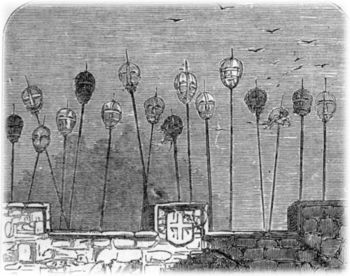
Possibly the most ambitious part of the proposal calls for a 20 foot high wall adorned with pikes to be built along our southern border. The severed heads of those trying to cross the border illegally would be placed on the decorative pikes as a reminder to those who would try to enter in the future.

headsonpikes

Nan Hypocritus, president and managing director of Christians Against Compassion and Empathy, an anti-immigrant group, told Reuters that her group was incredulous that President Obama would take such drastic unilateral action so close to the holidays.

“Thanksgiving is just next week, and Christmas is just around the corner!” said Hypocritus. “How dare he throw a wrench into the sacred holiday season by showing love and compassion to a group of brown people? We Christians have better things to do than worry about protecting immigrants from being torn away from their families and deported to God knows where! We have shopping to do and we are just getting geared up to act like a persecuted minority over the whole ‘War On Christmas’ fantasy! This is just outrageous!”

Although similar executive actions regarding immigration were taken by Republican presidents in the past, G.O.P. leaders are beside themselves over Obama’s orders and vow to make the new proposal law in the near future.

Speaker of the House John Boehner has lumped the new “Final Solution” Immigration Reform Bill in with an omnibus spending package that also features the repeal of Obamacare, mandatory fracking in national parks, the elimination of the EPA and the Department of Education, and the death penalty for Hillary Clinton for her role in the Benghazi conspiracy.

Poorer Nations Are Growing Renewables Nearly Twice as Fast as Richer Ones: Abbott refuses to contribute to the Green Fund and has reduced Foreign Aid. He wont tell you this fact.

According to a new study from Climatescope, developing nations are far outpacing developed ones when it comes to the installation of new renewable energy infrastructure.

The study monitored 55 developing countries, including emerging economies like China, Brazil, South Africa, India and Kenya, and found that between the years of 2008-2013, developing nations saw 143% growth in renewable energy, versus only 84% in developed countries.

Economic development is derived from a number of measures, including GDP, average income, and general standard of living. The Human Development Index classifies countries based off those measures (Image Courtesy of Wikipedia/Wikimedia Commons)

The Climatescope project was originally put together in 2012 by Bloomberg’s New Energy Finance division, the U.K. Government Department for International Development, and the Inter-American Development Bank Group to track the growth of renewable energy in 26 Latin American and Caribbean nations.

This year, they added 19 African countries as well as 10 in Asia to give a wider look at the emergence of renewable energy worldwide.

From 2007 to 2013, those 55 developing countries added a total of 142 gigawatts of renewable energy to their power grids, and more than doubled their total investments in renewable energy, from $59.3 billion to $122 billion.

They also passed a combined 450 legislative measures relating to renewables, according to the Climatescope report.

Indian Prime Minister Norendra Modi has led a huge solar push in the country over the past few years (Photo: PTI)

So why are these developing nations investing in renewables so much faster than the developed world? Well usually it just makes financial sense, according to Ethan Zindler, an analyst in Bloomberg’s New Energy Finance department.

In a phone interview, he used Jamaica as an example. In Jamaica, wholesale power costs about $300 per megawatt-hour. According to Zindler, the country could generate the same amount of power using current solar panel technology for about half that price.

He also added that Nicaragua could similarly cut their costs in half by using wind power (the feature photo of this article is a wind farm on the coast of Lake Nicaragua).

“Clean energy is the low-cost option in a lot of these countries. The technologies are cost-competitive right now. Not in the future, but right now,”

he said.

Read the full story from Bloomberg.

Also, make sure to check out the Climatescope 2014 Report, which features cool interactive maps that rank the countries in terms of their overall investment in renewables!

‘Racist’ Australians hard to crack after reality show First Contact has mixed success: You would never see this on a commercial station.

Outspoken Sandy did not appear on the reunion show after an early exit.

Outspoken Sandy did not appear on the reunion show after an early exit. Will we have seen the last of her or will it be pay to say on commercial media?

REALITY show First Contact has had mixed success in changing the “racist” views of its Australian stars.

Opinionated Sandy skipped the Insight reunion last night, after leaving the social experiment program before the halfway mark.

And fellow guinea-pig Marcus told the program that he didn’t think he had learned anything about Aboriginal life, although he was happy to be a “vessel” for others.

Marcus, right, said he didn’t think he had learned anything from the show.

Marcus, right, said he didn’t think he had learned anything from the show.

Sandy, who became notorious for her outspoken comments on Aboriginal life, said her views were not changed by the program.

Her absence from last night’s recap show was notable, suggesting the experiment had done nothing to alter her views on indigenous people.

During the show, she made comments including “Give them houses and they burn them down. You think that’s racist, well I don’t f***ing care.”

She could not understand life in the small rural community the group visited, saying: “You don’t just stay in a place like this forever. It’s beautiful. You come to places like this for holidays. It’s just bush.”

Sandy with Bo-Dene, whose life was turned upside down by the program.

Sandy with Bo-Dene, whose life was turned upside down by the program

Aboriginal leader Marcus Lacey, who shared his life with the six guinea pigs on the show, told Insight host Stan Grant that he found Sandy’s views “very hurtful”.

“We came from here, so, our dream and goal is to be here. The land owns us,” he added.

Marcus said he thought the series had “achieved its purpose, not mine”. But he added: “I guess my aim was to be a vessel more than anything. Just to be there so people can live through me on this show, or learn through me on this show, which is hopefully what happened.”

Another of the show’s stars, Alice, said her sympathetic views towards Aboriginals remained mainly unchanged, although she “had her eyes opened to the complexity and to the magnitude of all the problems”.

But Bo-Dene, Trent and Jasmine all underwent a dramatic transformation.

Jasmine also had a revelation, saying she thought her upbringing had drilled certain view

Jasmine also had a revelation, saying she thought her upbringing had drilled certain views into her

Bo-Dene became one of the show’s stars after her beliefs that Aboriginals get a free ride from welfare were completely broken down.

She admitted: “Watching the series back, the first couple of episodes, I was like, ‘It’s such bad things to have said’. I found it hard to watch it, I was so ashamed of the things I said.”

And her world as she knew it altered even further when she returned from filming the show to find her husband had left her.

“My outlook on life had changed, and it seemed too that my life had changed without me even having a say in it,” she wrote on SBS News.

“The trip showed me that I do have the strength to stand on my own two feet. If I was able to connect with so many inspirational people, surely I could handle this.”

Police officer Trent Giles says he hopes he can instil new attitudes in his workplace.

Police officer Trent Giles says he hopes he can instil new attitudes in his workplace.

Trent is trying to apply what he has learnt back at work as a policeman. “I said some pretty terrible things to start, and watching back, you know, episode one, it’s confronting,” he said.

But he admitted there was a long way to go with other Australians who shared his former negative views.

“Just like the six of us, when we started, we had certain opinions and prejudices and unfortunately they didn’t have the opportunity that I had.”

Jasmine took a little longer than Trent and Bo-Dene to be persuaded.

She said she felt that her views had been “drilled in her” when she was growing up in Perth.

“I guess I wasn’t open as much as the other guys and it took me a long time, but I got there,” she said.

Host Ray Martin has said he was inspired to do the show after witnessing shockingly racist scenes in his childhood, including Aboriginal children being hosed down at an NSW pool.

Alice, left, already had positive views towards the Aboriginal community.

Alice, left, already had positive views towards the Aboriginal community.

Stan Grant said he had been somewhat critical of First Contact, because: “I wonder if a format like this can wrestle with the complexity of the issue.”

Rachel Perkins, from production company Blackfella films, said: “Overwhelmingly people have been really positive about it, and particularly indigenous people because I think, you know, we know that there are these things said about us.”

She said it was a chance for indigenous people to address “the myths about Aboriginal Australia”.

One Twitter user said the experiment had worked because it had “got people talking”.

The three-part documentary series has stimulated fierce debate across the nation and had a cumulative reach of 1,847,000 Australian viewers

‘Racist’ Australians hard to crack after reality show First Contact has mixed success

Outspoken Sandy did not appear on the reunion show after an early exit.

Outspoken Sandy did not appear on the reunion show after an early exit. Source: SBS

REALITY show First Contact has had mixed success in changing the “racist” views of its Australian stars.

Opinionated Sandy skipped the Insight reunion last night, after leaving the social experiment program before the halfway mark.

And fellow guinea-pig Marcus told the program that he didn’t think he had learned anything about Aboriginal life, although he was happy to be a “vessel” for others.

Marcus, right, said he didn’t think he had learned anything from the show.

Marcus, right, said he didn’t think he had learned anything from the show. Source: SBS

Sandy, who became notorious for her outspoken comments on Aboriginal life, said her views were not changed by the program.

Her absence from last night’s recap show was notable, suggesting the experiment had done nothing to alter her views on indigenous people.

During the show, she made comments including “Give them houses and they burn them down. You think that’s racist, well I don’t f***ing care.”

She could not understand life in the small rural community the group visited, saying: “You don’t just stay in a place like this forever. It’s beautiful. You come to places like this for holidays. It’s just bush.”

Sandy with Bo-Dene, whose life was turned upside down by the program.

Sandy with Bo-Dene, whose life was turned upside down by the program. Source: SBS

Aboriginal leader Marcus Lacey, who shared his life with the six guinea pigs on the show, told Insight host Stan Grant that he found Sandy’s views “very hurtful”.

“We came from here, so, our dream and goal is to be here. The land owns us,” he added.

Marcus said he thought the series had “achieved its purpose, not mine”. But he added: “I guess my aim was to be a vessel more than anything. Just to be there so people can live through me on this show, or learn through me on this show, which is hopefully what happened.”

Another of the show’s stars, Alice, said her sympathetic views towards Aboriginals remained mainly unchanged, although she “had her eyes opened to the complexity and to the magnitude of all the problems”.

But Bo-Dene, Trent and Jasmine all underwent a dramatic transformation.

Jasmine also had a revelation, saying she thought her upbringing had drilled certain view

Jasmine also had a revelation, saying she thought her upbringing had drilled certain views into her. Source: SBS

Bo-Dene became one of the show’s stars after her beliefs that Aboriginals get a free ride from welfare were completely broken down.

She admitted: “Watching the series back, the first couple of episodes, I was like, ‘It’s such bad things to have said’. I found it hard to watch it, I was so ashamed of the things I said.”

And her world as she knew it altered even further when she returned from filming the show to find her husband had left her.

“My outlook on life had changed, and it seemed too that my life had changed without me even having a say in it,” she wrote on SBS News.

“The trip showed me that I do have the strength to stand on my own two feet. If I was able to connect with so many inspirational people, surely I could handle this.”

Police officer Trent Giles says he hopes he can instil new attitudes in his workplace.

Police officer Trent Giles says he hopes he can instil new attitudes in his workplace. Source: SBS

Trent is trying to apply what he has learnt back at work as a policeman. “I said some pretty terrible things to start, and watching back, you know, episode one, it’s confronting,” he said.

But he admitted there was a long way to go with other Australians who shared his former negative views.

“Just like the six of us, when we started, we had certain opinions and prejudices and unfortunately they didn’t have the opportunity that I had.”

Jasmine took a little longer than Trent and Bo-Dene to be persuaded.

She said she felt that her views had been “drilled in her” when she was growing up in Perth.

“I guess I wasn’t open as much as the other guys and it took me a long time, but I got there,” she said.

Host Ray Martin has said he was inspired to do the show after witnessing shockingly racist scenes in his childhood, including Aboriginal children being hosed down at an NSW pool.

Alice, left, already had positive views towards the Aboriginal community.

Alice, left, already had positive views towards the Aboriginal community. Source: Supplied

Stan Grant said he had been somewhat critical of First Contact, because: “I wonder if a format like this can wrestle with the complexity of the issue.”

Rachel Perkins, from production company Blackfella films, said: “Overwhelmingly people have been really positive about it, and particularly indigenous people because I think, you know, we know that there are these things said about us.”

She said it was a chance for indigenous people to address “the myths about Aboriginal Australia”.

One Twitter user said the experiment had worked because it had “got people talking”.

The three-part documentary series has stimulated fierce debate across the nation and had a cumulative reach of 1,847,000 Australian viewers.

Host Ray Martin wanted to be part of First Contact having witnessed serious racism in his

Host Ray Martin wanted to be part of First Contact having witnessed serious racism in his youth. Source: SBS

Catch-up numbers on SBS’s On Demand service for the series are currently at 198,143.

SBS Director of Television, Tony Iffland said: “Over the past three days, First Contact has truly shone a light on the divide between Indigenous and non-Indigenous people in Australia. SBS and the program’s producers Blackfella Films are beyond delighted that so many Australians have come together to engage in debate and discussion about an issue that effects all of us.”

It was, at the very least, a life-changing journey for Trent, Jasmine and Bo-Dene.

“We only see a very small snippet of the connections, the personal connections, that we made with these people,” said Trent. “I’m a leader in this area … I can go into my workplace and start encouraging change — which is exactly what I want to do.”

All episodes of First Contact are available now on SBS On Demand and you can watch all three epsiodes on SBS 2 Saturday at 8.30pm. Interactive content for schools is available here.

Filed under:

A new model of government: The West pivots towards authoritarian control for economic security.

Prisoners guaranteed work through job training scheme in WA’s North West

Prisoners at Roebourne

Prisoners in Western Australia’s North West will be guaranteed full-time work after completing training courses while incarcerated.

Fortescue Metals Group has signed a memorandum of understanding (MOU) with the WA Government through the Department of Corrective Services to deliver the Vocational, Training and Employment Centre (VTEC) Fresh Start Program, with an initial intake of eight prisoners from Roebourne Prison over the next year.

It is an extension of the existing VTEC program, which is a $45 million federal project that aims to provide guaranteed employment for 5,000 Aboriginal people nationally.

Under the new program, Fortescue Metals Group (FMG) will provide a training course for prisoners at Roebourne TAFE via a day release scheme.

Upon release the students then begin site-based training for two weeks, after which they are guaranteed a job.

While people are within the walls of a prison we need to do everything we can to address their offending concerns, the reason why actually they keep coming back.

Corrective Services Minister Joe Francis

FMG chairman Andrew Forrest said the recidivism rate of Aboriginal offending was about 50 per cent and it was hoped the employment program would reduce the “revolving door of people going into jail and out of jail and into jail again”.

“We’ve just got to stop it and the best way to stop is to give people hope, self sustainability and you give that with employment,” Mr Forrest said.

WA Corrective Services Minister Joe Francis said Aboriginal people represented 40 per cent of the 5,400 people currently in jails in the state, describing it as “a heartbreaking waste of human capital”.

He said the program would help address that.

“While people are within the walls of a prison we need to do everything we can to address their offending concerns, the reason why actually they keep coming back,” he said.

“Whether that is getting them a driver’s licence, which we’ve recently invested $5.5 million into trying to get Aboriginal men within prisons driver’s licences before they get out, or to address their drug or violent behaviour, we need to take every single opportunity to seize that moment to correct their behaviour so we can stop them from coming back.”

Mr Francis said he hoped the program would eventually be rolled out throughout the prison system.

Job gives me something to look forward to: former offender

Desmond Mippy entered the existing VTEC program after a four-year jail term for a serious assault.

A year before he was imprisoned, he had walked out on his partner and 10 children while battling methamphetamine addiction.

“Before I did this program I’d not long come out of prison, I was in prison for four years, and now I’ve got a good job, and it’s good to support my family and be a role model,” he said.

“About 12 months before I went to prison I was on amphetamines, I walked out of the house, I didn’t want life to be the way it was and I started to make changes and I didn’t give up.”

Mr Mippy joined the VTEC program in April and by May had a job as a surface miner with FMG.

“It gives me something to look forward to, something to pass onto my kids and something for them to look forward to, to carry on what I’ve started, and hopefully be a role model.”

Mr Mippy said his advice to anyone in prison who was offered the opportunity to participate was simple: “Take this opportunity, grab it with both hands and go all the way with it.”

Employers pledge jobs for Aboriginal people

Also today, the Chamber of Commerce and Industry in WA (CCIWA) launched a jobs pledge forum for employers.

Chief executive officer Deidre Wilmott said they were in talks with about 75 WA employers to provide jobs for Aboriginal and Torres Strait Islanders as part of the federal VTEC program.

“We have pledged to train and place 300 Aboriginal people in guaranteed jobs over the next 18 months,” she said.

She said expanding the program into the prison system was incredibly important.

“It’s seen opportunities for people who have been incarcerated to actually change their lives during that time that they’re in prison,” she said.

“What we really want to focus on is making sure that people have those opportunities to change their lives.

“We can reduce the total number of people in Aboriginal prisons, it’s totally unacceptable that we have such a high proportion of our prisons being occupied by Aboriginal people.

“Training for jobs is a really important part of giving people that economic independence so they don’t find themselves in prison.”

Assange’s extradition order upheld by Swedish Court of Appeal

http://rt.com/uk/207275-assange-extradition-appeal-sweden/#.VG5TgMKkoSw.facebook

US and Australian Intelligence Agencies Dodgy Dossiers and Mass Surveillance:

Intelligence agencies are hollowing out Western democracies and their global credibility. Maybe one of our leaders could try and restore dignity to the political system by reining in agency overreach and prosecting wayward agency officials.

The agencies draw from derivative material they know to be tainted, because they themselves tainted it with hearsay, they quote a canned sound bite from a collaborator or present fabricated evidence and brazenly lie, on the assumption they will never be held to account, never face independent judicial scrutiny, be subject to discovery and sanction. They understand their power and the practical limits on others of constraining it. Merely their act of raising certain allegations or making insinuations can leave a lasting smear, even when retractions, corrections, clarifications or exaggerations are made. Even once a ruse is uncovered or facts corrected, toxic residue remains in some peoples’ minds. As Susan described it, in the worst case, if the target is convicted of sexual offences and goes to jail, they will be are at the bottom of the prison hierarchy and treated abysmally; in the best case, a niggling doubt will remain in some peoples’ mind. The target is damaged no matter the outcome, it is just a question of degree.

It is a widely held belief that this strategy is being used in the case of Wikileaks founder Julian Assange who has received political asylum and is currently confined in Ecuador’s London embassy, hounded by authorities in the US, Sweden, UK and Australia over unsubstantiated, contradictory, and retracted or concocted, statements regarding encounters he had with apparently consenting women.

Cringing

Tom Switzer, former editor of Spectator Australia magazine, yesterday urged his readers on the Guardian’s website to look deeper at Prime Minister Tony Abbott’s performance over the G20 weekend. What might have seemed to many observers “defensive, embarrassing, insular, cringeworthy” was for Switzer evidence of Abbott’s “down-to-earth quality”, of his charming and unpolished bluntness.

The focus of the “cringe critique” to which Switzer takes exception was an eight-minute talk Abbott delivered, without notes, to open a discussion at a G20 “leaders’ retreat”. Bill Shorten described it afterwards as “weird and graceless”, though he didn’t elaborate. Does Switzer have a point? It was a significant speech, delivered when the world was watching, so it is worth examining in depth.

“We are meeting in the Legislative Council chamber of the Queensland state Parliament,” Abbott began, “and back in the 1920s, the Queensland government abolished the Legislative Council because it was too much of a restriction on the power of the then premier, who was in the Legislative Assembly. So, this room symbolises the limitations on our power.”

The logic doesn’t follow. More plausibly, the room symbolises what Abbott would like to do to the current Senate, which is creating enormous difficulties for his policy program. Abbott’s frustration spilled over into his address to the G20 leaders:

“If I could kick off very briefly by saying that when I was elected – my government was elected – 14 months ago, I made four promises to the Australian people. First, that I would repeal the carbon tax, and that’s gone. Second, that I would stop the illegal boats that were coming to our country, and they have, thank God, stopped. Third, that we would start building roads in particular which had been long neglected in this country. Fourth, I said I would get the budget under control.”

This paragraph is the main focus of the “cringe critique”. It was a strange thing to say to a group of international leaders – especially when many of them agree with carbon pricing and see Australia as shirking its responsibilities under the Refugees Convention. Surely few could be expected to care about specific electoral promises Abbott had made from opposition.

But Abbott, as always, even in the midst of the political leaders of 20 of the most economically powerful states, was talking solely to his domestic audience. The speech was filmed, distributed publicly, and transcribed on his website. All this suggests that the speech was meant for wide public consumption.

The alternative explanation – that Abbott genuinely expected that the other 19 leaders present would respond positively to his presentation of himself as a kind of conviction politician, determined to deliver what he’d promised – doesn’t really bear thinking about. If true, it suggests powerful delusion on Abbott’s part.

“Now, I have to say this has proven massively difficult – massively difficult,” Abbott continued, referring to his efforts to get the budget under control, “because it doesn’t matter what spending program you look at, it doesn’t matter how wasteful that spending program might appear, there are always some people in the community who vote, who love that program very much.”

Ostensibly, Abbott wanted a 100-minute discussion about the problems of getting “important economic reforms” through the Senate. If he wanted tips, it’s unlikely he would have got anything useful from Vladimir Putin, an autocrat, or from Xi Jinping, the president of a one-party state.

No. What Abbott wanted was for his domestic audience to see him discussing deeply unpopular domestic policies at the world’s premier economic forum. He spoke of two issues in particular – his government’s planned deregulation of the university sector, which would mean “less central government spending and effectively more fees that students will have to pay”, and the $7 GP co-payment. For Abbott, the policies are good and right. What’s wrong is the way they’re being perceived. As with any problem of perception, what’s needed is a good rhetorical play.

The rhetorical trick of the speech was all about framing. Since the May budget, Abbott has always justified these and other policies in economic and fiscal terms. What better opportunity to drive home that message than at the G20, when presumably only serious economic issues of world importance would be discussed? And by mentioning those policies without seeking to justify them on first principles, Abbott hoped to create the illusion that their economic credentials, at least for “the most powerful and influential people in the world” (as he described them), were self-evident and uncontroversial. “In most countries this is not unusual,” Abbott said about the need to inject a “price signal” into primary health care, making eye contact with others in the room as if gathering global support for a so-called “reform” that would obliterate the central tenets – bulk-billing and universality – of Medicare, in Abbott’s mind a thoroughly Labor policy.

“I don’t have any magic answers to the problems we face,” Abbott went on. “But the more gatherings like this can affirm the importance of good policy.” Having all but exhausted his domestic options short of a double dissolution, which on current poll numbers he would lose, the global play is a last-ditch effort to win domestic support for policies that the public rejects not because they’re “harsh but necessary”, but because they’re harsh and unnecessary.

For a man whose worldview is not all that dissimilar to the DLP’s half a century ago, Abbott made a very grave error when he allowed his economic policies to be outsourced to the right-wing think tanks (like the Institute of Public Affairs, with which Switzer is associated). It’s meant that on both social and economic issues, Abbott is for middle Australia a kind of extremist, albeit one who seems pleasant and blokey enough in person.

Tom Switzer is just one of an army of right-wing commentators whose function is to protect Abbott and his government from too much negative interpretation, to insulate him from it by building around him a fortress of bullshit. Most of them are at News Corp, an entity whose writers go to extraordinary lengths to present Abbott as “statesmanlike” in his international dealings.

There’s an irony to their efforts. A statesman – according to dictionaries a “disinterested promoter of the public good”, a political leader who “exhibits great wisdom and ability” – is precisely the opposite of what Abbott is: yet another insular, domestically focused political leader who sees foreign policy and international engagement as a way to earn cheap domestic points. He’s the type of leader Peter Hartcher laments in his book The Adolescent Country. If we weren’t so deeply in the thrall of the free market, one might be forgiven for seeing something of the old Soviet spin in Team Abbott’s methods.

But in the end, Abbott’s attempt to co-opt the G20 for domestic ends didn’t work. His delivery, all Midnight Oil hands and missed beats, was truly cringeworthy. And it came among too many gaffes. His incorrigible Anglophilia (his words) had displaced his domestic radar during David Cameron’s visit on the Friday, and he fell again into the trap of lauding the achievements of the British in Australia without acknowledging the destruction and devastation it wrought on those who were already here in 1788 – and generations of their descendants. His bizarre threat to shirt-front Putin – a mixture of playing for domestic points and genuine brain-snap – overshadowed the whole G20 preparation period in the tabloid media, and made him look full of piss and wind when he couldn’t follow it through. His stubborn insistence that his Direct Action policy – conceived as a purely political counterpoint to the Gillard government’s carbon price – is more effective than the market-based schemes elsewhere, and that environmental issues should be kept separate from economic ones, looks stupider and stupider as the world grinds forwards, if far too slowly, on climate change. By the end of the weekend he’d managed to confuse China with Tasmania.

No, Tom Switzer and the “Kelly gang” at News Corp: statesmen don’t behave like this.

Tony Abbott, Andrew Bolt think they are original thinkers. The Uni Failure and the Rhodes Scholar belong to the Church of Ayn Rand welcome to the Tea Party

Putting partisanship ahead of patriotism; Why can’t Obama be a Conservative Republican Mom?

Tony Abbott was reportedly "seething" about Barack Obama's speech.

The backlash against US president Barack Obama shows that Australian conservatives were never friends with America as a whole – they were just mates with the American right, writes Michael Cooney.

How can Julie Bishop expect to make real progress in stopping the spread of terrorism while she undermines our alliance with the United States?

Her speech to the United Nations this week was a strong one – and a strong reminder of how valuable to Australia’s national interest a two-year place on the Security Council is proving. Yet within hours, the Foreign Minister was on national television saying she “understands” conservative fury at the American president.

What is going on?

Since President Obama left Australia, the Australian right’s attack on our ally has been astonishing. The Treasurer boasts of having ignored the president’s speech at the University of Queensland and mocks his troubles with an oppositionist senate. (These remarks, as well as failing to understand how important American executive power can be, seemed smarter before the Abbott Government’s own Senate fiasco over FOFA laws.) The Foreign Minister complains that the president doesn’t know enough about what the Government is doing to conserve the Great Barrier Reef. The Queensland Government whinges that it bent over backwards to help arrange the UQ address and this is the thanks it gets. Queensland state MPs are even considering sending a written complaint to the White House. (The Tsar has been warned!)

It’s not only politicians; conservative commentators have also piled in.

Peter van Onselen reports that the Prime Minister was “privately seething” about Obama’s speech – although not completely privately, if PVO has the yarn. Paul Kelly was so disoriented by the whole event that he briefly demanded Bill Shorten act on climate change – “What the hell is Australia doing?” he hounded an understandably perplexed Opposition Leader on Sunday morning TV. (Meanwhile, Greg Sheridan’s contribution on the topic quite defies paraphrasing.)

These are the people who roar treason at any sign of progressive dissent on foreign policy, yet are now utterly exposed – a conga line of hypocrites.

When was the last time an Australian government and an American administration had a relationship this bad?

John Howard was hardly a golf buddy of Bill Clinton’s, and wasn’t delighted with the level of US support to our operation in East Timor in 1999, but he knew where the alliance big picture lay. The MX missile crisis of the mid-1980s was smoothed over by the diplomacy of Kim Beazley and the good relationship between President Reagan and Prime Minister Hawke.

Maybe someone who lived through the Whitlam era (I was three in November 1975) would be able to compare the trans-Pacific tensions of that period. Were they worse than this? Not necessarily. Some argue that despite their obvious political differences, there was some basis of respect between Whitlam and Nixon – Whitlam’s grand China triumph must have appealed to the audacious half of Nixon’s divided heart – but there’s no doubting the period was a difficult one for the Alliance.

In any case, it’s certain right now is the worst moment in Australia-US relations in 40 years, and maybe longer. What’s more, and for surely the first time in our shared history, the personal relationship between the Prime Minister and the president is making it worse, not better.

I was in the galleries of the Parliament in November 2011 to watch President Obama speak on the future of democracy in Asia and the future of our alliance. One of the striking memories of that day was then opposition leader Tony Abbott’s “weird and graceless” speech: rather than sincerely welcoming our friend, he attacked the Gillard government, not only for its handling of uranium sales to India, but over the tax on mining rents and economic policy in general. This was a big clanger, with newspapers reporting his own backbench complaining they were “squirming in their seats” and commercial television hosts quizzing Tony Abbott the following day about his lack of respect.

Our visitors noticed too.

In office, Tony Abbott hasn’t got any better. As PM, he wrapped his first visit to the US in other travel, to France and Canada, and made great play in advance of his arrival in Washington of his plans to ally with conservative, coal-fuelled Canadian PM Stephen Harper against our ally’s goals for climate change action. Then, ahead of the president’s visit to Australia for the G20, Australian Liberals repeatedly spoke, on the record and off, about “the lamest of lame ducks”. Put aside for the moment the Australian Government’s own inability to pass budget measures, and put aside that the next Australian election is likely to come before the next US poll. Doesn’t the Australian national interest require a strong US and a strong president?

The reality of climate change policy is that the policies of Australia and the US have never been so far apart in an international forum as they were in Brisbane this month.

Not ever.

In turn, the reality is that six decades of conservative mythology about their support for the Australia-US alliance is just that.

Myth.

It turns out Australian conservatives never were friends with America as a whole – they were just mates with the American right.

With a liberal Democratic president in the White House, they are putting partisanship ahead of patriotism – and this doesn’t just threaten the Great Barrier Reef, it weakens the fight against terrorism as well.

And worst of all, it’s not a problem which will expire with the end of President Obama’s second term. Imagine what the next President Clinton will say when she visits.

Michael Cooney is executive director of the Chifley Research Centre, the ALP’s think tank. He was speechwriter to prime minister Julia Gillard. View his full profile here.

Arms dealers are setting up shop in Australia. There’s still time to reject these merchants of death Northrop Grumman, a leading US defence contracting firm, will launch a major Australian expansion next month. We’re a bigger market for arms than you might think

northrop

It’s a good time to be in the weapons business. Three of the leading US defence contractors, General Dynamics, Northrop Grumman and Lockheed Martin, are all making unprecedented profits.

In December, Northrop will host an event at the Australian War Memorial to mark the company’s expansion into the Asia-Pacific region. It will be launched by Federal defence minister David Johnson. It’s a curious location because, as Crikey’s tipster drily noted, “without the endeavours of arms companies stretching back centuries, there’d be significantly fewer Australians for the War Memorial to commemorate”.

Northrop’s US-based corporate HQ decided in the last 18 months to open a major office in Australia. In March the company purchased Qantas Defence Services, a firm that provides engine and aircraft maintenance to the Australian Defence Force and global militaries. It was an $80m deal. In September 2013, Northrop bought M5 Network Security, a Canberra-based cyber-security outfit.

Northrop appointed Ian Irving as CEO of the Australian outfit in June, as part of a plan to capitalise on the “strategically important market” of the Asia Pacific. The centrepiece of that plan is to give smaller enterprises in the defence space access to Northrop’s global supply chain. That’s nothing to be sneezed at: they’re a vital defence contractor for the US military and the company’s weapons have been used in Iraq, Afghanistan and beyond.

Irving explained to Australian Defence Business Review in July that he was pleased to sell the Australian government the firm’s MQ-4C Triton surveillance drones. The machines will be used to monitor the nation’s borders and protect “energy resources” off northern Australia. Northrop Grumman Australia is set to make up to $3bn from selling the drones. Countless European nations are equally desperate to use drones to beat back asylum seekers.

Despite all this, a Northrop spokesman assured me that the company’s growing presence in Australia has no connection to the Abbott government’s increase in defence spending.

As Northrop’s Australian expansion makes clear, arms manufacturing thrives in an integrated global defence space. Australia is an important market for that other military powerhouse, Israel. In 2010 leading Israeli arms company Elbit Systems sold a $300m command control system to the Australian military. In August 2013 Elbit announced the $5.5m sale of “an investigation system” to the Australian federal police that was tested in the occupied Palestinian territories of the West Bank and Gaza.

That’s a trend that has become commonplace since the 9/11 attacks. As the Israeli newspaper Haaretz reported in August, “[Weapons companies] need to sell in the large international defence markets – where the products are scrutinized partly on the uses the IDF makes of them on the battlefield.”

In August pro-Palestinian activists climbed on the roof of Elbit’s Melbourne offices to protest its involvement in the recent Israeli military incursions in Gaza, after which the company’s share price soared. Amnesty International recently accused Israel and Hamas of committing war crimes during the war.

Defence contractors rarely stop with the profits from war and colonisation. In Britain, Lockheed Martin is now reportedly bidding for a massive National Health Service contract worth $2bn. In the US, Northrop was a presenting sponsor at a recent Washington DC event for honouring war veterans.

It’s rare to read about arms trading in the Australian press; even the country’s largest privately owned small arms supplier, Nioa, rarely registers beyond the business pages. Our politicians are also loathe to speak out, and are happy to have factories and bases in their electorates, and donations for their parties.

The Greens do oppose military trading with Israel. Leader Christine Milne tells me that, “given the continuing disregard by Israel of international calls to halt settlement expansion in the occupied Palestinian territories and the disproportionate response used against the people of Gaza, the Australian Greens have repeatedly called on the Australian government to halt all military cooperation and military trade with Israel”.

Greens senator Lee Rhiannon spoke in parliament last year, saying “if any of the military equipment that Australia has sold to Israel has been used in Israel’s deplorable wars in the Gaza strip which has killed thousands of civilians, the Australian government should be held accountable for this”.

Australia, the 13th largest spender on arms globally, has a choice. We can keep embracing these merchants of death, and the botched deals and waste that they bring. Or we can reject the the rise of Northrop and its associates, and refuse to participate in an investment culture that continues a cycle of violence both at home and abroad.

Listen up, white people Aboriginal communities in Western Australia are being closed because they’re “unviable”. No, it’s not all about you, white people

firstdog whitepeople

Only 38% of Australia’s Ebola funds have made it to Africa, group claims. Is there anything noble about this government?

A healthcare worker dressing in protective gear before entering an Ebola treatment center in the west of Freetown, Sierra Leone.

Advocacy group One says the global response to the virus has been too slow and funds are stuck in treasury departments

Only 38% of the funds pledged by Australia to fight the Ebola crisis have been distributed to stricken west African countries, an international advocacy organisation has claimed.

Campaigning group One, which boasts over six million members worldwide, has created an online Ebola tracker tool which shows how much funding, equipment and health personnel have been pledged by donor countries and large foundations.

Australia has committed a total of $42m to tackle the disease, $20m of which will go to private Australian company Aspen Medical to operate a UK-built medical centre in Sierra Leone. Another $18m has gone to the United Nations’ Ebola response.

Spokeswoman for One, Friederike Roder, has told Guardian Australia that less than 40% of the money Australia has already committed has made it to Ebola-stricken communities.

“We don’t need words, we need action,” Roder said. “Australia’s response, like the response of many other countries, has been too slow.”

But Roder admits there’s a “lack of clarity” around how and when the money is distributed, saying after countries make their pledges, “no one knows if it is then left in Treasury departments”.

Labor said the government’s response to Ebola leaves Australia in danger of being internationally isolated.

Tanya Plibersek, the opposition foreign affairs spokeswoman, said: ”As the current president of the UN security council, the Abbott government must explain exactly how it is providing leadership on the fight against Ebola, especially given the security council resolution Australia co-sponsored and voted for back in September calling on all nations to do more,”

Australia co-sponsored a UN bill to call for a better global response to the virus, which has killed more than 5,000 people worldwide.

“At the G20 in Brisbane last weekend, the world’s most powerful leaders called on the international community, including Australia, to do more to get the Ebola crisis under control,” Plibersek said.

G20 leaders issued a statement on Ebola following the two-day conference, despite Tony Abbott’s efforts to keep the international meeting focused on economic issues.

Roder welcomed the statement but said the meeting failed to deliver substantive goals in stopping the spread of the disease.

“It [Ebola] made it onto the G20 agenda way too late,” Roder said.

World leaders needed to set out a timetable for how services and resources would be delivered to disease-affected communities, she said.

The comments come as aid agencies defend the slow rollout of services at a newly-built hospital in Sierra Leone. The 80-bed facility, which has been functional for the last fortnight, has only seen 18 patients so far.

Roder said there needs to be more transparency of how resources are being used.

“We need better international coordination. There’s very little information about what’s happening on the ground in west Africa,” Roder said.

The advocacy group has released a video featuring celebrities such as Morgan Freeman and Matt Damon to raise awareness of the disease

TURC corrupted? The Kathy Jackson fix

TURC corrupted? The Kathy Jackson fix.

Life as an irregular student: The pitfalls of deregulated universities

View image on Twitter

Deregulating university fees will penalise students with learning disorders, increase inequality and send Australia backwards as a nation, writes Tim Lubcke.

On the way to work this morning, as I write this, I heard Christopher Pyne again defending the deregulation of university fees on ABC local radio. I had to switch stations. It seems to me that those in favour of it have lived a fairly benign existence and are honestly unable to see how much they risk undermining further Australian prosperity.

I know what it’s like to come at education with an irregular brain.

I was perhaps six or seven when a teacher slid the piece of paper in front of me. It was the first test of my schooling life.

When he told us to turn over the page and begin, what would dominate the next 15 years of my life came crashing home. The page was unintelligible. I just didn’t get what was being asked of me. It was like being handed a foreign language with everyone around you expecting you to understand it.

I panicked and after some time, broke down. More than two-and-a-half decades later, I still vividly remember that moment.

Dictation was by far the most difficult task I experienced over those early years, however it wasn’t isolated to one subject. Year after year teachers lamented to my parents about my “stubbornness” in class and refusal to learn. One teacher said it looked as though I wrote with my feet.

If it wasn’t for the sanctuary of the private world of my bedroom, I would have believed that I was stupid, as I was being told in school. At least in that one place – and the support of my parents with text books and equipment – I could learn about the natural world, and play with electronics and basic mechanics.

From that, I knew that I was able, but needed to learn by myself.

By the time I looked towards tertiary education, in my early 20’s, an astute teacher recognised the traits of dyslexia. She insisted that I was tested, which confirmed as much. While some suggestions came of it ‒ such as using computers rather than hand writing ‒ the central point was that I had learnt how to learn for myself.

Successfully landing a place in a degree in environmental science, I was not a great student. In the first couple of years, I passed with the occasional credit. Yet when I was given autonomy in my final year of the courses, that’s when I began to prove my value.

Dyslexia is nothing more than a story of a square peg and around hole. When I was able to define my working style, I could flourish.

Since the completion of my degree, I’ve gone on to demonstrate my value.

Although I completed a degree focused on ecology, I quickly moved towards data management, and technical project development and maintenance. I’ve designed a number of automated data validation and analysis packages, project databases, websites, remote research facilities and portable chemistry devices.

Again, it has been in those roles where I have been granted autonomy that I’ve added the most value in environmental research.

The discussions regarding the deregulation of university fees, however, I recognised would have stopped me entirely from pursuing this path.

Schooling has been hard and completely unenjoyable from start to finish in my case. I went on because I saw the value to my career. That value would be lost if I had acquired debt that I would live with for decades; seven years on, I have just under half of my HECS debt remaining as it is.

I’ve also heard talk in interviews from senior figures of various universities suggesting that deregulated university fees would allow them to provide a range of scholarships to students from humble backgrounds. That sounds nice, but I know that an unremarkable dyslexic student such as I was would be extremely unlikely to receive this particular boost.

I come from a working class family, where I am the only one to have even completed secondary education. I am very conscious of debt and how debilitating it can be.

I can confidently say that I would not be where I am today if Howard deregulated university at the turn of the century prior to my application to my course.

Earlier this year, I wrote about the failing green sector — something that has led me to contemplate my career path and indeed the possibility of completing another degree to move into a more secure career. Yet, I am unwilling to start something that might grow in exponential cost as I go further along the course. Uncertainty has left me in limbo.

Deregulation of university fees strips the Aussie fair go from education and I feel for my children, who would be stuck with very difficult choices as young adults.

The value of a candidate is impossible to define on purely academic measures, as I hope my career thus far illustrates. Moreover, with the recent passing of Gough Whitlam, we are reminded just how much it changed the lives of Australian’s (especially women) in opening the doors to universities in the 1970’s through free education

Debt is debt and the most responsible students will be wary to take on too much of it. We risk generations of hardworking, diligent students avoiding such debt and in turn, growing skills shortage which inevitably will take us backwards as a nation.

Russia at the crossroads

Russia at the crossroads. 53992.jpeg

The G20 summit which just ended revealed, by its actions and omissions, a great deal about the present New World Order (NWO) of neoliberal globalization and, even more significantly, about Russia’s uneven relationship with this criminal Order. Criminal, in a double sense. First, because of its millions of victims, as a result of the military violence used by the Transnational Elite (TE–i.e. the network of elites mainly based in the G7 countries which runs the NWO)[1] in its systematic effort to integrate every corner on the earth into this Order. That is, the victims of the wars it launched in the last quarter of a century or so with this aim (Yugoslavia, Iraq, Afghanistan, Libya) as well as of its proxy wars (Syria and Ukraine). Second, because of the even greater number of victims who have suffered as a result of the economic violence that the NWO of neoliberal globalization had institutionalized all over the world.

This was the direct result of the opening and/or liberalizing of markets for commodities, capital and labor and the consequent destruction of the social welfare systems imposed through the various structural adjustment programs by the international institutions (IMF, World Bank etc.) controlled by this elite, as well as by economic unions like the EU. Such programs were forcing people in the South to try to emigrate en masse to the North, where they had to compete with local workers for badly paid jobs under exhausting working conditions, thanks to the ‘flexibility’ of labor-another basic element of neoliberal globalization–that was bringing down wages generally and attracting consequently the hostility of (uninformed) local workers.

It was through this process of opening and/or liberalizing the markets for commodities, capital and labor that neoliberal globalization, (which was instigated by the Transnational Corporations-TNCs), brought about the economic growth that has been achieved in the last quarter of a century or so. This process has led also to the mass movement of capital to countries like China and India, which were offering cheap and flexible labor, creating the corresponding economic ‘miracles’ in these countries, as well an inevitable de-industrialization in the North. Byproducts of the same process of neoliberal globalization are the ‘zero hours’ contracts, the generalization of part-time/occasional employment and the essential freezing of real incomes in the North and almost slavery conditions in vast zones of the South, particularly in the cases of ‘economic miracles’. No wonder as a result of this kind of growth, resulting in prosperity for the few and desperation for the many, according to the latest statistics, the concentration of income and wealth in fewer and fewer hands has led to the present unbelievable situation when the richest 1 percent in the world (i.e. the population of the two largest cities in the world, Tokyo and Seoul), share almost the same wealth as the rest of the planet![2]


Yet, the G20 Communiqué of 2014 announced on 16 November was a pure celebration of neoliberal globalization with almost every single clause of it extolling the basic principles on which the NWO is based. Just indicatively[3]:

  • We are implementing structural reforms to lift growth and private sector activity, recognizing that well functioning markets underpin prosperity (clause 2)
  • Trade and competition are powerful drivers of growth increased living standards and job creation… We reaffirm our longstanding standstill and rollback commitments to resist protectionism. (clause 8)
  • To help business make best use of trade agreements, we will work to ensure our bilateral, regional and plurilateral agreements complement one another, are transparent and contribute to a stronger multilateral trading system under World Trade Organization (WTO) rules. (Clause 16)

It is important to note that this Communiqué was signed not just by the TE countries and their associate and client regimes but also by the BRICS countries. This is far from inexplicable given that, apart from Russia which under the Putin presidency has taken measures to protect Russia’s industry, (getting Russia into frequent frictions with the WTO in the process) and to control the activities of Transnational Corporations, the other BRICS countries and particularly the economic miracles of India and China have based their entire economic development on the sheer exploitation of local labor by TNCs and local oligarchs. Of course, Russia too suffers the consequences of the terrible legacy of Yeltsin–a period justifiably celebrated by the TE– who presided over the pillage of the country’s social wealth and the complete destruction of a social services system which had indeed managed to meet the basic needs of all its citizens.[4] However, it is well known that although the oligarchs do still exercise significant economic power and (indirectly political power as well, through the ‘globalist ‘ faction of the Russian elite) they have seen their economic power curtailed as a result of social legislation and their direct political power controlled by the Kremlin. In other words, Putin’s presidency restored Russia’s economic and national sovereignty, unlike the other BRICS countries, which never enjoyed for long such periods of sovereignty, apart from China during the Maoist period. That was a crime for the TE, as the NWO is based exactly on the abolition of economic sovereignty of every country integrated into it, and, by implication of its national sovereignty as well. Instead, a transnational sovereignty has been created, which is shared by the elites that constitute the TE.

Yet, although the G20 Communiqué was very wordy in describing the advantages of free trade and open, as well as ‘flexible’, markets it did not have a single word to utter on the greatest violation of these market principles today, i.e. the severe sanctions imposed by the TE not just on the ‘usual suspects’ (Iran, Syria, Cuba etc.) but even on the most important member of the BRICS: Russia itself! All the same, the fellow BRICS countries, with whom Russia is supposed to build an alternative pole according to the liberal “Left”[5] (which does not object to the neoliberal globalization adopted by BRICS but just demands some ‘improvements’) did not dare even to express their objections to them and demand their abolition. This was, of course, far from accidental as the economic ‘miracles’ of these countries was very much the result of the movement of significant TNCs activities to these countries, which could easily move their operations to other ‘paradises’. Every country integrated into the NWO begs them to invest in their own territory in order to create some growth and investment opportunities.[6] Furthermore, it can easily be shown that even if the economic ‘superpower’, China were to decide to dump its huge holdings of foreign reserves to ‘punish’ the U.S, it would be China that would suffer an economic catastrophe whereas the U.S could easily find other buyers, as long as the U.S dollar continues to be generally acceptable as a reserve currency.[7]

However, economic sanctions are a particularly effective form of warfare against a country like Russia, whose advanced technology and size makes a military attack against it inconceivable, if not suicidal, even for the TE and the all-powerful U.S army. No wonder that it was economic warfare which gave ‘victory’ to the West in the Cold War (although there were internal contradictions involved as well) and it is exactly the same success story that the TE attempts to repeat now. Particularly so, when the chances of success of such an economic war against Russia are much higher at present than in the 1980s. This is for two main reasons.

First, because an economic war against Russia is much easier than the similar war against the USSR for a variety of reasons shown elsewhere[8] but mainly, because Russia is much more integrated into the NWO than the USSR (though not as much as the other BRICS countries). Although sanctions against Russia do have an effect on the TE countries, clearly, the benefits that the latter will have in the event it manages to integrate Russia into the NWO as a subordinate member, (so that the pillage of the Yeltsin era could continue unabated) far outweigh any side effects of the present sanctions. Furthermore, as I had shown in another Pravda article, the present dramatic fall (and continuing decline) in the oil price is also part of the same economic war against Russia.[9] The effects of this economic warfare against Russia are clearly to be seen already in terms of the significant fall in the value of the ruble and the consequent domestic inflationary pressures, which might lead to deflationary policies and some recession and so on.

Second, because Russia is much more vulnerable to an economic war–than the USSR– since, as a FT analyst pointed out recently, Russia, unlike the USSR, “does not have an alternative ideology to sell”.[10] However, this claim will not be true if Russia adopts the ideology of the Eurasian Union (EEU) in its original conception, as an economic union of sovereign nations (politically, economically, culturally and so on) which aims at the creation of an alternative pole to the present NWO of neoliberal globalisation. This clearly implies a break with the present international institutions controlled by the TE which impose the rules of neoliberal globalization (WTO, IMF, World Bank etc.). Yet, an alternative pole is at present more imperative than ever. Not only for socioeconomic reasons, as it would allow member states–if it is organized on the basis of the above principles– to impose social controls on markets and create new social welfare institutions and socialized industries controlled by employees and citizens’ bodies. But, also, for geopolitical reasons, as it is obvious that Ukraine is in fact the pretext used by the TE to subordinate Russia.

Alternatively, if Russia continues remaining a member of the NWO, it will have only two options: either full subordination to the TE, or resistance with its hands tied. Particularly so as resistance under conditions of an economic war could easily lead to social unrest, with the decisive help of the TE and its organs within the fifth column, i.e. the globalist faction within the Russian elite.  In that case, even resistance will not be possible to take the form of a new Patriotic War and, instead, it may well take the form of a ‘velvet revolution’!

In conclusion, Russia is the only country today that can lead the struggle for the building of a really alternative pole to the NWO, provided however that this pole would consist of countries committed to alternative principles of socio-economic organization, like the ones described above. The sovereign nations that will choose to be its members should therefore discard the principles on which the present NWO is based and be committed instead to self-sufficiency (at the economic union level, something that would imply complementarity within the union). Of course this should not preclude bilateral trade relations with, for instance, BRICS countries, which prefer not to break relations with the NWO.

Russia stands once more at an historic crossroads and not only its own fate but also that of the entire world will be determined by the decisions it takes, i.e. whether a new long period of Dark Ages will emerge, or whether instead the foundations will be set for a real society of self-determination.

The Age Business News Markets Quotes Portfolio Money Property Focus Small Business Executive Style Compare & Save Events You are here: Home BusinessDay Media & Marketing Search age: Search in: Business Coalition has ‘ideological program’ to sell off ABC and SBS, says Malcolm Fraser

Malcolm Fraser says selling the ABC and SBS would be "lousy" politics.

The Abbott government’s push to double advertising on the SBS during peak viewing periods is part of a plan to sell the public broadcaster, former Liberal prime minister Malcolm Fraser says.

Mr Fraser criticised the government’s cuts to the SBS and the ABC, which total more than $300 million over five years.

“Forced cuts from the ABC and SBS … it is part of a whole ideological approach, which to me is to ultimately get rid of publicly funded broadcasting,” Mr Fraser said.

“The government does not believe in government activity. They’re not prepared to say so straight out in relation to ABC and SBS, because both are too popular.”

Mr Fraser’s comments after the boss of Ten Network Holdings Hamish McLennan said the government’s proposed changes to SBS’s advertising structure was creating a “fourth free-to-air network by stealth”.

Communications Minister Malcolm Turnbull said government would seek to average out the SBS’s current advertising limit of 5 minutes an hour over the day, allowing it to double it in peak viewing periods. This would increase the broadcaster’s “savings” back to the federal budget to $53.7 million, or 3.7 per cent, over five years, he said.

“[That is] assuming that the additional revenue to the SBS from advertising changes amounts to $28.5 million over five years,” the minister said.

But the commercial free-to-air networks have disputed the government’s figures, saying doubling advertising during peak would rob them of more than $200 million.

Mr Fraser said he was concerned that ongoing cuts and more advertising on the SBS would eventually lead to the government privatising the broadcaster.

“They’ll say ‘what’s the point, you’re behaving like a commercial [broadcaster], you’re getting your money the same way’.

“If there is any value left, they will sell it to somebody or if there is no value left they’ll wind it up,” he said.

“We are seeing an ideological program designed to get rid of both [the ABC and SBS].”

Mr Fraser said it was “lousy” politics and that the government did “not accept that there were some things that the government needs to do if they are going to be done well”.

“I would like to see the ABC operating, certainly throughout Asia, with the kind of reputation that the BBC holds worldwide. And the BBC is one of the most reliable news reporters. It always has been and that’s good for Britain.

“The ABC is the only organisation that can do that for Australia.”

Mr Turnbull defended the cuts on Wednesday, saying “the work I’ve undertaken with both broadcasters is about more than repairing the [federal] budget, it is also about reform that will modernise both organisations, pave the way for productivity gains and ensure our national broadcasters are focused on good business practices for the long-term”.

Mr Fraser’s comments were at odds with commercial network bosses, who say that the ABC should be able to absorb a cut over five years.

John Hartigan, chairman of regional TV broadcaster Prime Media and former News Limited boss, welcomed the Abbott government’s push for greater financial transparency and governance at the national broadcaster and also its proposal to strip Mark Scott of the combined role of ABC managing director and editor-in-chief.

“I applaud the fact that editorial responsibility is finally being split or will be split, and even more so, the directors now will have to not sit on the fence,” Mr Hartigan said.

“They have got to be active. That’s what boards are in place for to represent their constituency, and finally they will have to put up or shut up. You just can’t hide. There is no place to hide in today’s transparent world.”

 
Filed under:

Manifesto for a pogrom: hostility to resettled refugees grows on Nauru Refugees settled on Nauru woke on Monday to find an ominous letter, signed “Youth of Republic of Nauru”, had been delivered overnight. Copies had been left at shops, homes, workplaces employing refugees…

Nauru’s culture of hospitality once applied to all, including the asylum seekers who arrived in 2001 to a dance of welcome, a tradition depicted on this stamp. Refugee resettlement has changed all that. Author provided

Refugees settled on Nauru woke on Monday to find an ominous letter, signed “Youth of Republic of Nauru”, had been delivered overnight. Copies had been left at shops, homes, workplaces employing refugees and a restaurant, as well as at Fly Camp where male refugees are held and at the family camp and houses where young unaccompanied refugees live. Copies were thrown over the detention centre fence, erasing the distinction between recognised refugees settled outside and those still in detention under an agreement between the Australian and Nauru governments.

The distribution of the letter points to an orchestrated campaign, rather than a spontaneous individual act of intimidation.

The letter states:

“… we warn Refugees to Go Away of our country and just to hell with all your concerns if not, get ready for the bad things happening and waiting ahead.

It contains disturbing resentments and accusations:

Our women, girls and daughters are having contact with refugees and having affairs with them and we can never see our women having fun with refugees and neglecting locals.

It warns that:

… we can see clearly in near future refugees will be the leading and ruling people and will make local community people their slaves.

Such charges are characteristic of hate manifestos designed to mobilise communities against targeted groups. They are recognisable as the grievances that historically inform racist propaganda. The aim is to scapegoat and intimidate target groups and incite violence against them with the objective of removing them from the community.

We warn our Corrupt Government as well Australian Government to take away your rubbish (refugees) and leave our country, otherwise there can be worse situations for refugees as you can see these days.

The letter threatening refugee settlers, which was circulated on Nauru. Author provided
Click to enlarge

The reference to “rubbish” articulates precisely the logic of ethnic cleansing.

The phrase “as you can see” is a chilling reference to acts of thuggery against unaccompanied juvenile refugees, to whom a particular duty of care is owed. Living on their own in isolated locations, these vulnerable young refugees have reported being harassed, intimidated and physically beaten by groups of men on motorbikes.

These attacks were reported to authorities, including police and Save the Children, which is contracted to care for the refugees.

After seeing the letter, refugees again reported their fears to these authorities. The government has dismissed their concerns. They have not received any guarantees to safeguard their welfare and remain in great fear.

Australia in denial of its responsibility

Nauruan authorities reportedly responded that Australia’s Department of Immigration and Citizenship (DIAC) should be the one to address the refugees’ concerns. Australian Immigration Minister Scott Morrison has already washed his hands of his obligations. His spokesman has stated that any attack on a person settled on Nauru “is wholly a matter for Nauru”.

This is a blatant abrogation of responsibility. In the international context, it demonstrates a total disregard for the spirit of the Refugee Convention. Regionally, it evidences a disturbing indifference to the volatile and increasingly violent conditions that Australian policy has generated in neighbouring states such as Papua New Guinea and Nauru.

By exploiting its political and economic power over former Australian protectorates for domestic political ends, Australia has created conditions that serve to foment unrest with potentially lethal consequences.

The letter states:

… we cannot see and tolerate that Australia Government headache (refugees) [is] making our lives crashing and bringing down to the ground.

In other words, even as the letter scapegoats refugees, it holds Australia responsible for the new elements introduced to “our small and congested community”. It argues that:

Nauru is a conservative country, it is not a multicultural country so resettling refugees means that inducing [sic] culture from different countries and we think that we are never been ready for that.

Tony Abbott and his government share responsibility for policies that are poisoning Nauru’s friendly culture. AAP

Detention camps and their social and physical infrastructure – personnel, equipment, environmental features – are visible markers of Australian power. Their imposition compounds the legacy of Australia’s colonial impositions, one of irreversible environmental destruction and serious economic and political damage.

A once welcoming culture poisoned

In diagnosing the nativist sentiment of this letter, we wish to emphasise the dangerous conditions Australia has irresponsibly engendered in a small and vulnerable neighbour. Already disadvantaged, Nauruans are being called upon to assume Australians’ responsibilities. Our failure to fulfil our international obligations to refugees within our own expansive borders and our outsourcing of these to small, resource-poor societies lies at the heart of the ugly and violent sentiments expressed in the letter.

Such sentiments represent an erosion of Pacific communities’ traditional values of hospitality. At a recent Australian Studies conference, colleagues from the region voiced distress at this perversion of core aspects of their societies and cultures. In 2001, when the first asylum seekers landed on Nauru under the Pacific Solution, Nauruans greeted them with a welcome dance. Today Nauru and Australia are both harsher and lesser societies.

The cultivation of nativism in place of values of generosity has taken a disturbing turn on Nauru. Several refugees have expressed the sense that underlying political agendas are driving it: “we are just being kicked around for politics”.

We call on Minister Morrison and DIAC to assume their ethical and legal responsibility to protect unaccompanied minors and other recognised refugees whom the Australian government has placed on Nauru. Australia should immediately reassess a policy that has proved so destructive in its effects, as refugees continue to be resettled in a climate of fear and uncertainty.

The letter campaign is the latest chilling symptom of the toxic effects of Australia’s “no advantage” policy. That it invokes the horrific spectre of ethnic cleansing is an indictment of the great wrong we have perpetrated in our region.

The incredible shrinking Malcolm Turnbull and the ABC Sell-out

The incredible shrinking Malcolm Turnbull and the ABC Sell-out.

How many people need to tell a lie in order for us to believe there was no lie in the first place nor a broken promise. We’ve got your back Tony whether or not we want to.

The Gospel According to Bolt

BOLT 3

The Abbott Government must now change or die.

Following on from the grilling Alan Jones gave Tony Abbott on his talkback program. Andrew Bolt decided on Tuesday to weigh into the discussion about the poor performance of the government. At first glance one might say, fair enough. Putting aside the fact that Bolt and Jones write on the basis of payment for controversy, Bolt does make some valid points. He covers a wide range of topics from foreign policy to media bias. I think I agree more often than not. Did I just say that?

But there is one glaring omission. The Prime Minister seems to be responsible for nothing. It’s everyone’s  fault but Abbott’s. How can this be?

What follows is a transcript from Bolt’s blog. My comments are in italics.

The Abbott Government falls further behind in Newspoll:

In two-party-preferred terms, based on preference flows from last year’s election, Labor leads by 55 per cent to 45 per cent. The ALP’s third consecutive rise in two-party terms means the opposition has been in front of the -Coalition on this measure for 14 successive Newspolls.

I still believe this overstates the margin, and the reality is somewhere between Newspoll and Essential Media’s 48 to 52 per cent. But there is no disputing the Government has a serious problem.

At this stage in the election cycle polls are meaningless as to a pointer to who might win. However as a current form guide of performance they are illuminating. Why all of a sudden Newspoll is shadowing Morgan is a mystery. Perhaps they are calling mobiles. Given there will not be much joy in any LNP future announcements these figures will continue for months to come.

So to repeat:

– the Government’s foreign policy successes don’t much impress voters. They are important, some critical, but they will increasingly look to voters like evasive action. A smokescreen from what they’d consider their most immediate concerns.

Bolt is correct here. Abbott has looked as though he has vacated domestic policy in favour of the perception he is some sort of international statesman. Which he aint. THE G20 meeting gave him a powerful stage to articulate his vision for Australia. So he spoke about his inability to pass his unfair budget. Now that’s statesmanship for you.
And what intelligent Prime Minister PM would say.

“As for Australia, I’m focusing not on what might happen in 16 years’ time, I’m focusing on what we’re

doing now and we’re not talking, we’re acting,”

What would an intelligent 18-year-old about to vote for the first time think of this statement by the PM.

As Malcolm Farr said on insiders. ‘’He shouldn’t be left in charge of his own mouth’’

the domestic issues, especially Budget cuts and broken promises, continue to kill the Government.

In trying to sell the perception that the budget was in crisis while adding to the deficit (they are still doing it) themselves only served to highlight Abbott’s capacity for lying. If things continue the deficit will double by the time of next year’s budget. Whatever spin Abbott and his ministers put on it, he told lies to gain power and is now suffering credibility deficiency syndrome.

– weak economic growth and Budget blowouts undermine the Government’s entire argument for being.

There are reasons for the weak economic growth resulting in a drop in revenues. These could be addressed but for Abbott’s blind ideological political philosophy. Its better that the poor should pay.

– a ferocious onslaught by the media Left, especially the ABC behemoth, against the Government generally and Abbott personally, means the Government struggles to sell even its strengths.

What a ridiculously incoherent argument. The right control the vast bulk of media influence. The left have no shock jocks like Jones, Hadley, Smith and others. They have no journalists of the venom of Piers Akerman, Janet Albrechtson, Miranda Devine, Dennis Shanahan, Paul Kelly, Chris Kenny and Tom Switzer.Gerard Henderson Paul Sheehan, Miranda Divine.
They control 70% of the distribution of newspapers in the major cities. The ABC is not biased. It has a charter to uphold and is always under scrutiny to do so. Commercial stations don’t have one. It is but one TV channel against many. Given that the commercial media has vacated truthful reporting in favour of biased opinion. It is a bit rich for the most biased journalist in Australia to accuse the ABC of anything let alone bias. In any case 70% of Australians think it trustworthy. Ever watched the Bolt report?

– the Government’s media strategy is poor, too often defensive and reactive. Abbott still lacks a senior media strategist in his office – a critical and telling absence.

A media strategist will not resolve the issue of Abbott’s lying directly and by omission. Here is an example from Wednesday. When asked about the Green Fund at a joint press conference with French President Hollande the PM said that we already had a Direct Action fund of 2.5 Billion and a Clean Energy Finance Corp 10 Billion fund. The only thing wrong with the answer was that the first won’t work and it is Government policy to abolish the second. His lying knows no bounds.

– the Government has bought the myth that deeds speak for themselves and playing nice wins respect. A cameo: Tony Abbott in welcoming President Xi Jinping to Parliament yesterday praised Labor leaders Gough Whitlam and Neville Wran for fostering China ties; Bill Shorten in his welcome praised Whitlam, noted Labor leaders had worked on the free trade deal before Abbott and praised China for its global warming “deal” and the sending of doctors to treat ebola patients – all digs at bipartisan Abbott and his policies. The Government is getting killed in bare-knuckle politics.

What gratuitous nonsense. Trying to make out that Abbott is the personification of niceness when in fact he is a gutter politician of many years standing. A political thug who the pubic, it would seem, have finally woken up to. A man who has broken every parliamentary convention when it comes to the niceties of diplomacy. For a person such as Abbott, with his record, to solicit bipartisan cooperation is hypocrisy in the extreme.

– Treasurer Joe Hockey isn’t getting cut-through in the most important portfolio. A Treasurer who can’t dominate the agenda leaves a Government fatally weakened.

Totality correct Andrew. What a terrible indictment of the Treasurer of the country. Of course when he said that Global Warming and Economics don’t co-exist it was like saying blood has nothing to do with bodily function .He has no creditability what so ever. On the plus side you have to give him credit for owning up to the fact that the GFC did actually happen.

– the Government doesn’t have an effective headkicker. It lacks mongrel. Another cameo: Barack Obama won huge and positive coverage in the media for belting Abbott over global warming. The Government looked properly reprimanded, a punching bag, when it should have blasted back and won points for at least seeming tough.

The headkicker they had as Opposition Leader was good at it. As PM it is now not the done thing. All Obama did was to raise an issue of vital importance to the world. He was supported by the President of the world’s most populous nation. I think they made their point. Is Andrew suggesting our PM should have shirtfronted both of them.

– internal jealousies mean the Government’s most successful minister, Immigration Minister Scott Morrison, has been given not a single new problem to solve since stopping the boats, while strugglers are pushed in front of the TV cameras week after week.

(a single new problem to solve) Is there a daily list? Morrison’s appeal is to those in the community who are sympathetic to the demonization of people and would probably favor no immigration at all. There is nothing to suggest he would be popular in another ministry. Maybe Tourism, or perhaps I’d better not go there.

– the Government’s second most successor minister, Julie Bishop, is in a portfolio which lets her shine but does not win the government any votes.
True. Remember she had another portfolio once and got the sack for incompetence.

– the minister most admired by the Left-wing media, Malcolm Turnbull, is in a portfolio in which there is little call for him to use his undoubted influence and charm to sell the Government to its media critics. Instead, as Communications Minister he is more likely to protect the media critics from the Government.
Malcolm might have made a decent Treasurer but he is unlikely to be given the job because it comes with too much influence and power. Consequently it would make Abbott vulnerable.

– the Government has not developed a moral message – an inspiring cause – other than the constitutional recognition of Aborigines, which will actually prove marginal and divisive, not least with its own base. That agenda will also be thankless: witness Mick Dodson’s mean-spirited attack on Abbott last week. Where is the evangelism?

There he goes on the aboriginal thing again. The rotating writer. Global warming, asylum seekers, Muslims and Labor in whatever order. Abbott was the most successful Opposition Leader this country has ever seen.(depending on your mode of measurement) He won office by lying and barking negativity like a mad dog for four years. During that time he never ventured into the formulation of good public policy. As a consequence he came to power with a zeal for undoing, not doing.

– the Government has been poor in developing the “Greek chorus” effect that collectivists like Labor do so well. Too often it seems friendless. Business is slow to support it, and too rarely are the Prime Minister and his ministers seen surrounded by happy supporters. Obvious example?: the Government couldn’t or wouldn’t find hundreds of scientists and medicos to even back its huge medical research fund.

The ‘’Greek Chorus’’ or collective voices saw the total unfairness of everything conservative. Why would you expect scientists to support a medical research program while he was denouncing science with a vengeance and ridiculing it in terms of the Climate? A determination by government to limit the amount of sugar, fat and salt in processed food would achieve a similar outcome as a research fund.

– the Government can’t or won’t even energize its base with some signature campaigns and successes. It gave up the free speech fight, gave up on workplace reform and dares not challenge the global warming hysteria (indeed, its lacks the people, conviction and strategy to even attempt it). Where are the inspiring reforms – ones that its supporters will gladly man the election booths to defend?

1. Why is it that the Murdoch Press is the main agitator for more free speech? They are the pedlars of verbal violence and dishonesty .The most vigorous defenders of free speech because it gives their vitriolic nonsense legitimacy. With the use of free speech, the bigots and hate-mongerers like Bolt seek to influence those in the community who are susceptible or like-minded. 2. workplace reform is happening. Wages are in reverse. 3. You can believe the likes of Abbott and Bolt on Climate Change but I will stick with the evidence. 4. If Andrew can name a conservative reform in the name of the common good then do so.

– the Government too often radiates a lack of conviction. It often dares not dare name the cause in which it fights: it cuts (barely) the ABC without explaining that it’s too big and biased; it slashes at global warming programs without explaining why they are a useless fix to a non-problem, it resists Obama’s global warming evangelism without explaining he’s a fraud.

Perhaps the facts get in the road and are difficult to move.

– the Government has picked too many fights it cannot win, not just with the Senate but more especially with the public. It must ditch the undoable, argue only for what it can win and avoid the Senate bloc wherever possible. Bye-bye Medicare co-payment and parental leave scheme.

It was only Tuesday that Abbott told the Indian PM that he, Abbott, was a ‘’can do’’ person. And yes he should consign the co-payment and PPL to the rubbish bin. But there will be a residual price to pay for his ineptness.

– the Government seems out of synch with the times. Younger and fresher faces – women particularly – are needed in the lineup. Some of the Coalition’s most appealing talent is not in the Ministry.

Ah women. That’s always been the problem. Hasn’t it. The polls show that women and young people loath the man.

– the Liberals have never prospered without senior ministers in Victoria arguing the case, leading the charge, imposing themselves on the debate. Where are they?

That’s true. Victorians seem to have always been the more level-headed and of the ‘’small L’’ variety.

– a small point now, but why do Ministers go onto big set-piece interviews, especially with the ABC, without something new to reveal or announce? Why sit there passively while the interviewer asks the gotcha questions they’ve been working on for hours, hoping to have found the weakness?

What a silly question. The answer is obvious. There aren’t any.

Enough.

True, I have listed here the Government’s shortcomings but not its strengths and virtues. And if I were to list Labor’s failings, the list would be much longer.

But the Government cannot just motor on as Julia Gillard fatally tried, arguing that voters will eventually come around and see the gain for the pain, or see through the Opposition’s alleged failings. The polls today have a reality. Something is not working and must be fixed.

Labor lost the last election principally because of its leadership problems but the Gillard minority government never defeated on the floor of the house while at the same time passing some major reforms. Gillard could negotiate, Abbott cannot.

That fixing must start over the Christmas break. The planned minor reshuffle must be expanded. A new start must be signaled with new faces and an act of repentance. An aggressive, positive and confident media strategy must be adopted.
Get sharp. Get tough. Get assertive. Get confident. Offer inspiration. And fight.

One could argue that the damage has already been done. The electorate has labelled the Prime Minister a liar.

As I said at the start. Andrew Bolt raised a number of issues that are relevant to the LNP’s current predicament. He does not seem to apportion blame for anything to the party leader.

He could revoke Abbots to get his job. Latin Australia

The Hunger Game….. In Bronx Syria.

Waed

There was a circle of friends who lived on the southern edge of Damascus in a district called Yarmouk. They were artists, mainly. Actors, filmmakers, photographers, and musicians. Their neighborhood was a maze of alleys and tightly packed, four-story cement block buildings, and it smelled faintly sweet and dusty. On the roofs, the friends would sometimes sit to smoke cigarettes and look toward a horizon filled with rusted satellite dishes and rooftop water tanks. They could see laundry hung out of windows and rugs draped over balconies. In the evenings, they could watch men flying pigeons from their rooftop coops. Off to the west, they could see Mount Hermon, and if it was winter, there would be snow on it.

There were many sounds: children playing soccer in the alleys, men advertising the watermelons they pushed around on wooden carts, stereo-projected voices calling the devout to prayer. In between the honking of horns and vrooming of motorcycles there were the coos of pigeons, the dings of bicycle bells, the gossip of neighbors.

The scent of food always beckoned on Yarmouk Street: warm, cheese-filled pastries dripping with sugary syrup; the best falafel in Damascus; pizzalike things called fata’ir that came in 10 different varieties and cast tantalizing scents a block away. People were poor in Yarmouk, more so than in most of Damascus, but there was always much food. Many had large bellies.

Who then could conceive that imams would one day announce it was no longer religiously taboo to eat cats or donkeys? Women and children couldn’t yet dream they would soon be sifting through the grass for edible weeds. No one could imagine that on a street outside some apartments, there would be a little pile of cat heads next to men and children flaying the mangy animals and boiling them in a pot.

From the edge of Yarmouk, above the distant buildings miles away, the friends could see the house of Bashar al-Assad, sitting high up on a hill. They did not like him. People they knew had gone to prison for suggesting an alternative political vision, however subtly. They felt so choked by his secret police that when someone they didn’t know showed up at a party, they regarded him with suspicion and measured their words. Sharing a cigarette laced with hashish at the edge of Yarmouk, they would joke about the eyes of the dictator being upon them, and they would laugh cynically.

Among this group of friends were Hassan and Waed. (I’m withholding their last names to protect their families.) Hassan was a budding actor and playwright, and Waed had been a student of English literature. They were a handsome couple, both in their mid-20s. Waed was reserved compared to most of the group, but sharp and self-possessed, with gentle eyes and long, wavy hair. Hassan had a long face, a head of shiny black curls, and dense, dark eyebrows that arched high when he became excited. He loved to joke about things—ridiculous things, like the schlocky keyboard players who perform at weddings, and serious things, like how his grandparents’ honeymoon in 1948 consisted of being driven out of their homes in Palestine—”life’s a bitch”—and coming to Syria.

Their friends were refugees, mostly, as was nearly a third of the population of Yarmouk. They had been born in Syria and most of their parents had, too, but they were not citizens. The Syrian regime, like other Arab governments, held that naturalizing them would absolve Israel of its responsibility for the Palestinians it displaced. Refugees came to Yarmouk in waves, first after the mass expulsion in 1948, then in 1967, when Israel occupied the West Bank and Gaza. Yarmouk became the largest Palestinian refugee camp in Syria. Poor Syrians eventually moved in and outnumbered the Palestinians, but it remained known as “the camp.” In less than a square mile, Yarmouk contained an estimated half-million people, nearly 13 times the density of Manhattan.

As places to be a refugee went, it was a good one. In Syria, unlike neighboring Lebanon, Palestinians could do most of the things citizens could, including going to college. Waed and her sister were the first women in their family to attend university, at the urging of their illiterate grandmother. The school was two hours north of Damascus, and Waed had to travel there alone every week. She would leave on Sunday and come back Friday morning. Or so her parents thought.

They didn’t know that Waed would actually come back to the capital on Thursdays, as soon as she finished classes. Hassan would meet her at the bus station and they would go to the city’s main park, one of the only green parts of Damascus, where it smelled like eucalyptus and there were gushing fountains and winding rows of carnations. They would stroll around, snack on nuts, and talk for hours on the park benches. Once it was dark enough to move around unrecognized, they’d return to Yarmouk. There, they had a secret place. At the top of Hassan’s four-story building there was a little cement-walled room with no doors. Hassan and Waed would wait in the stairwell, sometimes for hours, until Hassan’s mom closed the door of her apartment for the night. Then they’d sneak up to the little room. The next morning, Waed would sneak out and go home, pretending she’d just come off the bus.

Years later, the two became engaged. Waed dropped out of college to get work so they could save up for an apartment and get married. The after-school trysts were over, but Thursday nights remained sacred for them. That’s when they would go to the weekly salons put on by Mazen Rabia, a mentor of sorts for their group. It was at these gatherings, while living in Yarmouk in 2009, that I first met Waed and Hassan.

Yarmouk after

When Waed and Hassan fell in love, they were students in a neighborhood of internet cafes and all-night parties. Then the Assad regime turned their world into a medieval hellscape.

Mazen had spent five years in a political prison for his association with the Commun­ist Workers Party. There, he was introduced to theater. Mazen came to believe that in Syria, the most powerful subversion was in art, not in politics, because art was difficult to suppress. Once, Mazen produced a play based on Kafka’s Metamorphosis, but the censors refused to let him stage it because Kafka was Jewish and they accused Mazen of trying to spread Zionist propaganda. He changed the name of the play to The Cockroach, the censors didn’t notice, and he performed it to a full house 10 nights in a row.

On Thursday nights at Mazen’s, Hassan and Waed would squeeze onto a couch or a spot on the floor. Everyone would watch a film or listen to people read their poetry or see someone’s photo project. They would discuss these works, and Mazen would bring food out—chicken, fries, eggplant with ground beef, hummus, pizza—and people would drink beer and anise-flavored brandy clouded with water. Someone might play flamenco guitar or put Algerian Rai on the stereo, or maybe Manu Chao. Hassan would drag Waed onto the dance floor, and then they would sit out in the courtyard where people talked about literature (was Faulkner better in Arabic than in English?) and politics (if they won the right to return to Palestine, would they actually want to leave Yarmouk?). Then Mazen would throw everyone out and they would walk home. Snippets of songs would trickle from radios into the streets, and sometimes they would see old men shuffling to the mosques for the early morning prayer. It was 2010. The world was safe.
Fall came, then winter. Hassan wrote plays and acted. A man lit himself on fire in Tunisia and there was a revolution. Then there was another in Egypt, and in Yemen, and Bahrain. They watched it all on TV, but the camp rolled on with its usual cadence. They still gathered at Mazen’s. They still talked and sang about returning someday to Palestine. They thought the fever of these revolutions would spread to Syria, and some of it did. Friends of theirs were arrested and released, but Yarmouk stayed the same.

Then, on the internet, some people made a call for Palestinians to have their own Arab Spring uprising. It was 2011, and they were calling it the “third intifada.” People in the West Bank and Gaza would rise against Israel, and the diaspora would storm the borders, unarmed. It would happen on Nakba Day, the day Palestinians commemorate their expulsion. Waed and Hassan were excited about it at first, but then pro-Assad Palestinian parties in Syria got involved and Hassan became suspicious.

Every year, the regime held events in the Syrian-controlled section of the Golan Heights to commemorate the Nakba, but they never let anyone near the border. This time, however, they left the road to the border open. Hundreds of young men rushed the barbed wire fence that separated the two countries. Young men threw rocks. Israeli soldiers fired their rifles. It happened again a few weeks later, on the anniversary of Israel’s seizure of the Golan Heights; 23 of the protesters were killed by Israeli soldiers, around 350 injured.

The dead in their wooden boxes floated over the heads of people filling Yarmouk Street. Hundreds surrounded the headquarters of the pro-regime Palestinian party. Was the regime trying to deflect attention from its own atrocities by trotting these young men off to get killed by Israeli border police? Some threw rocks. A 14-year-old boy was shot dead from the building. The people inside fled, shooting in the air as they left. The crowd stormed the headquarters and lit it on fire. They chanted, “The people want the end of corruption” and “God is great.”

As the months passed, Syria started to slip into war. The military had killed protesters in Dara’a, and by November tanks were opening fire on Homs. Hassan decided he needed to become more active. He wasn’t going to become a fighter, though he sympathized with them. What people needed, he decided, was comedy. Along with a few friends, he started filming skits and posting them to YouTube. Some of them were about the ridiculous details of daily life—people consumed with their smartphones, self-obsessed poets, men who bragged about how many phone numbers they’d scored from women. Other videos brought humor to the experience of war. As the fighting started taking its toll on the communications infrastructure, Hassan did a skit of himself running through the streets like a rebel fighter—to find cell coverage.
Humor was in short supply in Yarmouk. Mazen’s gatherings continued, but the tone had changed. There was no more dancing. Pro-regime Palestinian militiamen stood on corners around the camp. People from other parts of south Damascus, where there was fighting between regime and opposition forces, were flowing in, bloating Yarmouk’s population to as many as 900,000, nearly double its prewar density. At Mazen’s, the group of friends would discuss how to find apartments for these newcomers. How would they get them medicine and food? How would they register their kids in schools? Many of them started smuggling food and medical supplies to nearby neighborhoods coming under siege. Hassan headed a group of activists who documented events and posted their videos to YouTube.

For Waed and Hassan, there was a silver lining to all this chaos. With enforcement of building codes vanishing, they began to transform their little unfinished room into a studio apartment with a tiny bathroom and a kitchenette. Then, in December 2011, they got married.

But things were no longer the same. People began to disappear. One night, regime loyalists showed up at Mazen’s apartment and took one of their friends away. Shells would land in Yarmouk at random times. Mazen and others fled Syria.

On December 16, 2012, Waed was at work, on the other side of Damascus, when Hassan called and told her not to come home. MiG fighter jets had stormed over Yarmouk and launched missiles at several schools in the camp. Seconds later, they hit a hospital. Then the mosque, full of displaced people. Some people from Hassan’s film crew ran to the mosque. Bodies and parts of bodies were everywhere, like a pack of cards thrown up and left to lie as they fell. Men rushed around the place of worship, streaking the puddles of blood on the floor. Children screamed. Some just stared silently.

Waed told Hassan she would stay away, but as soon as she hung up the phone she rushed to Yarmouk. People were filing out of the camp by the thousands, carrying babies or armfuls of luggage. Waed pushed past them. Stay away from Yarmouk Street, they told her. There are snipers. But Yarmouk Street bisected the camp. The only way she could get to Hassan was to cross it.

Assad’s use of chemical weapons against his own people made headlines, but his use of starvation has slipped under the radar, even though it is far more pervasive.

She found the thoroughfare, always so jammed with cars and smelling of exhaust and pastries, empty. The only humans she could spot were a few men with guns—opposition fighters. She’d never seen any of those in the camp, but now she took a deep breath and ran toward them, shouting, “Long live the Free Syrian Army!” She heard bullets crack up the street and found Hassan standing in front of their house. “What are you doing here?” he exclaimed. His face showed both terror and relief.

The next day, thousands more left Yarmouk, including Waed’s family. Some crammed into relatives’ apartments in other parts of the city. Others slept on the streets. Hassan and Waed wouldn’t go. As the days passed, the shelling got heavier. Stray bullets came through their bathroom wall. One morning, Hassan woke Waed and told her they had to move downstairs into his parents’ apartment, where it was safer. She got up, closed the door, and went back to bed. “If you want to go, go,” she said. “This is my house, and I’m not leaving it.” She wasn’t trying to be a martyr; she just couldn’t let it go. No matter how rational it might have been to move, it was more comforting to close her own door to the world falling apart outside.
The fronts in Syria were hardening. The opposition controlled most of the country’s north, and nearly every major city had rebels battling the regime for control. Religious fundamentalist groups were starting to gain influence in the opposition, and suicide bombings against regime targets were on the rise.

A pro-regime checkpoint went up at the beginning of Yarmouk Street. Waed had to go through it to get to the other side of Damascus, where she worked for a company building a private hospital wing for the Assad family. Every morning, she would steel herself before making the journey. Regime snipers had set up on the rooftops. Several of the main streets of Yarmouk were now closed off like this, and when people had to cross them, they would dash across in a zigzag pattern to make themselves difficult targets.

She walked along the sidewalk, nervous yet determined. She and Hassan needed money to eat and the snipers targeted young men, so there was no way for him to work. Besides, there was almost no food for sale in Yarmouk anymore. The checkpoint blocked flour and gas from getting in. No one was allowed to bring in more than one bag of bread.

Rather than risk the checkpoint and its snipers, or wait for the intermittent UN aid packages, many started breaking into shuttered shops and abandoned houses to find something to eat. Within weeks, the camp’s complicated social hierarchy was obliterated. One neighbor of Waed’s parents, a well-respected historian, was now looting for bags of macaroni with his wife to feed their five-year-old twins. To cook them, Ghassan Shahabi and his family pulled doors and windows from abandoned apartments and lit a fire outside.

Waed and Hassan were fortunate, relatively speaking. Her government-related job allowed her to leave the neighborhood every day and bring back food, and their neighbors had left behind a supply of heating oil. It was colder than usual that winter. One night, it snowed, and people went outside to make snowmen. Ghassan, his wife, Siham, and their children were bundled up in blankets by a fire in the street, a warmer spot than their freezing apartment.

Now she had to show her ID both at the regime checkpoint and to the Free Syrian Army fighters. More and more, bearded men were shouting at her for not wearing a hijab.

Ghassan and Siham grew hungrier. One day, they decided they couldn’t take it anymore. During the morning window when the checkpoint opened, they put the twins in their car, drove into the city, and bought 25 bags of bread. The next day, on their way back in, a soldier searched the car and found their stash. Only one bag goes in, he told them, and the car has to stay out of the camp. Siham and the kids got out of the car with their one bag, then a soldier called from the other side of the checkpoint.

“Ghassan Shahabi,” he shouted. “Never mind. It’s okay. Go ahead and come in with your car.” Maybe the soldier had seen the kids and had a change of heart? Siham and the girls got in the backseat. Ghassan drove ahead. A sniper bullet pierced the window and went straight into Ghassan’s back, and then the gas tank was hit and erupted in flames. Ghassan’s lifeless foot continued to press the gas pedal. The car drove a ways down Yarmouk Street and crashed into a wall. People rushed to pull the screaming kids out of the car. They buried Ghassan immediately.

In the days that followed, Siham and the children gathered remnants of bread where they could find them and warmed them on the fire. After eight days, she decided, “If we die, we die. It’s better to die by sniper fire than by hunger.” They paid someone to drive them to the entrance of the camp. Snipers shot along the road, and when they got out of the car, they saw a man and a boy lying dead on the street. They ran to the checkpoint and got out. Eventually they found their way to Lebanon.
In Paris, Mazen got a call from a neighbor back in Yarmouk. The other day, in the little alley in front of his apartment, a dog had dragged in and eaten the lower half of a human body. The books on the shelves of Mazen’s apartment were all gone. Presumably people had burned them to keep warm.

By June 2013, people in other parts of Syria were starting to accuse the regime of using chemical weapons. The United States and the United Kingdom were now officially aiding the rebels, and Hezbollah, the Lebanese militia historically funded by Iran and Syria, was fighting on the side of the regime. Only 20,000 people remained in Yarmouk, leaving the streets eerily empty.

One day after midnight, Waed and Hassan heard a man call Hassan’s name. Downstairs was a car with some men from an Islamic opposition group. They told him to get in and drove away.

The men interrogated Hassan. Why had he been filming in a cemetery earlier that week? He explained that he was filming a man whose relative had died. Every single day the man went to his grave and put a flower on it. Hassan wanted to capture that quiet moment. The men asked if he was a spy. Was he filming the area to tell the regime where the militants were located?

Eventually they let him go, but Waed was seething. She and Hassan had been happy when the opposition fighters first showed up—perhaps they would go on to depose Assad. But it had been five months, and now she had to show her ID both at the regime checkpoint and to the Free Syrian Army fighters. Rumors were going around that the FSA was looting houses and stealing the little food aid that was getting in. More and more, bearded men were shouting at her for not wearing a hijab, for not fearing God.

Waed quit her job—the checkpoint was closed too often, and she was worried about being locked outside. It was time to leave, she told Hassan—she had family they could stay with. But now he refused. All those people in the camp, he said, they couldn’t just leave them. He wanted to keep going, to make a film, something.

Then, one day in July, the checkpoint closed permanently. No one could get into Yarmouk, and only the sick, which mostly meant the starving, could leave. Anyone who showed up at the checkpoint with an injury was presumed to be a fighter and likely to be arrested or killed. There was hardly any electricity, sometimes no water. The regime cut off all outside aid. No food was getting in, no medicine. Nothing.
There was a time when this sort of thing was common. The Goths blocked off the main entrances of Rome and cut off its aqueducts in 537, letting disease and famine spread throughout the city for more than a year. It was good to trap civilians inside, because they ate up food that would otherwise sustain the fighters. When the Romans besieged Jerusalem in 70 A.D., they allowed pilgrims to enter, but didn’t let them leave.

In the Middle Ages, sieges were far more common than battles. They became increasingly deadly as urban areas grew. World War II brought what was probably the deadliest siege in history when the Nazis surrounded Leningrad for 872 days. A million people in the city perished.

When the war was over, many thought no one would ever try something so horrific again. Then, in the early 1990s, the Serbian army blockaded Sarajevo, cutting off food, medicine, and electricity for years.

While the Syrian regime made global headlines with its use of chemical weapons, its use of starvation has largely slipped under the radar, even though it is far more pervasive. Assad has been trying to prevent food and medicine from entering opposition-controlled parts of Syria, while also destroying 60 percent of the country’s hospitals. Parts of Homs were cut off from the outside world for three years, and most of southern Damascus came under siege by last year, as did large parts of Aleppo. As this story went to print, some 250,000 people—the population of Orlando, Florida—were living under siege in Syria, completely cut off from outside food or aid. Most of the time regime forces were responsible for the blockades, though opposition forces began using the tactic too.

Overall, the United Nations says 10.8 million people in Syria—half the population—are currently in need of humanitarian assistance. (On November 11, the world body’s refugee agency said it was nearly $60 million short in funding to help nearly a million displaced people in Iraq and Syria get ready for winter.) The World Food Program reports it is delivering aid to 3.7 million, but it’s not clear how much of that is making it to people in need. One UN worker who deals with food distribution in Damascus told me, “We don’t actually know if it ends up in their hands, especially the food that goes to the opposition-held areas. We just don’t know where it ends up.”

By allowing food distribution only in the areas it controls, the regime has become the only source of survival for desperate Syrians; dissidents often face the choice between staying in besieged areas and starving, or crossing to the regime side to be arrested or killed. For most of the conflict, the UN has been largely complicit with this strategy, following its usual mandate to deliver aid only with the permission of the country receiving it. Under international pressure, the world body announced in July that it would start driving some convoys directly into rebel-held territories from neighboring countries. But for places like Yarmouk, with no international borders nearby, it remains virtually impossible to get food in without the regime’s permission.

Hassan

Hassan on the set of a play he directed while in the military

When the siege of Yarmouk began, Hassan was volunteering at a summer camp, teaching theater. The program finished in August, at the end of Ramadan. Normally, the streets would be full of sweets and festivities for Eid, but the mortars made it hard to go out at night. Hassan got some gifts and put on a little party for the theater kids in the basement of a building. After the children went home, the young men and a few women stayed behind, the men singing songs and dancing dabka. Hand in hand, they kicked their feet into the air and stomped on the ground as they snaked around the room. As they danced, three young men came down the stairs. They had beards and long robes and were carrying guns. One approached Waed as she smoked her cigarette near the entrance.

“Is this the image of a Muslim woman?” he asked her in formal Arabic.

“I’m not a Muslim,” she spat back, lying.

The three stormed into the room where the men were dancing. “What did I walk into here, some kind of brothel?” the man shouted.

“Whoa,” Hassan said. “This is my wife here. What’s the problem?” Waed recognized the bearded man. He was from the camp too, and he knew they were dancing a traditional Palestinian dance. It was Eid. This was what people did.

The man grabbed Hassan and put his gun to his head and shouted, “I will kill you today! If you want to fuck your woman with all of your friends, do it in private. Not in a public place.”

That night, Waed told Hassan they had to leave. They weren’t going to make any difference by staying in Yarmouk—the only question was whether they would die there, or survive somewhere else. Hassan agreed to find a way out. He just needed to film a little more. That way, at least, he could take something out with him, to show people what was going on inside the black hole they lived in.

Days passed, then weeks. Hassan and Waed were mostly living off ground-up macaroni and lentils that she made into something like bread. People with babies were on the streets, begging for something, anything, to eat. Waed barely went outside anymore because people kept harassing her for not wearing a hijab.

The scale of displacement in Syria dwarfs any conflict in recent memory. Nearly 10 million people—half the population—have fled their homes.

Shelling had turned the upper half of Yarmouk Street into an apocalyptic hell­scape. The buildings on each side of the street crumbled and sloped like the walls of a craggy ravine. By now, many different groups in Yarmouk were fighting the regime. Even Hamas had joined in. The rebels had transformed apartment buildings into warrens, smashing holes through the walls so they could move around without setting foot on the street.

A friend of Waed and Hassan’s put his own obituary in a newspaper. He had defected from the military and in retaliation his brother had been arrested. The friend figured if the regime was convinced of his death, they’d let his brother go. He put up posters around the camp extolling himself as a martyr and had friends post mournful reminiscences of him on Facebook. He erected a gravestone with his name on it.
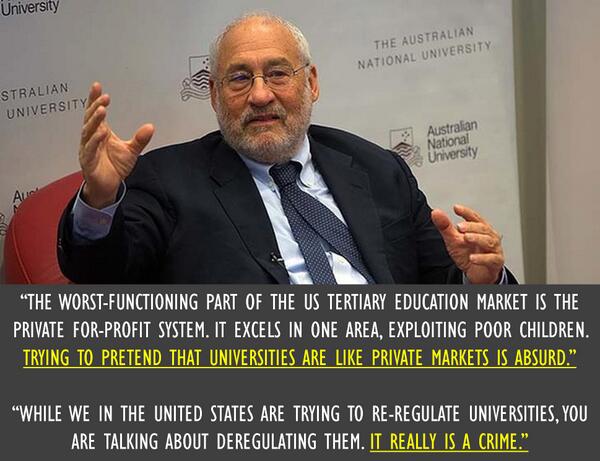
Waed and Hassan heard of a way out. They could go south through Hajr al-Aswad and Sbeneh, two other districts that were also under siege. In Sbeneh, there was a checkpoint that was still open, the last one in all of besieged south Damascus. Waed’s father knew the officer who ran it.
In October 2013, they gathered up what they could and got in a car, which drove them as far as they could go before entering sniper range. They walked for another hour and a half to the checkpoint in Sbeneh. There were around 300 people lined up under the desert-hot sun. They gave their IDs to an officer, who went off into a building. As they waited for him, a woman approached. She was dressed like a member of Al Shabiha, Assad’s anti-dissident militia. She eyed Hassan. “I don’t like your look,” she said. “What were you doing in the camp?” Waed started to respond. “No one told you to speak,” the woman snapped. Hassan pinched Waed in the side, and she bit her tongue until the woman left. They plopped down on the ground. “Forget about it,” Hassan said, and then he smiled. “I think she’s just jealous of you.” She looked up at him and they laughed.

Two minutes later, an officer called Hassan into a building. An hour and a half passed. Waed grew worried. Their family, waiting on the other side of the checkpoint, kept calling her to ask what was going on. It was growing dark. Then a soldier called her inside. Hassan wasn’t there. She gathered her courage and asked, “Where is Hassan?”

The officer raised his eyebrows and said softly, “If you want, why don’t you sleep here with us?”

“Who is Hassan?” the officer replied.

“My husband. You brought him in here a little while ago.”

The officer explained that Hassan was wanted. They would run her ID as well and if there wasn’t a warrant out for her, she would be sent back to Yarmouk. Her head spun. Back to the camp? It’s dark outside. There are FSA checkpoints. They’ll know I was entering from the regime checkpoint. They might kill me.

The officer raised his eyebrows and said softly, “If you want, why don’t you sleep here with us?”

She noticed that the window in his office looked out over the line of people waiting. She imagined this same scenario playing out every evening—him gazing out the window, finding a woman he liked, calling her to his office.

The officer pointed to the laptop she was gripping and told her to open it. It was Hassan’s. There were video files on the desktop, and the officer started clicking on them. Footage from Hassan’s grandmother’s apartment, then a video of a soldier lying with his eyes closed. Hassan’s voice came in, saying, “God is great. A martyr from Dara’a!” He laughed, and Waed grew more nervous. She knew the video. It was a prank he’d pulled on a sleeping friend back in the military, before the revolution, but the officer looked suspicious.

Then he opened Hassan’s last satire video. Unlike his other work, this one dealt directly with the siege. Still, Hassan had apparently thought it innocuous enough to leave on his laptop. It was comedy. None of it called out the regime directly. He had plenty of damning footage, but that was on an encrypted hard drive. Not even Waed knew the password.

The officer played the video. One character after another painted a little offbeat picture of life in the camp. Electricians, rebels, worried relatives of people stuck inside: All of them were Hassan in various costumes. The officer watched Hassan dressed as an Islamist threateningly asking directions from Hassan dressed as himself. The Islamist was shouting in formal Arabic, and Hassan asked him, “You really came here all by yourself? You don’t have a map? Google Earth?” The officer laughed. Another skit came on, of Hassan dressed as a raggedy man at the checkpoint in Yarmouk, telling a soldier it was the regime that brought the opposition fighters into the camp, so as to destroy it. It was a joke about conspiracy theorists in the camp, but the officer didn’t find it funny.

Waed convinced the officer to let her call her family. Finally, after she arranged a bribe, he let her go. He kept the laptop.

Waed’s mother knew a woman who worked in the government. The woman told her Hassan was charged with “insulting the government in the media.” For three months their families made phone calls and paid bribes. Finally, a man who’d been stringing them along for more money grew tired of their pestering. He told them about an office that kept a database of prisoners.

Hassan’s father called that office. “Your son passed away on October 23″—just a few days after that night at the checkpoint—he was told. “You can come tomorrow to collect his ID and then go to the military hospital and get a death certificate.” Hassan’s father went. He asked for the body, and an officer raised the butt of his rifle: “You don’t have the right to ask such questions. Take his ID and get out of here. This will be better for you.”

After she heard what happened, Waed felt a darkness pressing down on her. “It’s like a dream. The whole time I was searching for him and in the end they just said, ‘That’s it, he’s gone.’ Where is he? ‘You can’t know. That’s it. That’s it.'”
In January 2014, Waed left Syria. She went to Beirut, a city where people were out every night in streets packed with clubs, where there were trendy neighborhoods with vegan cupcakes, where women walked around with bandages on their faces from brand new nose jobs and men drove their Hummers to private beaches. One neighborhood had a banner saying Syrians must be off the streets by 8 p.m. Bombings in the city were becoming more frequent and the news blamed Syrians and Palestinians.

Things were different than in Yarmouk. People drank more and the conversations were darker. At one gathering, a man talked about how, before leaving Syria, he was picked up at a protest and shoved into the trunk of a car with four other men, beaten, and released the next day after being made to kiss the shoes of a general, but that wasn’t as bad as when his mother was arrested and held for a week and the intelligence agent would call him at night and claim he was raping her while she screamed in the background.

A week after Waed arrived in Lebanon, her visa expired and the Lebanese government wasn’t renewing Palestinian visas. The United Nations wouldn’t help them find anywhere to go either. The international organization had a program for resettling Syrian refugees, but Syrian Palestinians didn’t qualify. The UN, like Arab governments, held that resettling them in other countries would be absolving Israel of its responsibility to deal with its Palestinian refugees.

Even regular Syrians didn’t have many options. The scale of displacement in the country dwarfs any conflict in recent memory. Nine and a half million Syrians—nearly half of the population—have had to leave their homes, and 3 million of them have fled the country. At the height of the Bosnian war, 2.6 million fled their homes. In Iraq, the highest figure was 4.7 million.

Verbally endorsing any armed group in Syria can get  someone barred from entering the United States—a standard that, if applied to most members of Congress, would disqualify them.

As of December 2013, only 5,600 Syrians had been resettled in third countries by the UN refugee agency. This year, Germany committed to take in 25,500 refugees. Sweden has agreed to resettle 1,200. The United States has taken a mere 156 Syrian refugees, and according to a State Department spokesman, the majority of them applied before the crisis.

Part of the reason is US anti-terrorism laws: The Department of Homeland Security considers every armed group in Syria to be a terrorist organization, including those materially supported by the US government. Verbally endorsing any armed group in Syria can cause someone to be barred from entering the United States—a standard that, if applied to most members of Congress, would disqualify them. Earlier this year, the law was changed so as not to bar anyone who “has not provided more than an insignificant amount of material support to a terrorist organization.” But even so, DHS’s website says it considers “providing food, helping to set up tents, distributing literature, or making a small monetary contribution” to be grounds for disqualification. (DHS did not respond to my requests for comment, except to email general statements about its policy of “constantly reviewing” the criteria.)

Some of the people around Waed, including Hassan’s mother, began talking about desperate options, like trying to get to Europe by boat. But the vessels were prone to sinking or, if they left from Egypt, getting shot at by coast guards. And smugglers’ fees could easily reach $10,000.

Waed applied for asylum at the French Embassy. She explained that she was secular, and that her husband was most likely tortured to death by the regime.

Months passed as she waited, and she started to come out of her shell. She went out and visited people. She laughed. In June, she learned that she had been granted asylum. Her friends got together on her balcony to celebrate. “Maybe I should try to go to Turkey,” her friend Samir said. “Does anyone know someone who could give me an invitation?” He took a drag from his cigarette. “Maybe I’ll go to Ecuador. I hear Palestinians don’t need a visa to go there. Or maybe Indonesia—”

In the distance, a flash. Sparks emanated outward from the ground like a massive firework. Was it related to the World Cup? A red, fiery core grew and floated upward. It grew into a mushroom, and then they heard the BOOM! The flame expanded, then dissipated into the darkness.

Everyone’s faces were ashen. They moved inside. Finally, Waed smiled. “I’m used to this,” she said.

She still didn’t know how to feel about leaving. She had successfully convinced a bureaucrat that her life was more at risk than those of millions of others. She would be farther from Yarmouk and the war and the memory of crossing that checkpoint without Hassan. But she would also be farther from these nights with people who knew and loved her. Who, in France, would be heartened by the fact that some of her friends still in Yarmouk had planted seeds and were now reaping their first harvest of vegetables? Who would care that UN aid packages were occasionally getting in, but that people were saying the regime was using them as bait to arrest young men desperate for food? Or that some shops were open now, but at $20 a cigarette and $65 for bread, all it meant for regular people was that they could watch warlords smoke and eat? She would be on streets where people didn’t know that a place that was being rubbed out of existence ever did exist.

Samir poured himself a second araq. Someone else lit a spliff. Some searched Twitter and Facebook. The explosion was caused by a suicide bomber. After a while, everyone moved back out onto the terrace. Samir talked more about crazy schemes for leaving, and everyone glanced periodically at the red glow in the distance. The fire burned low, then it disappeared.

The year of ruling dangerously. What noteworthy things has this government done even the best seem tarnished

So what has the government actually done,” asked News Corp columnist Andrew Bolt in early August, “to reassure the party faithful that, yes, this is a Liberal government?”

It was a testament to how badly Tony Abbott’s government was faring, as it approached its first anniversary, that even its most strident ideological supporters were starting to sheer off in anger and disappointment.

The previous week had been a disaster. After Employment Minister Eric Abetz denied the scientific consensus on abortion and women’s health, Attorney-General George Brandis displayed the policy grasp and tech savvy of an insistent drunk at the bar, and Treasurer Joe Hockey complained that everyone was against him, it was clear the nation wasn’t going to unite around Team Australia, not that week anyway.

The only answers that Bolt came up with to his own rhetorical question were the repeal of the carbon tax and stopping the boats. And it’s not as if Bolt was omitting achievements not to his liking (knights and dames notwithstanding). After almost a year, the Abbott government has repealed one tax, a move that left the nation without a climate-change policy but had no discernible impact on prices, and implemented an increasingly inhumane, secretive and quite possibly illegal asylum-seeker regime designed in large part by the ALP.

At the time of writing, it had passed a total of six pieces of legislation.

“Of course, the government is not Labor, a virtue in itself,” Bolt added, trying to console himself and loyal readers.

Bolt was ignoring some of the government’s work, though. The Coalition may not have many achievements, but it has been good at undoing things. It has cut funding to social, educational, health, research and advisory bodies. Any and every environmental action, movement, organisation or legislation has been made a permanent target.

Now consider what the government has not done – what it has attempted but failed at, or allowed to fail through inaction.

In the first few weeks after the federal election in September 2013, evidence of travel rorts came to light. Initially the government denied there was a problem, leaving it to fester. Then the government acknowledged serious breaches had occurred, and promised to deal with them, but did nothing substantial. This response was indicative of much of what was to follow.

Despite the pledge that this was a grown-up government “open for business”, its first important foreign investment decision, to block a $3.4 billion American takeover of GrainCorp, said the opposite.

Abbott and team then had brief moments of ideological coherence as they argued for the end of corporate welfare, but the net result was the end of the auto-manufacturing industry in Australia. Qantas and SPC Ardmona survived, but the government still lacks industry and jobs policies for those out of work.

Christopher Pyne’s attack on the Gonski reforms undermined any sense of careful, considered government. Contrary to all previous commitments, Pyne bravely strapped on an Abbott-approved vest, stepped into the education sector and blew himself up.

It was a pattern of behaviour that would become familiar: an act with purely ideological motivation that neither the public nor industry supported; a minister without a detailed plan for reform; a leadership unprepared for the backlash; and no way forward. The government retreated within days, humiliated.

Brandis’ attempt to amend the Racial Discrimination Act was more of the same.

The announcement in May of the federal budget, a key moment in the first year of a government, was the epicentre of the Coalition’s political disasters. The public was prepared for a bitter pill and would have taken it – just as they had supported John Howard and Peter Costello’s tough first effort in 1996 – if the budget had been remotely reasonable or equitable. It was neither, and everyone knew it. The slew of broken election promises was equally damaging. Subsequent refusals to admit that they had misled the public only made Abbott and his colleagues appear more untrustworthy.

Many of the proposed measures seemed designed to punish the ordinary Australian. These included university-fees deregulation; health cuts and cost-shifting to the states; a Medicare co-payment; increased petrol excise; and changes to the family tax benefit, unemployment benefits and pension indexation. Some measures, such as privatisation plans (“asset-recycling”) and cuts to the ABC and SBS, have never had public support and probably never will.

The changes to the unemployment scheme were the government’s attitude to poor people writ large: gratuitously cruel. At the same time, the budget did nothing to reduce the tax concessions and industry subsidies that the rich and well-connected enjoy.

Most of the budget measures are in legislative limbo, for the same reason that the paid parental leave scheme and Direct Action climate-change plan stalled: the government doesn’t have the public backing. It hasn’t managed to mount substantial arguments for most measures. The Coalition lacks the political competence to build a case for anything unpopular – it has already forfeited the trust of the public and of most crossbench senators.

In an effort to head off growing criticism, the Liberal brains trust issued new talking points, stressing pragmatism and openness to negotiation.

“The groaning burden of buyer’s remorse has been acknowledged by the Abbott government,” wrote Malcolm Farr on news.com.au, “and the prime minister last week began steps to placate his political customers.”

But either the message wasn’t received in time by many commentators or it wasn’t enough to sway them. Paul Kelly and Dennis Shanahan of the Australian had already penned columns acknowledging that the Abbott government wasn’t doing at all well.

“Abbott is struggling to deliver on the style of government he pledged: an adult government of consistency, traditional cabinet process and ‘no surprises’,” observed Kelly. Both he and Shanahan invoked the dysfunction of the Rudd–Gillard era. In their eyes, what could be worse?

Bolt, however, was intent on resoldering the government to its ideological base. Sensing a government wavering over its ideological commitments, he leapt in, along with his fellow travellers at the Institute of Public Affairs, to criticise the Coalition for everything from dropping its plans to amend the Racial Discrimination Act (“frightened off by the Muslim lobby”) to over-funding the ABC. He was trying to drag it back out to the right, regardless of what the public want.

And here’s the rub: with the government labouring to achieve anything substantial, with its agenda mired and morale shaky, supporters, commentators and party members are all urging radically different paths back to electoral popularity.

Where does it go from here?

Process is clearly a problem for the Abbott government. It’s not just Abbott’s “captain’s picks” or the whims of ministers and their boosters (the bigot laws for Bolt or marriage-counselling vouchers courtesy of Kevin Andrews). The government also seems to rely heavily on the findings of stacked inquiries and responds to the lobbying of vested interests, whether in the media, banking, mining, gambling or retail. But it rarely acts in response to scientific or policy evidence. This might not be a problem if it had the talent to override the normal laws of politics, but every single one of the government’s main spokespeople, except perhaps Malcolm Turnbull and the sole woman, Julie Bishop, has damaged themselves badly, some perhaps irreparably: Eric Abetz, Greg Hunt, Kevin Andrews, Christopher Pyne, Peter Dutton, David Johnston, Scott Morrison and George Brandis. This, mind you, is their “A-team”.

Hockey was once thought to be an effective politician, but his reputation is now in tatters. He gives the impression that he wouldn’t know a poor person if he drove past one. Hockey and Mathias Cormann provided the defining image of the Abbott government’s first year. Kicking back outside a Parliament House office with their cigars, the treasurer and the finance minister were congratulating themselves on a job well done before they’d even delivered their first budget. Entitlement, that’s what it’s called.

Unemployment, now at a 12-year high, is rising. The budget is blowing out. The “infrastructure prime minister” has built nothing. The outlook for the government is bleak, because the Opposition and crossbenchers have no incentive to start co-operating, especially on unpopular budget items. Beyond the budget, it’s unclear whether the government has a legislative agenda of any kind. Perhaps this explains recent efforts to reposition Abbott as an international statesman, in charge of keeping Islamic terrorism, Russian tyranny and Scottish independence at bay. He needs to be above the fray, because domestically his troops are stuck in the trenches, and they’re starting to turn on one another. They must be relieved the Opposition is showing no stomach for a fight.

Indonesia is told by Morrison they are being helped. Coalition diplomacy delivered by this Christian

BOUNDLESS PAIN TO SHARE

Among his long list of reasons that explain why the Abbott government is failing to impress voters, Andrew Bolt yesterday suggested that its “most successful minister, Immigration Minister Scott Morrison, has been given not a single new problem to solve since stopping the boats”. In the absence of anything else to do, then, it appears that Morrison has now decided to stop the boats even earlier. Anybody who arrived in Indonesia after 1 July this year and who applies for refugee status will now be ineligible to be resettled in Australia – even if he or she has been assessed as a refugee by the United Nations. Today the UNHCR confirms that Australia is “undertaking an internal review” of its global humanitarian resettlement program.

Morrison continues to claim that his policies are consistent with the Refugees Convention, though such claims should probably be seen as “mere puffery” – a legal term allowing a salesperson to lie about his product if his lie is so obvious as to not be taken seriously by any rational observer. The Refugee and Immigration Legal Centre’s David Manne points out that Morrison’s latest policy change “does nothing to improve the plight of refugees needing protection”, and aids Australia in “failing to shoulder its fair share of the responsibility to protect refugees”. The ABC has spoken to asylum seekers in Indonesia who say the changed rules might actually prompt them to get on a boat.

Morrison wants asylum seekers – including Hazaras fleeing the Taliban in Afghanistan – to apply for refugee status in the “country of first asylum”, but the only parties to the Convention between Afghanistan and Australia are Cambodia, where Sarah Hanson-Young is currently learning that refugees “have no real rights”, and the desperately poor Timor-Leste. Presumably Morrison wants the developing world to shoulder even more than the 80 per cent burden it already carries for refugee welfare, but Indonesia has been “briefed”, rather than consulted, on the latest move.

Russell Marks
Politicoz Editor

Series: Katharine Murphy: Dispatches Previous | Index ABC, climate change: the Coalition is drowning us in nonsense

Australian Broadcasting Corporation ABC

This morning, on the wireless, I heard the finance minister, Mathias Cormann, say the government wasn’t making cuts to the ABC.

The day before, I heard the communications minister, Malcolm Turnbull, say Tony Abbott hadn’t actually promised before last September’s election not to cut the budgets of the ABC and SBS. If Abbott had said something like that, then he didn’t mean it; and more likely, we’d all just misunderstood what the prime minister had said.

Also on Wednesday, I heard the prime minister tell the French president, Francois Hollande, that part of the Australian government’s policy arsenal to combat the risks associated with climate change involved funding an agency called the Clean Energy Finance Corporation.

What he didn’t tell the French president was the government intends to abolish the CEFC.

In politics at the present time, we are drowning in nonsense. The nonsense waves are not only lapping, elegantly, at our ankles, they are picking us all up and dumping us head first into the sand.

The Abbott government is performing so many contortions, and running so rhetorically ragged, it’s hard to see if anything coherent is actually going on.

The maximum self-harm you can inflict on yourself in politics is to obscure your substance with abject nonsense, and yet federal politics has been seemingly locked in this cycle for the past couple of terms. Labor deadweighted itself with kindergarten intrigues and dysfunctional personality conflicts.

This government is seemingly intent on deadweighting itself with evasions and too-clever-by-half constructions that can be ripped apart comprehensively in about a minute-and-a-half.

You cannot, as Tony Abbott did in opposition, make a virtue of authenticity and truth-telling in politics then break promises and spout nonsense from the moment you take the prime ministership. By Abbott’s own measure, this behaviour is immoral; and if politics is too flawed a business to apply morality, then from a self-interest perspective, it’s a recipe for self-destruction.

It is death by a thousand cuts.

Let’s be clear on the examples flagged at the start of this dispatch. The government is cutting the budgets of the ABC and SBS. It doesn’t matter whether you call the cut an efficiency dividend because it sounds kinder, or if you call it an interpretative dance – it’s a cut.

Abbott made an unequivocal promise before the last election not to cut the budgets of the public broadcasters. There were no underpants on what he said – it was black and white. So no, Malcolm, we did not misunderstand what the prime minister said, and you really insult our collective intelligence (and your own) by suggesting otherwise.

As for the CEFC construction – well, that kind of takes the cake. Abbott is sounding increasingly defensive and sensitive on climate change, which he should.

The government has taken a carbon pricing scheme that was rational and functional and replaced it with a scheme that most sensible analysts think is an absolute dog. To dress up clear policy regression as action is an absurdity – absurd enough to be seen for what it is in far away capitals of the world.

On Wednesday in the Senate, two newcomers to Australian politics did a very simple thing. Jacqui Lambie and Ricky Muir got to their feet and said, effectively: we screwed up, we are sorry. We made the compromises and engaged in the sheep-like behaviour that institutional politics seems to demand. It delivered a poor result, and we are going to try very hard not to do that again.

Rather than sneering at the newbies, some of the old timers in Parliament House could stop for a minute and have a good, hard think about that gesture of atonement.

Truth-telling and humility are powerful things.

And as bankrupt as things currently are in Canberra, it is not too late for politics to learn that basic lesson.

First Dog on the Moon: do you have windfarm inquiry sickness?

firstdog windfarm

When broken promises become tests of character

Tony Abbott visits Arnhem Land as opposition leader.

Beyond the convenient promises of campaigning lie the deeper moral obligations of the state. How will Tony Abbott respond as Indigenous Australians face the prospect of being driven once more from their traditional lands? Jonathan Green writes.

The routine political promise is like a piece of Mary Poppins pastry: easily made, easily broken.

And do we care? Probably not so much. Trust has been worn down by the constant repetition of brazen insincerity. We are resigned.

“No cuts to education, no cuts to health, no change to pensions, no change to the GST and no cuts to the ABC or SBS.”

No change either to the post-truth framing of modern politics, a place where a promise is simply a piece of positioning to sway popularity whose impact is immediate and not dependent on execution.

If we wanted truth, we’d probably vote for it. As it is, we seem to prefer a more gestural approach: a sense of plausible coherence rather than too much specific commitment. We want a sense that things will be better, that things will be managed. That we all might quietly prosper and get on.

Truth is as far from the point as conviction.

It certainly wasn’t our issue with the last administration. To take the “Juliar” campaign as a pointed pursuit of honest politics is to mistake the rhetorical veneer for the character assassination it concealed. The carbon promise was a crack in credibility that subsequent consistency and unified confidence could have papered over, the same sense of confident denial the Abbott Government is using now to insist bluntly that black is almost certainly white if you consider the full ramifications of the changing context.

And to be fair, we’re flexible enough to admit that circumstances change and that campaign promises are largely rhetorical gestures that shouldn’t stand in the way of greater responsibilities.

That’s a practical as well as moral convenience, one that saves us from the awkward prospect of holding the simultaneous notions that truth matters while admitting that politics is inherently mendacious. We need that grace of flexibility.

And yet there is another level of political truth on which honesty matters very much indeed. Beyond the convenient promises of campaigning lie the deeper moral obligations of the state … to fairness, justice, equity, opportunity.

These are the sort of issues that draw broad declarations of noble intent, the sort of statements that truly go to something deeper than political character.

This kind of thing:

I want a new engagement with Aboriginal people to be one of the hallmarks of an incoming Coalition government … I hope to be a prime minister for Aboriginal Affairs.

This is more than Tony Abbott the politician, this is Tony Abbott the man dealing with an issue that is at the core of the most fundamental moral obligations of any Australian Government: to attempt some honest betterment of the state of Aboriginal Australians.

As much as any current politician he has put words to the profound necessity of a just settlement between Australia’s first and colonising peoples. As he told the Parliament in February 2013:

Australia is a blessed country. Our climate, our land, our people, our institutions rightly make us the envy of the earth; except for one thing – we have never fully made peace with the first Australians. This is the stain on our soul that Prime Minister Keating so movingly evoked at Redfern 21 years ago.

We have to acknowledge that pre-1788, this land was as Aboriginal then as it is Australian now and until we have acknowledged that, we will be an incomplete nation and a torn people.

Clearly we are far from achieving that healing. The Productivity Commission report released this week, Overcoming Indigenous Disadvantage, details a people in a state of psychological crisis. A people amongst whom suicide, self-harm and mental injury are rife.

There are slow improvements in things like infant mortality, but it seems that when many young and adult Indigenous Australians confront their life circumstances, they see little grounds for hope or evidence of opportunity.

And despite the Prime Minister’s declared intention to be “a Prime Minister for Aboriginal Affairs”, a Prime Minister who might move to heal this “torn people”, they also see a leader who fits, perhaps unwittingly, into the assimilationist orthodoxies of hyper-conservative Australia, of that body of bizarre opinion that sees any gesture toward Indigenous autonomy, self-determination or recognition as some queer inverted racism visited upon long suffering white Australia.

The sort of view promoted with endless vigour by the likes of Andrew Bolt:

I am an indigenous Australian, like millions of other people here, black or white. Take note, Tony Abbott. Think again, you new dividers, before we are on the path to apartheid with your change to our Constitution.

I was born here, I live here and I call no other country home. I am therefore indigenous to this land and have as much right as anyone to it.

It’s a lunatic fringe, but its impact is borne out in documents like the Productivity Commission report, a report that was preceded by news from Western Australia that the State Government intends to close over a hundred remote Indigenous communities, communities now defunded by the Commonwealth and thrust upon the slim resources of a state that sees little future in supporting them.

Their people will be driven, once more, from their traditional lands, by a Government that fully comprehends the consequences. As WA premier Colin Barnett put it:

It will cause great distress to Aboriginal people who will move, it will cause issues in regional towns as Aboriginal people move into them.

And here is a test for the PM, to stand by those principles he presents as deep conviction, as the fundamental tenets of his moral self.

This is as far from a dumb promise shaken out in the excitement of 11th hour campaigning as you can get, and something that might stand as a serious test of character for Tony Abbott, something, that if he is not careful, might yet make a Juliar of him.

Jonathan Green hosts Sunday Extra on Radio National and is the former editor of The Drum. View his full profile here.

Indonesian says Australia has created a burden after decision to cut resettlement intake of asylum seekers

Setting sun in Indonesia

Indonesia says Australia has burdened it with the responsibility of looking after thousands of refugees and asylum seekers, after the Federal Government decided to cut its resettlement intake.

Indonesia’s minister for law and human rights, Yasonna Laoly, said his country could only accommodate 2,000 asylum seekers and refugees.

Mr Laoly said it was a human rights issue and the decision placed a burden on Indonesia.

“It’s Australia’s right, but it becomes a burden for us,” Mr Laoly said.

On last month’s figures, there were 10,500 asylum seekers and refugees registered with the United Nations (UN) in Jakarta.

As Indonesia is not a signatory to the refugee convention, the UNHCR seeks to resettle them in countries like Australia.

Foreign Minister Julie Bishop will not say whether she discussed the policy with her Indonesian counterpart at last weekend’s G20 summit but said Indonesian authorities were briefed on the plan.

“I spent quite some time with the new [Indonesian] foreign minister over the weekend in Brisbane at the G20,” she said.

“We spoke about a whole range of issues including the issue of border protection and asylum seekers policy and we agreed to work closely.

“The Indonesian authorities have been briefed in detail about this.”

Immigration Minister Scott Morrison announced on Tuesday Australia would cut the number of refugees it would resettle from Indonesia and would not accept anyone who had registered in Indonesia after July 1.

Mr Morrison described the decision on Wednesday as “taking the sugar off the table”.

“We’re trying to stop people thinking that it’s OK to come into Indonesia and use that as a waiting ground to get to Australia,” he said.

Mr Morrison said Indonesia, as a transit country, was used by smugglers.

“We’ve had great success in stopping people coming to Australia by boat and for most of that time over the past year, that has seen a significant reduction of people moving into Indonesia,” Mr Morrison said.

“In recent months, we’ve seen a change to that and that’s because people think they can transit and sit in Indonesia and use that as a place to gain access to Australia.”

Indonesia’s foreign ministry said it would monitor the impact of the decision and would consider taking measures to protect Indonesia’s interests.

The ministry’s spokesman did not say what those measures might be.

Tony Abbott seeks closer security ties with Superpower

pope

EXCLUSIVE:  The AIMN has learned that Tony Abbott is seeking closer security ties with another superpower.

No, it’s not India, though they did sign a Framework for Security Cooperation to guide closer bilateral collaboration across “defence, counter-terrorism, cyber policy, disarmament and non-proliferation and maritime security”.

“They agreed to hold regular meetings at the level of the Defence Minister, conduct regular maritime exercises and convene regular navy to navy, air force to air force and army to army staff talks,” said the joint statement.

And it’s not China, though China and Australia will hold a series of high-level defence exchanges this year under an agreement sealed in April between Tony Abbott and Chinese Premier Li Keqiang on the first day of the PM’s visit to China.

Defence Minister David Johnston has hailed the forging of closer defence relations between Australia and China and strongly endorsed the agreement to conduct joint military exercises involving China, Australia and the United States.

“Exercise Kowari, in Australia, is a firm demonstration of all three countries’ intent to work together towards enhancing mutual trust and regional stability,” the Defence Minister said.

Nor is it Japan, though Prime Minister Abbott and Japanese Prime Minister Abe held a summit meeting on 7 April 2014, at which the two leaders decided to elevate the security and defence relationship to a new level.

In their first trilateral meeting since 2007 at the recent G20 meeting, Australia, the US and Japan agreed to stronger defence ties and to boost joint military exercises.

It’s not South Korea, though Tony Abbott has tightened defence ties with South Korea by laying out plans to conduct more joint exercises and share more military technology, helping to mend a bruising row two years ago over a cancelled weapons deal.

“I wanted to assure President Park that we were interested in defence cooperation beyond the long-established security cooperation including defence procurement, and I think she was very happy to have that assurance.”

Not Indonesia either, though the signing of a Defence Cooperation Agreement with Indonesia on 5 September 2012 shows a strong intent to deepen bilateral defence ties between Indonesia and Australia. There’s been a substantial increase in ministerial-level exchanges and the establishment of a regular Defence Minister’s meeting and a ‘two plus two’ dialogue between Defence and Foreign Ministers. And the next Defence White Paper will aim to set out a path to even closer and more comprehensive military cooperation.

The US you say?  Nope, though Australia, the G-20 host, has played an important role in Obama’s efforts to bolster the U.S. military presence in the region in order to be a counterweight to China. During a trip to Australia in 2011, Obama announced a plan to rotate 2,500 U.S. Marines through a military base in Darwin.  By the end of this decade, the US is set to deploy most of its navy and airforce to the region.

So who is it?

An insider has revealed to the AIMN that representatives of Tony Abbott are in negotiations with representatives of God at the Vatican regarding enhanced counter-terrorism surveillance.

It is understood that Cardinal Pell is arguing for an ISDS (Individual Sin Disclosure Statute) to be included which would see all confessions taped and the information held for two years.

A spokesman for Cardinal Pell said “Not only will this lead to more arrests of people who have had bad thoughts, it will free up the courts because it is so much easier to prosecute someone if you have a confession.”

He assured us that the information would not be used to prosecute pedophile rings in the clergy.

One point of contention appears to be George Brandis’ insistence on tapping the Telephone to Jesus.

“We are concerned that Jesus may have been radicalised during his time in the Middle East.  He has been receiving prayers asking for help from a lot of very suspect people.”

It is said that Tony Abbott has also had a “robust conversation” with God about his failure to smite their common enemy, the scientists, expressing his concern about recent statements made by Pope Francis about climate change, and his anti-business rhetoric about poverty and weak stance on border security.

Under the proposed agreement, radical scientists who encourage others to engage in scientific research could have up to fifty years added to their time in Purgatory, while it will also be a mortal sin for anyone to advocate an evidence-based approach.

Tony Abbott is said to be keen to sign off on the deal, suggesting a Christmas Day announcement from St Peter’s Basilica would make a great photo.

God was contacted for comment but, as at time of publishing, had not responded.

We will keep you informed as further news comes in.

Dutch mother rescues daughter from Islamic State in Syria

Take her back ... determined to bring her daughter home, the mother disguised herself in

A WOMAN has donned a burqa and travelled thousands of kilometres to Syria in an undercover mission to rescue her daughter from Islamic State terrorists.

The Dutch woman had been warned by police that the journey to find the teenager — who had recently converted to Islam and was married to a Dutch jihadi — would be too dangerous, The Telegraph reports.

But a mother’s love proved too strong and she decided to take matters into her own hands.

“Sometimes you gotta do what you gotta do. This is what I think is right,” she told family and friends.
Secret mission ... the pair managed to escape across the Syrian border.

Secret mission … the pair managed to escape across the Syrian border. Source: News Limited

The woman, known only as Monique, contacted her daughter Aicha through Facebook to arrange a meeting in the Syrian town of Raqqa, the so-called capital of the Islamic State.

The young woman had fallen in love with IS militant Omar Yilmaz and his lifestyle after seeing him interviewed on television, according to media reports.

But as time passed, Aicha felt she had made a huge mistake.
Islamic fighter ... the woman’s teenage daughter wanted to escape her husband.

Islamic fighter … the woman’s teenage daughter wanted to escape her husband. Source: No Source

“She wanted to go home, but could not leave Raqqa without help,” Monique said.

Determined to bring her daughter home, the mother disguised herself in a burqa to make the risky journey to Raqqa from Turkey, The Telegraphsays.

She and her daughter then managed to escape across the Syrian border back to Turkey where Aicha is being held as she does not have a passport.

Dutch officials are now involved and will bring the pair back before the end of the week.

Murdoch’s iron grip over News Corp slips. Not in News Corp papers, No comment by Andrew Bolt

News Corporation AGM’s run by Rupert Murdoch in Hollywood are about as undemocratic as you can get, however a shareholder revolt suggests this may not be the case for much longer. Former News Ltd executive Rodney E. Lever reports.

A faithful attendant at most, if not all, of the annual general meetings of News Corporation has been Stephen Mayne, the founder of news website Crikey.

Rupert Murdoch has virtually abandoned Australia now so, as a shareholder, Stephen flies to America for these occasions — perhaps because it nearly always provides a good story.

After his visit to the most recent one, on 13 November, he opened his report in Crikey with this line:

‘Rupert Murdoch has done a lot of ducking and weaving to avoid answering questions at his AGMs over the years, but this morning’s effort at Fox Studios in Los Angeles was arguably his most brazen.’

Stephen was one of only ten shareholders at the meeting and probably the least welcome.

Each shareholder is provided with a document that sets out the ‘rules and procedures’.

Stephen Mayne said that many companies have limits on questions and timing, but usually there is debate that could take an hour or more. Not, apparently, when Rupert Murdoch is in the chair.

In Australia, every new resolution must be discussed and debated. American law allows debate even when several resolutions are involved.

Rupert Murdoch opened the meeting with a 15 minute oration and then offered the microphone for questions, but only two questions would be accepted from any shareholder and each limited to one minute at a time.

http://www.theage.com.au/business/media-and-marketing/rupert-murdochs-news-corp-cops-major-investor-revolt-20141117-11ohmg.html

When Stephen asked for the microphone, one of the company lawyers, who shouldn’t have even been on the stage, told him the question rules would be strictly enforced for him. Stephen is known as a keen shareholder and a regular at these annual affairs.

He wanted to know two things: How was Rupert managing his time as executive chairman of two companies (News Corporation and 21st Century Fox)? And was Lachlan Murdoch, as co-chair of 21st Century Fox, running part of the meeting? Then he snuck in another question, but nobody seemed to notice: this was to ask why did the Murdoch family members took out a total salary of $64 million in 2014?

Rod Eddington, a News Corp director and former airline manager, took the questions and said Rupert was paid less than the two wealthiest chief executives of other media companies.

Proxy adviser Glass Lewis recommended a vote against the question.

Shareholders were not given the voting numbers but they were assured by Murdoch directors that

“… there were no meaningful protest votes.”

This despite 20 per cent of the non-Murdoch votes opposed the re-election of James and Lachlan Murdoch and close to a quarter the executive remuneration package.

In Australia and Britain votes on executive remuneration are unlawful and come under the control of the Australian Securities and Investments Commission.

So the meeting continued with the Lachlan question unanswered. Rupert said he could handle his two roles and, what’s more, all the key executives ‒ James Murdoch, Chase Carey and Robert Thomson ‒ had offices in New York next to Rupert’s own.

A shareholder named Aaron Epstein, asked a question and got a laugh saying he hadn’t come from Australia but rather North Hollywood.

Epstein said:

“It was most disappointing to think that the two grandsons were sitting mutely on stage alongside their father as he embarrassed the family yet again.”

In his own published account Mayne added:

When no one got up and we were still just twenty minutes into the meeting I returned to the microphone, and management again attempted to prevent any more discussion saying I was already in breach of the rules having asked two-and-a-half questions.

I blustered through, appealing for fairer treatment and the company’s great track record on free speech. Rupert reluctantly agreed to one last question, which turned into an omnibus about the delisting of Fox from the Australian Stock Exchange and the Time Warner takeover bid.”

Rupert Murdoch said the company had been expecting a deluge of Australian selling but had been surprised that many had instead chosen to hold on.

Mayne says Murdoch brushed aside another question about his failed attempt to take over Time Warner and he dismissed the question about why voting shares hadn’t been offered, saying it wasn’t an issue that came up with the directors. The bid failed because he wasn’t prepared to increase it by USD$10 a share.

As the meeting was coming to an end, a security guard took Mayne’s microphone away. An elderly shareholder then stood up and asked about the potential for higher dividends.

With no microphone, Rupert adjourned the meeting and then he remembered that he should have closed it first.

Stephen Mayne shouted:

“Any plans to retire, Mr Chairman?”

A second meeting held a few days later, again at 21st Century Fox Studios, produced a shock for Murdoch that might silence some of his recent bluster.

It was the knowledge that News Corp’s second biggest stock holder after the Murdoch family, Saudi Prince Alwaleed bin Talal, had voted against Murdoch for the first time.

Murdoch’s family owns only 12 per cent of News Corps Class B common stocks, but controls of 40 per cent of the company with about 80 million shares. He has controlled the company since he inherited it in 1952, always maintaining a majority of voting rights.

Prince Alwaleed holds seven per cent of voting rights. His father is King Abdullah, far richer than Alaweed and Murdoch combined. The Prince’s past support for Murdoch after nearly 18 years, has always been taken for granted. Analysts have pointed out that only a small group of “insiders” have benefited from this arrangement. Now the Prince appears to be an insider no more.

After the Los Angeles meeting Wall Street’s stock reports were showing 53.7 million votes against Murdoch’s re-election as chairman of the company. But he still has 112 million votes in his favor. Could this change?

Murdoch suffered an even closer shave on the day, when a shareholder proposal to unwind News Corp’s controversial dual-class voting structure, which maintains Murdoch family control despite only owing a small fraction of the stock, was narrowly defeated by 79.1 million shares in favour to 87.6 million against.

There is bound to be more news to come.

Federal MP Christopher Pyne launches online petition to save ABC jobs in Adelaide. Kick them in the balls & then yell mum they are attacking me..that’s MP C. Pyne manchild bully

Christopher Pyne at the Queensland Media Club

Federal MP Christopher Pyne launches online petition to save ABC jobs in Adelaide

Federal MP Christopher Pyne has launched an online petition to save jobs at the ABC in Adelaide.

Mr Pyne told 891 ABC Adelaide he had launched the petition this morning urging the board’s chairman, James Spigelman, not to close its television production house in the South Australian city.

The petition comes amid speculation 150 jobs will be lost in Adelaide as a result of the Government cutting the broadcaster’s funding by $50 million a year.

Mr Pyne said the ABC had been provided with an efficiency review that outlined ways to reduce spending at the broadcaster without impacting on production and programming.

“It is a deliberate act of political vandalism because they know, they have the report in front of them in black and white showing how to reduce costs without affecting production and programming,” Mr Pyne said.

“They [job cuts] could all be in the back office area, for example, in administration, in costs incurred particularly at Ultimo.

“I think [ABC managing director] Mark Scott and the board need to get out of Ultimo and go around Australia and find the place where the ABC is most popular.

“It’s in regional Australia, where it is the lifeline to a lot of country towns and regional areas.”

Petition receives mixed reaction

Mr Pyne’s petition has had a mixed response on social media, and it was posed to Mr Pyne the Government had broken an election promise not to make cuts to the ABC.

However, Mr Pyne said at the time Mr Abbott made the promise, he was not aware how “dire” the country’s economy was.

“At that time I don’t think he was necessarily as aware as we are now about the dire situation we face … we have to reduce the budget debt and deficit and that’s what we’re doing,” Mr Pyne said.

However, the federal MP for Port Adelaide, Mark Butler, said that defence was not good enough and suggested the Government should have put conditions on the cuts to the ABC.

“There has been an agenda for some time from other parts of the ABC as I understand it, to rationalise to Sydney, Melbourne and Brisbane,” he said.

“Maybe Christopher didn’t know about that when he voted in the cabinet to cut the ABC’s budget to the degree that it is, but this petition is just an extraordinary front on his part.

“Did they put any conditions on those cuts on the ABC management? It’s all well and good for Christopher Pyne to launch this Pontius Pilate petition after the fact.

“There were very significant efficiencies being made by the ABC during our term in Government, but instead of returning that money to the budget or spending the money on something else, we supported the ABC’s decision to create ABC24 and an ABC online platform with those efficiencies.”

Fears local Anzac Day coverage could be lost

What happened in NSW battalions is not so relevant in South Australia. We have our own local military history and you get that with a local production.

Bill Denny, RSL Anzac Day committee chairman

Bill Denny, chairman of the RSL Anzac Day committee, told 891 ABC Adelaide the loss of local television production would result in the loss of local content.

“I just think one of the things we are really going to lose in the state is the capacity to produce the Anzac Day package,” Mr Denny said.

“In recent years the ABC has done a marvellous job of preparing an Anzac Day package. [It’s] very important to veterans because as Christopher would know our service history is generally localised.

“What happened in NSW battalions is not so relevant in South Australia. We have our own local military history and you get that with a local production.”

Mr Denny said next year’s Anzac Day coverage had been guaranteed, but he believed but from then on locals will be shown Sydney’s march “and then a flash for five to 10 minutes to each of the other states”.

“That’s just downright insulting and it diminishes the whole spirit of Anzac and our recollections of it,” Mr Denny said.

Mr Pyne said it was up to the board to save local content.

“Ultimo needs to be told this isn’t allowed to happen,” Mr Pyne said.

“We have to try and save the Adelaide production and programming and I am going to do what I can to do it.”

Another global warming contrarian paper found to be unrealistic and inaccurate. Andrew Bolt’s Primary Sources

A woman looks at a globe model in the climate village during the United Nations Framework Convention on Climate Change (COP-16), in Cancun, 2010.

Abraham et al. show that a paper by ‘sceptics’ Spencer & Braswell is rife with unrealistic assumptions in an overly simple model

It’s hard to find a reputable scientist who denies that human emissions of greenhouse gases are warming the planet and that there will be consequences for human society and the biological health of the planet. There are a few holdouts who, for various reasons, either think humans are not causing warming or that the warming will not have much consequence.

Some members of this vocal minority spend a lot of time trying to convince the public that they are right. They write letters to newspapers, appear in slick movies, give press conferences, promote their views to Congress, and so on. Their high profile gives the public a false sense that there are two relatively equal-sized bodies of experts that cannot agree on climate change; this is not true.

An even smaller subset also tries to publish their views in the scientific literature – the dueling ground for experts. Sometimes these contributions have been useful, adding some nuance to the discussion, but all too often they have proven to be of very poor quality when other scientists have had a chance to dissect them.

A few months ago, I co-authored an article which charted the different quality in scientific output from the Dwindling Few contrarians compared to the majority of experts. My colleague, Dana Nuccitelli, summarized the article here. What we show is that the Dwindling Few have had a very poor track record – having papers rebutted time after time after time because of errors they have made. The low quality of their research has caused journal editors resign, and they have wasted the time of their colleagues who have had to publish the rebuttals to their work.

Well, again this year, I’ve wasted my time (and my colleagues’ time) by rebutting a 2014 paper published by the darling of the Dwindling Few, Roy Spencer. Dr. Spencer wrote a paper earlier this year that used a very simple ocean model to suggest that standard climate models overestimate the Earth’s sensitivity to carbon dioxide increases in the atmosphere. You can see his manuscript here although it is behind a paywall so you will have to shell out about $40 to read it.

Dr. Spencer and his colleague Danny Braswell made a number of basic math and physics errors in the article that call into question their conclusions.

Before we get into the errors, let’s talk about what their model does. They basically treated the ocean like a non-moving fluid and allowed heat to diffuse into the ocean depths. They did allow some mixing in the upper layers through added terms in a one-dimensional equation. The model neglects down-welling or up-welling of waters which occur particularly at the poles. In the end, they end up with a bunch of tunable parameters, which they adjusted so that the model output matches the measured temperature history.

So, what were the errors and poor modeling choices?

The model treats the entire Earth as entirely ocean-covered
The model assigns an ocean process (El Niño cycle) which covers a limited geographic region in the Pacific Ocean as a global phenomenon
The model incorrectly simulates the upper layer of the ocean in the numerical calculation.
The model incorrectly insulates the ocean bottom at 2000 meters depth
The model leads to diffusivity values that are significantly larger than those reported in the literature
The model incorrectly uses an asymmetric diffusivity to calculate heat transfer between adjacent layers
The model contains incorrect determination of element interface diffusivity
The model neglects advection (water flow) on heat transfer
The model neglects latent heat transfer between the atmosphere and the ocean surface.

Now, simple models like this one can still be useful, even though they necessarily gloss over some details. But some of these errors and omissions are pretty obvious, and would have been easy to fix. For instance, by treating the entire Earth as water covered, Spencer and Braswell omit 30% of the surface of the Earth that’s land-covered, and which heats up faster than the oceans. They then compare the CO2 sensitivity of their ocean-only model to those obtained from more realistic models — apples and oranges. Furthermore, the application of a very local phenomenon (El Niño) to the entire globe just doesn’t make much sense.
Advertisement

But, I here want to talk about the numerical errors, in particular items 3, 4, 6, and 7. In order to explain what went wrong, I need to talk about the underlying math.

The diffusion equation Spencer and Braswell used has a second derivative of temperature with respect to depth in the water. To solve this equation, the common approach is to break the ocean into a number of finite slabs of water and approximate the derivatives by finite differences. So far, so good. The problems arise when you apply what are called boundary conditions. That is, conditions at the ocean surface and the bottom of the ocean. At both locations, Spencer and Braswell’s approach fails.

First, at the ocean surface, you are required to make calculations at the exact surface. In fact, the physical phenomenon which Spencer and Braswell introduce require actual surface temperatures. However, in their computer program, no surface temperatures were ever determined. They basically transcribed a temperature 25 meters deep into the ocean onto the surface (and no, they didn’t do this because of ocean mixing). At the ocean bottom, Spencer and Braswell insulated the ocean, and thereby did not allow any energy exchange there.

Finally, Spencer and Braswell incorrectly used upstream element-diffusivity values in their heat transfer term. They were obligated to use mean values representing adjacent elements. When we implemented the corrected numerical scheme, the quality of the results dissolved. Once again, Roy Spencer has failed in his attempt to show the Earth is not very sensitive to climate change.

These errors are the sort of thing that could have been avoided by consulting any elementary textbook on heat transfer, or any number of papers that have published similar ocean diffusion models. My colleague and co-author, Dr. Barry Bickmore from BYU described the situation like this,

What our paper shows is that Spencer and Braswell’s model was flawed on a very basic level, in such a way that it could have predicted wildly low climate sensitivity to greenhouse gases. Whatever sensitivity their model predicts, the true value is probably significantly higher, and therefore probably in the range indicated by the IPCC.

Spencer and Braswell might object that their paper says ocean temperature measurements “might not provide a very strong constraint on our estimates of climate sensitivity.” Let’s just say that Roy Spencer forgot to include that little detail when he recently told a U.S. Senate committee, “Our most recent peer-reviewed paper on this subject… has arrived at a climate sensitivity of only 1.3 degree C for a doubling of atmospheric carbon dioxide, based upon a variety of global measurements, including warming of the global oceans since the 1950s.”

In a recent blog post, Dr. Spencer challenged well-known and well-respected Dr. Andrew Dessler to a debate. While the peanut gallery was busy chiding Dessler for not taking the bait, it perhaps is important to remember that the place where scientists debate is in the scientific literature. It is a venue that has not been kind to Dr. Spencer in the past decade or so. We published our latest work in an open-source journal here so that any interested reader can see the results for themselves.

G20 leaders slap down embarrassing Abbott and the COALition

The G20 delivered a stinging riposte to the Abbott Government, which is now seen around the world as little more than an arm of the fossil fuel industry. Lachlan Barker reports.

MUCH HAS ALREADY BEEN WRITTEN about the gut-wrenching embarrassment that all Australians suffered watching our prime minister talking with world leaders at the G20.

My favourite was from LA Times journalist Robyn Dixon who described Tony Abbott as:

‘The shrimp of the school yard’.

This perfectly encapsulated how we all felt as we listened to Tony Abbott’s speech to, frankly, bemused world leaders, as he told them of how his Government had stopped the boats and how none of us ungrateful Australians could see why it was so important to pay $7 to go see a doctor.

It was really embarrassing stuff; I struggle to think of a way it could have been worse.

As if Angela Merkel and all the rest could care less about a $7 payment that….

Actually, I can’t even go on, it’s too hard to revisit it in written form.

Of course here in the environment section, the real issue and that is an exact description, believe me, was climate change. Australia, sorry, Tony Abbott, didn’t even want it discussed but, thankfully, U.S. President Barack Obama wasn’t having that and he made a speech ‒ direct in its nature ‒ to the Australian people, talking of the effects of climate change, warning of “drought, wildfires, flood and storm damage,” as well as saying:

“… the incredible natural glory of the Great Barrier Reef is threatened.”

Obama added that he wished to be able to return with his daughters and see the Reef, and:

“I want them to be able to bring their daughters or sons to visit and I want that there 50 years from now.”

Of climate change’s effects he said:

“No nation is immune, and each nation must play its part.”

It was a genuinely world leading stuff from a genuine world leader, and so much at variance to the pint-sized utterings of our embarrassment of a prime minister.

Thankfully, the world leaders that were there, did get climate change discussed, and a communiqué was released, which one leader’s aide described as trench warfare to get done. Tony Abbott fought tooth and nail against world sentiment to downplay the effects of coal on the world’s climate as part of this process.

Away from climate change, one thing that was on the G20’s agenda was two per cent economic growth, and that is fair enough, as it is in essence an economic forum. However, even this modest outcome was largely shown to be pointless by Professor John Kirton, co-director of the G20 Research Group at the University of Toronto’s Munk School of Global Affairs, who appeared on ABC TV’s Insiders program on Sunday, 16 November.

Professor Kirton quoted Angel Gurria, the Secretary-General of the OECD, and, said professor Kirton:

“Angel Gurria has said that if we don’t do something right here, right now, to control climate change, the economic cost if going to be a minus six per cent hit on GDP, it rather makes the plus two percent that we are struggling to get here rather small in comparison.”

He then added:

“… so simply if you want a summit that is focussed on generating on global economic growth you have to look at both sides of the balance sheet, I think every business person knows that, not just trying to get two more, but also stopping the loss of the six per cent.”

So arguing for economic growth in isolation of environmental destruction is once again shown to be a genuine waste of time.

However, one of the main proponents of this two per cent growth goal, Treasurer Joe Hockey, did show (finally) some grasp of reality in the run up to the G20.

Hockey said in an interview with Fran Kelly on Radio National:

“70 per cent of Australia’s economy is services, but it’s only 17 per cent of our exports. So what we’ve got to do is lift our export in services and then we can supplement the massive export growth that we have in resources.”

So it’s good that at least the Treasurer has finally caught up with the rest of us, who have been saying for a long time that services are indeed 70 per cent of the economy and are a damn sight less polluting thing to export than mining products.
So why is Joe saying this now?

Well it seems that he has understood that resources exporting is in severe decline and it’s time to back a more sustainable horse in this race: services. It seems from his statement that a big part of the two per cent growth he is looking for will come, not from mining, but from services — education, health and finance are three examples.

Welcome to the twenty first century Joe.

But if the Treasurer is starting to orbit sanity, our prime minister continues to delve deeper into the mire is nuttiness, as part of his lunatic backing of coal against world sentiment, the prime minister said:

“The point I made in the G20 and perhaps it wasn’t the most popular point I made, is coal is very important, it’s an important part of the Australian economy, it’s an important part of the world’s energy supply and it will be for decades to come.”

Well, Tony, one seriously questions the use of the plural (decades) in that statement.

Turns out that coal may be an important part of the world’s energy supply for a lot less time than that and here’s why.

Glencore, one of Australia’s largest miners, have recently announced that they are temporarily closing all their coal mines in Australia ‒ shuttering, it’s called ‒ for three weeks in December. This is due to the world oversupply of thermal coal, used in power generation.  This is reflected in the spot price of coal, which dropped another 3.11 per cent last month to $US68.45 a tonne, and is therefore now US$6 below the profitable line for coal production in Australia.

One bank, ANZ, has predicted that the supply overhang will clear, possibly as early as 2016 or 2017, thus making the mining of thermal coal profitable again. However, the supply overhang has to be cleared for the price to go up again, and this is hardly likely if Australia continues to bring new coal mines on line, as in the Galilee basin in Queensland, which will clearly only add to the oversupply problem.

Added to which there is a nexus of disaster for Australia’s coal exporting looming, to wit: the above mentioned supply overhang coinciding with China’s massive investment in renewable power. China has already halved its coal imports, and with its avowed goal of creating 1.3 gigawatts of power from renewable sources, a week, for the next fifteen years, it could cease importing coal altogether.
India are going the same way, RenewEconomy tells us:

‘… in a landmark announcement that has caught the global coal industry totally by surprise, India’s Energy Minister, Piyush Goyal has announced an ambitious target that could see India cease thermal coal imports within two to three years.’

This of course shows once more the insanity, the environmental and fiscal lunacy of the Carmichael Coal Mine in Queensland. That mine is a massively destructive thing, with deleterious effects on the nearby agricultural land, the Great Artesian Basin, Australia’s greenhouse emissions and the Great Barrier Reef and all to dig up unprofitable coal for India, which, as RenewEconomy has now shown, India doesn’t really want.

All of the above allows us to paraphrase the great Oscar Wilde:

“Economically speaking, the only thing worse than fighting climate change, is not fighting climate change.”

And in answer to the prime minister’s assertion that coal will be important for decades to come, we can say that coal will be important for perhaps another decade — one.

Maybe.


Fact check: China pledged bigger climate action than the USA; Republican leaders wrong

BEIJING, CHINA - NOVEMBER 12:  U.S. President Barack Obama (L) shakes hands with Chinese President Xi Jinping (R) after a joint press conference at the Great Hall of People on November 12, 2014 in Beijing, China.

America can meet President Obama’s climate pledge relatively easily, but China’s will require dramatic change

This week, President Barack Obama and Chinese President Xi Jinping unveiled a secretly negotiated agreement for both countries to slow global warming by pledging to reduce carbon pollution. Specifically, President Obama pledged that the USA would cut its carbon pollution 26–28% below 2005 levels by 2025, while President Xi pledged that by 2030, Chinese carbon pollution will peak and 20% of the country’s energy will come from low-carbon sources.

This agreement received predominantly high praise because it represents the world’s two biggest net carbon polluters taking a leading role in committing to tackle the threats posed by human-caused global warming. China in particular is often used as an excuse by those in the United States and around the world who oppose taking steps to slow global warming.

With the announcement of this agreement, the Chinese president has agreed that his country must begin the process of slowing the growth of and eventually reducing its carbon pollution. The common refrain “nothing we do matters unless China acts” is moot.

However, Republican House Majority Leader John Boehner and soon-to-be Senate Majority Leader Mitch McConnell were among the few who issued negative public statements about the climate agreement. McConnell in particular badly misunderstood the practical consequences of the Chinese and American carbon pledges, saying,

As I read the agreement it requires the Chinese to do nothing at all for 16 years while these carbon emissions regulations are creating havoc in my state and around the country,

Senator McConnell misunderstood the Chinese target of reaching peak carbon pollution levels by 2030 as a pledge to “do nothing.” In reality, China has been developing rapidly with hundreds of millions of citizens rising out of poverty, thus demanding more energy. Much of that demand has been met with new coal power plants; China has added one and a half times the entire US coal power plant fleet in just the past decade. As a result, Chinese carbon pollution has been rising fast.

China could not meet its climate pledge by maintaining business-as-usual (BAU) and doing “nothing.” Quite the opposite; curbing those rising carbon emissions as China’s economy continues to grow will require substantial effort. That’s why President Xi also pledged that 20% of the country’s energy would come from low-carbon sources by 2030.

In comparison, the United States will have a relatively easy time meeting the pledge made by President Obama. US carbon pollution is already about 10–15% below 2005 levels and falling by about 1.5% per year. Achieving the target of 26–28% emissions cuts below 2005 levels by 2025 will only require continuing the current rate at which American carbon pollution is already falling.

China and USA carbon dioxide emissions from power generation from 1981 to 2012 (solid lines and squares; data from US Energy Information Administration), pledges (dotted lines), and business-as-usual (BAU) emissions (dashed lines).

China and USA carbon dioxide emissions from power generation from 1981 to 2012 (solid lines and squares; data from US Energy Information Administration), pledges (dotted lines), and business-as-usual (BAU) emissions (dashed lines). Created by Dana Nuccitelli.
Contrary to Senator McConnell’s perception, it’s President Obama’s pledge that requires doing little more than America is already doing. President Xi’s pledge requires that China dramatically alter its current course, cutting its net carbon pollution between 2015 and 2030 by about 20 billion tons. Speaker Boehner similarly denounced the agreement as,

…the latest example of the president’s crusade against affordable, reliable energy that is already hurting jobs and squeezing middle-class families

However, President Obama simply pledged that America’s carbon pollution would continue to fall. How those emissions cuts are achieved is open for debate, and studies have shown there are ways to cut carbon pollution while growing the economy, creating jobs, and helping the middle class.

Unfortunately, the comments made by Republican congressional leaders McConnell and Boehner signal that they’re more interested in finding ways to increase coal and oil consumption and making global warming worse than they are in finding economically beneficial ways of tackling this problem.

Recent research has shown that a majority of Republicans accept the reality of human-caused global warming when they realize there are free market solutions available, but about two-thirds of Republicans reject the science when they think the solution requires government regulation.

From Campbell and Kay,

From Campbell and Kay, “Solution Aversion: On the Relation between Ideology and Motivated Disbelief,” Journal of Personality and Social Psychology, 2014, Vol. 107, No. 5, 809–824. Published by the American Psychological Association, reprinted with permission.
Hence Boehner and McConnell frame the issue as requiring harmful government regulations. Ironically, free market climate legislation could replace the current EPA greenhouse gas regulations, if congressional Republicans were willing to propose and/or support such legislation. So far, all indications suggest that Boehner and McConnell would rather unsuccessfully fight against EPA regulations than propose replacing them with a free market alternative.

In any case, McConnell and Boehner got the facts wrong in their criticisms of President Xi and President Obama’s climate agreement. It’s China who have committed to a dramatic change from their current carbon emissions path, and America could meet its pledge relatively easily with a free market solution that would benefit the economy and create jobs, if Republicans in Congress would allow it.

Iran fears Isis militants are part of wider Sunni backlash

Iran’s Ayatollah Khamenei has called several times in recent months for Muslim unity. Pictured here at a Revolutionary Guard military manoeuvre in a western province near the border with Iraq in 2004.

With Islamic State militants just kilometres from the country’s western border, and increasingly radical anti-Shia militants to the east in Pakistan, Gareth Smyth examines Iran’s Sunni problem

Nearly ten years ago, a story circulating in Tehran had Mohammad Khatami say of Mahmoud Ahmadinejad, his successor as president, “No matter how extreme you are, you will always be in a queue behind Ousama [bin Laden].”

This may well have been an urban folk tale, but it highlighted a fear that Ahmadinejad’s assertive Shi’ism was not in Iran’s best interests. Rather than spread Iranian influence, unleash a revolution of the world’s dispossessed, or liberate Jerusalem from the Israelis, Iranian radicalism carried the danger of a backlash from Sunnis Muslims, who are around 80% of the world’s 1.6 billion Muslims, while Shia are 10-15% and a majority in only Iran, Iraq, Azerbaijan and Bahrain.

Is that nightmare now becoming real? Today the Islamic State (Isis), which regards Shia as infidels and has killed thousands, is barely kilometres from the Iranian border in Iraq’s Diyala province. But if the rapid rise of Isis to the west has alarmed the Iranian public, there are also developments to its east.

Several Pakistan Taliban commanders have declared their loyalty to Isis, including former spokesman Shahidullah Shahid. There are reports of Isis establishing an affiliate, Ansar-ul Daulat-e Islamia fil Pakistan, and luring recruits from two Sunni militant groups, Lashkar-e Jhangvi and Ahl-e Sunnat Wai Jamat.

For 30 years, Pakistan has been a centre of a brand of Sunni extremism, related to Saudi Wahhabism, that considers Shia apostates. Violence against Shia has killed thousands in recent years. In Baluchistan, neighbouring Iran, eight Shia were taken from a bus in October and gunned down in Quetta, the provincial capital.

A Human Rights Watch report in June highlighted a litany of atrocities against Shia, especially against ethnic Hazara in Baluchistan province, that have killed many hundreds in recent years, including two bombings in Quetta in 2013 in which at least 180 died.
Pakistani Baluch army recruits take part in a training exercise in Quetta in 2010.
Facebook
Twitter
Pinterest
Pakistani Baluch army recruits take part in a training exercise in Quetta in 2010. Photograph: Aamir Qureshi/AFP/Getty Images

It is not easy for Iran to isolate its own territory. Around 10 million Baluchis straddle Iran’s Sistan-Baluchistan and Pakistan’s Baluchistan, both poor provinces with widespread drug smuggling.
Advertisement

Last year Iran executed 16 members of Jundallah, which had carried attacks on Iranian security forces, mixing Baluchi nationalism with al-Qaeda style practices including beheadings, and declared its insurrection over.

But a new group, Jaish al-Adl, appeared and in February captured five border guards, provoking a drawn-out crisis that provoked major social media activity among alarmed Iranians before mediation by the main Sunni leader in Sistan-Baluchistan, Abdul-Hamid Esmaeel-Zehi, secured the release of four.

Iran fears both that the United States and Saudi Arabia have encouraged Jundallah, alleging when it captured and hanged its 27-year-old leader Abdul-Malik Rigi in 2010 that he had visited the US air base in Bagram, Afghanistan, shortly before his capture. The New York Times has recently offered new evidence of US intelligence involvement with the group.

Iran is also aware of collusion between sections of Pakistani security – especially Inter-Services Intelligence (ISI) – with militant Sunni groups, which goes back at least to both Saudi and Pakistani intelligence fuelling jihad against Russia in Afghanistan in the 1980s.

Hence the limits of last year’s bilateral agreement with Pakistan to co-operate against crime and security threats were exposed by several weeks of recent border tensions. In October, Tehran warned Pakistan after militants killed at least four Iranian soldiers or border guards, and then reportedly crossed the border (17 October) and, according to Pakistan, killed one and wounded three border guards. This culminated, a few days later, with the two sides’ armed forces exchanging mortar fire and the dispatch of a deputy Iranian foreign minister for urgent talks.

Pakistani officials have denied Iran’s claims that insurgents use Pakistan as a base, with some arguing unrest has its origins in legitimate Baluchi resentment. With support growing for Isis, this is no time to be “soft” on Shia Iran.

But for Iran, the Baluchi make a Sunni-Shia conflict domestic. Inside Iran, Sunnis are around 10% of the country’s 78 million people and are mainly ethnic Baluchi or Kurds. Extreme Sunni militancy has made far less headway among the Kurds than among the Baluchi, partly due to the influence of Sufism and the strength of pre-Islamic Kurdish culture, but a growth in Kurdish nationalism caused by both Syrian and Iraqi Kurds fighting Isis has its own implications for Iran’s 8 million Kurds.

But in any case, all Iran’s Sunnis allege discrimination in government employment and investment, and begrudge the absence of a Sunni mosque in Tehran and the common naming of buildings and streets in Sunni provinces after Shia leaders.

President Hassan Rouhani has promised to address the grievances of both ethnic and religious minorities. In last year’s presidential election, he did better in Kordistan province (which is not all of the mainly Kurdish region) with 71% and Sistan-Baluchestan (of which Sistan is mainly Shia) with 73% compared to 51% nationally. But delivery is far from easy, as Mohammad Khatami found when he made similar promises.

While there is political opposition to reform both among Shia clerics and the political class, Iranian security favours “strategic depth”, whereby border provinces are heavily militarised to create a buffer, an approach that can fuel resentment as much as improve security.

In terms of politics, Iranian leaders have been at pains to deny there is a regional battle between Shia and Sunnis and to argue that Sunni militants should be distinguished from the wider Sunni community. Ayatollah Ali Khamenei, the supreme leader, has called several times in recent months for Muslim unity. He told Iranian hajj officials in late October that the “ummah shouldn’t practise hostility towards each other, but should support each other over important global issues”.

But does at least some hostility towards Shia – and therefore rise of militant Sunni groups – stem from the behaviour of Iran and its allies?
An Iranian Revolutionary Guard covers his chest with a portrait of Lebanon’s Hezbollah leader Hassan Nasrallah.
Facebook
Twitter
Pinterest
An Iranian Revolutionary Guard covers his chest with a portrait of Lebanon’s Hezbollah leader Hassan Nasrallah. Photograph: Behrouz Mehri/AFP/Getty Images

The 2003 US-led invasion of Iraq unnerved the Sunni-led states, especially Saudi Arabia, by creating a new, Shia-led order in Baghdad that Iran welcomed. In 2008, Hezbollah’s military assertion in west Beirut, in response to a Sunni-led government challenging its security role at the airport, alienated “moderate Sunnis”. Above all, by 2012 the Syrian war appeared clearly sectarian as an Iranian-backed, Allawi-led regime confronted mainly Sunni rebels.

Since Isis took Mosul in June, Iran’s approach in Iraq has been rooted in Shia solidarity. Nouri al-Maliki, Iraqi vice-president and as former prime minister widely blamed for alienating Iraq’s Sunnis, was recently in Iran to improve what he called “mutual co-operation” against “Takfiri terrorists”. Shia militia leaders in Iraq have been quoted extolling the role of Qassem Soleimani, the head of the al-Quds section of Iran’s Revolutionary Guards, to the extent of leading a front-line operation in the recapture of Jurf al-Sakher from Isis, shunning a flak jacket in the process.

Human Rights Watch has documented abuses both by mainly Iraqi Shia government forces and by Shia militias (it has described the two as “indistinguishable”). After the killing of 34 civilians in a mosque in Diyala province in August, Joe Stork, HRW regional director noted: “Iraqi authorities and Iraq’s allies alike have ignored this horrific attack and then they wonder why the militant group Islamic State has had such appeal among Sunni communities.”

Our allies the US- backed Iraqi Military gave them the weapons. What will happen to the weapons after resupply. Is that why we are the to train them not to give away the weapons? Like the Immigration Dept the Defense Department has gone silent

ISIS rebel militant soldiers on the frontline

Isis has enough weapons to carry on fighting for two years, UN warns

A new report prepared for the United Nations Security Council warns that the militant group known as the Islamic State (Isis) possesses sufficient reserves of small arms, ammunition and vehicles to wage its war for Syria and Iraq for up to two years.

The size and breadth of the Isis arsenal provides the group with durable mobility, range and a limited defense against low-flying aircraft. Even if the US-led bombing campaign continues to destroy the group’s vehicles and heavier weapons, the UN report states, it “cannot mitigate the effect of the significant volume of light weapons” Isis possesses.

Those weapons “are sufficient to allow [Isis] to continue fighting at current levels for six months to two years”, the UN report finds, making Isis not only the world’s best-funded terrorist group but among its best armed.

Isis, along with its former rival turned occasional tactical ally the Nusra Front, are sufficiently armed to threaten the region “even without territory”, the report concludes.

The report, months in the making, recommends the UN implement new steps to cut off Isis’s access to money and guns.

The Isis arsenal, according to the UN assessment, includes T-55 and T-72 tanks; US-manufactured Humvees; machine guns; short-range anti-aircraft artillery, including shoulder-mounted rockets captured from Iraqi and Syrian military stocks; and “extensive supplies of ammunition”. One member state, not named in the report, contends that Isis maintains a motor pool of 250 captured vehicles.

Much of the Isis weapons stocks, particularly “state of the art” weaponry stolen from the US-backed Iraqi military, was “unused” before Isis seized it, the report finds. But some of the relatively complex weapons “may be too much of a challenge” for Isis to effectively wield or maintain.

Earlier this year, speculation focussed on Isis’s potential ability to produce chemical weapons after it seized Iraqi facilities that had contributed to Saddam Hussein’s illicit weapons programs, but the UN report casts doubt on the likelihood that Isis possesses the “capability to fully exploit material it might have seized”. Nor does the UN report believe that Isis can manufacture its own chemical or other weapons of mass destruction.

But at least one anonymous member state has provided information about “chemicals and poison-coated metal balls” placed inside Isis’s homemade bombs to maximize damage. In October, Kurdish forces defending the Syrian town of Kobani from Isis reported cases of skin blistering, burning eyes and difficulty breathing after the detonation of an Isis bomb.

The UN Security Council is expected to take up consideration of the report on Wednesday.

The report recommends the UN adopt new waves of sanctions designed to disrupt the well-financed Isis’s economic health. Significant among them is a call for states bordering Isis-controlled territory to “promptly seize all oil tanker trucks and their loads” coming in or going out.

While the report warns that Isis has alternate revenue sources, and does not predict that truck seizures can eliminate Isis’s oil smuggling money, it holds out hope that raising the costs to smuggling networks and trucking companies will deter them from bringing Isis oil to market.

To combat Isis’s ability to resupply its weapons stocks and launder money, the report recommends the UN mandate that no aircraft originating from Isis-held territory can land on airstrips in member states, and to prohibit flights into Isis-held territory. Exemptions would be made for humanitarian relief planes.

The report comes on the heels of an October report to the Security Council assessing that 15,000 fighters from 80 countries have flooded into Syria and Iraq to fight alongside Isis and other militant groups.

While still months off, the US has indicated it will intensify its fight against Isis, primarily in Iraq. After doubling the US troop commitment there, defense officials have said the US will bolster 12 Iraqi and Kurdish brigades, and may even join in the Iraqi fighting for key terrain, such as the borderlands between Syria and Iraq or the city of Mosul.

Scott Morrison: barring resettlement from Indonesia is ‘taking the sugar off the table’. Morrison sends them back to face death. Now he expects them to stay and face death and be judged on Australian terms not UN as to their status.eath

Rohingya asylum seekers in Aceh, Indonesia, last year.

Immigration minister says measure will help Indonesia, which he calls a ‘transit country’ for asylum seekers

Australia is “taking the sugar off the table” by announcing that asylum seekers registered with the UNHCR in Indonesia will no longer be eligible for resettlement, Scott Morrison has said.

The immigration minister announced on Tuesday that asylum seekers who had registered with the agency on or after 1 July would not come to Australia.

“We’re taking the sugar off the table. We’re trying to stop people thinking they can go to Indonesia and wait around till they get to Australia. Indonesia is not a refugee generating country, it’s a transit country and it’s used by smugglers,” Morrison told ABC radio.

“This is designed to stop people flowing into Indonesia. It will help Indonesia.”

The measure will not reduce Australia’s overall annual refugee intake under its humanitarian program, which currently stands at 13,750. Of those, 11,000 are resettled from overseas. Morrison said the policy would encourage people to stay in countries of first asylum.

Morrison said Australia remained committed to the UN refugee convention, but said the international treaty had been “abused” by people smugglers who picked and chose destination countries.

“The refugee convention wasn’t set up so people can go forum shopping,” he said.

Morrison would not be drawn on whether the matter was discussed when the prime minister, Tony Abbott, met the new Indonesian president, Joko Widodo, at last weekend’s G20 conference. But he acknowledged that “the Indonesian government was fully appraised of this decision prior to it being made”.

Widodo was sworn in as president last month, and warned Australia that navy incursions into Indonesian waters during boat turnbacks would not be accepted, signalling a tougher approach to issues of sovereignty.

Labor has sought an urgent briefing on the matter from the immigration minister’s office and the UNHCR.

“Regional co-operation is critical to having a long-term sustainable solution to the issue of displaced people in south-east Asia. We simply cannot shirk our regional responsibility,” the opposition’s immigration spokesman, Richard Marles, said.

“Labor believes Australia has an obligation to be a generous and humane country and we need to be working co-operatively with our neighbours to tackle people smuggling.”

Marles said Labor was committed to raising Australia’s refugee intake to 20,000.

The Greens senator Sarah Hanson-Young said barring resettlement from the UNHCR in Indonesia was “exactly the opposite” of what Australia should be doing.

“This flies in the face of any attempt to work with our regional neighbours to find a genuine solution, a genuine approach to asylum seekers and refugees,” she said.

She warned that the move would force asylum seekers to take drastic measures.

“I am very concerned that we will now see people take dangerous boat journeys, and perhaps in fact to places like New Zealand which is an even longer and more dangerous journey.”

Melbourne councils band together to buy 100GWh of clean energy direct

windfarm South Australia

Group hopes to kick-start wind and solar projects that have stalled because of uncertainty over the renewable energy target

A group of Melbourne councils are banding together to bypass the renewable policies of the state and federal governments and directly appeal to clean-energy providers.

In what could evolve into a national initiative to directly boost renewable energy uptake, the City of Melbourne, City of Maribyrnong and City Of Yarra will open a dialogue with clean energy producers ahead of a potential full tender process.

The trio of councils have partnered with businesses including Mirvac and Federation Square for the project. Renewable providers, such as solar and wind farms, will be asked whether they can supply the group’s combined 100GWh worth of energy at similar or lower cost than fossil fuel providers.

This 100GWh is the equivalent to around 250,000 solar panels or 15 wind turbines.

The consortium hopes to find renewable energy projects that are ready to proceed but have been hindered by uncertainty over the renewable energy target, which has seen investment in the sector grind to a virtual halt.

Victoria’s renewable energy industry has also been hit by severe restrictions on new wind farm developments, allowing states such as South Australia surge ahead of it in terms of clean energy.

By joining together, councils and businesses can offer a reliable demand for renewable providers to allow their projects to proceed, while at the same time potentially driving down the cost for users.

The City of Melbourne has a goal of zero net emissions by 2020. This target is supplemented by a goal of sourcing 25% of electricity from renewable sources by 2018. Just 5% of this target has been achieved via rooftop solar panels in Melbourne’s CBD, prompting the council to look to large-scale renewable projects in other parts of the state.
Advertisement

City of Melbourne councillor Arron Wood said the new approach will help counteract the “worrying” renewable energy policies of both state and federal governments.

“We are literally going out to test the market and find out what the price is,” he told Guardian Australia. “Our hope is that they will be on a par with fossil fuels or cheaper, because then the business case becomes a no brainer because renewables are cheaper than fossil fuels in the long-term.

“There are certainly some worrying signs over the state government’s attitude to renewable energy. There are genuine business opportunities for the state and we’re saying we’re open for business for renewable energy.

“There’s been the removal of the carbon price and uncertainty over the RET, meaning that in quick time a $1bn industry has ground to a halt. We can demonstrate a model that isn’t just a purchase of green energy, it can drive investment in new renewable energy.”

Wood said he expected other councils in Melbourne and across Australia to look closely at the concept in order to bolster renewable uptake. The City of Sydney, for example, has a 30% renewable energy target by 2030.

“Most metropolitan councils in Australia have a renewable energy target,” he said. “Cities are well set-up to band together for large-scale renewable generation. I feel many of them would be interested in this.”

WestWind, a German wind farm developer that has two approved projects in western Victoria, said it welcomed the initiative.

Tobi Geiger, managing director of WestWind, said there should be plenty of interest from solar and wind providers.

“I’d say there are around 10 projects in Victoria that would go for it, predominantly wind because we are blessed with wind all year round in Victoria,” he told Guardian Australia.

“We’ve had to wind back activities quite dramatically because of uncertainty over the future of the RET. We’ve been Abbott-proofing our company by looking at opportunities in renewable energy that don’t require government support.

“I think this kind of partnership will do well as long as we have a recalcitrant government. There’s a lack of government leadership so councils are stepping into the vacuum. The more Neanderthals that go back to fossil fuels, the more of these things we’ll see.”

It’s Time for Abbott to Step Down

jones

Surely when Alan Jones, one of Prime Minister Tony Abbott’s most fervent supporters, gives him a grilling on radio, it is time to say enough is enough. For whatever reason the talkback radio host found it necessary to take Abbott to task on the issue of the free trade agreement with China, it was enough to ask: if his friends are unhappy, isn’t it time someone tapped him on the shoulder?

On Insiders Sunday November 15th, Malcolm Farr summed up his thoughts: “Tony Abbott is a man who should not be left alone with his own mouth.” The comment was made in reference to Abbott’s opening remarks to the leaders of the G20 on the weekend about the $7 GP co-payment, the carbon tax and stopping the boats.

It was that, and Abbott’s attempts to exclude climate change from the G20 agenda that made him look foolish. Laura Tingle said it well enough in the Australian Financial Review. “Unfortunately for our Prime Minister, however, Barack Obama has delivered a rather humiliating exercise in power politics over the weekend: showing how leadership and power lies in setting and controlling an agenda.”

blew it

If Abbott ever had a golden moment to look every inch the statesman, it was the G20. He blew it in breathtaking fashion. Surely there must be a point where the collective mental health of the nation takes precedence over the choice of a national leader. How much more are we expected to endure?

If ever a supportive media had the chance to make him look worldly, it was at the G20, but even they could not do it. We saw him, warts and all, make an idiot of all those who voted for him and have the rest of us reaching for the Prozac. Then, on Monday night at a dinner to host the Chinese president, he confused China with Tasmania.

The thought of having to endure another two years watching this man stumble from one gaffe to another while continuing to lead our country, is asking too much. We deserve better. Whatever misgivings people may have had about Kevin Rudd or Julia Gillard, surely those misgivings must pale into insignificance when placed alongside the recurring examples of ineptitude displayed by this man.

For a moment, let us look beyond the sheer dishonesty that is the trail of broken promises. As unfair as they are, as economically unsound and unlikely to work as they are, his government would not be the first to play that card. Let us look beyond the appalling treatment of asylum seekers, a policy decision based solely on the belief that it gave his party an electoral advantage.

Let us look beyond his extraordinary approach to the issue of climate change. Let us put some of his utterly stupid remarks about coal to one side for the time being. Let us look beyond the possibility that he is, and has been, ineligible to stand for parliament in the first place, because of Section 44 of the Constitution which prohibits those holding dual citizenship from being candidates.

These are all issues we can debate but which are overshadowed by another. The question all LNP members of parliament should be asking is: does this man demonstrate the qualities and mental capacity necessary to lead the nation, or is he simply a figurehead, a puppet attached to, and dangled by, other more powerful interests who take advantage of his inability to articulate a coherent narrative?

bizarreWhen one addresses that question and places all his bizarre comments, his misguided sense of equality, his inability to express an original thought, surely they must scratch their heads and wonder: is he the best they have to offer?

If they cannot nominate an alternative, then they too must all be seen as incompetent and tarred with the same brush.

That then leaves the only alternative: to demand of the Governor General that he be replaced.

It’s not as if he would be the first. As unlikely as that is to happen, however, it is as clear as it is appropriate. If the man himself was willing to put the country ahead of his own personal ambitions, he would step down.

The latest Newspoll would suggest the majority of voters agree.

Real Media, Alt News, Politics, Critical Thought, War, Global events, Australia, Headlines,