Tag: USA

John Pilger: Venezuela’s long struggle against U.S. domination


John Pilger: Venezuela’s long struggle against U.S. domination.

Muslim-Americans: Presumed guilty? Rebuffing the collective guilt assigned to Muslims following the Oklahoma City beheading. In Australia these days, no burden-of-guilt on the Muslim community is complete without a desperately worded and rushed out apology by community leaders and imams for crimes at home or abroad. Yet today Tony Abbott and Andrew Bolt on the Bolt Report declared it wasn’t enough and has never been enough. Yet our Media never report the leading imam’s condemnations allowing bigots like Bolt to say they are lacking.

Alton Nolen allegedly beheaded a woman at a foods distribution plant in Oklahoma [EPA]

Story highlights….Preamble

Since April 19, 1995, Oklahoma has held a special place in the USA’s terror imagination. For Muslim-Americans, their current state as social pariah number one, holds unpleasant reminders of the post Oklahoma City indictment of Islam. (link – http://articles.latimes.com/1995-04-22/news/mn-57460_1_oklahoma-city-bombing). Almost two decades later, conditions are being replicated following a beheading outside Oklahoma City on September 25th. Alton Nolen, a 30-year old local, severed the head of Colleen Hufford – a former colleague at the food-distribution company that had recently fired him (link – http://www.aljazeera.com/news/americas/2014/09/us-man-shot-after-beheading-colleague-2014926233713271290.html).

Following the gruesome incident, media outlets immediately sought to link this savagery to the man’s recent conversion to Islam. (link – http://docapp065p.doc.state.ok.us/servlet/page?_pageid=394&_dad=portal30&_schema=PORTAL30&doc_num=634241&offender_book_id=391688&imageindex=5) His extensive criminal record was merely a sideshow, skipped over, in order to focus the public attention on the presupposed

Since April 19, 1995, Oklahoma has held a special place in the US terror imagination. For Muslim-Americans, their current state as social pariah number one, holds unpleasant reminders of the post Oklahoma City indictment of Islam. Almost two decades later, conditions are being replicated following a beheading outside Oklahoma City on September 25. Alton Nolen, a 30-year-old local, severed the head of Colleen Hufford – a former colleague at the food-distribution company that had recently fired him.

Following the gruesome incident, media outlets immediately sought to link this savagery to the man’s recent conversion to Islam. His extensive criminal record was merely a sideshow, skipped over, in order to focus the public attention on the presupposed “guilt” of Islamic doctrine.

Naturally the subhuman violence popularised by ISIL, including, but not limited to beheading, allowed pundits with little information of the crime motives, to blithely connect Nolen’s act with a terrorist network. Worse still, for a community already under an aggressive media spotlight – clear efforts were made to seek a connection (however tenuous) between Muslim-Americans and ISIL.

As the media hype about the first workplace beheading in the US reached fever pitch, it became nauseatingly clear that the true motive and the specific personality of the culprit were considered by news desks as something of an irrelevance to the story. Which by now had its own wrong-headed “terror-based” momentum.

But these days, no burden-of-guilt on the Muslim community is complete without a desperately worded and rushed out apology by community leaders and imams for crimes at home or abroad.

Politics of apology

These days, the quintessential hallmark of being Muslim in America is neither faith nor citizenship. Rather, the essence of Muslim-American identity right now is the collective fear which arises during national security crises. It is increasingly these “interim moments, between catastrophe and discovering the real culprits [of terrorism],” which most aptly defines so much of the experience of being Muslim and American today.

Although the overwhelming majority of terrorist attacks are committed by non-Muslims, the prevailing narrative conflating mass violence with Islam trumps statistics, easily shifting the presumption of guilt onto every adherent of the faith, via hyped up news bulletins.

These days, no burden-of-guilt on the Muslim community is complete without a desperately worded and rushed out apology by community leaders and imams for crimes at home or abroad.

The immediate search to indict Islam after every atrocious act has, systematically, bred a defensive posture among Muslim-American citizens and our institutions. The practice of assigning instant guilt, combined with the American understanding of Islam as a spiritual, ideological and demographical monolith, has pushed Muslim-Americans into the proverbial corner. Trapped between “supporting terrorism” and a hard place, Muslim-Americans are perpetually burdened with guilt by association of faith.

And we ourselves are not without blame for this sorry state of affairs. Muslim-American leaders (some self-appointed) and too many of our major institutions have largely ceded to intimidation. There are various elements at play.

Being the first to speak out when a new atrocity breaks, can mean a great deal of airtime and publicity for the “Muslim spokesperson”. And it is a long accepted fact that an invitation to White House dinners is on offer to Muslims who are willing to jump on the blame bandwagon. Those who sadly may be putting personal ambitions above long term community strategy, curry favour with government agencies that profile, prosecute, and persecute Muslim-Americans.

An apology is far more than an act of remorse when made to the media by Muslim-Americans. It is an admission of tacit guilt. Let me give you an example: If someone living on my road whom I’ve never met, steals your bike, do I apologise for it? And if I did, wouldn’t you wonder why I was linking myself to the crime?

Eroding stereotypes

Oklahoma, aptly named the “Sooner State” represents the American rush towards judging Islam as responsible for violent atrocities before facts are collected and assessed. This was the case in 1995 with the Oklahoma City bombing and with last week’s workplace beheading.

Now social media activists are seeking to breakaway from the confines of apologia. The Twitter hashtag kicked off by frustrated Muslim youth living in the West #MuslimApologies has brilliantly poked fun at the societal pressure to say sorry continually, nonsensically almost impulsively for all of the worlds ills – if you are Muslim.

Deftly catching the real atmosphere in the Muslim community humour is soothing our community’s soul and giving others an insight into the ludicrous nature of our dilemma.

Assed Baig: “I’m sorry that we keep getting in the way of your drone strikes.” Or how about this from “Raz”: “I’m sorry my beard scares you. It’s hormonal, I swear.”

Choosing to demonstrate that Muslims are diverse, this budding outlook may very well offer the strategic means to move beyond the bleak, dated, sorry state, that grips many organisational gatekeepers, and fails all of us in the US with its vacuousness.

Khaled A Beydoun is an Assistant Professor of Law at the Barry University Dwayne O Andreas School of Law. He is a native of Detroit.

Income inequality

CIA Whistleblower ‘Goes Through Proper Channels,’ Sentenced to Prison Anyway: Freedoms Lost

JEFFREY STERLING

CIA Whistleblower ‘Goes Through Proper Channels,’ Sentenced to Prison Anyway.

Cop Doesn’t Understand How Law Works, Arrests Guy Who Does For Something Totally Legal : If black and selling single cigarettes he’d be legally dead

Cop Doesn’t Understand How Law Works, Arrests Guy Who Does For Something Totally Legal.

The Higher Learning: The value of education and information not presented in Australia.

wealth inEQUS Inequality: Perception vs. Reality

The Higher Learning.

Would Prophet Muhammad say ‘Je Suis Charlie’? Not according to Wahhabism and the justification for despotic rule.

Would Prophet Muhammad say ‘Je Suis Charlie’? – Opinion – Al Jazeera English.

You Can’t Understand ISIS If You Don’t Know the History of Wahhabism in Saudi Arabia

BEIRUT — The dramatic arrival of Da’ish (ISIS) on the stage of Iraq has shocked many in the West. Many have been perplexed — and horrified — by its violence and its evident magnetism for Sunni youth. But more than this, they find Saudi Arabia’s ambivalence in the face of this manifestation both troubling and inexplicable, wondering, “Don’t the Saudis understand that ISIS threatens them, too?”

It appears — even now — that Saudi Arabia’s ruling elite is divided. Some applaud that ISIS is fighting Iranian Shiite “fire” with Sunni “fire”; that a new Sunni state is taking shape at the very heart of what they regard as a historical Sunni patrimony; and they are drawn by Da’ish’s strict Salafist ideology.

Other Saudis are more fearful, and recall the history of the revolt against Abd-al Aziz by the Wahhabist Ikhwan (Disclaimer: this Ikhwan has nothing to do with the Muslim Brotherhood Ikhwan — please note, all further references hereafter are to the Wahhabist Ikhwan, and not to the Muslim Brotherhood Ikhwan), but which nearly imploded Wahhabism and the al-Saud in the late 1920s.

Many Saudis are deeply disturbed by the radical doctrines of Da’ish (ISIS) — and are beginning to question some aspects of Saudi Arabia’s direction and discourse.

THE SAUDI DUALITY

Saudi Arabia’s internal discord and tensions over ISIS can only be understood by grasping the inherent (and persisting) duality that lies at the core of the Kingdom’s doctrinal makeup and its historical origins.

One dominant strand to the Saudi identity pertains directly to Muhammad ibn ʿAbd al-Wahhab (the founder of Wahhabism), and the use to which his radical, exclusionist puritanism was put by Ibn Saud. (The latter was then no more than a minor leader — amongst many — of continually sparring and raiding Bedouin tribes in the baking and desperately poor deserts of the Nejd.)

The second strand to this perplexing duality, relates precisely to King Abd-al Aziz’s subsequent shift towards statehood in the 1920s: his curbing of Ikhwani violence (in order to have diplomatic standing as a nation-state with Britain and America); his institutionalization of the original Wahhabist impulse — and the subsequent seizing of the opportunely surging petrodollar spigot in the 1970s, to channel the volatile Ikhwani current away from home towards export — by diffusing a cultural revolution, rather than violent revolution throughout the Muslim world.

But this “cultural revolution” was no docile reformism. It was a revolution based on Abd al-Wahhab’s Jacobin-like hatred for the putrescence and deviationism that he perceived all about him — hence his call to purge Islam of all its heresies and idolatries.

MUSLIM IMPOSTORS

The American author and journalist, Steven Coll, has written how this austere and censorious disciple of the 14th century scholar Ibn Taymiyyah, Abd al-Wahhab, despised “the decorous, arty, tobacco smoking, hashish imbibing, drum pounding Egyptian and Ottoman nobility who travelled across Arabia to pray at Mecca.”

In Abd al-Wahhab’s view, these were not Muslims; they were imposters masquerading as Muslims. Nor, indeed, did he find the behavior of local Bedouin Arabs much better. They aggravated Abd al-Wahhab by their honoring of saints, by their erecting of tombstones, and their “superstition” (e.g. revering graves or places that were deemed particularly imbued with the divine).

All this behavior, Abd al-Wahhab denounced as bida — forbidden by God.

Like Taymiyyah before him, Abd al-Wahhab believed that the period of the Prophet Muhammad’s stay in Medina was the ideal of Muslim society (the “best of times”), to which all Muslims should aspire to emulate (this, essentially, is Salafism).

Taymiyyah had declared war on Shi’ism, Sufism and Greek philosophy. He spoke out, too against visiting the grave of the prophet and the celebration of his birthday, declaring that all such behavior represented mere imitation of the Christian worship of Jesus as God (i.e. idolatry). Abd al-Wahhab assimilated all this earlier teaching, stating that “any doubt or hesitation” on the part of a believer in respect to his or her acknowledging this particular interpretation of Islam should “deprive a man of immunity of his property and his life.”

One of the main tenets of Abd al-Wahhab’s doctrine has become the key idea of takfir. Under the takfiri doctrine, Abd al-Wahhab and his followers could deem fellow Muslims infidels should they engage in activities that in any way could be said to encroach on the sovereignty of the absolute Authority (that is, the King). Abd al-Wahhab denounced all Muslims who honored the dead, saints, or angels. He held that such sentiments detracted from the complete subservience one must feel towards God, and only God. Wahhabi Islam thus bans any prayer to saints and dead loved ones, pilgrimages to tombs and special mosques, religious festivals celebrating saints, the honoring of the Muslim Prophet Muhammad’s birthday, and even prohibits the use of gravestones when burying the dead.

“Those who would not conform to this view should be killed, their wives and daughters violated, and their possessions confiscated, he wrote. “

Abd al-Wahhab demanded conformity — a conformity that was to be demonstrated in physical and tangible ways. He argued that all Muslims must individually pledge their allegiance to a single Muslim leader (a Caliph, if there were one). Those who would not conform to this view should be killed, their wives and daughters violated, and their possessions confiscated, he wrote. The list of apostates meriting death included the Shiite, Sufis and other Muslim denominations, whom Abd al-Wahhab did not consider to be Muslim at all.

There is nothing here that separates Wahhabism from ISIS. The rift would emerge only later: from the subsequent institutionalization of Muhammad ibn ʿAbd al-Wahhab’s doctrine of “One Ruler, One Authority, One Mosque” — these three pillars being taken respectively to refer to the Saudi king, the absolute authority of official Wahhabism, and its control of “the word” (i.e. the mosque).

It is this rift — the ISIS denial of these three pillars on which the whole of Sunni authority presently rests — makes ISIS, which in all other respects conforms to Wahhabism, a deep threat to Saudi Arabia.

BRIEF HISTORY 1741- 1818

Abd al-Wahhab’s advocacy of these ultra radical views inevitably led to his expulsion from his own town — and in 1741, after some wanderings, he found refuge under the protection of Ibn Saud and his tribe. What Ibn Saud perceived in Abd al-Wahhab’s novel teaching was the means to overturn Arab tradition and convention. It was a path to seizing power.

“Their strategy — like that of ISIS today — was to bring the peoples whom they conquered into submission. They aimed to instill fear. “

Ibn Saud’s clan, seizing on Abd al-Wahhab’s doctrine, now could do what they always did, which was raiding neighboring villages and robbing them of their possessions. Only now they were doing it not within the ambit of Arab tradition, but rather under the banner of jihad. Ibn Saud and Abd al-Wahhab also reintroduced the idea of martyrdom in the name of jihad, as it granted those martyred immediate entry into paradise.

In the beginning, they conquered a few local communities and imposed their rule over them. (The conquered inhabitants were given a limited choice: conversion to Wahhabism or death.) By 1790, the Alliance controlled most of the Arabian Peninsula and repeatedly raided Medina, Syria and Iraq.

Their strategy — like that of ISIS today — was to bring the peoples whom they conquered into submission. They aimed to instill fear. In 1801, the Allies attacked the Holy City of Karbala in Iraq. They massacred thousands of Shiites, including women and children. Many Shiite shrines were destroyed, including the shrine of Imam Hussein, the murdered grandson of Prophet Muhammad.

A British official, Lieutenant Francis Warden, observing the situation at the time, wrote: “They pillaged the whole of it [Karbala], and plundered the Tomb of Hussein… slaying in the course of the day, with circumstances of peculiar cruelty, above five thousand of the inhabitants …”

Osman Ibn Bishr Najdi, the historian of the first Saudi state, wrote that Ibn Saud committed a massacre in Karbala in 1801. He proudly documented that massacre saying, “we took Karbala and slaughtered and took its people (as slaves), then praise be to Allah, Lord of the Worlds, and we do not apologize for that and say: ‘And to the unbelievers: the same treatment.'”

In 1803, Abdul Aziz then entered the Holy City of Mecca, which surrendered under the impact of terror and panic (the same fate was to befall Medina, too). Abd al-Wahhab’s followers demolished historical monuments and all the tombs and shrines in their midst. By the end, they had destroyed centuries of Islamic architecture near the Grand Mosque.

But in November of 1803, a Shiite assassin killed King Abdul Aziz (taking revenge for the massacre at Karbala). His son, Saud bin Abd al Aziz, succeeded him and continued the conquest of Arabia. Ottoman rulers, however, could no longer just sit back and watch as their empire was devoured piece by piece. In 1812, the Ottoman army, composed of Egyptians, pushed the Alliance out from Medina, Jeddah and Mecca. In 1814, Saud bin Abd al Aziz died of fever. His unfortunate son Abdullah bin Saud, however, was taken by the Ottomans to Istanbul, where he was gruesomely executed (a visitor to Istanbul reported seeing him having been humiliated in the streets of Istanbul for three days, then hanged and beheaded, his severed head fired from a canon, and his heart cut out and impaled on his body).

In 1815, Wahhabi forces were crushed by the Egyptians (acting on the Ottoman’s behalf) in a decisive battle. In 1818, the Ottomans captured and destroyed the Wahhabi capital of Dariyah. The first Saudi state was no more. The few remaining Wahhabis withdrew into the desert to regroup, and there they remained, quiescent for most of the 19th century.

HISTORY RETURNS WITH ISIS

It is not hard to understand how the founding of the Islamic State by ISIS in contemporary Iraq might resonate amongst those who recall this history. Indeed, the ethos of 18th century Wahhabism did not just wither in Nejd, but it roared back into life when the Ottoman Empire collapsed amongst the chaos of World War I.

The Al Saud — in this 20th century renaissance — were led by the laconic and politically astute Abd-al Aziz, who, on uniting the fractious Bedouin tribes, launched the Saudi “Ikhwan” in the spirit of Abd-al Wahhab’s and Ibn Saud’s earlier fighting proselytisers.

The Ikhwan was a reincarnation of the early, fierce, semi-independent vanguard movement of committed armed Wahhabist “moralists” who almost had succeeded in seizing Arabia by the early 1800s. In the same manner as earlier, the Ikhwan again succeeded in capturing Mecca, Medina and Jeddah between 1914 and 1926. Abd-al Aziz, however, began to feel his wider interests to be threatened by the revolutionary “Jacobinism” exhibited by the Ikhwan. The Ikhwan revolted — leading to a civil war that lasted until the 1930s, when the King had them put down: he machine-gunned them.

For this king, (Abd-al Aziz), the simple verities of previous decades were eroding. Oil was being discovered in the peninsular. Britain and America were courting Abd-al Aziz, but still were inclined to support Sharif Husain as the only legitimate ruler of Arabia. The Saudis needed to develop a more sophisticated diplomatic posture.

So Wahhabism was forcefully changed from a movement of revolutionary jihad and theological takfiri purification, to a movement of conservative social, political, theological, and religious da’wa (Islamic call) and to justifying the institution that upholds loyalty to the royal Saudi family and the King’s absolute power.

OIL WEALTH SPREAD WAHHABISM

With the advent of the oil bonanza — as the French scholar, Giles Kepel writes, Saudi goals were to “reach out and spread Wahhabism across the Muslim world … to “Wahhabise” Islam, thereby reducing the “multitude of voices within the religion” to a “single creed” — a movement which would transcend national divisions. Billions of dollars were — and continue to be — invested in this manifestation of soft power.

It was this heady mix of billion dollar soft power projection — and the Saudi willingness to manage Sunni Islam both to further America’s interests, as it concomitantly embedded Wahhabism educationally, socially and culturally throughout the lands of Islam — that brought into being a western policy dependency on Saudi Arabia, a dependency that has endured since Abd-al Aziz’s meeting with Roosevelt on a U.S. warship (returning the president from the Yalta Conference) until today.

Westerners looked at the Kingdom and their gaze was taken by the wealth; by the apparent modernization; by the professed leadership of the Islamic world. They chose to presume that the Kingdom was bending to the imperatives of modern life — and that the management of Sunni Islam would bend the Kingdom, too, to modern life.

“On the one hand, ISIS is deeply Wahhabist. On the other hand, it is ultra radical in a different way. It could be seen essentially as a corrective movement to contemporary Wahhabism.”

But the Saudi Ikhwan approach to Islam did not die in the 1930s. It retreated, but it maintained its hold over parts of the system — hence the duality that we observe today in the Saudi attitude towards ISIS.

On the one hand, ISIS is deeply Wahhabist. On the other hand, it is ultra radical in a different way. It could be seen essentially as a corrective movement to contemporary Wahhabism.

ISIS is a “post-Medina” movement: it looks to the actions of the first two Caliphs, rather than the Prophet Muhammad himself, as a source of emulation, and it forcefully denies the Saudis’ claim of authority to rule.

As the Saudi monarchy blossomed in the oil age into an ever more inflated institution, the appeal of the Ikhwan message gained ground (despite King Faisal’s modernization campaign). The “Ikhwan approach” enjoyed — and still enjoys — the support of many prominent men and women and sheikhs. In a sense, Osama bin Laden was precisely the representative of a late flowering of this Ikhwani approach.

Today, ISIS’ undermining of the legitimacy of the King’s legitimacy is not seen to be problematic, but rather a return to the true origins of the Saudi-Wahhab project.

In the collaborative management of the region by the Saudis and the West in pursuit of the many western projects (countering socialism, Ba’athism, Nasserism, Soviet and Iranian influence), western politicians have highlighted their chosen reading of Saudi Arabia (wealth, modernization and influence), but they chose to ignore the Wahhabist impulse.

After all, the more radical Islamist movements were perceived by Western intelligence services as being more effective in toppling the USSR in Afghanistan — and in combatting out-of-favor Middle Eastern leaders and states.

Why should we be surprised then, that from Prince Bandar’s Saudi-Western mandate to manage the insurgency in Syria against President Assad should have emerged a neo-Ikhwan type of violent, fear-inducing vanguard movement: ISIS? And why should we be surprised — knowing a little about Wahhabism — that “moderate” insurgents in Syria would become rarer than a mythical unicorn? Why should we have imagined that radical Wahhabism would create moderates? Or why could we imagine that a doctrine of “One leader, One authority, One mosque: submit to it, or be killed” could ever ultimately lead to moderation or tolerance?

Or, perhaps, we never imagined.

This article is Part I of Alastair Crooke’s historical analysis of the roots of ISIS and its impact on the future of the Middle East. Read Part II here.

Falling petrol price good news for consumers but why didn’t experts see it coming?

<i>Illustration: Kerrie Leishman.</i>

Then a sudden oversupply pushed prices south, until the Organisation of the Petroleum Exporting Countries met in November. The US and Canada are not members of OPEC. It could have decided to wind back production to restore prices, as it had done in the past, and many experts expected it to again. But that would have been a gift to the upstarts and also to Russia, which isn’t a member. Instead it decided to destroy their business model. Maintaining production and allowing the oil price to plummet would hurt the US and Canada far more than it would hurt OPEC.

Countries damaged by falling prices are Russia,Venezuela & Nigeria. Is this as Putin says a direct economic attack on the Russian economy?

How Free Is Free Speech in America? Lenny Bruce “Knowledge of syphilis is not instruction to get it. Likewise, knowledge of an opposing point of view is not instruction to eradicate it—nor embrace it.”

Bill Blum

If the terror attacks in Paris have a silver lining, it is that they have sparked an outpouring of support for freedom of speech across the globe and across the ideological spectrum. According to The Associated Press, even Sheikh Hassan Nasrallah, the leader of Hezbollah, has weighed in on the side of enlightenment, saying “that radicals have done more to disparage the Muslim prophet than journalists who published satirical cartoons mocking Islam.”

Here in the U.S., the outrage has been virtually nonstop, expressed by media outlets, satirists and comedians, and in a marked display of solidarity, by Republican and Democratic party leaders.

As a nation, we are rallying around the First Amendment. To quote Chicago Tribune columnist Steve Chapman from an Op-Ed published Friday:

“We in Western societies almost always defer to the wisdom of Supreme Court Justice Oliver Wendell Holmes Jr., who said the basis of the First Amendment is ‘not free thought for those who agree with us but freedom for the thought that we hate.


These are fine and uplifting sentiments, and they clearly distinguish our best political and moral values from the twisted, medieval mindsets of the jihadists who perpetrated the massacres in France. But amid the celebration of our values, a question nags: Just how free is freedom of speech in America?

The uncomfortable truth is that here, as elsewhere around the world, freedom of expression has never come easily and is nearly always threatened in one way or another. From the Salem witch trials of the 1690s to the Red Scares of the mid-20th century and the Pentagon Papers trial of Daniel Ellsberg and Anthony Russo in the early 1970s, we have persecuted and prosecuted those whose ideas we fear. Intolerance and suppression of speech—along with the promotion of views favorable to dominant elites—have been hallmark American traditions.

Today, those traditions continue in at least five critical ways:

1. The Equation of Money and Political Speech: In a series of decisions dating back to the 1976 case of Buckley v. Valeo and continuing through 2010’s ruling in Citizens United and April’s majority opinion in McCutcheon v. FEC, the Supreme Court has held that the expenditure of money on elections is the equivalent of political speech entitled to full First Amendment protections.

The result has been the development of a political system in which candidates from both major parties are increasingly indebted to corporate donors and dare not contest the priorities of their patrons. The messages of third parties are effectively censored.

2. Union Busting: At the same time that the Supreme Court has promoted corporate speech, it has embraced a perverse distortion of the First Amendment when it comes to public employee unions, the last bastion of organized labor in America and a key source of funding for Democratic office seekers.

In two recent cases—Knox v. SEIU and Harris v. Quinn—the court has characterized union dues procedures as coercive, holding that the First Amendment right to freedom of association prohibits the collection of “fair-share” fees from government workers who elect not to join unions that nonetheless negotiate on their behalf. The long-term goal is to neutralize unions as a countervailing political voice.

3. Prosecuting Whistle-Blowers: The prosecution of whistle-blowers did not end with Ellsberg. Indeed, it will continue this month with the trial of former CIA officer Jeffrey Sterling, who is accused under the Espionage Act of leaking information to New York Times reporter James Risen that the CIA provided flawed nuclear weapons data to Iran in 2000. As The Guardian and other publications have noted, “Only ten people in American history have been charged with espionage for leaking classified information, seven of them under Barack Obama.”

Chelsea Manning was convicted under the act in 2013. NSA whistle-blower Edward Snowden awaits a similar fate should he return to the U.S.

4. NSA Spying: The pervasive surveillance apparatus erected by the National Security Agency doesn’t just implicate privacy rights under the Fourth Amendment. Government spying also affects First Amendment rights because of the chilling effect it has on those who wish to join political, social and religious organizations the government deems worthy of monitoring.

First Amendment claims lie at the heart of a federal lawsuit filed against the NSA by the San Francisco-based Electronic Frontier Foundation. The case is one of five major legal challenges to the NSA pending across the country. The events in Paris could deal them all a significant setback, as lawmakers and judges alike yield to arguments that more, not less, surveillance is needed to wage the unending war on terror.

5. Silencing Prisoners: The United States is home to 5 percent of the world’s people, but we have 25 percent of the world’s prison population. Yet we don’t just lock up our convicts; we also try to shut them up. Both the federal government and some 40 states have enacted some form of statute patterned after New York’s “Son of Sam” law, named after the moniker used by 1970s serial killer David Berkowitz, to prevent prisoners from profiting from their violent crimes by writing books or selling the rights to their stories.

Although the original Son of Sam law was invalidated by the Supreme Court in 1985, such laws haven’t gone away. The worst of the current crop is Pennsylvania’s “Revictimization Relief Act,” passed in October specifically to silence former Black Panther and journalist Mumia Abu-Jamal, who is serving a life term on charges of killing a police officer in 1982.

Abu-Jamal enraged state authorities after he delivered a pretaped commencement speech in October to the graduates of Vermont’s Goddard College. Under the new law, in terms that would bring smiles to the faces of any jihadist, victims of violent crime who experience “mental anguish” can sue to enjoin prisoners and released convicts from engaging in any “conduct [including uncompensated speech] which perpetuates the continuing effect of the crime on the victim.” Abu-Jamal is trying to overturn the law in federal court, along with four other inmates and the Prison Radio Network, which distributes his political commentaries.

No doubt there are other items—attacks on academic freedom and curbs on street demonstrations and the Occupy movement, for example—that could be included in my top five.

The important thing is not to construct an exhaustive list, but to underscore the point that freedom of speech is not just under assault in Paris by Muslim fanatics. It rests on a tenuous foundation here as well, in the very home of the First Amendment.

Good Cop, Bad Cop: A Tale of Two Police Chiefs

Chief Cameron Mclay

Justin King
January 7, 2015

(ANTIMEDIA) Two cops, not alike in dignity is where we lay our scene. One police chief wrote a 750-word essay filled with pro-cop propaganda, which is aimed at lessening criticism of police for killing unarmed citizens. The other indicated he would work to end racism. Guess which one is being attacked by their fellow officers.

The first cop comes from Horry Police Department in South Carolina. Chief Saundra Rhodes wrote an essay defending cops and saying that criticism is unwarranted. The whole essay is without substance or merit.

“I have sat by quietly for weeks now and listened to or read posts of people that I genuinely consider friends, speak so ill of my fellow law enforcement officers.

I told myself repeatedly that it is simply because they do not have a true understanding and that all of their opinions are based upon the negative incidents that are portrayed by the national media.”

It should be noted that the national media wouldn’t have been able to talk about those “negative incidents” if they hadn’t happened. Let’s be clear about what we’re talking about, a “negative incident” sounds like something a that Kindergarten teacher would say. The “negative incidents” she is referring to have names, they had families, they had lives, and the one thing they didn’t have were weapons. They had all of those things until the police officers she is attempting to defend killed them.

“I acknowledge that there are some officers who should not be police officers and that our criminal justice system does not always get it right.”

Well, isn’t that the understatement of the year?

“I think that it’s time that I give my friends my perspective.

I am a police officer, it’s not just a job; I am just as much a police officer as I am a mother, I am just as much a police officer as I am a daughter, a sister, a cousin and a friend.

It is not just a job to me and it’s not just a job to most of my fellow brothers and sisters who wear the badge with pride.”

No, it is just a job. Wearing a badge does not make you special. You go to work, go home, and collect a paycheck. It’s a job. You aren’t superheroes. You aren’t “brothers and sisters” in some special fraternity. It’s a job, and the people to whom you are condescendingly addressing are your bosses. This sense of superiority you are reinforcing is what leads those that share your noble profession to believe they can rape and kill without consequence.

“It was not a job that caused Officer Bo Sauls to buy the baby formula that his suspect was trying to steal to feed her baby, instead of taking her to jail. That selfless act was due to him being just as much a police officer as he is a son and a father.

It was not the job that caused Officer Richard Ernest to go home and take an air conditioner from his garage and go back to a ladies house and install it for her after he had responded there for something else but noticed she had no air.


It was not a job that caused my officers to go out and find furniture for a family that had none so that they would no longer have to sleep on the floor; they did this because they are police officers.

It was not the job that caused Cpl. Brad Thompson to not stop until he found the suspect that stole an elderly ladies appliances and made the suspect load them back up on his pick up truck and return them to the victim before he took him to jail, he did this because he is just as much a police officer as he is a grandson.

It was not a job that caused Detective Heather Brummett’s life to be changed forever as she was forced to shoot and kill a suspect that was trying to kill another officer; it was her devotion to the life that she chose and that choice of being there to arrest a suspect has caused her to never be the same person that she was before.

Finally, it was not a job that made all of my officers leave their families on Christmas Day to search for a missing 4 year old autistic boy who had wandered away from his family’s vacation home.

It was not the job that made them willingly walk through mud, woods and water searching every nook and cranny for young Jayden.

It was not the job that caused me to watch as this baby was pulled from the water, nor was it the job that caused me to hold his father’s hand as he kissed his baby goodbye for the last time and to hold that mother and not be able to offer an explanation of why bad things happen to good people.

No it was not a job that caused me to hold in my emotions and to be strong for people that I had never met before, knowing that young Jayden reminded me so much of my own “grand baby” Zaevion and that all I wanted to do was to get home to him and hear him yell out for his mema.”

Yes, that is the job. It’s the profession you chose. More importantly, it doesn’t matter what other things a person may have done in their life, if they support, excuse, or try to downplay the murder of unarmed and sometimes completely innocent people, that person is a horrible human being. This whole letter is designed to draw attention away from the murders of unarmed people. Understand that no matter what PR technique you attempt to employ, we will not let the story deviate from the fact that way too many unarmed people are being killed by your “brothers and sisters.” Shame on you for trying to excuse murder.

“It was not a job that caused me to be strong for this family although I wanted to fall apart and cry with them.

We are police officers, we are willing to head towards the gunfire when everyone else is running away.

We are police officers, we are the ones who tell parents that their child is dead and then hold them as long as necessary as they cry out in sorrow.”


What about the parents of all of the dead who were killed by your “brothers and sisters” all across the country. Are you willing to hold them as long as necessary? Obviously not. You sit there and make snide remarks about the glory of the badge while militarizing your own department with vehicles straight from the battlefield in Iraq. When you attempt to defend murder, you will have to do better than a few anecdotal stories about your officers.

“We are police officers, we are the ones who respond when a husband is beating his wife and then take the hits from her as she tries to prevent us from taking him to jail.”

Are we talking about the case involving Detective Gonska’s girlfriend? He allegedly beat her because she took his beer away. When the other officers arrived there was blood on her face and clothes and she told the story of Gonska beating her. Is that one of your honorable “brothers?” Whatever happened to that case? Was it inexplicably dropped? I notice he wasn’t one of the officers you chose to highlight above.

In fact, according to the National Center for Women and Policing, multiple studies show that at least 40% of police officer families experience domestic violence, in contrast to 10% of families in the general population.

“We are police officers, we are the ones who will listen to you call us pigs, pieces of crap and murderers; yet will head your direction with lights and siren the minute that you need us, because ……… We are police officers.”

If you don’t want to be called murderers, the solution is simple and it isn’t writing poetic little tributes to law enforcement. If you don’t want to be called murderers, stop killing unarmed people. It’s that simple. You will not change the topic of this national debate.

In a further display of utter arrogance, this department just acquired an MRAP, the local media avoided using the dreaded term and instead chose to call it a Caiman. Caiman is the brand name of the vehicle the department obtained from the Department of Defense after it was used on battlefields overseas. The Chief says the vehicle will be used in rescues, hostage negotiations, and active shooter scenarios.

This further shows that the Chief is in a position above her skill level. During a hostage or barricade situation the idea is defuse to the situation. Typically, rolling out a 60,000lb armored vehicle increases tensions a tad. If it was intended for dynamic entry, it’s too loud and you’re going to get your officers killed because you lost the element of surprise. If you ever attended a course on hostage rescues you should remember the three things needed to achieve victory: speed, surprise, and violence of action. A 60,000lb vehicle will cost you speed and surprise.

Active shooter scenarios typically occur within buildings. Does the department plan on crashing the MRAP through the wall Waco-style? Otherwise it just delivers them to the scene and then is left behind. If it was driven up to make the assault the same rules above apply and the officers are in greater danger having lost speed and surprise.

This letter fooled no one. It was a very transparent attempt at distracting people from the increasing number of citizens who have died at the hands of your “brothers and sisters.”

Pittsburgh’s new police chief, Cameron McLay held a sign saying that he was fighting to end racism at work and end white silence. Seems like a pretty simple statement. Who wouldn’t want to end racism in a police department? Apparently, the Fraternal Order of Police in Pittsburgh isn’t too fond of the idea. Howard McQuillan said:

“by Mayor Peduto labeling us ‘corrupt and mediocre’ and now our current Chief insinuating that we are now racist, merely by the color of our skin and the nature of our profession, I say enough is enough!”

Maybe McQuillan is unaware that the last chief of police went to jail for corruption. Homicide and rape incidents are on the rise, and there is racism resulting in violence inside the department. So, corrupt, mediocre, and racist seems a pretty fair generalization. As head of the Fraternal Order of Police, there’s something McQuillan can do to change it: stop defending corrupt, mediocre, and racist officers. Cameron McLay held a sign saying he wanted to end racism in his department. If there were more chiefs like him, maybe officers wouldn’t be getting killed while they sat in their patrol cars and cities wouldn’t be burning to the ground.

This country needs more like McLay.

Filed under:

Good Cop Blew Whistle on Corrupt Superior, She Was Fired for It. He got Worse, Was Just Arrested

good cop bad cop

Former cop says she wasn’t surprised when she found out that her prior superior was just arrested for sexual assault, while on duty.

Dallas, TX– Officer David Kattner, a 26 year veteran of the Dallas Police Department was arrested in late December for sexually assaulting a woman on three separate occasions while in uniform and in his police vehicle.

The evening of his arrest, the officer had called the woman and told her where to meet him. The affidavit states that he had her perform a sex act on him while one of his hands was on his weapon and the other hand was down her pants, after showing her outstanding warrants and telling her he knew where her daughter lives.  The woman believed this to be a threat to her and her daughter’s safety and complied.

The detectives were already on the scene and were aware the assault was taking place as it happened.  Instead of stopping the attack, they waited until it was over and questioned the woman, who they describe as “a known prostitute,” as she went to leave the scene.

The 44 year old officer is currently on paid leave and out on bond as the investigation into his second degree felony continues.  Oddly, the department refused to release any photo of the officer or his mugshot, stating they will not release it during the “on-going investigation” despite it already having been published in D Magazine in 2007.

The department is asking for any additional victims to come forward, and unfortunately it is likely there are many, due to the department’s own negligence.

Back in 2006, a then rookie officer named Shanna Lopez was terminated after she came forward and told one of her trainers that Kattner and three other Central police officers had systematically mistreated prostitutes, WFAA reports.

http://bcove.me/ml6p35t9

“Those are real people,” Lopez said. “Each and every one of those people were not only degraded and humiliated and targeted and hunted on a nightly basis for years.”

Rookie officers go through several months of field training, and Lopez’ first trainer was Kattner.  She alleges that she witnessed him filling out blank citations on prostitutes for minor violations like jaywalking before even leaving the station each evening.

Lopez explains that he was “seeding the field” with class C citations that would later become warrants.  Kattner kept a notepad in his shirt pocket with the names of prostitutes and street-level criminals he regularly saw, as he needed to keep information such as their addresses and date of birth handy to complete the illegal citations.

From February 2006 through July 2006 over a quarter of the citations written by Kattner and three of his buddies were issued “at large” or “refused to sign.”

She describes Kattner and the two others as being obsessed with prostitutes, who were easy targets for them.

She explained to D Magazine in June of 2007 an evening where she was out with Kattner and an officer Nelson who had just taken a prostitute into the back of his police vehicle for a game he called “64 questions,” meant to demean the women.

“Give me the four reasons why you hate to f— niggers.” “Give me the four reasons you hate to f— spics.” “What are the three things you like to do every day?” he would ask.

After releasing the woman, Nelson told Lopez, “They know the routine. They do what we tell them. You break them down like that, and they’ll do anything you want. They’ll come when you snap your fingers.”


Eventually she brought what was happening up to a subsequent trainer, who explained that they cannot do that, and that it is illegal to write citations for people you never stopped or detained.

“He was like, why would he use that to write tickets, because usually you have someone in your custody and you write a ticket and there they go. I was like, ‘I don’t know; he’d write four or five tickets a night before we’d ever leave the station and then write a few more when we would be at Lew Sterrett while I’d be typing up my jail report, turn them in at the end of the night .’ He said he was the number one ticket writer at Central.”

The trainer told a sergeant what Lopez told him, and that’s when she claims everything changed and she began to be treated as though she was incompetent. She was called into a meeting with her current trainer and Sergeant Deborah Ann Branton where she was intensely scolded and told she has done nothing right.  It was boggling, as she had received praise previously.

“I’ve heard you’ve been going around talking about illegal arrests and other activities by other officers,” Lopez recalls Sergeant Deborah Ann Branton saying.

Branton then proceeded to ask her if  she ever tape-recorded any of the conversations.  Unfortunately, Lopez had not.  After she left the meeting she overheard Branton saying “This should be easy. Gayle did a good job of documenting it.”

Shortly before being terminated, Lopez was confronted by Kattner outside of Central Patrol.

“He said he had heard that I was going around saying he was writing tickets to people that don’t exist,” Lopez told WFAA. “He was like, ‘I will hunt you down and hurt you.’”

Lopez was terminated without proper explanation in October of 2006, despite having a glowing record and even receiving a commendation two days before her demotion in August.

After Lopez came forward another whistleblower came forward and two of Kattner’s buddies were fired, a third suspended, over their ticket writing scheme.  Kattner faced zero repercussions.

According to WFAA, Lopez also was allowed to reapply to the department after signing a 10-page settlement agreeing not to sue the department over her earlier termination. She was rejected for rehire after background investigators wrote a detailing memo claiming — among other things — that she associated with gang members and street criminals and had dated a neighbor who was a gang member.

The December 17, 2007 memo stated that gang unit officers had obtained sworn affidavits attesting to those facts. But those affidavits were dated January 9, 2008 — more than three weeks after the date of that memo. Police officials told News 8 that they are looking into the date discrepancy.

Lopez denies the allegations detailed in the memo. She believes the department never had any intention of rehiring her.

It is truly unfortunate that honesty and being a decent human within the ranks is such dangerous business.  The thin blue line makes calling out corruption something that can be done by only the truly brave and heroic, which many departments seem to be lacking.  It is also unfortunate that the officers who are protected by their peers face no consequences and thus have no reason to modify their behavior.

Last month we reported on a heroic officer in Buffalo, NY who was punched in the face and fired after she stopped a fellow cop from choking a handcuffed man. The officer who assaulted her and the handcuffed man kept his job.  He went on to later assault two other officers and was indicted for civil rights violations against four black teenagers.

Its time to start placing the discipline where it is deserved.

Filed under:

9 signs the Kochs have created their own national political party – Salon.com

9 signs the Kochs have created their own national political party


9 signs the Kochs have created their own national political party – Salon.com.

Kochh Brothers Exposed: Murdoch’s heros and his model of influence


http://youtu.be/EAy3ogDMCIU

The Kochs are longtime libertarians who believe in drastically lower personal and corporate taxes, minimal social services for the needy, and much less oversight of industry—especially environmental regulation. These views dovetail with the brothers’ corporate interests. In a study released this spring, the University of Massachusetts at Amherst’s Political Economy Research Institute named Koch Industries one of the top ten air polluters in the United States. And Greenpeace issued a report identifying the company as a “kingpin of climate science denial.” The report showed that, from 2005 to 2008, the Kochs vastly outdid ExxonMobil in giving money to organizations fighting legislation related to climate change, underwriting a huge network of foundations, think tanks, and political front groups. Indeed, the brothers have funded opposition campaigns against so many Obama Administration policies—from health-care reform to the economic-stimulus program—that, in political circles, their ideological network is known as the Kochtopus. – See more at: http://www.thomhartmann.com/forum/2010/08/how-can-we-boycott-murdoch-koch-brothers-businessesthey-support-tea-party-fox#sthash.zXI7CaDr.dpuf

Filed under:

America is a lie: Alleged classlessness in a class society

America is a lie: Alleged classlessness in a class society. American society classless

It was Marx who called the world’s attention to ideology, which is a mask and cloak for concealing class antagonisms. The ancient Egyptians, whose ideology appears to have been glorifying their ruler, built stupid pyramids to exult but one man, the pharaoh, who took it easy in the shade with his harem while the common Egyptians slaved away  building the royal tomb. It did not benefit the common Egyptian to grind out a monument and labor at grinding backbreaking toil for another man. Leaders of various lands claimed descent from the gods, and if you fell for that old one–including the divine right of kings monstrosity–then perhaps there is no hope for the human race. The Aztecs feverishly tore the heart out of their human sacrifices on the temple, and then perhaps for several hours they were convinced that the sun would rise again in the east. But still they ran off and made war for captives for the offerings of their barbarism. If you were a doomed offering of the Aztecs, that was just too bad; there was noone there to rescue you, some things just have to be. Noone can rationally explain the Aztec need for Opfer. Life is full of tragedy and injustice.

The Reformation gave rise to the Counter-reformation that induced the Inquisition. But why go on in this way? History is nothing but the forcible suppression of the hopes and dreams and desires of the poor by the powerful. Thankfully the religio-imbecility Christianity, but one form of social warfare, is dead. Deus est in pectore nostro, wrote Ovid. Ideology is now usually based on economic productivity.


The American lie is classlessness in the reality of a class society. The American ideology is now and has always been rags to riches, but with the crucial corollary that all men have an equal chance of getting rich. Were it not for that corollary, the American ideology and its disastrous consequences might not have come about. All countries, all empires have pursued gold and mammon; there is nothing new in that. But the claim of equality in America transformed everything. Children when mature stop believing in fairy tales, but the pernicious lie “equality” continues. There is not now, and there never has been, any equality of any manner, type or persuasion in America, from Jamestown and Plymouth to the space and computer age. Yet lies can be useful, On some American stamps is the word “equality.” Politicians rapture provincial ad fortiori orating on equality. The American elite pretends it has no class privilege. And the lowliest, poorest worker in the country is allegedly endowed by equality, or rather a chance to grow rich, with a certain dignity besides being trash.

The heart of the matter was noted by the historian Christopher Lasch. The ideology of equality and getting rich “provides the elite with an antielitist ideology.” Lasch thus referred to two simple facts; in reality there is a ruling elite in the U.S., and despite appearance the elite does have an ideology. American propaganda extols first economic opportunity, and second and third some airy contemptibility for little minds called freedom and democracy. With regard to the American propaganda of “the leader of the free world,” you must assume that somewhere in the world the people are unfree. Are the Russians somehow unfree to drive to the country for a picnic?

Since the whopper is spread by media turds and others who believe an intellect is unnecessary, let me examine sociologically each institution in American society in terms of equality, and I will be certain to take “equality” and the nebulous “social equality” on their own terms. Is there any economic or financial equality in the U.S.? I had rather argue the British peerage to be democratic than that there exists any financial, economic or money equality. The money lords of Wall Street are better paid that bus drivers and dish washers.

Do Americans enjoy political equality?

Thus, anyone on television with the delusion of equality must make it subtle and magnify small insignificant truths to impute the lie.  In other words, the U.S. has such an obvious gap between rich and poor that the capitalist faithful must needs be very artful in pushing the strange co-occurrence of Marxist classlessness and American capitalist “classlessness.” George Washington and Lenin did have considerable political differences. As to small truths for greater lies, the media, for example, extol a poll stating that Americans believe that their bosses deserve their higher pay to imply in an inductive leap that impecunious Americans support the rich and superrich.

The next most important institution in society is the political. Do Americans enjoy political equality? The surest proof that this is untrue is that the powerful easily have more influence on politics than the powerless. The political and economic institutions are closely bound; in the U.S. money in the bank is politicians in the pocket. America has the most corrupt political system the world has ever seen.

The next institutions are miscellaneous–the religious, military, legal and family. Churches are as categorizable into classes as are the automobile one drives. Attending the Episcopal church is attendant with a good possibility of being rich. Catholic churches still have not economically closed the gap between themselves and the Protestant church. And know this, that the well-to-do church, such as the Episcopal, maintains a small satellite church in the poor quarter in order to keep the riffraff out of their precious shrine. In the poor black part of town it is “Jesus saves!” Mormons appear to be rather well off, although their theology is whacko. Since Jews are the single-most successful group in the U.S. attending a synagogue has a certain statistical association with wealth, though Yahweh is as real as the tourist puffery shroud of Turin.

The military and legal institutions are strictly hierarchical and have no equality. It is worth noting however, that the American military has a noted laxness of authority comporting with the spirit of democracy. The ideology of classlessness dictates a loose hierarchy compared to the military of other nations. But that laxness has not prevented the American military from constantly bombing this and that land. And finally, the American entwinement of the legal profession with politics means that everyone from the president to the lowly criminal lawyer are professional brethren. The legal profession is marked by vast differences in success; only an elite of attorneys succeed in being elected in a rigged political system to high office.

That there should even be equality in the family is strongly opposed by the right wing, yet there has been a movement to democratize it. What is most preposterous is not husband-wife equality, which might become more of a reality in the future, but instead child and parent equality. It seems that American liberalism is promoting this absurd idea. Certainly radicals are not promoting spoiled brats wanting to “divorce” their parents. Sweeping changes in the means of production have decreased Americans’ authority over their children. The advertising industry exploits children and juveniles and has a vested interest in weakening parental authority, thereby allowing the freedom to consume of the underaged. American children, so little disciplined, are conscripted by industry to increase consumer spending and thereby profit. The exploitation of the young helps to contribute to family and generational chaos. Government and industry have appropriated parental authority, in loco parentis The quality of care of the young has thus suffered. Finally, neither is there equality among families for the same reason that there is no economic equality.

American equality at bottom is nothing more than the fact that the rich are not supposed to “rub it in,” to lord it over the poor, who blame themselves for their failure. This is the basis of the American superficial friendliness and openness. The American penchant for smiling is, as it were, an acceptance of the ideology that a man has a chance to get rich. Those who do rise from rags to riches or to power become 100 percent American heroes., and hence the celebrity cult of Abraham Lincoln, Charles Lindbergh, Babe Ruth, Thomas Edison and Ben Franklin.

In sum, the ideology of wealth has formed American culture more than any other idea. Sociologists have calculated the probability of going from poor to rich and found it highly unlikely, but the slim chance has not diminished “the American way of life.”  America is many things: an economic powerhouse, a land of dramatic contrasts, a technological innovator. But above all it is a money culture, which conditions and informs every aspect of Americanism. For good or evil, the “almighty dollar, a phrase coined by Washington Irving, takes primacy and is the altar where all Americans worship.

John Fleming

John Fleming is author of a book, Word Power, available through Amazon.com

Filed under:

Afgahnistan has 2 million addicts:13 years since the United States invaded Afghanistan in 2001. The country’s opium production has doubled, now accounting for about 90 percent of the world’s supply.The reason that opium has flourished in Afghanistan is because the USA have brought in, supported,& tolerated figures who are involved in very grave criminality, in human rights abuses and in torture. They have done this because it’s been deemed militarily expedient.


http://www.democracynow.org/2014/12/29/the_worst_narco_state_in_history

Obama Destroys Country Again This Year: According to Rupert Murdoch the Anglo universe is heading for destruction and needs saving by GOP- USA, LNP- AUS & the Conservatives- UK ,& T

hydrogenbomb1

BLUE MOUNTAIN BEACH, CRETONIA (CT&P) – Fox News is reporting that America has once again been completely and utterly destroyed by President Barack Obama. This marks the 6th time during his presidency that he has managed to lay waste to the North American land mass known as the United States.

obamadog

White House Press Secretary Josh Earnest confirmed that America had been destroyed again at a press conference held early this morning in the Rose Garden.

“We’re proud that we managed to annihilate this once beautiful country and leave it in ruins yet again this year,” said Earnest, as he tuned one of the many special edition White House violins.

“President Obama was quite pleased that this year we got the job done early so he could take a much-needed vacation and recharge his batteries for the next round of obliteration scheduled to begin on January 1st. You know it takes a lot of energy to usurp power and then destroy all that is good about a nation.”

However, not everyone is convinced that Armageddon is just around the corner.

“The economy is in the best shape it has been in for a decade, unemployment is down, gas is under $2.00 per gallon, millions of poor people are now covered by health insurance, and there’s progress on the gay marriage front,” said New York Times Editor Dean Baqet, “but for some reason those cretins over at Fox insist that the country is on the brink of an apocalypse. I think it’s mainly because the President continues to be black even after six years in office.”

armageddon1

Indeed, Fox News continues to report ad nauseam that Obamacare, the Benghazi non-conspiracy, immigration policy, sex crazed predatory homosexuals, civil rights protestors, warming relations with Cuba, and just about every other fucking thing you could imagine has left the country a smoking wreck reminiscent of post WW II Europe.

However, one group of Americans seems to be blissfully unaware that we are all doomed.

“Our customers are happy and optimistic as hell,” said Joseph Clayton, President and CEO of DISH Network. “It’s absolutely amazing what a week free of propaganda and misinformation will do for people.”

Cuba, the USA, Operation Mongoose and the Siren’s Song – English pravda.ru

Cuba, the USA, Operation Mongoose and the Siren's Song. 54191.jpeg

Cuba, the USA, Operation Mongoose and the Siren’s Song – English pravda.ru.

Détente With Cuba: Just About Freaking Time | The Nation

Détente With Cuba: Just About Freaking Time | The Nation.

Dennis Kucinich: Three Members of Congress Just Reignited the Cold War While No One Was Looking – Truthdig

Dennis Kucinich: Three Members of Congress Just Reignited the Cold War While No One Was Looking – Truthdig.

Noam Chomsky: The U.S. Declares Itself to Be the World’s Leading Terror State and Is Proud of It – Truthdig


Noam Chomsky: The U.S. Declares Itself to Be the World’s Leading Terror State and Is Proud of It – Truthdig.

House Republican to introduce bill acknowledging the reality of climate change

House Republican to introduce bill acknowledging the reality of climate change

Filed under:

I Was There When an Undercover Cop Pulled a Gun on Unarmed Protesters in Oakland. Here’s How It Happened.

Over the past 24 hours, photos showing a plainclothes police officer pulling a gun on unarmed protesters in Oakland have gone viral. Tens of thousands of people, and news outlets like Gawker, Buzzfeed, The Guardian, and NBC have shared them, often including outraged comments. But there have been few accounts of what exactly happened, and how the incident came to pass.
I was one of the few reporters with the protesters at that point, around 11:30 p.m., and what I saw may add some useful context.

The protest was the latest in a series that have filled the streets of Berkeley and Oakland in the past couple of weeks in response to the lack of indictments for the officers who had killed Mike Brown and Eric Garner. (I covered most of them via Twitter.) Marchers generally remained peaceful. Sometimes they overtook highways and blocked intersections. Parents pushed strollers, students kept stride with older marchers, and people from all across the Bay Area joined in. But there was also infighting among the crowds, and breakaway factions looted stores, smashed windows, and burned trash cans. Police officers responded with tear gas, flash-bang grenades, and fired non-lethal bullets*, and their actions were often met with outrage.

Protesters run after police set off flashbang grenades in Oakland, Calif. Gabrielle Canon

Wednesday night seemed as if it was going to end differently. Organizers with hoarse voices rallied the crowd of some 150 with updates on the movement that they said was building across the country. They presented a petition listing demands, including for Darren Wilson to be indicted and protesters who’d been arrested to be released without charges. Starting at the Berkeley campus, the group marched peacefully toward Oakland as a rainstorm approached.

A little girl rides along on her stroller, chanting in a march last week. Gabrielle Canon

About 10:30 p.m., a small group from within the march broke windows at a T-Mobile store and smashed Bank Of America ATMs. Protesters blocked photographers documenting the violence, pushing us and putting their hands in front of lenses.

Marching floods into the streets in Berkeley, CA early on Wednesday night Gabrielle Canon

Shortly after this, police presence increased. Squad cars and white vans full of officers followed the march slowly as announcements rang out over a police intercom informing protesters that police were there for their protection and that their right to demonstrate was being respected. They also warned that any vandalism or violence would lead to citation or arrest.

According to reporter David DeBolt, writing for Inside Bay Area, officials say it was then that two undercover officers joined the march, both wearing dark handkerchiefs and hoods that covered their faces. I had not seen them earlier, and they did not appear in any of the photos I took.

A marcher does a different take on “Hands up don’t shoot” Gabrielle Canon

Suddenly, behind me, someone started to yell. A protester had discovered the undercover cops and shouted an alarm. Others began to join in, calling them pigs and telling them to go home. The two men passed me in silence, at a hurried pace. Suddenly, a scuffle erupted as one protester attempted to pull off one of the officer’s hoods. The officer tackled someone involved, and was quickly surrounded by a small crowd and kicked from several directions while on the ground. (That officer, who was African American, is who you see in the ground in the photo above.) The other officer stepped in front of his partner and brandished a baton. When the crowd did not back up he drew his gun, pointing at protesters and photographers. Moments later, police flooded the area, scattering marchers and blocking others, as the undercover officers arrested the man who had been tackled in the skirmish.

Protester in Oakland, CA Gabrielle Canon

DeBolt reports the undercover officers were later identified as members of California Highway Patrol, assigned to follow the march on foot. They had been following in a vehicle providing information to stop protesters from blocking highways. Officials said in a press conference that the agency is investigating the incident, but believes the officers did what was necessary to protect themselves. They said that undercover cops had been deployed in prior protests and would be again, and that Twitter accounts had also been used to gather information.

The incident and photo have sparked anger and questions about police tactics in crowd control. Protesters are expected to resume marching over the weekend throughout the Bay Area and I will send out updates on Twitter as events unfold.

Correction: An earlier version of this article erroneously stated the location from which nonlethal bullets were fired. The language has been changed to fix the error.

EXCLUSIVE: “Corrupt, toxic and sociopathic”: Glenn Greenwald unloads on torture, CIA and Washington’s rotten soul

EXCLUSIVE: "Corrupt, toxic and sociopathic": Glenn Greenwald unloads on torture, CIA and Washington's rotten soul

Glenn Greenwald tells Salon how the torture report exposes true evil — and a nation drowning in hypocrisy

It took years until the executive summary of the Senate Intelligence Committee’s torture report — which shows not only that the CIA’s torture regime was larger and more vicious than understood, but that the agency repeatedly lied about it to the White House and Congress — was finally released to the public. But it only took hours before President Obama was once again urging the nation to look forward, not back. “Rather than another reason to refight old arguments,” read a White House statement, “I hope that today’s report can help us leave these techniques where they belong — in the past.” When members of the media asked whether that meant the White House considered torture to be ineffective, as the report claims, an anonymous official said Obama would not “engage” in the ongoing “debate.” On the issues of rape, waterboarding and induced hypothermia, apparently, reasonable minds can differ.

Glenn Greenwald, the Intercept’s Pulitzer Prize-winning journalist and longtime critic of the war on terror, disagrees. “There’s no debate,” he told Salon. “Everything that we did,” he continued, “in terms of how we treated detainees, has [long] been viewed as morally vile and inexcusable and criminal.” Greenwald has little doubt, however, that Washington will turn torture into yet another partisan squabble. It’s the go-to move, he says, when America’s political and media elite decide they’d rather look the other way. “That’s just the ritual Washington engages in,” Greenwald said.

Speaking with Salon from his home in Brazil (or at least we assumed as much, given the barking in the background) Greenwald discussed what surprised him about the summary, what we still don’t know, why expressions of shock and horror from Congress are disingenuous, how President Obama is culpable, too, and why America’s leaders are “sociopathic.” Our conversation is below and has been edited for clarity and length.


One thing I want to establish as much as we can is who was involved in the lead-up to this release, and what role they played. So why did it take so long for this to be released?

Well, first of all, there was a major war between the Senate [Intelligence] Committee and the CIA over access to the information [the committee] wanted. That took years.

Secondly, there was a huge conflict between the committee and the White House, which, on its own, tried to stifle and suppress all kinds of vital material. In fact, there were 9,000 documents that the CIA and the White House — together, as part of the executive branch — refused to give to the committee.

So much of it was just grappling over access to information (which is ironic, since this committee is supposed to exercise oversight of the CIA …)

Also, the material was complicated. There were raw reports from all over the world, and it can take a long time to sort through that and put together a comprehensive report. So, I don’t think it’s surprising that it took this long.

And did anything in the summary surprise you? Or was it more or less what you expected after covering this for so many years?

Honestly, there wasn’t really anything that surprised me in terms of the disclosures.

There’s obviously new details about some of the more brutal interrogations; there are details and lots of corroborating pieces of evidence about the extent to which the CIA just outright lied, publicly, and to Congress. Part of what surprised me was how overt and unflinching the report was about essentially accusing people like [former CIA head] Gen. Hayden of being pathological liars.

But the broad strokes of the program and what the CIA did have long been known — for years — and I think what was more important about Tuesday was the ritual of official Washington finally admitting it.

Yeah, what’s striking to me about the lying is just how clearly it shows that the CIA in many ways is operating outside the system of democratic accountability. It’d be wrong to say it’s like the CIA runs the country, since there’s a bunch of stuff they don’t really care about besides intelligence and so forth, but it certainly looks like they don’t really answer to anyone.

The CIA cares about a lot more than just intelligence. They care a lot about private contracts (because so many of their colleagues work at those very lucrative private contracting jobs where a lot of them hope to go when they leave the CIA); they care about militarism and the assertion of force in the world (they run the drone program); they do all kinds of military activities beyond just the gather of intelligence. But you’re obviously right that the CIA exists beyond democratic accountability — and has for decades.

If I had to identify one key point from Tuesday, the thing that bothered me most about the narrative: Yes, the CIA goes off on its own and does things that political officials don’t know about; and yes, they mislead and lie to the committees that oversee them; and they do all these horrible things, the details of which are sometimes unknown to the political branches — but that’s how Washington wants it.

They’ve always wanted it that way. That’s what the CIA does. The CIA does the dirty work of the political branches of Washington and when they get caught, publicly, the ritual is that official Washington pretends that it was just these rogue CIA officers doing this without anyone’s knowledge or approval. It’s exactly what happened in the Iran-Contra scandal, which was ordered at the highest levels of the White House by President Reagan … but when they got caught, they said: Oh, it was Oliver North and these rogue CIA officers who were doing this without our knowledge!

That’s just the ritual Washington engages in; the CIA is kind of like their wild pit bull that they purposely let off leash. They don’t want to see the mauling but they know that it’s happening, and pretend they don’t know. And when it gets reported, they pretend that they’re horrified.

Along those lines, I saw a lot of people on Tuesday respond with a kind of amazement at how little President Bush knew about the program, according to the report. But that’s not really so weird when you remember that Cheney and Rumsfeld were his top advisers, and that the main lesson they learned from their time in the Nixon administration and from Watergate was to insulate the president from this kind of dirty work as much as possible —

Right, Watergate and Iran-Contra. Remember: Dick Cheney wrote the dissenting minority report of the House investigation of Iran-Contra, in which he basically laid out his vision for this unilateral presidency.

But I think it goes way beyond that. I actually went back and read a lot of the stuff I wrote about torture in 2006, eight years ago, especially surrounding the Military Commissions Act that passed in October of that year by a large, bipartisan majority in Congress — the primary purpose of which was to endorse what was happening at Guantánamo with military commissions and to protect torturers from liability for violating the Geneva Conventions — and it was incredibly clear then that there was a systematic and savage regime of torture that had been implemented.

The American media largely acquiesced to it, and leading members of both parties more or less just kind of went along with it. And that’s what’s so bothersome about the reaction on Tuesday: Everybody’s noses got rubbed in [the torture program] by this report, so people couldn’t pretend it wasn’t there any longer, they were forced to admit it, but a lot of the outrage and shock is very artificial. It’s really just a self-serving reaction designed to erase their own culpability.

The more you look at just how many people and institutions were involved (either actively or by looking the other way) — the doctors, the psychiatrists, the media, members of Congress — the more it starts to sound like a society-wide failure. It reminds me of what Arendt wrote about Germany (and Europe in general) in the interwar and World War II periods, how she described it as a kind of civilizational collapse. Tell me if you think I’m going too far.

I think there are several similar dynamics. For one thing, after World War II, when the full history got told, lots of people who had every way to know what was happening under their noses pretended they didn’t because the recognition of their complicity was just too painful. So they denied it and pretended they didn’t know and claimed that, had they known, they would have reacted a lot more strongly. That reminds me a lot of Tuesday’s reaction on the part of political and media circles in the United States.

And I also agree with your observation that the way in which values get jettisoned and standards get violated is incremental. It’s the frog in the boiling pot analogy; it just incrementally and slowly but inexorably keeps moving away from this point where you think you’re at [vis-à-vis norms and values], but because it’s incremental you feel like you’re always close enough to the prior point that you don’t actually feel like it’s a radical departure. And that has been the story of the United States not just under the Bush administration but for the last 13 years, where everything that happens that seems shocking becomes the justification for the next step.

So what do we still not know, now that this summary is released?

It’s hard to know because we only have seen 600 pages of a 6,000-page report. Presumably there are a lot more details; and, really, what’s harrowing are the details. It’s reading the specific treatment to which helpless detainees in American custody were subjected that is so disturbing. And so there are a lot of facts like that that are still suppressed, there are facts about who was complicit — and at some point that full report has to be disclosed.

To your point about the horrible details, as well as how people don’t want to look directly at these crimes because their own complicity is so painful: The detail I found the most disturbing in the whole report was about Abu Zubaydah and how he was literally trained to get himself in position for more waterboarding. To me, that is the most horrifying thing in here, that is truly staring-into-the-abyss-level evil; and if I’m writing the news, that’s one of the first things I bring up to establish the character of this program. But most American media has focused more on the incidents of sexual assault or beatings — which are obviously still heinous, but are less of an affront to Americans’ sense of themselves as inherently noble.

The reason that story is so horrifying is because it’s the process of dehumanization. It’s literally removing what is human about us. There was a detailed account of what happened in what they called “the Salt Pit” — the prison in Afghanistan, where they literally froze people to death — and [the report] talked about how visitors to that prison observed it was actually more like a dog kennel than it was a prison where human beings were kept. Whenever anyone would walk by, [the prisoners] would literally quiver, they would jump up out of fear, because they had been so conditioned to expect extreme levels of punishment.

Psychological torture is, [it’s believed] pretty much by consensus, worse than physical torture if it’s done at an extreme level. John McCain said that for him, by far, the worst part of captivity in North Vietnam was the isolation and the psychological torment — not the physical torture to which he was subjected quite extensively. There are studies about how people go insane if they’re kept in solitary confinement in American prisons in a way that doesn’t happen if the soles of your feet are beaten or you’re forced into stress-positions. And so much of this [program] was about dehumanization. It had nothing to do with interrogation; it was about exploitation and control. It was about the assertion of power.

And that’s what makes it so evil. Detainees are, by definition, helpless; they’re captive. So to completely brutalize them and remove their humanity is really worse than anything you could do to someone physically, including killing them. It’s basically like being dead while alive.

A lot of people don’t know this but one of the most effective torture techniques the Soviets used in the Stalinist era — especially during the Great Purge — wasn’t some kind of horrific physical abuse or mutilation. It was sleep deprivation.

Oh, yeah, I’ve written about this before. Andrew Sullivan, to his credit, found this Gestapo manual about these interrogation tactics, and the parallels — you don’t even have to search for them, they’re just right there for anyone to see. They’re obvious and self-evident. And they’re not ancillary similarities; they’re central. The way they talk about the techniques and the objectives.

And this is what makes the fact that there’s even something called “the torture debate” so ridiculous. This debate, quote-unquote, has been settled not for decades but centuries. Everything that we did as part of the war on terror, in terms of how we treated detainees, has [long] been viewed as morally vile and inexcusable and criminal, pretty much across cultural and social lines. (And the United States has prosecuted people as war criminals for doing things we did.)

So it’s not even a debate. There’s no debate. [The program’s] defilement [of the United States] is self-evident and indisputable.

When I hear people argue against the anti-torture position, like Nicolle Wallace did Tuesday on “Morning Joe,” I often want to say, “Look, your fight’s not really with me right now, it’s with the Enlightenment.”

Exactly. Although, I have to say, one of the benefits of Tuesday, despite all my frustrations with the process, is that it has prevented anybody from denying that America tortured — and not just in the three cases of waterboarding. It actually has been a disinfectant of that central lie. I mean, for a long time, that was the debate; it wasn’t “Is torture good?” it was “These things aren’t torture!” Dick Cheney described [waterboarding] as dunking people’s head into water.

What was really annoying for those of us who were actually [covering] this is that the waterboarding was almost the least of it. It was the easiest case to call torture because there was a whole body of law calling waterboarding torture; but [the larger issue] was the entire regiment of techniques that they were using that clearly constituted torture — not on dozens or even hundreds but thousands of people, and not just at Guantánamo but around the world. It was a systematic regime of torture, and I think yesterday’s report has prevented that from being denied any longer.

And that’s why people like Nicolle Wallace and others are now resorting either to “Yes, we tortured, and we should have!” (which I think is a healthy thing to force them to say) or “Yes, we tortured, and we shouldn’t have, but we’re still the greatest thing ever to exist.”

I’d like to get your response to a couple of things Gen. Hayden said in the Politico interview that came out the day after the summary’s release. He didn’t say anything particularly new, but what is very clear is that he’s leaning heavily on the Department of Justice’s decision in 2012 not to prosecute the CIA agents involved in the deaths of two detainees. Does he have a point in saying, well, if this was so bad then how come the DOJ gave it a pass?

I don’t blame him for making that argument; and it was totally predictable that that argument would be made. That’s what made what President Obama did [by not prosecuting torturers] so disgraceful and why he does bear a very significant part of the culpability and why this will be a huge, dark mar on his legacy. It’s so predictable that if you prevent not just criminal prosecutions but even civil liability or international investigation for America’s torturers — which is exactly what he did; he not only blocked criminal investigations but used the state secrets privilege to prevent civil liability, and then bullied and coerced other countries in Europe not to investigate — the message that’ll be sent is that [torture] is not actually a crime, that it was a policy dispute.

And, yes, he is on the other side of the Republicans in this policy dispute, and he thinks we shouldn’t torture — because it doesn’t work, because it’s inefficient, because it’s contrary to our values — and Republicans can believe it should. But this was never a policy dispute; these are war crimes, among the most atrocious war crimes. And when the Justice Department decides that nobody should pay any price, legally, for what was done, the message President Obama sent was: At worst, this is just a policy error. So of course people like Dick Cheney and Michael Hayden are going to say, well, if we’re really such brutal war criminals, why aren’t we being prosecuted?

I tried to get at this in a recent piece but one of the consequences of having torture now be a policy dispute is that all this talk of the report chronicling a dark chapter in our history and so forth is misleading, because it’s not like the torture era has actually ended. It’s just on pause, at best.

The United States is still torturing people — and continued to torture people well into the Obama administration. It didn’t do it by following legal memos from the Justice Department about these specific techniques, but the abuse of prisoners is well-documented at Bagram, in Iraq and even at Guantanamo. For years after president Obama’s inauguration, according to reporting from Jeremy Scahill, there were torture chambers in Somalia.

And the United States didn’t just torture on its own. We sent — we “rendered” — people to these tyrants that we claim to hate the most now, like Mubarak in Egypt and Assad in Syria and Gadhafi in Libya, in order to be tortured as well. And this has gone on for decades; obviously the CIA has supported all kinds of torturing squads around the world. So torture is a tool that the U.S. government has used pretty openly and continuously for decades — but especially since the war on terror. And nobody [in Washington] was surprised about learning that on Tuesday, although they pretended to be.

The other thing Hayden said that I’d be interested to hear you respond to was a comment that came near the end of the interview, which I guess was kind of darkly funny in a not-funny way. He basically says, If Congress said I lied to them, that’s not true, because I was just communicating what subordinates had told me, so it’s really their fault. It’s like a twisted, reverse Nuremberg defense — instead of just following orders from above, the claim is that you’re just passing along information from below.

You’re right entirely in what you just said, but I actually think that that’s what people like Sen. Dianne Feinstein are doing as well — or, for that matter, people in the U.S. media. They’re saying, look, we didn’t raise alarms about what the CIA was doing and about the torture they were engaging in because they were telling us that it was working, or that it wasn’t as brutal as it actually turned out to be. We were just misled. It’s exactly what people like Hillary Clinton do to justify their very vocal and public support of the Iraq War …

At some point, this blame-shifting has to stop. It should become apparent just how deeply corrupt, toxic and sociopathic the Washington political and media class is. I mean, it would be one thing if this was some isolated aberration, but this is a reflection of what the United States government in so many different ways around the world for a long time — but certainly since the war on terror, when it was intensified. And all of this faux indignation and shock and anger over discovering it is really unconvincing and disingenuous.

The reality is that people were comfortable with this and now all the truth has come out and they’re embarrassed about what they’ve done. That’s what this is about.

Last question: What do you think about this idea being floated around that Obama should issue a blanket pardon of torturers before he leaves office? The idea is that a pardon would represent an acknowledgment that laws were broken, which would in turn reestablish the norm of torture as an illegal act?

I hate that idea. I mean, I stand second to nobody in my admiration for the ACLU, but I thought the Op-Ed in the New York Times by Anthony Romero advocating that was really unconvincing, to put it generously.

For one thing, the world and certainly the overwhelming majority of the American public views a pardon as an expression of [the belief that] someone is deserving of leniency and protection from punishment — not as an admission of guilt. The lawyers at the ACLU might understand that a pardon is actually a formal declaration of guilt, but the rest of the world wouldn’t see it that way.

Secondly, all these people who’d get pardoned would have to do is just rhetorically reject the pardon and mock it and say they don’t need the pardon because they did nothing criminal. So the whole message would be destroyed anyway, and the only message that would come from it is that the people who tortured are being protected by President Obama from criminal liability (which happens to be the case anyway).

And thirdly, President Obama would never do it. He’s made it completely clear that he won’t risk an iota of his political capital in order to enforce U.S. legal obligations and treaty obligations to make clear that torture is a crime. The last time he talked about torture he talked about it like it was just the most casual thing in the world; he said, “We tortured some folks.” And then he told us not to be sanctimonious about it because these [torturers] were great patriots who were doing it with good hearts.

So it’s an unrealistic proposal and an incredibly unconvincing one. It’s very, very misguided.
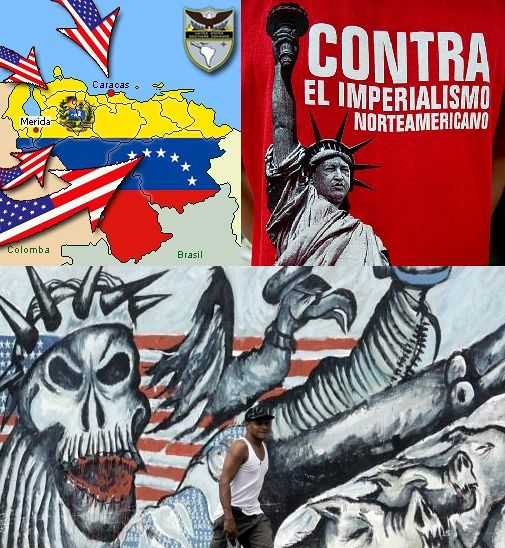
Howard, Asio, and the Neocons were all pretty chumy back then. Any wonder they wanted Julian put down along with anybody who wants to rewrite history.

Satan Confirms Dick Cheney’s Reservation In Hell

Vice President Cheney Criticizes Democrats Iraq Spending Bill

THE RIVER STYX, HELL (CT&P) – At a press conference early this morning, Lucifer, Lord of the Underworld, confirmed that Dick Cheney, former vice president of the United States and giant bipedal penis, will be spending eternity roasting in the fires of Hell.

cheney2

“I just wanted to make it clear to the American public that this asshole will not get away with his crimes against humanity,” said Satan. “I am well aware that the entire free world wants to put this bastard on trial for his crimes along with a host of other government employees including CIA officers who carried out war crimes in the name of revenge and some sort of perverse ‘justice.’ However, we all know that the current administration lacks the testicles to do so,” said the Prince of Darkness.

“I however, have no such qualms. Mr. Cheney will be receiving hourly refreshment via his rectum in the not too distant future, and that’s just the start of the fun for this dirty, filthy, lying son of a bitch.”

The Devil was not specific as to when Mr. Cheney will assume room temperature and begin his infinitely long sentence, but Satanic Press Secretary Lord Balthazar told journalists that we should not have to wait very long, as His Majesty will not be making any more deals with Cheney for new heart muscles ripped from the innocent in order to prolong his miserable life.

pulp

Lord Balthazar also said that many of the CIA’s apologists like Senator Saxby Chambliss (R-GA) better see the light and pray for forgiveness or they will soon be in the same boat with Mr. Cheney.

Lord Balthazar said that Mephistopheles had instructed Charon to charter an extra-large boat from Carnival Cruise lines so that no one would be left out of the upcoming crossing into the depths of Hell.

Memories: When Shep Smith Laid Down The Law At Fox News About Torture

Memories: When Shep Smith Laid Down The Law At Fox News About Torture

Memories: When Shep Smith Laid Down The Law At Fox News About Torture.

US Congress: Clique of Criminals or Cowards?

US Congress: Clique of Criminals or Cowards?. 54100.jpeg

It is by now patently obvious to all, except perhaps to a politically myopic, pith-headed, uncultured twit, that the only Representing the House of Representatives does is for itself and the lobbies which pull its members’ strings. A fifth-world style of governance; a clique of criminals, or cowards incapable of standing up for their electorate?

Ron Paul’s recent article “Reckless Congress Declares War on Russia”, referring to the decision by Congress to pass H. Res. 758, in his words “16 pages of war propaganda”, states that this is “one of the worst pieces of legislation ever”. Needless to say, it is a predictable bunch of Russophobic nonsense cobbled together by a handful of neocons pandering to the whims of the lobbies who pull their strings. It is also a Resolution which backs criminal activity contravening every fiber of international law.

What is even more sickening is that the bill only received ten votes against, meaning that either the entire House is in cavorts with criminal policies or else its members are sniveling cowards who do not have the guts and the spine to stand up for the principles they were elected to represent. Does the House of Representatives represent anything other than the interests of its members? And if this is the case, then why do the American people not stand up and be counted for once? Do they not have any principles either, or does their wonderfully democratic system deny them the tools to make a difference and have their say?

Examining the document, it blames Russia for invading Ukraine (Paragraph 3), blames Russian-backed forces for the downing of passenger aircraft MH 17 (Paragraph 14) and demands that Russian forces withdraw from Ukraine (Paragraph 13) then condemns Russia for selling weaponry to Syria (Paragraph 16) before going on to accuse Russia of invading Georgia in 2008 (Paragraph 22) and rubber-stamping approval for the USA to provide combat materials to Ukraine.

In short, the Resolution is a study in hypocrisy and contravenes international law, which forbids the involvement of a country in the internal affairs of a sovereign nation unless there are proven activities which directly pose a threat to the said country. Such was not the case in Iraq, such was not the case in Libya, such was not the case in Syria, where the activities of the USA and its allies have led to the creation of a serious security threat.

Examining the Ukraine issue, under the Ukrainian Constitution, the precepts for the removal of the President involved an impeachment process based on a formal accusation charging the President with a crime, backed by the incumbent Prime Minister, this Resolution backed in turn by the judges of the Constitutional Court and then the process backed by a three-quarters majority vote in Parliament. When Prime Minister Mykola Azarov resigned on January 28, 2014, he was replaced by Sergiy Arbuzov. When the Putsch placed Arseniy Yatsenyuk as Prime Minister and terminated the powers of the Supreme Court judges, convening a Parliament without many of the Party of Regions Members and using the Multiple Voting system (deputies voting in the name of absentee members, outlawed by President Yanukovich) it was basically denying itself any legal basis to act and guaranteeing that all of its actions would be illegal. The proper course of action would have been peaceful opposition until the elections. Let us remember that President Yanukovich was elected with 49 per cent of the vote, in a free and fair, democratic election

In the event, President Viktor Yanukovich was removed on “circumstances of extreme urgency” which was not a legal precept for removal from office. Being forced out of office by an armed uprising is meaningless and has no foundations whatsoever under any international, regional or national law. The only development which had any legal backing was the Agreement on the Settlement of the Crisis in Ukraine, signed between President Yanukovich and the Opposition on February 21, 2014, under which it was agreed to bring the 2015 election forward to December 2014.

Therefore, any activity surrounding or arising from the Ukraine crisis in 2014 has to begin with the principle that the Putsch was illegal and therefore the legitimate government of Ukraine was removed. This being the case, the body with powers to enforce the law in the Republic of Crimea was the Parliament of this Republic, which had been Russian territory for longer than the USA has been a nation, until February 19, 1954, when the Supreme Soviet of the USSR decided to transfer Crimea from the Russian Soviet Federative Socialist Republic to the Ukrainian Soviet Socialist Republic. No wonder its people voted to return back home in the free and fair Referendum, especially after the Putsch Government in Kiev had started issuing anti-Russian edicts amid calls for the slaughter of Russians and Jews on the streets, thronging with armed Fascists and thugs.

Not surprisingly, after Fascist massacres in Odessa, Mariupol and Donetsk, in which Russian-speaking civilians were murdered en masse by Fascists supporting the new Putsch government in Kiev, the men and women of the south-east Ukraine took up arms to protect themselves and declared that they wanted nothing to do with the new pro-Western forces claiming to govern the country.

As for the accusations against Russia, where is the evidence that Russia is involved directly? Where are the satellite photographs? If the members of Congress knew the Donbass region and its people, they would see clearly that the south-eastern Ukrainians need Russian military intervention for nothing, and anyway if Russia was involved, Kiev would have been taken within two days.

As for the downing of flight MH 17, how can Congress make any accusations when the official investigation has not even been concluded and when there is plenty of evidence which points toward a Ukrainian military aircraft shooting it down, thinking it was President Putin’s plane? Is Congress irresponsible, or is it packed with barefaced liars?

As for Syria, at least Russia’s weaponry goes to fighting against Islamic State, whereas the USA’s goes towards arming it. Russia did not side with terrorists to destroy Libya, the country with the highest human development index in Africa, the USA did. Russia did not attack Iraq, deploying military hardware against civilian structures breaching every norm and precept under international law. The USA did. As for saying Russia attacked Georgia, nonsense. Russia staged a very measured response to a murderous act of provocation, when Georgia attacked and murdered Russian citizens.

So to conclude, Congress is apparently either a bunch of criminals, giving the nod to more intervention in the internal affairs of a sovereign state, or else appears to be jammed full of sniveling yellow-bellied cowards, kicked around from pillar to post, too frightened to stand up and represent the interests of the people who elected them. The lobbies say jump, the Members ask how high.

And this is the body that represents the United States of America? Can I hear the Founding Fathers turning in their graves?

Timothy Bancroft-Hinchey

Filed under:

6 Videos That Didn’t Cause National Outcry of Unarmed Men Attacked by Cops

TooManyCopsTooLittleJustice

http://racisminamerica.org/6-videos-that-didnt-cause-national-outcry-of-unarmed-men-attacked-by-cops/

Filed under:

America’s epidemic of killer cops: Why would cops in America shoot, strangle, or beat to death an unarmed person? Answer: Because they can.


America's epidemic of killer cops. 54053.jpeg

It is a sad reality in today’s America that cops can not only do these things with immunity and impunity, they can actually do them in front of thousands, sometimes millions, of witnesses, and still get away with it.

Don’t take my word for it.  Look at the horrific beating death of Kelly Thomas, a homeless man in Fullerton, California.  Videotaped evidence showed six (yes six) cops beating an unarmed Thomas as he begged for his life.  According to the Website Police State USA, some of these officers are laughing after the incident, and one even boasts about hitting Thomas “probably twenty times in the face with [his] Taser.”

Yet, in an all too predictable pattern, a jury of idiots acquitted the cops charged in Thomas’s death.

Although protests erupted after this egregious verdict, both Thomas’s death and its aftermath failed to receive the extensive media coverage that has been devoted to the killing of Michael Brown in Ferguson, Missouri.  Some have argued that this is because Thomas was white, so his case lacked the racial elements America’s corporate-controlled media love to exploit for ratings and profits.

But even though the media may be guilty of selectively promoting stories of police brutality based upon their racial components, it should also be remembered that these same media are equally complicit in making African-Americans the “face of crime,” thus fueling an environment of suspicion and fear that often causes African-Americans to be treated more harshly by police, prosecutors, and judges, and for crimes committed against them to be taken less seriously.

If there is one positive that can be salvaged from the events in Ferguson, it is that alleged cases of excessive force and police brutality that did not influence national news like the Brown killing are now being revisited.  According to the Los Angeles Times, South Bend Tribune, and Huffington Post, other victims include James Boyd, a homeless man who was shot by police in Albuquerque, New Mexico; Amadou Diallo, an innocent man who was shot nineteen times in New York City after being mistaken for a fugitive; Samantha Ramsey, shot to death by a sheriff’s deputy in Boone County, Kentucky; Christopher Moreland, who was, according to a federal judge, beaten “mercilessly” by two cops in St. Joseph County, Indiana; and Jonathan Ferrell, shot ten times by a Charlotte, North Carolina police officer while looking for help after a traffic accident.


Sadly, the names on this list could go on, but the message is clear:  In all these cases, except for Ferrell’s, either the killings were ruled to be justified, prosecutors and/or grand juries refused to indict, or the cops were acquitted of any wrongdoing.  And in Ferrell’s case, it actually required a second grand jury to secure an indictment because the first apparently thought “voluntary manslaughter” was too severe a charge for a white police officer who gunned down an unarmed African-American.

Which raises two more questions:  How and why?

The “How” is simple.  Investigations of excessive force follow predictable patterns.  First, there is the “investigation” (aka cover-up).  In this phase, cops seize cellphones and other videos from witnesses as “evidence,” to ensure the media and public don’t have access to them.  Then police reports, stories, and testimony are fabricated to ensure an officer’s actions comport with existing laws regarding use of force.  Next, all officers are coached to get their stories straight, and to conceal any evidence that contradicts the “official” version.

Then comes the prosecutor’s role.  In America, most county prosecutors are elected officials.  As such, they usually campaign on the basis of their “conviction rates,” and/or being “tough on crime.”  The office of prosecutor often segues into opportunities to obtain higher political offices or judgeships.  But achieving these ambitions requires a symbiotic relationship with the police; therefore, prosecutors will do nothing to injure that relationship, and anything to maintain it.

So if victims of police brutality and/or excessive force survive their ordeals, they are likely to be charged with a plethora of imaginary crimes.  The prosecutor then tells the victim that the charges will be dropped if he/she agrees to not take further action against the police.  If the victim refuses this “deal,” the prosecutor will work zealously to obtain a bogus guilty verdict, to not only “justify” what the cops did, but also to weaken any potential civil lawsuit the victim might file.  If a police brutality and/or excessive force victim dies, all the better, because only the cops are around to tell their well-rehearsed version of events.

If prosecutors are concerned about the political fallout from refusing to indict cops accused of using excessive force, they will frequently conceal their biases behind a so-called “grand jury.”  Evidence and testimony presented to a grand jury is largely in the control of a prosecutor and thus can be extremely one-sided, leading many in the legal profession to joke that a prosecutor could obtain a grand jury indictment against a grapefruit with little difficulty.

This is why many in Ferguson, and throughout America, are looking askance at the grand jury verdict in the Michael Brown case, and how prosecutorial bias favoring the police might have affected how testimony and/or evidence was presented.

What a grand jury really does is give prosecutors a facade to hide behind.  They can face the public with a, “Gee whiz, it’s not my fault an indictment wasn’t issued.  It was the grand jury’s decision.”

On those extremely rare occasions when cops are actually put on trial for using excessive force, it is almost a certainty that defense attorneys will be blessed with a panel of jurors who view every cop as Andy of Mayberry, and therefore will readily swallow canned arguments about how police officers have dangerous jobs and risk their lives to protect the public; how these officers were simply “following their training”; and how the person they injured or killed was being “non-compliant,” “combative,” and/or “appeared to be reaching for a weapon.”

The answer to the “Why” question is a little more complex.

I have argued in several previous Pravda.Ru articles that America’s so-called “legal system” is not designed to obtain truth, nor is it concerned with even the most rudimentary principles of right and wrong.  In fact, the “system” will work harder to perpetuate and rationalize injustice than it will to obtain justice, and will almost always ignore, and in some cases even reward, criminality that serves it.

But juries are only exposed to the system on a case by case basis.  So why do so many of them routinely excuse actions by cops (and wannabe cops like George Zimmerman) that would cause them revulsion and outrage if committed by civilians?

As I suggested above, one problem is the media-created perception that causes white, middle class Americans to fear crime more than they fear interactions with the police, and to associate criminality with racial minorities.  Racial minorities, however, while sharing this fear of crime, must also struggle with the burden of being automatically perceived as criminals by the police, because of their skin color, dress, hair style, music, and/or location where they happen to be walking or driving.

Another problem is the fear of acknowledging police brutality.  Several of the alleged excessive force victims I’ve discussed in this article were white, so it is evident that nobody is exempt from being victimized by police brutality.

But that is a discomforting scenario to live with.  People do not want to believe that a late-night trip to the grocery store, or a stroll through a parking lot (Kelly Thomas), driving home from a party (Samantha Ramsey), or seeking assistance after a traffic accident (Jonathan Ferrell) can result in an encounter with police that ends in their death.  So the natural instinct is to blame the victims of police brutality, to find something, anything, no matter how minute, that can be used to rationalize a cop’s actions.

Lastly, and perhaps most tragically, is the belief that some people are disposable.  Predominantly white, middle class juries, whether they consciously admit it or not, may not consider the life of a racial minority, or a homeless person, to have the same value as theirs.

The final question that many are reluctant to discuss is “Who really wants to be a cop?”  After all, some of the canned arguments used by defense attorneys have undeniable veracity:  Cops do have dangerous jobs, and they routinely witness the worst in human behavior.

There are (with some exceptions) usually two types of people who want to be police officers:  Bullies who desire the power over others being a police officer brings; and idealists who enter the profession with the noblest of intentions, but eventually find themselves succumbing to a bitterness and disillusionment that compels them to either cover-up for the bullies or become one.  This means that incidents of police brutality and/or excessive force frequently evolve from egotistical anger against individuals whose only “crime” is disrespecting a cop’s authority.

The reason so many cops go unpunished is because those who control America’s so-called “criminal justice” system fear that punishing cops for their criminality will not only result in the loss of officers currently employed, but also discourage others from wanting to become cops.

In other words, ignoring, excusing, or covering up incidents of police brutality and/or excessive force are considered by those in power to be acceptable alternatives to having a shortage of police officers.

The irony is that all the cops, prosecutors, and jurors willing to ignore, excuse, or cover-up police brutality and/or excessive force are not doing society any favors.  They are causing all cops, not just the bullies, to be viewed as corrupt, brutal, and racist; they are fueling a cynicism that reduces the public trust and cooperation so essential to solving crimes; and they are further dividing America along racial and economic lines.

David R. Hoffman

Legal Editor

5 US Assumptions About the Middle East That Are Just Plain Wrong After thirteen years of the failed war on terror, it’s time to scrutinize America’s assumptions about military involvement in the Middle East. Andrew Bacevich Novem

Iraqi soldiers

Shi’ite fighters and Iraqi army members participate in an intensive security deployment against Islamic State militants in Jurf al-Sakhar,

This article originally appeared at TomDispatch.com. To stay on top of important articles like these, sign up to receive the latest updates from TomDispatch.com.

“Iraq no longer exists.” My young friend M, sipping a cappuccino, is deadly serious. We are sitting in a scruffy restaurant across the street from the Cathedral of St. John the Divine on Manhattan’s Upper West Side. It’s been years since we’ve last seen each another. It may be years before our paths cross again. As if to drive his point home, M repeats himself: “Iraq just doesn’t exist.”

His is an opinion grounded in experience. As an enlisted soldier, he completed two Iraq tours, serving as a member of a rifle company, before and during the famous Petraeus “surge.” After separating from the Army, he went on to graduate school where he is now writing a dissertation on insurgencies. Choosing the American war in Iraq as one of his cases, M has returned there to continue his research. Indeed, he was heading back again that very evening. As a researcher, his perch provides him with an excellent vantage point for taking stock of the ongoing crisis, now that the Islamic State, or IS, has made it impossible for Americans to sustain the pretense that the Iraq War ever ended.

Few in Washington would endorse M’s assertion, of course. Inside the Beltway, policymakers, politicians and pundits take Iraq’s existence for granted. Many can even locate it on a map. They also take for granted the proposition that it is incumbent upon the United States to preserve that existence. To paraphrase Chris Hedges, for a certain group of Americans, Iraq is the cause that gives life meaning. For the military-industrial complex, it’s the gift that keeps on giving.

Considered from this perspective, the “Iraqi government” actually governs, the “Iraqi army” is a nationally representative fighting force, and the “Iraqi people” genuinely see themselves as constituting a community with a shared past and an imaginable future.

Arguably, each of these propositions once contained a modicum of truth. But when the United States invaded Iraq in 2003 and, as then–Secretary of State Colin Powell predicted, broke the place, any merit they previously possessed quickly dissipated. Years of effort by American occupiers intent on creating a new Iraq out of the ruins of the old produced little of value and next to nothing that has lasted. Yet even today, in Washington the conviction persists that trying harder might somehow turn things around. Certainly, that conviction informs the renewed US military intervention prompted by the rise of IS.

So when David Ignatius, a well-informed and normally sober columnist for the Washington Post, reflects on what the United States must do to get Iraq War 3.0 right, he offers this “mental checklist”: in Baghdad, the United States should foster a “cleaner, less sectarian government”; to ensure security, we will have to “rebuild the military”; and to end internal factionalism, we’re going to have to find ways to “win Kurdish support” and “rebuild trust with Sunnis.” Ignatius does not pretend that any of this will be easy. He merely argues that it must be—and by implication can be—done. Unlike my friend M, Ignatius clings to the fantasy that “Iraq” is or ought to be politically viable, militarily capable and socially cohesive. But surely this qualifies as wishful thinking.

The value of M’s insight—of, that is, otherwise intelligent people purporting to believe in things that don’t exist—can be applied well beyond American assumptions about Iraq. A similar inclination to fantasize permeates, and thereby warps, US policies throughout much of the Greater Middle East. Consider the following claims, each of which in Washington circles has attained quasi-canonical status.

* The presence of US forces in the Islamic world contributes to regional stability and enhances American influence.

* The Persian Gulf constitutes a vital US national security interest.

* Egypt and Saudi Arabia are valued and valuable American allies.

* The interests of the United States and Israel align.

* Terrorism poses an existential threat that the United States must defeat.

For decades now, the first four of these assertions have formed the foundation of US policy in the Middle East. The events of 9/11 added the fifth, without in any way prompting a reconsideration of the first four. On each of these matters, no senior US official (or anyone aspiring to a position of influence) will dare say otherwise, at least not on the record.

Yet subjected to even casual scrutiny, none of the five will stand up. To take them at face value is the equivalent of believing in Santa Claus or the Tooth Fairy—or that John Boehner and Mitch McConnell really, really hope that the Obama administration and the upcoming Republican-controlled Congress can find grounds to cooperate.

Let’s examine all five, one at a time.

The Presence of US Forces: Ever since the US intervention in Lebanon that culminated in the Beirut bombing of October 1983, introducing American troops into predominantly Muslim countries has seldom contributed to stability. On more than a few occasions, doing so has produced just the opposite effect.

Iraq and Afghanistan provide mournful examples. The new book Why We Lost, by retired Lieutenant General Daniel Bolger, finally makes it permissible in official circles to declare those wars the failures that they have been. Even granting, for the sake of argument, that US nation-building efforts were as pure and honorable as successive presidents portrayed them, the results have been more corrosive than constructive. The IS militants plaguing Iraq find their counterpart in the soaring production of opium that plagues Afghanistan. This qualifies as stability?

And these are hardly the only examples. Stationing US troops in Saudi Arabia after Operation Desert Storm was supposed to have a reassuring effect. Instead, it produced the debacle of the devastating Khobar Towers bombing. Sending GIs into Somalia back in 1992 was supposed to demonstrate American humanitarian concern for poor, starving Muslims. Instead, it culminated in the embarrassing Mogadishu firefight, which gained the sobriquet Black Hawk Down, and doomed that mission.

Even so, the pretense that positioning American soldiers in some Middle East hotspot will bring calm to troubled waters survives. It’s far more accurate to say that doing so provides our adversaries with what soldiers call a target-rich environment—with Americans as the targets.

The Importance of the Persian Gulf: Although US interests in the Gulf may once have qualified as vital, the changing global energy picture has rendered that view obsolete. What’s probably bad news for the environment is good news in terms of creating strategic options for the United States. New technologies have once again made the United States the world’s largest producer of oil. The United States is also the world’s largest producer of natural gas. It turns out that the lunatics chanting “drill, baby, drill” were right after all. Or perhaps it’s “frack, baby, frack.” Regardless, the assumed energy dependence and “vital interests” that inspired Jimmy Carter to declare back in 1980 that the Gulf is worth fighting for no longer pertain.

Access to Gulf oil remains critically important to some countries, but surely not to the United States. When it comes to propping up the wasteful and profligate American way of life, Texas and North Dakota outrank Saudi Arabia and Kuwait in terms of importance. Rather than worrying about Iraqi oil production, Washington would be better served ensuring the safety and well-being of Canada, with its bountiful supplies of shale oil. And if militarists ever find the itch to increase US oil reserves becoming irresistible, they would be better advised to invade Venezuela than to pick a fight with Iran.

Does the Persian Gulf require policing from the outside? Maybe. But if so, let’s volunteer China for the job. It will keep them out of mischief.

Arab Allies: It’s time to reclassify the US relationship with both Egypt and Saudi Arabia. Categorizing these two important Arab states as “allies” is surely misleading. Neither one shares the values to which Washington professes to attach such great importance.

For decades, Saudi Arabia, Planet Earth’s closest equivalent to an absolute monarchy, has promoted anti-Western radical jihadism—and not without effect. The relevant numbers here are two that most New Yorkers will remember: fifteen out of nineteen. If a conspiracy consisting almost entirely of Russians had succeeded in killing several thousand Americans, would US authorities give the Kremlin a pass? Would US-Russian relations remain unaffected? The questions answer themselves.

Meanwhile, after a brief dalliance with democracy, Egypt has once again become what it was before: a corrupt, oppressive military dictatorship unworthy of the billions of dollars of military assistance that Washingtonprovides from one year to the next.

Israel: The United States and Israel share more than a few interests in common. A commitment to a “two-state solution” to the Palestinian problem does not number among them. On that issue, Washington’s and Tel Aviv’s purposes diverge widely. In all likelihood, they are irreconcilable.

For the government of Israel, viewing security concerns as paramount, an acceptable Palestinian state will be the equivalent of an Arab Bantustan, basically defenseless, enjoying limited sovereignty and possessing limited minimum economical potential. Continuing Israeli encroachments on the occupied territories, undertaken in the teeth of American objections, make this self-evident.

It is, of course, entirely the prerogative—and indeed the obligation—of the Israeli government to advance the well being of its citizens. US officials have a similar obligation: they are called upon to act on behalf of Americans. And that means refusing to serve as Israel’s enablers when that country takes actions that are contrary to US interests.

The “peace process” is a fiction. Why should the United States persist in pretending otherwise? It’s demeaning.

Terrorism: Like crime and communicable diseases, terrorism will always be with us. In the face of an outbreak of it, prompt, effective action to reduce the danger permits normal life to continue. Wisdom lies in striking a balance between the actually existing threat and exertions undertaken to deal with that threat. Grown-ups understand this. They don’t expect a crime rate of zero in American cities. They don’t expect all people to enjoy perfect health all of the time. The standard they seek is “tolerable.”

That terrorism threatens Americans is no doubt the case, especially when they venture into the Greater Middle East. But aspirations to eliminate terrorism belong in the same category as campaigns to end illiteracy or homelessness: it’s okay to aim high, but don’t be surprised when the results achieved fall short.

Eliminating terrorism is a chimera. It’s not going to happen. US civilian and military leaders should summon the honesty to acknowledge this.

My friend M has put his finger on a problem that is much larger than he grasps. Here’s hoping that when he gets his degree he lands an academic job. It’s certain he’ll never find employment in our nation’s capital. As a soldier-turned-scholar, M inhabits what one of George W. Bush’s closest associates (believed to be Karl Rove) once derisively referred to as the “reality-based community.” People in Washington don’t have time for reality. They’re lost in a world of their own.

Someone Called The Cops Because A Black Guy Had His Hands In His Pocket: By Susie Madrak

Someone named B. McKean posted this online today without much information. It took place in Pontiac, Michigan. He started videotaping the encounter and the cop whips out his phone and does the same thing. The cop sounds apologetic, but says he had to check him out because they got a phone call about his “suspicious” behavior.

Damn. Walking with your hands in your pocket while black. In Michigan, in the cold.

What the hell is wrong with this country? I guess we should be grateful the cop didn’t shoot him, what with him being “suspicious” and all.

The American legacy: It’s what Conservatives simply want us to forget. However it’s internalised in each and everyone of us in different ways. It’s history it’s culture for some Australians it’s a 40,000 year journey. It doesn’t mean that’s all we are , but it’s better recognised. In decades to come we will be judged because of who we are today.

The American legacy. 54036.jpeg

By Dave Harrison

When Osama bin Laden was killed in cold blood in Pakistan and many demanded to see his death-photos for verification, President Obama refused and said, “That’s not who we are,” which begs the question: Who are the Americans?

Are Americans the ones who annexed the Philippines, denied them their own republic and then engaged in a war (1899-1902) with those who opposed them at the cost of 1.4 million Filipino lives? Are they the ones who burned villages, murdered their entire populations, and rounded up all boys over ten and young men and had them executed? Is that who they are?

Are Americans the ones who supported, supplied with arms and intelligence-gathering and bolstered many, brutal South and Central American dictatorships like Batista and Pinochet whose death-squads callously murdered tens of thousands of people in the 1950s, ’60s and ’70s simply because they believed in social justice by way of a social-minded government?

Are Americans the ones who experimented with atomic weapons on Hiroshima which killed over 80,000 people – including innocent men, women, and children – who were not actively involved in the war and then repeated its massacre on Nagasaki? Hiroshima had no military value and American bomber pilots were warned not to drop conventional bombs on it lest they ruin their precious experiment. Is that who they are?

Are Americans the ones who succeeded the French in Vietnam, picked up an already lost war and made it their own all based on a faulty thesis known as the “Domino Effect” which later proved to be nonsense?  And while they pursued this baseless theory, put an entire country to the torch at the cost of another 2,000,000 Vietnamese lives and 58,000 of their own, the American military-industrial complex thrived. Is that who they are?

Are Americans the ones who burned villages, shot the villagers’ animals, destroyed their crops and in one instance evacuated an entire village of 504 defenseless old men, women, children and even babes in arms in Mi Lai in 1969 and then shot them down like dogs in a ditch with their M-16 rifless? Is that who they are?


Are Americans the ones who provided the experimental drug LSD to a Montreal asylum to test out on Canadian patients including one MP’s wife in the 1960s without their knowledge or consent? Are they the ones who sprayed a Canadian city (Winnipeg) to make long-term chemical tests on Canadian civilians rather than risk their own? Is that who they are?

Are Americans the ones who entered Korea on a “police action” and then engaged in the “Forgotten War” at the cost of 2,000,000 civilian Korean lives? How can Koreans forget? Is that who they are?

Are Americans the ones who followed George Bush and his senseless side-kick, Dick Cheney, to invade Iraq based on outright lies and half-baked intelligence, which almost everyone else knew was completely untrue? Are they the ones who headed the “Coalition of the Willing” to wilfully destroy a complete country and its infrastructure, kill 50,000 of its soldiers defending their own country, kill another 100,000 civilians, displace over a half million Iraqi citizens and then occupy it and rebuild it under the direction of Halliburton Company which was once headed by Dick Cheney himself? Is that who they are?

Are Americans the ones who set off their first, atomic test in the Nevada desert on July 16th, 1945 with American and Canadian soldiers present within 1000 yards of the blast without any radiation protection whatsoever, marched them to Ground Zero through the atomic dust afterward, and then casually swept them off with corn brooms to show that it was harmless? When they later died off like flies from cancer, victims were told, “Prove it.” Is that who they are?

Are Americans the ones who deviously tested Agent Orange in New Brunswick, Canada along transmission lines before they used it inVietnam at the cost of many Canadian lives and the tortured lives of thousands of Vietnamese? Is that who they are?

Are Americans the ones who incarcerated hundreds of individuals at Guantanamo Bay and left them without any legal rights, tortured them in various ways – like water boarding and sleep deprivation – and then threw away the keys? Is this who they are?

Are Americans the ones who send in drones to kill one individual whom they suspect of being a terrorist – without arrest and a fair trial but only their suspicions – and without any consideration for the rights of hundreds of innocent victims? And, when they anonymously kill dozens of innocent victims – women and children included – they simply issue an apology for the mistake and do it again later. Is that who they are?

Are Americans the ones who place on their coins, “In God we trust“? We are left to ponder: Which God is that? (It’s certainly not the one I know.) Is that who they are, or is that how history will remember America?

In decades to come, America will be judged harshly.

Dave Harrison

Wisc. Police Come To Man’s Home, Arrest Him For Calling Them Racists On Facebook : Coming our way Australia. Even more Scott Morrison can make you stateless.

Wisc. Police Come To Man's Home, Arrest Him For Calling Them Racists On Facebook

A federal lawsuit filed by a Wisconsin man alleges that Arena police violated his civil rights by charging him for calling officers racists on Facebook.

A federal lawsuit filed by a Wisconsin man alleges that Arena police violated his civil rights by charging him for calling officers racists on Facebook.

In 2012, Thomas G. Smith had seen an Arena Police Department Facebook post thanking community members for helping to detain two black children. Smith responded with a profanity-laced message about how Arena officers were racists.

A federal lawsuit obtained by the StarTribune said that Officer Nicholas Stroik had deleted Smith’s comments, and the comments of others who accused police of targeting suspects based on race.

Smith then received a call from officers, who wanted to know if he had posted the comment. Smith replied that he had posted the Facebook message, and that he had meant it.

That night, officers arrested him at his home in Arena. He was charged with disorderly conduct and unlawful use of computerized communications.

Prosecutors asserted that his words had not been protect by the First Amendment of the Constitution because they could incite violence. Smith was convicted, and sentenced to probation with community service.

But in July, a state appellate judge overturned the case on the grounds that the Supreme Court’s so-called “fighting words doctrine” only applied when the speaker was in close proximity to the listener. The judge ruled that Smith’s Facebook messages should have been protected under the First Amendment.

Smith’s lawsuit alleges that the officers retaliated against him. He is seeking legal fees and unspecified damages. The lawsuit noted that his arrest could have the effect of chilling free speech, and that the department only chose to delete Facebook messages that were critical of officers.

Filed under:

Abbott arrested giving food to the homeless…..coming your way soon

90-year-old Arnold Abbott retrieves his driver license to present to police during an altercation over Fort Lauderdale’s new law restricting distributing food to the homeless.

Is Giving Food to the Homeless Illegal in Your City Too?

Last week, a 90-year-old vet got busted by cops for feeding the hungry. He’s not alone.

Last week, 90-year-old World War II veteran Arnold Abbott made national headlines when he got busted by cops in Fort Lauderdale, Florida twice in one week—for giving out food to homeless people. While serving a public meal on November 2, Abbott told the Sun-Sentinel, “a policeman pulled my arm and said, ‘Drop that plate right now,’ like it was a gun.” Abbott runs a nonprofit group that regularly distributes food in city parks. Because of an ordinance the city passed this October that restricts feeding the homeless in public, his charity work is now potentially illegal.

Abbott was cited again three days later in a different city park. Now the retired jewelry salesman is facing up to 60 days in jail or a $500 fine. And he’s not the only one risking jail time for generosity: 71 cities across the country have passed or tried to pass ordinances that criminalize feeding the homeless, according to Michael Stoops, director of community organizing at the National Coalition for the Homeless.

National Coalition for the Homeless

The number of cities trying to pass these so-called “feeding bans” is on the rise, says Stoops. An October report by the National Coalition for the Homeless found that since January of 2013, 22 cities have successfully passed restrictions on food-sharing, and the legislation is pending in nine other cities. (Fort Lauderdale’s measure passed a few days after the Coalition’s report published.)

Most of these measures regulate public property use, especially parks, by either requiring permits to share food on public property or banning the practice altogether. Citations for violating these laws are not uncommon. In Orlando in 2011, more than 20 activists got arrested while ladling food for about 35 people in a park, in violation of the city’s restrictions on feeding the homeless. In 2013, police threatened to arrest members of a Raleigh, North Carolina church group who regularly hand out coffee and sausage biscuits to the needy on weekend mornings. Just this May, six people in Daytona Beach, Florida were fined more than $2,000 for feeding homeless people at a park. (The fines were ultimately dropped.)

“They don’t want the homeless in the downtown areas. It interferes with business.”

A few cities have imposed food safety precautions, like requiring charities to get a food handler’s permit, or mandating that they only serve hot food prepared in approved locations or in the form of pre-packaged meals. These sorts of restrictions regularly shut out donated meals. And in many cases, they seem to be unfairly targeting the homeless: When the issue of food safety was raised during a court hearing on Myrtle Beach, South Carolina’s food-sharing law, the legal director of the state’s ACLU chapter pointed out that similar restrictions weren’t being levied against family reunions in parks, for instance, and that it had never received a single report of homeless people getting sick from the food. A Utah state representative said the same thing about Salt Lake City’s food-sharing law.

Stoops says that the uptick in food-sharing restrictions is driven in part by what cities perceive to be the rising visibility of the homeless. “They don’t want the homeless in the downtown areas. It interferes with business,” Stoops says. “Cities have grown tired of the problem, so they think by criminalizing homelessness they’ll get rid of the visible homeless populations.”

South Carolina’s ACLU chapter pointed out that it had never received a single report of homeless people getting sick from the food.

Data doesn’t back up the notion that homelessness has grown more apparent: Between 2007 and 2014, homelessness decreased by 11 percent, according to the Department of Housing and Urban Development’s point-in-time counts, considered the most scientific census of the homeless. Numbers of the unsheltered homeless, who are typically more visible, fell by 23 percent between 2007 and 2013.

Still, visibility persists as an oft-cited motivator for those who support these measures. “The food sharing itself was not necessarily the issue, but there was a host of ancillary behaviors when people gathered after the food sharing,” Kelly McAdoo, the assistant city manager of Hayward, California, told NBC after the city enacted restrictions for food-sharing on public property this past February. She said people would stay in the public park drinking, relieving themselves, and fighting; other residents “wouldn’t feel comfortable coming to these parks.”

Others say that food-sharing should be curbed because it enables homeless people to stay homeless. Stoops disagrees with that view. He notes that challenges like lack of job opportunity and mental or physical disability are what cause homelessness—not the occasional free meal.

For now, all eyes are still on Fort Lauderdale. Abbott has gotten calls from all over the world, and he confronted the city’s mayor on live TV this past Sunday. Now he’s bracing himself for more altercations with police. Last weekend, Abbott promised to return to the park where he’s served meals to the homeless for more than two decades: “We will continue as long as there is breath in my body.”

The Richest 0.1 Percent Is About to Control More Wealth Than the Bottom 90 Percent

While a complex web of factors have contributed to the rise in income inequality in America, a new research paper says most of the blame can be largely placed in the immense growth experienced by the top tenth of the richest 1 percent of Americans in recent years. From the report:

The rise of wealth inequality is almost entirely due to the rise of the top 0.1% wealth share, from 7% in 1979 to 22% in 2012, a level almost as high as in 1929. The bottom 90% wealth share first increased up to the mid-1980s and then steadily declined. The increase in wealth concentration is due to the surge of top incomes combined with an increase in saving rate inequality.

So, who are the 0.1 percent among us? According to Emmanuel Saez and Gabriel Zucman, the paper’s researchers, the elite group is a small one, roughly composed of 160,000 families with assets exceeding $20 million, but their grip on America’s wealth distribution is about to surpass the bottom 90 percent for the first time in more than half a century.  Today’s 0.1 percent also tend to be younger than the top incomers of the 1960’s, despite the fact the country as a whole has been living longer—proving once again, that there has truly never been a more opportune time to be rich in America:

rise of the megarich

Pictorial images tells a story of different realities of democracy

Democracy in the hands of idiots. Part III

Democracy in the hands of idiots. Part III. 53898.jpeg

Okay world, that ritualistic, vacuous exercise in futile optimism, known as an “election” in America, is over, and the idiots again have spoken.

But how could they not?  After all, the entire concept of “democracy” in America’s corrupt, two-party system is nothing more than a farcical illusion, and the extent of this corruption has only been magnified by the Koch brothers controlled majority on the United States Supreme Court, who, in recent rulings, gave billionaires and corporations unbridled power to buy politicians of their choice.

In previous Pravda.Ru articles, I have argued that history is nothing more than a pendulum incessantly swinging back and forth between overreaction and regret, and the recent elections in America have vividly confirmed this thesis.

The coup of 2000, for example, that-thanks to a heavily politicized Supreme Court-saw George W. Bush steal the election from Al Gore, forever shattered the myth that politicians are concerned about “public service.”  If this were the case, then Bush, and indeed any person with a modicum of integrity, would have conceded defeat instead of defying the will of the people.

If there is one reality that slimy politicians can count on in America, it is the fact that Americans are notoriously devoid of long-term memories.  Although Bush entered office amid great outrage, the (conveniently timed?) attacks on 9/11/2001 quickly elevated him, and likeminded filth like Dick Cheney and Donald Rumsfeld, to almost godlike status.

Segueing off of this deification, these kleptocrats decided to both ensure Bush’s reelection and further enrich themselves and their cronies in the military-industrial complex by manufacturing fictitious reasons to invade Iraq.

After all, history has shown that American voters are loath to change presidents during wartime, and, as Bush’s reelection demonstrated, it doesn’t matter who instigated the war, or for what reasons.

By the time the Bush/Cheney/Rumsfeld lies were exposed, it was too late.  But the regret it caused did result in the election of Barack Obama.

And, once again, optimism reigned supreme, especially amongst progressives who, for decades, were compelled to hold their noses while voting for Democratic candidates who championed none of their interests, but who represented the lesser of two evils.

It didn’t take long for Obama to prove that his campaign promises of progressive reform were empty words.  In many ways, with the increased spying on American citizens, the targeting and imprisonment of reporters and whistleblowers, the extrajudicial executions of American citizens, and the zealous defense of Bush-era abuses and abusers, Obama demonstrated that his administration was no better than the previous one, and, in some cases, perhaps even worse.

This disillusionment with Obama recently caused American voters, who just a few years ago were incensed by the lies, venality, and racism exhibited by the Republican party, to put Republicans back into power.

It would be laughable if it wasn’t so pathetic!

After all, America’s two-party system is designed for nothing more than stagnation, and politicians schmoozing with lobbyists to obtain lucrative jobs after leaving the political arena.

In America, the strategy for political victory of one party over the other is simple.  Even without a majority in one or both Houses of Congress, there are usually enough minority party members (especially in the Senate) to foment obstruction and delay.  While this would seem to be a formula for political suicide, the reality is the President usually gets the blame for failing to “get things done”; therefore, Republicans simply blocked anything Obama attempted to do, despite the best interests of the people they supposedly represented.  This, in turn, gave them the ability to denounce Obama for the very stagnation they created.

Now that Democrats are the minority party in Congress, they will assume the role as architects of obstruction and delay, so, in 2016, they can castigate the Republican-controlled Congress for failing to get anything meaningful done.  

And the pendulum of idiocy swings on.

I realize I may sound harsh for condemning the idiocy of American voters, because the reality is that oftentimes they really have no choice.  Politics is a loathsome, dishonest, and corrupt business that repels decent human beings; therefore, only the loathsome, dishonest, and/or corrupt aspire to become politicians.

For example, a prank telephone call made by a disc jockey to governor Scott Walker of Wisconsin proved Walker is firmly in the pockets of the billionaire Koch brothers.  He was reelected anyway.  And Greg Abbott won the governorship of Texas, even though, while serving as attorney general, he went to extraordinary lengths to impede investigations into whether a man named Cameron Todd Willingham had been wrongfully executed.

Still, voters cannot be absolved from blame.  Political appeals to the basest instincts in human nature; the creation of contempt for the poor and working classes to obscure the economic inequalities that are causing the middle-class to vanish while the rich get richer; negative campaign ads that attack opponents instead of promoting a candidate’s own merits; and the exploitation of hatred and bigotry that causes people to act against their own economic interests are only effective because voters have habitually and predictably allowed them to be.

This is why many critics of American-style democracy have argued that voting as a means of social change is nothing more than an illusion.  Some have even argued that the only way to create a nation where human rights are more important than corporate rights; where being “pro-life” does not just focus on birth and death, but also on enhancing the quality of life during the years in between; where “natural” and “human” are viewed as more than just resources; and where the Bill of Rights applies to everyone, not just the rich and powerful, is through a revolution.

Unfortunately, it is too late.  Tactics that have been rubber-stamped by America’s so-called “justice” system-the indefinite detention, torture, and extrajudicial execution of American citizens; GPS, cameras, drones, and satellites tracking everyone’s movements; facial recognition technologies; and the unrestrained spying by the NSA, CIA, and FBI-will cause any revolutionary overtures to be decimated in their infancy.

So here America stands, a rudderless ship occupied by idiots elected or appointed by idiots.  And when it sinks, Americans will only have themselves to blame.

Democrats can still win presidential election in 2016?

Democrats can still win presidential election in 2016?. 53896.jpeg

The Republicans won in seven states that the Democrats represent in the US Senate, having thus gained control of all committees in both houses of the Congress. Now it will be up to Republicans to determine daily legislative agenda. How will the White House try to build relationships with the Republican majority? Pravda.Ru asked expert opinion from political scientist, Director General of the Russian Council for International Affairs, Andrei Kortunov.

“What will Obama do now? Will his law legalizing illegal migrants fail?”

“As a rule, the president tries to put his foreign policy on the support of the two parties, to reach a consensus on major issues, at least. If such a consensus exists, the change in leadership of certain committees of the Senate or the House of Representatives does not affect the passage of bills. In this particular case, this agenda of US foreign policy can be divided into two parts: there are issues, on which consensus has been reached, and there are other issues, on serious differences remain.

If we take the policies of the United States in respect of Russia and the Ukrainian crisis, there are no discrepancies. It is hard to assume that the Republicans will change something fundamentally in their attitude to the events in Ukraine. As for the new immigration legislation – this is a field for serious party debate. I think that it will be very difficult now for Obama to preserve the law on the reforms of immigration policy in its original form.

“During the last 18 months, the Republicans have been attacking basic provisions of the law. Ultimately, it will be adopted, but most likely, with significant changes. A radical reform of immigration laws, as it was two or three years ago, is no longer possible. The Republicans can fit the law into their ideas of how the reform should be conducted.

“As for foreign policy, the struggle will unfold primarily on the Iranian issue. The Republicans traditionally take a tougher stance on Iran. I admit that differences will emerge regarding the development of relations with China. Perhaps the Republicans will traditionally take a more pro-Israeli position regarding the Arab-Israeli conflict.


“The White House may face difficulties both when passing certain legislative acts, and in respect of possible appointments. The Republicans may, for example, put obstacles in appointing ambassadors, or other high-ranking officials. It is unlikely, though, that the struggle will become acute.

“Are there any discrepancies between Obama and the Republicans as far as the Ukrainian crisis is concerned? For example, can they solve the question of arms supplies to Ukraine?”

“I do not think there are fundamental differences on Ukraine. Indeed, there are Republican senators, who support bigger support to Kiev, including through the supplies of so-called deadly weapons that can be used directly in the so-called anti-terrorist operation in eastern Ukraine. Even if such permission is granted, it does not mean that the Obama administration may agree to accept and use it.

“Therefore, the evolution of the US-led policy in relation to the Ukrainian crisis will depend on the events in eastern Ukraine. Russia’s stance on the crisis, as well as actions of the self-proclaimed republics, will play an important role here. That is, it depends more on external factors, rather than on internal struggle in the US Congress.

“What does this election defeat mean for the Democrats? Does it mean defeat in the presidential election in 2016?”

“Defeat is always bad for anyone. For Democrats, it means less powers in domestic policy, budget allocation, social and economic reforms in the country. Noteworthy, the Democrats now have an additional incentive for consolidation to get ready for the presidential election in two years and try to maintain control over the White House.

“Given that the Republicans have moved to the right, the Democrats have a chance to capture the political center in the next presidential election. And then, most likely, the Democratic Party will be able to win the presidential election. This is more important than winning midterm congressional elections.”

ISIS is a scenario to destroy Russia. Black and White spies

ISIS is a scenario to destroy Russia. 53724.jpeg

The UN Security Council unanimously, which is a rare occasion during the recent years, adopted a resolution on the fight against terrorism. Pravda.Ru interviewed executive secretary of the Presidium of the Academy of Geopolitical Problems, Araik Stepanyan, about old and new threats in the Middle East and in the whole world.

“Why did Russia support the United States? Not that long ago, there was heated debate on the USA’s interference in the internal affairs of Syria and Ukraine. In fact, the United States wants to destroy Russia by the hands of Ukrainian fascists. Yet, Russia supported the States. Why so?”

“Russia has its list of terrorist organizations. Some of them, included on our list, are not included on the list of the United States. They consider them fighters for freedom and democracy and support some of them. Russia calls for the coordination of databases of terrorist organizations, so that they are clearly considered as terrorist organizations for the whole world. In this case, it would be possible to catch members of such organizations and bring them to trial, rather than simply bomb sovereign states. Russia voted for coordinated legal international action.”

“Do we have a certain interest at this point?”

“Of course. The USA and Turkey did not consider ISIS a terrorist organization. Russia does not consider the Kurdistan Workers’ Party a terrorist organization, but the Americans consider them as such. Russia considers the Muslim Brotherhood a terrorist organization, but the Americans do not. We have different opinions. Even Egypt found Muslim Brotherhood a terrorist organization. So we do have our own interests here. Moreover, Russia may even restrict the Americans in their actions to a certain extent. It is very hard to convince the Americans to give up their positions. They are stubborn, even if they are wrong. This is their view and their policy.”

“Russian Foreign Minister Lavrov diplomatically did not name those who are directly responsible for the growing threat of the Islamic State. He said that the bombing of Libya and the Syrian conflict led to the fact that ISIS now poses a huge threat to the world. He does not call Western countries responsible for that. Is it a part of covert struggle to change the Americans’ position on Ukraine, support the USA in the fight against ISIS and obtain their neutrality in Novorossiya?”

“The rhetoric of the Russian foreign minister represents Russian diplomatic school. His remarks are indeed diplomatic. He is absolutely correct not to name responsible sides specifically, because it includes the entire intelligence network of the United States represented by Al-Qaeda and Al-Nusra, from which ISIS broke away. These are the structures that the Americans created.

“They invested from three to nine billion in Bin Laden. Where did Al-Qaeda go? Each of those organizations performs a specific function. Al-Qaeda let the Americans invade the Middle East, Afghanistan and farther – they have bases on the territory of the former Soviet Union already. Al-Qaeda quietly disappeared. But first, the American leadership was using Al-Qaeda to intimidate the world and the American society. Records of Bin Laden’s threats would appear regularly. Today, instead of audio recordings, the world watches video, in which terrorists behead hostages. And once again, the United States starts shaking the international community, convincing all and everyone that one has to bomb them and so on and so forth.”

“Do you think all of this is staged?”

“All of this is a game of the USA. They punish the forces that do not want to obey the Americans. Those who do, receive support and help from the USA. American schizophrenic McCain always speaks cynically and impudently. This is the style of American diplomacy – hypocritical and cynical diplomacy. McCain says that he is constantly in touch with American partners, that the United States considers them fighters against the regime of dictator Assad. They put Assad on a par with these ISIS thugs. If everything goes according to the American scenario, they support them. If someone goes against the US line, the Americans punish them.”

“What is the ultimate goal of this scenario?”

“Of course, the goal of the American foreign policy is to destroy Russia. Another goal of theirs is China. All of these processes that take place in the Middle East were launched in the United States targeting Russia and China.”

“Is the current bombing of ISIS in Syria a start of the operation that will then proceed to the destruction of Bashar Assad?”

“Of course. The Americans supply weapons to the so-called Liberation Army, but it is very weak. An-Nusra, ISIS and other groups captured warehouses of that army. There are no Syrians in those organizations, because the Syrians do not want to destroy their country. There are mercenaries from all over the Islamic world, from the former Soviet Union.

“By bombing, the Americans want to strengthen the organization that they control, so that this organization defeats Syria afterwards. There is a version that the head of the Islamic State, al-Baghdadi, is a citizen of Israel, who was put into that organization. He had been in American prisons, but then the Americans freed him and made him a leader. The Americans were trying to do the same with al-Nusra, but failed. Those guys were more ruthless, more cunning, more daring. ISIS crushed the Syrian opposition and an-Nusra because they had a universal ideology. Now they have territory, caliphate, leader, money, army.

“ISIS has something from everything. It has something from Jehovah’s Witnesses, from archaic Judaism, from the criminal world … That is, they built a fine, universal and simple ideology. The main idea of ​​it is the false understanding of the end of the world. To be saved, one needs to unite and go to the end of the world together. In another world, they will have beautiful women, etc.”

“If this is a script for the destruction of Russia and China, why is the Russian government being so inactive in its responses? Why doesn’t Russia ship arms to Assad? Why doesn’t Russia protest against the bombing of Syria? Where did this protest go?”

“For many years, our country was running the foreign policy of total retreat and defeat. During this time, a part of the liberal elite has penetrated into the structures of power, there is a very powerful force in oligarchic circles that do not support Russia’s national interests. They support Western policies. Our leadership is fragmented, so it can not be more confident, more rigid in its actions.”

“Probably, it could also be due to the fact that Russia is economically weak compared to America. Have sanctions put pressure on us?”

“They did, but Russia is a self-sufficient country. It has all resources that one needs. The main thing is how to organize them. If it wasn’t for those saboteurs, who had been investing in Western banks for 25 years, rather than the Russian economy, science and education, we would be the most prosperous country in the world. We have so many opportunities. Despite the brain drain during the 1990s, Russia still has a scientific and technical potential. Yet, those, who sympathize with the West, do not want that to happen. It is convenient for them to make money here and then invest it in the West. Their children study in the West. Money is invested there.

“The West accuses Russia of corruption. Where do Russian corrupt officials go? Has any of them escaped to India or China, for example? No. All of them escaped to the West. Westerners take what they want. They declared Muammar Gaddafi’s money the money of a dictator and put a trillion dollars into their pockets. They can do just the same to the money of Russian oligarchs. Just as easily, they can arrest accounts and confiscate all money. The Americans clearly gave a signal to Russian oligarchs: kill Putin or remove him by any means, and we will continue welcoming you.”

“Why doesn’t Putin respond to that?”

“We have neither NKVD, nor Gestapo. One needs to have it done in a civilized way, not to shock the society. Vladimir Putin gave a clear signal that Russia won’t let down Syria, South Ossetia, Abkhazia and the Crimea. The Americans understand that Russia is becoming stronger.”

Abbott has become Iran’s man on the ground.

Contradictory interests bedevil US strategy

Updated 1 Sep 2014, 4:29pmMon 1 Sep 2014, 4:29pm

To defeat the Islamic State, the United States needs to overcome not only its own split strategic thinking in the region, but also secure the support of Sunnis inside and outside Iraq and Syria. Stuart Rollo writes.

The long-term success of confronting the Islamic State hinges is securing the cooperation of Sunnis, both within Iraq and Syria, and in governments across the Middle-East. Given that G.W Bush killed 60,000 and  assisted in killing some 60,000 plus more it seems like a nigh on impossible task. How do you forgive and forget?

It will need to overcome not only its own split strategic thinking in the region, but also secure the support of its Sunni Arab allies in the Gulf States in a campaign with the essential aim of destroying the main Sunni resistance movement to two widely unpopular Shia governments, which act as proxy states of Iran.

The Islamic State’s success is due not to the appeal of its dogma, but to the local struggles between ruling Shia governments in Iraq and Syria and their disenfranchised Sunni populations.

While the ideological foundations of the Islamic State consist of a Sunni brand of fundamentalist pan-Islamism, the group’s success is due not to the appeal of its dogma, but has been the result of local struggles between ruling Shia governments in Iraq and Syria and their disenfranchised Sunni populations. Those struggles are heavily influenced by the geopolitical maneuverings of their respective Sunni and Shia patrons in the Gulf States, especially Saudi Arabia, and Iran.

Rising to prominence as “Al Qaeda in Iraq” in the immediate aftermath of the 2003 US invasion, the group weathered various political and military oscillations there, and were particularly damaged by the US-backed “Sunni Awakening” of 2006, before the 2011 Syrian uprisings provided them with unprecedented opportunity to expand and consolidate their power.

The United States maintains its stance on the illegitimacy of the Assad regime, while the Islamic State has positioned itself as the prime power in the Syrian opposition movement. The United States maintains its support for the Shiia-led government of Iraq, while the Sunni regions, long-backed by America’s closest Arab allies in the Gulf, are in open revolt, having reportedly given their support to the Islamic State.  The semi-autonomous Kurdish region has declared the intention to pursue full independence, at the same time grabbing the oil rich region of Kirkuk from the ailing government in Baghdad.

The US wishes to support Kurdish military forces in their fight against the Islamic State and the system of Kurdish autonomy within Iraq more generally, yet it is a treaty ally with Turkey, a state with a long history of suppressing movements towards Kurdish independence within its own territory, and will not support the full bid for Kurdish independence. The US finds itself navigating the difficult equation of how much arms and training it can provide the Iraqi Kurds to defeat the Islamic State, while minimising the threat that such assistance could pose to the Turkish military in the future.

Perhaps the most spectacular case of contradictory strategic interests for the United States involves Iran. Long the most powerful member of the “Axis of Evil”, and the presumed target of imminent US bombardment for years, the Islamic Republic of Iran has been cast in the current conflict as America’s least likely collaborator. A united and Shia-led Iraq is in Iran’s utmost interest, as is the retention of power in Syria of the Assad regime.

The destruction of the Islamic State goes a long way towards securing both of these objectives. The more effectively the United States combats the Islamic State, the better for Iran. The more powerful and secure Iran, the less comfortable America’s regional allies including Saudi Arabia and Israel. For this reason alone the US will find it very difficult to secure genuine, long-term, cooperation from the Gulf States in confronting the Islamic State.

The ramifications of increased US military intervention will have drastic implications on the power dynamics of the region. It is doubtful that Saudi Arabia, Qatar, and other Gulf States will be enthusiastic participants in a military intervention which will empower their bitter regional rival Iran and revitalize the ailing Shia governments in Iraq and Syria that they have worked so hard to destabilize. Without their cooperation the long-term prospects for destroying the Islamic State and securing regional peace become quite bleak.