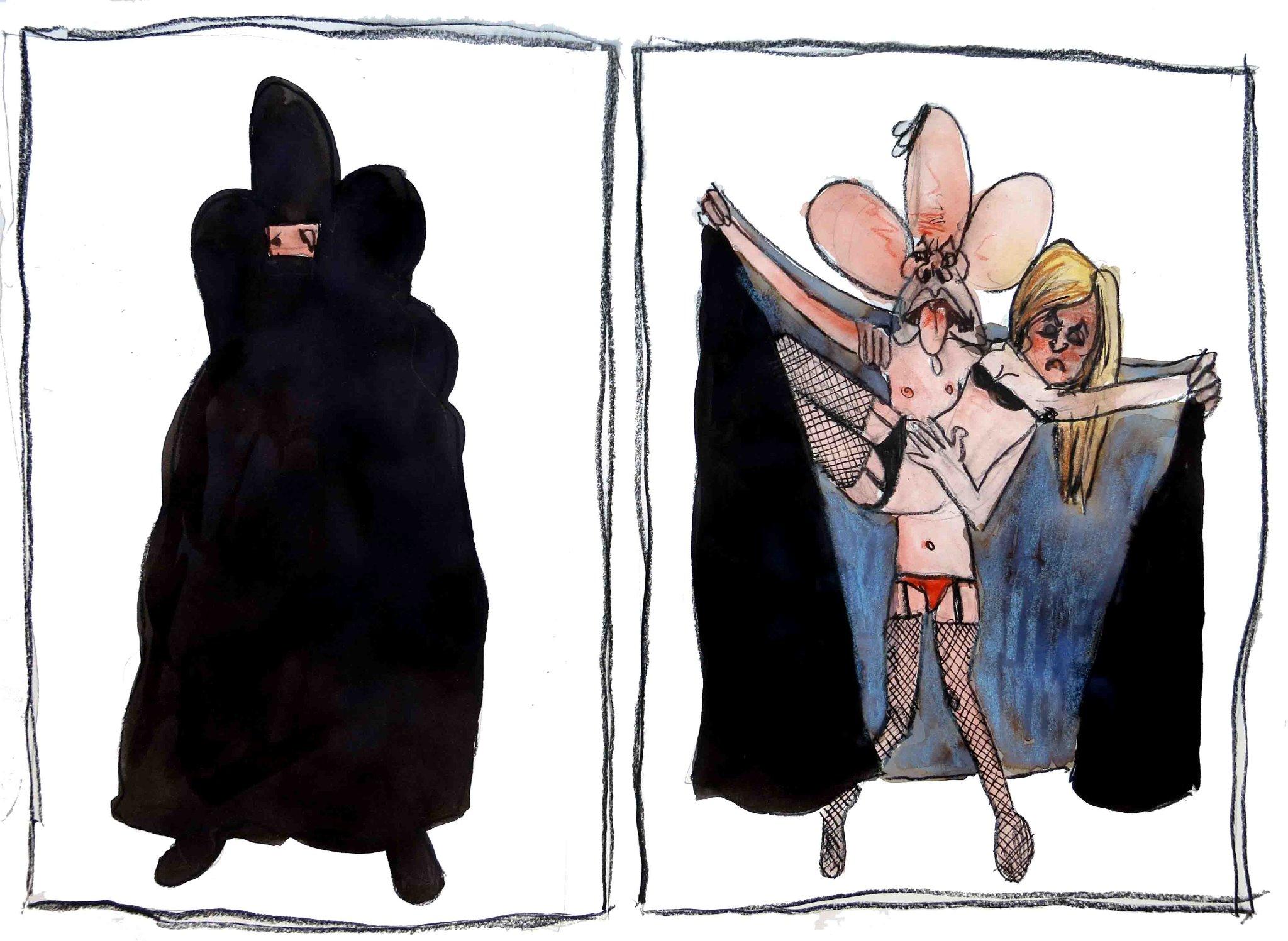
Category: Abbott

The kooky Cult of Abbott’s end days

View image on Twitter

https://www.youtube.com/watch?feature=player_embedded&v=IHd0uCie1zU

The kooky Cult of Abbott’s end days.

Australia slashes funding for UN Environment Programme

Greg Hunt

Australian minister for the environment Greg Hunt said some of the funds amounted to ‘bureaucratic support’ for the UN.

Cuts to environmental sustainability agency make country a ‘global pariah on the climate front’, says Australian Greens party

Australia will cut its funding to the UN Environment Programme (Unep) by more than 80%, it has been reported.

The federal government was due to give $1.2m to Unep this year, but will now give just $200,000. The ABC reported $4m would be cut over the next four years.

The environment minister, Greg Hunt, said the fund was not a budget priority for the government.

“You’ve always got to make choices in a difficult budget environment. I would imagine that most Australians would think that putting $12m into coral reef protection within our region, and combating illegal logging of the rainforests of the Asia Pacific would be a pretty good investment, rather than $4m for bureaucratic support within the UN system,” Hunt said.

Unep was established in 1972 with the aim of promoting environmental sustainability through global action. It relies on contributions from member countries.

“Close to 90% of the financing of Unep is voluntary and depends on countries’ goodwill and also their recognition of Unep,” the executive director of the program, Achim Steiner, told the ABC.

“You have to be disappointed [with the funding cut] because clearly the contribution of member states is what enables the Unep to fulfil its mandate and be of service to the global community,” Steiner said.

The opposition spokeswoman on foreign affairs, Tanya Plibersek, said: “Tony Abbott tried to keep climate change off the G20 agenda, but he failed. That’s because other world leaders know climate change is both an environmental and economic issue.”

“The cuts revealed today just reinforce that when it comes to climate change Tony Abbott is out on his own.”

Based on its funding commitments for 2012, Australia ranked 13th globally in its support for Unep. The Netherlands contributed the most, with $10m. The US pledged $6.5m and the UK $5.7m.

The foreign minister, Julie Bishop, will soon visit Peru for major international climate talks that have been hailed the best chance in a generation for reaching global climate consensus.

The Greens leader, Christine Milne, labelled the funding cut “a slap in the face”. “Australia is a global pariah on the climate front,” Milne said on Tuesday. “This sleight of hand is just extraordinary.”

She accused the government of using money taken from Unep to fund its commitment to stop illegal logging of rainforests, made at the World Parks Congress in Sydney in November.

“This is really Australia on a world stage behaving badly on the climate. We are so out of step as a nation with the rest of the world. We are not only risking the environment, but Australia’s standing in the world is seriously diminished by the Abbott government,” Milne said.

Finding a narrative for the Abbott government… First Dog 2014 Theme for a Team

firstdog redtext

Cuban Medical Workers Fighting Ebola: Alexander Reed Kelly

Cuban doctors await travel to Liberia and Guinea in mid-October

The phrase “generosity of nations” is unlikely to appear in textbooks assigned to American political science and economics students. Nonetheless, the concept is visible in action in certain parts of the globe—perhaps most inspiringly in the countries of Sierra Leone, Guinea and Liberia in West Africa, where the Cuban government has defined itself as a world leader by providing hundreds of doctors and health workers to combat the raging, deadly Ebola virus.

As of mid-November, the tiny island state with a population of 11 million and an economy valued at slightly more than that of Belarus has provided more health care workers in the battle against Ebola than any other nation. That’s 256 doctors and nurses with an additional 200 professionals on their way. By comparison, the U.S. sent 3,000 military troops, none of them providing medical assistance, but instead focusing primarily on building treatment centers. It also pledged $400 million in aid. An article in The Wall Street Journal noted that “nations with some of the world’s most advanced health-care systems have come too late with too little to the crisis, said leaders from Ebola-affected countries.” China and India were reported to have contributed an “underwhelming” $5 million and $13 million, respectively.

Officials put the number of deaths caused by Ebola at over 4,000, but experts say the actual figure is twice as high. U.N. Secretary-General Ban Ki-moon said ending the outbreak would require “at least a 20-fold surge in assistance.”

Advertisement

It is clear that money alone will not solve the problem. In mid-September, the World Health Organization issued a desperate plea for medical staff and supplies to resolve the outbreak. “Our response is running short on nearly everything from personal protective equipment to bodybags, mobile laboratories and isolation wards,” said Director-General Margaret Chan, calling for 500 to 600 foreign doctors, and at least 1,000 additional staffers. “But the thing we need most of all is people: healthcare workers. The right people, the right specialists—and specialists who are appropriately trained and know how to keep themselves safe—are most important for stopping the transmission of Ebola.” The WHO reported that all members of the first contingent of Cuban workers had more than 15 years worth of experience and had worked in other countries facing natural disasters and the outbreak of disease.For a new generation of observers, the Ebola response is helping Cuba make a name for itself as a force for global good. And the reputation is deserved. The WHO reports there are currently more than 50,000 Cuban-trained health care workers in 66 countries. By 2008 it was training 20,000 foreigners a year to be doctors, nurses and dentists, largely free of charge. The generous export is a function of the country’s publicly funded universal health care system, which was established by the Communist regime shortly after it overthrew U.S.-backed Fulgencio Batista in 1959 and enshrined as a human right in its 1976 constitution.

The country has consistently extended this policy beyond its borders to other nations in need. Its medical missions began with a provision of aid to Chile after an earthquake in 1960. In the 1970s and ’80s it offered wartime assistance to South Africa, Algeria, Zaire, Congo and Ghana. More recently, Cuban doctors went to Sri Lanka after the 2004 tsunami and treated victims of the 2005 earthquake in Pakistan and the 2010 quake in Haiti. In 2013, Cuba sent 4,000 doctors to remote rural areas of Brazil. The government offered assistance to the U.S. in the aftermath of Hurricane Katrina in 2005, but the offer was apparently rejected.

Cuba’s medical tradition was partly inspired by Che Guevara, the Argentine physician-turned-revolutionary who helped foment the Communist uprising. The medical workers have been nicknamed the “ejército de batas blancas”—the “army of white coats.” The contingent in West Africa is known as The Henry Reeve Brigade. It was founded in 2005 and named after a Cuban soldier in the country’s first war of independence. The doctors take their mission seriously. A wall in Cuba’s most prestigious medical school, the Escuela Latinoamericana de Medicina, bears a quote by dictator Fidel Castro: “This will be a battle of solidarity against selfishness.” The workers are reported to be eager to risk their lives for what they regard as an obligation to people everywhere. Before departing for Liberia, 63-year-old doctor Leonardo Fernandez expressed resolve in the face of danger and uncertainty in an interview with Reuters. “We know that we are fighting against something that we don’t totally understand,” he is quoted as saying. “But it is our duty. That’s how we’ve been educated.”

And the doctors are suffering too. While consultants from the U.S. Centers for Disease Control and Prevention enjoy the comfortable lodgings of a more than $200 a night resort, The Wall Street Journal reported, the Cuban medics “are living three to a room in one of Freetown’s budget hotels. The hotel’s toilets are broken. Flies buzz around soiled tablecloths where the Cubans eat in cafeteria-style shifts.”

Cuba’s efforts have received some praise from the U.S., which has maintained a destructive trade embargo against the island since 1960. U.S. Secretary of State John Kerry praised the country for its work. And U.S. Ambassador to the U.N. Samantha Power was “very grateful” to Cuba for its response. There was no question about working alongside the U.S. in the effort. “Against Ebola, we can work with anyone,” said Dr. Jorge Juan Delgado Bustillo, who has led Cuba’s response in West Africa. “The United States? Yes, we can.” In the state newspaper Granma, Fidel Castro wrote that he would be happy to put aside the country’s political differences to help nations afflicted with the virus. U.S. officials eventually confirmed they were willing to cooperate with Havana and the rest of the international community through organizations such as the WHO.

A tiny nation excluded from so many of the benefits of global trade is leading the humanitarian response to the Ebola outbreak. Cubans have every reason to glow with pride as their doctors and nurses undertake the grim work of attending the health of people of other countries that have been degraded by economic and often military aggression. Cuba’s officials and health care workers are our Truthdiggers of the Week.

Indigenous leaders to meet at First Nations Summit for Freedom

G20 protest for Aboriginal rights

First nations leaders and elders are holding a summit to establish a community-elected committee which would reclaim Indigenous rights and representation from a few high-profile voices.

About 100 people from across the country are expected to gather at the First Nations Summit for Freedom to discuss the major issues facing Indigenous people and address a feeling that the federal government is not speaking with Indigenous people when making decisions which have a direct impact on them.

The summit is being held on Thursday and Friday at the Old Telegraph Station in Mparntwe/Alice Springs. The site is the birthplace of the Aboriginal social activist Charlie Perkins.

“This is all about the local issues first and how the national agenda is responding to them, and how we’re not very happy about it,” said one of the summit organisers, Tauto Sansbury.

Sansbury pointed to attempts by the WA government to amend the Aboriginal Heritage Act, stripping traditional owners of a say over the cultural heritage value of their land and sacred sites, as well as a recent announcement that remote communities would likely be closed.

“The heritage act is having a big impact on Western Australia,” Sansbury, who is a long time Aboriginal advocate and was heavily involved in the royal commission into Aboriginal deaths in custody, told Guardian Australia.

“The closures of the communities over there … Aboriginal people are going to be removed off their land and there are suggestions that the SA government is thinking along the same lines.”

Federal government cuts to Aboriginal legal services and frontline organisations and attempts by state and territory governments to water down land rights and other Indigenous legislation are also on the agenda.
Advertisement

Increasingly high rates of Indigenous incarceration, suicide, protective orders on children, and recent deaths in custody are also not being addressed, organisers have said.

“For all of us this is totally unacceptable and it’s governments talking to governments about what they’re going to do with Aboriginal people. We’re not in the discussion, we’re just an item for discussion.”

The prime minister Tony Abbott receives much of his advice from the Indigenous Advisory Council, headed by Warren Mundine, as well as the chairman of the Cape York Group, Noel Pearson. Sansbury said he hoped the summit would end with the establishment of a community-elected committee of Aboriginal leaders from across first nations who could approach governments, confident they were representing the concerns of Aboriginal and Torres Strait Islander people.

“For me I’d like to see fair representation from each state or territory representing their communities, and I’d like to see them elected by their own community,” he said.

Behind the summit is an increasing dissatisfaction with the national focus on the voices of a few high-profile people. Anger boiled over at G20 protests when effigies of Pearson, Mundine and academic Marcia Langton were burned, alongside an Australian flag.

“It’s totally unacceptable when you have three people speaking for the rest of Aboriginal Australia,” said Sansbury.

“That’s not really a democracy for us. Governments have got so many ministers representing so many people and it’s a bit ridiculous, why does it work for them and not us?”

Aboriginal lawyer and activist Michael Mansell told ABC radio the focus needed to remain on government policy.

“The real issue is that after 226 years we still have a white person deciding Aboriginal policy for Aboriginal people,” said Mansell on Tuesday.

“The single voice that we hear is the right-wing conservative voices from North Queensland who tend to blame the victims for the problem … but if we keep our focus on where the issues are – federal and state governments, then I think this summit could … make the agenda one that Aboriginal people agree with.”

The federal minister for Indigenous affairs has been contacted for comment.

Now, If I Say It, It must Be True, Because Liberals Never Lie. And You Can Trust Me On That Because I Said It!

IMG_1039.JPG

BARRIE CASSIDY: Sure, but do you accept climate change potentially is one of the biggest impediments to growth?

JOE HOCKEY: No. No, I don’t. Absolutely not .

Well, I guess we can just accept that Joe Hockey could be right on this one. After all, climate change could lead to a lot of floods, fires and other devastation. This should be a real pick-me-up for the building industry, shouldn’t it? Impediment to economic growth? I don’t think so.

It’s just a shame that it’s still unclear that the climate even exists, let alone that man could have any effect on it. After all, we’ve been dumping stuff in the ocean for years and, in spite of what that upstart President from the USA has to say, the Barrier Reef is doing just fine, thank you.

As for those ABC cuts, well I think they’ve been well and truly dealt with. As Mr Turnbull implied, while Mr Abbott may have said no cuts to the ABC, the SBS and no changes to pensions, there was no reason to think that he was speaking on behalf of the Liberal Party. Or, indeed, was there any reason to think that he had the authority to deviate from the policies that had been so clearly spelt out by IPA prior to the election.

Of course, all these critics who are complaining (wrongly, of course) that Abbott changed his mind on the ABC, had no problem when he went against his election commitment on pensions. He clearly said they’re be “NO CHANGES TO PENSIONS”  in the same interview. Yet, in spite of the fact that the intention was to eliminate all future rises, the government is still allowing some indexation, albeit at a lower rate. We didn’t hear a whimper out of the left on that one!

Now, to quote Scott Morrison from last week:

“And as former president Yudhoyono said, in advice to Australia, you’ve got to take the sugar off the table, and that’s what we’re doing.”

He pointed out that they were “taking the sugar off the table” so many times in that interview that I decided it must be some sort of metaphor and not simply a way off helping Joe to keep his weight down to somewhere near his IQ. A friend helpfully suggested that the metaphor was about making the table less attractive to ants.

“So, the asylum seekers are being compared to ants. What’s the table?”

“The table is Australia.”

“I see. I guess that means that the sugar is what makes Australia appealing. Affordable healthcare, a living wage and the Great Barrier Reef.”

So, I see it all now. Julie Bishop and Andrew Robb are right. The Liberals know what they’re doing with their Reef management. They’re taking the sugar off the table.

Silly old Obama. As if we want foreigners coming over here, telling us what to do. (And don’t say that Tony and Matthias are foreigners – that’s just racist – they’re as Australian as Anzac Biscuits with Vegemite!)

     *                   *                    *

Peter Reith just wrote that he found it hard to believe that Labor would win this week’s Victorian election, in spite of the polls having them “slightly ahead” (on average, at 54-46%). It defied “common sense” according to Mr Reith.

This morning, Victoria’s Treasurer announced that – a few weeks ago – the Liberals signed a contract for the East-West Link which would entitle the consortium to over a billion dollars, even if Labor kept their election promise and didn’t build it OR the councils opposing it blocked it in Court.

Why did they sign a contract with such a big penalty clause so close to an election?

I guess it was just common sense!

Exclusive IA interview: The appeal of Craig Thomson

Exclusive IA interview: The appeal of Craig Thomson.

Yet another victim of Abbott steel capped boot politicking. Clock work Green. Abbott’s whitsleblower  Kathy Jackson seems to have run out of wind. Craig Thompson is looking more a victim.

Our allies the US- backed Iraqi Military gave them the weapons. What will happen to the weapons after resupply. Is that why we are the to train them not to give away the weapons? Like the Immigration Dept the Defense Department has gone silent

ISIS rebel militant soldiers on the frontline

Isis has enough weapons to carry on fighting for two years, UN warns

A new report prepared for the United Nations Security Council warns that the militant group known as the Islamic State (Isis) possesses sufficient reserves of small arms, ammunition and vehicles to wage its war for Syria and Iraq for up to two years.

The size and breadth of the Isis arsenal provides the group with durable mobility, range and a limited defense against low-flying aircraft. Even if the US-led bombing campaign continues to destroy the group’s vehicles and heavier weapons, the UN report states, it “cannot mitigate the effect of the significant volume of light weapons” Isis possesses.

Those weapons “are sufficient to allow [Isis] to continue fighting at current levels for six months to two years”, the UN report finds, making Isis not only the world’s best-funded terrorist group but among its best armed.

Isis, along with its former rival turned occasional tactical ally the Nusra Front, are sufficiently armed to threaten the region “even without territory”, the report concludes.

The report, months in the making, recommends the UN implement new steps to cut off Isis’s access to money and guns.

The Isis arsenal, according to the UN assessment, includes T-55 and T-72 tanks; US-manufactured Humvees; machine guns; short-range anti-aircraft artillery, including shoulder-mounted rockets captured from Iraqi and Syrian military stocks; and “extensive supplies of ammunition”. One member state, not named in the report, contends that Isis maintains a motor pool of 250 captured vehicles.

Much of the Isis weapons stocks, particularly “state of the art” weaponry stolen from the US-backed Iraqi military, was “unused” before Isis seized it, the report finds. But some of the relatively complex weapons “may be too much of a challenge” for Isis to effectively wield or maintain.

Earlier this year, speculation focussed on Isis’s potential ability to produce chemical weapons after it seized Iraqi facilities that had contributed to Saddam Hussein’s illicit weapons programs, but the UN report casts doubt on the likelihood that Isis possesses the “capability to fully exploit material it might have seized”. Nor does the UN report believe that Isis can manufacture its own chemical or other weapons of mass destruction.

But at least one anonymous member state has provided information about “chemicals and poison-coated metal balls” placed inside Isis’s homemade bombs to maximize damage. In October, Kurdish forces defending the Syrian town of Kobani from Isis reported cases of skin blistering, burning eyes and difficulty breathing after the detonation of an Isis bomb.

The UN Security Council is expected to take up consideration of the report on Wednesday.

The report recommends the UN adopt new waves of sanctions designed to disrupt the well-financed Isis’s economic health. Significant among them is a call for states bordering Isis-controlled territory to “promptly seize all oil tanker trucks and their loads” coming in or going out.

While the report warns that Isis has alternate revenue sources, and does not predict that truck seizures can eliminate Isis’s oil smuggling money, it holds out hope that raising the costs to smuggling networks and trucking companies will deter them from bringing Isis oil to market.

To combat Isis’s ability to resupply its weapons stocks and launder money, the report recommends the UN mandate that no aircraft originating from Isis-held territory can land on airstrips in member states, and to prohibit flights into Isis-held territory. Exemptions would be made for humanitarian relief planes.

The report comes on the heels of an October report to the Security Council assessing that 15,000 fighters from 80 countries have flooded into Syria and Iraq to fight alongside Isis and other militant groups.

While still months off, the US has indicated it will intensify its fight against Isis, primarily in Iraq. After doubling the US troop commitment there, defense officials have said the US will bolster 12 Iraqi and Kurdish brigades, and may even join in the Iraqi fighting for key terrain, such as the borderlands between Syria and Iraq or the city of Mosul.

Pictures stories and anger

Inside Story G20 summit: Is Putin being frozen out? Russian president given a frosty reception in Brisbane over his Cold War-style stand-off with the West.

http://aje.me/11qYGvm

Inside Story

G20 summit: Is Putin being frozen out?

Russian president given a frosty reception in Brisbane over his Cold War-style stand-off with the West.

Russian President Vladimir Putin has been branded a bully with imperialistic ambitions at the G20 summit in Brisbane.

Australian Prime Minister Tony Abbott accused the Russian leader of trying to recreate the lost glories of the old Soviet Union, and said he planned to “shirtfront” or physically confront Putin over Russia’s actions in Ukraine.

Britain’s Prime Minister David Cameron also warned that Russia faced further sanctions if it didn’t commit to resolving the conflict in Ukraine.

Putin was met at Brisbane airport by Australia’s assistant defence minister, in an apparent diplomatic snub.

Al Jazeera’s Andrew Thomas, reporting from Brisbane, said Putin was “isolated” at lunch on day one of the G20 summit on Saturday, “all but ignored by other world leaders”.

So is Putin being frozen out – or do world leaders need him more than he needs them?

 
Filed under:

Climate change deal: US-China agreement embarrasses Abbott Government, climate policy analyst says

Barack Obama and Xi Jinping

http://www.abc.net.au/news/2014-11-13/china-us-deal-embarrasses-abbott-government-analyst/5889190?WT.mc_id=Corp_News-Nov2014|News-Nov2014_FBP|abcnews

One of these men still has a head on his shoulder

Tony Abbott and John Key at Parliament House in Canberra

Politics in a different key

On economic reform and now on national security, New Zealand can see beyond scare campaigns and political opportunities – unlike their cousins across the ditch, writes Barrie Cassidy.

There’s no doubt about the Kiwis. Sometimes – well often in fact – they show a political maturity streets ahead of their cousins across the ditch.

Just this week Prime Minister John Key delivered a speech to the Institute of International Affairs on national security and the IS threat.

In that speech he talked about his obligations to secure the country and to support stability and the rule of the law internationally, and that’s just as you would expect.

But Key – the leader of the conservative National Party – and prime minister since 2008 – spoke at length as well about a longer term strategy; dealing with the root causes of extremism; and that’s something that gets precious little attention from the major parties in Australia.

Key said defeating IS (also known as ISIL) “will mean winning the hearts and minds of those vulnerable to its destructive message.”

“There is little doubt,” he said, “that a lack of movement towards a two-state solution in relation to Palestine, and the recent high number of civilian casualties in Gaza, serve to make the task of recruiters to extremist causes a significantly easier one.

“The unresolved issue of Iran’s nuclear capabilities hangs over the region as well.

“We also need to redouble efforts towards reaching a political solution to the violent stalemate in Syria. This has been another cause of ISIL’s rise, and has seen almost 200,000 killed, and led to more than three million Syrians fleeing their country.”

He went on to say that “the seeds of ISIL’s success lie in the failure of the Maliki regime to adhere to acceptable standards of governance, and to treat all citizens, regardless of ethnicity or religion, with respect.”

Key emphasised that military support is one thing, but the new al-Abadi government will need significant international backing if they are one day to fight their own battles.

In Australia, Tony Abbott talks incessantly about a “death cult”, or if you’d prefer, just this week, “an apocalyptic millennial extremist ideology”, that essentially beheads and crucifies people simply because they don’t like us. He likes to keep it simple. And the Labor opposition too steers away from sophisticated discussion about root causes for fear something they say might be interpreted as a lack of bi-partisanship. That could cost votes.

But then again, New Zealand is the country that introduced a GST at 10 per cent in 1986, increased it to 12.5 per cent in 1989, and then finally to 15 per cent with big personal tax cuts as compensation. And then Key got re-elected. In Australia, a GST was introduced in July 2000, at 10 per cent, and both the base and the rate have stayed the same since.

The debate in New Zealand was not particularly acrimonious and the public broadly, if not grudgingly, embraced each increase. Why? Partly because the politics being played out was not as self serving and destructive as that experienced here whenever the issue is raised. The electorate apparently understood they were not being asked to pay more taxes; but rather to accept a more efficient and sustainable mix of taxation.

On economic reform – and now on national security – they can see the issues beyond scare campaigns and political opportunities. The New Zealanders somehow manage to find a place in the world that is commensurate with their size and influence, and at the same time, retain a strong degree of independence.

And just by the way, the threat of a terrorist attack in New Zealand is officially “possible but not expected

Wattle on green attacks

Wattle on green attacks

Australian governments are deliberately contributing to the deaths, suicide, homelessness, domestic violence and mental illness of Australian Defence Veterans — both young and old.

These sustained and bureaucratically controlled ‘Wattle on Green’ attacks are as treacherous to Diggers on home turf, as the infamous ‘Green on Blue’ attacks on Coalition forces in the Middle and Wider East.

Time and again, in rapid fire betrayal, pensioner veterans have been promised paltry pension increases and time and again in our name, they have been publicly humiliated and their begging bowls filled with soiled matter and rotting promissory notes.

Worthless IOUs for risking stepping on IEDs

We might as well bury alive our returned service personnel.

Wednesday morning’s gut-wrenching report by Ashley Hall on the ABC’s AM program is a shameful indictment on how Australia treats its returned soldiers with blatant contempt.

It makes a mockery of the political expediency and duplicitous hollow words of successive political leaders who deliver sonorous and patriotic eulogies on the likes of ANZAC Day, during Turkish dawns and over the flag-draped coffins of those killed in Iraq, Afghanistan and elsewhere, whilst basking in the stolen heroic glories of those who lay down their lives for this country in squalid wars mounted upon squalid lies.

Afghanistan War veteran Geoff Evans, now working with the Returned and Services League, RSL’s LifeCare told Hall that Australian diggers were suffering from epidemic rates of homelessness, with some of them sleeping with their families in cars

He said a lot of parallels could be drawn with Vietnam:

…There’s a lot of parallels we can draw here with the Vietnam generation because everyone in Australia knows what happened to Vietnam veterans.

If you look at mental health, suicide and alcoholism – including in their families – well we’re seeing that play out again in my generation.

We must not capitulate to the will of successive governments and ignore our older veterans in favour of younger veterans.

Both groups must be treated as the first among equals.

Just as there is no space for a generation gap amongst the dead, none must be allowed amongst the living.

I urge everyone to stand shoulder to shoulder on this.

Post-traumatic stress is an insidious and parasitic worm that can, if left unchecked, entirely consume the body, mind and soul of its host.

Because some of our diggers are older, does not mean that their illnesses and horrible predicaments are less real or less worthy than those of younger diggers.

It is clear that successive governments are holding off on compensating older diggers in the hope they will die off and thus avoid any payouts of illnesses contracted through exposure to Agent Orange and other poisonous toxins — as well as giving them fair and honourable increases in their pensions.

We should note that Agent Orange affected military personnel as well as civilians.

On next week’s second Tuesday in the month, long after the hooves of The Melbourne Cup are stilled, some permanently, millions around the nation will again hold their breath on Remembrance Day and observe a minute’s silence on the 11th day of the 11th month to acknowledge the 96th Anniversary of the Armistice of the First World War as well as the sacrifice made by the dead, the living and the living dead who walk amongst us, in all wars and conflicts.

For several years, Independent Australia has campaigned and written about the shameful plight of our veterans.

On Monday, the Defence Force Welfare Association (DFWA) in conjunction with the Alliance of Defence Service Organisations (ADSO) issued a media release condemning the outrageous and pompous decision of the Defence Remuneration Tribunal (DFRT) to endorse the Abbott Coalition Government’s crude and unforgivable decision to limit veteran pension increases to an insulting 1.5% per annum – wait for it – thinly spread over three years — barely half the expected annual inflation rate.

National President, David Jamison said:

It is a strange way to reward ADF members for their dedication and hard work especially as the Government has just dispatched a new contingent to the ongoing Middle East conflicts.”

It is time that DFWA Patron, His Excellency General, the Honourable Sir Peter Cosgrove AK MC (Retd), now Governor General, did what he should have done when he was chief of the Army and when he was chief of the Defence Force — publicly recommend that Australia’s returning defence personnel be accorded pensions worthy of their sacrifice and commitment.

There is fresh blood on the yellow wattle, spilling onto the green of our national colours and national returned veterans.

From wounds and heartbreak caused by successive and callous home-grown Australian governments, whose continuing war against our veterans is such that they are taking no prisoners; dead or alive.

View image on Twitter

Once again, Abbott makes Australia look uncaring and stupid.

Once again, Abbott makes Australia look uncaring and stupid..

The Liberal’s attack on Whitlam and Gillard 38 years apart: An attack on progressive ideas & a return to mediocrity

gillard gough

Originally published on http://polyfeministix.wordpress.com/

Despite the IPA’s urgency for “Abbott to be more like Whitlam” because Whitlam ‘changed Australia, more than any other Prime Minister ever has,’ the IPA’s agenda for Abbott is very different.

In the 1970’s Gough Whitlam was seen as the first progressive Prime Minister, who stood for the people. He stood for workers, battlers, migrants, everyone. He wanted to shift Australia to a more inclusive and progressive society.

Gough shifted Australia from a stagnant, mediocre nation, to a nation of ideas, progress and voices.

For so many years, the voices of the worker, the battlers and migrants had been silenced, by the collective group of individuals who could manage just fine on their own; whether that be through the privilege of money, position in society, family heritage or education, is neither here nor there. The crux of the what Gough Whitlam did, was to bring more people into this exclusive collective by opening up opportunities, thought a hand up, a fair go for all. Gough’s vision was to propel the nation forward, through ensuring that individual Australians could achieve enormous success; even if they were in a previously ‘excluded group’ under the Liberals. He wanted every single Australian, to be the best that they could be.

Gough Whitlam propelled this country forward, and these changes became the status-quo we all accepted and still do:

  • Access for all to Higher Education
  • Needs based funding for schools
  • The beginning of what we know today as Medicare – Medibank
  • National funding of hospitals and community health centres
  • The creation of the single mother’s pension (now parenting payment-single)
  • The handicapped children’s allowance (now known as carer’s payment).
  • Funding community grassroots social welfare organisations and volunteer organisations (now collectively known as ‘the community sector’) who served a need to assist individuals in their communities.
  • Enacted the Social Housing Act for States, which has housed so many Australians from low income/disadvantaged households
  • Outlawed discrimination against Indigenous people
  • Handed back land to Indigenous people
  • Funded legal services for Indigenous people
  • Enacted Human Rights protection through International Acts
  • Funded urban transport projects
  • and connected homes to sewerage – the beginning of the end of the thunderbox

It is well known that Gough Whitlam’s legacy is very vast, therefore, I have only chosen a few for example. To read more go to: The Whitlam Government’s achievements

In the 1970’s, the Liberals, not happy at all with such changes to our society, sought a means to attack this progress and ‘return Australia to its Status Quo – to the mediocre way Australians had lived before under the Liberals.” Through political mechanisms within our system, the LNP stamped their feet and got their own way.

The reason why I have highlighted the above is to me, the correlation between the attack on Julia Gillard and Gough Whitlam. Why do I see this as a correlation between the two? Because both have the underlying construct of:

Shifting the status-quo to exclusion of groups, the notion that only ‘those who try succeed’, that everyone is equal, and the disadvantaged and unemployed are the burden of society’

In ways that Gough Whitlam shaped Australia, Julia Gillard was also attempting to do so. Policy highlights such as Gonski reforms (needs based funding for education), NDIS (Peace of mind for every Australian, for anyone who has, or might acquire, a disability), A price on Carbon (a leader ahead of many other western countries, now adopting a price on carbon), the Royal Commission into Child Abuse, an attack on Work Choices and the introduction of Fair Work Australia and Modern Awards, the National Broadband Network (which would give fast internet nationwide, including regional & rural), Plain packaging for cigarettes (a leader ahead of other nations wanting to adopt the same) and an apology to all persons affected by forced adoption practices, to name a few.

In fact, the IPA, the right wing think tank of Australia, found Prime Minister Gillard’s progress for Australians, so threatening to the Liberal way of life, they have issued a list to Abbott in 2011, to which he has agreed to implement.

The threat to the Liberal’s right-wing side of politics, that these progressive changes of the Gillard Government would become norm and adopted as the status quo amongst Australians, was a serious concern and action needed to be taken.

Indeed action was taken. The Liberals did not hold the balance of power in the senate, as they did in 1975, so they needed to adopt ways and means of bringing down a progressive and effective Government. They needed to ensure that the Liberals gained power. To do this, they needed to taint the left as corrupt, a shambles and not to be trusted.

The onslaught on Julia Gillard during her Prime Ministership was relentless, astounding, hateful and most of all untruthful.

The right, did not care if Prime Minister Gillard was not a criminal. The fact of the matter is, they had to paint her as a criminal to bring her down. Once the trust of the electorates where broken, through this tactic, they were home and hosed.

The idea behind the IPA’s list of ideas to Abbott is so that reforms could be torn down, as quickly as possible and that a push to the right through Liberal policy can shift the status quo to the hard right. The reasoning behind this, is once this becomes status quo, it will be extremely hard for any left Government in power to shift policy back to the progressive left.

This is summarized in this quote below from John Roskam, James Paterson and Chris Berg of the IPA:

Only radical change that shifts the entire political spectrum, like Gough Whitlam did, has any chance of effecting lasting change. Of course, you don’t have to be from the left of politics to leave lasting change on the political spectrum.

Essentially, the IPA has requested Abbott push the country as far right as possible, so it then becomes adopted by the public as the status quo and becomes normal over time. This is the impetus behind the relentless attacks on the Prime Minister Gillard and her Government.

Now we have a situation where the former Prime Minister, Julia Gillard has been cleared of all criminal activity. The question is, how did this play in the minds of voters at the election in 2013? How did this sway the votes to the ‘trusted right?’ The question we need to ask ourselves now and in the future, is now we understand the true agenda of the Liberal party, do we vote again in 2016/17 for a progressive Australia, or the Liberals return to mediocrity?
Journalists have questions to answer

Photo from SMH.com Peter Rae http://www.smh.com.au/federal-politics/political-news/royal-commission-on-union-corruption-told-julia-gillard-should-be-cleared-of-any-crime-20141031-11f1gq.html

Look at this photo of Julia Gillard. Does this look like an innocent person – someone who has just been vindicated by a Judge as having played no part in any criminality in relation to a union slush fund 20 years ago? Or does it look like someone guilty, with questions to answer, being rushed away from cameras, refusing to make eye contact with her accusers? This is the image that the Sydney Morning Herald used to accompany a headline which you would think would be good news for Julia Gillard, and bad news for the media who relentlessly pursed this story to no end:

‘Royal commission on union corruption told Julia Gillard should be cleared of any crime’

The article moved quickly from reporting that The Royal Commission into Union Governance and Corruption found Gillard innocent, to report that her ex-boyfriend, Bruce Wilson, and his colleague Ralph Blewitt should face criminal charges. Kathy Jackson is also recommended for criminal charges. Remember Blewitt and Jackson and their work to bring down the previous Labor government? No? Don’t remember these links? Why am I not surprised?

To the average media consumer, who doesn’t follow independent journalism, who relies on their news from mainstream journalists such as those at Fairfax, you would never know that Ralph Blewitt’s accusations towards Julia Gillard were used relentlessly by right-wing-nut-job-chief Larry Pickering (you know the guy – he likes to draw politicians with huge penises) to push the media to keep saying that Gillard had ‘questions to answer’. You might wonder why the media would follow the lead of the un-hinged Pickering and the word of Blewitt, who was blaming Gillard for something he himself was being accused of doing in a bid for immunity. You might also not realise that Kathy Jackson was the very same Kathy Jackson who ‘blew the whistle’ on Craig Thomson’s misuse of union funds, who is also partner of Tony Abbott’s good friend Michael Lawler and a favourite guest of the right wing extremist HR Nicholls Society, and was misusing union funds herself at many tens of times worse than Craig Thomson. This article quotes the misuse for personal expenses at $660,000. But this link between right wingers and criminality in unions is never mentioned is it? This link to a 2012 article where Tony Abbott is praising Kathy Jackson as heroic is never mentioned. These people with vested interest in bringing down Labor politicians, who are accused of doing the exact same things as they are accusing Labor politicians of doing, who have links to right wing politicians and media identities are never properly investigated because no journalist wants to make the link between stories they’ve been writing, and the obvious campaign by Abbott to not just destabilise Gillard’s minority government, but to smash unions and workers’ rights with them. Remember Ashby versus Slipper, another campaign orchestrated by Abbott’s Opposition to try to bring down the Gillard government? Remember how Michelle Grattan used Craig Thomson and Peter Slipper as reasoning as to why Julia Gillard should resign?

You’ll notice that most of the stories that I’ve linked to in the above paragraph were written by journalists at Fairfax. I use Fairfax in this case purposely. I could have used News Ltd, but no one takes News Ltd seriously as they don’t actually employ journalists and prefer to work at being grubby partisan hacks so there’s no point reminding everyone why we don’t read News Ltd. I could have used the ABC, who went with this very ABC-like headline to report the news of Gillard’s vindication in the slush fund affair:

‘Trade union royal commission submissions question Julia Gillard’s professional conduct but clears her of any crime’

Of course the ‘questions’ had to be right up there front and centre, and the vindication the afterthought, added later. The ABC is terrified of Abbott and people like Chris Kenny who accuse them of left-wing bias so they prefer to let Murdoch set the agenda than to actually do any journalistic work themselves for the good of the public who fund them.

I actually used Fairfax not because they are the worst case of bad, on non-existent journalism in Australia. There is some investigative journalism happening at Fairfax, which the stories about Jackson, and Ashby and Michael Smith prove. But what frustrates me, and should frustrate the public at large, is the apparent inability for these journalists to pull bit-piece stories together to tell a wider story, which no media outlet in the county has had the courage to tell. Simply, the media went after Prime Minister Gillard ferociously over Thomson, Slipper and the AWU slush fund affair. The media mauled Gillard’s leadership over these ‘scandals’, running with a fixed narrative of Labor chaos, Labor dysfunction, Labor failure, Labor leadership tensions. This fixed narrative refused to join the dots between the Thomson, Slipper and AWU affair and the Liberal Opposition – who through Jackson, through Blewitt, through Larry Pickering, through Pyne’s deep involvement in the Ashby plot, were the ones goading the media on to destroy their political opponents. This fixed narrative also seemingly didn’t notice, or chose not to see, that the Gillard government was the most productive government this country has ever had. Where are the facts Fairfax? Buried in a political smear campaign?

In Kate McClymont’s 2014 Andrew Olle Media Lecture on investigative journalism, she said:

‘But as journalists we should have the courage to act for more than the lofty notion of freedom of speech. We have a duty to be the voice of the powerless in our society, to stand up for them.’

Were Fairfax Media journalists standing up for the powerless in our society when they were complicit in a campaign to wrongly accuse Julia Gillard of criminality in relation to the AWU slush fund affair? It’s too late to go back and apologise for this error – the damage to Gillard’s political career and her progressive policy platform is already done. But what about Jackson and Ashby? Are Fairfax journalists standing up for truth, for the powerless voters who knew nothing of what was happening in the Thomson and Slipper affairs when Fairfax journalists refused to join the dots between these Labor ‘scandals’ and a campaign by Abbott’s opposition to destabilise the Labor government? And what about union members, whose working conditions, wages and rights will be damaged by Abbott’s campaign to destroy unions? Where are the journalists speaking truth to power on behalf of the Australian public, instead of on behalf of the Abbott opposition, and now Abbott government?

I note that Fairfax reported, but never mounted media campaigns that culminated in suggesting the Prime Minister resign, stories about Abbott’s rorting of tax-payers funds for private travel, his daughter’s secret $60,000 scholarship, his own involvement in a slush fund to destroy Pauline Hanson’s electoral fortunes (this was much more recent than 20 years ago). Is Fairfax saying that they’re only interested in following stories that can damage Labor governments? And if so, can they please explain how this represents their role of standing up for the powerless in society? I think it’s time that journalists realise that they have their own questions to answer. And until they satisfactorily answer them, the powerless in society should continue to distrust them.

Yesterday’s bogeyman and the petrol tax

Bob Ellis

The terrorism scare isn’t going very well for the Abbott Government lately, with people more worried about the cost of living than ISIL, writes Bob Ellis.

THE HOME-GROWN ISIL BOGEYMAN isn’t playing very well for the Liberals lately.

The boy they shot dead was seventeen. The boy in the recruiting video was a teenager too — red-haired and blue-eyed and clearly naive. It seemed wrong he should go to gaol for twenty-five years, or be targeted for assassination by drone in Iraq or Syria. And the Australian master terrorist Mohammad Ali Baryalei, now reportedly dead – killed perhaps by a fighter bomber ASIO gave information to – didn’t kill any of us, though he probably wanted to.

So the score, thus far, is two of them dead, none of us.

And yet no Australian on Australian soil has died of ‘terrorism’ since January 1915 — three months before Gallipoli, 100 years ago.

And so little is the issue resonating that a rise in the price of petrol of 40 cents a week has overwhelmed it.

People feel safe enough with the Muslims they know and they’d rather gripe about petrol prices.

In Queensland, where it should be playing up big (APEC, old white Christians, and so on) Opposition Leader Annastacia Palaszczuk has overtaken Newman for the first time as preferred Premier. In New South Wales, a by-election occurred which, if duplicated federally, would leave the Abbott-Truss government with one seat, not their own. In Victoria, a poll out this morning shows Labor gaining a majority of twenty-five seats.

It’s usually thought a national security scare helps the leader then in power. And it usually does. But Abbott is so creepy and sneaky and malodorous (would you buy a used pregnant bride from this man?) that anything he says is now suspected.

We have found MH370. Putin is behind the shooting down, and I will shirtfront him and say so. I broke none of the eighteen promises you mention, you just didn’t hear them right.

And none of the narrative is working very well.

No Australian troops are in Iraq yet and half the army there is AWOL, or buying their way out of battle, as rich young men did in Lincoln’s time. We are defending crooks and cowards against people we call ‘terrorists’.

There will be minimal precautions at the Whitlam funeral, which everyone famous is going to. There are no body-searches, none, on suburban trains. In October, 500 million train journeys occurred unpoliced. We are hysterical about the Cenotaph, where an attack is unlikely, and blasé about trains, where most terrorist acts, historically, occur.

One of the problems about the whole thing is that ‘terrorism’, lately, has either no meaning, or too much.

A divorced husband who holds his wife and children at gunpoint in a siege while police bellow at him with loud hailers is, logically, a terrorist. A papparazzo with nude photos of a princess he proposes to sell back to her is a terrorist. A U.S. drone bombing a village containing ‘suspected militants’ in Pakistan is practising terrorism. Everything Israel does in Gaza is terrorism. Most of what the CIA does in Homeland is terrorism. Most of the debt-collecting industry is a form of terrorism — inciting fear in a chosen victim, the fear of a worse lifestyle than the one now enjoyed.

View image on Twitter

And to call a terrorist someone who has merely talked about blowing things up, as most young men do in their adolescent years, and to put them away for twenty-five years if they do, is to take on the colouring of a South American police state, or Putin’s Russia, or a harsh, provincial, peasant religion punishing women for wearing lipstick, or men for swearing, by flogging them or putting them in the stocks.

There are already laws against killing people. There are already laws against conspiracy to murder. There are laws against attempted murder. There are laws against causing grievous bodily harm. There have been no deaths caused by Muslim ‘terrorism’ on our soil in a hundred years — except the boy we shot in the head three weeks ago.

Let’s leave it at that, shall we.

View image on Twitter

Team Australia

Politicians’ pay rises outstrip soldiers’ by 140 per cent . 1.5% increase p/a for the next 3 years.

Politicians’ pay rises have outstripped those of Australian soldiers by more than 140 per cent over the past two decades, according to new research by a leading military think-tank.

And the Australian Strategic Policy Institute says the government could afford to give sailors, soldiers and air force personnel a pay rise to match inflation without reducing other military spending programs.

The government put its offer of a 1.5 per cent pay rise for each of the next three years in exchange for a reduction in leave entitlements and other allowances before the Defence Force Remuneration Tribunal this week amid a storm of controversy.

More than 11,000 service men and women and their families contacted their advocacy group the Australian Defence Welfare Association, most of them expressing anger at the deal and some of them labelling it “outrageous” and “a joke”.

The military’s top brass were forced onto the defensive with the Chief of the Defence Force, Air Chief Marshal Mark Binskin, telling the nations’s 57,000 men and women in uniform that it was the best outcome he could negotiate in the current budget climate.

After the tribunal reserved its decision on Wednesday, the Strategic Policy Institute’s senior analyst Mark Thompson has found that the wage offer will leave ADF members and their families more than 2.6 per cent worse off over the next 36 months with inflation running at 2.5 per cent per year.

“Compared with the remainder of the labour force, the picture is worse still,” Mr Thompson wrote in his analysis.

“The government projects that the wage price index will run at 3 per cent over the next two years.”

The Defence economics expert wrote that with the Defence budget indexed at 2.5 per cent to keep pace with inflation, a better pay rise was within the government’s means, even under its hardline public sector industrial policies.

“ADF workforce has been quarantined from efficiency dividends under the current and previous governments.” Mr Thompson wrote.

“It follows that an inflation-matching salary increase of 2.5 per annum could be afforded from within existing funding without redirection from other programs, consistent with the government’s 2014 Workplace Bargaining Policy.”

The analyst found the base pay of a federal parliamentarian had grown more than 250 per cent since 1991 while the average adult weekly earning was up by just over 160 per cent.

But the salaries of ADF members, and their civilian colleagues in the Department of Defence, had grown only about 110 per cent.

“The salary plus service allowance for a sergeant in the army roughly equates with average adult full-time earnings in Australia, $78,000,” Mr Thompson wrote.

“Looking over time, ADF salary increases have consistently outpaced inflation; and growth in average weekly full-time ordinary earnings has done the same, but by a wider margin.

“Defence APS salaries and ADF salaries are bootstrapped onto each other, thereby explaining their overlapping trajectories.”

Mr Thompson acknowledged the government had frozen the pay of politicians and senior public servants this year.

“However, this needs to be seen in the context of the 31 per cent pay increase awarded to parliamentarians in 2012, along with the 27 per cent increase in remuneration awarded to the Chief of the Defence Force and a similar rise for departmental secretaries over the period 2012 to 2014,” he wrote.

The technical union Professionals Australia, which represents many members of the Defence establishment, said the research highlighted the “hypocrisy” behind the low wage offer.

“It is also clear that increases to the Defence budget could comprehend fair and reasonable increases for all Defence personnel,” union official Dave Smith said.

“This is why it is outrageous that ADF personnel are expected to take a pay offer well below CPI and lose important conditions and it is hypocritical for their political masters to tell them to tighten their belts.”


Man in a hurry: Scott Morrison’s power grab putting off cabinet colleagues.

Illustration: Eric Lobbecke

Man in a hurry: Scott Morrison’s power grab putting off cabinet…

An opinion piece after 54:47 poll disaster for Abbott, Hockey is done and dusted Turnbull is not liked by the Right so Scott Morrison has to be dealt with.

IMMIGRATION Minister Scott Morrison is on the prowl. He wants new portfolio responsibilities, and his colleagues are none too impressed with his agitating for carve-outs from their ministerial duties.

On September 30, The Australian revealed that Morrison might be hoping to secure extra duties in a beefed-up Homeland Security-type portfolio. The proposal would have seen Australian Federal Police, Customs and intelligence services, as well as some other agencies, brought under Morrison’s watch. The cabinet has not endorsed the idea, which had been examined separately by a bureaucratic review of our ­security services.

The new portfolio would have seen deputy Liberal leader Julie Bishop give up responsibilities, but she was having none of it. Bishop issued a sharp rebuke to Morrison when The Australian broke the story.

Attorney-General George Brandis also would have lost responsibilities under the Morrison push. Brandis used an address to the National Press Club to repel the idea. And he chose not to be diplomatic about it when doing so. Brandis’s junior minister, Justice Minister Michael Keenan, also would have been forced to shed powers to Morrison under the Immigration Minister’s ambitions. Keenan already lost border protection from his ambit of ­duties when the Coalition came into government.

This week we have seen reports that Morrison now wants to take over biosecurity responsibilities from Nationals deputy leader and Agriculture Minister Barnaby Joyce, who was surprisingly diplomatic in question time on Wednesday when opposition agriculture spokesman Joel Fitzgibbon pressed him on the issue.

Biosecurity has long been a tightly held responsibility of Nationals ministers when the Coalition holds office. “You should hear what he says privately about Scott’s power grab,” a Nationals MP told me. “It would be fair to say he wasn’t nearly as calm.” We know Joyce pushed back hard against Morrison internally, airing his displeasure to the Prime Minister’s Office.

But Morrison’s desire to secure more powers doesn’t stop with needling at the portfolios of Bishop, Brandis, Keenan and Joyce. He’s also after responsibilities that are the preserve of Health Minister Peter Dutton. Wrapped up with biosecurity are the healthcare responsibilities of managing Australia’s response to the Ebola crisis. Morrison thinks he is the best man for that job, too.

The Immigration Minister has been successful at “stopping the boats”, whether opponents of his harsh approach (such as me) like it or not. Morrison therefore carries significant political capital wherever he goes. And judging by his efforts to nudge colleagues out of the way, he has become rather confident in his capacity to deliver pretty much anything.

The push for a super portfolio, dismissed publicly as “speculation”, is reminiscent of Julia Gillard’s super portfolio of education and industrial relations, which ensured that while she didn’t damage the uneasy truce between Kevin Rudd and Treasury spokesman Wayne Swan at the time, she remained a cut above other frontbench colleagues.

The difference now is that Morrison isn’t the deputy, which Gillard was. He has no rights to seek further responsibilities so soon after entering government, and the tensions and destabilisation such pushing creates risks getting Tony Abbott off-side. Which would be an unnecessary aggravation by Morrison, as ­Abbott the conservative would probably like to see the religious conservative Morrison overtake the likes of Bishop, Joe Hockey and Malcolm Turnbull as the natural leadership successor.

It is hard to fathom why Morrison is in such a rush. Some politicians can’t help but stay in perpetual motion. That was always Rudd’s problem.

Morrison needs to be careful because his senior colleagues are growing tired of what they privately describe as Morrison’s “I’m always right” approach to any discussion. One cabinet minister told me: “He’s great to deal with until he disagrees with you about something. Then you see the real Scott, and it’s not pleasant.”

That’s a character assessment that Labor MPs started to make about Rudd soon after he became PM. While Morrison has shown a competence in his portfolio that Rudd rarely did, ministerial successes can’t paper over personal animosities caused by impolite ­interactions with colleagues. ­Managing up doesn’t always work in a democratic party structure.

We already knew before the Coalition won office that Morrison was keen on a change of portfolio as soon as the opportunity presented itself. Now, however, with the broad issue of national security likely to be front and centre alongside the economy for the remainder of this term, it is perhaps understandable that Morrison would like more of the same power rather than a switch.

At first glance there doesn’t appear to be anywhere else senior enough for him to move to. Foreign affairs is taken and that won’t change. Abbott wouldn’t dare shift Hockey out of Treasury, knowing that would unleash internal instability. Besides, Hockey works well with Mathias Cormann, who is in finance. Shifting Cormann and pairing Morrison up with Hockey would be a recipe for disaster, so that won’t happen either.

Defence was always talked about as a portfolio Morrison might like to shift into, but that is more problematic now. David Johnston is considered a weak fit, but he is close to West Australian colleague Bishop, who would likely use her authority to protect him in any reshuffle. Besides, Assistant Defence Minister Stuart Robert is a close ally of Morrison. He no doubt has cabinet ambitions in that portfolio space. And the PM knows defence can be a graveyard for senior ministers, which might tempt him to send Turnbull there one day to distract the member for Wentworth from ambitions beyond communications.

If Morrison isn’t happy staying where he is, and a new homeland security portfolio is out of the question, Abbott could give him the social security ministry.

Kevin Andrews then replaces Bronwyn Bishop as Speaker, Bronwyn Bishop takes up a diplomatic post in a location other than the Middle East, and Morrison can get to work on fixing, expanding and selling the all-important welfare reforms.

Success at such a task would broaden his image, carry economic (and reforming) credibility and significantly help the government. Implementation of the National Disability Insurance Scheme would give Morrison a chance to display a softer side.

The only loser in this scenario is Assistant Social Security Minister Mitch Fifield, who would have to work with Morrison — assuming those who complain that Morrison is hard to work with are right, of course.

While at one level it suits the PM to have rivalry among future leadership aspirants because it means they eye each other off rather than him, it also causes unrest. The leak to me out of cabinet in February that Morrison argued (unsuccessfully) for subsidising SPC Ardmona caused the Immigration Minister to complain at the following cabinet meeting that colleagues were backgrounding against him. Since that time a longer line of Morrison’s colleagues have started to leak against him as well.

The Immigration Minister needs to do more than stop the boats. He must stop agitating for promotion and rebuild his relationship with colleagues

UK has sent 750 people, USA 3000, Australia 0 looks like our approach to climate change. Not war however

Ebola worker in white suit being sprayed with disinfectant

Ebola crisis: AMA criticises Australia’s response to virus outbreak; West Africa cases exceed 10,000

The Federal Government’s response to the Ebola crisis has been chaotic, the Australian Medical Association (AMA) says.

AMA president Professor Brian Owler said the Government was keeping Australians in the dark about their plans and medical professionals wanted a coherent plan to tackle the crisis in West Africa and at home, in case Ebola spreads.

The Federal Health Department this week said that there were about 20 caseworkers trained to care for potential Ebola patients.

But Professor Owler said neither the AMA nor the chief health officer knew who they were or what sort of Ebola training they were being given.

“It’s not the AUSMAT (Australian Medical Assistance) teams that you would expect would be trained to do this work,” Professor Owler said.

“Who are these people? If anything is going to be irresponsible it would be a last-minute announcement about people who are ill-equipped or ill-trained to go and do this dangerous work”.

He has also called on the Government to announce what it is going to do to help tackle the “humanitarian crisis” overseas and what the plans are if a potentially infected person arrives in Australia.

And Professor Owler said he had “big questions” about mandatory quarantines at airports for people returning from affected areas, like those to be set up in the US.

He said the nurse in Cairns, who had quarantined herself after showing signs of fever, had followed the right procedures by avoiding contact with others and alerting authorities.

“People should be reassured that the risk of transmission of that infection is very, very, low, but obviously it is a concern,” he said.

Opposition Leader Bill Shorten also accused Prime Minister Tony Abbott of not doing “enough to deal with this crisis”.

“Logic dictates that you’re better off dealing with the outbreak of a deadly and serious contagion closer to the source than waiting until it comes to Australia or comes to Papua New Guinea,” he said.

While we drag our feet on this issue, while the Government continues to roll out the tired old excuses about why we can’t respond, unfortunately people are going to continue to die

AMA president Professor Brian Owler

“If you want to deal with a contagion and a disease which is deadly and spreads very rapidly, you’re better off dealing with it early.”

The Government has so far refused to send health workers to Africa, arguing that it would be unable to evacuate them if they became infected with the deadly virus.

The US and UK asked for assistance from Australia a month ago.

Prime Minister Tony Abbott acknowledged the requests, but insisted the security of “our people” was paramount to any final decision.

The British are sending 750 people to help in Sierra Leone, while the US has dispatched more than 3,000 to Liberia.

“While we drag our feet on this issue, while the Government continues to roll out the tired old excuses about why we can’t respond, unfortunately people are going to continue to die,” Professor Owler said.

Scott Morrison/Tony Abbott conflict

Decisions on Ebola according to Scott Morrison are not the governments. The government  must be given the lead by health professionals before it can act. No special border protection measures are in place at air or seaports to the extent that they are in the USA.

Abbott on the other hand says we have made border protection the first line of defence and  we have secured ourselves against Ebola. We are fully prepared.

Whilst medical professionals are ready, eager and prepared to go Abbott refuses to support them because legal protocols and guarantees aren’t in place. They can go privately if they wish  but not with government support.

Looking at these two positions and their public statements the two seem diametrically opposed  We are and aren’t ready when it comes to the border protection from Ebola and  who actually leads  the decision-making process. Scott is passing the buck to health  and Abbott says all the decisions regarding Ebola rest with the government ,protocols and legal guarantees.

I’m sorry  are they mugs or feeding us political bullshit as usual

Does this remind you of any one? Abbott/Hockey Buget. Kevin Andrew DSP cut “he can work 8 hours”


Andrew Wilkie seeks to prosecute Abbott Government over ‘inhumane’ treatment of asylum seekers

Claim ... Mr Wilkies says “Members of the Australian government are pursuing policies tha

ANDREW WILKIE has written to the International Criminal Court seeking to prosecute the Abbott government for crimes against humanity, specifically asylum seekers.

The Tasmanian Independent MP and human rights advocate and lawyer Greg Barns have requested Tony Abbott and his 19 Cabinet colleagues be the subject of inquiries by the ICC prosecutor.

In his letter, Mr Wilkie nominates evidence of crimes against humanity, including “imprisonment and other severe deprivation of physical liberty in violation of fundamental rules of international law”.

There is also the “deportation and other forcible transfer of population” and “other intential acts causing great suffering, or serious injury to body and mental and physical health,” he writes.

“Members of the Australian government are pursuing policies that are designed to deter persons arriving by boats from seeking protection in Australia.”

They include sending people to Nauru and Manus Island, he says.

“The effect of the policy is that men, women and children are being forcibly relocated and then subjected to arbitrary imprisonment through mandatory and sometimes indefinite detention.

“The conditions they are forced to endure in detention are causing great suffering as well as serious bodily and mental injury.”

Mr Wilkie accuses the government of not only breaching the article of Crimes Against Humanity, but also “the Refugee Convention, Convention on the Rights of the Child and the International Covenant on Civil and Political Rights”.

Large numbers of asylum seekers are also being put at risk by being “forcibly” returned to countries from which they have fled, including Sri Lanka and Afghanistan, he said.

“The Government is pandering to racism, xenophobia and selfishness instead of acting like leaders. This is why I’ve asked the Prosecutor to initiate an investigation into the Prime Minister and the Cabinet because, if they won’t listen to the swathe of community outrage, then hopefully they’ll listen to the International Criminal Court,” Mr Wilkie added in a statement.

“Article 7 of the Statute defines ‘crimes against humanity’ to mean acts such as deportation, imprisonment or other severe deprivation of liberty in violation of fundamental rules of international law, torture and other similar acts that are committed as part of a widespread or systematic attack directed against any civilian population.”

Mr Barns said the pair is asking “the ICC Prosecuting authority” to “gather information, analyse evidence and make a report to the pre-trial chamber of the ICC asking it to authorise an investigation into the commission of offences by the Cabinet of the Abbott Government”.

Take it from us in India: the world needs renewables, not more Australian exported coal: Abbott doesn’t care to listen


    • theguardian.com, Wednesday 22 October
    • Here are little known facts about coal: its use is responsible for 400,000 premature deaths per year globally, and many more illnesses. In India, coal contributes to between 80,000 to 115,000 premature deaths and 20m new asthma cases annually. It is also responsible for around 40% of the greenhouse gas emissions that are dramatically changing the world’s climate and impoverishing millions of people.

      This, however, did not stop Tony Abbott from glossing over these costs when he declared recently that “coal is good for humanity”, nor did it stop environment minister Greg Hunt from saying that coal will lift millions in the developing world out of energy poverty.

      But coal is not the solution to energy poverty. Local renewable energy is. India’s people are best served by renewable energy sources like wind, solar and small-scale hydropower. That’s why Indian giant Adani’s proposed Carmichael mine in Queensland’s Galilee Basin, one of the world’s largest, is such a backward idea – and why I have joined the fight to stop it.

      scenario emphasising coal.

      Local women carry coal taken in the eastern Indian state of Jharkhand.
      Local women carry coal taken in the eastern Indian state of Jharkhand. Photograph: Ahmad Masood/Reuters

      This difference is even starker when you take into account the costs of imported coal from Australia and Indonesia. Increases in imported Indonesian coal prices have made the massive Tata Mundra and Adani Mundra power projects in the Indian state of Gujarat uneconomical, leading to plant shutdowns.This price differential would be even greater for Australian coal. Recent analysis from the Institute of Energy Economics and Financial Analysis has shown that the cost of imported Galilee coal-fired power generation in India is double the current average wholesale cost of electricity. More than 300m Indians simply cannot afford Australian coal.

      The coal from Carmichael, when burnt in Adani’s power stations in India, will damage the health of the Indian rural poor and the land and water on which they depend for their livelihoods. And they still won’t be able to afford the electricity generated.

      Abbott said “coal has a big future as well as a big past.” He and the coal companies want us all to believe that coal is inevitable. Coal helped build the economies of developed countries and so it must be the right choice for the rest of us. Yet by that logic, the opium trade and slavery should also be reintroduced, since they also contributed to the enrichment of many countries.

      All the pieces are in place now for developing countries to choose a clean energy path that is cheaper, faster and healthier than coal. It would be nice if the Australian government focused on this, rather than exporting dirty, outdated coal.


Abbott got it wrong again. German spies say MH17 was shot down by Russian-backed Ukraine militia Putin didn’t do it


http://www.news.com.au/video/id-FheHY3cDpWq7jknpX4uPrXt2mXxef0Y-/MH17-Report-Refutes-Russian-Media%27s-Fighter-Jet-Theory

GERMAN intelligence has pointed the finger of blame at pro-Russian rebels for shooting down a Malaysian passenger jet over Ukraine using missiles captured from government forces, a media report said Sunday.

Kiev and the West have previously charged that Malaysia Airlines Flight MH17 was blown out of the sky in July by separatist fighters using a BUK surface-to-air system supplied by Russia.

Moscow has denied the charge.

But the head of Germany’s BND foreign spy agency Gerhard Schindler said intelligence gathered by his network indicated the rebels had captured a BUK system from a Ukrainian base and fired a missile that exploded directly next to the plane, Spiegel magazine reported.

American intelligence officials had in July said that the plane could have been shot down mistakenly by ill-trained separatists.

Free market fundamentalism and the rise of ISIL…. Oh what a lovely war. Lawyers were working on the commercial aspects.

View image on Twitter

The American’s insistence that whatever could be outsourced was outsourced meant that Iraqi colonels were provided with enormous sums of money to pay not only their soldiers’ wages, but also all the other costs necessary to maintain an army.The men charged with allocating these funds became hugely powerful and influential and, rather than spending it on things like fuel and ammunition, siphoned much of it off into their own coffers.

A parade of former leaders responsible for the destruction of Iraq and, thus, the rise of ISIL – John Howard, Tony Blair and the perennial warmonger Dick Cheney – have come forward in recent months to try and expunge their culpability from the historical record. However it was their neoliberalism that has spawned what is, today, essentially a failed State.

Soldiers would join the army, receive their pay-check, kick-back half of it to his officer – who’d then distribute it amongst all the other officers – and then go and work a second job somewhere else. When Mosul fell, it’s estimated that only one in three soldiers who were meant to be there actually were. And once IS were advancing, it was the leaders who were the first to flee.

As predicted by the Iraqi official, the some 30,000 troops stationed there left their posts, shed their uniforms and fled the few thousand (or less) advancing ISIL fighters.

Now, with the Iraqi army having all but completely dissolved, the U.S. and its allies have committed to air strikes to ‘degrade and destroy’ ISIL.

President Obama, Tony Abbott and a host of other world leaders that claim to be committed to fighting ISIL have become fond of saying that this is primarily Iraq’s fight, not theirs.

What they fail to say is that their commitment to the privatisation of the Iraqi army at the expense of proficiency is responsible for destroying the very institution they’ve now charged with taking the fight to ISIL. It’s these boys we say we’re going to train who won’t come out of their barracks.

What does Abbott have to say about this. He believes in the infallability of the Pope . Ditto Kevin Adrews and Christopher Pyne

This is information not commentary. However the details remain secret and revelation is a jailable offence. People can Pay

Australians could be forced to pay more for medicines, movies, computer games and software, and see whistleblowers and journalists prosecuted for revealing business secrets, according to secret…
smh.com.au

Tony Abbott’s next strategy coming our way. More security

“Obviously a degree of paranoia and sensationalism has colored the Ebola story since long before this week. But this week’s developments provided conservatives the psychological ammunition they needed to justify using the specter of a major Ebola outbreak as an election-year base-mobilization strategy.”

Ebola is all Obama’s fault, obviously.
newrepublic.com

Abbott’s definitely been heard but how have they been listening?

‘I’d grab the bastard’

Posted by: 3AW Online | 14 October, 2014 – 9:47 AM
Neil Mitchell was overwhelmed, but not surprised, by the generosity of his listeners today.The man who wrote a scathing column of Australian Prime Minister Tony Abbott in a Russian newspaper has gone further in an email exchange with the Neil Mitchell program.

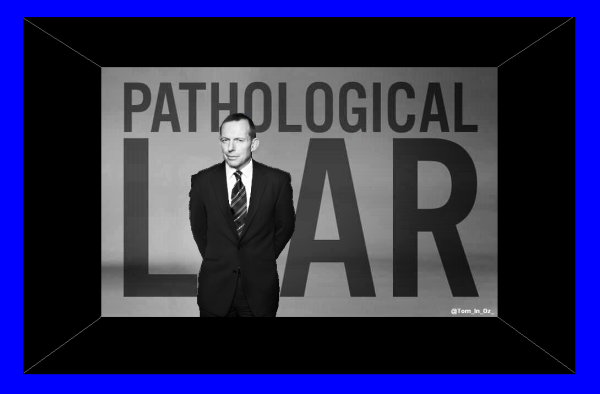
Timothy Bancroft-Hinchey said Mr Abbott “displays a degree of insolence, arrogance and incompetence” and said Russian president Vladimir Putin should “sterilise his hand” after shaking the Australian leader’s hand in a Pravda column.

RELATED: Ross and John go through the Pravda editorial

The Neil Mitchell program conducted the following interview with Bancroft-Hinchey via email, in which he praises MasterChef Australia and recommends Mr Putin should “grab the bastard” in the unlikely scenario Mr Abbott does attempt a shirtfront.

How would the average Russian respond to Tony Abbott saying he would ‘shirtfront’ Vladimir Putin?

Well, any Russian or anyone else for that matter would question whether Abbott made the remark before or after lunch. If he made it before lunch then either he is childish or mentally challenged and if he made it after lunch then he is incompetent.

How would Vladimir Putin react to being ‘shirtfronted’?

I cannot speak for Vladimir Vladimirovich but if I were him, I’d grab the bastard that did it, slam him over my shoulder, place my boot in his face and ask “You were saying…?”

Vladimir Putin is world-renowned for his judo expertise — would he use that on Mr Abbott if he was ‘shirtfronted’? 

Well, I cannot speak for President Putin but he certainly has the skills to react adequately to such an act of aggression. I am not saying he would do so, basically because Abbott wouldn’t have the guts anyway. As soon as he saw Putin looking at him he’d triple his laundry bill, suddenly turn white, sit bolt upright and go screaming over to his sister’s house to grab a clean pair of Y fronts.

Could Vladimir Putin being ‘shirtfronted’ cause an international incident?

Well it would be an act of aggression, common assault and would render the perpetrator liable for prosecution as a criminal. Figures…figures…

Do you feel Tony Abbott is unhygienic (more than once you advocate that Mr Putin wash his hands after interacting with Tony Abbott)?

Well who knows? The guy doesn’t seem to have that much going for him at present, now does he?

What does the show ‘Neighbours’ say about the Australian people?

Well Neighbors is a soap which projects what the Australians want others to believe about the way they live. I do have some family and friends in Australia, though I have more in New Zealand, and would not be surprised if the community based approach was spot on.

What does the show ‘Masterchef’ say about Australia?

Well the Australian Masterchef with those three judges, Garry, George and Matt Preston is extremely popular outside Australia and is my favorite TV show. I like it because people are nice to each other, they are pleasant and the judges are careful not to humiliate the guests, always finding something positive to say about their meals or else giving them constructive criticism. This differs greatly with other Masterchef productions which seem to focus on insulting the cooks and making them feel small and inadequate. I seriously hope Australian Masterchef continues for many years to come…it’s also an excellent source of recipes for those of us who like cooking.

Who do you feel was responsible for the downing of MH-17, and do leaders such as Tony Abbott know more than they are letting on?

Actually after Abbott’s remarks in recent days I get the idea the guy has issues and to be honest feel he may need therapy. Maybe he should try Veganism for a while to see if he can calm down a bit. I doubt he has a clue what is going on in Ukraine after his statements. What I said in my article explains the history of the conflict and in any civilized country you wait for the investigation to conclude before spouting off and firing in all directions. I guess the guy might make a competent hands-on Mayor of a small town somewhere but the Head of Government? Jesus, I could do a better job myself.

Achivements of Rupert and Gina’s boy. Working for the 1%ers. He certainly Hell’s Angel

So where is the crisis Mr Abbott???

Illustration by John Shakespeare (image from smh.com.au)Australia is still the richest nation . . . But don’t celebrate just yet

Australia remains the richest country in the world according to the annual wealth report from Credit Suisse released this week. The ascendancy Australia gained during the global financial crisis (GFC) has been easily maintained, although fortunes have varied widely elsewhere. Quite the opposite according to Tony and Joe.

The median wealth of Aussie adults increased from US$219,500 last year to $225,300. Belgium is second, well back on $173,000. Then follow Italy, France, the UK, Switzerland, Japan and Singapore.

Australia has not always been the richest nation. It topped the table during the global financial crisis, thus bolstering the view of Joseph Stiglitz, Tim Harcourt and others that Australia handled the GFC particularly well.

In 2008, Australia ranked sixth in the world on median wealth behind Luxembourg, Iceland, Belgium, Italy and France. Through 2009, as the global financial crisis devastated most developed economies, Australia rose to second behind clear leader Luxembourg, with Belgium a close third. The others fell well back.

By 2010, Australia was within a fraction of a percentage point of Luxembourg, which it overtook to lead the world in 2011. Through 2012 Australia moved further ahead, leading Luxembourg, Japan, Italy, Belgium and the UK. By 2013 Australia’s median wealth had rocketed to US$219,500 per adult, leaving Luxembourg, France, Italy, the UK and Norway well behind.

Over the 14 years since the turn of the century, Credit Suisse calculates household wealth in Australia grew at an average annual rate of 11%, despite the GFC.


Professor John Mathews and Hao Tan pointed out in their research

“latest target is that renewables will have a capacity of 550 gigawatts — over half a trillion watts — by the year 2017. We calculate that this will exert a major impact in China — enhancing energy security; reducing emissions pollution; and reducing carbon emissions .… If it can reach its 2017 target of 550 GW renewables, we calculate that this would translate into a saving of 45% on current imports of coal, oil and natural gas.”

Added to this, the price of coal dropping, largely due to oversupply and import tariff  thereby lowering profit. Coal production costs will put an enormous strain on mines.

Our biggest client for coal and gas is Japan. After Fukushima, Japan has become more wary of nuclear power and, as such, will rely, in the short term, on importing coal and gas from Australia — amongst others. Abbott last week opened a Japanese/Australian partnered mine. However Japan has plans to go renewable as well 20% by 2020 All this accompanied by divestment  is  highly negative portent for the industry.

Joe and Tony, “the fossil fuel ride is over”, it’s time you recognised that.

Australia’s Special Forces troops Iraq bound for Islamic State fight stuck in UAE as Iraq wants Iran’s help not ours.

Awaiting legal permission to help Iraq ... SAS (Special Air Services) in full patrol unif


EXCLUSIVE: Australia’s 200 Special Forces are stalled in the United Arab Emirates, awaiting legal clearance to kick off their mission assisting the Iraqi Security Forces in repelling the Islamic State.

The Special Forces, under the leadership of 2nd Commando Regiment, arrived in the UAE a month ago, fully equipped for their “advise and assist” role, but Iraq is sending mixed signals on whether it wants the Australians in Iraq.

The new Iraqi government of Haider al-Abadi has expressed reluctance about allowing foreign troops onto Iraqi soil — even though small groups of combat specialists, including US, German and British, have made their way to the front line

The RT news channel has reported Iraqi Foreign Minister Ibrahim al-Jaafari as saying yesterday: “We are absolutely against foreign military bases and the presence of foreign military forces. Yes, we did ask for help, but it concerned air cover.

“The question of sending troops in was discussed several times and we were very frank and stated clearly that we are completely against the deployment of foreign troops on our territory, as it can cause justifiable fears and concerns among the Iraqi population.”

Further complicating matters, Prime Minister al-Abadi is yet to appoint a permanent Defence Minister as Iraq transitions to its new government.

The six Australian F/A-18F Super Hornets flying combat missions over Iraq operate under an agreement separate to the planned SoFA. It was negotiated between Baghdad and Coalition countries and gives them diplomatic clearance to fly over Iraq and conduct strikes.

No word had come through on the Special Force deployment as of yesterday.

The Iraqi Foreign Minister’s strong language appears to throw doubts as to whether it would accept as many as 200 Australians, who are fully primed to show their Iraqi colleagues that they are staunch and committed allies in combat.

The US, British and German specialists — who are also assisting the Kurds out of Irbil, in northern Iraq — have taken the chance and gone in without SOFAS.

In theory, Australia could send in the Special Forces today, but if — for example — they accidentally shot an Iraqi policeman, they could be arrested and jailed. Australia is not prepared to take that risk.

It may still be the case that they will go, and possibly at a moment’s notice if the deed is signed.

Behind the scenes, that resistance will be most forcefully applied by the Shia regime of Iran, which wields strong political influence in the Iraqi capital, which is also Shia and appears increasingly to be looking to its neighbour — a former enemy — for an Islamic solution to the ISIL scourge.

Not wanted in Iraq but Abbott WILL deploy. Wanted in West Africa Abbott WON’T deply. In permanant opposition

Ebola: Tony Abbott resists pressure to deploy medical specialists to west Africa

AMA accuses government of having its ‘head in the sand’ but PM says other countries have yet to commit to assist in evacuations of Australians

The AMA called on the Australian government to step in and provide assistance, saying the problem must be tackled at the source to ensure it did not spread.

Owler said he understood the government’s reluctance to send people into harm’s way and he was not calling for people to be deployed against their will, but some were willing to “do this dangerous work”.

“Unless we respond and control this with a global effort, unfortunately, the cases are going to spiral out of control,” he said.

Owler also called on Australia to review its preparedness to deal with cases here, after the second case in Texas raised the prospect that procedures and protocols had failed.

He said he was surprised that the government had not convened a meeting of experts to consider the Australia’s domestic and international response.

Iraq does not want Tony on the ground. He wants the profit and glory


Australian military role unclear as Iraq minister rejects idea of foreign troops.

Iraqi foreign minister ‘absolutely against’ foreign presence but Tony Abbott remains confident of gaining legal clearance

The “level of engagement” of Australian special forces troops heading to Iraq is still unclear after the new Iraqi foreign minister, Ibrahim al-Jaafari, was quoted as saying he was “absolutely against foreign military bases and the presence of foreign military forces”.

However, the Australian prime minister, Tony Abbott, confirmed the legal clearance contained in a status of forces agreement (Sofa) for the special forces troops was expected within days.

“With the new government of Iraq still forming, it is taking a little longer than we would have liked to have put those legal protections in place but I am confident that the situation will be revolved in the next few days,” Abbott said.

The Australian soldiers remain in the United Arab Emirates awaiting clearance to advise Iraqi military forces in their fight against Islamic State (Isis). The clearance has been in process for weeks.

Al-Jaafari’s comments appear to place a cloud over the status of foreign troops, though small groups of US, British and German troops are already on the ground in Iraq in an advisory role.

He was quoted as telling the RT news channel: “We are absolutely against foreign military bases and the presence of foreign military forces. Yes, we did ask for help, but it concerned air cover.”

“The question of sending troops in was discussed several times and we were very frank and stated clearly that we are completely against the deployment of foreign troops on our territory, as it can cause justifiable fears and concerns among the Iraqi population.”

Abbott rejected suggestions the Iraqi government was wavering about international troop deployments in its country.

Asked whether the new Iraqi prime minister, Haider al-Abadi, had expressed any reluctance about Australian troops entering Iraq, Abbott said: “I made it very clear to [al-Abadi] in New York a couple of weeks ago that we were very keen to help.”

“I made it crystal clear that our special forces are ready to go and there is an enormous amount of good that they can do inside Iraq but we owe it to our special forces only to deploy them with the right legal protections.”

Definition of a shirtfront

Definition of “shirt-fronting” to be added to national primary school curriculum (picture censored for under 18s because you can see too much information about #Abbott‘s helmet head – sorry, public interest comes first; once seen it cannot be unseen)

A Liars welcome. Scott Morrison made space for Yzidis we went to save. Where are they

Politicians and media let us down in fight to curb rising Islamophobia

Many incidents of violence and harassment directed at Australian Muslims have been reported recently. These are visible confirmation of fears expressed by their community, that support for the government’s…

Many incidents of violence and harassment directed at Australian Muslims have been reported recently. These are visible confirmation of fears expressed by their community, that support for the government’s new security laws and military action in Iraq would be rallied with “racist caricatures of Muslims as backwards, prone to violence and inherently problematic”.

Policing and intelligence operations have focused exclusively on members of the Muslim community. This has contributed to a public backlash against Muslims and supposed Muslims. The immediacy and scale of this outbreak of Islamophobia is alarming.

Stereotypes do terrible damage

Australia has emerged as a fertile environment for Islamophobia. Stereotypical representations of Muslims in the early years of the “War on Terror” – which linked terrorism, violence and Islam – gained wide currency by the mid-2000s.

Sections of the news media, politicians and social media have re-activated these stereotypes. Muslim Australians are made to feel they are targets – for everything from the everyday racism encountered in schools and on the streets, to draconian counter-terrorism legislation that restricts civil liberties, to war and the preparations for war.

Social psychological research has shown that when public figures and media endorse negative stereotypes this legitimises prejudicial attitudes. This can influence the translation of such attitudes into discriminatory actions, as we have seen in the recent spate of attacks.

Australia now has several openly Islamophobic far-right social movements and political parties. Until recently these were generally small and operated largely in isolation. However, such groups have begun to collaborate on campaigns.

These groups also appear to be attracting more support from the wider community. The re-emergence of anti-Muslim rhetoric in public discourse has provided legitimisation for their views.

Those Australians who are openly hostile to Muslims and their institutions feel emboldened by anti-Islamic rhetoric in public discourse. AAP/Tertius Pickard

Muslims suffer when Coalition dons khaki

The government also appears to be a political beneficiary of the resurgence in Islamophobia. As national security concerns top the news agenda, pressures on the government on a range of other fronts, particularly the deeply unpopular May budget, have faded into the background.

The increased “terror threat” was followed by rises in the approval rating of Prime Minister Tony Abbott and Coalition voting intentions.

The amplification of threats to national security has worked for struggling conservative governments before. In 2001, the Howard government was polling poorly, yet managed to snatch victory later that year. The Coalition election campaign played on racial anxieties and national security fears following the “children overboard” affair and the September 11 terrorist attacks.

In 2010, with the Coalition again languishing in the polls, then opposition immigration spokesman Scott Morrison sought to replicate this strategy. He urged the shadow cabinet to “capitalise on the electorate’s growing concerns about “Muslim immigration” and Muslims’ “inability to integrate”.

Tony Abbott’s each-way bet in his remarks on Muslim women’s dress sent a terrible message. AAP/Alan Porritt

The Prime Minister has not been nearly as forthright in condemning acts of Islamophobia as he has been in denouncing Islamic extremists. He even weighed into the debate to dismiss Muslim community concerns. And Abbott failed to condemn the inflammatory push from within his party for a “burqa ban”.

This is in contrast to the firm and admirable stance taken by Western Australian Premier Colin Barnett. He emphasised that “Australia as a country has a history of respecting different cultures and faiths”. The reported taunting and terrorising of Muslim women and children in Perth was “unacceptable”.

Media reports that marginalise harm us all

The media is not blameless either, as some journalists have acknowledged. Australian Muslims have consistently identified the media as a central social institution that contributes to their marginalisation and exclusion.

Media reporting has frequently perpetuated stereotypes. It has also failed to reflect the diversity of origins, outlooks and aspirations of Muslim Australians. Journalism of this sort negatively affects other Australians’ perceptions of Islam and the Muslim community.

My research has shown that articles with lower levels of Islamophobia feature the voices of “ordinary” Muslim men and women. They humanise them. Such articles contextualise conflicts and avoid simplistic frameworks such as “good versus evil” or “War on Terror”.

The media can do more to highlight positive efforts by individuals and groups to resist and respond to oppression and conflict. More balanced perspectives can reduce the reinforcing and perpetuation of Islamophobia.

The “newsworthiness” of stories related to Islam and conflict, and the concentration of negative reporting patterns, suggest that adoption of conflict reporting standards could be another key way to curb Islamophobia.

The mass media and our politicians will be central to either exacerbating or stemming Islamophobia. Gestures of support and solidarity from the non-Muslim community, and standing up to racism, are also important.

Combating Islamophobia is vital to the wellbeing of the Muslim community, to wider community cohesion and to limiting recruitment for groups such as Islamic State (ISIS)/Da’ish. To curb Islamophobia, we must contest the political spectacle that gives rise to discriminatory and violent treatment against Muslims by the state and some non-Muslim Australians.

Preachers of Hate Abbottt and Jones and should not be allowed to formulate the hate laws about who are Preachers of Hate

Preachers of hate

Peter Wicks 10 October 2014, 1:30pm 68

 Tony Abbott wants to push “preachers of hate” red card legislation  through Parliament.

He announces  the plan with Alan Jones on 2GB.

Alan Jones,  is the man who has repeatedly faced court over claims he incited the Cronulla race riots with his own on air hate speech and who launched a vicious attack on Julia Gillard based on the demise of her father.  Who called for public the country’s prime minister ‒ amongst other public figures ‒ to be drowned at sea in a chaff bag.

This should be something that is overseen by a completely independent panel and has representatives from all cultures, religions and minority groups taking part.This is far too important an issue to let it be overrun by a blinkered, hypocritical rightwing agenda.

It is the same crowd that only recently, reluctantly, backed down on its election promise to amend the Racial Discrimination Act to allow people to promulgate racial hatred and bigotry. Abbott sought to give a green light to rather than a red card were Alan Jones and Andrew Bolt. How handy, then, to be discussing hate speech on the Alan Jones programme — they are the experts.

When Geert Wilders  who famous follower Anders Behring Breivik, who massacred 77 people in Norway in 2011; came here Andrew Bolt, Cory Bernardi and burqa banning George Christiansen  gave him the red carpet not the red card.

on radio to Jones Abbott said

“Under the law that we are bringing through the Parliament, hopefully before the end of the year, it will be an offence to promote terrorism not just to engage in terrorism but to promote terrorism.”

Abbott believes a “preacher of hate” is someone who promotes terrorism, not someone who is on a soapbox making speeches designed to promote intolerance, hatred, discrimination and ignorant bigotry.

Preacher of hate Alan Jones used the Abbott interview to preach some hatred about an Islamic organisation he wanted banned.The group is called Hizb ut-Tahrir.

Banning hasn’t exactly worked a treat for bikie gangs, Banning an organisation won’t suddenly change its members’ beliefs, indeed it would seem more likely to antagonise the membership.

It is starkly ironic that the same people arguing for greater freedom of speech when it came to the Racial Discrimination Act are the same ones wanting less freedom of speech for those whose views they find objectionable. Hypocrisy writ large.

If it was a criminal offence to preach hate in Australia, maybe we would see less comments from those seeking to promote class warfare by branding people such as the disabled, pensioners, single parents and the unemployed as “leaners” (or bludgers), claiming they are parasites on society while others do the “heavy lifting”.There is no doubt that hate speech is a current and relevant topic and something our laws need to consider.


If as Abbott says this war is affordable what happened to the emergency budget?

Second Generation Lebanese youth are lagging far behind the rest of New South Wales state on indicators such as income and employment.

Crime and gangs: the path to battle for Australia’s Islamist radicals

A man wearing an Islamic prayer cap, or 'Kufi', prays with other Muslim worshippers in the Gallipoli Mosque located in the western Sydney suburb of Auburn September 26, 2014. REUTERS-David Gray
 Muslim worshippers walk into the Gallipoli Mosque to pray in the western Sydney suburb of Auburn September 26, 2014.

(Reuters) – The children of refugees who fled Lebanon’s civil war for peaceful Australia in the 1970s form a majority of Australian militants fighting in the Middle East, according to about a dozen counter-terrorism officials, security experts and Muslim community members.

Of the 160 or so Australian jihadists believed to be in Iraq or Syria, several are in senior leadership positions, they say.

But unlike fighters from Britain, France or Germany, who experts say are mostly jobless and alienated, a number of the Australian fighters grew up in a tight-knit criminal gang culture, dominated by men with family ties to the region around the Lebanese city of Tripoli, near the border with Syria.

Still, there is a clear nexus between criminals and radicals within the immigrant Lebanese Muslim community, New South Wales Deputy Police Commissioner Nick Kaldas told Reuters.

The ease with which some hardened criminals from within the community have taken to militant extremism, and the prospect of what they will do when they return home from the Middle East battle-trained, is a major worry for authorities, he said.

In recent years, he said, the divide between criminal gangs and radicals in Lebanese community, who were driven by different motives, had narrowed.

Prime Minister Tony Abbott says that at least 20 of the fighters are believed by authorities to have returned to Australia, and that more than 60 people believed to be planning to go to the Middle East have had their passports canceled.

A broad sampling of the areas in Sydney most associated with Lebanese ancestry on the 2011 national census – Auburn, Lakemba, Punchbowl, Granville – show them lagging far behind the rest of New South Wales state on indicators such as income and employment.

“It’s a troubled community as a group,” said Greg Barton, director of the Global Terrorism Research Centre at Monash University. “So they’re over-represented in petty crime, in organized crime, in religious extremism.”

Aftab Malik, a Scholar-in-Residence at Sydney’s Lebanese Muslim Association who has spent years living in western Sydney’s Muslim community, said he believed the convergence between radical Islam and organized crime was unique to Australia.”I haven’t come across that in the U.S. or in Great Britain. It’s quite specific here and I don’t know why that is,” he said.


Lawyers appear to be pulling rank over the generals. Ours are talking to ISIS Lawyers about their rates

Tony Abbott waits for approval to use Australian special forces in Iraq

Prime Minister Tony Abbott.

Prime Minister Tony Abbott. Source: News Corp Australia

IT’S a strange kind of war when lawyers appear to be pulling rank over the generals.

The drawn-out negotiations to allow Australian special forces to act in Iraq seem more like solicitors settling a real estate transaction than a soldier issuing a battle command.

“We’ve written to the Iraqis, the Iraqis have written back to us, and now we need to consider their response to finalise our considerations,” Prime Minister Tony Abbott told reporters today,

The Prime Minister is prepared to wait for advice from his crack legal team before flicking the green light for his crack fighting units.

That’s because he wants any Australian battle with the fighters now blighting Iraq to be legitimate legally as well as morally.

It’s a matter of respecting international law, but there is also a domestic element. Voters broadly see the mission in Iraq as necessary, but that doesn’t mean it is popular. There is still a significant slice of the electorate which would be outraged if the government rushed into what could be an endless engagement.

That means any action will be delayed until the diplomatic niceties have been finalised.

Of course, no permission was sought from Iraq for the 2003 invasion. The United States argued it had approval under a United Nations measure, and Australia used the same legal justification. The US military still has the legal right to operate in Iraq. Further, the United States is the big dog of international affairs and is unlikely to be denied.

Australia doesn’t have that heft. Permission from Baghdad’s post-Saddam government for Australian soldiers to serve in Iraq has expired, and has to be renewed line by line.

The Iraqi lawyers won’t be rushed. At one point last week, there were concerns a public holiday in Baghdad might further defer negotiations for our Hornets to fly over the country.

Today, Mr Abbott maintained his insistence on a lawyer’s approval regarding action by Australian troops.

“Our forces are ready to go. We are finalising the legal documentation,” he told reporters.

“I hope that can be done very quickly, because it is an absolutely critical mission upon which our forces will be embarked, to advise and assist the Iraqi armed forces as they regroup and regather, and hopefully regain control of their country.” or just piss off again

Tony Abbott sends Australia off to fight the wrong war

While Tony Abbott send Australia’s warplanes, bombs and soldiers into Iraq, the far more deadly war against climate change is being ignored by his Government.

AUSTRALIA’S WARPLANES ARE FLYING OVER IRAQ. Soon they will be dropping humanitarian bombs.

2013 has been Australia’s hottest year on record. An already dry sunburnt country, Australia is in the firing line of climate change.

Our Government of fools fails to join the dots.

The global peoples’ climate march coincided with Tony Abbott promoting himself as a saviour, in a war against a so-called “death cult” — ISIS.

Captain Ahab Abbott is intent on taking us all down with the ship.

In contrast to this, the worldwide September action for the climate was a pro-life movement. It called for a lifesaving switch to renewable energy.

Carbon dioxide (CO2) emissions are now at the highest level in human history. The threat level is beyond high — it is extreme.

In Melbourne, I marched with 30,000 people. This march felt as massive as the protests in 2003 against the invasion of Iraq. An estimated six to ten million took part in that march in over 600 cities and 60 nations.

Nevertheless the ‘coalition of the willing’ ignored the people and proceeded on their disastrous invasion path. It was a war based on lies that lead to half a million Iraqi deaths and fostered the conditions that created ISIS.

My first protest march was back in the days of Australia’s involvement in the Vietnam War. As an 18-year-old student I sat down with tens of thousands of people in Burke Street Melbourne, to demand a moratorium on the war. Western involvement in that war was also based on political lies.

Having now infamously repealed the price on carbon and attacked all measures already in place to reduce emissions. He has his eye on scrapping the RET and vandalising renewables.

Abbott is killing our action on climate change, while promenading on the world stage claiming ‘to lead by example’ and to ‘work for the benefit of mankind’.


The climate movement is a struggle in which all our rights are at stake. We can win the day.

The challenge is to shift paradigms, understanding and ideas. These struggles are not won on killing fields.

Abbott Booed at the NRL Final…. He loves the smell of napalm in the morning….. WAR

The forgotten war but they are still there

They are booing the man

Filed under:

Abbott and Obama’s Iraq: The war that is and is not

When is a war not a war? When is a war really a war?

The answer to those questions is strictly in the hands of whoever is in charge of a country at a particular time.

Tony Abbott badly needed a war, or something like it, when his Government was being shredded a few weeks ago — firstly because he lied to the population about everything his government intended to do. He lied before the election and he lied again after the election when he said he didn’t lie.

The angry backlash had begun to look serious for his Government.

The murderers who appeared out of the Islamic State of Iraq and al-Sham gave Abbott his real opportunity.

War! War! War!

Now U.S. President Barack Obama has decided that

“… we will not get dragged into another ground war.”

Instead it is a “counter terrorism campaign” in the president’s words, but our Tony Abbott decided that it was a war and he is throwing the Australian army and air force right into it.

More recently, Obama has decided that American troops still in Iraq, should be part of a routine policy which America has been following in Somalia and Yemen aimed at securing “national security” and to “protect of our people” — meaning the workers of U.S. oil magnates.

For Tony Abbott, it’s a war. For the U.S. it is not a war.

In Australia, we have a news media today that reeks of sheer bullshit, making headlines of nothing, scaring the pants off many in the population, arguing endlessly about what women should be allowed to wear or not to wear. Inside our population, we undoubtedly have a number of people who have come to Australia and received citizenship but there will always be some who will abuse the freedoms that Australia offers them.

Tony Abbott and his favourite dinner companion Rupert Murdoch are playing a game with the Australian people, while at the same time our police and security forces are doing all that is reasonably necessary to keep us safe. At the same time, we need to be concerned that the opposition side of our parliament must be convinced that Abbott is doing the nation no good.

There are plenty of people in Australia now who are well aware that the country is being taken for a ride for outrageous political chicanery and it needs to be stopped.

I would love to know the subject of the dinner conversations of Abbott and Murdoch. Particularly Murdoch, whose obsolete views on practically everything I learned years ago.

Filed under:

A New World Order or yet another Monumental Blunder?

strike

And have we now forgotten that we spent eight years in Iraq with that same coalition on the pretext of training the new Iraqi Army to deal with any subsequent incursion. Now, just five years later it appears that this same western trained Iraqi army has all but collapsed and can’t even protect its own people. So isn’t it reasonable to ask just what kind of training we gave them over that eight year period? What the hell were we doing?

It’s obvious to anyone that Iraq was a far better governed nation under Sadam Hussien than it is today. It was wealthier, militarily stronger and more than capable of defending itself against its immediate neighbours.Today, it resembles a basket case.

Why hasn’t America intervened in Syria?The reality is that we know nothing of what these air strikes will achieve and will be given nothing but heavily censored, favourably worded reports of “ongoing successes” as the campaign drags on till whenever.Civilian casualties will be concealed or minimised, if not redacted, so as not to upset our delicate sensitivities or impact upon our support. It will be years before the truth comes out.

The strength of Islamic State seems to be somewhere between 20,000 and 100,000 depending on which source you believe. Such a disparity in their perceived numbers suggests that nobody really knows. Western intelligence looks to be somewhat flawed. They seem to be making it up as they go along, just like they did prior to the 2003 invasion of Iraq. It is the 2003 conflict where today’s problems were born. Michael Brull of New Matilda gives a detailed account of how ISIS came into being; the result of yet another monumental blunder by the invading, conquering Western coalition.


Abbott’s day at the office …Stuff the I’ll sign the papers tomorrow. The polls are up.

New York Times…. We won’t hear it in the Herald Sun or in any Murdoch paper

The five-point plan used to justify fighting wars is being deployed in media again

The five-point plan used to justify fighting wars is being deployed in media again

The government has been using the same techniques and devices of propaganda and persuasion that were brought out to justify the Iraq war of 2003, the removal of Colonel Gaddafi in 2011 and the proposed attacks on the Assad regime in Syria in 2013.

Step 1. Highlight atrocities

We have claimed the moral high ground, using atrocity propaganda. Tony Abbott does this on a regular basis even though our allies behead people as .

Step 2. Communicate moral obligation

The enemy is evil and to do nothing in the face of such evil would amount to dereliction of moral duty.We must stop them. If we do not, then we are no better than them and evil will prosper. “They are against god”…Tony Abbott

Step 3. Deny enemy’s humanity

“the propagandist’s purpose is to make one set of people forget that certain other sets of people are human”. Death Cult, Medieval, a cancer

Step 4. Say intervention is for the people

if you are averting a humanitarian catastrophe then you can act. We have to protect the civilians and civilian-populated areas under threat of attack. Salvation is a just cause.

Step 5. Raise threat to national security

Illustrate that this far-away, evil regime constitutes a threat to national security, here and now. The danger becomes localised. Military action is urgent. ISIS “would come to hit us here very quickly –indeed there have already been plots.”

However much technology and times may change, the techniques of propaganda and persuasion remain largely the same. Today even more so in your face.


Real Media, Alt News, Politics, Critical Thought, War, Global events, Australia, Headlines,