The Great Australian Race Riot S1 Ep1 – The Great Australian Race Riot Series 1 Ep 1
The Great Australian Race Riot S1 Ep1 – The Great Australian Race Riot Series 1 Ep 1 | Programs.
The Great Australian Race Riot S1 Ep1 – The Great Australian Race Riot Series 1 Ep 1 | Programs.

For those who scream blue murder about freedom of the press and freedom of expression being the victims of the Charlie Hebdo massacre in Paris, let us take a deeper look and see to what extent the West in general is engaged in censorship and spreading lies. For those who complain about terrorism, let us not be hypocritical.
Let us start where we should, namely paying respect to the victims (and their families and loved ones) of the shocking attack which took place at the editing rooms of the Charlie Hebdo satirical magazine in Paris on January 7 2015, the first big event to mar the New Year, the first benchmark in the news which will constitute 2015.
Let us also start by underlining a universal human value, the right to life and let us condemn those who take it away in any shape or form. This involves an unqualified attack against terrorist acts anywhere at any time against any target; these must be condemned in the very strongest words possible whether they are perpetrated by some demented fanatic at the end of a Marathon, by Islamist fundamentalist jihadis avenging the Prophet, by some coward flying at 30,000 feet in the sky blasting the faces off civilians at a wedding party or by a Government which takes part in an uprising in a foreign country using terrorists as its tool.
So, you throw the boomerang and it comes back to hit you square in the face. You spend months demonizing “Assad”, saying “he must go”, then what happens? Thousands of youths with empty lives jet off to Syria to become Jihadis, many of them thinking they are doing their duty for their religion (although because President Assad is a Moslem therefore any act against him is unjustified) and their country. And now what? Many of these Jihadis are totally demoralized because they see the Syrian “Opposition” for what it is, namely a bunch of thugs and terrorists impaling kids on metal spikes, slicing the breasts off women in the streets, decapitating them then raping the bodies, using Downs Syndrome children as suicide bombers and so on. Just as the West’s darling terrorists did in Libya. But they are radicalized, have no lives to come back to and have learnt some new tricks among the terrorists trying to topple President Assad.
And the next move on the social and political chess board is for radical extremist groups to pop up like mushrooms across Europe calling for moves against Moslems in particular and immigrants in general, as Fortress Europa continues to be assailed by hundreds of migrants a day looking for a slice of the cake, while up to 60 per cent of Europe’s youth in some areas are endemically unemployed.
A positive situation it is not, and it seems things can only spiral downwards from here. While every problem has a solution, this one is very complex and it would appear there is no easy way out of a situation which has been brewing for decades.
When a terrorist group is localized and has a cause which is regional or local in its scope, it is relatively easy to engage the organization on two levels – officially, through military operations and the security services, and unofficially through negotiations to bring the action onto the political stage. Examples of success are the IRA, ETA and several groups in Africa, for instance in the DR Congo.
But when you have terrorist acts being perpetrated by cells of disaffected youths without any particular cause, except for a misty and vague idealistic chimera about defending Islam, no such approach is possible.
It is important to contextualize the situation with the example of a group of Portuguese Jews in the fifteenth and sixteenth centuries. Banned from Portugal by the Inquisition, they fled to Amsterdam, where they were also banned by the Inquisition, so they fled to London where they were banned by the Christian King and then went to Italy, where they were again banned by the Christians, and ended up enjoying their freedom and hospitality protected by the Moslem Ottoman Empire.
So Islam and Moslems are one thing, Islamist fundamentalism is another, and in fact this movement is a blasphemy to Islam itself because Islam is, more than a religion of peace, a way of life which involves respect for all living beings, including animals and plants.
Why these youths have been radicalized cannot be blamed on the western education system in general because most people do not go around blowing themselves up on trains or planting bombs indiscriminately in public places. However, how many of these youths are engaged inside the societies in which they live, with stable jobs and hopes for the future? How many of those young radicals in Paris come from the banlieues, the suburbs, rings of poverty around the main cities of France?
How many of Britain’s radicalized youths come from the Inner Cities, where once again they are marginalized and feel they do not belong to the society in which they grew up and find in radical Islamist doctrine an escape, as others find an escape in drugs?
The problem, therefore, is not a complex one of religion, it is a simple socio-economic question. The way forward therefore, is to engage the community leaders in the banlieues and inner cities, giving reinforced powers to local authorities, including structuring the education program so that it makes sense to individuals in certain areas. The legacy of Muammar al-Gaddafy was to teach us that the human being thrives when the system of governance is localized and when small communities govern themselves – this was the Jamahiriya, which France and its Anglo-Saxon bedmasters helped to destroy.
Let us end where we should, once again sympathizing with the victims of the Charlie Hebdo attack and their families and loved ones. And for those who scream blue murder about freedom of expression and freedom of the press after this outrage against a French satirical publication (very much a French tradition dating back to the times of the Revolution), let us remember the hacking attacks by western agents against social media, let us remember the purposeful taking over of social media accounts by western agents, let us remember the hacking of emails by western agents. Is this freedom of expression?
Timothy Bancroft-Hinchey
Pravda.Ru
(timothy.hinchey@gmail.com)

Once again, after the December 20-22 facts in Tours, Dijon and Nantes, France was targeted with a terror attack, probably the bloodiest carried out by Islamist terrorists on French soil. Could it have been thwarted? Well, those who deal with security issues on a daily base know how hard it is to prevent an attack, especially when the judicial system lacks proper laws on preventive restrictive measures that must go side to side with surveillance activities.
Although, the two terrorists, French-Algerians Said and Cherif Kouachi, were well-known to French intelligence, they had been in Syria, fighting side to side with the Islamic extremists. According to the French police the two brothers were small criminals that had progressively radicalized. Cherif was arrested in 2008 and charged with 3 years for being part of a cell that was sending fighters to Iraq.
It is interesting to notice how the two were able to penetrate with the car in the center of Paris, fully armed with automatic rifles and a rocket-launcher, in front of a newspaper that had already been targeted in the past by Islamic extremists and that was expected to be well-guarded; they knew that the newspaper was holding the weekly meeting that day at that exact time, they managed to carry out an attack that lasted at least 5 minutes, calling their victims by name, shooting multiple times and then fleeing the scene, hijacking two cars and yet they are still at large.
On March 24th 2014 another French-Algerian with previous jihadist history in Syria and with criminal records, Mehdi Nemmouche, had fired on the Jewish Museum in Bruxelles, killing four people. He was later arrested in Marseilles while getting off a bus and denied charges against him.
We are obviously in front of a new type of terrorism that doesn’t involve anymore suicide bombings but rather cold-blooded assassins that were trained in camps in the Middle East and who have acquired the necessary operative preparation to plan and carry out attacks in Europe, in an extremely efficient way, fleeing the scene and giving the authorities a hard time in tracing them. Europe will soon need new laws to deal with such a phenomenon.
Giovanni Giacalone


The slaying of the Charlie Hebdo journalists and cartoonists because of their work is the grossest attack on the value of free speech, and of course the right to life. In the deadly attack on the magazine’s office, the sword has crushed the pen: an unspeakable outrage.
Any attack motivated by the pen upon that pen’s purveyor, whether he or she be a journalist or academic or author or satirist, is an attack on free speech. And journalists are tragically the victims of persecution, including murder, every year. Since 1992, 731 journalists have been murdered worldwide due to their work, not counting the further 373 killed in crossfire or combat, or while on dangerous assignment.
The murders of journalists tend to take place in countries with a weak rule of law. They are virtually unknown in developed liberal countries such as France. Furthermore, most work-related murder of journalists arises because they bravely speak, or attempt to speak, truth to power.
The motivation behind the Charlie Hebdo murders seems different. The cartoonists were killed, presumably, because the murderers believed its portrayals of Muhammad and Islam were blasphemous. They were killed because they refused to abide by the cultural values of the murderers, who lethally enforced their own views on the societal limits of free speech in France. This led to the outpouring of solidarity and defiance mixed with grief in huge gatherings in Paris and other European capitals.
Charlie Hebdo editor-in-chief Stéphane Charbonnier and his colleagues are now martyrs to free speech and satire, and in particular the right to offend. Leaving aside the obvious point that no-one should be killed because of what they have drawn, how does one characterise the Charlie Hebdo cartoons? Were they cheeky cartoons, wholly within the proper bounds of freedom of speech, or were they the product of “a racist publication”?
There is a human right to free speech, including the right to offend, a right held dear by cartoonists the world over. But there are limits. Of relevance, hate speech is prohibited in international human rights law, including that which is likely to incite hatred on the basis of religion.
The Charlie Hebdo cartoons were generally more likely to offend members of the targeted group than to generate hatred against that group. For example, its depictions of Muhammad and Islam were more likely to offend and hurt Muslims rather than generate hatred by non-Muslims against them. Such speech, to my mind, falls outside the definition of hate speech.
However, some of the Charlie Hebdo cartoons seem clearly racist – though racist speech is not always, legally, hate speech. For example, one particular cartoon portrays the girls kidnapped by Boko Haram in Nigeria as greedy welfare recipients. However, this discussion of that cartoon reminds us of the importance of context, which I lack as a non-French speaker who hasn’t read that edition.
The murders were more likely inspired by the images of Muhammad themselves, rather than any Islamophobic cartoons. The depiction of Muhammad, regardless of negative (or positive) connotations, is considered blasphemous and therefore grossly offensive to many Muslims.
However, there is no human right not to be offended on a religious basis. Blasphemy laws themselves are breaches of the human right to freedom of expression. That is not to say that the gratuitous giving of offence to Muslims, or the people of any religion, is desirable. But “desirability” must not be the measure of permissible free speech. And it is dangerous to hold up any religion as something which must be free from ridicule.
Charlie Hebdo deliberately published cartoons which its staff knew would offend some people deeply. It has done so throughout its history of more than four decades, with its targets including the French political and cultural establishment, and religions of all kinds. Islam was not disproportionately targeted.
However, the sensitivities shown by extremist Islam in the realm of speech were likely a red rag to a bull for Charbonnier, a man who “built his career on defiance and the right to insult religion” – principles he was tragically killed for.

Clashes between extremist Islam and freedom of speech have been prominent for more than a quarter of a century. Iran’s supreme Ayatollah Khomeini imposed a fatwa on author Salman Rushdie in 1989 over the portrayal of the Prophet Muhammad in The Satanic Verses.
Dutch filmmaker Theo Van Gogh was murdered in 2004 in Amsterdam over his film about violence against women in Islamic societies, Submission. In 2010, an episode of the cartoon South Park featuring Muhammad was censored, against the wishes of its creators, in response to death threats.
The burning of a Koran by fringe Florida pastor Terry Jones in 2011 provoked riots and the murders in Afghanistan of UN personnel, while the release of internet film The Innocence of Muslims in 2012 prompted lethal riots in some Islamic countries.
In late 2005, the Danish newspaper Jyllands Posten published 12 cartoons which were critical of Islam, including portrayals of Muhammad. The episode led, in early 2006, to protests and riots, particularly in Islamic countries, and death threats against the cartoonists. In 2010, one of the cartoonists, Kurt Westergaard, was attacked in his home with an axe.
In 2006, Charlie Hebdo republished all 12 Danish cartoons, along with some of its own of a similar ilk. It has since published numerous depictions of Muhammad, as well as cartoons ridiculing Islamist extremism and aspects of Muslim life, such as the niqab. Charbonnier was placed on an al-Qaeda hitlist. Al-Qaeda is suspected of involvement in his assassination.
Death threats against material perceived as religiously offensive are not unique to Islam. In October 2014, an exhibition of Catholic iconography using Barbie and Ken dolls was cancelled in Buenos Aires due to death threats.
Australians may remember the 1997 controversy over Andres Serrano’s Piss Christ, a photo of a crucifix in a vat of urine, when a Serrano retrospective in Melbourne was cancelled after the work was physically attacked. A Serrano exhibition in Avignon in 2011 closed prematurely after death threats against museum staff.
Protection was supplied to actors in Mel Gibson’s controversial 2004 film The Passion of the Christ, which attracted charges of anti-Semitism.
Outside the realm of religion, in late 2014, persons unknown – though suspected to be the North Korean government – threatened major acts of terrorism if the film The Interview was released. The movie is a comedy which depicts the violent assassination of North Korean dictator Kim Jong-un. Production company Sony caved in to the threat, before reversing its position and authorising an internet and limited theatre release.
Nevertheless, it seems that threats motivated by the offence felt over forms of expression (for example, a book, movie or cartoon) arise more often and more credibly, and with greater lethal consequences, from extremist Islamists.

A final consideration is the treatment of the cartoons by the media in the aftermath of the killings. While I have argued that the cartoons should not be banned, a separate question is whether the cartoons should be displayed.
Many major media outlets, such as CNN, have refused to show the cartoons, or have shown them with pixelated images. Others, such as Daily Beast, are showcasing some of the magazine’s controversial covers. Outlets in Europe differed. In Denmark, four papers republished Charlie Hebdo cartoons (interestingly, not Jyllans Posten).
In judging the merits of such an editorial decision, context and motive are crucial. Self-censorship out of fear hands a shocking win to the Charlie Hebdo murderers, but I cannot put myself in the shoes of the editor who is genuinely concerned over the safety of staff. Nor can I criticise self-censorship out of respect for the feelings of Muslims (and others).
The tragic demise of the victims does not mean that one has a duty to offend swathes of people who have nothing to do with the atrocity. And many see the cartoons as racist and will not be morally blackmailed “into solidarity with a racist institution”. Hatred of the murders does not have to translate into love of the cartoons.
For others, it is important to show the public what the fuss is about, just as, for example, Wikipedia displays the Danish cartoons. Finally, some media outlets have published the controversial cartoons to reflect the widespread mood of “Je suis Charlie” – that is, to speak defiance to the perpetrators of this atrocity. It is one way, alongside the wonderful tributes drawn by cartoonists in response, of reinforcing the pen, and proving it can never be truly crushed by the sword.

Paris (CT&P) – During an address to the nation earlier today, French President Francois Hollande told his countrymen that the actions of four filthy pig-dog Islamic fundamentalist nut jobs “had nothing to do with the Muslim religion.” Mr. Hollande made the statement with a straight face.

The address to the nation was made shortly after French police and military units dispatched three of the terrorists in hail of gunfire and sent them on their journey to Hell.
Mr. Hollande was merely echoing the sentiments of heads of state and religious leaders around the world made over the past few days after 12 innocent people had their brains spilled on the floor of Charlie Hebdo, the satirical newspaper in Paris.
This high level of delusional behavior in our leaders has alarmed many experts in the field of mental health.
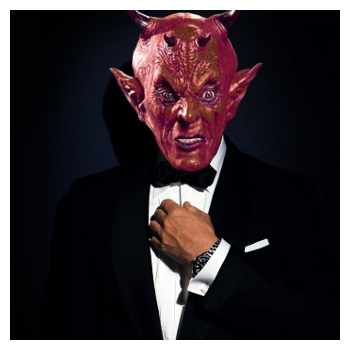
Dr. Frank Black, a psychoanalyst at the Banzai Institute in Holland Township, New Jersey, told reporters that “These idiot politicians and pompous ass religious leaders started spouting all this bullshit about the “religion of peace” shortly after the 9/11 attacks. Hell, even George Bush said we were not at war with Islam. I think anyone who has been incinerated or disemboweled by a fucking suicide bomber or maniac with an AK-47 might disagree.”
“After all, these brainless cretins are not running around killing people screaming ‘Roll Tide or War Eagle, are they?” continued Black. “They’re yelling Allahu Akbar! Well, I’m here to tell you, God ain’t that great. I don’t see millions of Muslims lining up to mourn the employees of Charlie Hebdo. Hell, even the president of the Catholic League chastised the cartoonists! Until we human beings outgrow this obsession with living forever and following rules written by cave men, we are going to continue to murder each other in ever-growing numbers. Fuck!”

Although one terrorist apparently escaped capture even though she was surrounded by about a gazillion cops, Mr. Hollande told reporters that he was confident she would be captured. Hopefully this whore will also be torn apart by lead from fired from police machine guns. God forbid the French people have to pay for her food and lodging for the rest of her natural life.
By the way, odds makers in Las Vegas will give you one chance in a million that the dirty, filthy bitch is not a Muslim.

A Saudi blogger who was sentenced last May to 10 years in prison and 1,000 lashes will be publicly flogged for the first time after Friday prayers outside a mosque in the Red Sea coastal city of Jeddah, according to a person close to his case.
Raif Badawi was sentenced on charges related to accusations that he insulted Islam on a liberal online forum he had created. He was also ordered by the Jeddah criminal court to pay a fine of 1m Saudi riyals, or about $266,000.
Rights groups and activists say his case is part of a wider clampdown on dissent throughout the kingdom. Officials have increasingly blunted calls for reforms since the region’s 2011 Arab Spring upheaval.
Badawi has been held since mid-2012, and his Free Saudi Liberals website is now closed. The case has drawn condemnation from rights groups.
He called from prison and informed his family of the flogging, due Friday, said a person close to the case. The person, who spoke to the Associated Press on condition of anonymity for fear of government reprisal, said Badawi was “being used as an example for others to see”.
Badawi’s lawyer Waleed Abul-Khair was sentenced in July to 15 years imprisonment and barred from travelling for another 15 years after being found guilty by an anti-terrorism court of “undermining the regime and officials”, “inciting public opinion” and “insulting the judiciary”.
Amnesty International has said that Badawi is to receive 50 lashes once a week for 20 weeks.
“It is horrifying to think that such a vicious and cruel punishment should be imposed on someone who is guilty of nothing more than daring to create a public forum for discussion and peacefully exercising the right to freedom of expression,” said Philip Luther, Amnesty’s Middle East and north Africa director.
Badawi was originally sentenced in 2013 to seven years in prison and 600 lashes in relation to the charges, but after an appeal, the judge stiffened the punishment. Following his arrest, his wife and children left the kingdom for Canada.

Imams condemn Paris gunmen as ‘barbarians’ but fear stigmatisation could mean they ‘pay a price for the atrocity’
Grenades and gun shots have struck several Islamic targets in France following the murderous attack on the satirical magazine Charlie Hebdo, police and local media said, raising fears of an Islamophobic backlash among the country’s six million-strong Muslim community.
Three grenades hit a mosque in Le Mans, in the early hours of Thursday while in Aude, southern France, two gunshots were fired at an empty prayer room.
A Muslim family in their car in Vaucluse came briefly under fire but escaped unharmed, and a mosque in Poitiers was daubed with graffitti saying “Death to Arabs”. In Villefranche-sur-Saône, an explosion blew out the windows of a kebab shop next door to the town mosque.
On Thursday a delegation of about 20 imams from France’s Muslim federations visited the Charlie Hebdo offices in the 11th arrondissement of Paris and fiercely condemned the gunmen who killed 12 people, including 10 of the magazine’s staff and two police officers.
Witnesses said the gunmen had shouted “Allahu Akbar” and “we have avenged the prophet” as they left the scene after the murders.
“These men are criminals, barbarians, satans. For me, they are not Muslims,” the imam of the Paris suburb of Drancy, said, addressing the media. “Their hatred, their barbarism, has nothing to do with Islam. We are all French, we are all humans. We must live in respect, tolerance and solidarity.”
Abdallah Zakir, president of the Observatory against Islamophobia, told AFP news agency that he was worried that there would be anti-Muslim events. “We’ve had at least three already, and the day is not yet over. I am afraid that these attacks will only spread in the days to come.”
With the Front National’s triumph in last year’s European elections, the growing concerns over large numbers of French jihadis going to Syria and Iraq, and the succession of divisive controversies over Islam and its place in French society, these were, said Dalil Boubakeur, rector of the Grande Mosquée de Paris, not easy times to be a French Muslim.
Advertisement
In a recent interview with Psychologies magazine, Boubakeur suggested French Muslims felt that it was “easier for other populations from abroad – that for them the integration machine works better”. He added: “Our community lacks recognition, it feels it is looked upon with too severe an eye … unjustly attacked.”
French Muslims, he said, were condemned to “eternally divided” lives. “That’s true, above all, for the young, who have the impression of being caught between what they feel they are and what French society would like them to become.”
Coming out of lunchtime prayers at the Adda’wa mosque in the shadow of the Paris ring road, at Porte de la Villette, few worshippers wanted to talk. But many of those who did, braving the cold and driving rain, said they feared they would pay a price for the atrocity.
“People just lump all Muslims together,” said Ali, who worked for Paris city hall. “They associate all Muslims with what those fanatics did. But you’ve seen us here: we are normal people, going back to our jobs. Muslims are not all the same.”
French media have reported that the mosque, housed in a bleak collection of temporary huts while it awaits a more permanent building on a site at its former home in the rue Tanger, used to be regularly frequented by the two suspected gunmen, the brothers Chérif and Saïd Kouachi.
But Ali, who declined to give his full name, said he had gone to the mosque often, for five years at least, and had never seen the pair there.
Another worshipper, Mohammed Aklit, 37, a security guard, said he might have seen the brothers but “years ago, maybe once or twice”.
One man, who refused to be named, said Charlie Hebdo had resorted to publishing cartoons of the Prophet Mohammed – causing uproar in much of the Muslim world – “because they had to sell magazines, they had no money, so that’s they did”. He added: “I reject what happened. But no one should attack the prophet.”
Nourredine, a taxi driver, said the cold-blooded attack on Wednesday at Charlie Hebdo had left him very saddened and angry. It had reminded him of his home country, Algeria, in the 60s and 70s, he said, where “journalists were often the first to be targeted” by extremists.
“But you know, we will become victims of this atrocity,” he said. “There is real stigmatisation in France. I love this country, really I do, but this stigmatisation, this amalgamation, this tarring all Muslims with the same brush – all it does is feed the extremists. It helps the Front National, the people who hate and fear Islam.”
Aklit said he was sure the murders at the magazine’s premises would end up fuelling more hatred of Muslims. “Which is just … wrong. Because my Islam, the Islam of so many of us, is a modern, moderate Islam. It’s about communication, respect, tolerance, understanding.”
The French people, Aklit said, shivering under a large green umbrella, were mature and intelligent. “They won’t swallow just anything. They know when they’re being manipulated. But you know that’s just as well, really, because there are plenty out there who will be trying to manipulate this.”

THE CABIN ANTHRAX, MURPHY, N.C. (CT&P) – As the world mourns the loss of 12 more innocents in the civilized world’s battle with a bunch of Islamic fundamentalist bipedal turds, the signage used by Parisians to show their solidarity with Charlie Hebdo ignited a firestorm of ignorance across the Bible Belt today.
Evangelical leaders across the United States but particularly in the southeast called for a ban on the use of Jesus’ name on placards and posters used by those wishing to stand up for liberty and freedom of speech in Europe.
 “We just can’t stand by and watch as the Lord’s name is taken in vain,” said Bryan Fischer of the American Family Association. “I am a great supporter of free speech as long as it agrees with whatever hatred I happen to spewing at the time, but this is taking it a little too far. Besides, them Mooslims aren’t all bad. They have a few good ideas, like executing homosexuals and keeping women in their place.”
Pat Robertson droned on and on during his 700 Club broadcast this morning about how the attack on Hebdo was a disgrace but using “Our Savior’s name” on posters was far worse. He warned his over 250 viewers that it would cause a new series of earthquakes and tidal waves in the Caribbean and elsewhere across the globe.
Perhaps the most interesting response came from Michele Bachmann, who ran to the nearest microphone to blame President Obama for both the attack and the signage. “This is a direct result of our socialist emperor Barack Obama not taking my advice to nuke Tehran over the Christmas holidays. Now, instead of having the Ten Commandments in every school and courthouse across America, we have those damn Frenchies carrying around blasphemous posters that say ‘Jesus Charlie!’”
When told about the reaction French President Francois Hollande said “I really don’t know what to say. Sometimes I curse my forefathers for ever helping those idiots gain their independence.”


The recent headline in The Sydney Morning Herald – Abbott government spends up big on media monitoring – went on to tell its readers that:
Federal government departments are spending eye-watering sums to know what the public is thinking and what the media is saying about them . . .
Social media – in particular Facebook – was saturated with the story and subsequent howls of derision over such a costly and questionable exercise.
I disagree.
I want this government to spend as much time and money as it takes to monitor ‘what the public is thinking and what the media is saying about them’. They seriously need to know. They need to take a good look at what’s happening on social media – a long, hard look – where there are refreshingly honest opinions about how utterly incompetent, heartless and disgraceful they are (whereas no such critique exists in the mainstream media). They need to to look, listen, and learn. Thousands of social media users will tell them that this government is considered the closest thing to fascism seen in the free world, while personal attacks on Tony Abbott continue; notably suggestions that the man is a sociopath. While there certainly is no proof, it is understandable that such opinions exist given the behaviour of this government and its leader.
But if they do want to know what people outside the fluffy Murdoch media think, they can always start with this site.
Hundreds of articles have been published on The AIMN echoing what the public think of the worst government in Australia’s history – the Abbott government – and I’d l really appreciate that one or some of their minions take a look at us. Actually, I would implore them to. This site represents the political and social views of a large number of disgruntled Australians. Given the recent opinion polls and the noticeable stench of this woeful government, it would be safe to say we now represent the views of most Australians: ordinary people appalled by this mess, ordinary people appalled at seeing their country – to put it bluntly – go to crap.
However, to save them from rummaging through The AIMN (and similar sites), Facebook and Twitter I have compiled a summary of what I have found of them. I will address it to Tony Abbott personally.
Dear Tony Abbott,
Do you really want to know what the public is thinking of you and your government? After being heavily involved in social media since your election win I’ve come up with the following (based on thousands of comments I have read). This is what people are saying about you (with my own comments in italics):
Have you heard enough? I could go on – there is so much more. And I haven’t even started on your ministers yet. But at this stage I won’t: people are saying many of the same things about them too.

France has a special relationship with terrorism. It is the only country to draw specific, rather than general, threats from ISIS. It is the only country to take on a terrorist organisation and expel it from a country, and it is the only country to brag recently about having none of its citizens in the hands of hostage-takers.
The United States and its allies, including Australia, have taken a fairly laissez-faire approach towards ISIS, aimed at containing rather than expelling it. Even during my visit to neighbouring Iran in November last year, the general feeling was that the government there did not seriously intend to eradicate ISIS, because it wasn’t in its interest to do so. However, France demonstrated in 2013 that with the right coalition, a great degree of confidence and a certain amount of belief, terrorist armies can be defeated even in remote, hard-to-reach places.
France’s engagement in its former West African colony Mali, alongside Malian and African Union troops, engendered a tremendous amount of hatred against it in the world of Islamist radicalism. At the time, al-Qaeda-linked militants had hijacked a local ethnic rebellion in an attempt to form a state in one of the more remote and poorly governed parts of Africa. The fact that France, a former colonial ruler with a history of brutality in the region, was invited to assist by Mali’s military dictatorship and achieved its aim quickly placed a large dent in the morale and self-belief of those who have faith in radical religious-nationalist ideology.
In the past year, ISIS has shocked the world with its speed and brutality. A neo-colonialist army with soldiers drawn from all corners of the globe, this previously obscure group has managed to dominate many parts of Iraq and Syria through military success, as well as by exploiting its reputation for causing fear and sectarian division. France refers to ISIS by the Arabic acronym “Da’ish”, rather than Islamic State, so as to disassociate the group from Islam. That is something ISIS hates and for this reason it has declared that the “filthy” French hold a special place among its enemies.
While some have considered the attack in Paris to be aimed at Europe, the result of foreign fighters returning from the Middle East or of poor integration policies, the question that remains unanswered is why has France specifically drawn such attention from terrorists? Anti-Muslim groups held huge rallies in Germany at the weekend but it was France that dealt with three impromptu terrorist attacks in December.
Even the target itself, Charlie Hebdo, which had published satirical cartoons of the prophet Muhammad, is a specifically French target. After all, these cartoons were published originally in Denmark in 2005, where the main reaction was protests from the Danish Muslim population, who felt they were being unfairly treated by mainstream Danish society. It was only a few months later, when Charlie Hebdo published these cartoons in a special issue, that outrage boiled in many Muslim countries.
Muslim attitudes towards blasphemy are the same as other religious groups. Additionally, the accusation of blasphemy, particularly insulting the prophet, has a long history of being the result of ulterior motives. The 17th century Armenian chronicler, Arakel of Tabriz, documented a dozen or so Christian “martyrs” in his lifetime in the Ottoman and Iranian empires, the majority of whom were executed when a disgruntled neighbour accused them of insulting the prophet. Similarly, several blasphemy trials in Pakistan over the past decade have boiled down to disputes over land between the accuser and the accused. The fact that a French publisher is the target of this well-organised attack and not the original Danish publisher demonstrates that this justification is window dressing for a deeper dispute between the French and Islamic militants.
Ultimately, we shouldn’t allow ourselves to be dragged into pointless debates about whether Islam or Western culture are responsible, since these debates serve the interests of those who benefit from division. As the response to the Martin Place attack last month demonstrated, people are drawn together by their common humanity. Attacks like these are not aimed only at the West, but at anyone who doesn’t accept the ideology of the attackers, whether Muslim or not. Let us not forget that ISIS’s primary aim is to first “purify” Muslims.
Dr James Barry is an Associate Research Fellow at Deakin University’s Centre for Citizenship and Globalisation, researching the role of Islam in Iranian foreign policy.

Max Ehrenfreund points to an interesting tidbit this morning. A pair of researchers have released a working paper that attempts to figure out if watching Fox News makes you more conservative. They do this by exploiting the fact that channel numbers on cable systems are placed fairly randomly throughout the country, and people tend to watch channels with lower numbers. Thus, in areas where Fox has a low channel number, it gets watched a little bit more in a way that has nothing to do with whether the local viewers were more conservative in the first place.
So does randomly surfing over to Fox News tend to make you more right-wing? Yes indeed! “We estimate that Fox News increases the likelihood of voting Republican by 0.9 points among viewers induced into watching four additional minutes per week by differential channel positions.” And this in turn means that we owe the Iraq War to Fox News: “We estimate that removing Fox News from cable television during the 2000 election cycle would have reduced the average county’s Republican vote share by 1.6 percentage points.”
And what about MSNBC? It had no effect until the 2008 election, after it had made the switch to liberal prime-time programming. At that point, it becomes pretty similar to Fox in the opposite direction. But the effect is subtly different:
The largest elasticity magnitudes are on individuals from the opposite ideology of the channel, with Fox generally better at influencing Democrats than MSNBC is at influencing Republicans. This last feature is consistent with the regression result that the IV effect of Fox is greater than the corresponding effect for MSNBC.
….Table 16 shows the estimated persuasion rates of the channels at converting votes from one party to the other. The numerator here is the number of, for example, Fox News viewers who are initially Democrats but by the end of an election cycle change to supporting the Republican party. The denominator is the number of Fox News viewers who are initially Democrats. Again, Fox is more effective at converting viewers than is MSNBC.
The difference in persuasion rates is significant: the study finds that in the 2008 election, a full 50 percent of Fox’s left-of-center viewers switched to supporting Republicans. For MSNBC, the number of switchers was only 30 percent. That’s a big difference.
Now, in real-world terms this is still a smallish effect since neither channel has a lot of regular viewers from the opposite ends of their ideological spectrums in the first place. Still, this is interesting. I’ve always believed that conservatives in general, and Fox in particular, are better persuaders than liberals, and this study seems to confirm that. But why? Is Fox’s conservatism simply more consistent throughout the day, thus making it more effective? Is there something about the particular way Fox pushes hot buttons that makes it more effective at persuading folks near the center? Or is Fox just average, and MSNBC is unusually poor at persuading people? I can easily believe, for example, that Rachel Maddow’s snark-based approach persuades very few conservative leaners to switch sides.
Anyway, fascinating stuff, even if none of it comes as a big surprise. Fox really has had a big effect on Republican fortunes over the past two decades.

Prime Minister Tony Abbott has blasted in his strongest terms yet the US management of Iraq following the 2003 invasion, branding it a period of “chaos and confusion”.
During a visit to Baghdad on Sunday, Mr Abbott hinted he could bolster Australian troop numbers in the war-torn country. It came as Fairfax Media learnt that Australian special forces soldiers in Iraq have begun operating “outside the wire” by accompanying local troops beyond Baghdad.
Mr Abbott met with his Iraqi counterpart and discussed what further help Australia could give the government beyond the current commitment, which includes 200 special forces advisers and RAAF airstrikes, for the fight against the brutal Islamic State group.
He used conspicuously strong language to slam the post-2003 handling of Iraq led by the US administration of George Bush and Dick Cheney, and strongly supported by former Prime Minister John Howard, who is Mr Abbott’s political mentor.
“Iraq is a country which has suffered a very great deal,” Mr Abbott said. “First, decades of tyranny under Saddam Hussein. Then, the chaos and confusion that followed the American-led invasion. Most recently, the tumult, the dark age, which has descended upon northern Iraq as a result of the Da’esh death cult. But Australia will do what we can to help.”
The deliberately chosen words about the post-invasion period reflect Mr Abbott’s efforts to distinguish what is now widely seen as a debacle in the aftermath of 2003 from the current more cautious approach, steering Australians away from any impression the West is being drawn back into a quagmire.
Most experts agree Washington made major missteps in the aftermath of the invasion, including by dissolving the ruling Baath Party and the military, and by underestimating the troop levels needed to stabilise security.
Foreshadowing a further possible commitment, Mr Abbott vowed to do more to help the Iraqis beat back the extremist scourge, which has seen nearly a third of the country fall under Islamic State control.
“We are determined to deepen our co-operation with the government and the people of Iraq in the weeks and months to come, not because we are a country which goes forward seeking foreign fights, but because where our vital national interests are threatened, where universal values are at stake, Australia should be a strong partner,” Mr Abbott said.
Iraqi Prime Minister Haider al-Abadi said after the meeting that he had asked Mr Abbott “to increase armament and speed up training to end the battle and eliminate Da’esh”, using the Arabic term for the extremist Islamic State organisation.
Fairfax Media understands that some of the 200 special forces troops who arrived in Baghdad in November to “advise and assist” the Iraqis have begun moving outside the capital.
Defence has said in the past their role will include operating at the level of battalion headquarters, which could put them well out on the battlefield, clearly raising the risk they face.
And while they are able to defend themselves, the government has ruled out any offensive combat role for Australians.
Defence has already drawn up contingency plans for Australia to provide further forces for a longer-term training role in Iraq, estimated at between 200 and 400 additional personnel.
Fairfax Media understands however that such a further deployment has not been discussed at recent meetings of the National Security Committee of Cabinet and is not imminent.
Mr Abbott, who was accompanied on his visit by new Defence Minister Kevin Andrews and Chief of the Defence Force Mark Binskin, also announced a $5 million aid boost to Iraq through the World Food Program, bringing to $22 million Australia’s humanitarian assistance to the country since June.
This came despite the government’s deep cuts to foreign aid, most recently in the mid-year budget update in December

The shootings at Charlie Hebdo, the French newspaper, have shocked us all. But let us be united by it, writes Paul Dellit.
Charlie Hebdo stands for the essence of democratic society based upon pluralism.
Salman Rushdie has issued the following statement:
“Religion, a mediaeval form of unreason, when combined with modern weaponry becomes a real threat to our freedoms. This religious totalitarianism has caused a deadly mutation in the heart of Islam and we see the tragic consequences in Paris today. I stand with Charlie Hebdo, as we all must, to defend the art of satire, which has always been a force for liberty and against tyranny, dishonesty and stupidity. ‘Respect for religion’ has become a code phrase meaning ‘fear of religion.’ Religions, like all other ideas, deserve criticism, satire, and, yes, our fearless disrespect”.
Of course, this attack by fundamentalists has a strategic purpose. Their objective is to provoke us into abandoning our values in favour of adopting theirs: the absolutism of believing that I am the bearer of immutable truth and anyone who does not share my belief is my enemy. And as one of the enrolled, I am entitled, if not obliged, to remove any obstacle to my belief becoming predominant in the world. I am entitled to kill anyone and destroy anything if it assists my mission. There are no grey areas for discussion. There is no point in debate when you possess the absolute truth. The world is divided into two camps: those who believe as I do and those who do not; those whom I would uplift and those whom I would remove from the face of the earth. The distinctions I make are as clear as the ultimate extremes of black and white.
Christianity has abandoned the overt pursuit of its violently barbaric Inquisition, long since Christianity was uniquely the Roman Catholic Church, heir to the Holy Roman Empire. But it is only in relatively recent times that the traditional Christian Churches have backed off their dogmatic tone in Sunday sermons and in public statements. Vatican II did not presage this change in public attitude. Vatican II failed, ultimately because men of the stripe of George Pell saw it as the creeping democratisation of the power structure which gave them their own autocratic power and status. And they could tell themselves that their mission was virtuous for, was it not true that they held office within the organisation chosen by the one true God to be the standard-bearer of His absolute truth.
Closer to home, it is unsurprising that the mediocre intellects which dominate the Front Bench of our current Government are committed to Hayekian dogma. The majority of them are still devotees of the particular flavour of Christian dogma in which they were schooled. They like dogma. It gives them that warm fuzzy feeling of being tucked up inside their middle class residences and looking out at those who aren’t. In essence, it satisfies two basic human cravings: certainty about the world they live in which, incidentally, places them in the box seat; and relief from those unpleasant intimations of mortality. Their pursuit of personal wealth at the expense of others is sanctioned by their secular dogma and their Christian dogma promises them life eternal.
The delusions of these men and one woman would be laughable in any other circumstances than that it is their hands gripping the levers of power for one whole term of government. Like all good Hayekians, their limited view of life and total lack of any broader philosophy leaves them with the view that economic utility equals happiness, that the accretion of money is the single purpose of life, that we are nothing more than utilitarian foragers pitted against our fellows for whom the notion of compassion is anathema. They are men and one woman who lack the broad range of sensibilities and sensitivities which mark out all that is fine and estimable in our humanity. How else could they have Abbott as the Minister for Women, Morrison as the Minister for Social Services, and Brandis as Minister for the Arts.
It may be that Charlie Hebdo provides a particularly French character to the art of satire. It pushes the three founding principles of the French Revolution to the limits of Liberté, Égalité, Fraternité. It is an equal-opportunity satirist with caricatures of every religion, commercial institution, government party and organisation – a true iconoclast with its origins in the 1960s which, unlike Honi Soit (extant) and Oz (deceased), has been able to maintain the rage long after the flowers wilted and the Beatles left the rooftop.
This is a truly sad day, but with the saving grace that it provides the opportunity for all countries and people of good will to unite in their steadfast maintenance of their belief and practice of pluralism.

PARIS (CT&P) – The attack earlier today on the satirical newspaper Charlie Hebdo that killed 12 people was apparently the last in a series of foul ups and snafus committed by the Prophet Muhammad during his yearly vacation in Paris this week.

According to the bloodthirsty demigod’s press secretary Abdul-Aziz Cornhollah Habib Lulu Maalik Skyhook, which loosely translated means “The One Who Does Not Bathe,” the attack was supposed to target Le Lonesome Camel, a restaurant just down the street from the newspaper.
It seems the Prophet became extremely agitated when, while dining at the restaurant last night, the staff mistakenly served him a meat pie which was loaded with processed pork products. According to Skyhook, the tourtière in question was supposed to be “pork and gluten-free” in order to adhere to the strict dietary guidelines published in the Prophet’s latest cookbook, How to Feed a Cave Full of Subhuman Terrorists on $10.00 a Day, first published in 2002.
However, the owner of the restaurant, retired Formula One driver Alain Prost, told reporters that the Islamic killing machine had “only himself to blame” for his irritable bowels because the Prophet insisted on ordering in French, like so many other idiot foreigners who vacation in Paris.

“At first the dimwit ordered a goat with a football stuffed up its ass,” said Prost. “He had to try five times before he actually ordered something on the menu. His server tried to warn him that the tourtière had pork in it, but the pompous ass would not listen. I’m surprised he’s able to speak any French at all. After all, the only language other Arabic that he hears are the screams coming from his follower’s victims.”
The Prophet became even more agitated when he went outside to discover that his dinner party’s camels had all been ticketed for parking in a loading zone. Apparently he ordered the attack later that night.

Chief Inspector Jacques Clouseau, who has been assigned the task of bringing the filthy subhuman Islamic slime to justice, told reporters at L’Express that what happened was that the geographically challenged religious fanatic gave his henchmen the wrong address.
“You would think that the terrorists would have realized that they were not attacking the restaurant they had just dined in only hours earlier, but you have to remember that we’re dealing with a bunch of savages that want to return the world to the 9th Century. I’m amazed they were even able to operate the nav system on the Hertz rental car they used.”
Although most politicians and religious leaders around the world are denouncing the attack, some apologists for Islam are defending the actions of the blessed, sacred, but not-so-intelligent Prophet.
Reza Aslan, author of Zealot: The Life and Times of Jesus of Nazareth and No god but god: The Origins, Evolution, and Future of Islam, told the New York Times that these types of attacks are to be expected when one dares to insult a Muslim by accidentally serving him the wrong entrée.
“I can understand the Prophet’s actions. I once considered sawing off the heads of everyone in a Shoney’s Big Boy after smelling bacon on the breakfast bar while I was trying to enjoy my sheep testicle soufflé. Ignorant infidels in the west need to be considerate of Islamic tradition, no matter how asinine and Neolithic it may be.”
The offices of the Cretonia Times-Picayune are located on Savannah Road in Murphy, North Carolina. The editor in chief and sole proprietor of the wildly successful online newspaper, Jerry Dickerson, cordially invites anyone not happy with the views and opinions expressed in this article to jump on the nearest camel and “come try that shit up here.”


Brown says challenge is to ‘build for the future, not steal from it’ after balancing a $26bn deficit and creating a rainy-day fund to gird against future shortfalls
Democrat Jerry Brown, who turned around California’s finances after years of deficits, vowed to keep a tight rein on spending as he was sworn in on Monday for a record fourth term at the helm of the nation’s most populous state.
Brown, currently serving a second stint as governor, first served two terms from 1975 to 1983 and then returned to the governorship in 2011. He easily defeated his Republican challenger, Neel Kashkari, to win re-election in November.
Brown, the 76-year-old son of the late California governor Edmund G “Pat” Brown, has forcefully steered the heavily Democratic state on a centrist path since voters returned him to the governorship.
“We are at a crossroads,” Brown said in his inaugural address. “With big and important new programs now launched and the budget carefully balanced, the challenge is to build for the future, not steal from it, to live within our means and to keep California ever golden and creative, as our forebears have shown and our descendents would expect.”
California faced a budget deficit of $26bn when Brown was elected in 2010, following a national recession that hit the state’s economy hard and came after years of fiscal woes in California. He enters his fourth term with a balanced budget.
In November, California residents voted to enshrine a rainy-day fund in the state’s constitution, a plan backed by Brown that aims to ensure the state’s financial stability after years of boom-and-bust budgets.
This year, California will set aside $2.8bn in the fund, Brown said during his speech, to applause from lawmakers.
Brown also pledged to improve the state’s environment for the next 15 years by cutting petroleum use and increasing electricity derived from renewable sources to 50%.
The Assembly Republican leader, Kristin Olsen, said the governor has failed to present a comprehensive plan for job growth and education, and she expressed doubts about a project to build the nation’s first high-speed rail line in California.
A groundbreaking ceremony is planned for Tuesday, and Republicans have derided the project, which is estimated to eventually cost $68bn.
“While Governor Brown is still off chasing trains, we still have real needs in California,” Olsen said.
Brown sought his party’s presidential nomination in 1992, refusing to take donations larger than $100 and ultimately losing out to Bill Clinton.

Rodney E. Lever has a dream that, before 2016, one of the main parties can offer a rational solution to deter any more megalomaniacs from wrecking all our freedoms, all our hopes and all our future.
“I have a dream, today.”
Some people will recall that Martin Luther King Jnr opened his most famous speech with those words in 1963. He was demanding fairness for the black people of America — the slaves who had provided much labor that was to make America the wealthiest nation on the planet.
In Australia, it was convicts that Britain sent who would help to build the beginnings of our nation in New South Wales. There were also islander people brought here – some voluntarily, but also also many through “blackbirding” – to help cut sugar cane in colonial Queensland.
There were the coal miners from England who came here after they had been permanently blackballed by their owners when they begged for better wages and safer working conditions. One of them was Andrew Fisher, who was three times prime minister of Australia.
Then there were the shearers, thrown out of work when they protested at the importation of cheap Chinese shearers.
These were issues that resulted in the formation of the Australian Labor Party in 1891 under the “Tree of Knowledge” in Barcaldine, Queensland. It was the era of Waltzing Matilda, Banjo Patterson and the Melbourne Cup, and the beginning of Australia as we know it today.
We have a proud freedom of the press, unwritten and unspoken. And we have a Murdoch press that exploits that freedom by telling lies, and in Britain engages in raw criminality and bribery and fear.
There are regulations which affect television and radio, but no regulation of our press. Rupert Murdoch began to abuse the freedom of the press as no one before him had ever done.
Fairness and freedom are words that often go together. It gets trickier once you talk about freedom of the press and that extends to other forms of communication never thought of when the United States ratified its Constitution in 1787.
Four years later, in 1891, the fathers of the Constitution added the First Amendment:
‘Congress shall make no law respecting an establishment of religion, or prohibiting the free exercise thereof; or abridging the freedom of speech, or of the press…’
That did it! The cat was out of the bag.
We don’t in Australia have any formal acknowledgement of press freedoms. We just take it for granted because it generally had worked well.
Rupert Murdoch treated us like suckers. He showed his view of freedoms as his right, not the right of his readers. In Australia, then in Britain and then in America, no one could touch him. The U.S. Constitution had opened the door to all media, even though the Constitution only says “the press” and the rest of the English speaking world seemed to accept it.
In Australia, Murdoch owns three quarters of all the major newspapers. No one has ever freely exerted that kind of power before — perhaps not even Hitler and Stalin.
Never before have we seen one magnate grow up so quickly and then turn the country’s media into a personal fiefdom, bullying and abusing politicians, and crashing electoral traditions. The politicians on both sides of the major media let him get away with it. The rest of us have had no say at all, except many choosing not to buy the rubbish and looking elsewhere for news..
In Britain, Murdoch has far more competition, but one of his papers, The Sun, has the largest readership and is powerful enough to change governments according to wherever he can get the best deal. It has nothing to do with press freedom and all to do with wealth and personal power over politicians and the lives of people.
He dumped Labor in Britain last year in the interest of accessing the full ownership of Britain’s largest commercial television service. TV has always been a licence to print money. After supporting the Blair and Brown Labor government for six years, Murdoch switched his support to David Cameron’s Conservatives only after Cameron was able to snare another party into coalition and to promise that Murdoch would get his wish for total ownership of BSkyB.
In Australia’s Constitution there is no mention of freedom of our press.
It does, however, state that
“… the Parliament shall, subject to this Constitution, have power to make laws for the peace, order and good government of the Commonwealth.”
Both Sir Frank Packer and Kerry Packer were called to a parliamentary inquiry at different times. Both fired back at the questions they were asked and gave as good an argument as the drubbing they received.
I remember another occasion when R. G. Menzies was prime minister. He had the Speaker, Archie Cameron, order the arrest of a publisher named Frank Browne and his partner. They were called before Parliament and charged with contempt because of something written in their modest weekly paper. They served a short prison sentence, as I recall, which is better than a flogging.
So much for freedom of the press in Australia.
If Australia does not formally offer total press freedom as a Constitutional given, then opportunities are there for the next Parliament and Senate to argue about it, but only as long as they keep Murdoch at bay.
Some form of legislation must surely be possible to protect the rights of readers, over any rights of publishers. Voters want the truth, the whole truth and nothing but the truth. They don’t want funny headlines.
Relying on an Australian Press Council to constrain its own members is a little like playing with a piranha in your bathtub.
Our best hope for the 2016 election is that one or the other party can offer a rational political solution to deter any more megalomaniacs from wrecking all our freedoms, all our hopes and all our future. This could be the main issue next year. I hope so.
You can follow Rodney Lever on Twitter @RodneyELever.


Up to a third of Aboriginal people in remote towns are being ripped off by financial scams involving funeral pre-payments, pay-day lending or excessive interest rates on loans for household essentials such as a fridge.
Legal Aid NSW has called for the federal government to act on the Financial System Inquiry’s proposal to allow targeted bans of unfair practices.
Legal Aid senior solicitor Jemima McCaughan said salesmen are preying on high infant mortality and youth suicide rates among Aboriginal communities to sell high-cost funeral insurance plans to families to cover their children from a very young age.
“The younger you sign up, the more you will pay,” she said.
“Aboriginal people tend to attend and contribute to more funerals due to social and cultural obligations, and a larger kinship network, so having a way to pay for funerals is important to a lot of Aboriginal people.”
But the contracts can end up costing tens of thousands of dollars.
A Legal Aid program sending solicitors into four communities, Dareton, Lake Cargelligo, Condoblin and Murrin Bridge, to assist 350 Aboriginal families, will be expanded across the state in 2015.
“These issues are so prevalent that in some communities as many as 30 per cent of the population have sought – and received – legal help with these money worries,” said NSW Attorney-General Brad Hazzard.
One Aboriginal elder, John, who lived on the aged pension in a remote town, used a payday lender to pay for his car registration and living expenses after he took temporary care of his grandchildren.
When Legal Aid intervened, John had paid $6500 for $3500 in credit over 18 months, continued to pay $130 a fortnight from his pension and still owed $2500 on the contract.
Legal Aid found the contract breached consumer protection laws, and was able to get $1500 refunded.
Ms McCaughan said Aboriginal people on low incomes are paying a quarter of their wage on consumer leases for a fridge or other essential items because they are excluded from mainstream financial products, and aren’t told the full cost of the contract.
The inquiry has recommended that the financial regulator be able to target bans to conduct relating to certain classes of people. Banning consumer leases from being marketed in Aboriginal communities would prevent families getting into financial difficulty, she said.
“We think a prohibition on unfair trading will fill the gap. What we see is a lot of business models dependent on taking advantage of the vulnerable,” said Ms McCaughan.
Legal Aid has encouraged Aboriginal communities to put up “do not knock” stickers on letter boxes, which is helping, she said.
“There is a real capacity to improve the information people have and share information to strengthen the community. The Koori grapevine works very well.”
The solicitors are raising awareness of No Interest Loan providers.
Superannuation products are also a problem, because the preservation age is often higher than the life expectancy of Aboriginal people.
Aboriginal people have been unable to locate the superannuation of deceased family members, and have difficulty accessing death benefit funds, because of proof of identity requirements.
Low birth registrations, multiple names, and the difficulty of accessing documents from remote communities are hurdles, Legal Aid found.


Wouldn’t you love to be a fly on the wall at the LNP Headquarters at this moment?
As most of Australia swelters in the summer heat, quietly, oh so very quietly, in ‘the smoke filled back-rooms’ of the Liberal Party, tactics are being discussed while promises are made and gifts exchanged.
For the Coalition, the electoral barometer has plummeted from ‘change’ to ‘stormy’ and shows no sign of movement nor is it likely to.
Through his bungling and imperialist bluster demonstrated toward both Indonesia and China during the first two months of his term while at the same time shamelessly toadying to the US and Japan, and followed swiftly by the delivery of a budget hated by the community for its unfairness and blatant bias, Abbott had already set in motion the end of his leadership before it had even begun.
As early as its first quarter, the government’s approval rating began to slide and after May steadily declined to its present rating of 42.5% to the ALP’s 57.5% on a two party preferred basis.
This is not surprising considering the electorate has been a horrified witness to a government which careens from crisis to crisis in the pursuit of God only knows what, while leaving a trail of destruction in its wake.
Arguably, whilst the budget dug the government’s grave, the cuts to the ABC, SBS, and the underhanded implementation of the Medicare co-payment. screwed down the lid on the coffin.
As early as January 2014 the public began to develop selective deafness where Abbott’s statements were concerned about the need for tough budget measures, and by November they had stopped listening – entirely.
Despite the best efforts of the Coalition spin doctors to paint Abbott as a credible leader, nothing has worked.
Not the threat of terrorist attacks, not the deployment of troops to fight terrorist threats – real or imagined, and certainly not ‘shirt-front’ diplomacy. The gaffes and parochialism of Davos were repeated at the G20, and Abbott side-lined and reduced to insignificance by Obama and Xi’s declaration to combat climate change.
Mid term now looms, and the LNP power brokers are on the verge of panic.
When the electorate loses all faith in the government and treats it with ignore, there can only be one outcome and on the results of polls such as this they know that as far as a second term goes, alles verloren.
Their only option is to try and limit the damage.
This leaves two courses of action.
Keep Abbott as leader and try to tough it out with the threat of a double dissolution if the government’s bills continued to be blocked in the Senate.
A double dissolution however carries a high risk. With all seats in both houses open to contest, the results are unpredictable and neither Abbott, Palmer, or the independents are likely to relish another round of electioneering so soon.
In Abbott’s case, even if the Coalition were to be returned with a majority in the lower house, it may also mean that the government could face an even more intractable and hostile Senate than it does at present.
For Palmer and PUP, it would be at best a loss of their present power bloc; at worst, obliteration as the electorate tires of both Palmer’s antics and his caprices.
In the minor league, neither Leyonhjelm nor Lambie are likely to be re-elected due to their innate stupidity and the Motoring Enthusiasts Party are also unlikely to drive much further.
A double dissolution is not entirely risk free for the ALP either. Shorten has been able to profit through the strategy of adapting a ‘small target’ stance (and been roundly criticised for it) while standing back and allowing the government’s own ineptitude to seal its fate.
An election campaign however, would require a far more aggressive stance by Labor than demonstrated since its time in opposition, and next few months will also be critical for Shorten to prove beyond doubt to the public that he’s P.M. material.
The other option is to replace Abbott as leader. While pundits argue that this would open the LNP to the same accusations of disunity, disloyalty and disorganisation levelled at the Gillard government, the Coalition’s backers know that the urgency of the necessity to sacrifice the crown in order to save the purse grows by the day.
In less than half a term, the ‘Iron Throne’ of Abbott style Conservative government has become one of porcelain located not in a gleaming bathroom of ‘free markets and workplace reform’ but rather in a political outhouse infested by Red-backed spiders.
But who will ascend it? Truss, Hunt, and Robb are nolo contendere, and Macfarlane would do little more that to cause a rise in sales of throat lozenges.
Pyne will never lead the party as long as his Gluteus Maximus points to the ground, and while Hockey and Morrison may be palatable to the right wing of the party, as far as the electorate is concerned; both are in the same category as Pyne.
This leaves a choice between either Turnbull or Bishop. Arguably Turnbull is far more likely to be acceptable to the public despite blotting his copy book with the NBN and the defence of Abbott’s cuts to the ABC, but Malcolm is so utterly despised by both the right and centre right of the Coalition, that he is unlikely to be able to garner enough support to mount a successful challenge.
For the power brokers, Bishop is the only option but it’s not going to be easy to sell a someone who has been described by a Right wing US think tank as; “Australia’s Margret Thatcher and who is as tough as a woodpecker’s lips”.
Australian’s have had more than enough of chest beating, beak whetting Conservative politicians vowing to implement ‘tough measures’ against the most vulnerable in the community in order to drive down a non-existent ‘debt’.
For her own part, Bishop surely knows that to assume leadership is to accept that the chalice from the palace has the pellet with the poison and most of the next eighteen months will be spent in frenzied efforts to reverse the government’s fortunes.
The replacement of Abbott as leader of the LNP is a foregone conclusion. In back-rooms of the party he has been weighed and measured and now stands on the trap-door of the gallows. It’s only a matter of time before the lever is pushed.


Almost on cue, Möbius Ecko drew our attention to an article in The Australian which stated:
“THE carbon tax cost $5310 for every tonne of emissions abated during its two years of operation, new government analysis shows.
Environment Minister Greg Hunt leapt on numbers in Australia’s National Greenhouse Gas Inventory declaring the carbon tax an expensive failure.
He said the 2.9 million tonnes in carbon dioxide emissions reductions during the carbon tax’s operation came at a cost of $15.4 billion in gross carbon tax revenue, or $5310 a tonne.
When the land sector is included, as is the case under Kyoto accounting, Australia’s emissions fell from 567.1mt in 2012-13 to 563.5mt, a drop of 3.6mt. Between 2011-12 and 2013-14, emissions fell 0.5 per cent or 2.9mt.”
Let’s have a closer look at this.
“Land sector” refers to deforestation and reforestation activities. Under the Kyoto Protocol, deforestation is defined as the direct, human-induced removal of forest cover on land that was forest on 1 January 1990. Emissions result when cleared vegetation is burned or left to decay, and as soil carbon levels decline over time.
Net emissions due to deforestation had been declining since 2005 but increased in the last two years. Annual emissions over 2013-14 are estimated to be 37.8 Mt CO2-e, 3.9% higher than the previous year.
Under the Kyoto Protocol, the afforestation and reforestation sector covers new commercial and environmental forest plantations by direct human action on land not forested in 1989. Net emissions are typically negative, as sequestration of carbon in biomass of growing trees outweighs emissions from harvesting activities.
On an annual basis, net sequestration was lower by 13.3% to -16.8 Mt CO2-e over 2013-14. The main cause for the decline in afforestation and reforestation credits in 2013-14 is a decline in sequestration rates due to the post 1990 plantation estate reaching harvestable age.
In other words, over the last two years we have been cutting down too many trees. Imagine how much worse it would be if Hunt got his way about logging Tasmanian World Heritage forests.
As the carbon tax did not affect the forestry industry, it should hardly be included in calculations as to whether the tax has been effective.
The Clean Energy Regulator published a list of 293 companies and organisations that were liable to pay a charge of $23 for every tonne of carbon dioxide they emitted (or the equivalent amount from greenhouse gases such as methane and nitrous oxide)
In reality many of these companies are subsidiaries of much larger corporations so this probably overstates the extent of the impact. For example, BHP Billiton has at least eight subsidiaries listed as separate liable entitites, AGL has six and the relatively small Energy Developments Limited (EDL) lists five.
The companies that were liable, many of whom received up to 94.5% free permits in 2012-13, belonged to the following categories:
1) Chemicals
2) Building and construction materials
3) Paper and packaging
4) Food processing
5) Glass packaging
6) Manufacturing general
7) Mining and waste services
8) Oil and gas
9) Petroleum refining
10) Metals processing
11) Mining
12) Coal Mining (Held liable because methane is inadvertently released in extracting the coal. They are not held liable for emissions associated with combustion of the coal)
13) Gas distribution (held liable for any leakage of methane from pipelines)
14) Power generation and gas retail
15) Waste disposal (mainly local government councils responsible for managing local rubbish tips)
Excluding land sector, annual emissions for 2013-14 are estimated to be 542.6 Mt CO2-e3. This represents a 1.4% decline in emissions when compared with the previous year.
Over 2013-14, annual emissions from electricity generation fell by 4.0%. This was partially attributed to a decrease in demand in the National Electricity Market (NEM), 2.6% lower than the previous year, registering the lowest level seen since Tasmania joined the NEM in 2006.
Changes in the fuel mix used to generate electricity have also contributed to the recent decline in emissions. Over the year to June 2014, generation in the NEM from black coal decreased by 5.1%, brown coal generation decreased by 3.0% and gas generation decreased by 1.2%. Hydroelectric generation grew by 1.8% and generation from wind and other renewables continues to grow, increasing by 27.5%, from a small base.
Australia cut carbon dioxide emissions from its electricity sector by as much as 17 million tonnes because of the carbon price and would have curbed more had industry expected the price to be permanent, according to an Australian National University study.
The ANU report, which used official market data to the end of June, found the drop in power demand attributed to the carbon price was between 2.5 and 4.2 terawatt-hours per year, or about 1.3 to 2.3 per cent of the National Electricity Market serving about 80 per cent of Australia’s population.
Emissions-intensive brown and black coal-fired power generators cut output, with about 4 gigawatts of capacity taken offline. The emissions intensity of NEM supply dropped between 16 and 28 kilograms of carbon dioxide per megawatt-hour of supply, underscoring the role of carbon pricing rather than slumping demand in curbing pollution, the paper said.
However, investors’ doubts that the carbon tax would last – fostered in part by then opposition leader Tony Abbott’s “blood oath” to repeal it if the Coalition took office – meant high-emissions generators were mothballed rather than permanently closed.
“We’d expect the impact of the carbon price would have been larger, perhaps far larger, if there had been an expectation that the carbon price would have continued,” Professor Jotzo said.
The repeal of the carbon tax will see a partial reversal of emissions reductions, particularly on the supply side as generators switch back to coal. Rising gas prices, unrelated to carbon pricing, will add to demand for coal-fired power generation.
The other factors that Mr Hunt ignores are that the population has grown by about 780,000 and the economy by about 6% in the last two years yet we have had an overall reduction in emissions – not a decline in the increase – a real decrease despite our growth.
Yes, I think we can chalk this one up to propaganda and marketing along with so many other examples of Liberal Party perfidy outlined in this excellent article by Greg Jericho which should be compulsory reading for all maths teachers and students on how to make misleading graphs.
PS Whilst on the subject of perfidy, the latest MYEFO predicts the free trade agreement with Japan will reduce revenue by nearly $1.6 billion over the forward estimates.




 olddogthoughts
You must be logged in to post a comment.