
International Labor Day: Workers’ Rights under unprecedented threat – English pravda.ru.

AUSTRALIA has been named and shamed on a list of the world’s worst human rights offenders — but it’s not just our treatment of indigenous people and asylum seekers that has landed us there.
Sharing the dubious honours with the likes of Syria, Nigeria and Egypt, we have made the cut for reasons you might not expect.
According to Human Rights Watch’s World Report 2015, our counterterrorism laws — hastily introduced by the Abbott government last year — have been slammed as “vague” and “over-broad” in the damning report, infringing on the basic rights of all Australians.
In response to the threat of home-grown terrorism, new laws extend to the use of control orders and preventive detention and also make it a criminal offence to travel to “declared areas’’ abroad, which overly restricts people’s freedom of movement, the report states.
The controversial proposal that would force telecommunications companies to retain metadata for use by intelligence organisations has also been slammed.
The laws would essentially give Australian Security Intelligence Organisation (ASIO) unprecedented power to monitor the entire Australian web with only one warrant.
“Draconian counterterrorism laws undermining free speech are causing incalculable damage to Australia’s international standing as a rights-respecting country,” warns Australian director of HRW Elaine Pearson.
“The government rammed these measures through parliament despite their having lasting consequences on Australians’ civil liberties.”
“These are excessive restrictions on freedom of speech, so a whole range of peaceful conduct can be prosecuted under these laws — something that affects the civil liberties of all Australians.”
The 656-page report, its 25th edition, reviews human rights practices in more than 90 countries ranging from so-called democratic nations such as the United States, France and Australia to trouble spots including Iraq and Syria.
Last year, the Abbott government rushed through several new counterterrorism offences imposing criminal penalties for “advocating terrorism” and travelling to “declared areas” abroad, as well as making unauthorised disclosures of information related to “special intelligence operations.”
The reforms also contained tough penalties for journalists and whistleblowers, who could be jailed for up to 10 years for “recklessly” disclosing information related to a “special intelligence operation”.
“Australia’s new counterterrorism laws mean journalists, whistleblowers, and activists will risk prison for certain disclosures — even if it’s in the public interest,” Ms Pearson said.
But our counterterrorism laws aren’t the only thing to have landed us on the shame list.
FOREIGN POLICY HYPOCRISY:
According to HRW, Australia used its United Nations Security Council seat to promote human rights in Syria, North Korea, Central African Republic, and elsewhere, but failed to speak out and act on abuses taking place there.
It also accuses the Abbott government of muting its criticism of authoritarian governments in Sri Lanka and Cambodia “apparently in hopes of winning support of these governments for its refugee policy.”

Australia’s treatment of asylum seekers was also criticised in the Human Rights Watch report. Source: AAP
‘DISASTROUS OBSESSION WITH STOPPING THE BOATS’:
Australia’s foreign policy has focused on deterring asylum seekers from coming here at the exclusion of other issues, the report claims.
“Australia’s aspirations for a more powerful role in world affairs will get nowhere until it acts on human rights concerns both at home and abroad.”
The Abbott government was also heavily criticised over it’s policy of transferring all asylum seekers who arrive by boat to Nauru and Papua New Guinea despite concerns about prolonged refugee status violence and poor conditions in detention.
“On foreign policy, Australia used its seat on the UN Security Council very effectively to raise issues like human rights in North Korea and humanitarian access in Syria. However in the Asia-Pacific region, the obsession with “stopping the boats” is a main driver of foreign policy with disastrous consequences,” Ms Pearson said.
HWR also noted that as of October last year, more than 2000 men, women and children were held in detention centres in Nauru and Manus Island, yet only 271 had been determined to be refugees.
Australia’s offshore detention policy was also criticised by the United Nations Refugee Agency, which noted the detention centres were overcrowded and claims were not processed in a fair, transparent or fast manner, the report noted.
‘HETEROSEXUALS ONLY’:
The government’s response to same sex marriage was also criticised despite some states and territories moving to recognise it.
“Despite increasing public support for same-sex marriage in Australia, marriage remains restricted to heterosexual relationships in accordance with the federal Marriage Act,” the report states.
According to HRW, all these issues undermine Australia’s ability to call for stronger human rights protections overseas.

Australia’s treatment of our indigenous people was also under the spotlight. Source: News Corp Australia
‘THEY CONTINUE TO DIE AT ALARMINGLY HIGH RATES’:
The government’s decision to establish an indigenous advisory council while defending the Congress of Australia’s First Peoples was also criticised as was the high numbers of indigenous people in jail.
“While some health and socio-economic indicators are improving for indigenous Australians, they still on average live 10-12 years less than non-indigenous Australians,” the report warns.
Aboriginals also “have an infant mortality rate almost two times higher, and continue to die at alarmingly high rates from treatable and preventable conditions such as diabetes and respiratory diseases”.
THE DANGERS OF BEING DISABLED:
The report notes the Australian Human Rights Commission found last April that Australians with disabilities have inadequate safeguards and poor access to services.
Forty-five per cent also live below the poverty line and are at an increased risk or violence or prison.

Australians with a disability are at a greater risk than other Australians, the report warns. Source: Supplied
HOW THE WORLD COMPARES:
In the global report, HRW also highlighted growing problems in Iraq whose government “carries out carry out killing and cleansing of Sunni civilians with impunity.”
It also heavily criticised Syria for heinous human rights abuses, including President Bashar al-Assad’s decision to “attack civilians in opposition-held areas” and their use of “indiscriminate weapons — most notoriously, barrel bombs — [which] has made life almost intolerable for civilians.”
The report mentions the growing rise of extremist groups such as the Islamic State and how governments, including the United States and France, are using this to further “subordinate human rights” including free speech.

The growing rise of IS has been noted and is being blamed for several reasons. Source: Supplied
It also blames both a lack of policy in neighbouring countries as well as a power vacuum left by the US, for contributing to the rise of the militant group.
“ISIS did not emerge out of nowhere,” HRW warn.
“In addition to the security vacuum left by the US invasion of Iraq, the sectarian and abusive policies of the Iraqi and Syrian governments, and international indifference to them, have been important factors in fuelling ISIS.”
It also accused the United Nations Security Council of standing by because Russia and China use their veto power to stop unified efforts to end the carnage.
“The United States and its allies have allowed their military action against ISIS to overshadow efforts to push Damascus to end its abuse,” the report said.
“This selective concern allows ISIS recruiters to portray themselves to potential supporters as the only force willing to stand up to Assad’s atrocities.”
Nigeria was also heavily criticised in the report over its brutal rounding up of civilians accused of having ties to terror group Boko Haram, while the US was slammed over ongoing concerns of torture and its response to the CIA torture report.
Kenya, Egypt, and China, governments all came under fire after its security forces have responded to real or perceived terrorism threats with abusive policies that ultimately fuel crises.

Acclaimed author of Sri Lanka’s Secrets Trevor Grant visited refugee camps in India and spoke to residents, including the family of a Tamil asylum-seeker Leo Seemanpillai, who self-immolated in Australia in June last year.
Dusk is descending upon the Abdullapuram refugee camp, 120 kilometres outside Chennai, India.
Most of the 1500 Tamil refugees in this open-air prison are already back in their wretched little huts, careful to meet the 6pm curfew and avoid the daily intimidation and harassment of the security police. Dim lights flicker from open windows, revealing wives and mothers preparing meals of rice and watery soup on portable burners in the corner of tiny rooms that serve as kitchen, bedroom and lounge for as many as ten people. There is no such thing as a bathroom, and the only toilet, shared by scores of neighbours, is up to 200 metres away. The joyous laughter of children at play, chasing each other across stinking garbage piles, conceals the heartbreak and misery that resides permanently here, alongside the rats, the disease, the slavery, the murder, the rape and sexual assault and the ever-present Q-branch.
Seemanpillai sits quietly at home, a sparsely-furnished, concrete shoe-box where plastic sheets covering the holes in the corrugated iron roof barely hold the line against the heavy rain which has been pouring most of the day and turning many of the camps into reddish-brown swamps. He eagerly awaits our arrival, his grey moustache twitching nervously and his moist eyes flickering constantly to hold back the tears.
He’s a proud man who prefers not to cry in front of others but he soon gives in to his welling emotion. When I walk through the door and greet him, the dam bursts. He defies custom and hugs me tightly. He whispers in my ear; something in Tamil that I don’t understand. He points to a photograph on the wall of his deceased son, Leo, a refugee who died in Geelong, Australia last June after setting himself alight because he feared being sent back to the torture chambers in Sri Lanka from which he had fled.
What I do understand, instantly, is that Leo’s father and mother, Elizabeth, who joins us later, are people of substance, of immense strength and resilience; people determined not to submit to the tragedies that have visited them and their sons for most of their lives. They want us to know they are eternally grateful to the many people who helped Leo while he was living in Australia, and especially to those advocates who, after his death, let the world know that he was a decent, hard-working young man of faith who wanted nothing more than a chance at life.
They hold no anger towards the former Australian Minister for Immigration, Scott Morrison, whose constant public statements that he was determined to send back all Tamil refugees scared Leo so much that friends said it drove him to suicide. They are puzzled, rather than outraged, by Morrison’s actions. Seemanpillai can’t understand why a fellow-Christian would deny grieving parents a visa to come to Australia to bury their son, as Morrison infamously did. He asked me if Morrison knew his son had donated his organs to save the lives of at least four Australians. I felt ashamed to say the Minister probably didn’t know or care.
Seemanpillai and Elizabeth have shed too many tears through their 25 years in this squalid camp in the Indian state of Tamil Nadu. It all began as the bombs rained down on their Sri Lankan village and this hard-working fisherman was forced to flee the long-running civil war with his wife and four little sons, Alexander, Leo, Ezekeil and Maricilin, leaving behind their home and all their worldly goods. That night, in 1990, he shoe-horned them into a corner of a small speed boat and then lay across them, bullets flying overhead, as the boat was chased by a Sri Lankan naval patrol with orders to kill rather than allow Tamil civilians to seek safety 30 kilometres away in India.

Somehow, they got through the night but, while they had escaped death on this occasion, the daily struggle to survive was about to begin all over again once they were condemned to life as refugees in India. Without the chance of citizenship, of work rights, of access to decent education, of anything beyond a pitiful hand-to-mouth existence in disease-ridden slums, they soon became the living dead. And today, a quarter of a century later, along with an estimated 100,000 Tamils in 120 camps in south India, they remain so, little more than prisoners of the state secreted away under close scrutiny for the term of their natural lives, their only crime being a desire to save their lives and those of their children.
I visited several houses in camps on the outskirts of Chennai and in Vellore. They are all much the same; tiny one-room shacks housing up to 10 people, mostly in appalling conditions. Most of the people I met had either lived in these camps for between 20-25 years or were born there. They receive a pittance from government that just manages to keep starvation at bay. There are no proper medical facilities, and few toilets and bathing facilities. In some camps, people were forced to relieve themselves in bushes. Women, particularly, were targets for passing males when they did this. One 64-year-old explained that she didn’t eat because she didn’t want to go outside to defecate. Access to drinking water is often severely limited. In some camps, men and women had to cycle for several kilometres to fetch water. Many people were without electricity for as long as 16 years, although it is more readily available now.
It’s hard to imagine there could be more oppressive places than these, but residents say the so-called special camps are far worse. These have been used for decades to house anyone suspected of links to the former Tamil Tigers or anyone the intelligence police, known as Q-branch, looks upon negatively. They are secret, dirty, hell-holes where people die regularly, unbeknown to the outside world. “Many of us fear being sent to a special camp. There is often that threat from some police,” one man told me. It’s little wonder special camps have been described as worse than jails by India’s Peoples Union For Civil Liberties.
These are the places that former Australian Immigration Minister Scott Morrison said last year provided perfectly-decent refuge for Tamil asylum-seekers from Sri Lanka, many of whom he said were engaging in “economic migration” by trying to come to Australia.
Last July, as he was unsuccessfully trying to send 157 Sri Lankan Tamils back to India, Morrison went so far as to compare the camps to conditions one might find in New Zealand:
“If we can’t take people back to India what is next? New Zealand? I would be surprised if anyone was seriously suggesting people were persecuted in India by the Indian government.”
While describing any such claim as “absurd and offensive”, Morrison clearly overlooked the legal meaning of persecution as defined under the Refugee Convention, to which Australia is a signatory but India is not.
In a Federal Court case in Australia in 1989, Justice McHugh said:
“Persecution for a [Refugee] Convention reason may take an infinite variety of forms from death or torture to the deprivation of opportunities to compete on equal terms with other members of the relevant society…. It depends on whether (the conduct) discriminates against a person because of race, religion, nationality, political opinion or membership of a social group.”
Fear of intimidation was palpable among the refugees during my time in the camps. One man ushered me into his hut and closed the door quickly. He explained that there were informers throughout the camp, ready to report people who have unannounced visitors. Two weeks earlier, security police, who work with Q-branch, had interrogated him after a local refugee advocate had been seen visiting him. Refugees told me that a non-government charity that had been supplying women and children with clothing was suddenly banned a few weeks ago. The Government bans NGOs because they tend to expose the truth of these camps to the outside world. One frail, tiny 69-year-old Tamil woman who had missed the curfew by 30 minutes waved a clenched fist as she uttered an expletive or two about the guards who might try to challenge her over being late back. She had been there for 20 years, having fled Sri Lanka after her two sons were killed in the war, and was clearly accustomed to standing her ground.
A 40-year-old woman in another camp said no-one was allowed out of the camp after 8pm:
“Nobody can come from outside to see us unless they get permission from the authorities. If anybody comes we get questioned and these officials take away anything these people might have brought us. Because of this fear, we tell relatives and friends not to come at all. We were persecuted in Sri Lanka, now in Tamil Nadu. There is no-one to speak out for us, no-one cares about what’s happening to us. We are trapped and invisible.”
The travesty of life-long incarceration of innocents remains a dirty little secret in India, one which the mainstream media is happy to keep. Many middle-class Indians to whom I spoke knew nothing of the camps. Others accept the Government propaganda that the refugees are being treated well without asking why the same government refuses open access to the camps.
The truth the Indian Government is so keen to hide, with the assistance of a compliant media and complicit foreign governments, such as Australia, includes the most shocking crimes, including rape and sexual assault, committed by security guards and intelligence police, who, aware of the vulnerability of these people, act with total impunity as they roam the camps at will day and night.

Women who feel cultural shame after being raped or sexually assaulted find it difficult to tell of their experiences, so these crimes are rarely reported. However, through their female friends and young Tamil Nadu activists, including a film-maker, Vijay Chakravarthy, the stories have emerged in recent times.
Through an interpreter, I spoke to several people, including activists and the friends of female victims, who revealed the sickening details of these crimes. I learned of a group of six widows and young single women who were forcibly taken from Mandapam camp to Chengalpattu special camp, where they were used as sex slaves by security police for more than six months before being returned.
The victims say it’s been happening for years.
In 2010, a 28-year-old Tamil refugee, Kumar Pathmathevi, from a camp in Karur district died after setting herself ablaze. She made a death-bed statement to a female activist, saying she had been raped by three policemen who were conducting inquiries about her husband. Five years later, Vijay tells me of another case that recently came to light after a naked female refugee was found dead outside the Madurai camp. Police said she had been raped. Tamil news websites reported the contents of a police interview with a local informant.
Vijay told me:
“This guy was a driver for a local mafia gang. He told the police that refugee women were being used as sex slaves all the time.”
A middle-aged widow, whose late husband was a Tamil Tiger fighter, fled Sri Lanka with her three children in 2011. She said sexual violence in the camps was commonplace against young women, and in particular any former Tamil Tiger fighters. She said any Tamil refugee who arrived with any injury to the body was automatically assumed to be a former fighter and taken to the Chengalputtu special camp. She knew of at least three women who were sexually tortured at this camp.
When they came back, she said they showed signs of mental illness:
“Their minds are dead. They don’t even know how to ask for food. Some of us feel sorry for them. We take food to them. We are scared when we do it. If the security guards see us, they say ‘Do you want to sleep with us as well?’ Those men still visit them to satisfy their sexual needs. They hold their hair and hit them. When I look at this I can’t stand it. When our children are out, they come to us and say ‘come and sleep with us or we will claim you’re a Tamil Tiger’ [and get them sent to a special camp]. Even the other Tamil men [refugees] can’t protect us against these people. I don’t know how I’m going to save my own children.”
Vijay said he has attempted to bring these stories to public attention, speaking to well-known Tamil Nadu politicians, such as MDMK party leader Vaiko. However, there is a distinct lack of willingness to bring the issue out into the open.
Vijay told me:
“Vaiko was the only one who wanted to listen and help. Apart from him, no-one was interested. Basically, it’s a taboo topic here. So many politicians and media people say that they don’t want to spoil the image of Tamil Nadu.”
Whether it’s avoiding sexual violence or finding enough to eat and live, the Tamil refugees from Sri Lanka still retain a remarkable capacity for survival. They would not last a few days on the pittance they get from the government so, out of necessity, thousands of them – men, women and children – illegally flood into the local employment market. Often, leaving the camp for work has to be facilitated either by a bribe or stealth. One man told me he had a job as a painter – 12 hours a day six days a week for $50 a month – but he was forced to pay guards at the camp 20 per cent of his wage to be allowed out.

One of the better homes
Most of the refugees I spoke to at the camps were employed as “coolies” on building sites, where they lug 50kg bags of cement on their backs. To earn enough to survive, they must carry 300-400 bags a day, six days a week. This gives them $2-$3 a day. For this, they must face the probability of a damaged spine or lung disease from cement dust. One woman told me her father had died at 45, five years ago, after his lungs gave out. One group said they knew of 20 men who have died in similar circumstances in the past six months. Now some of their widows have replaced them as coolies, so their children can survive.
Then, when the children, many of whom have been born in the camps, reach mid-teens, and have little prospect of going to college, they leave government schooling – if they are lucky enough to go to these basic schools – to become cement coolies. The fact that it’s against the law for refugees to work is conveniently ignored by a government that sees no hypocrisy in Indian corporations using these people as virtual slaves while they are denied the basic rights that go with citizenship.
Once you see these places, it’s easy to understand why the Indian government wants to hide them from the world. And why some women told me they were prepared to risk going back to Sri Lanka, where they know they could be targeted by the military, which continues to occupy the Tamil-dominated regions in the north and the east and carry out many crimes with impunity, including rape and murder.
“We are breathing but we are dead in this life. We may as well die back there,” said one 37-year-old woman who has lived in the camp since she was 12. Yet they are trapped, they say, because they have no capacity to earn the airfare to go home and it’s impossible to return by stealth.
Another widow in her forties reflects the same sentiment:
“Coming here is the biggest mistake of my life. I could have given poison to my children and myself in my homeland. In a way, those people who died during the war are lucky. Those of us who survived are dying every day, many times over.”
Many people among the walking dead who you see everywhere in these camps are so traumatised that they long ago stopped giving voice to their suffering. They sit and stare all day into the distance, meekly awaiting their fate.
Others, such as Seemanpillai and Elizabeth, carry their burden with a stoic resistance. They remain good Catholics but they long ago gave up praying for a better life. These days they ask of God only that one day the Australian government will allow them to visit their son’s grave, along with their three remaining sons. One day, hopefully, we have an Immigration Minister who does not think this is too much to ask.

Trevor Grant talks with local activist, Prabha, in a house in another camp on the outskirts of Chennai

very Monday. Since the terror attacks in Paris, the movement has grown: The police counted 25,000 demonstrators on Jan. 12, the Monday after the attacks, a 7,500 jump from the week before. (It canceled its Jan. 19 protest over security concerns.)
Known by its German acronym, Pegida, the group has inflicted great harm on the country’s international reputation. Our neighbors and allies are asking whether Germany is stumbling back into the darkness of xenophobia, and rightfully so. Many Germans are asking the same question these days.
There are two ways to look at the situation. The optimistic take is to note that, for all the attention Pegida gets inside of Germany and abroad, Germany has never been as liberal, culturally diverse and open toward minorities as it is today.
Last year a biennial poll conducted by the Friedrich Ebert Foundation, a foundation associated with the left-wing Social Democrats (and thus unlikely to underestimate the problem), found that anti-foreigner attitudes were at a historic low. While its 2012 poll found that about a quarter of Germans reported hostile views toward foreigners, only 7.5 percent did in 2014. And anti-Semitism, which is on the rise elsewhere in Europe, has dropped significantly, to 4.1 percent from 8.6.
Apart from the polls, there is quite a bit of evidence for a new openness. On Jan. 12, 100,000 people went to the streets nationwide in counterdemonstrations against Pegida, showing their solidarity with German Muslims. In Leipzig, 4,800 pro-Pegida protesters were met by 30,000 counterprotesters.
Meanwhile, all over Germany, private initiatives are popping up to help refugees. In Duisburg, a local politician has collected 100 bicycles for refugee children. In Zirndorf, doctors are providing refugees with free medication. Even in Dresden, Pegida’s stronghold, groups are helping refugees with the hard tasks of getting settled, like providing translation services at appointments with authorities.
Still, the enormous support for Pegida requires us to consider another, darker reading of the situation, as evidence of troubling developments within German society.
One is the failure of mainstream politics. There is a tendency among the major parties to move toward the center of the political spectrum, creating an ideological void at its far right and left ends. The far right in particular has lacked political representation in the past years, which helps explain why a new populist party, Alternative für Deutschland, had such enormous success in European and state elections last year. While leaders of the Alternative, as it’s called, claim to be primarily anti-European Union, many have also expressed support for Pegida.
Another change revolves around the Internet. In this view, the Pegida people are just the usual frustrated lot looming at the edges of society. Now, emboldened by the reinforcement they find in like-minded communities online, they’re taking to the streets.
And a third is the persistence of regional differences. Though Pegida has drawn support in western Germany, it is strongest in the former East Germany. In the East, xenophobic attitudes are still more common than in the West, for a complex mix of reasons, including higher unemployment rates, but also because of feelings of inferiority.
We also have to ask what Pegida says about Germany, whatever its causes. It certainly indicates that the relative social peace we are experiencing right now is fragile. But it also shows how the country, still new to the multiethnic game, is struggling with its identity. It wasn’t until the 1950s that the first waves of immigrants arrived, the “Gastarbeiter” (guest workers) from Turkey and Italy who came to fill the labor gap in the country’s prospering postwar economy.
For decades, Germany was able to pretend that the guest workers were just that, guests. But the third generation of Turkish immigrants is now reaching adulthood. At the same time, immigration numbers are rising: Germany’s immigrant population grew by about 430,000 last year. Many came from the Southern European countries that still suffer from the euro crisis, but last year Germany also welcomed some 220,000 refugees, mostly from Syria, Eritrea, Serbia and Afghanistan.
The white face of German society is changing at a rapid pace. In this context, the Pegida protests are getting such attention because they act as a weekly checkup of German society. It’s as if every Monday, the news media are putting a trembling hand to the country’s forehead, checking its temperature, wondering whether our ugly, xenophobic past is taking over again. And we don’t have to look back to the 1930s to find that past; in the early 1990s, when the country last saw similar numbers of refugees, an irrational fear of foreigners taking the jobs of “real Germans” gripped the country, culminating in anti-immigrant riots in several cities, with several deaths, many wounded and thousands scared.
Last week, a 20-year-old refugee from Eritrea was found stabbed to death near his apartment in Dresden. Neighbors reported that swastikas had been painted onto the door of his apartment. Germans held their breath. Was this a neo-Nazi murder? Was there a connection to the Pegida rallies? Then, on Thursday, authorities arrested one of the victim’s roommates, another asylum seeker, who they say has admitted to the attack. Still, we don’t trust ourselves. Why should our neighbors? Why should you?
However the investigation turns out, I am an optimist, believing that we will not see history repeated. Germany has come a long way since even the early ’90s. And rather than causing violence, Pegida has set off a public debate on Germany’s national identity. This is long overdue. Prominent conservative politicians like Peter Tauber, the secretary general of the Christian Democratic Party, have demanded a new, clearer framework for immigration. Last week, Chancellor Angela Merkel declared that “Islam is part of Germany.” It was an assessment, rather than an ideological statement. It was the simple acknowledgment of a simple reality.


In the recipe of what a democracy is there are many ingredients but simply explained it is a political system where like-minded people come together to form ideas that become a philosophy. They then become the foundation of political parties. These ideologies pull in different directions in a quest for majority approval by the people. It is a far from perfect system that has variations all around the world. It is elastically flexible, (we even have democratic dictatorships), unpredictable and at its worst, violent and extremely combative.
At its best it is noble, constructive and generally serves society well. It is very much better than the next best thing and accommodates diagonally opposed ideas, extreme or otherwise. All in all it’s an imperfect beast that has served us well. Yes it’s government for the people by the people.
Common to most Western Democracies (and in the absence of anything better) it has a capitalistic economic system.
In Australia the right to vote is the gift that democracy gives and people are free to vote for whichever party (or individual) they support but overriding this is the fact that people cannot possibly believe in democracy, if at the same time they think their party is the only one that should ever win.
A clear indication of an Australian Democracy in decline is the fact that people are giving up this voting gift, literally saying:
“A pox on both your houses”.
Three million did so at the last election by not voting.
Our political system is in crisis because our solicitations fail to speak with any clarity on issues that concern people.
Moreover, an enlightened democracy should provide the people with a sense of purposeful participation. It should forever be open to regular improvement in its methodology and its implementation. Its constitutional framework should be exposed to periodical revision and renewal, compromise and bi-partisanship when the common good cries out for it.
But above all its function should be, that regardless of ideology the common good should be served first and foremost. A common good healthy democracy serves the collective from the ground up rather than a top down democracy that exists to serve secular interests. One that is enforced by an elite of business leaders, politicians and media interests who have the power to enforce their version. That is fundamentally anti-democratic.
Every facet of society including the democratic process needs constant and thoughtful renewal and change. Otherwise we become so trapped in the longevity of sameness that we never see better ways of doing things.Unfortunately, Australia’s particular version of the democratic process has none of these things inherent in it and is currently sinking in a quagmire of American Tea Party Republicanism.

I am not a political scientist, historian or a trained journalist. I write this as a disgruntled and concerned citizen because it seems to me that the Australian democracy I grew up with no longer exists. The demise of Australian Democracy has its origins in a monumental shift by both major parties to the right with the result that neither seem to know exactly what it is they stand for. They are now tainted with sameness.
The Liberal Party has been replaced by neo Conservatism actively asserting individual identity against a collective one and old style Liberalism no longer has a voice. There is little or no difference between the Liberals and the National Party who seem irrelevant as a political force.
Conservatives have gone down the path of inequality with a born to rule mentality that favors the rich.
“The whole logic of the “lifters” and “leaners” rhetoric so favoured by the current Government is a distillation of the idea of that there is no such thing as society, that we and only we are responsible for our own circumstances”.
Tim Dunlop.
The Labor Party needs to rid itself of an out-dated socialist objective and invest in a social philosophical common good instead. And recognise that the elimination of growing inequality is a worthwhile pursuit.
The major parties have become fragmented with Labor losing a large segment of its supporters to the Greens whilst the LNP is being undermined by rich populist Clive Palmer in the style of Berlusconi.
In terms of talent both parties are represented by party hacks of dubious intellectual talent without enough female representation and worldly work life experience. Both parties have pre-selection processes rooted in factional power struggles that often see the best candidates miss out. Both need to select people with broader life experience. Not just people who have come out of the Union Movement or in the case of the LNP, staffers who have come up through the party.
Our Parliament, its institutions and conventions have been so trashed by Tony Abbott in particular that people have lost faith in the political process and their representatives. Ministerial responsibility has become a thing of the past.
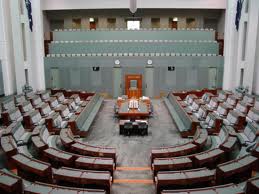
Question time is just an excuse for mediocre minds who are unable to win an argument with factual intellect, charm or debating skills, to act deplorably toward each other. The public might be forgiven for thinking that the chamber has descended into a chamber of hate where respect for the others view is seen as a weakness. Where light frivolity and wit has been replaced with smut and sarcasm. And in doing so they debase the parliament and themselves as moronic imbecilic individuals.
Question time is the showcase of the Parliament and is badly in need of an overhaul and an independent Speaker. Our democracy suffers because no one has the guts to give away the slightest political advantage.
Recent times have demonstrated just how corrupt our democracy has become. We have witnessed a plethora of inquiries all focusing on illegal sickening behavior. There is no reason to doubt that the stench of NSW doesn’t waffle its way through the corridors of the National Parliament and into the highest offices.
And our democracy lacks leadership because our current leaders and their followers have so debased the Parliament that there is no compelling reason to be a politician. Well at least for people with decency, integrity and compassion.
I cannot remember a time when my country has been so devoid of political leadership. In recent times we have had potential but it was lost in power struggles, undignified self-interest and narcissistic personality.
The pursuit of power for power’s sake and the retention of it has so engulfed political thinking that the people have become secondary and the common good dwells somewhere in the recesses of small minds lacking the capacity for good public policy that achieves social equity.
Our voting system is badly in need of an overhaul. When one party, The Greens attracts near enough to the same primary votes as The Nationals but can only win one seat in the House of Representatives, as opposed to eight there is something wrong with the system. Added to that is the ludicrous Senate situation where people are elected on virtually no primary votes, just preferences. It is also a system that allows the election of people with vested business interests with no public disclosure.
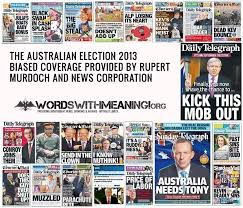
One cannot begin to discuss the decline of Australian democracy without at the same time aligning it to the collapse in journalistic standards and its conversion from reporting to opinion. Murdoch and his majority owned newspapers with blatant support for right wing politics have done nothing to advance Australia as a modern enlightened democratic society. On the contrary it has damaged it, perhaps irreparably.
The advent of social media has sent the mainstream media into free fall. Declining newspaper sales have resulted in lost revenue and profits. It is losing its authority, real or imagined to bloggers who more reflect a grass roots society. Writers with who they can agree or differ but have the luxury of doing so. As a result newspapers in particular have degenerated into gutter political trash in the hope that they might survive. Shock jocks shout the most outrageous lies and vilify people’s character with impunity and in the process do nothing to promote decent democratic illumination. They even promote free speech as if they are the sole custodian of it.
There are three final things that have contributed to the decline in our democracy.
Firstly, the Abbott factor and the death of truth as a principle of democratic necessity. I am convinced Tony Abbott believes that the effect of lying diminishes over time and therefore is a legitimate political tool. So much so that his words and actions bring into question the very worthiness of the word truth. Or he has at least devalued it to the point of obsolesce.
The budget will be remembered for one thing. That it has given approval for and overwhelmingly legitimised lying as a political and election contrivance.
Mr Abbott has long set a high standard when it comes to keeping promises. On August 22, 2011 he said:
“It is an absolute principle of democracy that governments should not and must not say one thing before an election and do the opposite afterwards. Nothing could be more calculated to bring our democracy into disrepute and alienate the citizenry of Australia from their government than if governments were to establish by precedent that they could say one thing before an election and do the opposite afterwards.”
On the eve of the last election, after crucifying Prime Minister Julia Gillard daily for three years, Abbott made this solemn promise:
“There will be no cuts to education, no cuts to health, no change to pensions, no change to the GST and no cuts to the ABC or SBS”.
This is an unambiguous statement that cannot be interpreted any differently than what the words mean. To do so is telling one lie in defense of another.
In the budget he broke them all. As a result, a rising stench of hypocrisy and dishonesty has engulfed the Abbott prime minister-ship. When you throw mud in politics some of it inevitably sticks but there is a residue that adheres to the chucker. That is now Abbott’s dilemma but the real loser is our democracy. In Australian political history Abbott’s legacy will be that he empowered a period emblematic of a nasty and ugly period in our politics.
Our democracy is nothing more or nothing less than what the people make of it. The power is with the people and it is incumbent on the people to voice with unmistakable anger the decline in our democracy.
People need to wake up to the fact that government effects every part of their life (other than what they do in bed) and should be more concerned. But there is a political malaise that is deep seated. Politicians of all persuasions must be made to pay for their willful destruction of our democracy.
Good democracies can deliver good governments and outcomes only if the electorate demands it.
You get what you vote for rings true.
Lastly but importantly we need to educate our final year school leavers (the voters of tomorrow) with an indebtedness and fundamental appreciation of democracy. A focus group I held recently at a nearby college revealed two things. One was that our young people are conversant with societal issues and have strong opinions grounded in clear observation. They cannot however place them into a logical political framework because (two) they are not adequately informed about political dogma and its place in the workings of a democracy.
We deserve better than what we have at the moment. However, if we are not prepared to raise our voices then our democracy will continue to decline and the nation and its people will suffer the consequences.
Part two. Opinions
Three books have recently been published that address the state of our democracy. The first ‘’Triumph and Demise’’ is by The Australian’s editor-at-large, Paul Kelly. In the final chapter Kelly suggests that our political system is in trouble and that, if that is the case, then by definition so are we. The Prime Minister launched the book and in doing so fundamentally disagreed with the authors assertions.
“Paul suggests that the relentless negativity of our contemporary conversation, the culture of entitlement that he thinks has sprung up over the last decade or so, means that good government has become difficult, perhaps impossible’’“It’s not the system which is the problem, it is the people who from time-to-time inhabit it. Our challenge at every level is to be our best selves.”
In the first quote two words, negativity and entitlement jump out at you. Not necessarily in the context of the difficulty of governance, he was alluding to, but rather as self-descriptive character analysis. He could not have chosen two better words to describe his own footprint on the path to our democratic demise.
The second is a disingenuous, even sarcastic swipe at his opponents that leaves no room for self-examination or blame for his own period as opposition leader and later as Prime Minister in particular. And in another indignant self-righteous swipe he said that Labor was “much better at politics than government.”
These are quotes by Kelly at the launch.
Kelly said he increasingly felt there were “real problems” with the mechanics of the political system as he worked on his book.
“I have always believed in the quality of leadership. I have always felt that leadership was fundamental … to the success of the country,” Kelly said.
“I do think the system today makes governing, and in particular serious reform, more difficult, and I think the record does show that.”
I have not read the book but I agree entirely with his diagnosis. In the first quote I believe he is referring to a breakdown in the conventions and institutional arrangements of our democracy.
The second is a general commentary on the dearth of leadership over the past decade or so. Although he was a Howard supporter and he has recently said this of Abbott.
“Abbott is governing yet he is not persuading. So far. As Prime Minister he seems unable to replicate his success as Opposition leader: mobilising opinion behind his causes. The forces arrayed against Abbott, on issue after issue, seem more formidable than the weight the prime minister can muster.”
The third quote is a direct reference to the 24/7 News cycle and negativity as a means of obtaining power.
The second book ‘’The Political Bubble’’ by Mark Latham also addresses the state of our democracy.
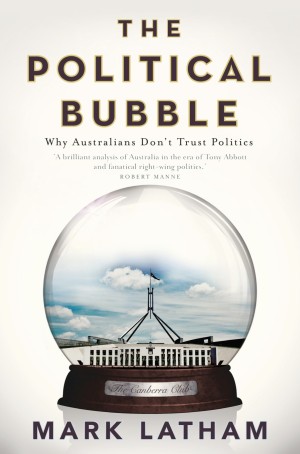
‘’Australians once trusted the democratic process. While we got on with our lives, we assumed our politicians had our best interests at heart’’
He suggests that trust has collapsed. In this book, he freely explores and travels up and down every road of our democratic map. On the journey he talks about how democracy has lost touch with the people it’s supposed to represent. Like a fast talking cab driver he gives view on how politics has become more tribal with left and right wing politics being dominated by fanatical extremists.
An entire chapter is devoted to how Tony Abbott promised to restore trust in Australian politics and how he failed to keep his promises. Another chapter is devoted to what can be done about fixing the democratic deficit as he calls it.
‘’Can our parliamentary system realign itself with community expectations or has politics become one long race to the bottom?’’
The third, and more recent book, by Nick Bryant (BBC correspondent and author) aptly titled The Rise and Fall of Australia ‘’How a great Nation lost its way’ ’takes a forensic look at the lucky country from inside and out. The most impressive thing about this book, besides the directness of his observations and astuteness of his writing, is that what is being said is an outsider’s point of view. He is not constrained by the provincial restrictions of self-analysis. Instead he offers his take on what he calls
‘’the great paradox of modern-day Australian life: of how the country has got richer at a time when its politics have become more impoverished.’’
Another important contribution to the democracy debate is this piece by Joseph Camilleri ‘’Democracy in crisis’’ I highly recommend this thoughtful article for a comprehensive outline of what ails our democracy.
I have alluded to these works, not as a review of each, but rather to highlight a growing concern over the state of our democracy.
There is no doubt in my mind if one looks at all the ingredients that go into forming a strong democracy, and you make a list of ingredients, the traditional recipe is no longer working. Or it has been corrupted by inferior ingredients.
At the risk of repeating myself, take for example the seemingly uncontrollable bias and market share of Murdoch. A desire for unaccountable free speech that is weighted toward, extremism. The attack on the conventions and institutions of parliament by the Prime Minister. The precedent of invoking Royal Commissions into anything as a means of retribution. The rise of fanatical right wing partisan politics and media. The decline in parliamentary respect and behavior. Add to that the right wings dismissive contempt for feminism.
Corporate sway and the pressure of the lobbyist can also be added to the mix, together with the voice of the rich that shouts the voice of inequality. The idea that with political servitude comes entitlement via financial benefit and privilege. And you can throw in the power of personalities over policy within the mainstream parties. Then there is the uninhibited corruption from both major parties. Then there is the acceptance by both sides that negativity is the only means of obtaining power.
But at the top of the list is the malaise of the population. Although we have compulsory voting 3million people at the last election felt so disgusted with our democracy that they felt more inclined to have a beer at the pub, or mow the lawn than cast a vote for Australian democracy.
If we are to save our democracy we might begin by asking that at the very least our politicians should tell the truth.
Others have also written on the subject. Democracy and diversity: media ownership in Australia
Budget Crisis or Crisis in Democracy
Another by me.
Democracy Usurped
ByJohn Kelly

“It is racism killing our people – suicides born of racism” | The Stringer.
When a white Culture overlay has little or no empathy for indigenous cultural psychology. When a white cultural ego dominates a landscape of human emotions. Little recognition is given to minorities completely flattened by the impact of constant dominance and being at crossroads leaves nothing any longer taken for granted. Crossroads give birth to individual uncertainties in youth that can create existential despair and death welcoming.
Strange how politically useful politicians and the media find it to create that sense of emergency about terrorism , economic emergency, to create false realities for political ends. But how those same governments in doing so can totally ignore the real feelings of our indigenous and other minorities it’s citizens particularly their non voting youth and then simply write them off as if it’s their own cultural and psychological inadequacies.
It’s a case of who do you believe? I suggest the people who advocate there was nothing here but bush before the British arrived are profound liars. They appropriated or discarded everything that went before them and have created the myths that have dominated our psyches since but find hard to eradicate. The ghosts that remain and haunt not all of us but those at the crossroads particularly the youth of minority cultures the indigenous kids, the migrant kids that are told they should move on forget and assimilate to be worthwhile.The kids born of poverty sold a promise of equal opportunity who blame themselves when they realize the unachievable outcomes.
Have a look at this face we don’t need Scott Morrison to to feel globally ashamed. We’ve been towing back the boats of indigenous Australia since our arrival and blaming their their drownings on people smugglers we call their Culture.
Lookin Philinka’s eyes she’s better than you Bolt, Morrison, Abbott purveyors of the myth of hate for little more than cultural elite ego, and profit. I can’t speak from the personal experience suffered but I can empathize with the general condition you maintain. I can ask you Christian bastards to listen to all our Australian citizens black white or brindle on behalf our common humanity .

By Dave Harrison
When Osama bin Laden was killed in cold blood in Pakistan and many demanded to see his death-photos for verification, President Obama refused and said, “That’s not who we are,” which begs the question: Who are the Americans?
Are Americans the ones who annexed the Philippines, denied them their own republic and then engaged in a war (1899-1902) with those who opposed them at the cost of 1.4 million Filipino lives? Are they the ones who burned villages, murdered their entire populations, and rounded up all boys over ten and young men and had them executed? Is that who they are?
Are Americans the ones who supported, supplied with arms and intelligence-gathering and bolstered many, brutal South and Central American dictatorships like Batista and Pinochet whose death-squads callously murdered tens of thousands of people in the 1950s, ’60s and ’70s simply because they believed in social justice by way of a social-minded government?
Are Americans the ones who experimented with atomic weapons on Hiroshima which killed over 80,000 people – including innocent men, women, and children – who were not actively involved in the war and then repeated its massacre on Nagasaki? Hiroshima had no military value and American bomber pilots were warned not to drop conventional bombs on it lest they ruin their precious experiment. Is that who they are?
Are Americans the ones who succeeded the French in Vietnam, picked up an already lost war and made it their own all based on a faulty thesis known as the “Domino Effect” which later proved to be nonsense? And while they pursued this baseless theory, put an entire country to the torch at the cost of another 2,000,000 Vietnamese lives and 58,000 of their own, the American military-industrial complex thrived. Is that who they are?
Are Americans the ones who burned villages, shot the villagers’ animals, destroyed their crops and in one instance evacuated an entire village of 504 defenseless old men, women, children and even babes in arms in Mi Lai in 1969 and then shot them down like dogs in a ditch with their M-16 rifless? Is that who they are?
Are Americans the ones who provided the experimental drug LSD to a Montreal asylum to test out on Canadian patients including one MP’s wife in the 1960s without their knowledge or consent? Are they the ones who sprayed a Canadian city (Winnipeg) to make long-term chemical tests on Canadian civilians rather than risk their own? Is that who they are?
Are Americans the ones who entered Korea on a “police action” and then engaged in the “Forgotten War” at the cost of 2,000,000 civilian Korean lives? How can Koreans forget? Is that who they are?
Are Americans the ones who followed George Bush and his senseless side-kick, Dick Cheney, to invade Iraq based on outright lies and half-baked intelligence, which almost everyone else knew was completely untrue? Are they the ones who headed the “Coalition of the Willing” to wilfully destroy a complete country and its infrastructure, kill 50,000 of its soldiers defending their own country, kill another 100,000 civilians, displace over a half million Iraqi citizens and then occupy it and rebuild it under the direction of Halliburton Company which was once headed by Dick Cheney himself? Is that who they are?
Are Americans the ones who set off their first, atomic test in the Nevada desert on July 16th, 1945 with American and Canadian soldiers present within 1000 yards of the blast without any radiation protection whatsoever, marched them to Ground Zero through the atomic dust afterward, and then casually swept them off with corn brooms to show that it was harmless? When they later died off like flies from cancer, victims were told, “Prove it.” Is that who they are?
Are Americans the ones who deviously tested Agent Orange in New Brunswick, Canada along transmission lines before they used it inVietnam at the cost of many Canadian lives and the tortured lives of thousands of Vietnamese? Is that who they are?
Are Americans the ones who incarcerated hundreds of individuals at Guantanamo Bay and left them without any legal rights, tortured them in various ways – like water boarding and sleep deprivation – and then threw away the keys? Is this who they are?
Are Americans the ones who send in drones to kill one individual whom they suspect of being a terrorist – without arrest and a fair trial but only their suspicions – and without any consideration for the rights of hundreds of innocent victims? And, when they anonymously kill dozens of innocent victims – women and children included – they simply issue an apology for the mistake and do it again later. Is that who they are?
Are Americans the ones who place on their coins, “In God we trust“? We are left to ponder: Which God is that? (It’s certainly not the one I know.) Is that who they are, or is that how history will remember America?
In decades to come, America will be judged harshly.
Dave Harrison

Work for Abbott and your face changes. Politics the Anti-Science
Trade minister Andrew Robb has slammed US president Barack Obama’s call for Australia to do more to save the Great Barrier Reef, saying the speech was unnecessary and Obama was misinformed.
Robb is the latest high-profile minister to criticise the climate change speech, which Obama made on the sidelines of last weekend’s G20 meeting in Brisbane.
On Friday, foreign minister Julie Bishop publically rebuked Obama for the address, saying that she had a briefing with the US secretary of the interior Sally Jewell before the G20 in which she’d outlined the action Australia was taking to protect the reef.
The trade minister took up the fight on Sunday, saying the content of the speech was wrong.
“It was misinformed, and I think it also was unnecessary,” Robb told Sky News.
“I felt that the president was not informed about Australia’s achievements, which have been bipartisan achievements. You know, we get a lot of people lecturing us from around the world about meeting targets. We – Australia – have met the Kyoto targets … Most of the countries lecturing us did not meet their targets.”
“I don’t think others should be coming and lecturing us on climate change,” he said. “[The speech] gave no sense of the first world, high-class efforts that Australia is making successfully on that issue.”
Robb said the speech unfairly highlighted the issue of climate change, which wasn’t the focus of the G20 meeting.
“There had been 12 months of work gone into shifting the focus of the G20 to greater growth, sustainable growth.”
But he wouldn’t be drawn on whether he thought Obama had shown a deliberate disregard for the Abbott government, saying that the two governments had worked well together on a number of key issues over the last year.
Australia’s attempts to keep climate change off the G20 agenda were hijacked by the announcement of a climate deal between the US and China in the lead up to the high-profile leaders’ meeting.
A final communique by the leaders included a call for all countries to contribute to the international green climate fund, a call previously rejected by Australian prime minister Tony Abbott.
 Australia has been warned it is wrong to view fossil fuels as the way to boost economic growth after the prime minister, Tony Abbott, defended coal before and during the G20 summit.
A UN report says Australia and just three other nations will not meet their pledge to reduce emissions by 2020
Australia is one of just four nations not on track to meet emissions reduction promises, a UN report has warned, while a US-based research firm has poured scorn on Tony Abbott’s insistence that coal is “good for humanity.”
A report by the UN Environment Programme states that the world should aim to be “carbon neutral” by 2070 at the latest. Exceeding a budget of just 1,000 gigatonnes of carbon dioxide would risk “severe, pervasive and in some cases irreversible climate change impacts”.
In an analysis of each signatory to a UN goal to limit global warming to 2C above pre-industrial levels, the report found that just four nations – Australia, Canada, Mexico and the US – needed to do more to meet their respective emissions reduction targets by 2020.
The UNEP analysis finds that Australia is set to emit 710 million tonnes of CO2 in 2020. This is well above the 555 million tonnes it would emit if it were to meet a goal of a 5% reduction in greenhouse gases by 2020, based on 2000 levels.
The report notes that Australia’s Coalition government has “replaced carbon-pricing mechanism with Emissions Reduction Fund. This results in an increase in projected emissions for 2020.”
After scrapping carbon pricing in July, emissions have risen in Australia, reversing a previous downward trend.
The replacement Direct Action policy, which the government claims will be more effective and a lesser burden on cost of living pressures, will start voluntary payments to businesses to reduce emissions from the first quarter next year. Independent analysis has cast doubt on whether Direct Action will meet the 5% emissions reduction goal.
The UNEP said countries could slash emissions through renewable energy and energy efficiency while maintaining economic growth.
Achim Steiner, executive director of UNEP, said there are “many synergies between development and climate change mitigation goals.
“Linking development policies with climate mitigation will help countries build the energy-efficient, low-carbon infrastructures of the future and achieve transformational change that echoes the true meaning of sustainable development.”
In October, Abbott said coal was “good for humanity” because it would be used to lift millions of people out of poverty, In subsequent G20 talks, Abbott reportedly told international leaders he was “standing up for coal”.
This position was directly challenged at the launch of the UNEP report in Washington DC. Andrew Steer, president of US development research organisation World Resources Institute, said Australia was wrong to view fossil fuels as the way to boost economic growth.
Steer said better technology and more efficient uses of resources were the best paths to alleviate poverty, claiming that US$19tn would be invested in renewable energy globally over the next 15 years. “We can’t afford not to do it; the economic imperative is to act,” Steer said.
The report presents just the latest climate change headache for the government. Julie Bishop, the foreign minister, has spoken out against a speech made by US president Barack Obama over the threat posed by climate change to the Great Barrier Reef.
In an apparent contradiction of the Intergovernmental Panel on Climate Change and the government’s own Great Barrier Reef Marine Park Authority, Bishop said the reef was not in danger and that a decline in water quality had been reversed.
Mark Butler, Labor’s environment spokesman, said the UNEP report was evidence that the Direct Action climate policy wouldn’t work.
“Tony Abbott is taking Australia backwards, while the rest of the world moves forward,” he said. “The United Nations report demonstrates that under the carbon price mechanism, Australia’s carbon pollution reductions reduced by 7% – for the first time in history.
“World leaders, including some of Australia’s largest trading partners, have pledged to increase their emissions reduction targets. Tony Abbott would rather pay polluters to pollute and keep his head in the sand.”

The backlash against US president Barack Obama shows that Australian conservatives were never friends with America as a whole – they were just mates with the American right, writes Michael Cooney.
How can Julie Bishop expect to make real progress in stopping the spread of terrorism while she undermines our alliance with the United States?
Her speech to the United Nations this week was a strong one – and a strong reminder of how valuable to Australia’s national interest a two-year place on the Security Council is proving. Yet within hours, the Foreign Minister was on national television saying she “understands” conservative fury at the American president.
What is going on?
Since President Obama left Australia, the Australian right’s attack on our ally has been astonishing. The Treasurer boasts of having ignored the president’s speech at the University of Queensland and mocks his troubles with an oppositionist senate. (These remarks, as well as failing to understand how important American executive power can be, seemed smarter before the Abbott Government’s own Senate fiasco over FOFA laws.) The Foreign Minister complains that the president doesn’t know enough about what the Government is doing to conserve the Great Barrier Reef. The Queensland Government whinges that it bent over backwards to help arrange the UQ address and this is the thanks it gets. Queensland state MPs are even considering sending a written complaint to the White House. (The Tsar has been warned!)
It’s not only politicians; conservative commentators have also piled in.
Peter van Onselen reports that the Prime Minister was “privately seething” about Obama’s speech – although not completely privately, if PVO has the yarn. Paul Kelly was so disoriented by the whole event that he briefly demanded Bill Shorten act on climate change – “What the hell is Australia doing?” he hounded an understandably perplexed Opposition Leader on Sunday morning TV. (Meanwhile, Greg Sheridan’s contribution on the topic quite defies paraphrasing.)
These are the people who roar treason at any sign of progressive dissent on foreign policy, yet are now utterly exposed – a conga line of hypocrites.
When was the last time an Australian government and an American administration had a relationship this bad?
John Howard was hardly a golf buddy of Bill Clinton’s, and wasn’t delighted with the level of US support to our operation in East Timor in 1999, but he knew where the alliance big picture lay. The MX missile crisis of the mid-1980s was smoothed over by the diplomacy of Kim Beazley and the good relationship between President Reagan and Prime Minister Hawke.
Maybe someone who lived through the Whitlam era (I was three in November 1975) would be able to compare the trans-Pacific tensions of that period. Were they worse than this? Not necessarily. Some argue that despite their obvious political differences, there was some basis of respect between Whitlam and Nixon – Whitlam’s grand China triumph must have appealed to the audacious half of Nixon’s divided heart – but there’s no doubting the period was a difficult one for the Alliance.
In any case, it’s certain right now is the worst moment in Australia-US relations in 40 years, and maybe longer. What’s more, and for surely the first time in our shared history, the personal relationship between the Prime Minister and the president is making it worse, not better.
I was in the galleries of the Parliament in November 2011 to watch President Obama speak on the future of democracy in Asia and the future of our alliance. One of the striking memories of that day was then opposition leader Tony Abbott’s “weird and graceless” speech: rather than sincerely welcoming our friend, he attacked the Gillard government, not only for its handling of uranium sales to India, but over the tax on mining rents and economic policy in general. This was a big clanger, with newspapers reporting his own backbench complaining they were “squirming in their seats” and commercial television hosts quizzing Tony Abbott the following day about his lack of respect.
Our visitors noticed too.
In office, Tony Abbott hasn’t got any better. As PM, he wrapped his first visit to the US in other travel, to France and Canada, and made great play in advance of his arrival in Washington of his plans to ally with conservative, coal-fuelled Canadian PM Stephen Harper against our ally’s goals for climate change action. Then, ahead of the president’s visit to Australia for the G20, Australian Liberals repeatedly spoke, on the record and off, about “the lamest of lame ducks”. Put aside for the moment the Australian Government’s own inability to pass budget measures, and put aside that the next Australian election is likely to come before the next US poll. Doesn’t the Australian national interest require a strong US and a strong president?
The reality of climate change policy is that the policies of Australia and the US have never been so far apart in an international forum as they were in Brisbane this month.
Not ever.
In turn, the reality is that six decades of conservative mythology about their support for the Australia-US alliance is just that.
Myth.
It turns out Australian conservatives never were friends with America as a whole – they were just mates with the American right.
With a liberal Democratic president in the White House, they are putting partisanship ahead of patriotism – and this doesn’t just threaten the Great Barrier Reef, it weakens the fight against terrorism as well.
And worst of all, it’s not a problem which will expire with the end of President Obama’s second term. Imagine what the next President Clinton will say when she visits.
Michael Cooney is executive director of the Chifley Research Centre, the ALP’s think tank. He was speechwriter to prime minister Julia Gillard. View his full profile here.

It’s a good time to be in the weapons business. Three of the leading US defence contractors, General Dynamics, Northrop Grumman and Lockheed Martin, are all making unprecedented profits.
In December, Northrop will host an event at the Australian War Memorial to mark the company’s expansion into the Asia-Pacific region. It will be launched by Federal defence minister David Johnson. It’s a curious location because, as Crikey’s tipster drily noted, “without the endeavours of arms companies stretching back centuries, there’d be significantly fewer Australians for the War Memorial to commemorate”.
Northrop’s US-based corporate HQ decided in the last 18 months to open a major office in Australia. In March the company purchased Qantas Defence Services, a firm that provides engine and aircraft maintenance to the Australian Defence Force and global militaries. It was an $80m deal. In September 2013, Northrop bought M5 Network Security, a Canberra-based cyber-security outfit.
Northrop appointed Ian Irving as CEO of the Australian outfit in June, as part of a plan to capitalise on the “strategically important market” of the Asia Pacific. The centrepiece of that plan is to give smaller enterprises in the defence space access to Northrop’s global supply chain. That’s nothing to be sneezed at: they’re a vital defence contractor for the US military and the company’s weapons have been used in Iraq, Afghanistan and beyond.
Irving explained to Australian Defence Business Review in July that he was pleased to sell the Australian government the firm’s MQ-4C Triton surveillance drones. The machines will be used to monitor the nation’s borders and protect “energy resources” off northern Australia. Northrop Grumman Australia is set to make up to $3bn from selling the drones. Countless European nations are equally desperate to use drones to beat back asylum seekers.
Despite all this, a Northrop spokesman assured me that the company’s growing presence in Australia has no connection to the Abbott government’s increase in defence spending.
As Northrop’s Australian expansion makes clear, arms manufacturing thrives in an integrated global defence space. Australia is an important market for that other military powerhouse, Israel. In 2010 leading Israeli arms company Elbit Systems sold a $300m command control system to the Australian military. In August 2013 Elbit announced the $5.5m sale of “an investigation system” to the Australian federal police that was tested in the occupied Palestinian territories of the West Bank and Gaza.
That’s a trend that has become commonplace since the 9/11 attacks. As the Israeli newspaper Haaretz reported in August, “[Weapons companies] need to sell in the large international defence markets – where the products are scrutinized partly on the uses the IDF makes of them on the battlefield.”
In August pro-Palestinian activists climbed on the roof of Elbit’s Melbourne offices to protest its involvement in the recent Israeli military incursions in Gaza, after which the company’s share price soared. Amnesty International recently accused Israel and Hamas of committing war crimes during the war.
Defence contractors rarely stop with the profits from war and colonisation. In Britain, Lockheed Martin is now reportedly bidding for a massive National Health Service contract worth $2bn. In the US, Northrop was a presenting sponsor at a recent Washington DC event for honouring war veterans.
It’s rare to read about arms trading in the Australian press; even the country’s largest privately owned small arms supplier, Nioa, rarely registers beyond the business pages. Our politicians are also loathe to speak out, and are happy to have factories and bases in their electorates, and donations for their parties.
The Greens do oppose military trading with Israel. Leader Christine Milne tells me that, “given the continuing disregard by Israel of international calls to halt settlement expansion in the occupied Palestinian territories and the disproportionate response used against the people of Gaza, the Australian Greens have repeatedly called on the Australian government to halt all military cooperation and military trade with Israel”.
Greens senator Lee Rhiannon spoke in parliament last year, saying “if any of the military equipment that Australia has sold to Israel has been used in Israel’s deplorable wars in the Gaza strip which has killed thousands of civilians, the Australian government should be held accountable for this”.
Australia, the 13th largest spender on arms globally, has a choice. We can keep embracing these merchants of death, and the botched deals and waste that they bring. Or we can reject the the rise of Northrop and its associates, and refuse to participate in an investment culture that continues a cycle of violence both at home and abroad.

Australians believe Muslims make up 18% of the country’s population, when their actual proportion is just 2%. Photograph: Michele Mossop/Getty Images
International Ipsos Mori poll shows Australians are also wildly wrong in their estimations on teen pregnancy, immigrants and unemployment
• How well do you know Australia? Take the quiz
http://www.theguardian.com/news/datablog/quiz/2014/oct/30/quiz-how-well-do-you-know-australia
Australians believe the proportion of Muslims in the country is nine times higher than it really is, according to a new international survey comparing public perceptions with actual data.
The Ipsos Mori poll conducted across 14 countries also showed Australians are wildly wrong in their estimations of the number of pregnant teenagers, unemployed people, immigrants and Christians in the country.
Australians said the murder rate was rising, when the data shows it generally falling.
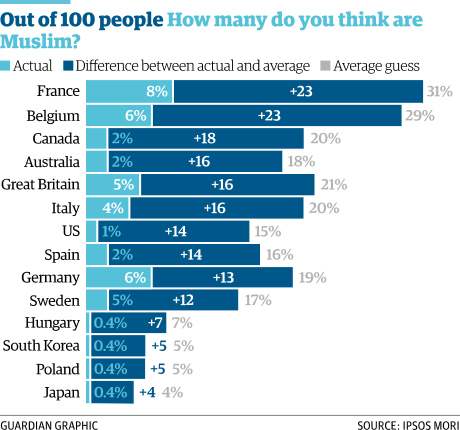
Swedes were found to most accurately perceive their society, ahead of Germany, Japan, Spain and the UK. Australia came in sixth, while Italians, Americans and South Koreans ranked worst in the survey’s index of ignorance.
Australians said that Muslims made up 18% of the country’s population, far higher than their actual proportion, just 2%.
Similar overestimations were made by Americans, Canadians, Belgians and the French. The latter believed nearly one in three of their compatriots were Muslim, when the real figure is 8%.
Bobby Duffy, managing director of Ipsos Mori, said the misperceptions “present clear issues for informed public debate and policy-making”.
“For example, public priorities may well be different if we had a clearer view of the scale of immigration and the real incidence of teenage mothers,” he said.
Australians meanwhile understate the proportion of Christians in the country, believing 67% of people identify with the faith, when it is actually 85%.
On another hot-button issue – immigration – our perceptions are a little less skewed. Australians believe immigrants make up 35% of the country – higher than the true number, 28%, but among the most accurate guesses of the 14 countries polled.
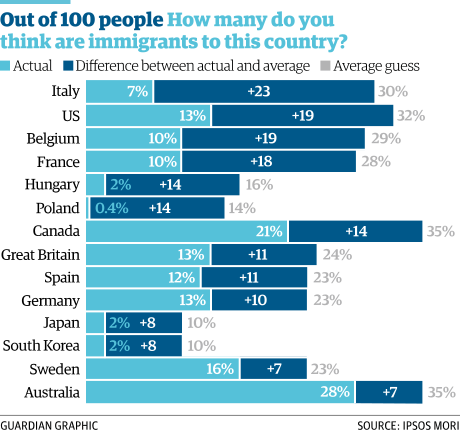
Italians and Americans both said immigrants make up one in three of their populations, instead of 7% and 13% respectively.
Australians believe a whopping 23% of the population is unemployed, when the data says 6%. Even more pessimistic were the Italians, who guessed that nearly half their population couldn’t find a job, the reality being a still-high 12%.
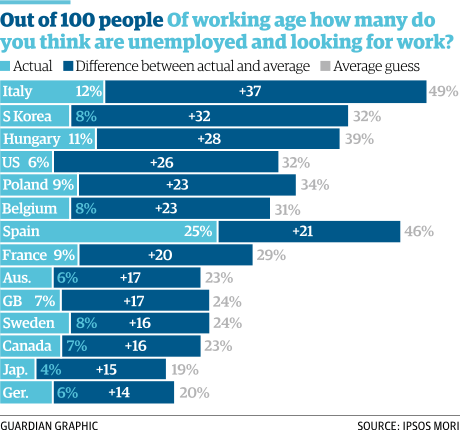
What proportion of girls aged between 15 and 19 give birth each year? Australians said 15%, more than seven times higher than the reality at 2%. That figure is 3% among Americans and Britons, but they guessed 24% and 16% respectively.
Also polled were Australian perceptions of the number of voters in the last federal election (underestimated), the number of people over 65 (overestimated) and the average life expectancy (spot on at age 82).
Speculating on the reasons behind the wide gulf between the world’s guesses and the facts, Duffy said “emotional innumeracy” played a role. When answering questions about our social environments, “we are sending a message about what’s worrying us as much as trying to get the right answers”, he said.
Also at play are flaws in the way people remember information, “where vivid anecdotes stick, regardless of whether they are describing something very rare”, he said
Updated
To defeat the Islamic State, the United States needs to overcome not only its own split strategic thinking in the region, but also secure the support of Sunnis inside and outside Iraq and Syria. Stuart Rollo writes.
The long-term success of confronting the Islamic State hinges is securing the cooperation of Sunnis, both within Iraq and Syria, and in governments across the Middle-East. Given that G.W Bush killed 60,000 and assisted in killing some 60,000 plus more it seems like a nigh on impossible task. How do you forgive and forget?
It will need to overcome not only its own split strategic thinking in the region, but also secure the support of its Sunni Arab allies in the Gulf States in a campaign with the essential aim of destroying the main Sunni resistance movement to two widely unpopular Shia governments, which act as proxy states of Iran.
The Islamic State’s success is due not to the appeal of its dogma, but to the local struggles between ruling Shia governments in Iraq and Syria and their disenfranchised Sunni populations.
While the ideological foundations of the Islamic State consist of a Sunni brand of fundamentalist pan-Islamism, the group’s success is due not to the appeal of its dogma, but has been the result of local struggles between ruling Shia governments in Iraq and Syria and their disenfranchised Sunni populations. Those struggles are heavily influenced by the geopolitical maneuverings of their respective Sunni and Shia patrons in the Gulf States, especially Saudi Arabia, and Iran.
Rising to prominence as “Al Qaeda in Iraq” in the immediate aftermath of the 2003 US invasion, the group weathered various political and military oscillations there, and were particularly damaged by the US-backed “Sunni Awakening” of 2006, before the 2011 Syrian uprisings provided them with unprecedented opportunity to expand and consolidate their power.
The United States maintains its stance on the illegitimacy of the Assad regime, while the Islamic State has positioned itself as the prime power in the Syrian opposition movement. The United States maintains its support for the Shiia-led government of Iraq, while the Sunni regions, long-backed by America’s closest Arab allies in the Gulf, are in open revolt, having reportedly given their support to the Islamic State. The semi-autonomous Kurdish region has declared the intention to pursue full independence, at the same time grabbing the oil rich region of Kirkuk from the ailing government in Baghdad.
The US wishes to support Kurdish military forces in their fight against the Islamic State and the system of Kurdish autonomy within Iraq more generally, yet it is a treaty ally with Turkey, a state with a long history of suppressing movements towards Kurdish independence within its own territory, and will not support the full bid for Kurdish independence. The US finds itself navigating the difficult equation of how much arms and training it can provide the Iraqi Kurds to defeat the Islamic State, while minimising the threat that such assistance could pose to the Turkish military in the future.
Perhaps the most spectacular case of contradictory strategic interests for the United States involves Iran. Long the most powerful member of the “Axis of Evil”, and the presumed target of imminent US bombardment for years, the Islamic Republic of Iran has been cast in the current conflict as America’s least likely collaborator. A united and Shia-led Iraq is in Iran’s utmost interest, as is the retention of power in Syria of the Assad regime.
The destruction of the Islamic State goes a long way towards securing both of these objectives. The more effectively the United States combats the Islamic State, the better for Iran. The more powerful and secure Iran, the less comfortable America’s regional allies including Saudi Arabia and Israel. For this reason alone the US will find it very difficult to secure genuine, long-term, cooperation from the Gulf States in confronting the Islamic State.
The ramifications of increased US military intervention will have drastic implications on the power dynamics of the region. It is doubtful that Saudi Arabia, Qatar, and other Gulf States will be enthusiastic participants in a military intervention which will empower their bitter regional rival Iran and revitalize the ailing Shia governments in Iraq and Syria that they have worked so hard to destabilize. Without their cooperation the long-term prospects for destroying the Islamic State and securing regional peace become quite bleak.


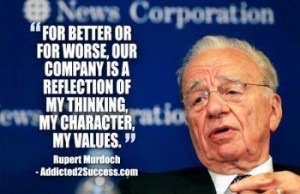


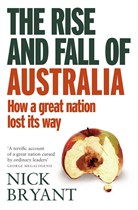


 olddogthoughts

You must be logged in to post a comment.