Category: Coal

The Big Coal Con: Car Registration In Queensland Brings In More Revenue Than Coal – New Matilda

There’s big money in coal, right? Well, for Queensland taxpayers there’s bigger money in car registrations, writes Rod Campbell from The Australia Institute. Despite the arrival of online political gambling, you still can’t place a bet on the most exciting thing in Queensland politics and economics. Forget Labor vs LNP, Greens vs Pauline Hanson orMore

Source: The Big Coal Con: Car Registration In Queensland Brings In More Revenue Than Coal – New Matilda

Coal peddlers are far more dangerous than heroin peddlers – » The Australian Independent Media Network

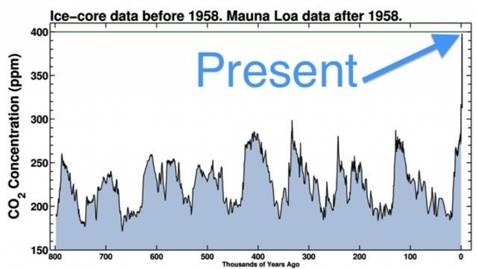
By James Moylan The science is settled regarding the relationship of atmospheric C02 and average atmospheric temperature. Ice cores demonstrate a sturdy correlation that stretches way back for many hundreds of thousands of years. We know that there is a lag in the effect because that is apparent from the data. It seems our oceans…

Source: Coal peddlers are far more dangerous than heroin peddlers – » The Australian Independent Media Network

The World’s Largest Coal Company Just Filed for Bankruptcy | VICE News

US coal company Peabody Energy reports more than $10 billion in debt, making it the third, major US coal producer to seek protection from creditors since 2014.

Source: The World’s Largest Coal Company Just Filed for Bankruptcy | VICE News

Queensland Labor Has Turned Its Back On The Climate, The Reef, And The Electorate – New Matilda

ANALYSIS: The Queensland government has all but approved the largest coal mine in Australia’s history. They’re treating voters with contempt when they ask them to believe this could possibly be ‘sustainable’, writes Thom Mitchell. With plans to extract 60 million tonnes of coal each year for sixty years, and a footprint 10 times the size of theMore

Source: Queensland Labor Has Turned Its Back On The Climate, The Reef, And The Electorate – New Matilda

Filed under:

Peabody Energy, world’s largest private coalminer, may file for bankruptcy | Business | The Guardian

Company says there’s ‘substantial doubt’ it will go on after delaying $70m payment amid slowing global economy and tougher environmental standards

Source: Peabody Energy, world’s largest private coalminer, may file for bankruptcy | Business | The Guardian

New Acland coal mine: The land that rehabilitation forgot

Coal miner New Hope is in court again, attempting to explain why the State Government should let them destroy another huge chunk of Queensland.

Source: New Acland coal mine: The land that rehabilitation forgot

Australian coalmines are one of riskiest investments in the world – report | Environment | The Guardian

Oxford University research also finds Australian, Chinese and US coal-fired power stations are the most vulnerable to environmental dangers

Source: Australian coalmines are one of riskiest investments in the world – report | Environment | The Guardian

Adani’s failure to disclose Jeyakumar Janakaraj’s history with African pollution disaster a ‘mistake’: Environment Department – ABC News (Australian Broadcasting Corporation)

The Federal Environment Department says Adani likely made a mistake when it failed to disclose that its Australian CEO ran a mining company that pleaded guilty to environmental harm.

Source: Adani’s failure to disclose Jeyakumar Janakaraj’s history with African pollution disaster a ‘mistake’: Environment Department – ABC News (Australian Broadcasting Corporation)

Brown coal is the Datsun Sunny of electricity. It’s time to upgrade or be overtaken | Richard di Natale | Opinion | The Guardian

Businesses around the world are investing in low carbon technology. Political leaders can either seize the opportunity or get left behind

Source: Brown coal is the Datsun Sunny of electricity. It’s time to upgrade or be overtaken | Richard di Natale | Opinion | The Guardian

China Clamps Down on Coal – Truthdig

Source: China Clamps Down on Coal – Truthdig

There’s no precedent for stopping the Carmichael coal mine — but we should

In light of the Paris Agreement, Queensland University Law Lecturer Justine Bell discusses our legal power – and moral obligation – to stop the Carmichael coal mine.

Source: There’s no precedent for stopping the Carmichael coal mine — but we should

Is Australia the last country standing in defence of coal? | Bill McKibben | Comment is free | The Guardian

The OECD wants to phase out export credit agencies providing money for coal projects. Australia, almost alone, might stand in its way

Source: Is Australia the last country standing in defence of coal? | Bill McKibben | Comment is free | The Guardian

Carmichael coal mine: we want to stop it in its tracks

The Adani coal project is wrong on economic and environmental grounds.

Source: Carmichael coal mine: we want to stop it in its tracks

Scientist hits back at fact fudging by pro-coal climate skeptics, Lord Matt Ridley and Rupert Murdoch

Scientist arcs up at fact-fudging by climate skeptics Lord Matt Ridley and Rupert Murdoch. Wouldn’t have anything to do with their financial interests in fossil fuels? Graham Readfearn investigates.

Source: Scientist hits back at fact fudging by pro-coal climate skeptics, Lord Matt Ridley and Rupert Murdoch

These Charts Show the Hidden Costs of Dirty Energy | Mother Jones

Adding up the price in money—and lives.

Source: These Charts Show the Hidden Costs of Dirty Energy | Mother Jones

Josh Frydenberg’s arguments in favour of Adani mine are farcical

The argument that burning coal exported by the Adani mine project will deliver health benefits to the world’s poor is plain rubbish.

Source: Josh Frydenberg’s arguments in favour of Adani mine are farcical

Coal,

https://scontent-lax3-1.xx.fbcdn.net/hphotos-xpa1/v/t1.0-9/12112103_10153654982259099_2428869752605832557_n.jpg?oh=a2ed0e37259f9821de4657770486a457&oe=56D2F77E

OOPS THEY DID IT AGAIN: The Turnbull Government just approved Australia’s LARGEST coal mine for the second time, after their initial approval was deemed to be illegal. They just don’t get global warming. The coal from Adani’s Carmichael mine would be equivalent to almost one quarter of Australia’s total greenhouse pollution – a climate disaster! This mega mine would also destroy 20,000 ha of native bushland, use 12 billion litres of Queensland’s precious groundwater per year and threaten the endangered black-throated finch with extinction. No vision, no heart, definitely no science. SHARE if you want a rapid transition to clean energy, not more coal mines.

China mulls new coal curbs that would limit emissions but dent commodity demand

China is considering aggressive new curbs on coal consumption as it accelerates efforts to transform its economy and tackle climate change.

Source: China mulls new coal curbs that would limit emissions but dent commodity demand

Four Lies In 14 Minutes: Josh Frydenberg And His Andrew Bolt Report Porkies | newmatilda.com


Appropriately dubbed the “new Mr Coal” by an excited Andrew Bolt on his weekly Channel Ten slot yesterday, the new Minister for Resources, Energy and Northern Australia, Josh Frydenberg averaged a lie every 3.5 minutes as he raked over the Abbott Government’s legacy on climate change and coal.

Source: Four Lies In 14 Minutes: Josh Frydenberg And His Andrew Bolt Report Porkies | newmatilda.com

Will the UK phase out coal in a decade? | Environment | The Guardian

Despite government rhetoric that coal must go, experts say without policy changes this most carbon intensive fossil fuel is set to stay beyond 2030

Source: Will the UK phase out coal in a decade? | Environment | The Guardian

W.A. says solar is the future as it prepares to dump coal : Renew Economy


West Australia energy minister says the future is in solar, noting that it is cheap, democratic, and was likely to displace the state’s ageing coal generators. And this man used to head the IPA!

Source: W.A. says solar is the future as it prepares to dump coal : Renew Economy

Indian mining giant Adani lashes out at environmentalists who sought to block a giant coal mine in the Galilee Basin — and succeeded

Adani blames activists for stopping Carmichael coal mine

Adani blames activists for stopping Carmichael coal mine

Filed under:

Moments ago, Greg Hunt and Adani conceded defeat as the Federal Court

It leaves Adani without an approval for the biggest coal mine in Australia, no approval for dredging in Great Barrier Reef waters, and no investors in sight.

Thank you to everyone who chipped in. And thank you to the incredible Mackay Conservation Group who ran the case.

We’ve just won a huge battle, but the war’s not over yet. The law states Minister Hunt must now reconsider the mine, and either grant a new approval or reject it forever. Can you spread the incredible news and tell

The fossil-fuel funded Institute of Public Affairs has just a released a report promoting the potential of the Galilee Basin

IPA: Coal lobbyist and climate skeptic factory

IPA: Coal lobbyist and climate skeptic factory

China, Coal. Be Afraid. Be Very Afraid. | Mother Jones

China, Coal. Be Afraid. Be Very Afraid. | Mother Jones.

The head of the OECD says wealthy countries should help poorer nations that cannot afford to replace coal with low-carbon alternatives. Alex Kirby from Climate News Network reports.

OECD: Coal investment is most urgent climate threat

The case for Australian coal in India is weakening

The case for Australian coal in India is weakening.

Norway confirms $900bn sovereign wealth fund’s major coal divestment | Environment | The Guardian

 aerial view of Drax Power Station near Selby in North Yorkshire

Norway confirms $900bn sovereign wealth fund’s major coal divestment | Environment | The Guardian.

Big Coal’s 10,000 Jobs Claim Has Been Inflated Almost 10-Fold, Court Hears | newmatilda.com

Big Coal’s 10,000 Jobs Claim Has Been Inflated Almost 10-Fold, Court Hears | newmatilda.com.

Big Banks Closing The Vault On Big Coal, Adding To Adani’s Woes | newmatilda.com

Big Banks Closing The Vault On Big Coal, Adding To Adani’s Woes | newmatilda.com.

If We Don’t Dig It Up, Someone Else Will: Coal Giant’s Argument In Court | newmatilda.com

If We Don’t Dig It Up, Someone Else Will: Coal Giant’s Argument In Court | newmatilda.com.

The Coal Industry Is Imploding. Why Is it Still So Powerful in Washington? | The Nation

A coal processing plant

The Coal Industry Is Imploding. Why Is it Still So Powerful in Washington? | The Nation.

Old King Coal dying a slow death: Bolt withdrew his $$$

Old King Coal dying a slow death.

Australia accelerates coal mine projects in the face of study that finds it should stay buried

Tony Abbott coal

Research finds more than 80% of reserves should stay in the ground to avoid dangerous climate change, just as Australia expands production

Australia is pressing ahead with huge new coalmining projects, just as a new study has calculated that more than 80% of the world’s current coal reserves must remain in the ground to avoid dangerous climate change.

The research, by the UCL Institute for Sustainable Resources, found that globally a third of all oil reserves, half of all known gas deposits and 82% of coal capacity would have to remain unused by 2050 if the world was to remain within an internationally agreed limit of 2C warming compared with pre-industrial times.

The report found the world needed to stay within a carbon dioxide “budget” of 1,100 gigatonnes emitted between 2011 and 2050 to have at least a 50% chance to avoid more than 2C warming.

That level of warming is considered to have highly damaging consequences for human health, coastal infrastructure, food production and endangered species.

Despite its commitment to the 2C warming limit, Australia is pushing ahead with a massive escalation in its coal output, with prime minister Tony Abbott declaring in October that coal is “good for humanity” while warning against any “demonisation” of the fossil fuel.

Nine new coal projects are earmarked for the Galilee Basin region of central Queensland, producing a combined 330m tonnes a year at capacity.

This coal, destined for export to countries such as China and India, would produce an estimated 705m tonnes of CO2 when burned – substantially more than Australia’s entire annual greenhouse gas emissions of 542m tonnes.

Several international financial institutions have rejected funding the largest of the Galilee Basin mines, Adani’s Carmichael project, but the Queensland government has stepped in to provide taxpayers’ money for construction, citing the jobs the mine would create.
Advertisement

Tim Buckley, the director of energy finance studies at the Institute for Energy Economics and Financial Analysis, said the Australian government’s energy policies “fly in the face” of the need to avoid digging up the vast majority of known coal reserves.

“Rather than acknowledge the problem and transition energy sources over time, Tony Abbott is wedded to an idea of digging up coal as fast as possible before we’re not allowed to do so, which is a globally irresponsible position,” he told Guardian Australia.

“At the current price of thermal coal, the profit margin is zero. It makes no sense to sponsor these projects when the world is awash with coal. Why is Queensland providing millions of dollars to projects that aren’t commerciallly viable? Why does a project funded by a foreign billionaire need taxpayer subsidy?”

Buckley said Abbott’s argument that coal could lift people in developing countries out of poverty was “a highly embarrassing parroting of a coal industry PR campaign”.

Victoria McKenzie-McHarg, climate campaigner at the Australian Conservation Foundation, said Australia was “completely out of kilter” with the required action to avoid dangerous climate change.

“Tony Abbott and [Queensland premier] Campbell Newman have bent over backwards to push through coal projects and side with polluting mining companies over the need to protect Australians from climate change,” she said.

“If we become the greedy polluter, it puts unfair pressure on developing nations to cut their emissions when Australia has been one of the largest polluters for so long. We have a responsibility to clean up our act and take advantage of our real natural resources, such as wind and solar.”

But the Minerals Council of Australia (MCA) disputed the findings of the report, stating that the Intergovernmental Panel on Climate Change made it clear last year that carbon capture and storage technology would ensure that fossil fuels could remain widely used.

“The report’s apparent conclusions are at odds with a series of recent forecasts by a range of respected international bodies, including the International Energy Agency and the Intergovernmental Panel on Climate Change,” said Brendan Pearson, chief executive of the MCA.

“Those reports show that addressing climate change, eradicating energy poverty and a continued strong future for Australia’s energy sector are not mutually exclusive goals.”

Pearson said the International Energy Agency’s 2014 outlook showed that the global coal trade was set to grow by 40% by 2040, with Australia forecast to regain its ranking as the world’s top coal exporter by 2030.

According to the UCL institute’s paper, published in Nature, companies spent $670bn last year searching for and securing new fossil fuel deposits. The research was funded by the UK Energy Research Centre.

Pressures on coal show no signs of ending

When world leaders assembled at the G20 Summit in Brisbane last month, the corporation selected by the Australian government to address the G20 and spearhead its “thought leadership forum” was none other than United States coal producer Peabody Energy.

Exhorting governments to address poverty with coal and other fossil fuels, Peabody’s executives had a sure meeting of minds with Prime Minister Tony Abbott, who had made his controversial “coal is our future” comments days earlier.

Less telegraphed in this sphere of “thought leadership” are the impending costs of an industry in decline, and what these costs mean for this country.

Take Peabody itself for instance. In four years, the equity market value of this coal producer – with its huge mines in the NSW Hunter Valley – has fallen from $US17 billion to $US2 billion ($2.46 billion).

Advertisement

On that equity value, Peabody is carrying $US5.5 billion in net debt. While the pension scheme for its management is 90 per cent funded, its retired workers’ pension liabilities of $US735 million are zero funded.

Then there is mine remediation. For Peabody, there are $US713 million in company assessed remediation liabilities against which surety bonds of $568 million are held to cover overall clean-up costs as at December 2013.

Peabody appears better covered than others on this front, though. Throughout Australia, there are tens of thousands of abandoned mine sites left for taxpayers to clean up on a multitude of old companies’ behalf. Some, such as the  Mount Morgan goldmine in Queensland, have already cost taxpayers $50 million as toxic sludge contaminated rivers and killed fish 50 kilometres downstream.

The Queensland Auditor-General has put the cost of cleaning up the state’s 15,000 abandoned mines at $1 billion. However,  financial analyst Tim Buckley, of the Institute for Energy Economics and Financial Analysis, says the eventual figure could be 10 times higher.

That is just Queensland. Collectively, the other legacy costs in the wake of the biggest resources boom in history and its slather of top-of-cycle acquisitions will surely run into the dozens of billions.

Much will depend on whether the sharp decline in coal prices is structural rather than cyclical. The government and the coal fraternity say it is cyclical, that demand will rebound. There is a good deal of hope factored into this view, hope that  appears to also be the basis for the government to provide taxpayer subsidies to back the giant Galilee coal project in Queensland.

Figures out of China last week showed thermal coal consumption fell 2.1 per cent year on year in 2014. Demand for electricity, however, still rose 3.9 per cent, an unassailable indicator that coal is losing significant market share in the battle against cleaner forms of energy. That 6 per cent loss in market share in China alone in one year can be viewed against the 10 per cent growth every year for the first 10 years of this century.

Unfortunately, most of the profits of this boom found their way overseas. The clean-up will be funded at home.

Yet companies such as Peabody Energy continue to fork out dividends for their shareholders while their liabilities are increasingly at risk. This company, as of yesterday, had an Altman Z-Score (global measure of financial distress) of 0.76. It is in distress zone (anything less than 1.81), implying possible bankruptcy in the next two years.

Peabody is in better shape, though, than the Indian coal producers. A research report by IEEFA’s Tim Buckley suggests all three big players in Australia – Adani, GVK and Lanco Infratech (owner of Griffin Coal in WA) – are showing Z-Scores suggesting a real risk of distress.

As described here three months ago, http://www.smh.com.au/business/mining-and-resources/wise-investment-or-fossil-fools-queensland-backs-coal-as-g20-moves-the-game-on-20141117-11odkq.html  GVK’s net debts stand at 10 times its market cap.

Its Galilee colleague Adani Mining P/L is an Adani subsidiary with $1 billion in debt, negative shareholders funds, zero revenue and high cash burn with many billions still to spend. It is no wonder the Indians have their arms outstretched for taxpayer subsidies. Unless the coal price bounces substantially, this is not a viable project without state support.
http://www.smh.com.au/business/adanis-galilee-basin-project-not-commercially-viable-20140905-10cyc3.html#ixzz3N9vSfwSZ

As for the third company, the central subject of Buckley’s report, Lanco Infratech is already a year into a corporate debt restructuring with its many banks.

“The imminent of Lanco Infratech’s Griffin Coal business points to an increasingly urgent need for federal and state government planning to prepare for the economic and social impacts of the structural decline in coal.”

The government of WA is in a bind. It needs Griffin’s thermal coal to fire its grid. While taxpayers are likely to be tapped to prop up yet another distressed mining company, the sheer survival of the mine will render mine remediation a minor issue for future generations to worry about.

“IEEFA notes the absence of any material environmental remediation bond protection at Griffin Coal. West Australian taxpayers could well end up with yet another significant unfunded mine remediation liability”.

The Indian power and infrastructure companies were last to the party. All three bought into Australian coalmining projects in 2011 – the very peak of the boom. All were already excessively leveraged. All three paid big prices with borrowed money. Since then the seaborne price of thermal coal has more than halved.

For its part, Griffin Coal is operating negative cash-flow and struggling even to pay the interest on its $600 million to $800 million in acquisition-related debts. Lanco paid way over the top for Griffin. Rival Chinese group Yancoal acquired the Premier coal asset for $300 million, just after Wesfarmers had spent $90 million on its upgrade. Lanco in contrast paid $750 million for a slightly smaller business that was loss making and in need of capital expenditure.

It paid 2.5 times the price Yancoal paid. Yet Yancoal recently picked up a $240 million subsidy from the WA government. Meanwhile, in Queensland the government is pondering a suite of taxpayer assistance for the Galilee partners: equity funding for the railway, water, dredge and spoil removal and/or a holiday on coal royalties.

Coal is a mature industry and should hardly be a candidate for big taxpayer handouts, especially since it is already a recipient of state largesse in many forms. Governments, however, will come under intense lobbying pressure – especially the threat of job losses – to shield mining companies from tumbling commodity prices.

What is required to protect future generations in this country is a concerted plan to deal with the fallout. There isn’t one. NSW for one does not even properly report remediation liabilities. Eventually, these may be in the tens of billions of dollars so an audit of all environmental liabilities is in order before – should the mining sector fail to regain its former glories – the country is left with a slew of insolvent mining companies and even more thousands of toxic holes in the ground.

Blockading Australia’s largest coal mine – Features – Al Jazeera English


Blockading Australia’s largest coal mine – Features – Al Jazeera English.

Subsidised to pollute

Tony Abbott says Australia may send uranium and coal to Ukraine

Petro Poroshenko and Tony Abbott,

Ukraine’s president, Petro Poroshenko, laughs with Australia’s prime minister, Tony Abbott, during their meeting in Melbourne on Thursday.

Prime minister tells Ukraine’s president exports from Australia could help secure Ukraine’s energy sources

Australia is considering exporting coal and uranium to Ukraine it was announced, as the leaders of the two countries met for a historic state visit.

President Petro Poroshenko became the first Ukrainian leader to visit Australia, after accepting an invitation from the Australian prime minister, Tony Abbott, to discuss security issues in the wake of the downing of Malaysia Airlines flight MH17 in July.

“The MH17 atrocity has brought our countries together in a remarkable way,” Abbott told reporters on Thursday.

“I want to say thank you to you, Petro, for the help and assistance that Ukraine and your government gave to Australia and our citizens in the aftermath of that terrible atrocity. And coming from this tragedy, I believe will be a strong and lasting friendship between the Australian people and the Ukrainian people,” Abbott said.

A permanent Australian embassy is due to open in Kiev in February, and Poroshenko has invited Abbott to Ukraine for a state visit, saying he is one of the most popular foreign leaders in the country. “It’s nice to be popular, even if only in Kiev,” Abbott quipped.

Abbott and Poroshenko attended an ecumenical church service on Thursday to honour the nearly 300 victims of the MH17 disaster, 38 of whom were Australian.

“I should acknowledge the part that faith has played in our culture and in our public life, in the culture and public life of civilised countries,” Abbott said.

“There would hardly be a country on Earth so subject to existential threat as Ukraine is. If the freedom of one country is diminished, the freedom of all is diminished. I have come to know Petro Poroshenko quite well over the last few months. And I want to say that not just Ukraine, but freedom has a great champion in Ukraine’s president.”
Advertisement

Australia is part of an International Monetary Fund contribution aimed at stabilising Ukraine, which has been in a precarious security situation since Russia’s annexation of Crimea in March. Russia sides with rebels in eastern Ukraine, but denies providing them with the arms that brought down the Malaysia Airlines flight.

Abbott and Poroshenko acknowledged the importance of securing energy sources for Ukraine, and said that Australia would consider the export of coal and uranium to the country.

Russia has threatened to take Ukraine to the international court if it fails to pay the more than $3bn it owes the Kremlin in unpaid energy debt. Shipments of natural gas from Russia to Ukraine started again after a six month suspension, ending an energy crisis in the country.

Abbott also announced that Australia would give $2m to the Ukrainian military, but skirted the issue of whether Australia was taking sides in the conflict.

“The side we take is the side of freedom, democracy and self-determination,” Abbott said, adding that he had frank discussions with the Russian president, Vladimir Putin, when the leader was in Australia for the G20 conference in Brisbane last month. “We seek freedom and dignity for every person in every country and that’s not taking sides.”

Abbott wants Putin to keep his promises on promoting peace in the region. “I say to president Putin, who obviously I’ve got to know reasonably well over the last few months, that this is an opportunity for him to be a statesman as well as a patriot,” Abbott said. “And I appeal to everyone to heed the better angels of their nature here because… we will all advance together or none of us will advance at all.”

Poroshenko wants those responsible for the shooting down of MH17 to be deemed a terrorist organisation and said Ukraine was “making war for peace” to defend its borders. “The truth is with us,” Poroshenko said. “The whole world is with Ukraine, and Russia stays in isolation.”

Russia has denied sending troops to the eastern parts of Ukraine, saying that Russian fighters stationed there are volunteers who feel empathy with Crimeans, many of whom look to Moscow for leadership.

Australia has condemned the annexation of the area, and has called for tougher sanctions to be imposed on Russia until peace talks are successful.

Time to cease the ‘clean coal’ crock

Time to cease the 'clean coal' crock

Time to cease the ‘clean coal’ crock.

Big coal allegedly buys 500,000 social media followers — then denies it

Big coal allegedly buys 500,000 social media followers — then denies it.

This is what News Corp would do and then offer it to the PM’s office to use. Denial is an African River as far as the Fossil Fuel Industry is concerned

Short-term political fixes pose threat to environment and future prosperity, scientists warn

Smoke emits from steel works

Some of the nation’s top scientists have warned short-term political fixes pose a threat to both the environment and the nation’s future prosperity.

The first major report in more than a decade from the influential Wentworth Group of Concerned Scientists suggests the Federal Government eliminate fossil fuel subsidies and provide tax breaks to landowners who work to protect threatened species and ecosystems.

“We’re increasingly seeing the consequences of our current short-termism and the cost that will impose on this society in the future, because, in the long run, environmental degradation will come at an enormous cost,” Wentworth Group director, Peter Cosier, said.

The report included contributions from former treasury secretary Ken Henry and Clean Energy Finance Corporation director Martijn Wilder.

The group said the Abbott Government’s tentative steps towards reforming the tax system provided an opportunity to better protect the environment.

“Tax is an effective way [to protect the environment] because it’s something you have to pay and it’s a measure which governments use all the time to pull triggers in the economy,” Mr Wilder said.

“There’s an opportunity here to look at our tax system over the long-term to make it such that it has measures that are beneficial to the environment and the economy.”

There’s an opportunity here to look at our tax system over the long-term to make it such that it has measures that are beneficial to the environment and the economy.

Martijn Wilder

The report recommends removing fossil fuel subsidies and instead paying farmers, indigenous communities and other landholders to restore and protect environmental assets.

“A farmer may take particular steps to look after and manage their land in a more sustainable fashion and by doing that they may be rewarded with some sort of tax concession,” Mr Wilder said.

Professor Bruce Thom, a founding member of the group, said with climate change predicted to bring more extreme heat, bushfires, and damaging storms, smarter planning decisions need to be made now.

“We spend 10 times more on recovery after a disaster than we spend on mitigating their impacts,” Professor Thom said.

He said he believed preparing communities for climate change has not been well coordinated to date between different tiers of government.

Professor Thom said recent discussions about tax and federalism should be expanded to include the management of the natural environment.

“The Federal Government is the driver of the economy and the states are the deliverers,” he said.

“We feel that all three levels of government must be closely working together in better managing our natural capital for the long-term future.”

The authors cite advice from the Productivity Commission, Treasury, and the Garnaut Review that an emissions trading scheme remains the most cost-effective way for Australia to reduce greenhouse gas emissions.

A copy of the Wentworth Group’s report will be sent to every state environment minister and every federal MP.

Take it from us in India: the world needs renewables, not more Australian exported coal: Abbott doesn’t care to listen


    • theguardian.com, Wednesday 22 October
    • Here are little known facts about coal: its use is responsible for 400,000 premature deaths per year globally, and many more illnesses. In India, coal contributes to between 80,000 to 115,000 premature deaths and 20m new asthma cases annually. It is also responsible for around 40% of the greenhouse gas emissions that are dramatically changing the world’s climate and impoverishing millions of people.

      This, however, did not stop Tony Abbott from glossing over these costs when he declared recently that “coal is good for humanity”, nor did it stop environment minister Greg Hunt from saying that coal will lift millions in the developing world out of energy poverty.

      But coal is not the solution to energy poverty. Local renewable energy is. India’s people are best served by renewable energy sources like wind, solar and small-scale hydropower. That’s why Indian giant Adani’s proposed Carmichael mine in Queensland’s Galilee Basin, one of the world’s largest, is such a backward idea – and why I have joined the fight to stop it.

      scenario emphasising coal.

      Local women carry coal taken in the eastern Indian state of Jharkhand.
      Local women carry coal taken in the eastern Indian state of Jharkhand. Photograph: Ahmad Masood/Reuters

      This difference is even starker when you take into account the costs of imported coal from Australia and Indonesia. Increases in imported Indonesian coal prices have made the massive Tata Mundra and Adani Mundra power projects in the Indian state of Gujarat uneconomical, leading to plant shutdowns.This price differential would be even greater for Australian coal. Recent analysis from the Institute of Energy Economics and Financial Analysis has shown that the cost of imported Galilee coal-fired power generation in India is double the current average wholesale cost of electricity. More than 300m Indians simply cannot afford Australian coal.

      The coal from Carmichael, when burnt in Adani’s power stations in India, will damage the health of the Indian rural poor and the land and water on which they depend for their livelihoods. And they still won’t be able to afford the electricity generated.

      Abbott said “coal has a big future as well as a big past.” He and the coal companies want us all to believe that coal is inevitable. Coal helped build the economies of developed countries and so it must be the right choice for the rest of us. Yet by that logic, the opium trade and slavery should also be reintroduced, since they also contributed to the enrichment of many countries.

      All the pieces are in place now for developing countries to choose a clean energy path that is cheaper, faster and healthier than coal. It would be nice if the Australian government focused on this, rather than exporting dirty, outdated coal.


Bees are good for Humanity not coal


Professor John Mathews and Hao Tan pointed out in their research

“latest target is that renewables will have a capacity of 550 gigawatts — over half a trillion watts — by the year 2017. We calculate that this will exert a major impact in China — enhancing energy security; reducing emissions pollution; and reducing carbon emissions .… If it can reach its 2017 target of 550 GW renewables, we calculate that this would translate into a saving of 45% on current imports of coal, oil and natural gas.”

Added to this, the price of coal dropping, largely due to oversupply and import tariff  thereby lowering profit. Coal production costs will put an enormous strain on mines.

Our biggest client for coal and gas is Japan. After Fukushima, Japan has become more wary of nuclear power and, as such, will rely, in the short term, on importing coal and gas from Australia — amongst others. Abbott last week opened a Japanese/Australian partnered mine. However Japan has plans to go renewable as well 20% by 2020 All this accompanied by divestment  is  highly negative portent for the industry.

Joe and Tony, “the fossil fuel ride is over”, it’s time you recognised that.

Joe your needed in Iraq or West Africa don’t come back

wedging

Bolt calls for the socialisation of University investment funds. How long would it be before they start instructing us where we should invest our money.”

Malcolm Fraser and John Hewson back ANU fossil fuel divestment decision

Former Liberal leaders sign open letter in support of university’s decision to divest from a number of fossil fuel companies

Dock the universities the cost of what they’ve helped block  Andrew Bolt’s leftist call to socialise/ and or police and regulate university investment funds. Challenging Christopher Pyne’s call for ‘free market’ independance

“We cannot understand why a government that is committed to deregulating the university sector would question the ability of a university to make investment decisions,” the letter says.

The university has announced its offloading holdings in Iluka Resources, Independence Group, Newcrest Mining, Sandfire Resources, Oil Search, Santos and Sirius Resources for ethical reasons.

The decision represents 1% of the university’s total investment holdings.

Treasurer Joe Hockey and education minister Christopher Pyne have criticised the move.

Hewson warned against bullying from vested interests.

“The mining industry has bought this government like it bought the last one,” Hewson told ABC Radio.

The Liberal party was supposed to stand for freedom and individual choice.

“It’s a totally unjustified intervention by government,” he said.

“If I was a superannuation fund manager I would wonder how long it would be before they start instructing us where we should invest our money.”

Filed under:

Australia a laggard rather than leader on climate change, says Wayne Swan Former treasurer says there is ‘genuine dismay’ on global stage at the lack of attention given to climate issues on G20 agenda

Wayne Swan

“Inevitably, though, having made such pains of ourselves insisting on the G20 as the steering room of the global economy, the expectations on Australia in its host year are enormous.”

Australia has “gone from lifter to leaner” on action against climate change, and must not block the topic’s inclusion on the agenda for the G20 summit in Brisbane next month, the former treasurer Wayne Swan will say.

When asked about climate change in February the prime minister said:

“We do not want to clutter up the G20 agenda with every worthy and important cause because if we do, we will squander the opportunity to make a difference in the vital area of economic growth.”

But Swan, the Labor treasurer from 2007 to 2013, says climate change previously sat at the core of the G20 agenda “not just as an environmental issue but as a core issue of sustainable economic growth”.

“In the corridors of Washington, Berlin and elsewhere, there is genuine dismay about the lack of attention to climate change in the G20 agenda,” he says.

Referring to the Gillard government’s carbon pricing scheme, which has since been abolished by the Abbott government, Swan says: “Australia has been recognised around the world as an energy-intensive nation and a beneficiary of significant commodity exports, for taking seriously its international obligations to reduce its carbon emissions.”

“At best, Australia has gone from leader to laggard on climate change,”

Swan says.

“At worst, it’s gone from lifter to leaner. This is at the very time significant players like the US and China are more willing than ever to address climate change, and international financial institutions like the IMF are highlighting the strong links between climate change action and positive economic outcomes

Mining companies are campaigning for the G20 to support continued use of coal as a solution to the global “energy poverty” crisis.

Abbott said on Monday coal should not be demonised because it was “good for humanity”.

On Tuesday the treasurer, Joe Hockey, dismissed the finding that Australia was the highest per-capita emitter of greenhouse gases in the OECD.

“The nation’s most senior economic leader has embarrassed himself on international TV over a fact most school students would know,”

Joe Hockey

Joe Hockey ridicules suggestion Australia is among top emitters

Treasurer rejects ‘ridiculous’ comment from interviewer, despite Australia topping OECD per capita rankings

Joe Hockey has ridiculed a suggestion that Australia is one of highest emitters of greenhouse gases in the OECD, despite the fact that it does top the OECD rankings of greenhouse gases per capita.

“The comment you just made is absolutely ridiculous,” the treasurer said in an interview with the BBC when it was suggested to him that Australia was among “the dirtiest, most greenhouse gas-emitting countries in the OECD group of developed countries”.

“We’ve got a small population and very large land mass and we are an exporter of energy, so that measurement is a falsehood in a sense because it does not properly reflect exactly what our economy is,” Hockey said.

“Australia is a significant exporter of energy and, in fact, when it comes to coal we produce some of the cleanest coal, if that term can be used, the cleanest coal in the world.”

The latest OECD greenhouse gas emissions index, released in January, ranks Australia as the highest emitter per capita, with Luxembourg second, followed by the US and Canada.

Luxembourg reaches such a high position on the list because its low fuel taxes mean motorists from neighbouring countries drive over the border to fill up their cars. The study found Australia emitted nearly 25 tonnes of carbon dioxide per person in 2010.

Emissions released during the process of mining coal and gas are counted towards Australia’s total, but the emissions when the fossil fuels are exported and burned are counted in the country that buys them.

So-called fugitive emissions from mining have been the fastest growing source of Australian emissions in recent years, according to the national greenhouse gas inventory, but still account for only about 8% of Australia’s total.

Australia also lags when it comes to cutting greenhouse gas emissions over the past two decades, according to the OECD data.

Of the 34 nations, only Chile, Mexico, Korea and Turkey have increased their emissions more than Australia since 1990, while the UK, France, Germany and Italy all achieved cuts in that time.

The shadow environment spokesman, Mark Butler, said what was really ridiculous was “that Australia’s treasurer doesn’t know this about Australia”.

“The nation’s most senior economic leader has embarrassed himself on international TV over a fact most school students would know,” Butler said.

Hockey angered conservationists in May when he said he found the wind farms he passed when driving between Canberra and Sydney “utterly offensive” and a “blight on the landscape.”

Last month he clarified that it had been a comment about “aesthetics”.

“I drive from Sydney to Canberra on Sundays to go to parliament and I just look at those wind farms around Lake George and I’m just appalled at a beautiful landscape ruined,” he said.

“Just for all the ‘greenies’ in the audience, if they built a huge coal-fired power station there, I would be equally appalled. So, it’s just an aesthetic view.”

Tony Abbott says ‘coal is good for humanity’ while opening mine. We are subsidising a shrinking export!!

Tony Abbott

Tony Abbott has declared “coal is good for humanity” while opening a coalmine in Queensland.

The prime minister, who describes himself as a conservationist, said coal was vital to the world and that fossil fuel should not be demonised.

“Coal is vital for the future energy needs of the world,” he said. “So let’s have no demonisation of coal. Coal is good for humanity.”

Abbott said the opening of the $4.2bn Caval Ridge coalmine in Moranbah, operated by BHP Mitsubishi Alliance (BMA), was “a great day for the world”.

“The trajectory should be up and up and up in the years and decades to come,” Abbott said.

“The future for coal is bright and it is the responsibility for government to try to ensure that we are there making it easier for everyone wanting to have a go.

“It is a great day for the world because this mine will keep so many people employed … it will make so many lives better.

“This mine epitomises the have-a-go spirit,” he said.

In May, Abbott told a minerals industry parliamentary dinner he could think of “few things more damaging to our future” than leaving coal in the ground.

A month later, after a meeting with Barack Obama in June this year, Abbott said he took climate change very seriously.

“I regard myself as a conservationist,” he said. “Frankly, we should rest lightly on the planet and I’m determined to ensure that we do our duty by the future here.”

In Moranbah, the prime minister said he was proud to have abolished the carbon tax and the mining tax.

Last week, China imposed a 6% tariff on non-coking coal and announced attempts to address pollution in its cities by increasing spending on renewable energy. Last year, China spent $56bn on wind, solar and other renewable energy projects while Australia’s renewable industry slumped by 70%, due to uncertainty over the government’s intentions for the Renewable Energy Target.

On Sunday, the prime minister said he would prefer China’s coal tariff announcement “didn’t happen” and still hoped for a resolution to the Australia-China free trade agreement in November, before or at the G20 summit.

“We would prefer that this [the coal tariff] didn’t happen,” Abbott said.

“The fact that it seems to be happening makes it more important than ever that we get a good outcome to the free trade negotiations that have been going on between Australia and China now for many, many years.”

On Monday the treasurer, Joe Hockey, criticised the Australian National University for its decision to divest from fossil fuel companies.

“I would suggest they’re removed from the reality of what is helping to drive the Australian economy and create more employment,” Hockey said.

Joe Hockey “the bully” had called on the university to reconsider its decision to jettison investment in seven companies

Joe Hockey

Coalition accused of ‘bullying’ ANU after criticism of fossil fuel divestment

Joe Hockey the invisible man had called on the university to reconsider its decision to jettison investment in seven companies

The government has been accused of bullying the Australian National University, after Joe Hockey criticised it for divesting from a number of fossil fuel companies.

“I would suggest they’re removed from the reality of what is helping to drive the Australian economy and create more employment,” Hockey told the Australian Financial Review.

Tim Buckley, former head of equity research at Citigroup and now head of the Institute of Energy Economics and Financial Analysis, said ANU was being “bullied” by the government over its stance.

“I find it absolutely bizarre because, the last time I checked, investment managers have the right to change their portfolios,” he told Guardian Australia.

“I can’t fathom why Australian politics has stooped as low as this. Joe Hockey should really be concentrating on his day job and try to pass his budget.

“The fossil fuel industry may be trying to desperately to put its fingers in the leaking dyke left, right and centre, but that won’t change the fact that Australia will have to face up to a future as a low-carbon economy.”

Sydney University has ruled out future investments in coalmining, while the Bendigo and Adelaide Bank has said it will not lend to firms involved in thermal coal and coal seam gas. Last week, the Anglican diocese of Perth joined the Uniting Church in Australia in divesting itself of fossil fuels.

The viability of new coalmining projects in Australia has been questioned due to a depressed trading price and indicators that key markets are beginning to wean themselves off imported fossil fuels.

Last week China, the destination for 25% of Australia’s coal exports, imposed a 6% tariff on non-coking coal. The country is also introducing new standards to phase out imported “dirty” coal, which is blamed for causing the smog that regularly envelops cities such as Beijing.

Last year, China spent an estimated $US56.3bn on wind, solar and other renewable energy projects.

Investment in clean energy in Australia has slumped by 70% in the past year, due to uncertainty over the future of the Renewable Energy Target. Hockey has previously called wind turbines “utterly offensive” and “appalling”.

Real Media, Alt News, Politics, Critical Thought, War, Global events, Australia, Headlines,