
Information regarding war crimes committed by Australians against prisoners of war in Iraq has been ignored for over a decade.
Information regarding war crimes committed by Australians against prisoners of war in Iraq has been ignored for over a decade.
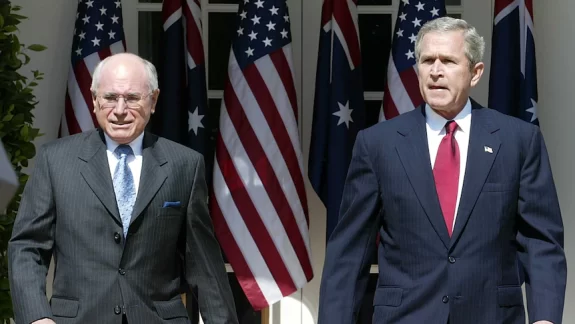
Cabinet, won over with no evident demurral, and previously buttered up by oral reports, approved the measure to commit Australia to another failed military mission of murderous, bungling incompetence. The United States would receive no resistance in getting its pound of Australian flesh for an illegal enterprise, and the Australian public, many of whom had participated in some of the largest anti-war demonstrations the country had ever seen, would be ignored.
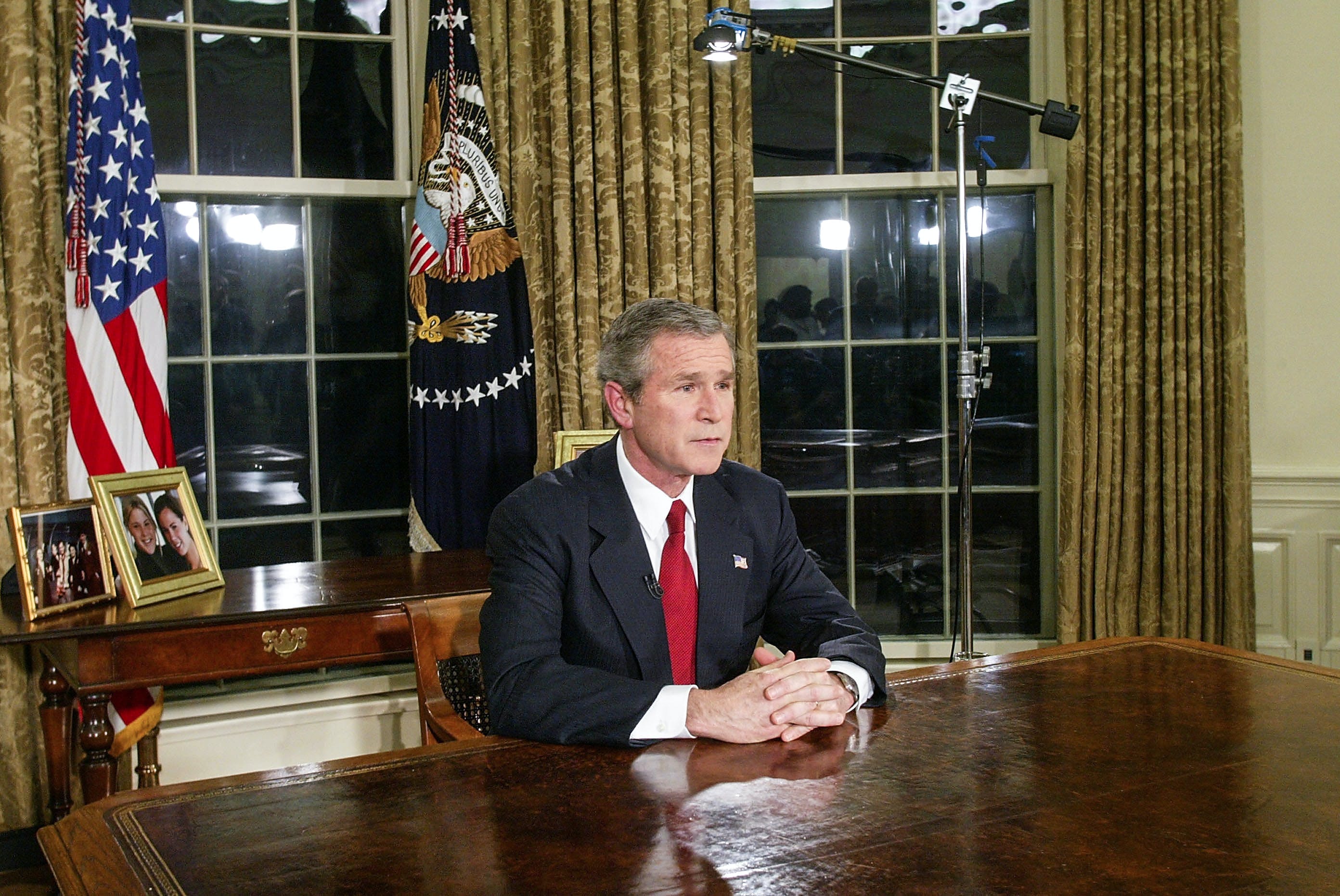
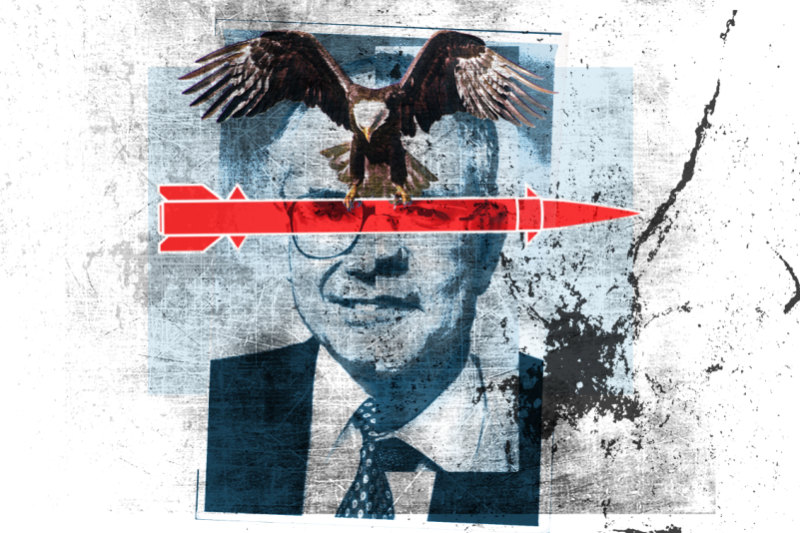
It was a powerful piece of disinformation that became so deeply embedded in the American consciousness that it was nearly impossible to dislodge.
Source: George W. Bush’s Iraq Lies Served as a Blueprint for Trump
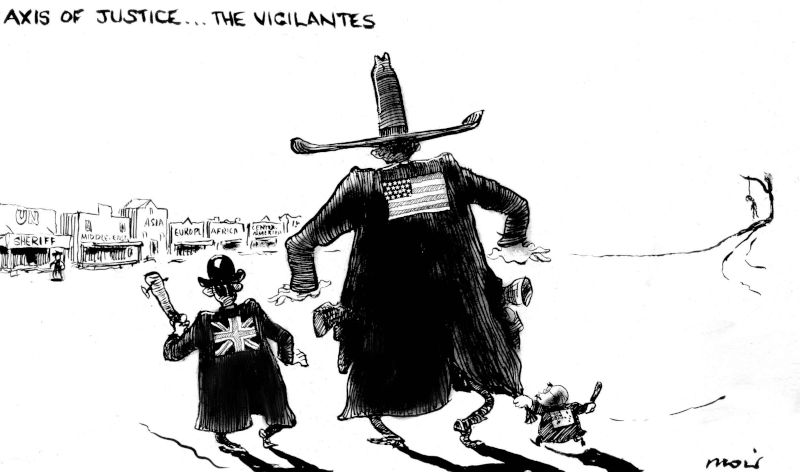
20 years ago, on 20 March 2003, the US, the UK, Australia and Poland invaded Iraq in an illegal act of aggression. As with all wars, we were told this one would be quick. The pretext for the invasion was – despite authoritative doubts raised at the time – claims about the Iraqi leader Saddam Hussein having weapons of mass destruction. There were no such weapons in Iraq, although plenty of them in two of the invading nations. After on-again off-again ADF deployments, the last Australian troops finally left the country in June 2020.
Source: Twenty years on, ‘coalition of the willing’ rebranded – Pearls and Irritations
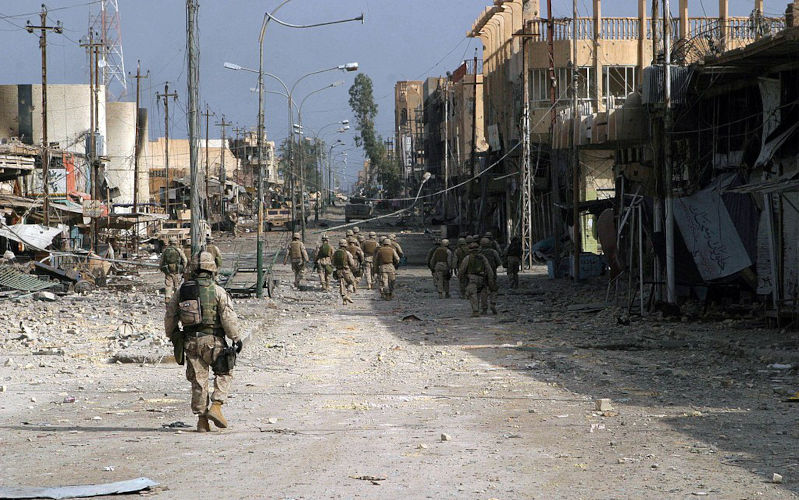
The late Jim Molan will be remembered for many things. Few will remember him for the widespread violence by Coalition troops under Molan’s command during the brutal assault on Fallujah and other Sunni cities during the illegal occupation of Iraq in late 2004.
Source: The Iraq war, Fallujah and Jim Molan – Pearls and Irritations

History forgotten, Losers in past conflict, Vietnam, Aghanistan, Iraq, Syria,
How do we explain that half the Australian community thinks we should go to war with China? After twenty years of conflict in the Middle East, will our addiction to war and our insouciance about its consequences finally catch up with us in an American war over Taiwan?
Source: Australia is addicted to fighting other people’s wars – Pearls and Irritations
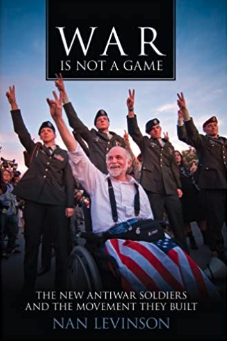
The significance of Ukraine’s struggle certainly doesn’t lie in educating Americans, but perhaps it is finally making us reckon with the costs of war, as we’ve needed to do for so long. As the blood and dread and filth of war are made vivid to Americans through relentless reporting and imagery, is it possible that we will become at least somewhat more mindful of going to war? Might it even lead us — and yes, I know it’s unlikely — to reexamine this country’s militarism in this century and its role in other wars in places we’ve done our best never to see from the inside?
Source: Our Compassion for Ukrainian Victims of War was not on Offer to Iraqis or Afghans when We Invaded
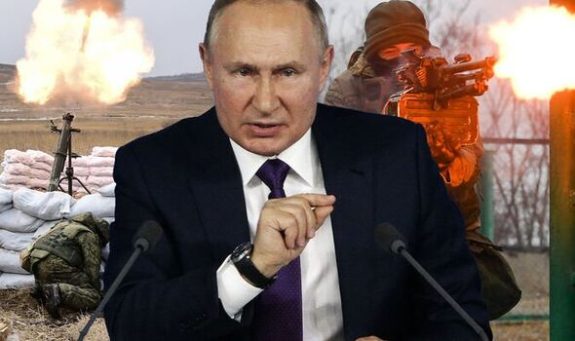
John Howard, Tony Blair and George Bush do have a lot to answer for and Putin has brought that into relief. Bullshit is bullshit and they were all a parties to it when they invaded Iraq “to save us”.
It might well be said that the US-led Iraq invasion in 2003 was a product of its own mental disease, the product of ideological and evangelical madness, accompanied by a conviction that states could be forcibly pacified into a state of democracy. Where there was no evidence of links between Baghdad and al-Qaeda operatives responsible for the attacks on the United States on September 11, 2001, it was simply made up.
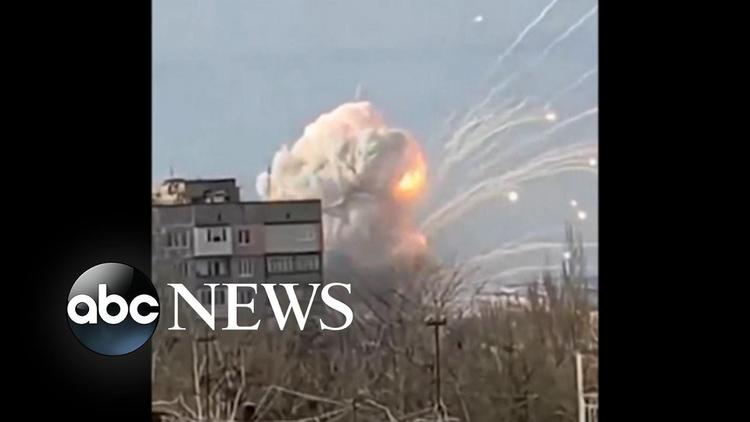
Remember Bush Blair and Howard and the “Weapons of Mass Destruction” Putin figures he’s justified do the same in the Ukraine and not be charged with war crimes. He’s not invading Finland a Democracy that’s promised not to be a part of NATO. He can turn to history and America’s Monroe Doctrine Cuba and a number of countries whose governments they have tried to change or made fall over the years simply because they were seen as a danger to American interests. Cuba stands out with the Russian missile crisis only 90 kms off their coast. They have been punishing Cuba ever since. Nothin is ever simple. Zelensky is prepared to negotiate.
Bush’s willful act of aggression, his invasion and eight-and-a-half-year military occupation of Iraq, has deeply hindered effective policy-making by the U.S. regarding Russia’s attack on Ukraine. Here are some of the ways it matters:
Source: How Bush’s Iraq Fiasco ruined US Credibility and Enabled Putin’s Invasion of Ukraine
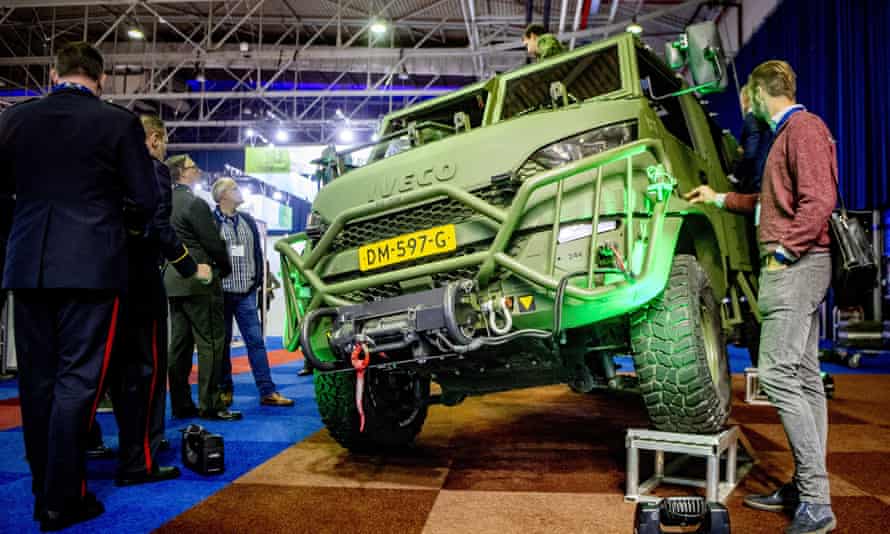
Private military contractors outnumbered US troops on the ground during most of both conflicts. And defense industry stocks soared
While Washington bickers about what, if anything, has been achieved after 20 years and nearly $5tn spent on “forever wars”, there is one clear winner: the US defense industry.
Source: Where did the $5tn spent on Afghanistan and Iraq go? Here’s where | Linda J Bilmes | The Guardian
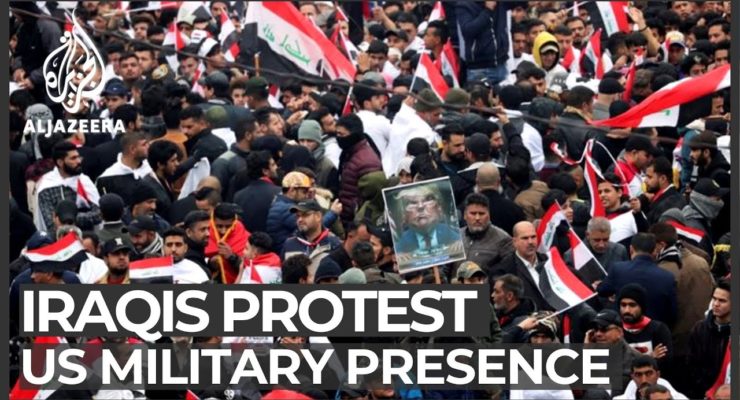
Trump the Hero of the Middle East (ODT)
via Tens of Thousands of Iraqis mass in Baghdad to Demand Expulsion of US Troops, Hang Trump in Effigy
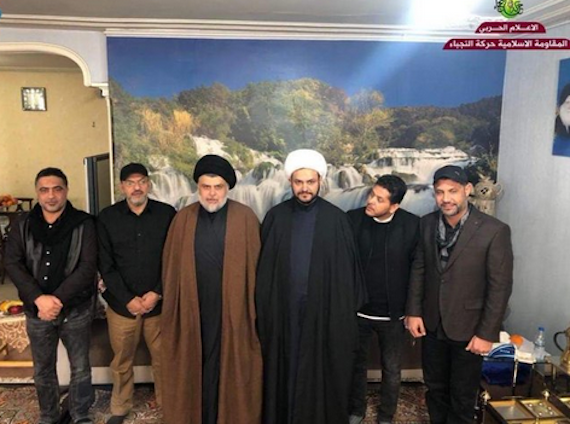
March against Trump in Iraq we have seen nothing yet. Will Trump become the ISIS ally he really is? (ODT)
Whatever happened to Iraq? Is it not an independent country with a democratic government thanks to the 2003 US invasion? So says Washington.
The murder of senior Iranian military commander Qassem Soleimani suddenly shone a strobe light on ‘independent’ Iraq, and what we saw was not pretty.
Welcome to the new Imperialism 101.
Trump is a know-nothing President simply following plans laid down since the 80s after the 6 day war. No country in the Middle East was allowed to establish an Army let alone a number of Arabic and Muslim States and so the demise of Libya, Iraq Syria and Iran were laid out years ago by Israel and the US acting as it’s proxy their reward oil and global dominance. The greatest threat to that plan today is Renewable and clean energy. (ODT)
And there is no end in sight with Donald Trump now tweeting furiously that if the Iranian government seeks to retaliate for Soleimani the U.S. will strike 52 targets inside Iran, including cultural sites, a war crime. Congress will do nothing to stop the carnage because it is just as completely controlled by the Israel Lobby as is the White House.
The blood of the Americans, Iranians and Iraqis who will die in the next few weeks is clearly on Donald Trump’s hands as this war was never inevitable and serves no U.S. national interest. It will surely turn out to be a debacle, as well as devastating for all parties involved. And it might well, on top of Afghanistan, Iraq, Syria and Libya, be the long-awaited beginning of the end of America’s imperial ambitions. Trump has had three years to learn the lesson gleaned from Iraq and Afghanistan. He obviously used that time to learn nothing.
via Killing Inside Iraq to Punish Iran, by Philip Giraldi – The Unz Review
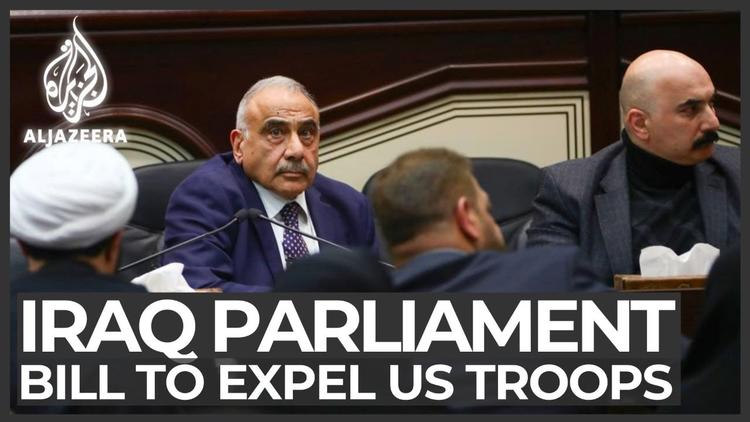
Axios reports that US State Department initially attempted to stop the parliamentary vote from taking place (presumably by pressuring its Iraqi political allies). That press failed miserably, given the angry mood of the country after the US attack on an Iraqi military officer. After the resolution passed, State pleaded with the Iraqi parliament to rethink its decision, but somehow I don’t think that is going to happen.
Trump went ballistic on hearing the news and threatened to impose “sanctions like you’ve never seen” on Iraq if it does kick out US troops. He also demanded repayment for the costs of constructing the al-Balad Air Force Base. The US invaded Iraq illegally in 2003 and essentially stole its oil income for years to pay for its military occupation of the country.
It is highly unlikely that the world would cooperate with Trump sanctions on Iraq over this issue, and unlikely that the 4.6 million barrels a day produced by Iraq could or would be made up, so that any Trump sanctions would send petroleum prices skyrocketing. This development would be good for the health of the planet, since people would likely buy electric cars in that case.
Some Iraqi militia leaders suggested that US military training could be replaced with Russian or Chinese such help.
via Iraqi Parliament Resolves to Kick Out US Troops, and Trump Threatens Mother of All Sanctions
Australia, a juniour partner in the Coalition of the Killing, wants senior status it seems. While Trump has declared he’s putting the fight against ISIS on hold in order to deal with IRAN Theresa Payne wants to take over that war on Daesh. Remember when Trump declared that war was won. He relocated troops in Syria to grab the oil and betrayed the Kurds in the process. Now the USA are mercenary force for Exxon It’s always been questioned why we are in Iraq? Why John Howard joined the illegal invasion of a Sovereign State that doesn’t want us there? Now we are ready to partake in yet another escallated war with Iran who signed a peace treaty before Trump came on the scene. A treaty we are now supporting the total shredding of. Payne is proof we are Puppets lapdogs to American politics for profit and its grab for Middle Eastern oil which when said and done we will buy from the US at their price.
More to the point the LNP ready to see the escalation of violence and another unwinnable war offering up Australian lives as we have done time again since WW2. What we are doing is boosting Trump’s desperate efforts in domestic American politics. (ODT)
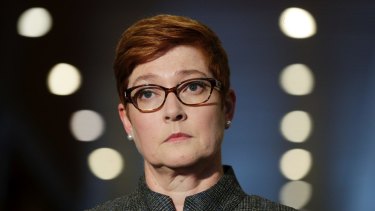
Foreign Minister Marise Payne will on Tuesday publicly plead for the Iraqi government to let Australian and international partners remain in the country.
“We urge the Iraqi government to ensure the coalition is able to continue its vital work with Iraq’s security forces in countering the shared threat of Daesh,” she said.
“We understand the resolution passed by Iraq’s parliament is non-binding, absent formal approval by the government in Baghdad.”
Militiamen Breach U.S. Embassy In Baghdad; Trump Blames Iran
The developments represent a major downturn in Iraq-U.S. relations that could further undermine U.S. influence in the region.
via Militiamen Breach U.S. Embassy In Baghdad; Trump Blames Iran | HuffPost
Here’s a word of advice to Prime Minister Scott Morrison. Unless he wants to risk a smudge on his reputation of the sort that accompanies John Howard to this day: don’t get involved in conflict with Iran beyond limited naval engagement in a Gulf peace-keeping role.
via Acting on Iran has painful shades of joining the US in Iraq
What the world new but governments denied it was about oil (ODT)
April 24 marks the 15th anniversary of my initial entry into Baghdad as the senior oil advisor to retired Lieutenant General Jay Garner, our US government civilian leader in Iraq. It was the beginning of my six plus years in Iraq working on the oil sector and denying the allegation that the Iraq war had an oil agenda. I can no longer refute such an allegation.
Was there an oil agenda for the Iraq war? If you had asked me that question four years ago, I would have said no, absolutely not. And, I said no on national television in 2014.
via Iraqi Oil for Israel? 15 Years later, new Light on the Iraq War
Sjursen says U.S. foreign policy “has been unmoored and drifting away from anything close to sober strategy for coming up on 17 years now. I think the post-9/11 wars have been an absolute tragedy, and probably the greatest foreign policy disaster since the Vietnam War. … I truly believe we are less safe because of American foreign policy and American militarism in the world since 9/11.”
via Maj. Danny Sjursen: U.S. Foreign Policy Doesn’t Make Us Safe (Audio)
The implicit assumption was that the very serious allegations could not be true because the accused had belonged to the ADF. This is as logical as stating that another of our hallowed institutions, the church, could never give rise to people who abuse positions of power.
via Jim Molan, Address The Allegations About Your Time In Iraq – New Matilda
 Coalition says it struck area in west Mosul where officials say scores of civilians were killed by aerial bombardment.
Source: Coalition says it hit Mosul site where civilians died | News | Al Jazeera

Residents of the Iraqi city of Mosul said up to 30 civilians were killed in an air strike on a district held by Islamic State this week.
Source: Air raid targeting IS militant kills up to 30 civilians in Iraq’s Mosul, residents
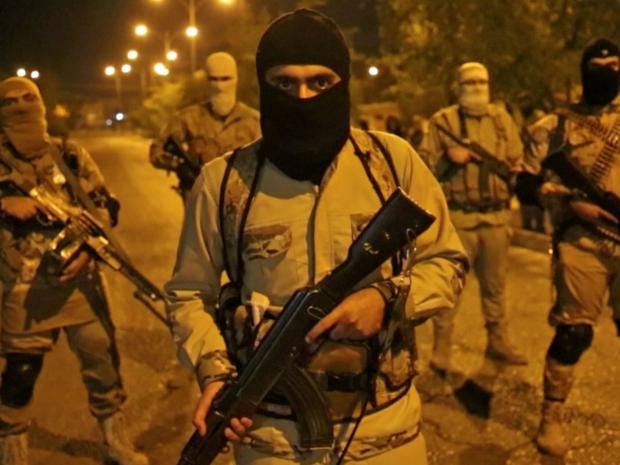
“They are afraid of a lot of things now. They are afraid of the bombing, they are afraid of the attack that’s coming and they are also really afraid of the foreign spies who are among them”. This was Rashid’s description of what was going on inside Isis. And the Western intelligence agency that has infiltrated Isis the most, claimed the Belgian jihadi, was the British.
Source: Inside Isis: how UK spies infiltrated terrorist leadership | The Independent

TeleSur | – – The United Nations said it was “deeply concerned” about reports the groups are using children on …
Source: ‘Unacceptable’ UN says US-Backed Iraqi Militias Recruiting Children

The screaming headline on the front of today’s edition of The Sun added to the shredding of Tony Blair’s reputation. “Weapons of Mass Deception,” it blared. That was bit rich, considering the role of The Sun and the rest of the global media empire owned by Rupert Murdoch in the run-up to the Iraq war.

A haggard-looking Tony Blair spent two hours struggling to rescue his reputation from the ruins of Iraq. In his protracted press conference, the former Prime Minister expressed sorrow for the British soldiers killed or maimed after the invasion of March 2003 and offered an apology – but insisted that the world was a better place for the removal of the Iraqi dictator, Saddam Hussein, and the Chilcot report proved he had acted in good faith.


The bitter rivalry between Saudi Arabia and Iran can be seen played out across the Middle East, from the rise of Islamic State to the assault against the Houthis in Yemen. Amin Saikal writes about what this means for the US as it attempts to find a coherent policy.
The Middle East continues to be a zone of frenemies. The latest development is the collective military assault by the Kingdom of Saudi Arabia and a number of its Arab allies against the Houthis as an allegedly Iranian-backed terrorist group in Yemen.
This comes hot on the heels of these countries’ refusal to assist the US-led air campaign with ground forces against ‘Islamic State’ (IS) in Iraq.
Why against the Houthis, but not IS?
The answer lies in the Saudi-Iranian geopolitical driven sectarian rivalries, and America’s attempts to maintain its de facto alliance with Saudi Arabia and its Arab allies, negotiate a nuclear agreement with Iran, and fight IS with as much regional support as possible.
The Houthis are followers of Shi’a Islam and claim representation on behalf of 45 per cent of the Yemeni population. As such, they have a sectarian affiliation with the Islamic Republic of Iran.
Tehran has been accused of materially supporting the Houthis rebellion, which since last September has taken over the capital Sana. The Houthis have successfully fought the Saudi-backed government of president Abd Rabbuh Mansour Hadi, who has fled the capital, as well as the Sunni Al Qaeda in the Arabian Peninsula (AQAP). The Saudis and their partners in the Gulf Cooperation Council (GCC) and Egypt want to get rid of the Houthis and reinstall Hadi’s leadership. The Iranian supreme leader, Ayatollah Ali Khamenei, has condemned the Saudi-led assault as a “genocide” and called for its end. However, the United States has backed the Saudi-led military campaign to Tehran’s annoyance.
In contrast, Saudi Arabia and its allies have only made a symbolic contribution to the US-led Western air campaign against IS. Yet, clearly what could help this campaign to roll back IS is a regional ground force to assist the Iraqi military.
Two reasons account for why this has not occurred. First, IS is an extremist Sunni, anti-Shia entity, whose ideology is rooted in the Saudi brand of Wahabi/Salafi Islam. IS, which established itself over large swathes of Iraqi and Syrian territories last June, was initially a beneficiary of funds coming from Saudi Arabia and some of its oil-rich GCC partners. These countries were motivated by the consideration that Iran had gained too much influence in Iraq, which had traditionally been identified with the Arab world, and Syria, where Iranian aid has sustained Bashar al-Assad’s government as Iran’s only Arab strategic partner, and Lebanon, in which the Iranian-backed Hezbollah has reigned supreme in support of Iran’s wider regional interests.
This means that whilst Saudi Arabia and its allies would like to see IS contained, they do not find it in their strategic interests to see it eliminated as an anti-Iranian and anti-Syrian government force. The second reason is that the Iraqi government is dominated by the Shi’as, who form a majority of the Iraqi population, and cannot afford to offend Tehran by being receptive to an Arab force to fight IS on its soil.
Paradoxically, whilst opposed to IS and helping the Iraqi and Kurdish forces, as well as cooperating informally with the US and its Western allies in combating IS, Tehran shares the Arab countries’ step-back approach to IS, although for different reasons.
Iran views IS as an extension of Saudi Salafism, and does not mind to see its continuation in a symbolic form for a while to discredit the Saudi brand of Islam and thus counter the Saudi opposition to Iran. Meanwhile, to shore up its domestic and regional position, the Iranian regime, with moderate/reformist Hassan Rouhani in the presidency, wants a breakthrough in its long-standing hostilities with the United States.
In response, US president Barack Obama has found diplomacy as the best means to settle the dispute over Iran’s nuclear program and to come to terms with Tehran. Yet, like the Iranian leadership, Obama faces his internal and regional detractors, who do not view a possible normalisation of US-Iranian relations to be in their strategic interests. Israel has campaigned viciously against it, and Saudi Arabia and its regional allies have voiced serious apprehension about it. For Obama to overcome this opposition, he has engaged in a regional balancing act. He has supported the Saudi-led military action against the Houthis and has blamed Iran for Yemen’s woes (although Yemen’s strife stems largely from internal factors) and assured Israel of America’s unwavering commitment to it.
What may emerge from all this is unpredictable. But one thing is sure. Irrespective of whether or not there will be a US-Iranian rapprochement, the Saudi-Iranian rivalry may continue to be a main cause of regional volatility, unless the two sides agree to a summit to settle their differences peacefully through dialogue and understanding.
As for the United States, it presently lacks a clear and coherent policy in dealing with a region riven by contradictions and paradoxes. It appears to be shuttling between various forces to find a niche of determining influence in the region. However, if there is a major improvement in its relations with Iran, that could help it to play a meaningful role in resolving some of the regional issues, ranging from Iraqi to Yemeni conflicts, that at least partly underpin the Saudi-Iranian rivalry.
Amin Saikal is Distinguished Professor of Political Science, public policy fellow and director of the Centre for Arab and Islamic Studies (the Middle East and Central Asia) at the Australian National University, and author of Iran at the Crossroads (Cambridge: Polity Press, 2015, forthcoming).

AUSTRALIAN special forces soldiers are reportedly in line to step up in the fight against Islamic State militants in Iraq.
Currently a contingent of 200 are in the country advising and assisting local forces.
But following talks between Tony Abbott and his Iraqi counterpart Haider al-Abadi, they could be further involved in military exercises, according to The Australian.
EARLIER: PM Tony Abbott visits Iraq
The paper reports the Prime Minister used his visit to Baghdad last week to overcome barriers in getting the group put to more effective use.
Confidential briefings also canvassed deploying the special forces beyond Baghdad to be closer to the frontline.

Visit … Tony Abbott shakes the hand of a FA18 Super Hornet Pilot who had just returned from a combat mission over Iraq last week. Picture: Gary Ramage/News Corp. Source: News Corp Australia
Tony Abbott this morning admitted he wanted Australian forces in Iraq to be as “vigorous” as they can be.
“Our focus is on making sure our existing commitment is as effective as possible,” he told 3AW.
“We’re there to help counter this threat, not just to the people of Iraq but to the people of Australia.
“We’re there effectively to defend Australia and obviously I want out troops to be as vigorous as possible.”
The Prime Minister said Australian forces in Baghdad, and those conducting air strikes, are making a “substantial contribution” already, but he is open to further talks.
“We can’t substitute for the actions of the Iraqi’s themselves, we can’t be keener to defend Iraq than its own people, but nevertheless we are there to do everything we reasonably can in conjunction with the Iraqis to defeat this death cult.
“Let’s see how this mission evolves over time, but what we are not going to do is participate in independent combat operations,” he stressed.
Getting Australian special forces into Iraq took months — with the group stuck in the Middle East awaiting the securement of a formal agreement with the country.
Mr Abbott has always said the troops wouldn’t be involved in combat operations.
But he has previously admitted they would be armed and could fight back if they needed to defend themselves.
While in the Middle East last week, the Prime Minister flagged a further involvement for Australia in Iraq.
“I certainly don’t rule out doing what we reasonably can to make the world a safer place, because our military forces here in the Middle East are protecting our interests at home as much as they’re protecting our interests and our values abroad,” he said.

|
Iraq’s Sunnis want a bigger role in the battle against ISIL [Al Jazeera]
|
|||||
|
Fighters from the Shi’ite Kata’ib Imam Ali (Imam Ali Brigades) militia search a house after taking control of a village from Islamist State militants, on the outskirts of Dhuluiya, north of Baghdad December 29, 2014.
(Reuters) – Behind black gates and high walls, Iraqi national security agents watch 200 women and children.
Boys and girls play in the yard and then dart inside their trailers, located in a former U.S. military camp and onetime headquarters for Saddam Hussein’s officials in Babel province’s capital Hilla.
The women and children are unwilling guests, rounded up as they fled with their male relatives in October from Jurf al-Sakhr, a bastion of Islamic State, during a Shi’ite militia and military operation to clear the farming community.
Once they were arrested, security forces separated out the men, accusing them of being Islamic State fighters. They have not been heard from since.
Security forces say the women and children are being investigated, but have not been brought to court.
Their status shows how central Iraq’s mixed Shi’ite and Sunni regions are being altered.
As Shi’ite forces push into territories held by Islamic State, many Sunnis have fled for fear of both the Shi’ite-led government and the Sunni jihadists.
Shi’ite leaders insist Islamic State must never be allowed to strike them again, nor return to areas now abandoned.
Shi’ite groups now decide who can stay in a community and who should leave; whose houses should be destroyed and whose can stand.
In one case, a powerful Shi’ite paramilitary organization has started redrawing the geography of central Iraq, building a road between Shi’ite parts of Diyala province and Samarra, a Sunni city that is home to a Shi’ite shrine.
“The ideas of what Shi’itestan’s limits are is changing,” said Ali Allawi a historian and former Iraqi minister.
“Some of these towns and villages, which were neutral or partial to ISIS, have been retaken. I don’t think the people living there will go back. We are talking about depopulated areas that may be resettled by different groups.”
More than 130,000 people, mostly Sunnis, fled central Iraq in 2014, counting just Baghdad’s agricultural belt and northeastern Diyala province, the International Rescue Committee told Reuters.
The exodus has left villages empty as Shi’ite paramilitaries, tribes and security forces fill the void.
Iraqi government officials including Prime Minister Haider Abadi stress the importance of helping people return home.
But in the current chaos it is questionable whether officials can help, or that the displaced will want to return.
“I AM TRAPPED”
Already dramatic changes are happening on the ground. For the 200 women and children from Jurf al-Sakhr, it has meant an undefined period of detention.
When they ran from their homes in October raising white surrender flags, security forces and militias separated the women from their male relatives.
Now the women, jailed in Hilla, worry about their fate.
“I’m trapped here living on charity without understanding why all this happened to us”, said Um Mohamed, sobbing during a visit Reuters made to the heavily secured compound last week.
“All that I wish is to have my husband back and to return to our small farm.”
Security officials say the women and children have not been brought before a court, and will not be freed soon.
“These families were joining or harboring Islamic State,” said Falah al-Rahdi, head of the Babel provincial council’s security committee. “The judicial system will decide their fate.”
Privately, officials in Babel province vow never to welcome back its Sunni residents.
CONFISCATE LAND
As Shi’ite militia leaders and tribal allies surround Sunni villages in central Iraq, they insist they have strong intelligence from inside those communities.
“Our orders come from the government: whoever is with Islamic State, we will confiscate their land. Those who aren’t Islamic State will be allowed back,” a national commander from Asaib Ahl al-Haq told Reuters.
He said he contacted sources in Islamic State-held areas and waited until all civilians had escaped before liberating a community.
However, those who have lost their homes say the militias make little distinction between jihadists and civilians when they storm areas.
Akram Shahab, 32, a Shi’ite in Diyala’s Saadiya district, fled with his family last June when Islamic State were about to overrun the town.
He heard from a Sunni neighbor that a jihadist family had moved in. For Shahab it was a relief his house was not blown up.
But after Iraqi militias and security forces kicked Islamic State out of Saadiya in November, Shahab was stunned to learn that the militias had burned his house assuming it was a terrorist’s.
The next day, Shahab went with Shi’ite militiamen to inspect the ruins.
“I blamed the militia members at the scene for burning my house and they defended themselves, saying how could they tell a Sunni house from a Shi’ite house.”
Shahab, who comes from a family with both Shi’ite and Sunni relatives, said he managed to save his Sunni aunt’s house by telling the militia she belonged to their sect.
“They spray-painted (Shi’ite) on the gate to alert the other militia groups,” he said.
“They told me,‘We need to clean your town from those germs who supported Islamic State. You might have lost your house but as a Shi’ite you will live with your head high from now on’.”
SCENIC HIGHWAY
Not only are homes being demolished, but new infrastructure is being built.
A Shi’ite paramilitary organization is constructing a road to strengthen its positions across the mixed areas of Diyala and neighboring Salahuddin province.
The Badr Organization, a leading political party and militia with ties to Iran, is supervising the new road, which leads to Samarra.
It means Badr can resupply troops guarding Samarra, currently surrounded by Islamic State.
The 35 km road will also allow Shi’ite pilgrims from Iran to visit Samarra, one of Shi’ite Islam’s most sacred shrines.
On a recent day, in olive green sweater and commander’s cap, Badr Organization chief Hadi al-Amri toured the 35 km road.
Arguably the most popular Shi’ite politician in Iraq for defending Diyala, Amri placed orange work cones on the ground and directed bulldozers.
“The road is of strategic importance to finish off Islamic State in the outskirts of Diyala and to put pressure on them in Salahuddin,” said Badr lawmaker Mohammed Naji.
“Hadi Amri suggested this road and he supervises it daily in spite of the dangers.”
Senior Iraqi politicians say Amri is the commander closest to Iran on the battlefield.
Amri’s new project — the Samarra road — passes through one trouble spot: an area called Hawi, which Badr considers to be filled with Islamic State cells.
“We have started neutralizing the villages, putting guards on the road,” Naji said. “We have not displaced the people there. We put forces there to make sure Islamic State cannot enter the villages.”

A Saudi blogger who was sentenced last May to 10 years in prison and 1,000 lashes will be publicly flogged for the first time after Friday prayers outside a mosque in the Red Sea coastal city of Jeddah, according to a person close to his case.
Raif Badawi was sentenced on charges related to accusations that he insulted Islam on a liberal online forum he had created. He was also ordered by the Jeddah criminal court to pay a fine of 1m Saudi riyals, or about $266,000.
Rights groups and activists say his case is part of a wider clampdown on dissent throughout the kingdom. Officials have increasingly blunted calls for reforms since the region’s 2011 Arab Spring upheaval.
Badawi has been held since mid-2012, and his Free Saudi Liberals website is now closed. The case has drawn condemnation from rights groups.
He called from prison and informed his family of the flogging, due Friday, said a person close to the case. The person, who spoke to the Associated Press on condition of anonymity for fear of government reprisal, said Badawi was “being used as an example for others to see”.
Badawi’s lawyer Waleed Abul-Khair was sentenced in July to 15 years imprisonment and barred from travelling for another 15 years after being found guilty by an anti-terrorism court of “undermining the regime and officials”, “inciting public opinion” and “insulting the judiciary”.
Amnesty International has said that Badawi is to receive 50 lashes once a week for 20 weeks.
“It is horrifying to think that such a vicious and cruel punishment should be imposed on someone who is guilty of nothing more than daring to create a public forum for discussion and peacefully exercising the right to freedom of expression,” said Philip Luther, Amnesty’s Middle East and north Africa director.
Badawi was originally sentenced in 2013 to seven years in prison and 600 lashes in relation to the charges, but after an appeal, the judge stiffened the punishment. Following his arrest, his wife and children left the kingdom for Canada.

Max Ehrenfreund points to an interesting tidbit this morning. A pair of researchers have released a working paper that attempts to figure out if watching Fox News makes you more conservative. They do this by exploiting the fact that channel numbers on cable systems are placed fairly randomly throughout the country, and people tend to watch channels with lower numbers. Thus, in areas where Fox has a low channel number, it gets watched a little bit more in a way that has nothing to do with whether the local viewers were more conservative in the first place.
So does randomly surfing over to Fox News tend to make you more right-wing? Yes indeed! “We estimate that Fox News increases the likelihood of voting Republican by 0.9 points among viewers induced into watching four additional minutes per week by differential channel positions.” And this in turn means that we owe the Iraq War to Fox News: “We estimate that removing Fox News from cable television during the 2000 election cycle would have reduced the average county’s Republican vote share by 1.6 percentage points.”
And what about MSNBC? It had no effect until the 2008 election, after it had made the switch to liberal prime-time programming. At that point, it becomes pretty similar to Fox in the opposite direction. But the effect is subtly different:
The largest elasticity magnitudes are on individuals from the opposite ideology of the channel, with Fox generally better at influencing Democrats than MSNBC is at influencing Republicans. This last feature is consistent with the regression result that the IV effect of Fox is greater than the corresponding effect for MSNBC.
….Table 16 shows the estimated persuasion rates of the channels at converting votes from one party to the other. The numerator here is the number of, for example, Fox News viewers who are initially Democrats but by the end of an election cycle change to supporting the Republican party. The denominator is the number of Fox News viewers who are initially Democrats. Again, Fox is more effective at converting viewers than is MSNBC.
The difference in persuasion rates is significant: the study finds that in the 2008 election, a full 50 percent of Fox’s left-of-center viewers switched to supporting Republicans. For MSNBC, the number of switchers was only 30 percent. That’s a big difference.
Now, in real-world terms this is still a smallish effect since neither channel has a lot of regular viewers from the opposite ends of their ideological spectrums in the first place. Still, this is interesting. I’ve always believed that conservatives in general, and Fox in particular, are better persuaders than liberals, and this study seems to confirm that. But why? Is Fox’s conservatism simply more consistent throughout the day, thus making it more effective? Is there something about the particular way Fox pushes hot buttons that makes it more effective at persuading folks near the center? Or is Fox just average, and MSNBC is unusually poor at persuading people? I can easily believe, for example, that Rachel Maddow’s snark-based approach persuades very few conservative leaners to switch sides.
Anyway, fascinating stuff, even if none of it comes as a big surprise. Fox really has had a big effect on Republican fortunes over the past two decades.

Prime Minister Tony Abbott has blasted in his strongest terms yet the US management of Iraq following the 2003 invasion, branding it a period of “chaos and confusion”.
During a visit to Baghdad on Sunday, Mr Abbott hinted he could bolster Australian troop numbers in the war-torn country. It came as Fairfax Media learnt that Australian special forces soldiers in Iraq have begun operating “outside the wire” by accompanying local troops beyond Baghdad.
Mr Abbott met with his Iraqi counterpart and discussed what further help Australia could give the government beyond the current commitment, which includes 200 special forces advisers and RAAF airstrikes, for the fight against the brutal Islamic State group.
He used conspicuously strong language to slam the post-2003 handling of Iraq led by the US administration of George Bush and Dick Cheney, and strongly supported by former Prime Minister John Howard, who is Mr Abbott’s political mentor.
“Iraq is a country which has suffered a very great deal,” Mr Abbott said. “First, decades of tyranny under Saddam Hussein. Then, the chaos and confusion that followed the American-led invasion. Most recently, the tumult, the dark age, which has descended upon northern Iraq as a result of the Da’esh death cult. But Australia will do what we can to help.”
The deliberately chosen words about the post-invasion period reflect Mr Abbott’s efforts to distinguish what is now widely seen as a debacle in the aftermath of 2003 from the current more cautious approach, steering Australians away from any impression the West is being drawn back into a quagmire.
Most experts agree Washington made major missteps in the aftermath of the invasion, including by dissolving the ruling Baath Party and the military, and by underestimating the troop levels needed to stabilise security.
Foreshadowing a further possible commitment, Mr Abbott vowed to do more to help the Iraqis beat back the extremist scourge, which has seen nearly a third of the country fall under Islamic State control.
“We are determined to deepen our co-operation with the government and the people of Iraq in the weeks and months to come, not because we are a country which goes forward seeking foreign fights, but because where our vital national interests are threatened, where universal values are at stake, Australia should be a strong partner,” Mr Abbott said.
Iraqi Prime Minister Haider al-Abadi said after the meeting that he had asked Mr Abbott “to increase armament and speed up training to end the battle and eliminate Da’esh”, using the Arabic term for the extremist Islamic State organisation.
Fairfax Media understands that some of the 200 special forces troops who arrived in Baghdad in November to “advise and assist” the Iraqis have begun moving outside the capital.
Defence has said in the past their role will include operating at the level of battalion headquarters, which could put them well out on the battlefield, clearly raising the risk they face.
And while they are able to defend themselves, the government has ruled out any offensive combat role for Australians.
Defence has already drawn up contingency plans for Australia to provide further forces for a longer-term training role in Iraq, estimated at between 200 and 400 additional personnel.
Fairfax Media understands however that such a further deployment has not been discussed at recent meetings of the National Security Committee of Cabinet and is not imminent.
Mr Abbott, who was accompanied on his visit by new Defence Minister Kevin Andrews and Chief of the Defence Force Mark Binskin, also announced a $5 million aid boost to Iraq through the World Food Program, bringing to $22 million Australia’s humanitarian assistance to the country since June.
This came despite the government’s deep cuts to foreign aid, most recently in the mid-year budget update in December

Howard ignored official advice on Iraq’s weapons and chose war
by Margaret Swieringa>>> Former prime minister John Howard’s justification on why we went to war against Iraq in 2003 obfuscates some issues. I was the secretary to the federal parliamentary intelligence committee from 2002 until 2007. It was then called the ASIO, ASIS and Defence Signals Directorate committee – which drafted the report Intelligence on Iraq’s Weapons of Mass Destruction. Howard refers to this committee in his speech justifying our involvement in the war.
The reason there was so much argument about the existence of such weapons before the war in Iraq 10 years ago was that to go to war on any other pretext would have been a breach of international law. As Howard said at the time: ”I couldn’t justify on its own a military invasion of Iraq to change the regime. I’ve never advocated that. Central to the threat is Iraq’s possession of chemical and biological weapons and its pursuit of nuclear capability.”
So the question is what the government knew or was told about that capability and whether the government ”lied” about the danger that Iraq posed. At the time, Howard and his ministers asserted that the threat to the world from Iraq’s weapons of mass destruction was both great and immediate.
On February 4, 2003, he said Saddam Hussein had an ”arsenal” and a ”stockpile” and the ”illegal importation of proscribed goods ha[s] increased dramatically in the past few years”. ”Iraq had a massive program for developing offensive biological weapons – one of the largest and most advanced in the world.”
On March 18, 2003, foreign minister Alexander Downer told the House of Representatives: ”The strategy of containment [UN sanctions] simply has not worked and now poses an unacceptable risk.”
In his speeches at the time, Howard said: ”Iraq has a usable chemical and biological weapons capability which has included recent production of chemical and biological agents; Iraq continues to work on developing nuclear weapons. All key aspects – research and development, production and weaponisation – of Iraq’s offensive biological weapons program are active and most elements are larger and more advanced than they were before the Gulf War in 1991.”
None of the government’s arguments were supported by the intelligence presented to it by its own agencies. None of these arguments were true.
Howard this week quoted the findings of the parliamentary inquiry, but his quotation is selective to the point of being misleading.
What was the nature of the intelligence on Iraq’s weapons of mass destruction provided to the government? The parliamentary inquiry reported on the intelligence in detail. It gathered information from the Defence Intelligence Organisation and the Office of National Assessment. It said:
1. The scale of threat from Iraq’s weapons of mass destruction was less than it had been a decade earlier.
2. Under sanctions that prevailed at the time, Iraq’s military capability remained limited and the country’s infrastructure was still in decline.
3. The nuclear program was unlikely to be far advanced. Iraq was unlikely to have obtained fissile material.
4. Iraq had no ballistic missiles that could reach the US. Most if not all of the few SCUDS that were hidden away were likely to be in poor condition.
5. There was no known chemical weapons production.
6. There was no specific evidence of resumed biological weapons production.
7. There was no known biological weapons testing or evaluation since 1991.
8. There was no known Iraq offensive research since 1991.
9. Iraq did not have nuclear weapons.
10. There was no evidence that chemical weapon warheads for Al Samoud or other ballistic missiles had been developed.
11. No intelligence had accurately pointed to the location of weapons of mass destruction.
There were minor qualifications to this somewhat emphatic picture.
The committee concluded the ”case made by the government was that Iraq possessed WMD in large quantities and posed a grave and unacceptable threat to the region and the world, particularly as there was a danger that Iraq’s WMD might be passed to terrorist organisations.
”This is not the picture that emerges from an examination of all the assessments provided to the committee by Australia’s two analytical agencies.”
Howard would claim, no doubt, that he took his views from overseas dossiers. But all that intelligence was considered by Australian agencies when forming their views.
They knew, too, of the disputes and arguments within British and US agencies. Moreover, Australian agencies as well as the British and US intelligence agencies also knew the so-called ”surge of new intelligence” after September 2002 relied almost exclusively on one or two unreliable and self-serving individuals.
They knew that Saddam ‘s son-in-law, Hussein Kamel Hassan al-Majid, who had defected in 1995, had told Western agencies the nuclear program in Iraq had failed, chemical and biological programs had been dismantled and weapons destroyed.
There are none so blind as those who will not see.
Margaret Swieringa is a retired public servant.
#howardbushblaircrimes #hate4sale #rememberwom #auspol
The Real News Channel Australian Labor Party The Australian Greens Campaign for an Iraq War Inquiry Bush War Crimes Charge George W. Bush & Dick Cheney With War Crimes War Criminals Watch George w. bush War Criminal George h. w. bush War Criminal Lets indict Tony Blair for War Crimes Tony Blair is a war criminal George Bush And Tony Blair Should Face Trial In The ICC Over Iraq War John Howard War Criminal International War Crimes Tribunal War Crimes Tribunal
| Middle East | |||
Kurdish offensive against ISIL gains momentum |
|||
Peshmerga forces have regained ground in northwestern Iraq, while Kurdish fighters also battle ISIL in Syria.
|
|||


Federal Attorney-General George Brandis says at least 20 Australians have been killed fighting alongside terrorist groups in Syria and Iraq, and warns that the Islamic State group is using Australians on the frontline as “cannon fodder, bombers and propaganda tools”.
Senator Brandis said the number of Australians killed had risen in recent weeks and that Western recruits were being duped into thinking they were an important part of a religious crusade.
Around 70 Australians are still believed to be fighting in the Middle East while another 20 have returned home.
Among those fighting is Sydney man Mohammad Ali Baryalei, who has been accused of masterminding a plot to kill random members of the public in Sydney and Brisbane, and had recruited dozens of Australians to fight with extremist groups in Iraq and Syria.
There were reports that he had been killed in Syria, but Vice Admiral David Johnston last month said the Australian Defence Force believed it was less than likely that he was dead.
The Government recently introduced a raft of legislation aimed at stopping would-be jihadists from travelling to the Middle East.
The Foreign Fighters Bill passed Parliament in October, making it illegal to travel to areas declared as terrorist zones, without a specific humanitarian or family purpose.

Australians found to be illegally visiting the region could face up to 10 years in prison.
Foreign Minister Julie Bishop used provisions under the recently passed Bill to declare it an offence for Australians to visit the Al-Raqqa province in Syria without a legitimate reason.
Ms Bishop said the province was Islamic State’s de facto capital, and said the terrorist organisation directed many of its operations from the banned region.
“I have today declared Al-Raqqa province an area where a listed terrorist organisation is engaging in hostile activity,” Ms Bishop told Question Time last week.
“This now makes it an offence under Australian law to enter or remain in the province of Al-Raqqa without a legitimate reason.”
Graft hobbles Iraq’s army in fighting Islamic State.
These are the guys we are meant to train. We couldn’t do it over a 10 year period what on earth makes us believe we can do it now in such a short time particularly when we are really not wanted.The Iraqi army surrendered 2 years supply of US weapons to Isis and some joined them. This is the organization we are there to train. The Shiia Militia and Sunni tribes wont fight along side the army yet these are the men we are meant to train. We just seem to be fighting like Abbott the boxer punching with our eyes closed.

ISIL have seized most of Anbar province which borders Saudi Arabia, Jordan, Syria and the Baghdad governorate.
The Islamic State in Iraq and Levant (ISIL) has launched a major attack on the Iraqi city of Ramadi, capital of the troubled western province of Anbar, security officials have said, resulting in the killing of at least 20 soldiers.
The assault came as Joe Biden, the US vice-president, arrived in Istanbul on Friday with a view to push Turkey to step up its role in the international coalition’s fight against the ISIL.
Al Jazeera’s Imran Khan, reporting from Baghdad, said pro-government forces had called in reinforcements to push back the offensive on Ramadi that was coming from four sides.
“Ramadi is a crucial city for ISIL as it attempts to consolidate its grip over all of Anbar province,” Khan said.
 |
Sources told Al Jazeera tens of Iraqi soldiers had been abducted near Ramadi while at least 20 Iraqi soldiers and eight ISIL fighters had been killed in the fighting.
“Clashes are ongoing around the city. A series of mortar attacks have targeted areas inside the city, including provincial council buildings and a police post,” a security official told the AFP news agency said.
Adhal al-Fahdawi, a member of the Anbar provincial council, said on Friday that ISIL had managed to capture part of an eastern district called Mudhiq but pro-government forces had stopped their advance and were encircling the fighters there.
“The security forces need support because we have not received any back-up from the army’s air force or the coalition,” Fahdawi said, referring to the US-led air campaign launched in August.
Parts of the restive province, which borders Saudi Arabia, Jordan, Syria and the Baghdad governorate, have been out of government control since January.
ISIL, which also controls large parts of Syria, spearheaded a major offensive in Iraq in June, seizing territory, including much of Anbar.
A fresh spate of attacks in recent weeks has seen the armed group extend their grip over the province, where only a handful of pockets remain under the control of Iraqi security forces backed by Shia armed groups and Sunni tribal fighters.
US-Turkey talks
Biden met the Turkish Prime Minister Ahmet Davutogulu on Friday and will hold talks with the President Recep Tayyip Erdogan on Saturday.
Biden’s visit follows weeks of public bickering between the two NATO allies. The Turkish president insists if the US wants his help, it must focus less on fighting the ISIL and more on toppling Syrian President Bashar Assad. Erdogan wants the US-led coalition to set up a security zone in northern Syria to give moderate fighters a place to recoup and launch attacks.
The obvious compromise would be if Washington shifted its policy on Syria to do more to force out Assad, and Turkey agreed to do more against ISIL, said James Jeffrey, former US ambassador to Turkey and Iraq who is now at the Washington Institute for Near East Policy.





 olddogthoughts
You must be logged in to post a comment.