Month: November 2014

“Ignorance is associated with exaggerated confidence in one’s abilities, whereas experts are unduly tentative about their performance.”

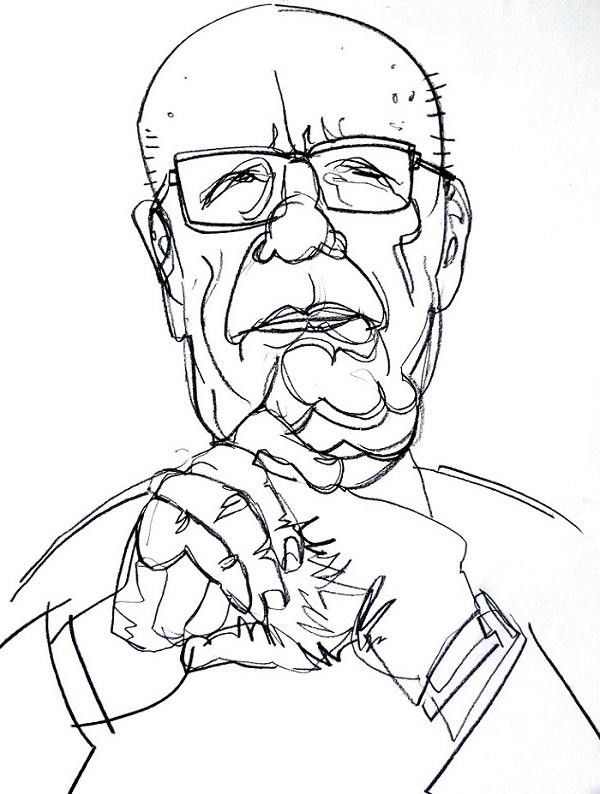
The  Dunning-Kruger effectpublished in 1999.Appliesdirectly to the Andrew Bolt’s of this world when it comes to the denial of Climate change in particular those employed by Fox News and News Corp.

“Ignorance is associated with exaggerated confidence in one’s abilities, whereas experts are unduly tentative about their performance.”
 https://www.youtube.com/watch?feature=player_embedded&v=wvVPdyYeaQU

Confidence and credibility

Unfortunately projected confidence as the most important determinant in judged credibility.

Does this mean that the poorest-performing — and hence most over-confident — expert is believed more than the top performer whose displayed confidence may be a little more tentative?

In contested arenas, such as climate change, the Dunning-Kruger effect and its flow-on consequences can distort public perceptions of the true scientific state of affairs, yes.

To illustrate, there is an overwhelming scientific consensus that greenhouse gas emissions. This consensus is expressed in more than 95% of the scientific literature and it is shared by a similar fraction — 97-98% – of publishing experts in the area.  Research has found that the “relative climate expertise and scientific prominence” of the few dissenting researchers “are substantially below that of the convinced researchers”. In other words Bolt and his denier sources are not only a minority but are below par when it comes to research. Those ‘for’ are counted in the 1000’s whereas those against wouldn’t fill  a small room. What News Corp and Bolt fail to recognize is the false balance they present is actually bias.

recognise (false) balance as (actual) bias?

‘I’m not an expert, but…’

How should actual experts  deal with the problems that arise from Dunning-Kruger, the media’s failure to recognise Bolt’s lack of “balance” as bias, and the fact that the public uses projected confidence  of commentators as a cue for credibility?

1 The pervasive scientific consensus on climate change IPCC report based on 100’s of the top climate scientists  In the same way as there is a consensus that smoking causes cancerThe public has a right to know that there is a scientific consensus on climate change.

2That the public wants scientists to work closely with managers and others to integrate scientific results into management decisions. This opinion appears to be equally shared by all stakeholders, from scientists to managers and interest groups. That decisions aren’t made on Bolt’s notion that “I’m not an expert but think of the economic harm therefore…..”

Advocacy or understanding?

Given the consensus “the only unequivocal tool for minimising climate change uncertainty is to decrease our greenhouse gas emissions”. In the same way that given the consensus on smoking and cancer quitting will minimise the risk of cancer.It is not advocacy.

Both statements are true. Both identify a link between a scientific consensus and a personal or political action.Neither  advocates any specific response or non response.— but both require an informed decision based on the scientific consensus.

Spurious accusations of advocacy which Bolt uses is merely a ploy to marginalise the voices of experts.removing their opinion from public debate. The consequence is that scientific evidence is lost to the public and is lost to the democratic process.Sober policy decisions on climate change cannot be made when politicians claim that they are not scientists while also erroneously claiming that there is no scientific consensus which immediately shows their advocacy and conservative bias.

Climate change denier Jim Inhofe in line for Senate’s top environmental job

Climate skeptic nad Republican Senator Jim Inhofe

Obama faces a fight to protect his climate change agenda after midterm results suggest Senate’s top environmental post will fall to Republican stalwart of climate denial

The Senate’s top environmental job is set to fall to Jim Inhofe, one of the biggest names in US climate denial, but campaigners say Barack Obama will fight to protect his global warming agenda.

Oklahoma Republican Inhofe has been denying the science behind climate change for 20 years – long before it became a cause for the conservative tea party wing. Following midterm elections which saw the Republicans take control of the senate, he is now expected to become the chairman of the senate environment and public works committee.

However, advocates believe Obama will work to protect his signature power plant rules from Republican attacks, and to live up to his earlier commitments to a global deal on fight climate change.

“We think he sees this as a critically important part of his second term legacy and there is no reason why he should not continue to go forward on this… both domestically and around the world,” Gene Karpinski, president of the League of Conservation Voters, told a press briefing.

The campaigners were less clear, however, how far Obama would be willing to fight to block the Keystone XL pipeline project.

Obama will get a chance to show he is still committed to fighting climate change during a trip to Beijing next week, where the US and Chinese are expected to announce new energy co-operation.

Extracting a pledge from China to cut emissions is hugely important now for Obama, who faces growing pressure from Republicans to demonstrate that other countries beyond the US – especially the high-emissions, rising economies – are acting on climate change.

“It is a domestic political imperative for the president to gain emissions reductions from China and other major emitters as much as it is an international policy goal,” said Paul Bledsoe, a climate change official in the Clinton White House.

“The president is under increasing pressure to gain emissions reductions from China and other major emitters in order to justify US domestic mitigation policy. That is going to be the spin Republicans put on it – that we are wasting our time with domestic emissions reductions because they will be swamped by developing countries’ pollution.”

Obama is going to feel that pressure the most from Congress. With his opponents now in control of both houses, the top slot on the Senate’s environment and public works committee passes from a climate defender, the California Democrat, Barbara Boxer, to Inhofe.

He published a book in 2012 calling global warming a hoax, and has compared the Environmental Protection Agency (EPA) to the Gestapo.

A spokeswoman for Inhofe said his first concern was passing the defence budget, and that he would make no comment on his leadership roles until next week.

But if, as expected, Inhofe becomes the new committee chair next January, he will probably try to dismantle the EPA rules cutting greenhouse gas emissions from power plants – the centrepiece of Obama’s environmental agenda.

Industry lobbyists and campaigners said Inhofe lacked the votes to throw out the power plant rules entirely.

Obama would also veto any such move, said Scott Segal, an energy and coal lobbyist with Bracewell & Giuliani.

“I’m not sure we have the votes to advance those across the finish line particularly if they are vetoed,” Segal told a conference call with reporters. Instead, he said he expected “tailored changes”, which could weaken the rules.

Bledsoe did expect, however, that Obama will sign off on the controversial Keystone XL project early next year.

Republicans have said approving the pipeline, built to pump tar sands crude to Texas Gulf Coast refineries, would be an early order of business.

Obama in his post-election press conference gave no indication what he would decide. But Bledsoe said: “I actually believe the president is likely to approve the piepline and in the process deny Republicans a politically potent issue.”

From his perch in the Senate, Inhofe is expected to launch multiple investigations into the EPA – including Republican charges that the agency leaned heavily on a campaign group in drafting the proposed new rules.

But as committee chair, Inhofe is unlikely to indulge in quite the same level of theatrics on climate denial, said RL Miller, a California lawyer and founder of the grassroots organising group, Climate Hawks Vote.

“I expect we are going to see less headline-grabbing efforts on the EPA and more of simply throttling their budget,” Miller said. “If he touches climate denial at all he is going to be ridiculed in public and in the media. If he is smart, he is going to be very quiet publicly, and it will be death by a thousand cuts in the kind of budget battles that people like Jon Stewart don’t pay attention to.”

Despite their upbeat postures, Tuesday’s results were a big setback for campaign groups which had invested an unprecedented amount in trying to elect pro-climate candidates to Congress.

The former hedge fund billionaire, Tom Steyer, spent nearly $75m on advertising and organising in only seven races, making him the biggest known single spender in these elections. Only three of his candidates won.

“There is no way to dance around the issue that in too many races we lost good allies,” Michael Brune, the director of the Sierra Club, told a briefing. “We see those people being replaced by people that are against our values.”

But the environmental leaders blamed the poor showing on low turnout in an off election year – and continued to insist that climate change was becoming a top-tier issue.

They insisted their effort had put climate change on the electoral map – a big shift from 2012 when virtually no candidates would even utter the words climate change.

This time around, Republican candidates were forced to back away from outright climate denial, the campaigners said.

They noted Cory Gardner, the newly elected Republican Senator from Colorado, had appeared in campaign ads with wind turbines, after earlier disparaging climate science. “Climate denial is an endangered species,” Brune said.

G20: Australia resists international call supporting climate change fund Exclusive: Europe and the US argue strongly that leaders should back the need for contributions to the Green Climate Fund, which helps poorer countries prepare for climate change

tony abbott
Australia’s original position was that the G20 meeting should focus solely on economic issues. Photograph: Lukas Coch/AAP

Australia is resisting a last-ditch push by the US, France and other European countries for G20 leaders at next week’s meeting in Brisbane to back contributions to the Green Climate Fund.

The prime minister has previously rejected the fund as a “Bob Brown bank on an international scale” – referring to the former leader of the Australian Greens.

The Green Climate Fund aims to help poorer countries cut their emissions and prepare for the impact of climate change, and is seen as critical to securing developing-nation support for a successful deal on reducing emissions at the United Nations meeting in Paris next year.

The US and European Union nations are also lobbying for G20 leaders to promise that post-2020 greenhouse emission reduction targets will be unveiled early, to improve the chances of a deal in Paris, but Australia is also understood to be resisting this.

As reported by Guardian Australia, Australia has reluctantly conceded the final G20 communique should include climate change as a single paragraph, acknowledging that it should be addressed by UN processes. Australia’s original position was that the meeting should focus solely on “economic issues”.

The text that has so far made it through the G20’s closed-door, consensus-driven process is very general, and reads as follows:

“We support strong and effective action to address climate change, consistent with sustainable economic growth and certainty for business and investment. We reaffirm our resolve to adopt a protocol, another legal instrument or an agreed outcome with legal force under the United Nations Framework Convention on Climate Change that is applicable to all parties at the 21st Conference of the Parties in Paris in 2015.”

Australia had previously insisted the G20 should discuss climate-related issues only as part of its deliberations on energy efficiency, but the energy efficiency action plan to be agreed at the meeting, revealed by Guardian Australia, does not require G20 leaders to commit to any actual action.

Instead it asks them to “consider” making promises next year to reduce the energy used by smartphones and computers and to develop tougher standards for car emissions.

But as the negotiations on the G20 communique reach their final stages, European nations and the US continue to argue strongly that leaders should back the need for contributions to the Green Climate Fund.

More than $2.8bn has been pledged to the fund so far – including $1bn by France and almost $1bn by Germany. More pledges are expected at a special conference in Berlin on 20 November. The UK has said it will make a “strong” contribution at that meeting.

It is understood the Department of Foreign Affairs and Trade, which leads Australia’s negotiating position, is considering whether Australia should make a pledge.

Asked about the fund before last year’s UN meeting, the prime minister said “we’re not going to be making any contributions to that”. It was reported that at one of its first cabinet meetings the Abbott government decided it would make no contributions to a fund that was described as “socialism masquerading as environmentalism”.

The government also pointedly dissented from support for the fund in a communique from last November’s Commonwealth Heads of Government meeting – a stance backed by Canada.

Abbott told the Australian newspaper at the time; “One thing the current government will never do is say one thing at home and a different thing abroad. We are committed to dismantling the Bob Brown bank [the Clean Energy Finance Corporation] at home so it would be impossible for us to support a Bob Brown bank on an international scale.”

How Long can Hockey Survive? As long as the poison chalice is not transferred to Turnbull

hockey

For someone whose popularity was the envy of everyone in the new Coalition government earlier this year, Joe Hockey must be wondering what the hell happened. His pre-budget popularity among all voters was 21 points on the positive side (51% for and 30% against). Then came his first and possibly last budget. That budget is best described as a fart bomb, the aroma of which just won’t go away.

From that point on Joe has suffered from a lingering case of foot-in-mouth disease. Some of his revealing comments following on from his earlier, ‘end of the age of entitlement’ rant, and his dancing to the ‘best day of my life’ music, on budget night, include ‘old people don’t drive cars,’ and just the other day a mind boggling, ‘we will find any way we can to take money out of universities,’ as said to Phil Coorey at the Australian Financial Review.

So, it’s pretty clear his star has hit a brick wall not just with the electorate generally, but with LNP voters as well. The odd thing is that Joe himself is genuinely surprised at how badly his budget has been received. So one has to ask, did he not think that being unfair to the disadvantaged would rebound on him? What was he thinking? Were the unpopular budget measures his idea, or was he encouraged to go down that path by others? Was he set up?

debtOne thing is for sure. The Treasurer owns the budget no matter who else contributed and Joe will own this one for years to come just like John Howard owned the 1982 budget that preceded Malcolm Fraser’s defeat in 1983. The full impact of Joe Hockey’s budget is yet to be realised because the economy is in much better shape than it was in 1982. That’s the good news.

The government, however, campaigned furiously on fixing the ‘debt and deficit disaster’ and that is the bad news. They did so not realising the nature of the problem which was, and is, falling revenues and excessive tax expenditures. They still don’t seem to realise it, or do they? They still want to curb spending but in fact are doing the opposite. Debt is steadily increasing. Perhaps that is why Tony Abbott wants a more mature discussion about the GST. They know they have to find some new money from somewhere.

Sooner or later the numbers will show them up as utter failures. They have already left it too late. And someone will have to accept responsibility for it. It almost feels like poetic justice that while Peter Costello benefitted hugely from a barrel load of money coming in from China and making him look so good, Joe Hockey’s barrel has shrunk to a tea pot and he is looking so bad.

musicWhen the money flows the music plays. When it stops the music fades.

Costello was never put to the test. Hockey is being tested severely right now and is not looking good at all. The analogy being, that when things are good the music is playing. When things go pear-shaped, the music begins to fade.

If the budget is ever to return to surplus, revenues must rise. That is fundamental. The only way that can happen, short of a revival in China, is to raise taxes and cut tax expenditures; the exact opposite of Abbott’s mantra about lower taxes. They won’t do it. What a delicious opportunity for Labor to exploit. If Bill Shorten and Chris Bowen can climb out of their lethargic slumber and show the Coalition up for the failures they are, Abbott will have to respond.

budget1The likely response is to blame the Treasurer. That’s the way of politics. How long has he got left? Probably one more budget and if it does include tax increases of some description, Joe is screwed. If it doesn’t, by 2016 the Coalition’s economic credentials will be screwed and they will have to go.

The Coalition could have avoided all this last year by campaigning on Labor’s leadership failures and little else, but they had to engage in chest beating about the economy, pointing to their so called success while Costello was Treasurer. They chose to highlight, what seemed to be Labor’s economic failures. In reality, they shot themselves in the foot.

They didn’t hear the music fading. In 12 to 18 months’ time the music will stop.

Booing Howard and Abbott: The expression of an enthusiasm maintained

Some people seem to think the passionate reaction to Abbott and Howard by the crowd outside the Whitlam memorial yesterday was inappropriate; Judy Crozier says that’s ridiculous.

MY MOTHER WOULD HAVE SAID the crowd’s reactions at Gough Whitlam’s State Memorial service were beyond the pale.

But then, my mother, bless her, was a conservative born in 1918 who may never have voted Labor in her life. Or she may have once — who knows? She kept how she voted a secret.

She was not consumed by a passion for left politics that reforms the social infrastructure of whole nations; she didn’t spend her life in a tension of hope for social transformation.

But I have.

I’ve had a day or so to consider the meaning behind that crowd’s response at Gough Whitlam’s State Memorial Service.

I watched the service from my couch, with a box of tissues next to me. The tears, strangely, first sprang up when ex-PM Howard arrived at Sydney’s Town Hall and was roundly booed before entering to take his seat.

Odd, I thought to myself, dabbing my eyes. Why now?

Because, I responded, this is visceral.

And I realised that even through the screen and from another state, I felt a bond with these men and women of Australia — who felt as I do, who had worked and fought probably for decades as I had, who have never felt that politics was any kind of game, who have never felt politics was anything other than welded to the very real business of life.

They were, as I was with them, at one with the Whitlam of our youth, who said:

“Maintain your rage and your enthusiasm…”

We knew well enough what would have been his reaction to the passion of the day, to the cheering of the heroes and the booing of the villains. We hold our passions dear.

These men and women were making this occasion their own, and across the nation most of us – true believers, participators and witnesses – understood that this was the case. We were present at Gough’s memorial and it was ours, as he was ours and we (most of us) were the workers for the Party that made this country great.

Once again, he and we were present for the making of Australian history.

Others since then have argued that that level of participation, the way these men and women asserted themselves and made their passionate statements of approval or disapproval, was wrong, was bad manners. But this is an absurdity for anyone who has slogged through rain and sun to go letterboxing, who has argued for hours in branch meetings or at policy committees, organised or attended all of those fundraisers.

Don’t be ridiculous.

Gough Whitlam believed in the assertion of passion and belief, equally for all.

As Graham Freudenberg said:

“He believed profoundly in the Australian Labor Party as the mainstay of Australian democracy and equality.”

And there it was, his Party, represented that day inside and outside the hall — and vocal, dammit, as it always should be.

Promise Tracker: The Abbott Government’s broken election promises jump from 8 to 12

The number of election commitments broken by the Abbott Government has jumped from eight to 12.

Since launching our election Promise Tracker in July, we’ve had requests from the audience – and the Prime Minister’s office – to examine more of the Coalition’s pre-election commitments.

We’ve added a dozen of the most popular requests into the mix, including Tony Abbott’s pledge to spend a week a year in an Indigenous community, the promise to send a Customs vessel to the Southern Ocean to monitor whaling, and the commitment to ensure the continuation of existing university funding arrangements.

Of the additions, one is delivered – the decision on Sydney’s second airport at Badgerys Creek; four are broken; two are stalled; and five are in progress.

But overall the Abbott Government is still delivering more than it’s breaking.

Here’s how the new promises change the tally: of the 78 promises now being tracked, 15 are delivered, 12 are broken, four are stalled and 47 are in progress.

Head to the Promise Tracker for the full picture and if you’re not already familiar with it, watch this video for a quick demo on how to use it.

Here’s an overview of the new promises and their statuses:

Delivered

1. Choose a site for Sydney’s second airport

In April 2014, Prime Minister Tony Abbott confirmed the Government would help fund a second airport for Sydney at Badgerys Creek, fulfilling its pre-election promise to announce a site for the airport and ending decades of debate.

Broken

2. Spend a week a year in an Indigenous community

Tony Abbott repeatedly promised to spend a week a year in an Indigenous community. In his first year in Government, he spent four days in Arnhem Land, breaking his promise.

3. Send a Customs vessel to the Southern Ocean to monitor whaling

The Coalition said it was committed to sending an Australian Customs vessel to act as a “cop on the beat”, after confrontations between anti-whaling group Sea Shepherd and Japanese whalers in 2013.

This year’s whaling season ended in March, with a plane – but not a vessel – being sent to monitor whaling in the Southern Ocean.

4. All $100m-plus infrastructure projects to have cost-benefit analysis

The Coalition vowed to publish a cost-benefit analysis before funding any infrastructure project over $100 million. It broke that promise, by paying $1 billion to Victoria for the second stage of the East West Link before any analysis was released.

5. No unexpected adverse changes to superannuation

Tony Abbott repeatedly promised he wouldn’t “move the goalposts” on superannuation and would make sure there were no more negative, unexpected changes to the system.

He broke that promise when increases to the superannuation guarantee were delayed until July 2021.

Stalled

6. Ensure the continuation of existing university funding arrangements

The Coalition’s Real Solutions booklet released in January 2013 promised a continuation of the “current arrangements” for university funding.

But in its first budget in May this year, the Government announced significant changes to higher education funding.

The Government is still trying to get these reforms passed in the Senate.

7. One million additional solar energy roofs over 10 years

Part of the direct action plan the Coalition took to the election included rebates for an additional one million solar panels or hot water systems over 10 years.

Days before the election, then opposition environment spokesman Greg Hunt said the rebate had halved from $1,000 to $500. The 2014-15 budget contained no funds for the scheme.

In progress

8. Build Australia’s replacement submarine fleet in Adelaide

In 2013, then opposition defence spokesman David Johnston promised to build Australia’s new submarine fleet in Adelaide.

Talks with Japan have attracted controversy, but the Coalition said before the election it would take 18 months to come to a decision.

9. Provide $700 million for the Toowoomba Second Range Crossing

The Coalition promised to provide $700 million in funding to the Toowoomba Second Range Crossing.

The 2014-15 budget commits up to $1.285 billion to the project. Construction will begin in mid 2015.

10. Ensure child care is more affordable and accessible

In his campaign launch speech in August 2013, Tony Abbott pledged to help make child care more affordable and accessible.

Soon after being elected he announced a major national inquiry into the sector, with a report expected for public release before the end of 2014.

11. No cuts to penalty rates

Despite the Coalition’s plans for revised Fair Work laws, Tony Abbott said before the election penalty rates would not be wound back.

The Government has introduced legislation which has attracted criticism that it might leave workers worse off.

12. Grow higher education as an export industry

The Coalition said growing higher education as an export industry – by increasing international student enrolments – would be a priority within the first six months of Government.

Three months after the election, enrolments were up 2 per cent, and by June 30 enrolments were up 11.5 per cent compared with the first six months of 2013.

Gerry Brown did it in California and turned the world’s 8th biggest economy around

Once again, Abbott makes Australia look uncaring and stupid.

Once again, Abbott makes Australia look uncaring and stupid..

Every picture tells Mick’s story….. Cartoonmick have ink will draw, Every picture tells a story

http://cartoonmick.wordpress.com/editorial-political/#jp-carousel-774

Watch Bolt’s performance on Q&A. Any wonder he never wanders far from home

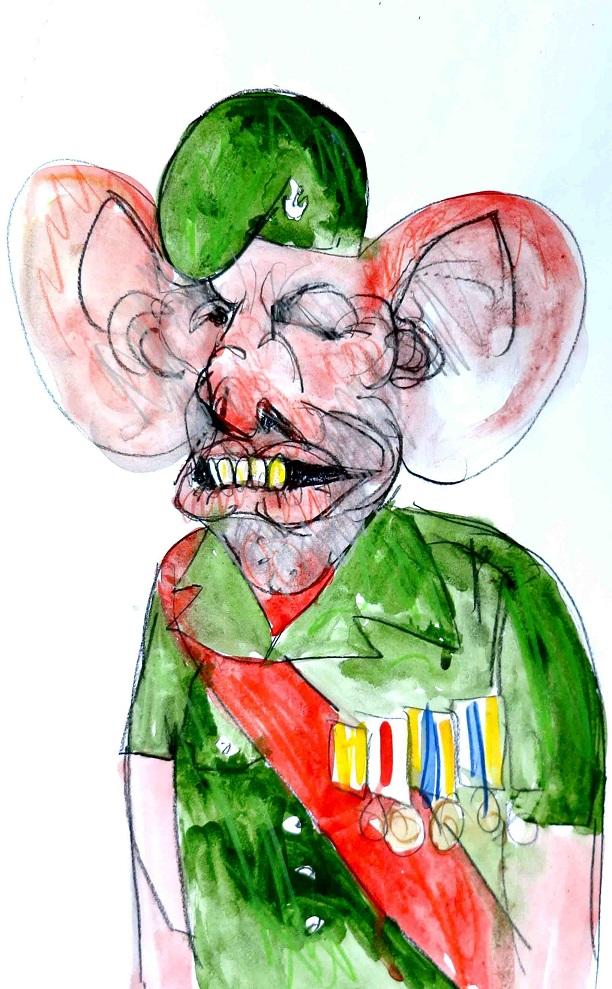
‘Why I’m ashamed to be an Australian Soldier’: Digger speaks out on military wages . Abbott beheads the ADF!!

A brave soldier has spoken out revealing why he’s ashamed to serve in the role he was onc‘All we can afford’: The Prime Minister says the government would like to pay defence per

A LONG-SERVING Australian soldier has spoken out about the state of our country’s military declaring he is “thoroughly disgusted” to serve in the army.

The 31-year-old soldier, who has requested to remain anonymous has served with the Australian Defence Force for 11 years across Australia as well as serving in Afghanistan.

It’s a role he dreamt of fulfilling, and, until a decision was handed down on military wages by the Defence Remuneration Tribunal this week, it was “the proudest thing (he) could imagine anyone doing”.

The Victorian soldier has never spoken publicly about his life as a soldier, but this week he felt compelled, he told news.com.au.

The decision to increase defence personnel wages by only 1.5 per cent, a rate below inflation that would mean a decrease in pay in real terms was the last straw.

The Defence Force member says he has “sworn to protect and serve” his country, and until now was “enormously proud to do so”.

“My identity as a Serving Member has taken some hits recently,” he said.

“The order not to wear or our uniforms in public because of an ‘unspecified’ threat — if I wasn’t scared to wear my uniform fighting in Afghanistan, I’m sure as hell not going to be scared to wear it on any Australian street. But, I’ll toe the line.

“And then there was my recent discovery as I investigated my upcoming posting, that Defence has been quietly stripping away allowances for things such as the cross country moves that it requires its members to undertake.

“I’m only going to get a third of the allowances that I got for the exact same move I made previously, and in fact am going to be out of pocket? OK, OK … You are telling me you’re only going to pay me to fly and if I choose to drive I guess that’s just my own stupid fault.

“But today, the government that I have sworn to protect and serve, and that up to this point have been enormously proud to do so, has signed off on a deal that is essentially a kick in the teeth to every Soldier, Airmen, & Sailor.

“They have given us a ‘pay rise’ of 1.5% per year for the next few years. This is more than 1.5% below estimated inflation, and 140% less than the pay rise that politicians have awarded themselves in past years.”

“And how are we, the Serving members of this countries military forces supposed to pay the government back for this paltry pay rise? By sacrificing leave days and allowances across the board. In fact, the monetary value of the lost leave days is greater in value then the extra money this ‘pay increase’ will deliver.”

Expressing his disgust at the pay increase decision the Defence Force Welfare Association has labelled “insultingly low”, the soldier goes on to sympathise with outsiders disgusted at the military.

“If you want to attack me in the street because you disdain the fact that I am an Australian Soldier, then at the very least I can understand you,” he added.

“My own government disdains me and my fellow serving members, and it disdains us publicly and with thinly disguised contempt.

“I am an Australian Soldier and, for the first time in eleven years, I am thoroughly disgusted to be one.”

The soldier told news.com.au that although he is the one who has bravely spoken out on this issue, it’s not just his battle.

“This is not my fight, it’s the fight of every serving member as of that despicable decision,” he said.

“I”m just one member of thousands who are affected, and I’m not even the worst off … I’m not currently serving overseas, where our people are actively put in harms way, and yet expected to accept a loss of, in some cases, up to a quarter of their dangerous service allowance.”

The three-year pay deal affecting Australia’s 57,000 full-time uniformed personnel and 20,000 reservists was approved by the Defence Force Remuneration Tribunal on Monday.

Defence Force Welfare Association urged the Prime Minister to intervene, saying to “insultingly low annual increase” was a strange way to reward defence personnel.

“This so-called increase represents barely half the expected annual inflation rate and an even lesser proportion of the expected rise of annual living costs,” he said in a statement.

The Government has justified the decision saying it’s all they can afford.

“We’d all like to pay our serving defence personnel more, but there’s going to have to be a very tight pay restraint across the public sector, including with defence personnel,” Prime Minister Tony Abbott told media in Sydney yesterday.

Assistant Defence Minister Stuart Robert described defence personnel’s current salaries as “generous”, citing an “enormous number of allowances”, subsidised housing and health care benefits.

Democrats can still win presidential election in 2016?

Democrats can still win presidential election in 2016?. 53896.jpeg

The Republicans won in seven states that the Democrats represent in the US Senate, having thus gained control of all committees in both houses of the Congress. Now it will be up to Republicans to determine daily legislative agenda. How will the White House try to build relationships with the Republican majority? Pravda.Ru asked expert opinion from political scientist, Director General of the Russian Council for International Affairs, Andrei Kortunov.

“What will Obama do now? Will his law legalizing illegal migrants fail?”

“As a rule, the president tries to put his foreign policy on the support of the two parties, to reach a consensus on major issues, at least. If such a consensus exists, the change in leadership of certain committees of the Senate or the House of Representatives does not affect the passage of bills. In this particular case, this agenda of US foreign policy can be divided into two parts: there are issues, on which consensus has been reached, and there are other issues, on serious differences remain.

If we take the policies of the United States in respect of Russia and the Ukrainian crisis, there are no discrepancies. It is hard to assume that the Republicans will change something fundamentally in their attitude to the events in Ukraine. As for the new immigration legislation – this is a field for serious party debate. I think that it will be very difficult now for Obama to preserve the law on the reforms of immigration policy in its original form.

“During the last 18 months, the Republicans have been attacking basic provisions of the law. Ultimately, it will be adopted, but most likely, with significant changes. A radical reform of immigration laws, as it was two or three years ago, is no longer possible. The Republicans can fit the law into their ideas of how the reform should be conducted.

“As for foreign policy, the struggle will unfold primarily on the Iranian issue. The Republicans traditionally take a tougher stance on Iran. I admit that differences will emerge regarding the development of relations with China. Perhaps the Republicans will traditionally take a more pro-Israeli position regarding the Arab-Israeli conflict.


“The White House may face difficulties both when passing certain legislative acts, and in respect of possible appointments. The Republicans may, for example, put obstacles in appointing ambassadors, or other high-ranking officials. It is unlikely, though, that the struggle will become acute.

“Are there any discrepancies between Obama and the Republicans as far as the Ukrainian crisis is concerned? For example, can they solve the question of arms supplies to Ukraine?”

“I do not think there are fundamental differences on Ukraine. Indeed, there are Republican senators, who support bigger support to Kiev, including through the supplies of so-called deadly weapons that can be used directly in the so-called anti-terrorist operation in eastern Ukraine. Even if such permission is granted, it does not mean that the Obama administration may agree to accept and use it.

“Therefore, the evolution of the US-led policy in relation to the Ukrainian crisis will depend on the events in eastern Ukraine. Russia’s stance on the crisis, as well as actions of the self-proclaimed republics, will play an important role here. That is, it depends more on external factors, rather than on internal struggle in the US Congress.

“What does this election defeat mean for the Democrats? Does it mean defeat in the presidential election in 2016?”

“Defeat is always bad for anyone. For Democrats, it means less powers in domestic policy, budget allocation, social and economic reforms in the country. Noteworthy, the Democrats now have an additional incentive for consolidation to get ready for the presidential election in two years and try to maintain control over the White House.

“Given that the Republicans have moved to the right, the Democrats have a chance to capture the political center in the next presidential election. And then, most likely, the Democratic Party will be able to win the presidential election. This is more important than winning midterm congressional elections.”

Tony Abbott, Iraq and the Anzac myth: The Anzacs sailed arrived and fought Abbot’s SAS are waiting waiting and even he has stopped sabre rattling out of embarassment.

View image on Twitter

PM Tony Abbott is using the centenary of WWI and the spirit of Anzac’ as a cynical propaganda exercise to build support for our latest foreign military adventure, writes

Young Australian men, their heads full of British, Australian and Empire propaganda rushed to the colours, much as young men are swallowing Islamic State propaganda and mistakenly rushing to the black flag. That is the fatal mix for young people — propaganda, emotion, a quest for adventure, dissatisfaction with current circumstances and off they go to meet the demands of cynical power brokers, who rarely fight.

Of the Australians who went overseas 150 in every 1,000 contracted venereal disease . The French averaged 83 cases per 1,000 and the Germans 110. The Australian rate was amongst the highest. Perhaps Abbott can weave that into one of his speeches?

WWI gives the lie to Christianity as a civilising influence.

For those at the front forced to endure days of high explosive shell fire ‒ to the point that they cried with terror, went temporarily or permanently mad, defecated and urinated involuntarily and then crawled out of trenches to face machine gun fire of between 500-700 rounds per minute ‒ it could be said that they were in Dante’s Inferno. Christianity failed to prevent the Armageddon of WWI and some might argue that it contributed to its onset.

The story of war, particularly the First World War should be told as it was and not as part of a propaganda exercise to get the Australian public to accept, yet again, the deployment of Australian forces to war on the sole discretion and authority of a prime minister who has not had the courage to send Australians overseas to fight Ebola in case they return with the disease and threaten his comfort zone.

Tell us about war Tony

Short-term political fixes pose threat to environment and future prosperity, scientists warn

Smoke emits from steel works

Some of the nation’s top scientists have warned short-term political fixes pose a threat to both the environment and the nation’s future prosperity.

The first major report in more than a decade from the influential Wentworth Group of Concerned Scientists suggests the Federal Government eliminate fossil fuel subsidies and provide tax breaks to landowners who work to protect threatened species and ecosystems.

“We’re increasingly seeing the consequences of our current short-termism and the cost that will impose on this society in the future, because, in the long run, environmental degradation will come at an enormous cost,” Wentworth Group director, Peter Cosier, said.

The report included contributions from former treasury secretary Ken Henry and Clean Energy Finance Corporation director Martijn Wilder.

The group said the Abbott Government’s tentative steps towards reforming the tax system provided an opportunity to better protect the environment.

“Tax is an effective way [to protect the environment] because it’s something you have to pay and it’s a measure which governments use all the time to pull triggers in the economy,” Mr Wilder said.

“There’s an opportunity here to look at our tax system over the long-term to make it such that it has measures that are beneficial to the environment and the economy.”

There’s an opportunity here to look at our tax system over the long-term to make it such that it has measures that are beneficial to the environment and the economy.

Martijn Wilder

The report recommends removing fossil fuel subsidies and instead paying farmers, indigenous communities and other landholders to restore and protect environmental assets.

“A farmer may take particular steps to look after and manage their land in a more sustainable fashion and by doing that they may be rewarded with some sort of tax concession,” Mr Wilder said.

Professor Bruce Thom, a founding member of the group, said with climate change predicted to bring more extreme heat, bushfires, and damaging storms, smarter planning decisions need to be made now.

“We spend 10 times more on recovery after a disaster than we spend on mitigating their impacts,” Professor Thom said.

He said he believed preparing communities for climate change has not been well coordinated to date between different tiers of government.

Professor Thom said recent discussions about tax and federalism should be expanded to include the management of the natural environment.

“The Federal Government is the driver of the economy and the states are the deliverers,” he said.

“We feel that all three levels of government must be closely working together in better managing our natural capital for the long-term future.”

The authors cite advice from the Productivity Commission, Treasury, and the Garnaut Review that an emissions trading scheme remains the most cost-effective way for Australia to reduce greenhouse gas emissions.

A copy of the Wentworth Group’s report will be sent to every state environment minister and every federal MP.

Immigration Minister denies claims asylum seekers were offered deal if witness statements on Reza Barati’s death withdrawn

Julian Burnside QC accepts his Sydney peace prize

Scott Morrison walks on water to avoid the truth such is his arrogance

 Scott Morrison’s duplicitous history is on  record from his nomination for the seat of Cook with the fortuitous help of News Corp To his current efforts to expand his portfolio at the expense of other sitting ministers. Why should we believe any denial of this story. Julian Burnside’s reputation on the other hand is second to none.

Federal Immigration Minister Scott Morrison has denied statements made by prominent human rights lawyer Julian Burnside QC that asylum seekers were offered relocation to Australia in return for withdrawing witness statements about the death of Iranian detainee Reza Barati.

Mr Burnside, an outspoken critic of the Federal Government’s immigration detention policies, made the claim while accepting the Sydney Peace Prize last night.

He said a confidential source told him witnesses to the death of Mr Barati were offered transfer to Australia if they took back their statements.

“My understanding is that some people in the Manus Island detention are being offered the opportunity of being taken to mainland Australia on condition they withdraw any witness statements they’ve made,” he told the function at Sydney Town Hall.

However, the Immigration Minister has strongly denied the allegations.

“This is a false and offensive suggestion made without any basis or substantiation by advocates with proven form of political malice and opposition to the Government’s successful border protection policies. The government once again rejects these claims,” Mr Morrison said.

Mr Barati, 23, was killed during a riot at the Australian-run Manus Island detention centre in Papua New Guinea in February.

An official report found Mr Barati suffered a severe brain injury caused by a brutal beating by several assailants and died a few hours later.

Mr Burnside said he was told 13 to 14 people were involved in the death of Mr Barati.

He told the function he had received a sworn statement from an eyewitness about Mr Barati’s death.

“An employee of the detention centre, armed with a length of timber with two nails driven through it, had lashed out at Reza Barati and had brought down two crushing blows on his head,” Mr Burnside said.

He said Mr Barati’s scalp was lacerated and he fell to the ground.

He was then kicked repeatedly by a dozen employees from within the detention centre including two Australians. They kicked him in the head and stomach as he tried to protect himself with his arms, Mr Burnside told the crowd.

He said another employee took a rock and smashed it on Mr Barati’s head with “such ferocity, it killed him”.

Two PNG men were charged with murder but their trial was delayed because they did not have lawyers.

In a wide ranging speech on Australia’s human rights record, Mr Burnside accused both the Coalition and Labor of treating asylum seekers in a cruel and selfish manner.

But he said he was not party political.

“Labor has never contradicted the Coalition’s dishonest message about asylum seekers,” he said.

“The Coalition call them illegal. It’s a lie.

“The Coalition call them queue jumpers. It’s a lie.”

Burnside praised as a fearless humanitarian

Past winners of Australia’s only international award for peace include US intellectual Professor Noam Chomsky, and Indigenous leader, Pat Dodson.

Former New South Wales governor, Dame Marie Bashir, praised Mr Burnside as a champion of human rights.

“You are an Australian of outstanding qualities, distinguished as a barrister, a humanist, an author and as we have heard tonight, a fearless humanitarian,” Dame Bashir told the ceremony.

Mr Burnside said in his speech the world sees Australia as cruel and selfish because of the way asylum seekers are treated.

“Boatpeople who manage to get to Australia are mistreated in every possible way as if somehow that will make us feel better or safer,” he told the function.

Hours earlier, the Sydney Town Hall hosted a memorial service for former prime minister, Gough Whitlam.

Mr Burnside said the country needed more politicians of Mr Whitlam’s calibre.

“Whitlam was a colossus but a survey of today’s political landscape shows we are led by midgets,” he said.

“Led may not be the right word.

“We haven’t seen a political leader in this country for decades,” he said.

Bolt’s ideologicaly confused and dangerous youth – brilliant

FBI targets Wall Street analyst after report on US mining company Freeport McMoran

FBI targets Wall Street analyst after report on US mining company Freeport McMoran.

The One Percent Just Keeps Getting Richer, According to the 2014 Global Wealth Report The richest one percent owns $127 trillion. That’s 48 percent of the wealth in the world.

This story was originally published on BillMoyers.com.

Global inequality, like global warming, is a disease that may be too far along to ever be cured.

We seem helpless, both in the US and around the world, to stop the incessant flow of wealth to an elitist group of people who are simply building on their existing riches. The increasing rate of their takeaway is the message derived from the Credit Suisse Global Wealth Databook (GWD).

It’s already been made clear that the richest Americans have taken almost all the gains in US wealth since the recession. But the unrelenting money grab is a global phenomenon. The GWD confirms just how bad it’s getting for the great majority of us.

1. US: Even the upper middle class is losing

In just three years, from 2011 to 2014, the bottom half of Americans lost almost half of their share of the nation’s wealth, dropping from a 2.5 percent share to a 1.3 percent share (detail is here).

Most of the top half lost ground, too. The 36 million upper middle class households just above the median (sixth, seventh, and eighth deciles) dropped from a 13.4 percent share to an 11.9 percent share. Much of their portion went to the richest one percent.

This is big money. With total US wealth of $84 trillion, the three-year change represents a transfer of wealth of over a trillion dollars from the bottom half of America to the richest one percent, and another trillion dollars from the upper middle class to the one percent.

2. US: In three years, an average of $5 million went to every household in the one percent

A closer look at the numbers shows the frightening extremes. The bottom half of America, according to GWD, owned $1.5 trillion in 2011. Now their wealth is down to $1.1 trillion. Much of their wealth is in housing equity, which was depleted by the recession.

The richest Americans, on the other hand, took incomprehensible amounts of wealth from the rest of us, largely by being already rich, and by being heavily invested in the stock market. The following summary is based on GWD figures and reliable estimates of the makeup of the richest one percent, and on the fact that almost all the nation’s wealth is in the form of private households and business assets:

  • In three years the average household in the top one percent (just over a million households) increased its net worth by about $4.5 million.
  • In three years the average household in the top .1 percent (just over 100,000 households) increased its net worth by about $18 million.
  • In three years the average household in the top .01 percent (12,000 households) increased its net worth by about $180 million.
  • In three years the average member of the Forbes 400 increased his/her net worth by about $2 billion.

3. World: The one percent’s wealth grew from $100 trillion to $127 trillion in three years

A stunning 95 percent of the world’s population lost a share of its wealth over the past three years. Almost all of the gain went to the world’s richest one percent.

Again, the gains seem almost incomprehensible. The world’s wealth grew from $224 trillion to $263 trillion in three years. The world’s richest one percent, who owned a little under $100 trillion in 2011, now own almost $127 trillion. For every dollar they possessed just three years ago, they now have a dollar and a quarter.

From New York and LA and San Francisco to London and Kenya and Indonesia, the rich are pushing suffering populations out of the way to acquire land and build luxury homes. The “winner-take-all” attitude is breaking down society in the US and around the world.

More Madness

There’s a lot more in the GWD, and it doesn’t get any prettier. It tells us what unregulated capitalism does to a society.

In an upcoming post, we’ll consider what has to be done to end the madness.

Fossil fuels should be phased out by 2100 says IPCC….100’s of scientists

Chimneys billowing smoke

The unrestricted use of fossil fuels should be phased out by 2100 if the world is to avoid dangerous climate change, a UN-backed expert panel says.

The Intergovernmental Panel on Climate Change says in a stark report that most of the world’s electricity can – and must – be produced from low-carbon sources by 2050.

If not, the world faces “severe, pervasive and irreversible” damage.

The UN said inaction would cost “much more” than taking the necessary action.

The IPCC’s Synthesis Report was published on Sunday in Copenhagen, after a week of intense debate between scientists and government officials.

It is intended to inform politicians engaged in attempts to deliver a new global treaty on climate by the end of 2015.

The report says that reducing emissions is crucial if global warming is to be limited to 2C – a target acknowledged in 2009 as the threshold of dangerous climate change.

The report suggests renewables will have to grow from their current 30% share to 80% of the power sector by 2050.

In the longer term, the report states that fossil fuel power generation without carbon capture and storage (CCS) technology would need to be “phased out almost entirely by 2100”.

‘Science has spoken’

The Synthesis Report summarises three previous reports from the IPCC, which outlined the causes, the impacts and the potential solutions to climate change.

It re-states many familiar positions:

  • Warming is “unequivocal” and the human influence on climate is clear
  • The period from 1983 to 2012, it says, was likely the warmest 30 year period of the last 1,400 years
  • Warming impacts are already being seen around the globe, in the acidification of the oceans, the melting of arctic ice and poorer crop yields in many parts
  • Without concerted action on carbon, temperatures will increase over the coming decades and could be almost 5C above pre-industrial levels by the end of this century

“Science has spoken,” UN Secretary-General Ban Ki-moon said. “There is no ambiguity in their message. Leaders must act. Time is not on our side.”

http://www.bbc.com/news/science-environment-29855884

Ban Ki-moon: Inaction on climate change “will cost heavily”

“There is a myth that climate action will cost heavily,” said Mr Ban, “but inaction will cost much more.”

The US Secretary of State, John Kerry, described the report as “another canary in the coal mine”.

“Those who choose to ignore or dispute the science so clearly laid out in this report do so at great risk for all of us and for our kids and grandkids,” Mr Kerry said in a statement.

The Secretary of State for Energy and Climate Change Ed Davey described the report as the “most comprehensive, thorough and robust assessment of climate change ever produced”.

“It sends a clear message that should be heard across the world – we must act on climate change now. It’s now up to the politicians – we must safeguard the world for future generations by striking a new climate deal in Paris next year,” he said.

“The UK has been leading the world and bringing the world with us. The historic agreement to cut carbon emissions in Europe by at least 40 per cent by 2030 effectively means our Climate Change Act is being replicated across Europe, just as it’s being copied in countries across the world as they seek to cap and cut their own emissions.”

Blunt language

Prof Myles Allen from Oxford University, a member of the IPCC core writing team, said: “We can’t afford to burn all the fossil fuels we have without dealing with the waste product which is CO2 and without dumping it in the atmosphere.”

“If we can’t develop carbon capture we will have to stop using fossil fuels if we want to stop dangerous climate change.”

line

Analysis: David Shukman, BBC science editor

The language in the UN’s climate reports has been steadily ratcheted up over the years, but this publication lays out the options more bluntly than before.

The conclusion that fossil fuels cannot continue to be burned in the usual way – and must be phased out by the end of the century – presents governments with an unusually stark choice.

The IPCC has tried to make it more palatable by saying that fossil fuel use can continue if the carbon emissions are captured and stored.

But so far the world only has one commercially-operating plant of that type, in Canada, and progress developing the technology is far slower than many had hoped.

So this raises the difficult question of how key governments are likely to respond.

Events in Copenhagen back in 2009, when a disastrous and dysfunctional summit failed to agree anything substantial, showed how easily rhetoric crumbles in the face of economic pressures or domestic realities.

line

The report’s clarity of language over the future of coal, oil, and gas was welcomed by campaigners.

“What they have said is that we must get to zero emissions, and that’s new,” said Samantha Smith from World Wildlife Fund.

“The second thing is they said that it is affordable, it is not going to cripple economies.”

Fierce standoff

In the IPCC’s discussions on fossil fuels, there was a fierce battle over a chart that showed how much the electricity sector needed to curb its carbon, the BBC’s environment correspondent Matt McGrath reports from Copenhagen.

According to one observer, “the Saudis went ballistic” over the chart’s inclusion.

While arctic sea ice is melting at an alarming rate, Antarctic sea ice at record levels, Dr Helen Czerski reports

Another significant fight was over the inclusion of text about Article 2 of the UN Framework Convention on Climate Change.

It quickly became a standoff between those who want the focus to be on cutting emissions against those who think the right to develop economies must come first.

An unlikely alliance between Bolivia and Saudi Arabia ultimately saw the section dropped entirely from the underlying report.

Some of those attending the talks said that tackling climate change and sustainable development went hand in hand.

“Different countries come to different perspectives” said Prof Jim Skea from Imperial College and a review editor of the report.

“But from the science perspective, we need them both. We need to walk and chew gum at the same time.”

Hillary Clinton wants you to be afraid – very afraid – of a Republican dystopia

hillary clinton warning you

Doom and gloom may not be the new hope and change, but they just might work

  • Clinton attacks Scott Brown for ‘dismissing’ women’s rights
  • Hillary Clinton sprinkles her stardust on Grimes campaign
  • Live updates: Complete coverage of the US midterm elections
  • Hillary Clinton is, as she reminded audience in Kentucky, Louisiana and New Hampshire this weekend, a new member of “the grandmother’s club”. Many other new grandmas might spend their time daydreaming about the future of their grandchildrens – I’m pretty sure we were all destined to be lawyers, doctors, future presidents or well-remunerated sports stars, in the minds of most grandmothers – but Clinton’s reveries about Charlotte’s future are a bit more … dark.The Democrats are going to lose on Tuesday, and Hillary Clinton knows it. Her grim prophecy of a GOP takeover isn’t so much a last-minute appeal to Senate voters as an early bid for her own. Because doom and gloom may not be the new hope and change, but they might actually work.

    Clinton’s campaign speeches aren’t each original works of creative genius. As Maggie Haberman reports at Politico, she does tailor her zings about Republicans neatly to each race where she’s stumping, but the foundation of her remarks in the US midterm election homestretch remained the same: equal pay (and GOP opposition to it), the minimum wage (and GOP opposition to it) and Republicans creating a climate of fear (“the last resort of those who have run out of ideas”).

    But at the end of each speech, Clinton turned to her granddaughter and her own fears about the country Charlotte might face as a young adult if Republicans gain more power. At her appearance in Highland Heights, Kentucky, in a message largely repeated elsewhere, Clinton said:

    What’s our country going to be like in 20-25 years when she’s an adult – like many of the students here [at Northern Kentucky University], when she is going to be starting her adult life? Is the American dream going to be there for her the way it was for me and my husband, and for Alison [Lundergan Grimes]? Is the education system from pre-K to university level going to keep the standing it’s always had as the best in the world, so that young people will find a place that can help prepare them? Is our political system, our democracy, going to represent our values and ideals? Or is it going to be captured by a very few who seem not to understand that the obligation of being in public service in a democracy is not to get captured by some small elite privileged group, but to be constantly working to give the same opportunities to everybody that gave you the chance to be in public service in the first place.

    (That last bit is, of course, a reference to the Koch brothers and their reportedly cozy relationship with US senate minority leader – and Grimes opponent – Mitch McConnell.)

    In her three-state swing, Clinton’s marked shift in tone and content – from stumping for the candidate by her side to warning about the America that her granddaughter might inherent – was almost disconcerting, especially given the overall upbeat tenor of the speakers at most pre-Election Day rallies. But even within the confines of Clinton’s themselves speeches, the abupt shift in gears halted her palpable momentum and mostly silenced her audiences.

    It was as though Hillary Clinton felt more compelled to make dark prophesies than inspire voters.

    Then again, you hardly need to read tea leaves to predict the Republicans will take control of the senate – and thus the entire legislative branch – after Tuesday. You don’t need a Senate forecaster to know which way the gridlock will go: the Congressional intransigence Americans claim to hate (even as they like or remain indifferent to divided control of the branches of government, the cause of said intransigence) will either continue or get worse, to the detriment of everyone, assuming that Republicans have legislative goals beyond dismantling Obamacare.

    But especially here in Kentucky – where almost 400,000 workers make less than $10.10 per hour and a bill to raise the minimum wage and minimum server wages died in the GOP-controlled state senate – it’s not an unreasonable thought that the whole “American dream” thing is getting a little tarnished for more than a few low-income voters. And decrying a minimum wage increase for the next two years won’t exactly make Republicans popular – especially given that there were about twice as many people making at or below the minimum wage in 2013 as there were in 2006 (before Congress passed the last increase).

    Clinton’s increasingly busy and impromptu travel schedule this election season – and the positive reception she’s gotten from die-hard Hillary fans sporting buttons and signs and local voters more concerned about Tuesday than 2016 alike – have not exactly tamped down speculation that she’ll start running for president in the next six months. And when she does, Clinton will be running against the (potential) dystopia she’s prophesying on the campaign trail right now: Republican control of the legislative branch and further political gridlock. Despite the overwhelming popularity of both, there almost certainly won’t be any effort to raise the minimum wage or guarantee women equal pay, and Republicans will almost certainly have a go at repealing the still-unpopular Affordable Care Act even as its effects are finally beginning to be felt by more Americans.

    Clinton told her audiences this weekend:

    You should not have to be the grandchild of a former secretary of state or a former president to be given the opportunities that you deserve as an American.

    But she also asked them to imagine a future in which their children would have to be – and it wasn’t tough

Cuba, the Empire and Ebola

Cuba, the Empire and Ebola. 53883.jpeg

The Ebola epidemic constitutes an enormous risk… we have to struggle so it does not become one of the greatest pandemics … by planning and working together … and this in turn requires political will, rigorous organisational discipline and efficiency.’

– José Ángel Portal Miranda, Cuban Vice Minister of Health

by Tim Anderson

In early October, as a first group of 165 Cuban doctors arrived in Sierra Leone, the Wall Street Journal recognised that Cuba was ‘at the forefront’ of the battle against Ebola in Africa. This was unusual North American praise for Cuba.

The reluctant admission shows some of the reasoning behind a semi-covert relationship which has developed between Cuba and Washington over the Ebola crisis. Nevertheless, stark differences in approach signal the deep ideological divide between the would-be global empire and the small socialist island.

The imperial approach has been to present a militarised and self-referential response to Ebola, as a security threat to ‘Americans’. Focus quickly moved to ill-conceived quarantine measures. In contrast, Cuba’s international solidarity approach was to send trained health workers and help build a coordinated social medicine response, which includes specialist training for local health workers.

Ebola haemorrhagic fever is transmitted by the bodily fluids of an infected person and has a fatality rate of from 25% to 90%. According to the WHO, 70% of affected people die because of the lack of proper treatment and facilities.

The Ebola outbreak in the West African countries of Guinea, Liberia and Sierra Leone was declared in March 2014 and, by late October, almost 5,000 people had died, 10% of them health workers. The WHO calls it an international public health emergency.


Local health workers die due to lack of training and lack of protective equipment and facilities. One member of the Cuban team in Guinea, Jorge Juan Guerra Rodriguez, has already died, but from another deadly disease, cerebral malaria.

Margaret Chan, Director of the WHO, said: ‘What we need most are people, medical people … the most important thing to prevent the transmission of disease is to have the right people, appropriately trained specialists.’

Washington sent troops. US President Barrack Obama said: ‘we have to keep leading the global response, because the best way to stop this disease, the best way to keep Americans safe, is to stop it at its source – in West Africa.’ The US troops were directed to secure facilities and build treatment centres.

With more than 4,000 health workers already in Africa, Cuba by late October had sent another 350, most of them doctors and all with specialist training. Mexico, Venezuela and even Timor Leste are logistically and financially supporting the Cuban effort. After Cuba, the international organisation Médecins Sans Frontières also has 270 international health workers in the affected countries, while employing many locals.

By the end of October, dozens of the almost nine hundred US troops in ‘Operation Unified Assistance’ in Liberia and Senegal were being withdrawn from West Africa, to face a quarantine regime in Italy and leaving behind USAID branded tent-style treatment centres. Photos from Liberia show that Cuban doctors are now using those facilities.

That link is not an accident. A report in the New York Times observes that ‘a mid-level official’ from the US Center for Disease Control and Prevention attended a regional ALBA meeting on Ebola in Havana, and that Secretary of State John Kerry recently (and unusually) invited Cuba’s top diplomat in Washington (there is no ambassador, as the US and Cuba do not have diplomatic relations) to his speech on Ebola. The NYT writer aptly observes that the Ebola crisis ‘seems to be injecting a dose of pragmatism to Washington’s poisonous relationship with Havana’.

However we should not exaggerate the significance of this cooperation. The US and European relationship with West Africa has a dreadful history. Freed slaves from Britain and the US played a major role in the creation of both Liberia and Sierra Leone, the latter a British colony until 1961. Liberia became the focus of a ‘return to Africa’ movement in North America, after it became clear that the abolition of slavery in the US did not mean acceptance of African-Americans as equal citizens.

In more recent times western-controlled multilateral banks and aid agencies have made sure that these poorest of poor countries have not developed strong public education and health systems. The World Federation of Trade Unions (WFTU) says the Ebola epidemic exposes ‘the chronic and deep wounds in the African Continent [from] colonialism, by the continuous plundering of the wealth-producing resources and by the high public debts that keep African states and their economies enslaved to the IMF, the World Bank and monopolies cartels’.

The WFTU observes that Ebola is facilitated by ‘the poverty, the malnutrition, the lack of basic healthcare infrastructure and social welfare’, the absence of strong public and free education systems, and the prevalence of slum housing along with militarised and violent states, panicking in face of desperation. All this is in place of what they could have: strong ‘human development enabling’ states (see Anderson 2014).

On top of this, West African countries have become the preferred site for western countries to dump chemical, electronic and apparently even nuclear waste. This was ‘market forces’ at work, as a 1988 report in the New York Times observed: ‘As safety laws in Europe and the United States push toxic disposal costs up to $2,500 a ton, waste brokers are turning their attention to the closest, poorest and most unprotected shores – West Africa’. Toxic waste dumping, although to a large degree outlawed by international conventions, has become as lucrative a business as trafficking in drugs and human beings (Brooke 1988, Selva 2006 and Koné 2010).

Cuba, which has a very different history in Africa, decided to supplement its emergency brigades with four doctors for each of a range of African countries (not just the affected countries), for specialist Ebola training. This is consistent with its social medicine approach which emphasises promotion and prevention, as well as genuine capacity building through local empowerment.

Havana has a range of partners, most of whom, at this stage, seem to be financing the costs of its medical teams, particularly in transport and equipment. These teams include specialists in infectious disease, epidemiology and specialist nursing.

Plans for the Americas were high on the agenda of the eight-country ALBA (Bolivarian Alliance for the Peoples of Our America) special Summit in Havana on 20 October. This group, affirming its basic principles of solidarity, cooperation and complementarity, agreed to support the western African missions while they developed their own regional protection plan. That plan includes taking coordination efforts to the wider 33-member CELAC group (Community of Caribbean and Latin American States). Venezuela committed several million dollars to Cuba’s West African mission.

The Government of Mexico also says it will ‘join forces’ with Cuba in the campaign against the epidemic, at first by WHO-channelled finance for ‘specialised equipment’ for the Cuban brigades. Doctors have to burn gloves, masks and other protective equipment after treating each patient.

Timor Leste, now benefiting from more than 800 Cuban-trained Timorese doctors, has decided to join in, by financing the costs of 35 of the Cuban doctors in West Africa.

A Cuban offer to cooperate directly with Washington seems to have been deflected in favour of low-profile discussions and cooperation through third parties, such as the WHO, the UN Ebola Mission (UNMEER) and the respective governments of Liberia, Sierra Leone and Guinea.

Cuban doctor Ronald Hernández Torres, now in Liberia, says the Cuba brigade is working well with professionals from other countries and that Cuban medical training, along with specialist Ebola training is going on in Liberia. Another group of Cubans is working in Guinea.

Cuban Ambassador in Liberia, Jorge Fernando Lefebre Nicolás, said the emergency brigade represented a strong sense of solidarity his government had for Liberia, and that it was help ‘improve the existing links between both countries … [and] mark the beginning of [further] health cooperation between Cuba and Liberia’.

Liberia’s foreign minister Augustine Kpehe Nga­fuan thanked Cuban Government for its ‘solid friendship and solidarity with needy people’, adding that he believed the epidemic would soon be eradicated in his country.

The Gough Whitlam memorial: Farewell to a giant

Prime Minister Gough Whitlam’s memorial service in Sydney yesterday was an occasion memorable for its reticence, proud good taste and meaningful contributions, writes Bob Ellis.

For a time it seemed Rudd must sit beside Gillard, but it was soon sorted, and they sat, eyes averted, two apart. Keating, entering, with Annita, got huge applause; Hawke with Blanche, less so, Penny Wong and her ‘spouse’ a great deal, Garrett a little more.

Silence greeted Howard and Jannette. Abbott, unaccompanied, materialised in the front row, from, it seemed, a secret entrance, having been booed out on the street.

Jill Wran was there. Albo and Carmel, Deputy Premier and Deputy Premier, man and wife. John Brown. Smith and Swan. Menadue. Spiegelman. Two Fergusons. Les Johnson and Doug McClelland. Barry Jones, famous now since 1948, irrepressible, buoyant, grizzled. Phillip Adams, looking as he did since he was twenty-five. Latham was not there, of course; of course. Like Hemingway, he never forgave a favour.

Huge pipe organ music as the tall family entered; a ‘flotilla of Whitlams’, I used to call them, fewer now.

From the upper level, near the front, I could see all the faces, like a perfect stained glass window of a gathering of sainted worthies, in a sacred site, the Town Hall, where, six months ago, Nifty’s coffin had lain, and his daughter, now on a charge of murder, had spoken over him, quoting Shakespeare.

There was the national anthem and Kerry O’Brien came forward, tawny and mild-mannered, Steve McQueen-like, as always, and I remembered how, on the day of the sacking, he, beside me in the press gallery, had said:

“Let slip the dogs of war.”

He told of working on Gough’s last campaign — the energy, the detail, the generosity, the fury, the joy.

And then there was a welcome to country, and a potent didgeridoo, and then … Freudenberg.

The years melted away and I remembered Freudy in 1977 after Gough resigned, saying:

“I’m, what, forty-two, and my life is over. It ended tonight.”

I remembered ten years ago, after a lunch with Jeff Shaw, Gough saying: “Lend me a shoulder, comrade” and, leaning on Freudy, walked from the building, linked forever to his collaborator and chronicler.

Freudy’s speech ‒ and his delivery of it ‒ showed the great orator the Legislative Assembly lost when the Labor Party, in its wisdom, nominated Eddie Obeid instead. Like his speech on getting life lembership, in the same Town Hall, it was among the best ten of our nation. But there was more, and better, to come.

Across the world, with perfect symmetry, America’s Whitlam, Obama, was being ended by ebola and Fox News, the toy of Murdoch, who had ended Gough also, and the choir and the orchestra performed the St Matthew Passion final chorus by J.F. Bach.

Cate Blanchett came forward and spoke of how she, as a woman, was better able to explore what she could do in the world because of Whitlam’s free universities and Abbott, the minister for women, cringed in the front row. The choir sang the chorus of the Chorus of the Hebrew Slaves by Verdi and things notched up a bit.

Fifteen years ago, I called Noel Pearson ‘Australia’s best orator’, after sharing a stage with him in Mosman.

He proved it again before a vaster audience in Town Hall with an oration rich in wile and fury, almost Elizabethan in its intimacy, clarity and beauty, in which, being now himself a man of no party, he extolled the ‘old man’ he, his people, and Australia, owed so much.

Quickly hailed as the ‘best Australian speech, ever’, it became, like Lincoln’s second inaugural, a new benchmark of the language well used in a great cause on a high occasion.

Kelly and Carmody then sang From Little Things Big Things Grow in an atmosphere charged like none since wartime.

Faulkner’s tribute and Tony Whitlam’s thanks then swiftly followed and the first chords of Jerusalem, as always, had me in tears.

I remembered Gough at Margaret’s funeral theatrically steering his wheelchair out of the church as the choir sang ‘I shall not cease from mental fight, Nor shall my sword sleep in my hand’ and knowing, I think, precisely knowing, that this was the last that most of us would see of him, heroically engulfed in this great Labour anthem, tragically leaving, making his exit, the job unfinished. And here was the song again.

It was swiftly sung, and that was it. No coffin was carried out. There was silence.

The orchestra conductor stood undecided. Would there be more? No. An inconclusive, shuffling silence.

And that was it.

It was an occasion memorable for its reticence, proud good taste and almost Anglican harmony of soul. No humorous montage of wacky television moments was projected. Gough’s own voice did not occur, though the imitations of others, on stage and at the party afterwards, were many and usually good — Mike Carlton’s, as always, the best.

There was a feeling not so much of sadness, or even happiness at a great life well concluded, as of an enormous, high-vaulting life interrupted, diverted, dislocated and of thirty-eight years then somewhat, although not altogether, diminished in a sort of grand nightclub act, of a stand-up elder statesman for a nation’s posterity.

Language honours and forgives / Everyone by whom it lives, as Auden said of Yeats. Lincoln, Churchill, the Kennedys, Obama, had varying successes and great failures in war and peace, but their gift of language, of the smooth self-mocking utterance, of bringing the house down with gales laughter, made up for their failings while millions died.

Whitlam’s record was better than theirs. He embarked on no new war. He ended one. He uplifted three generals to a possibility of personal excellence like none before him, or after. He fought the good fight, he finished, or almost finished, the course. He kept the faith. Now there is laid up for him a crown of righteousness.

And so it goes.

Coalition Parties! Bolt says it was Abbott’s guidance and the US are on their knees in gratitude.

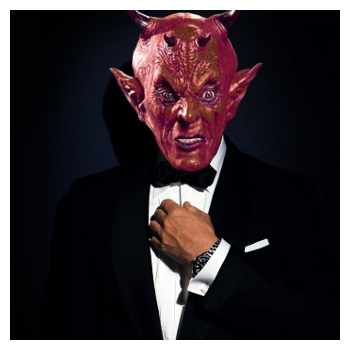
Satan Said To Be ‘Absolutely Delighted’ With Election Results

satanhappppy

THE RIVER STYX, HELL (CT&P) – At an early morning press conference just outside the gates of Hell, Satanic Press Secretary Lord Balthazar told reporters that Lucifer, Lord of the Underworld and Prince of Darkness, was “positively euphoric” over the results in yesterday’s midterm elections.

nazieurope

“His Majesty Lord Satan could not be happier,” said Balthazar. “Beelzebub believes that these results represent an overwhelming victory for the forces of darkness and will set the United States back decades on important issues such as racial hatred, fear of immigrants, climate change, health care, and women’s rights. With any luck, these fine new elected officials will be able to reverse the current progressive trends that have alarmed all of us down in Hades.”

Balthazar went on to say that Mephistopheles was hopeful that the archaic and draconian policies that the new officeholders support could be used to roll back recent gains made by supporters of gay marriage, enlightened drug policy, and intelligent foreign policy that has so far prevented another ground war in the Middle East.

satantux

“Lord Apollyon is literally on Cloud Nine,” said Balthazar. “He feels that the election results show once and for all that a well-financed campaign based on fear mongering and hateful rhetoric will sway an unenlightened electorate, just like we have always said it would. He told me in private that now money will surely edge out Ebola, ISIS, and wheat gluten to take its rightful place as the root of all evil in America.”

Lord Balthazar concluded the press conference by telling reporters that although the stars were not as favorably aligned for the 2016 election, Old Nick felt that if supplied with enough cash from earth-dwelling demons such as the Koch brothers, any one of the current GOP Neanderthal candidates for president could give Hillary a run for her money.

“We remain optimistic about 2016,” concluded Balthazar. “Propaganda is a powerful tool to use on an uneducated public, and as the master himself once said, we should ‘think of the press as a great keyboard on which the government can play.’ We feel that as long as our allies such as Fox News can keep their ratings up, there will be enough numbnut voters out there to get our candidate elected president in 2016.”

Charts: Who Are the 1 Percent?

Occupy Wall Street has focused national attention on the vast majority of Americans who have been left behind by the economic growth of the past few decades. But if OWS is the voice of the 99 percent, who exactly are the 1 percent?

A quick look at the numbers reveals that they aren’t all bailed-out Wall Street execs or brokers pulling down fat bonuses. That’s just some of them:

Even though the richest 1 percent of Americans don’t all work on Wall Street, they do control a disproportionate amount of its wealth, including nearly half of all stocks and mutual funds and more than 60 percent of securities.

But you can’t beat this chart for the most dramatic measure of just how wide the gap between the tippy-top and the 99 percent has become. While incomes for the superrich have skyrocketed in the past three decades, most Americans’ have flatlined.

ALSO: Check out our charts on income inequality, overworked America, and six common economic myths.

Filed under:

Australia’s tryst with tyranny: ASIO hatchet jobs on politicians.

Australia’s tryst with tyranny: ASIO hatchet jobs on politicians..

Tony Abbott booed as he arrives at Gough Whitlam memorial service

http://www.smh.com.au/federal-politics/political-news/tony-abbott-booed-as-he-arrives-at-gough-whitlam-memorial-service-20141105-11h6qd.html

Did Islamic State really call a convention of nuts and have 15,000 people show up?

Islamic State fighter gestures from a vehicle in the countryside of the Syrian Kurdish town of Kobani, after the Islamic State fighters took control of the area

Last week, the Guardian reported, “The United Nations has warned that foreign jihadists are swarming into the twin conflicts in Iraq and Syria on ‘an unprecedented scale’ and from countries that had not previously contributed combatants to global terrorism.”

“A report by the U.N. Security Council, obtained by the Guardian,” the story continued, “finds that 15,000 people have travelled to Syria and Iraq to fight alongside the Islamic State (ISIS) and similar extremist groups.”

Multiple news organizations picked up the Guardian’s scoop but added little. It seems that none had gotten the report, which the United Nations has not released.

But this is a huge story demanding lots more difficult reporting. Have 15,000 terrorist wannabes really trooped in to Iraq and Syria from what the Guardian reports the United Nations says is “more than 80 countries” to join a group whose major calling card is beheading Westerners for show and otherwise slaughtering nonbelievers?

Islamic State fighters stand along a street in the countryside of the Syrian Kurdish town of Kobani, after taking control of the area

That’s a huge number, dwarfing anything we have previously been told about the number of fanatics recruited from around the globe to join Islamic State’s fight.

What information is the United Nation basing its estimate on? Are the numbers real? Are they growing as fast as the Guardian’s story implies?  Who carried out this “report” for the U.N. Security Council? If the recruits are able to be counted and even have their countries of origin identified, as the report implies, why can’t they be tracked and stopped?

Or, on closer look, is the report a vague estimate published to highlight the threat so that the world will pay attention?

Assuming the report’s findings look real, what is motivating recruits from as far afield as the Maldives, Chile, Russia and Northern Ireland? Who are these people?

Has Islamic State’s use of social media and other digital propaganda, including videos of the beheadings, worked so well that the group has been able to convene a convention of all the world’s crazies, arm them and send them out to battle? We need to read and see as many different case histories as reporters can gather.

That, of course, is easier said than done. Trying to get that story from any of those 15,000 recruits could, by definition, be a suicide mission. But reporters should at least try to track down the families of the recruits. The world needs to understand what is going on here.

Then there’s the question of how long the recruits are typically staying and what their leaders’ priority is. Are they being encouraged to come and get trained and then go home to fight? Or are they being encouraged to fight in Syria or Iraq as long as possible and only urged to continue the battle elsewhere once they decide to return home?

Which leads to all the unprecedented security issues — for the United States and every other civilized country — raised by the apparent burgeoning of an indoctrinated and trained army like this.

For starters, should this change the way we think about all the privacy issues raised by the Edward Snowden leaks that revealed the National Security Agency’s seemingly unbounded effort to track people? Should knowing that there are 15,000 trained fanatics roaming the world targeting Western democracies make us more willing to let agencies like the NSA sift through everything and everyone’s lives?

If we know that these recruits are getting into Iraq and Syria mostly through the border of one country, maybe Turkey, should a Western alliance execute a kind of reverse border-control strategy and line up all the forces necessary to block people from leaving Turkey for Syria or Iraq? Could we get the Iranians and Saudis to do the same thing from the east and south?

Are we already trying to do this?

Is there any way we can and should change our passport system — perhaps even by embedding chips in passports — so that we can actually know when people returning home have been in Syria or Iraq? Or other hot spots as they arise?

Finally, what are we trying to do, and what more can we do, to counter what appears to be an increasingly successful image campaign by the world’s worst villains?

In that regard, I’d like to see what my former colleague — former Time Managing Editor Richard Stengel — now under secretary of state for public diplomacy and public affairs — is up to. I’ve read lots of stories, like this one, extolling Islamic State’s social media savvy and referring vaguely to how Stengel and others are trying to counter it.

But these reports have not pinned down what Stengel has been trying to do and whether and why it has worked or failed.

Have bureaucratic or other constraints (the constraints of political correctness, perhaps) limited Stengel? What other, more creative or aggressive measures do private-sector messaging experts suggest we try?

An army of 15,000 (and growing) violent, crazy people — with many carrying U.S. passports or passports from countries where they don’t need visas to come to the United States — should start everyone thinking outside the box. And an army of journalists should be tracking all that.

Christians are Terrorists too. Bolt’s hypocrisy un veiled

nuns

  • November 5, 2014
  • Written by:
  • It’s a good thing that most Christians don’t believe everything the Bible teaches. If they did then wholesale slaughter and gratuitous violence would be the order of the day. Take Luke 12:51-53 for example, “Suppose ye that I am come to give peace on earth? I tell you, Nay; but rather division: For from henceforth there shall be five in one house divided, three against two, and two against three. The father shall be divided against the son, and the son against the father; the mother against the daughter, and the daughter against the mother;

    Christians believe that the Bible is the Word of God and that Jesus is the Son of God. So, here we have Jesus promoting family division.

    In the Old Testament (which is part of the same Bible), it’s much worse. Take Exodus 21; 15, 17, And he that smiteth his father, or his mother, shall be surely put to death. And he that curseth his father, or his mother, shall surely be put to death.

    So, children who curse their parents should be killed.

    Finally, the pick of the day is in Proverbs 20:30, “Blows and wounds scrub away evil,
        and beatings purge the inmost being.

    So, a good thrashing cleanses us of evil, it says. Is this not a great endorsement for family violence?

    boltWhy am I, an Atheist, writing this? Well, it occurred to me while reading an article in New Matilda by Michael Brull this week concerning Andrew Bolt’s apparent obsession with things Islamic, that with all the anti-Muslim sentiment that seems to be the fashion these days, it’s worth pointing out that the Qur’an is not the only Word of God and yes, the Bible advocates violence and terrorism too.

    The similarities between what Christianity teaches and what radical Muslims believe should be discussed and compared more frequently. If that happened, those who profess to be Christian might want to think twice before they agree with Bolt when he says, “… Muslim clerics should open a debate on reforming Islam so fewer followers believe it preaches that nonbelievers should submit — or risk death.

    Reforming Islam! How about reforming Christianity. Christians believe that salvation is possible only through accepting Jesus as their Saviour and fundamentalist Christians believe it just as passionately as jihadists believe the teachings in the Qur’an.

    In the article, Bolt makes mention of recent jihadist attacks on soldiers in Canada, on police in the US and civilians in Israel and goes on to say, “In the end, we must actually stop the production of jihadists. That means reforming the creed they say licenses their violence. It means destroying the Islamic State, now inspiring such losers. It means preaching pride in this country.”

    Reform the creed, really? Perhaps we should ask the same of Catholic Bishops. Would they be prepared to reform (I presume that means rewrite) the gospel that says it is okay to engage in family violence? While we deplore jihadist terrorism, might we ask the question, “How many good Christian women and children have died at the hands of a good Christian father, or brother or son? How many Christian men actually believe that it is okay to bash and brutalise their spouse and their children?

    violenceI’m sure Andrew Bolt would agree with my sentiments about family violence and he may well have written about it. But I would be surprised if he advocated limiting the number of Christian immigrants to this country. Or, limiting the number of Christians living in particular suburbs the way he does with Muslims.

    He writes, “It also means slashing Muslim immigration (already being done) until we better integrate those here. And it means ending the enclaves that inhibit integration. It is dangerous to have suburbs such as Lakemba in Sydney and Dallas in Melbourne where half the residents are Muslim.”

    Dangerous to have suburbs where half the residents are Muslim? Really? What would be the alternative? Does Andrew seriously think that separating Muslims and limiting their numbers in some areas would reduce the number of jihadists? And what exactly does he mean by ‘integration’? Should we also separate Christians and integrate them with Atheists?

    I don’t normally read Andrew Bolt’s column although I have regularly contributed comments to his blog. Perhaps I should read him. He’s a man on a mission and has a very large following. But I wonder how many of his followers are Christian and engage in anti-Muslim ‘hate speech’.

    I wonder how many Christians abuse Muslim women for doing nothing more than wear the hijab, chador or niqab in public places. I wonder how many protagonists of family violence are Christian.

    qur'anIt is a bit rich advocating reforming of one particular group to eliminate terrorist activities, when another group is just as prone to violence and their actions just as evil.

Rupert Murdoch’s ‘quiet retirement’

Rupert Murdoch will be 84 years old at his next birthday next March, but the old curmudgeon shows no signs that he wants to stop working and enjoy a quiet retirement.

But then, I am the same, if only a year and a half younger than he is. I want to keep going, too.

So I do have some understanding of the guy I knew so intimately half a century ago. The younger Rupert was, even then, a classic case of narcissistic nepotism — a condition usually reserved for dictators and conquerers.

There was an ancient Gaelic word for Murdoch: Mur (the sea) and Doch (invaders).

He was also good fun for a while when he needed you. But you knew the day would come when he didn’t need you.

His best friends at school, university and at the gambling tables in the Riviera all learned that. To know him was to soon recognise he was someone who believed himself be well above the ordinary earthling.

And Rupert was to prove it.

We are recognising today that the Islamic wars now raging in Syria, Iraq, Libya and their neighbouring countries have their origins in the earlier Iraq war, in which Rupert Murdoch was a secret but powerful influence.

The Iraq invasion was the consequence of decisions made by John Howard, Tony Blair and George W. Bush. Having been fed information that turned out to be totally wrong, they nevertheless manipulated the United Nations to support an invasion and Murdoch was standing behind them. The misleading and untrue headlines that followed were the height of his whole career and his influence on politicians.

The newspaper archives of those events still show that Rupert Murdoch was just as involved as the political leaders.

One could overlook many things that Rupert Murdoch did in his life, but the Iraq war will always haunt his reputation. No other newspaper proprietor in history can claim to have started a major war — except perhaps William Randolph Hearst.

In America, Rupert seems now to be seeking a kind of redemption.

Dishonoured in Britain for many reasons, including the nasty hacking business, at which he encouraged his staff to become expert peeping toms and nasty vilifiers of innocent celebrities, from royalty downwards.

There was something in his mentality that made him see everyone else as evil and only he totally blameless.

His visits to the UK now are strictly in-and-out as quick as you can. Equally short visits to his homeland Australia encourages the same kind of skullduggery that is now the signature style of his crumbling newspaper empire.

In America, where he seems now to have settled, he is clearly trying to promote his identity, which has never been as great there as in Britain and Australia. He wants to be a major player in a country that is loaded with major players in every aspect of life.

A real estate agent in New York’s Central Park area is advertising high-rise apartments with a message:

The higher the tower, the more each multimillion dollar apartment is worth.

Rupert is busy now trying to build a greater recognition of his brilliance in a country that has never paid him much attention before. Billionaires and posturers are thick on the ground. Every day, he attends every function hoping to be the prime centre of attraction.

He is playing a double game in U.S. politics.

A fervent Republican for many years, he is still courting Democrat heroes — mainly Bill and Hillary Clinton, while hanging out with some of the more prominent members of his own party. Hillary has been coy about the presidency, but there is no doubt she is a significant possible replacement for Obama next year.

Rupert often appears alone at the various functions he attends, but always in  the background is a retinue of two armed bodyguards, a permanent doctor and nurse, some of his currently favoured employees and one of his sons.

Adding to his image are a series of modern playthings ‒ like the Amazon four-propeller drone he takes to one of the Californian beaches to learn how to fly it, happy to be photographed with it.

He has no plans to slow down any time soon. He will, no doubt, be continuing to formulate his plans for the world.

We can only wonder: does he have in store for Australia next?

View image on Twitter

Papua New Guinea to offer bridging visas to Manus refugees. Has Scott Morrison been bullshitting?

Manus Island detention centre

Minister says asylum seekers found to be refugees will be given ‘cultural training’ but not permanent resettlement

Papua New Guinea has insisted that a permanent agreement on resettlement of refugees is still being determined but has signalled temporary concessions for those held in Manus Island detention centre by offering them bridging visas and “cultural training”.

PNG’s immigration minister, Rimbink Pato, on Wednesday formalised Port Moresby’s position on the asylum seekers, saying they would be offered the equivalent of Australian bridging visas and cultural training at an Australian-funded centre in East Lorengau on Manus.

Asylum seekers who have been processed and found to be refugees will have classes in English and pidgin, or Tok Pisin. They will also be taught the PNG way of life so they can fit in with locals.

But Pato said: “These people will not yet be permanently resettled.”

PNG’s prime minister, Peter O’Neill, last month told his Australian counterpart, Tony Abbott, that Port Moresby would be tearing up the existing resettlement agreement, signed in July 2013 by Kevin Rudd, and offering a revised one for cabinet to sign off on.

“The prime minister, Peter O’Neill, announced on 19 October that we will conduct a comprehensive program of public awareness raising and consultation about refugee resettlement before developing a new national refugee settlement policy for cabinet’s endorsement,” he said.

The Manus Island MP, Ron Knight, has told Guardian Australia that locals will accept the refugees if they have skills that are lacking on the island. “If they are surgeons or doctors they will be welcome,” he said. “If they have skill sets that we don’t, they will be welcome.”

Without such skills, the locals would be reluctant to accept them: “Why would we take people into our overcrowded towns? Why would we adopt more problems?”

Questions remain about where the refugees will live. “I don’t think anyone [local provinces] will take them. Ninety-seven per cent of land in PNG is customarily owned, and the government-owned land that remains is already very crowded,” Knight said.

He warned of violence if refugees encroached on locally owned properties. “Land in PNG is something that people die over, willingly.”

Knight said there was definitely a “move towards permanent resettlement in PNG, but the question is how”.

Pamela Curr from the Asylum Seeker Resource Centre said it was still too dangerous for refugees to live permanently in PNG.

“The fact is they haven’t, and are not able, to resettle,” she told Guardian Australia. “This announcement is a way of buying time [for the PNG government] to continue to keep them in some form of detention.”

Amnesty International is also concerned about the safety of refugees who may be granted asylum in PNG.

“It is not clear what steps have been taken to ensure their security [and] alleviate tensions between refugees and local people,” Amnesty’s refugee campaign coordinator, Graeme McGregor, said.

Curr said PNG was “under immense pressure” to resettle the refugees “because of money given by the Australian government”.

Guardian Australia has sought comment from Australia’s immigration minister, Scott Morrison.

40% of horses slaughtered in Australia each year are thoroughbreds. 80% of racehorses have stomach ulcers.

horses cup

Vale Gough Whitlam

http://pbs.twimg.com/media/B1pFRQ8CQAAW6Dv.png

Cate Blanchett speaks at the Whitlam Memorial

Islamic State: Militants kill hundreds in massacre in Iraq’s Anbar province. Where were we? They ran out of Ammo

Iraq's Anbar province police chief

Officials said the victims included dozens of women and children whose bodies were dumped in a well.

The systematic killings marked some of the worst bloodshed in Iraq since the Sunni militants swept through the north in June with the aim of establishing a medieval caliphate there and in Syria.

The Albu Nimr, also Sunni, had put up fierce resistance for weeks but finally ran low on ammunition, food and fuel last week as Islamic State fighters closed in on their village of Zauiyat Albu Nimr.

“The number of people killed by Islamic State from Albu Nimr tribe is 322,” Iraq’s human rights ministry said.

“The bodies of 50 women and children have also been discovered dumped in a well.”

One tribal leader, Sheikh Naeem al-Ga’oud, said he had repeatedly asked the central government and army to provide his men with arms but no action was taken.

State television said prime minister Haider al-Abadi ordered air strikes on Islamic State targets around the town of Hit in response to the killings.

However, officials at a government security operations command centre in Anbar and civilians said they had not seen any air strikes.

IS targets strategic region

Explained: Iraq intervention


Do you understand what’s happening in Iraq and Syria? Our explainer steps you through the complexity.

The fall of the village dampened the Shiite-led national government’s hopes the Sunni tribesmen of Anbar – who once helped US Marines defeat Al Qaeda – would become a formidable force again and help the army take on Iraq’s new enemy.

US air strikes have helped Kurdish Peshmerga fighters retake territory in the north that Islamic State militants had captured in its drive for an Islamic empire that redraws the map of the Middle East.

But the picture in Anbar is more precarious.

IS fighters already control most of the vast desert province which includes towns in the Euphrates River valley dominated by Sunni tribes, running from the Syrian border to the western outskirts of Baghdad.

If the province falls, it could give IS militants a better chance to make good on their threat to march on the capital.

In Anbar, the militants are now encircling a large air base and the vital Haditha dam on the Euphrates.

Fighters control towns from the Syrian border to parts of provincial capital Ramadi and into the lush irrigated areas near Baghdad.

Iraqi Kurdish fighters join battle

Iraqi Kurdish fighters have joined the fight against IS militants in Kobane, hoping their support for fellow Kurds backed by US-led air strikes will keep the ultra-hardline group from seizing the Syrian border town.

The Syrian Observatory for Human Rights, which monitors the civil war, said heavy clashes erupted in Kobane and that both sides had suffered casualties, while the US military said it had launched more air raids on Islamic State militants over the weekend.

The Peshmerga joined the battle late yesterday and it made a big difference with their artillery, it is proper artillery. We didn’t have artillery, we were using mortars and other locally made weapons.

Deputy minister for foreign affairs in Kobane district Idriss Nassan

Deputy minister for foreign affairs in Kobane district Idriss Nassan said Iraqi Kurds using long-range artillery had joined the battle on Saturday night against IS militants.

“The Peshmerga joined the battle late yesterday and it made a big difference with their artillery, it is proper artillery,” he said.

“We didn’t have artillery, we were using mortars and other locally made weapons. So this is a good thing.”

The arrival of the 150 Iraqi fighters – known as Peshmerga or “those who confront death” – marks the first time Turkey has allowed troops from outside Syria to reinforce Syrian Kurds, who have been defending Kobane for more than 40 days.

Air strikes have helped to foil several attempts by IS fighters, notorious for their beheading of hostages and opponents, to take over Kobane.

In their latest air strikes, US military forces staged seven attacks on IS targets in Syria on Saturday and Sunday and were joined by allies in two more attacks in Iraq, the US Central Command said.

In the Kobane area, five strikes hit five small Islamic State units, while two strikes near Dayr Az Zawr, 240km to the southeast in Syria, destroyed an Islamic State tank and vehicle shelters.

US and partner nations hit small Islamic State units near the Iraqi cities of Baiji and Falluja.

In addition to their deployment to Kobane, the Kurds are waging their own battle against the Sunni militants in Iraq.

Car bombs hit Baghdad

Meanwhile, a car bomb blast targeting Shiites in Baghdad ahead of the major Ashura religious commemorations killed at least 13 people on Sunday, security and medical officials said.

The blast struck near a tent from which they were distributing tea and water in the Al-Ilam area in southwest Baghdad, and also wounded at least 29 people, the sources said.

Another car bomb exploded near a police checkpoint in central Baghdad later on Sunday, killing at least five people and wounding at least 17.

Hundreds of thousands of Shiite pilgrims will flock to the Iraqi shrine city of Karbala for Ashura, which marks the death of Imam Hussein, one of the most revered figures in Shiite Islam.

Pilgrims have been targeted during Ashura before, but this year’s commemorations, which peak on Tuesday, face even greater danger, with Islamic State militants in control of large areas of the country.

IS militants, like other Sunni extremist groups, considers Shiites to be heretics and frequently targets them with bombings.

The pilgrimage is a major test for the new government and Iraq’s security forces, who have struggled to push the militants back.

Reuters/AFP

Iran jails British-Iranian woman who was detained for watching volleyball

British-Iranian law graduate Ghoncheh Ghavami

A British-Iranian woman who was arrested in Iran after trying to attend a men’s volleyball match has been sentenced to one year in jail, local media says, quoting her lawyer.

Ghoncheh Ghavami, a law graduate from London, was arrested in June at a Tehran stadium, where Iran’s national volleyball team was to play Italy.

The 25-year-old went on trial last month.

Ghavami’s lawyer said she has been found guilty of spreading anti-regime propaganda.

Her brother, Iman Ghavami, said his family was still waiting for a court hearing to officially announce the sentence.

“My parents are kind of shattered really. I mean they didn’t expect this you know, she’s already been through enough and now she’s going to get a year,” he said.

“They’re running from one office to another to see if they can get some sort of leniency or they can make an appeal.”

Earlier Ghavami’s lawyer Alizadeh Tabatabaie was quoted in Iranian media as saying the judge had shown him the sentence, but no reason was given for the conviction.

Iranian officials have said Ghavami was detained for security reasons unrelated to the volleyball match.

Britain said on Sunday it was worried about the case and the way Ghavami had been treated.

“We are concerned about reports that Ghoncheh Ghavami has been sentenced to 12 months in prison for ‘propaganda against the state’,” the foreign office said in a statement.

“We have concerns about the grounds for this prosecution, due process during the trial and Ms Ghavami’s treatment whilst in custody.”

The “Free Ghoncheh Ghavami” Facebook page, where her friends and family campaigned for her release, features photographs of her set against the slogan: “Jailed for wanting to watch a volleyball match.”

An update on the page on Sunday appeared to corroborate the one-year sentence but bemoaned the closed-door legal process that has prevailed in the case.

“This morning Ghoncheh’s family and lawyer returned empty handed from branch 26 of revolutionary court,” it said.

“It is not clear to her family and lawyer as to what the current legal basis of her detention is. A fair and just legal process according to Iran’s legal framework is the basic right of every Iranian citizen. Why are these rights not upheld in Ghoncheh’s case?”

Ghavami’s arrest came after female fans and women journalists were told they would not be allowed to attend the volleyball match at Azadi stadium in the capital.

National police chief General Esmail Ahmadi Moghaddam said it was “not yet in the public interest” for men and women to attend such events together.

Women are also banned from attending football matches in Iran, with officials saying this is to protect them from lewd behaviour among male fans.

The man who would be king . Gunna Abbott is about to restrict Commonwealth public sevant wages to 1.5%. Finally he is taking us to war.

The Abbott Government is now turning its ideologically blinkered eye towards ‘reforming’ the federation of states which underpins the Commonwealth of Australia.

“Then we had no national government. Then, as we’ve been reminded earlier this evening, we had six colonies, each of them with a prime minister…..
A hundred years ago the states were clearly responsible for funding and operating public schools, public hospitals, public transport, roads, police, housing and planning. Under our constitution, the states are still legally responsible for them…”
[Prime Minister Tony Abbott, Sir Henry Parkes Commemorative Dinner speech, 25 October 2014]

Oh dear, Australia had six prime ministers prior to Federation? Under the Australian Constitution the states are clearly responsible for funding public hospitals?

No, Mr. Abbott. The six colonies had six premiers, which headed governments with more limited power than a post-1901 federal government headed by a prime minister, because they were legally obliged to take direction from the British government of the day and a federal government is not so obliged.

Gang-rape victim Katrina Keshishian launches campaign to recover compensation lost in budget cuts.

Katrina Keshishian

A gang-rape victim has been denied more than half her victim-of-crime compensation because the law was changed retrospectively during the six years it took to process her claim.

Katrina Keshishian, who was raped by three men at Windsor in Sydney’s outer-west in 2008, has told her harrowing story to 7.30 in the hope that the New South Wales Government might reassess her case.

Ms Keshishian, then 20, was out with her family at her local Leagues Club at St Mary’s when she decided to stay on and have a drink and a flutter on the pokies after her parents left. She was approached by a young man.

“He seemed like a really nice guy, we started talking, we had a lot in common at the time, so I had no reason to be in fear of the man,” she said.

“I was having a good time.”

The man suggested that they go out to a nightclub to go dancing and she agreed. He brought two friends along for the ride.

Ms Keshishian said she started to feel nervous as the car drove 20 kilometres to Windsor down dark roads, but she suppressed her gut instinct.

Instead of the nightclub, the men took her to the riverbank at Windsor. It was dark and deserted, but they said they just wanted to hang out and have a few beers before going dancing.

One thing led to another and Katrina went off with the first man she had met at the Leagues Club. They had consensual sex.

“And after we finished, I opened my eyes and his friends were standing behind him and he turned around to his friends and said, ‘Sharing’s caring, get down here’,” she said.

“That’s when the other two took turns at raping me,” a sobbing Ms Keshishian told 7.30.

“They just had sex with me. It was horrible.”

The men then took Ms Keshishian back to St Mary’s, where they dumped her at a petrol station.

She went inside, crying and covered with mud and told the attendant about the rape. They called the police immediately, who took her to hospital for a rape examination.

Government slashed compensation available to crime victims

Two of the men, who had prior criminal convictions, were charged with rape and were held on remand.

But fearing the humiliation of cross-examination in court, Ms Keshishian eventually pulled out.

Even though the men were not convicted, Ms Keshishian applied, as was her right, for victim’s compensation.

“My rape was classified as a category three sexual assault because there were two or more offenders … so I was meant to receive a sum anywhere between $25,000 to $50,000,” she said.

To me, it says to me is that the Government doesn’t care about victims. All it cares about is money, saving some money.

Katrina Keshishian

After waiting six years, finally, in June this year, Ms Keshishian’s claim was approved – the assessors found that she was raped.

While it processed her claim, the NSW Government retrospectively changed compensation awards for victims.

But there was a catch. Her payout had been slashed from up to $50,000 to $15,000.

“I don’t think it’s fair,” Ms Kershishian said.

“Not to me and not to the hundreds or thousands of other people that are going through the same thing that I’m going through.”

Now she has started a Change.org petition which has attracted thousands of signatures.

“To me, it says to me is that the Government doesn’t care about victims,” she said.

“All it cares about is money, saving some money.”

Twenty-four thousand victims of crime had their compensation retrospectively cut last year when the law was enacted.

Many were female survivors of sexual assault and domestic violence, and child abuse victims.

Attorney-General defends move to save budget expense

Despite being asked repeatedly, Attorney-General Brad Hazzard would not be drawn on the morality of changing the law retrospectively – a decision made by his predecessor.

At the end of the day we also have to make sure that we’re providing a scheme, a system, that’s sustainable, financially, for the State.

Attorney-General Brad Hazzard

But he insisted the Government needed to save money.

“Each of us who are in that difficult position of having to look at whether or not a particular compensation scheme is appropriate or not, agonise for people like Katrina and people in the same situation – it’s awful,” Mr Hazzard told 7.30.

“And it’s almost unbelievable that there can be animals out there that can do these sorts of things to people.

“But at the end of the day we also have to make sure that we’re providing a scheme, a system, that’s sustainable, financially, for the State.”

NSW Greens MP David Shoebridge fought the Government’s compensation cuts.

“I think that (the Government) just took a political view of it,” Mr Shoebridge said.

“They realised that victims of crime, they’re damaged, they’re often isolated, they’re very disparate, they’re scattered around the state.

“They find it very hard to politically organise and, in the eyes of the Government, here was an easy way of taking $40 million and getting budget savings and they won’t be able to collectively organise to make much of a fuss.”

Compensation changes present double standard: advocate

NSW Rape Crisis Centre chief executive Karen Willis said there was a double standard when it came to victims of sexual assault.

“If someone has a terrible car accident and permanent injury, we would say, of course, they should be compensated for that,” Ms Willis said.

“When someone experiences sexual assault the psychological impact is trauma.

“Just because you can’t see the injury, just because it’s a psychological injury does not mean it’s not incredibly painful and that we shouldn’t be looking at compensation to assist that person to recover.”

Ms Keshishian said no amount of money will undo the rape, but it would help ease the financial strain of years out of the full-time workforce and counselling bills.

She is slowly getting her life back together, but will never forget that night by the river.

“This rape, this gang-rape ruined my life – they took away something from me something that was mine to give, not theirs,” Ms Keshishian told 7.30.

“I see their faces every day. Every night I go to sleep I have nightmares, every night. It’s not like I can just forget.

“It’s horrible being a victim of a rape, let alone a gang-rape where there’s multiple offenders and I can hear them laughing, in my dreams, every night, laughing at me.”

Middle East #1: Convert or die – the ISIS ultimatum

You get three choices, pay the Islamic State tax, convert or die.Then the first choice is taken off the table. That makes it quite simple. Convert or die. On my first day here in Jordan I came face to face with Iraqi Christians who had less than an hour to flee the advancing Islamic State. Standing in the bustling refugee processing centre in Amman, an Iraqi family tell me their story.

It was June in Mosul and many thought the Peshmerga forces would stop the murderous militants from swamping their city. They were wrong.

  • While the Iraqi families consider their resettlement options, Jordan is being faced with it’s own Islamic State ultimatum. The rise of the brutal jihadis has forced countries like Jordan to choose between security and humanity.As we walk through hundreds of refugees at the UNHCR’s Amman processing centre, the organisation’s head Andrew Harper tells me that fear of Islamic State militants crossing the border has been a game changer here in Jordan and other neighbouring countries.

    View image on Twitter
    “The humanitarian focus has now been surpassed by the security focus,” Andrew Harper goes on to explain that in the last month very few refugees have been allowed to cross the Syrian border in Jordan. October was the lowest intake in two years.That’s created a nightmare situation where vulnerable Syrian refugees fleeing the Islamic State are starting to pile up at the border.

  • Andrew Harper tells me there are 5000 asylum seekers piled up at Jordan’s eastern border crossing with Syria.
  • “Anyone who is stuck at a border and is not allowed in is a massive concern because it’s my job to make sure that people fleeing violence have access to safety.”It’s obviously a tricky balance. While Jordan has been incredibly generous in accepting over 600,000 refugees they are now part of the US led coalition at war with the Islamic State.

  • If security concerns means thousands of refugees stuck at the border become sitting ducks for Islamic State militants it will take this three year long catastrophe to another level.

Further west we go, the worse it gets for First Peoples by Gerry Georgatos November 2nd, 2014

Chair of the Indigenous Advisory Council, Warren Mundine

Extensive and acute poverty is usually borne of ‘racial’ divides, a theme the world over. Here in Australia, the First Peoples have it worst. If we get the justice right for First People we get it right for everyone. Migrant cultures are hit by poverty and pressures disproportionately higher than the rest of the Australian population but even so it is nothing like the chronic poverty and marginalisation faced by a third of this continent’s First People. But the poverty faced by First Peoples is not the same right across the nation. The further west one journeys across the continent the worse it gets for First Peoples – and the further west the worse the racism.

But the Chair of the Indigenous Advisory Council, Warren Mundine was quoted in The Australian by journalist, Patricia Karvelas, “Not even the poorest people in Australia live anywhere near extreme poverty.”

I could not believe that Mr Mundine would make that claim when I know he has seen the acute poverty. He was arguing that the real poverty was welfare dependence. Well, this is not true, there is no “welfare dependency” but there is a third-world-akin poverty which many people are languishing within. Mr Mundine said to Ms Karvelas, that the ‘welfare dependency’ that he perceives “is nothing more than State-sponsored poverty.” I would have argued that the third-world-akin poverty is State-sponsored.

Today, Mr Mundine and I took to Twitter, alongside quite a few others. Our tweeting escalated, drawing in many. We engaged on his claims that in effect there is no semblance in Australia of third-world-akin poverty.

Celeste Liddle tweeted, “I’ve never read such goona in my life.”

Amy McQuire tweeted, “He lives in a different world.”

Michael Gravener tweeted, “Did WM really say that?”

And so it went.

Mr Mundine tweeted, “I grew up in poverty. But ‘extreme’ poverty ($1.25 per day) doesn’t exist in Oz.”

Then he tweeted, “It’s obvious none of you have a clue what extreme poverty is.”

Then I tweeted.

“Seriously, are you writing this to me? Warren, let us do a public panel.”

Third-world-akin poverty in Australia is not about $1.25 per day. We are the second wealthiest nation per capita, with the highest median wages in the world, and therefore we have cost of living pressures that the marginalised cannot by any means cope with. But shanty-living in Australia is the equivalent of what you would find anywhere in the world. I tweeted a suite of statistics and images that I believe demonstrate significant ‘extreme poverty’ in this otherwise wealthy Australia.

My tweets included, “Warren, will you come to the shanty towns with me?”

“60 reported suicides per year in the NT & Kimberley.”

“Where do the imprisonment and suicide rates come from?”

“The more west we journey, the worse the racism.”

Mr Mundine responded, “You think if I see the poverty in Aboriginal communities then I’d agree with you? I’ve seen it. It’s why I hold the views I do.”

I responded, “I know you have seen it.”

“Warren, you have a power & leverage few have, you can push for changes others cannot, real changes and without assimilation.”

And on it went.

There should be no denying the discriminating extreme poverty in this nation. It is borne exclusively of racism. How do we know this? Look at the move-on notices by police to First Peoples in every State and Territory. In one 12-month period in Western Australia, 10,000 move-on notices were handed out to First People, who are less than 80,000 of the State’s population. Compare the arrest and imprisonment rates. Compare the homelessness rates. Compare the poverty indicators and measures. Look at the life expectancy, premature death and suicide rates. Without fail the more west we go, the worse it gets. We finish up in Western Australia where it is worse than anywhere else. The Northern Territory follows, then South Australia.

How do we know Western Australia is the backwater of racism? We only have to look at what legislation and policies have been implemented in each State and Territory. We only have to look at how each State and Territory disburses its wealth. When it comes to First People, Western Australia, the Northern Territory and South Australia have no choice but either to lie or to hang their heads in shame.

The number of people in Western Australian jails for unpaid fines soared 600 per cent in the past five years, with the brunt borne by First People. But in New South Wales this practice was outlawed in 1988. Twenty-six years after the NSW Government’s decision to stop jailing people for fine defaults, which should really be a civil matter rather than a criminal issue, Western Australia, the nation’s wealthiest jurisdiction, continues to jail fine defaulters. Fine defaults are obviously predominately the result of poverty but Western Australia is going after the poor like no other State or Territory in this nation. The most marginalised are First People. The majority of Western Australia’s impoverished are First People. So yep, well once again proportion to total population it is majorly First People finishing up in Western Australian jails. Criminalised for the most minor of offences, many are broken by the vicious prison experience. Suddenly they are ‘criminals’ and many find themselves reoffending, going back to prison on serious offences.

Listen here – SBS Radio – World News Radio – “Unpaid fines leading Indigenous over representation”

In Western Australia, fine defaulters jailed have gone up from 194 in 2008 to 1,358 in 2013 – more than 600 per cent in five years. The jailing of First People in Western Australia increased from 101 to 590, but First People only comprise 2.6 per cent of the Western Australian population. But they comprise 46 per cent of the Western Australian prison population.

In Western Australia, First People are 22 times more likely to be jailed than the non-Aboriginal population. Whatever lens you look through, you can see it is a racialised issue. Or in a nutshell, rather than the reductionist ‘racialised’, it is racism.

Let us look at Western Australia’s jailing rates. How bad are they?

According to the Australian Bureau of Statistics 2014, the Northern Territory had the highest jailing rate – 850 prisoners per 100,000 adult population. That is one of the world’s top ten jailing rates. Western Australia follows with 264 prisoners per 100,000 adult population. But the true picture is there to see if we disaggregate the data. I began this 10 years ago during the first of two separate Masters on various racialised issues.

According to the ABS, the highest jail rate of First Peoples for the June quarter 2014 was recorded in Western Australia – 3,661 First People per 100,000 per adult First People population. Yes, it is true! Is there anyone who would dare to suggest that this is not racialised imprisonment, that this is not racism? The Northern Territory jail rate of adult First People is 2,861 per 100,000, while South Australia’s is 2,388. Yes, the more west we journey across the continent the worse it gets for First Peoples.

The Western Australian jail rate of First People adult males often surpasses 4,000 prisoners per 100,000 First People population. The mother of all jailers, the United States, jails its adult male Black population at around 4,000 per 100,000. Australia’s national jailing trend does not come within cooee of the American national trend. So how is it that Australia’s First People are incarcerated at rates comparable with the United States, the toughest jailer on the planet? How is it that Western Australia competes and often beats the mother of all jailers, the United States, for the world title of the mother of all jailers of a minority, or of a particular ‘racial’ group?

One in 13 of Western Australia’s First People adult males are in jail.

View this – ABC 7:30 Report – “Aboriginal deaths in custody bring focus to disturbing rate of imprisonment”

One in 13 of adult males of First People languishing in jail equates to racism. Logically, therefore Western Australia’s existing laws have a racist bent when compared to the rest of the nation. Who is responsible for these laws? The parliamentarians are ultimately responsible. We can blame many, including the media, the State’s institutions, et cetera, but ultimately the buck stops with the parliamentarians – with the Government(s).

Seven per cent of Western Australia’s Kimberley region is homeless, nearly 100 per cent of that homelessness comprised of First People. How can this be possible in the nation’s richest State? Australia is the world’s 12th largest economy, 2nd wealthiest nation per capita, and boasts the world’s highest median wages. Western Australia is the richest jurisdiction of this very wealthy nation. But where is the fairness? I am not writing about classicism but of social inclusion. Racially, there are people missing out.

Read Here “My Country – but look how I am forced to live”

There is no excuse for the third-world-akin impoverishment of First Peoples in this vast continent that too few parliamentarians are prepared to sustain a dialogue about. Tens of thousands of First People languish in shanty-towns, in corrals of misery. The Northern Territory and Western Australia are littered with these corrals. But it is Governments that have cheated them. They deny them an equality of investment. Governments argue they are not sustainable, that they are too expensive to maintain – that they should be closed down and the residents relocate to the towns and cities. But it is the Governments who help along the miners cheat these communities of their due. We can keep on beating around the bush, but this is cheap racism. The cheating of these communities of their due is ugly racism.

We can smash in the shocker statistics, the exhaustive narratives, the images that prove the third-world akin-conditions far too many First People are corralled in but why should we have to? Let us not deny truth and hence never discuss what should be the ways forward.

Let us begin having a good look at ourselves, this nation and who we should be, that is who all of us should be.

Other articles:

25.4 billion spent on Aboriginal disadvantage is a lie

Close the Gap failed

Australia’s Aboriginal children – the world’s highest suicide rate

Western Australia – mother of all jailers

Australia – the mother of all jailers of Aboriginal People

Mulrunji – ten years ago, the 147thBlack death since the Royal Commission

340th death since end of the Royal Commission

Death in police custody – Custody Notification Service should be implemented nationwide

Six homeless children fighting for a better tomorrow

996 Aboriginal deaths by suicide – another shameful Australian record

One man, one vote As captain of Team Australia, Tony Abbott has plunged us into war without debate

By Judith Brett

I happened to be in London the day the British prime minister, David Cameron, recalled the House of Commons to request its support for British air strikes against Islamic State in Iraq. I went to listen to the debate, and although I missed the big beasts I caught the three-minute speeches of some of the backbenchers. One after the other, members got up and told the House why they would be supporting the government’s motion or, in some cases, voting against it.

A Conservative who had been a member in 2003 reflected ruefully on the naivety with which he had supported the invasion of Iraq that year. He had thought that once Saddam Hussein was removed liberal democracy would flourish, as if it were the natural state of a people. A Labour woman, a Muslim, spoke of the danger Islamic State posed to Muslims in the Middle East and the travesty of its carnage in the name of Islam. A Labour man who had voted against the invasion in 2003 was voting against the air strikes. Some members focused on strategic issues and international security, others on the domestic context; some focused on the present complexities of the Middle East, others on the historical paths that had led to the current situation.

All the speeches I heard were reasoned, articulate, disciplined, well informed and civil. There was no name-calling, no blaming for the mistakes of the past, no loony claims, and no dog-whistling about Muslims and immigrants. And there were members in the House to listen to them. The contrast with our jeering, sneering question time and the nearly empty chamber when a backbencher speaks was unsettling. Here were members of the political class seriously debating a complex and threatening international situation without trying to score political points. Their names and how they voted were recorded for all to see. There were not many opposed to the strikes, only 43 to 524 in favour, but they were from both sides of the House and from all parties, as party discipline for backbenchers is more relaxed in Britain than in Australia.

By tradition, foreign policy in Westminster parliamentary systems has been an executive prerogative, a hangover from the days when kings and queens wielded the power that prime ministers and cabinets have inherited. There has been no requirement that parliament be consulted about the gravest decision a government can take: when it should declare war and risk the lives of the members of its armed forces.

In Britain this is changing. The executive prerogative over foreign policy remains, in theory, but ever since Tony Blair allowed the House of Commons to debate Britain’s participation in the Coalition of the Willing against Iraq in 2003, a convention has emerged that the government will seek the consent of the House before it commits to the use of armed force. In Canada, too, Prime Minister Stephen Harper put before parliament a motion to authorise air strikes against Islamic State in Iraq.

Not so here. Tony Abbott announced cabinet’s authorisation of air strikes against Islamic State in Iraq at a short press conference. His announcement was followed by very brief statements from the defence minister, David Johnston, and the air chief marshal, Mark Binskin. Simple arguments supported the decision: Islamic State has declared war on the world and is a threat to Australia; Iraq needs our help; we will be part of a US-led coalition; it is essentially a humanitarian mission; it is in Australia’s national interest. Abbott warned us that the task was difficult, dangerous and could last a long time, while Johnston and Binskin reassured us that our armed forces were skilled and ready. That was it: a top-down decision defended with general arguments and with no reference to Australia’s previous engagements in the region and their less-than-optimal outcomes. Abbott also told us that he had briefed and consulted the Opposition leader, Bill Shorten, who supported cabinet’s decision.

The House of Commons spent a full day in thoughtful and nuanced debate; these three spoke for just six minutes before taking questions. There was little space for a national conversation, no recognition even that one might be possible. Our parliamentary representatives had no need to acquaint themselves with the political and strategic complexities of the contemporary Middle East, to reflect on the outcomes of past interventions in the region, to weigh possible effects on domestic cohesion against obligations to our allies. In short, our parliamentarians were not required to think hard about and face up to the responsibility for the decision.

This absence barely registered, although the Greens leader Christine Milne and the independent MP Andrew Wilkie did move unsuccessfully to have parliament debate the commitment. Greg Sheridan wrote in the Australian that “Tony Abbott has conducted a textbook mobilisation of political support, institutional evaluation and executive decision-making in the way he has gone about mounting the operation,” as if there were no other way it could have been done. In New Zealand, which at the time of writing was yet to make a decision about joining the international effort, there were calls for the government to take the decision to parliament.

How are we to explain this absence of debate?

One explanation is that many Australians are not very interested in international events and are quite happy to leave them up to the government. Nor do they have much interest in how the rest of the world sees the country. For them, politics is essentially a domestic matter of warring tribes, self-interest and occasional mild entertainment.

That there is no call for it to take responsibility in decisions of war might also be a sign of how far federal parliament has fallen in public esteem; we don’t trust its members to behave well and not to play politics. A recent survey by Newspoll for Griffith University’s Centre for Governance and Public Policy found that the federal government was the least trusted level of government.

In the same week that Abbott made his announcement, there was a completely unnecessary fracas about the non-existent threat of burqas at Parliament House. The causes of this are obscure. Was it a justified security concern, a paranoid overreaction, or a dog whistle gone wrong? Comments by Niki Savva suggest it may well have been a botched attempt by Abbott’s office to repair his relations with the backbench, and if she’s right it shows a worrying insularity.

Given how badly the government and the parliament handled this non-issue, perhaps it is just as well that the parliament did not get a chance to debate Australia’s decision to engage in air strikes against Islamic State. It is unlikely that Australian parliamentarians could have conducted themselves with the bipartisan civility of their British counterparts, or without at least one of them causing gross offence to Muslim and Middle Eastern Australians and so exacerbating an already very challenging situation.

And then there is the difficulty of criticising a government wrapping itself in the flag. One might be thought un-Australian, a deserter from Abbott’s Team Australia. Like John Howard when he took Australia into the Coalition of the Willing, Abbott appeals to nationalism, but compared with Howard’s his nationalism is curiously thin and lacking in content. As prime minister, Howard made innumerable orations about what it meant to be Australian: Australia Day and Anzac Day addresses, speeches to community organisations, and remarks at state occasions like the celebrations to mark the centenary of Federation in 2001. He praised Australians for their belief in the fair go, their practical mateship and ordinary decency, their unpretentiousness and informality, and their tolerance. This view of Australian virtues has a long history, though previously it had been Labor mates rather than Liberal patriots who had praised “the fair go”. Howard worked hard to give his nationalism experiential content beyond the simple black and white, Them and Us divisions to which it is so dangerously prone. He did not always succeed. His early rejection of multiculturalism and his refusal to condemn Pauline Hanson were bad beginnings, but his nationalism had a core as well as a border.

What is the core of Abbott’s Team Australia, the shared values and historical experiences that he wants the phrase to evoke? It’s hard to know. And Abbott can’t really talk about the fair go, when his government’s first budget is generally perceived as unfair. Team Australia seems like little more than an advertising slogan, a “captain’s pick” with no historical resonance and little content to stabilise it. Thus it can easily seem to be just about Them and Us, with Muslim Australians the Them, especially if they wear strange clothing.

U.S.-backed Syria rebels routed by fighters linked to al-Qaeda. Trained allies defected to Jabhat al-Nusra. Aussies watched on in Iraq and did nothing as well.

A fighter for the moderate Free Syrian Army sits in a shooting position behind sandbags during clashes with loyalist forces in Aleppo, Syria, on Nov. 2. Moderate rebels elsewhere in northern Syria were pushed back by Islamists over the weekend. (Hosam Katan/Reuters)

The Obama administration’s Syria strategy suffered a major setback Sunday after fighters linked to al-Qaeda routed U.S.-backed rebels from their main northern strongholds, capturing significant quantities of weaponry, triggering widespread defections and ending hopes that Washington will readily find Syrian partners in its war against the Islamic State.

Moderate rebels who had been armed and trained by the United States either surrendered or defected to the extremists as the Jabhat al-Nusra group, affiliated with al-Qaeda, swept through the towns and villages the moderates controlled in the northern province of Idlib, in what appeared to be a concerted push to vanquish the moderate Free Syrian Army, according to rebel commanders, activists and analysts.

Other moderate fighters were on the run, headed for the Turkish border as the extremists closed in, heralding a significant defeat for the rebel forces Washington had been counting on as a bulwark against the Islamic State.

Moderates still retain a strong presence in southern Syria, but the Islamic State has not been a major factor there.

A senior Defense Department official said the Pentagon “is monitoring developments as closely as possible” but could “not independently verify” reports from the ground. The official was not authorized to comment publicly and spoke on the condition of anonymity.

Jabhat al-Nusra has long been regarded by Syrians as less radical than the breakaway Islamic State faction, and it had participated alongside moderate rebels in battles against the Islamic State earlier this year. But it is also on the U.S. list of terrorist organizations and is the only group in Syria that has formally declared its allegiance to the mainstream al-Qaeda leadership.

A Jabhat al-Nusra base was one of the first targets hit when the United States launched its air war in Syria in September, and activists said the tensions fueled by that attack had contributed to the success of the group’s push against the moderate rebels.

“When American airstrikes targeted al-Nusra, people felt solidarity with them because Nusra are fighting the regime, and the strikes are helping the regime,” said Raed al-Fares, an activist leader in Kafr Nabel, in Idlib.

“Now people think that whoever in the Free Syrian Army gets support from the U.S.A. is an agent of the regime,” he said.

Fleeing rebel fighters said they feared the defeat would spell the end of the Free Syrian Army, the umbrella name used by the moderate rebel groups that the United States has somewhat erratically sought to promote as an alternative both to the Assad regime and the extremist Islamic State.

Among the groups whose bases were overrun in the assault was Harakat Hazm, the biggest recipient of U.S. assistance offered under a small-scale, covert CIA program launched this year, including the first deliveries of U.S.-made TOW antitank missiles. The group’s headquarters outside the village of Khan Subbul was seized by Jabhat al-Nusra overnight Saturday, after rebel fighters there surrendered their weapons and fled without a fight, according to residents in the area.

Hussam Omar, a spokesman for Harakat Hazm, refused to confirm whether American weaponry had been captured by the al-Qaeda affiliate because, he said, negotiations with Jabhat al-Nusra are underway.

Harakat Hazm, whose name means “Steadfastness Movement,” had also received small arms and ammunition alongside non-lethal aid in the form of vehicles, food and uniforms from the United States and its European and Persian Gulf Arab allies grouped as the Friends of Syria alliance. Scores of its fighters had received U.S. training in Qatar under the covert program, but it was also not possible to confirm whether any of those fighters had defected to the al-Qaeda affiliate.

Another Western-backed group, the Syrian Revolutionary Front, on Saturday gave up its bases in Jabal al-Zawiya, a collection of mountain villages that had been under the control of the pro-American warlord Jamal Maarouf since 2012. A video posted on YouTube showed Jabhat al-Nusra fighters unearthing stockpiles of weaponry at Maarouf’s headquarters in his home town of Deir Sunbul.

In a separate video, Maarouf, addressing the Jabhat al-Nusra leadership, said he fled along with those of his men who had not defected, “to preserve the blood of civilians, because you behead people and slaughter them if they do not obey you.”

The loss of northern Idlib province could prove a crippling blow to the moderate rebels, whose fight against Assad’s regime began in 2012 and has since been complicated by the rise of rival Islamist groups with goals very different from those of the original revolutionaries.

Idlib was the last of the northern Syrian provinces where the Free Syrian Army maintained a significant presence, and groups there had banded together in January to eject the Islamic State in the first instance in which Syrians had turned against the extremist radicals.

Most of the rest of northern Syria is controlled by the Islamic State, apart from a small strip of territory around the city of Aleppo. There the rebels are fighting to hold at bay both the Islamic State and the forces of the Assad government, and the defeat in Idlib will further isolate those fighters.

Perhaps most significant, it will complicate the task of finding Syrian allies willing to join the fight against the Islamic State, said Charles Lister of the Qatar-based Brookings Doha Center.

“The United States and its allies are depending very strongly on having armed organizations on the ground to call upon to fight the Islamic State, and now those groups have taken a very significant defeat,” he said.

Although some groups have already been receiving U.S. support, it was never sufficient to tilt the balance of power on the ground, Lister said. “This sends a message that Western support doesn’t equal success,” he added.

The limited assistance program already underway is expected to be supplemented by a bigger, overt, $500 million program to train and equip moderate rebels that was first announced by President Obama in June and that has become a central component of the U.S. strategy to confront the Islamic State.

But U.S. officials have said it could be months before the program starts, and longer before it takes effect, thereby giving an incentive to the moderates’ foes to challenge them before any significant help arrives.

Although the administration has long voiced its support for the rebel fighters, direct U.S. aid to them has been slow and scant, with weapons shipments and a CIA training program limited by the need to vet the fighters for any ties to militants.

More extensive aid to the rebels has also been withheld in the interest of promoting a negotiated political solution that would remove Assad from power while leaving Syrian institutions, including the military, intact.

In public remarks last week, national security adviser Susan E. Rice acknowledged that the U.S.-backed rebels “are fighting a multifront conflict, which is obviously taking a real toll on them.” The expanded military train-and-equip mission, Rice said, “is, in the first instance, going to enable them to fend off ISIL, but it is also designed and originated with the concept of trying to help create conditions on the ground that are conducive to negotiations. And that means helping them in their conflict against Assad as well.”

Meanwhile, the extension of the air war to Syria in September has drawn widespread complaints from moderate rebels that their goal of ousting the Assad regime is being shunted aside in the effort to fight the Islamic State, which is also known as ISIL. Anecdotal evidence that the airstrikes have indirectly aided the Assad government in its efforts to crush the rebellion has further fueled resentment.

Besides southern Syria, where the Islamic State has not established a significant foothold, moderate groups are also still fighting in scattered pockets around Damascus. But the U.S. campaign against the Islamic State is focused on the northern part of the country, where the group has entrenched itself across vast areas of territory for more than a year.

IS supporters shot man outside Greenacre Islamic centre: Witness claims. Shiia shot and this get’s no rise from Andrew Bolt it doesn’t fit his anti-Islamic rant

Police search a street in Greenacre after a man was shot in the face and shoulder

A man who was shot outside an Islamic Centre in south-west Sydney was the victim of an attack by local Islamic State (IS) supporters, a witness has said.

A friend of the victim, a Shia Muslim who did not want to be identified, said a group of men drove past the centre in Greenacre several times before the shooting, calling out “IS lives forever”.

“They called us ‘Shia dogs’ and they threatened to come back down tonight and kill you, shoot you, whatever,” the man said.

“We didn’t believe them and we went home and we got a phone call that one of our community members got shot in the head.

“He was walking his family home so he can come back and do the cleaning (at the Islamic Centre) and they shot him in front of his family.

“His wife, she just fainted.”

Police have not identified a motive for the shooting but said they were following several lines of inquiry.

IS is attempting to establish a caliphate in Iraq and Syria and they see Shia Muslims as opponents as they dominate the Iraqi Government.

Victim had attended a prayer meeting

Officers were called to an industrial area on Rosedale Avenue at 1:15am (AEDT) where they found the wounded man with pellet wounds to his face and shoulder.

“Police have cordoned off the area as a crime scene and are currently processing that scene,” Inspector David Firth said.

“Police are speaking to a number of witnesses at the scene and are appealing for anyone with information who can assist with their inquiries to come forward, particularly those who may have seen a vehicle acting suspiciously in the area at the time.

“We do have some CCTV footage of the street that may help us with our inquiries.”

Inspector David Firth said the injured man was helped by other people before paramedics treated him.

“Witnesses assisted the man. Emergency services were called a short time later and the 47-year-old man was treated by paramedics before being taken to hospital,” Inspector Firth said.

“He is expected to undergo surgery for injuries that are not considered life-threatening.”

The witness said he and other Shia community members were at the Islamic Centre for a prayer gathering before the shooting took place.

“They shot an innocent guy, a family man. This is Australia, it’s a safe country. How can this happen?

“That’s not a human act, it’s just not human what they did.

“And we just want them (the attackers) to know, we’re not afraid of them.”

Police have appealed for help and have urged anyone with information to call Crime Stoppers.

Direct Action is a Mickey Mouse scheme says former Howard adviser. They didn’t tow him back he jumped overboard.

Criticised Abbott government scheme: Geoff Cousins.

Direct Action is a “Mickey Mouse” scheme that falls short of the “real leadership” needed to tackle climate change, a former adviser to John Howard says.

The president of the Australian Conservation Foundation, Geoff Cousins, has slammed the Abbott government’s Direct Action policy, which was approved by the Senate last week, following a surprise deal between the Coalition and the Palmer United Party.

The program will set up a $2.55 billion Emissions Reduction Fund, designed to help Australia meet its emissions reduction target of 5 per cent below 2000 levels by 2020. Through the fund, the government will provide incentives to businesses, households and landowners to reduce their emissions

Mr Cousins told ABC TV on Sunday that politicians “of all stripes” were failing Australians in the area of climate change policy.

“What we’ve got to do is convince this government and all political leaders in this country to take real action on this,” he said.

“Not this Mickey Mouse scheme that has been stitched up with the leader of a mining company.”

Direct Action has been heavily criticised by economics and climate scientists, who say the scheme will fail to meet Australia’s reduction target.

Mr Cousins singled out Prime Minister Tony Abbott for not doing enough to address the issue.

“When the big United Nations summit [on climate change] was on in New York [in September], only three world leaders failed to arrive and one of them was our Prime Minister,” he said.

“What was he doing? Riding a bike or shirt-fronting someone? Australians aren’t silly. They understand that the government is not really interested in these issue at all.”

On Sunday, Environment Minister Greg Hunt again said the government would meet the target with the current funds and approach.

He said that the first auctions under the Emissions Reduction Fund will begin in the first quarter of 2015.

“The Emissions Reduction Fund is open for business,” he told Sky News.

Labor’s environment spokesman, Mark Butler, said the policy was not a good one for the country.

“There has not been one single credible economist or climate scientist or business organisation that has said this is a good use of taxpayer funds that will achieve the stated objective, which is to reduce carbon pollution,” Mr Butler told ABC TV.

Mr Cousins, who is also a millionaire businessman, was a consultant to prime minister John Howard for 10 years.

He has a long history as an environmentalist, campaigning against the Gunns pulp mill in Tasmania in 2007

ns pulp mill in Tasmania in 2007

Poll: Do you support Direct Action to help Australia meet its 5% emissions reduction target by 2020?

Yes. It’s the best way to reduce emissions without pushing up electricity prices
5%

Kind of. It’ll do the job for now and is better than no emissions reduction policy at all
4%

No. It will never meet the target and pays the worst emitters
91%

Total votes: 2385.

Poll closed 3 Nov, 2014

Control fraud: Australian banksters rort with impunity. Corman wants it left in history while Andrew Bolt tries to throw mud at Gillard when she’s declared NOT GUILTY.

There has never been a better time to be a criminal in Australia — so long as you’re a white-collar criminal in the finance industry, writes Philip Soos from Deakin University comments (via The Conversation).

RECENTLY, the head of the Australian Securities and Investments Commission (ASIC), Greg Medcraft, called Australia a “paradise” for white-collar criminals (note image right).

Soon after, he recanted, claiming he didn’t want the country to become a haven for financial fraudsters. This rephrasing likely followed on from Finance Minister Mathias Cormann leaning on Medcraft.

The mass media has done an admirable job bringing the Commonwealth Bank (CBA) financial planner scandal to light, forcing the ASIC to finally investigate, the Senate to inquire and the CBA to apologise and provide compensation. Despite this, frauds like these are universally downplayed as isolated events, perpetrated by “bad apples” in an otherwise trustworthy FIRE (finance, insurance and real estate) sector.

Australia’s economic history shows otherwise.

Our past is littered with a surprisingly large number of control frauds, which government and regulators have done next to nothing to prevent and rarely prosecute. The mounting frauds appear emboldened by deregulation and liberalisation of banking and finance.

The following table provides an overview of the major frauds committed by the FIRE sector in recent decades:

The term “control fraud” refers to the systematic, highly damaging, institution-driven and directed nature of the fraud, in contrast to common low-level frauds. The weapon of choice is accounting.

William K. Black’s book The Best Way to Rob a Bank is to Own One provides an excellent account of regulatory public executives who, during the United States Savings and Loan crisis in the 1980s, actively protected the worst fraudsters in the industry, while damning “mum and dad” investors. Black later developed the concept of control fraud, whereby executives use the institution they manage as the mechanism to commit fraud.

Control frauds typically involve a four-part strategy: exponential loan growth, lending to uncreditworthy borrowers, extreme leverage and minimal loss reserves (plus obnoxious pay packets for bank CEOs). The obvious presence of these four elements in Australia’s banking system demonstrates the risk to stability which lies at the centre of finance.

Why fraud goes undetected

Australian economist Phillip J. Anderson documented in his book on US real estate cycles from 1800 to 2008 that fraud is never detected by the mainstream for two reasons.

The first is that FIRE sector executives and managers are extremely powerful politically, financially and legally, so few will tangle with them.

Secondly, during economic booms, the public is typically too self-centred to care, as long as the predations don’t affect the majority.

ASIC refuses to investigate the control frauds, instead choosing to offer up a number of excuses: lack of funding, jurisdictional boundaries, ineffective laws and so on.

Thankfully, 20-year veteran financial consumer activist Denise Brailey does what ASIC declines to do on a A$400 million dollar budget. Brailey, a criminologist, has helped unearth and sue control frauds and recalcitrant state governments over the years.

According to Brailey, Australia has two major control frauds rapidly growing without restraint: a subprime mortgage scandal and debenture-funded pyramid business scams. The former is similar to the U.S. subprime mortgage scandal.

Brailey estimates these control frauds could each cause over A$100 billion in losses. She has warned ASIC about these control frauds for over a decade.

Paradise untouched

It has never been a better time to be a criminal, as long as you’re a white-collar criminal in the FIRE sector. Bankers involved with the CBA financial planning scandal have still managed to advance their careers and win bonuses.

History enlightens us, which is why the history of control frauds isn’t taught anywhere. Political and economic elites want the public kept blind to the plague of theft they’ve been engaged in.

In Australia, this history is left to individuals like Denise Brailey and (IA contributor) Dr Evan Jones to tell, whose work was used in my recently published book, co-authored with (fellow IA contributor) Paul D. Egan.

The disparity between white and blue-collar criminals has never been larger.

If I defraud my neighbour of $10,000, I’ll be charged, prosecuted and sent to jail for years.

In contrast, a banking executive who robs borrowers and loots or destroys untold billions of dollars is praised by politicians, business groups, the mass media and the economics profession for “wealth creation”.

Australia’s credit-based banking system – liberated from responsibility by deregulation, self-regulation, de-supervision and de facto decriminalisation – has and will inevitably continue to generate toxic and recurring control frauds. The FIRE sector cannot be allowed to profit from control fraud. Government has a civic obligation to prosecute those who perform criminal acts on innocent parties. We know this as the rule of law.

Academia could offer an independent voice against these control frauds, but the legal and economics professions are mute before the FIRE sector, which employs many directly and indirectly. As Black documented, mainstream economists have intentionally ignored the dangers of control frauds, proclaiming that “private market discipline” and “rational agents” can prevent frauds from even occurring —  the fallacious “market knows best” line of  reasoning.

The full extent of these control frauds is yet to be revealed as the government, regulators and external dispute resolution organisations (RBA, ASIC, APRA, ATO, AFP, Treasury, FOS and COSL) resolutely refuse to investigate. Meanwhile, control frauds are free to weave a trail of forced bankruptcies, homelessness, poverty, desperation, depression and suicide.

History shows government only acts when the predations of control frauds break in the mass media. The two largest control frauds, the debenture-funded pyramid business scams and subprime mortgage scandal, are running rampant. Unfortunately, government will only grudgingly do something when the number of victims climbs far enough that they become too visible to openly ignore – but, by then, it will be too late.

Nevertheless, a Royal Commission is necessary to shine a light on the transgressions of the FIRE sector.

Any complaints investigate. Then you can stay silent for at least a year. It will have passed if your lucky

First Dog on the Moon 03.11.14

When children are assaulted on Nauru it is a matter for Australian law, whatever Scott Morrison says

scott morrison

It’s a rocky time for everyone clinging to the border protection liferaft. We’ve got unaccompanied child refugees in Nauru being bashed and threatened with death and, if that’s insufficiently disturbing, coming down the pipeline is new migration and maritime legislation that enshrines the most fevered attempt to shred the rule of law.

First to Nauru, where last week Guardian Australia reported four unaccompanied boys between 15 and 17, who had refugee status and were living in the community, had been roughed-up by a group of local men on motorbikes. They made it clear that these “motherfucker refugees” were not welcome on the charmless rocky outcrop.

Two of the lads were hospitalised and all of them traumatised. Scott Morrison, characteristically, managed to be both ruthless and inaccurate. He took no responsibility for these refugees. “This incident is wholly a matter for Nauru,” he said.

It would be near-impossible to record each and every occasion Morrison dissembled, misled or was downright inaccurate. But this particular pork pie cannot be allowed to pass without taking a big bite from it. It is not entirely a matter for Nauru at all, it is mainly a matter for Morrison, for a number of reasons.

The minister may not be aware of it, but there is a well developed body of law governing state responsibility, which says nations cannot simply divest themselves of legal obligations.

The fact that Morrison is not capable of “delegating out” can be found not only in international law, but in the memorandum of understanding between Nauru and Australia. Among other things it says, “participants [ie the two countries] will treat refugees with dignity and respect and in accordance with relevant human rights standards”.

The use of the word “participants” means that this is not just on Nauru’s shoulders. Further, nothing in the document limits Australia’s human rights obligations.

Most asylum seekers sent by the Australian government to the tiny island, who are found to be refugees, are only given Nauruan visas for five years. What happens after that is unknown. Maybe a few will be sent, against their will, to Cambodia.

Settlement in Nauru was only ever a temporary “solution”. The future of these refugees is still in the hands of the Australian Department of Immigration and Border Protection.

Madeline Gleeson, a research associate at the Andrew and Renata Kaldor Centre for International Refugee Law at the University of NSW, says that until a durable solution is found, the children who have been injured and threatened are still within Australia’s obligation of care.

Nor can Morrison shrug off Australia’s international obligations under the treaties to which it is a party – specifically in this case the conventions dealing with the rights of the child, the status of refugees, and civil and political rights. In any case, the parliamentary joint committee on human rights has found the new laws breach Australia’s obligations under international law.

As recently as June this year in the case where the high court found that capping protection visas was invalid, Robert French, the chief justice, said that the Migration Act must be construed consistently with Australia’s treaty obligations – unless parliament specifically and unambiguously says otherwise.

For good measure, the European court of justice has ruled that unaccompanied children cannot be arbitrarily transferred between countries in such a way as to prolong the processing of refugee claims.

The European court of human rights, in 2012, found that countries cannot contract out of their state responsibilities. In that case, Italy could not under a bilateral agreement transfer irregular arrivals by sea to Libya.

This body of jurisprudence resonates with the prevailing Australian circumstances. But what can be done about it?

The treaties themselves do not provide remedies. Madeline Gleeson says their purpose is to establish a “normative minimum standard” for the treatment of all people within Australia’s jurisdiction, including children and refugees.

To get a remedy for youngsters in harm’s way in Nauru would require someone to get the government to court, on the basis that Morrison has breached his duty of care.

While the minister’s hand-washing routine continues, he has other treats in his locker – the daddy of them all being a bill to give him far-reaching powers over the detention and dispatch of asylum seekers, along with measures to dismantle previous high court findings and head off future ones.

The Migration and Maritime Powers Legislation Amendment (Resolving the Asylum Legacy Caseload) Bill is quite a mouthful and seeks to bite off more that the government can legally digest.

The legislation, if passed, would give power to the minister to detain people on the high seas and send them anywhere, including back to where they face persecution – in breach of the refugee convention and the convention against torture.

The convention relating to the status of refugees also comes in for a frontal attack, as the legislation removes references to it from the Migration Act. In some peculiar drafting mindset there’s a mistaken belief that once shredded from domestic law the internationally ordained obligations to refugees can be forgotten.

Other main provisions include the usual cat-and-mouse game with lawyers – empowering bureaucratic arbitrariness and limiting the rule of law. There are also provisions that would overturn the high court’s decision in June, by permitting the minister to cap the number of protection visas.

Submissions to the senate legal and constitutional affairs legislation committee are now closed, with a reporting date of November 27.

The Coalition continues to dress-up these punitive measures with the conceit that they have the humanitarian purpose of saving lives at sea – never mind the painstaking destruction of lives on land. This is the moral vacuum into which Morrison and his colleagues have plunged us.

Islamic State militants murder 322 Iraqi tribe members in Anbar province. According to Bolt these are the guys we are fighting NOW not waiting to fight.

Haider al-Abadi

Tribe leader Sheikh Naeem al-Ga’oud says he was not provided with any arms by the central government and army. Aren’t we supplying weapons anymore?

Islamic State militants have killed 322 members of an Iraqi tribe in western Anbar province, including dozens of women and children whose bodies were dumped in a well, the government said in the first official confirmation of the scale of the massacre.

The systematic killings, which one tribal leader said were continuing on Sunday, marked some of the worst bloodshed in Iraq since the Sunni militants swept through the north in June with the aim of establishing medieval caliphate there and in Syria.

The Albu Nimr, also Sunni, had put up fierce resistance against Islamic State for weeks but finally ran low on ammunition, food and fuel last week as Islamic State fighters closed in on their village Zauiyat Albu Nimr.

“The number of people killed by Islamic State from Albu Nimr tribe is 322. The bodies of 50 women and children have also been discovered dumped in a well,” the country’s Human Rights Ministry said on Sunday.

One of the leaders of the tribe, Sheikh Naeem al-Ga’oud, told Reuters that he had repeatedly asked the central government and army to provide his men with arms but no action was taken.

State television said on Sunday that prime minister Haider al-Abadi had ordered air strikes on Islamic State targets around the town of Hit in response to the killings.

Officials at a government security operations command centre in Anbar and civilians reached by Reuters said they had not heard of or witnessed air strikes.

The fall of the village dampened the Shia-led national government’s hopes the Sunni tribesmen of Anbar – who once helped US Marines defeat al-Qaida – would become a formidable force again and help the army take on Iraq’s new, far more effective enemy.

US air strikes have helped Kurdish peshmerga fighters retake territory in the north that Islamic State had captured in its drive for an Islamic empire that redraws the map of the Middle East. But the picture in Anbar is more precarious.

Islamic State already controls most of the vast desert province which includes towns in the Euphrates River valley dominated by Sunni tribes, running from the Syrian border to the western outskirts of Baghdad.

If the province falls, it could give Islamic State a better chance to make good on its threat to march on the capital.

Ga’aud said 75 more members of his tribe were killed on Sunday under the same scenario – they were hunted down while trying to escape from Islamic State, shot dead execution-style and dumped near the town of Haditha.

The Albu Nimr leader also said Islamic State killed 15 high school and college students in Zauiyat Albu Nimr and that, apart from an air drop, there had been no help from the US-led air campaign.

Security and government officials could not be immediately reached to confirm the latest killings.

In Anbar, the militants are now encircling a large air base and the vital Haditha dam on the Euphrates. Fighters control towns from the Syrian border to parts of provincial capital Ramadi and into the lush irrigated areas near Baghdad.

How Can Dems Be Losing to These Idiots?

Today’s GOP is the most anti-idea party in the history of parties. Beating them shouldn’t be this hard. So why is it? Well, let me tell you.

Back in February, I wrote a column arguing that the Democrats would need a strong, base-motivating message this year. By which I did not mean happy talk about jobs or the minimum wage. I meant the age-old motivator, fear—stoking fear in their base of what a Republican Senate would look like.

Well, here we are eight months later and less than a week out from the voting, and they haven’t done it. They’ve done a little of it. They push the “war on women” button, and a couple of others, like Social Security, which I discussed yesterday. But it just amazes me. They are running against a party that is as intellectually dishonest and bankrupt and just plain old willfully stupid as a political party can possibly be, and they have developed no language for communicating that to voters.

I mean it is truly admirable, in its perverse way, how anti-idea this party is. It has no economic plans. Did you see this Times article last week called “Economists See Limited Gains in G.O.P. Plan”? I trust that you understand the world of newspaper euphemism enough to know that “limited gains” basically means “jack shit.” It’s all tax cuts and fracking and the wildly overhyped (in jobs terms (PDF)) Keystone pipeline.

Republicans know the truth about these proposals deep down, or I think most do (I suppose some actually are that dumb). But they keep peddling them like a costermonger selling rotten fruit. Why? At least in part because they also know deep down that things like an infrastructure bank are what will really create jobs. I mean, it’s the very definition of creating jobs. But they can’t be for that, because it would be a vote for Obama, and Party Chairman Limbaugh would call them mean names.

Not a single constructive idea. Oh, they put out these things they call “ideas,” so they can sound like they have ideas, but they’re not meant for actual implementation. They’re just meant to exist so candidates can campaign saying, “See? I have ideas!”

And then, of course, there are a few actual ideas they do have, like the Ryan Budget, but those are deep-sixed at campaign time, because the Republicans know that it would indeed force seniors to pay more out-of-pocket for their Medicare—I mean, as far as Paul Ryan is concerned, that’s the point!—and they’d much sooner not have to answer such questions at election time.

So they’ve got nothing. Not on the economy. Not on immigration reform. Not on health care—ah, health care. Think back with me now. In the first half of this year, there were a lot of news stories that got pumped out through Speaker John Boehner’s office about the Republicans working on a plan to replace Obamacare. Oh, it’s coming along, he said in summer. And the media scribbled down stories: Lookout, Obama! Republicans coming with alternative proposal!

Today’s GOP is the most anti-idea party in the history of parties. Beating them shouldn’t be this hard. So why is it? Well, let me tell you.

Well, try Googling it now. You won’t find a word. They have no intention of “replacing” Obamacare with anything, and they never did. It was just something they knew they had to say for a while to sound responsible in Beltway land. Oh and by the way, that celebrated House lawsuit against Obamacare—remember that one, announced back in June? It turns out they haven’t even filed it! How empty can you get? Even their smoke and mirrors is smoke and mirrors.

On foreign policy, which is to say on the question of a world that is clearly in a deep crisis that the United States must perforce play a central solve in trying to solve, Republicans again have nothing meaningful to say. And please, don’t tell me “but Rand Paul!” His speech laid out some decent notions as far as they went, but how can a person support the war against ISIS while opposing the arming of the Syrian rebels? That’s like supporting a crackdown on bank robbery while advocating that banks keep the safes unlocked. And Paul, probably, is the closest thing the party has to a responsible voice on foreign policy.

I could go on, but you follow me. The GOP has absolutely nothing of substance to say to the American people, on any topic. The Republicans’ great triumph of this election season is their gains among women, which have happened because (mirabile dictu!) they’ve managed to make it through the campaign (so far) without any of their candidates asserting that rape is the will of God. All these extremists who may be about to win Senate seats are winning them basically by saying opponent, opponent, opponent, Obama, Obama, Obama.

And the Democrats can’t beat these guys? This should not be hard. But it is hard. Why? There’s the “who votes” question. There’s money, especially the outside dark money I wrote about last week. And there’s the GOP skill at pushing the right fear buttons. And there’s the fact that the president happens to be, well, you know.

But the underlying reason is this: The Democrats don’t have the right words for attacking the Republicans’ core essence and putting Republican candidates on the defensive. When Republicans attack Democrats, the attacks quite often go right to the heart of Democratic essence, and philosophy. “My opponent is a big-government, big-spending, high-taxing” etc. That gets it all in there in a few short words. Every Republican says it, and the fact is that it’s typically at least sort of true, because Democrats do believe in government and spending and taxes.

As a result, in almost every American election, the Democrat is instantly put on the defensive, while the Republican is playing offense. Of course that’s going to be truer in a sixth-year election of an incumbent Democratic president. But it’s usually more true than not. The Democrat, who is for things, who wants to do things besides cut budgets and taxes, carries the burden of explaining why those things will be good.

In fairness to the Democrats, they’re a little boxed in, because they can’t respond to the above attack by saying, “Well, my opponent is a small-government, low-spending, low-taxing” etc., which wouldn’t sound like much of an attack to most people.

So what they have to do instead is find a way to talk about this policy bankruptcy and duplicity of the GOP that I describe above, the party’s essential anti-idea-ness, because it’s through that bankruptcy and duplicity that the Republican Party manages to conceal from voters its actual agenda, which is to slash regulations and taxes and let energy companies and megabanks and multinational corporations do whatever it is they wish to do. Most Americans may be for limited government and lower taxes, but they sure aren’t for that.

In my experience, Democrats seem kind of afraid to do this. Partly afraid of the Republicans, and partly afraid of the conglomerates (they seek campaign contributions from Citibank too). And maybe my suggested way isn’t the only way to do it.

But high-ranking Democrats collectively need to perform the following exercise. Sit down together in a room. Distribute index cards. Let each of them write down five adjectives they associate with the GOP, adjectives they not only believe themselves but hear from constituents. Because the crowd has wisdom that the individual does not, take those that get the most mentions and turn them into attack on the GOP’s essence that will put Republican candidates on the defensive. Maybe that’s when our campaigns will change.

A ‘lottery’ electoral system could break our malaise

Sortition could be the way to go

By Tim Dunlop

Perhaps it’s time to overhaul our voting system and instigate a form of “lottery” whereby our MPs are elected on the basis of random sampling. It may not be perfect, but neither is our current system, writes Tim Dunlop.

The basic logic of voting is that it is the method by which we determine the will of the people. Free elections are therefore understood to be the cornerstone – the defining characteristic – of democratic governance.

No vote, no democracy is just about a truism.

But what if that’s wrong? What if voting actually hampers democratic governance and is leading to undemocratic outcomes?

What if all the stuff we complain about in regard to our politicians – that they are unrepresentative, that they are out of touch, that they are in the pocket of various vested interests, that all they are really interested in is getting re-elected – what if all those problems are actually a by-product of voting itself?

Wouldn’t it then make sense to get rid of voting? To choose our politicians by another method?

David Van Reybrouck is a Belgian historian and founder of the G1000 Citizens’ Summit, and although he doesn’t want to get rid of voting altogether, he does want us to think about other ways of deciding who governs us.

Reybrouck wants to replace traditional democratic voting with a combination of voting and sortition. That is, the drawing of lots.

Let me say at this point that I am not completely convinced by his argument, but I am sufficiently incensed by our current parliamentary democracy and its many failures to at least consider what he suggests.

Essentially sortition is a lottery, where political power is given to candidates on the basis of random sampling. It is not dissimilar to the system we use to select juries, and it is often used in other informal and semi-formal situations.

But why go down this path?

Reybrouck’s concern is that Western democracies are changing in ways that make traditional hierarchies – reflected in party politics and conventional voting – not just obsolete but stifling of the democratic will. He writes:

Democracy is like clay: it moulds itself to the times. The concrete forms it assumes are always shaped by historical circumstance. As a governmental model centering around consultation, it is extremely sensitive to the available means of communication.

That is why the democracy of ancient Athens was formed in part by the culture of the spoken word. That is why the electoral-representative democracy of the nineteenth and twentieth centuries flourished in the age of the printed word (the newspaper and other one-way media such as radio, television and the Internet 1.0).

Today, however, we find ourselves in the age of permanent interactivity. Hyper-fast, decentralized communication leads to more and more critical voices being heard. But which form of democracy fits these circumstances?

In suggesting that political office be filled on the basis of a lottery, he is not advocating we hand over the Treasury benches or the defence department entirely to a random selection of people. His model is what he calls bi-representative:

The route we should be taking today is one that leads to a bi-representative model, a legislative branch comprising both allotted and elected officials. Both systems, after all, have their advantages: the expertise of professional politicians alongside the freedom of citizens who are not constrained by the need to be re-elected.

On one level, it is a radical idea, not least because it is entirely predicated on a belief in the good sense and good will of the voting public as a whole. To even contemplate sortition is to presume civic competence, something our elites are often loath to do.

Obviously there are risks with a lottery system, especially in the transition stage, but who would seriously argue that there are no problems with the current system? And really, if the best argument you can offer is that “I don’t trust ordinary people to run the country” then you are not much of democrat to start with.

Indeed, it wasn’t so long ago that people insisted that women or black people, or unskilled workers, or non-landowners should not be allowed to hold office. We shouldn’t let similar prejudices scare us off random sampling as a way of choosing parliamentarians.

What’s more, the fear that a parliament chosen, in part, by sortition would be one populated by incompetents is contradicted by our continuing comfort with juries and by experiments like deliberative polling.

It is also contradicted by the small experience we have of those few independents who manage to get themselves elected in our party-rigged parliaments.

My politics doesn’t always coincide with the likes of David Leyonhjelm, or Rob Oakeshott, or Nick Xenophon or even Cathy McGowan, but few of us, I suspect, would see them as other than sincere, hardworking representatives.

So why not have a system – sortition – that opens up the possibility of getting such people into parliament as a matter of course, rather than one that relies on the whims of a voting system effectively rigged against such a possibility?

Indeed, for those voters looking for democratic renewal, for an alternative to the least-worst option of voting for the two majors, or registering a “protest” vote by voting for the likes of Clive Palmer, why not consider a system of governance that guarantees ordinary people – other people – a seat at the parliamentary table?

It’s worth thinking about, isn’t it?

As Reybrouck says: “Treat critical, outspoken citizens as a voting mob and they will behave like a voting mob. Treat them like adults and they will act as adults.”

Politics 101 . . . again . . .

DemocracyWorstFormGovernment

The current wave of anti-politics is a dead end. Tim Dunlop’s article on The Drum, ‘A ‘lottery’ electoral system could break our malaise,’ is just one example. Dunlop often has something new and interesting to say, but this one leaves me shaking my head. How does he think government actually works?

Dunlop has long taken ‘a pox on both your houses’ view of Australian party politics. In this article he suggests that the problems in our current system warrant consideration of a bi-representative system comprising both allotted and elected members. The ‘allotted’ bit is called ‘sortition’, which is a lottery where political power is given to candidates on the basis of random sampling. Ordinary people are chosen to be part of the process of making laws. Sounds fair? I don’t think so.

OK, let’s go back to Politics 101. The governor general chooses as Prime Minister the person who commands a majority of votes in the House of Representatives. And how do we know who commands a majority in the House? We have elections. Normally, the party that wins the majority of seats is called on to form the government. Occasionally, no party has a majority, so it is the party that attracts enough support from minor parties or independents that they can guarantee passing Supply that forms the government. Seems obvious – though giving the furore about Gillard’s minority government, you’d be forgiven for thinking otherwise. The Ministry – the executive – is drawn from the majority party. The legislative program that the government announces is then introduced, and is guaranteed passage in the House (though of course the Senate is another matter). This in the main enables people to get what a majority voted for. It also allows governments to pass legislation that may not be immediately popular, but is in their view good for the country.

Now let’s think about how it would work with a bi-representative system. Let’s assume that parties with more or less coherent policies contest elections for half the seats in the House. You can easily work out which has more seats (assuming an odd number). But what about the other half? They are individuals, each with their own views on a range of questions. Dunlop says his proposal is ‘predicated on a belief in the good sense and good will of the voting public as a whole.’ For the purposes of the argument, I’ll go along with that – though if you’ve handed how-to-vote-cards to as many clueless voters as I have, you might think I’m being over-generous. But with the best will in the world, you can’t tell in advance which way they are going to vote on any proposal. They may be a random sample, but they haven’t agreed to vote for anything in particular. So who forms a government? Perhaps it could be the head of the party that won a majority in the elected half of the seats. Ok, so she introduces a bill for an Emissions Trading Scheme. All her party agree, but not enough of the individuals support it, and the second reading vote is lost on the floor of the House. So does the PM resign? Do we have another election? Ask the leader of the minority of the elected members to form a government? Chaos. Dysfunction. A stupid idea.

In countries where proportional representation delivers a number of small parties in the parliament, leaders spend all their time carefully building up coalitions that even with the best will in the world, and the most high-minded participants, still involve a level of compromise that make the passage of controversial but arguably necessary measures difficult and long term planning impossible. Is this really what we need?  It’s not like we haven’t have examples of non-party parliaments in Australia in the past. And how did they work? ‘Support in return for concessions’ sums it up pretty well. You vote for me and I’ll build you a bridge, or a railway in your electorate.

Of course there are problems with the current two party system. These include, as Dunlop says, politicians being ‘in the pocket of various vested interests’. But why would that be different in his proposed system? Surely the courting of individual politicians would be even easier? What’s needed is surely curbs on the powers of vested interests, the prohibition of campaign contributions and the public funding of electoral campaigns being a good place to start.

Dunlop is also right that the parliamentary membership of the two major political parties is ‘unrepresentative’ – though I’m not sure what it’s supposed to be representative of. Points of view? Social class? Occupation? What most people mean by saying that parties are unrepresentative is that too many parliamentarians come from the ranks of the political operatives of the two parties, without much other experience of the world. This is probably fair comment, and is an issue that the parties should address. It’s tied up with the questions of how far parliamentary seats are the rewards given to factional allies, and how off-putting being part of the internal factional workings of the parties is to people who might otherwise be attracted to politics as career. ‘Politics is an honourable career’, says Gough Whitlam. It can be, but often isn’t when it is the result of factional deals.

Internal party reform to give ordinary members more say, and factional bosses less, is at least being discussed in the Labor Party. And though the progress of change seems slow, the idea of doing away the two party system because internal change isn’t happening fast enough is certainly throwing out the baby with the bath water. It’s hard to join the party and try and do something about it. It’s easier to sit outside a party and criticise. And it’s even easier to dismiss the whole two party system.

What’s behind all this anti-party rhetoric is the argument that the two major parties are the same and as bad as each other. This, frankly, is rubbish. List the achievements of the Rudd/Gillard governments and those of the Abbott government, and tell me they are the same. Sure, there are problems, but to paraphrase Churchill, ‘two-party representative government is the worst form of government, except for all the others.’