
There were six principal reasons why the “No” campaign triumphed.
The first was its shameful, morally bankrupt slogan: “If you don’t know, vote ‘No’.” The “No” campaign essentially argued “Why bother? Nothing to do with you. Don’t bother to find out. If you know nothing, welcome aboard the ‘No’ campaign.” Many “No” voters never understood what the referendum was about, and there was no imagination, sympathy or understanding.
The second boon for the “No” campaign was its public faces: Senator Jacinta Nampijinpa Price and Nyunggai Warren Mundine to the right, Lidia Thorpe to the left. They gave a leave pass to the unsure and disengaged, promoting uncertainty and confusion. The argument for these people was: “If the Aboriginal community is divided about the Voice, how can I make a judgement?”
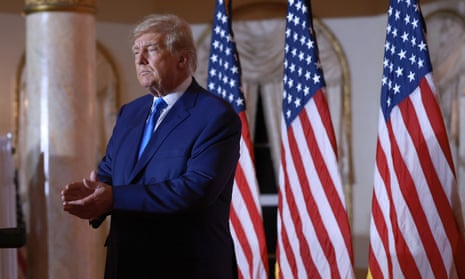
The third key point for “No” was its exploitation of the idea of “division”. This masterstroke was Trumpian. Words were taken and turned to mean their opposite. “Yes” became characterised as a vote for division and “No” was a vote for unity. It did not matter that the inverse was true.
Price and Mundine argued the Voice would entrench division along racial lines, giving privileges to First Nations people that would be denied to other Australians. “Division” became the central theme of the “No” case and proved to be a winner.
Price exploited the “unity” issue relentlessly. If she saw a conflagration in the distance, she was eager to help by bringing more petrol. She said the Australian Electoral Commission had interfered with the referendum process and insisted most First Nations people in the Northern Territory were opposed to the Voice. Many believed her, but polling on October 14 indicated remote communities voted “Yes” at a rate of more than 70 per cent.
Fourth among the factors that favoured “No” was Australia’s curious relationship with the Constitution. This document, unread and unrecognisable in the context of constitutional practice as it has evolved, was invoked during the campaign as a Holy Grail – revered, unknowable, untouchable. Each assertion by the “No” campaign that the Voice would be “risky” was demonstrably false, but the country’s worship of its ill-understood Constitution was enough to scare people away from change.
Fifth, the government and Yes23 were very vague about the structure and powers of the Voice itself, even in broad outline, and that looked shifty, although it followed normal practice in referendums.
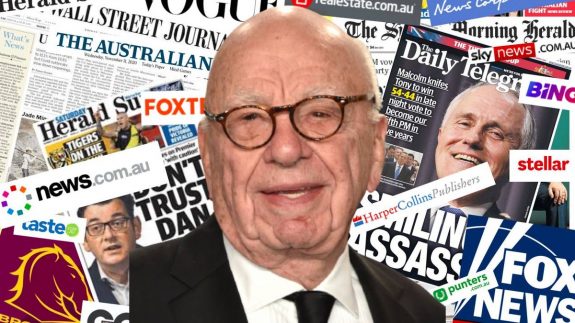
Finally, the media overall played a shameful role. This was a campaign defined by Murdoch and Musk. The lies circulated on social media were strategically targeted: First Nations people would be given free houses, free cars, free education at private schools. The “Yes” campaign was allegedly being run by the United Nations, or by Jews, or by condescending urban elites. The Voice would apparently push millions of people off their land. Taxes would rise exponentially to pay for Aboriginal welfare and the country itself would be forced to adopt an Indigenous name.
The government and the “Yes” campaign failed to attack these lies head on. The ABC was overly cautious and News Corp was brutal.
Source: Truth and the threats to liberal democracy








 olddogthoughts
You must be logged in to post a comment.