Tag: G20

Morrison Government humiliates Australia at G20

Substitute “faith” or “god” for wherever, and the number of times Morrison says “Plan”, and you find yourself listening to a religious zealot and not a Prime Minister. There is no substance only a promise of a Morrison Miracle coming. You only need be a true believer. He’s more a Trump with MAGA becoming “The Australian Way” and at worst a QAnon totally backed Murdoch prepared liar’s PR package prepared months beforehand saying we were never Climate Change deniers.

More amusing and light relief is that Australia’s Trump even has his own Rudy Giuliani backing him. It’s Deputy Barnaby Joyce whose running around by trying to get in on the act and bring the French President Emmanual Macron down  saying. ” Mate its only a contract get over it. It’s just a commercial contract for christ sake”. We all supposed to know they have no real or moral standing in Australia. So mate sue us!! After all he signed an $80mill one with Angus’s mates and got nothing for it.

As Prime Minister Scott Morrison met world leaders in Rome on Saturday, he represented a country a shadow of its former self. Alan Austin reports. THE CONTRAST could hardly be more glaring. A decade ago, Australia was the greatest country on the planet. Today, Australia is the stand-out loser — on climate policy, on economic outcomes, on corruption, on military procurement, on infrastructure, on democracy and on good global citizenship. Collapse in economic performance

Source: Morrison Government humiliates Australia at G20

Old Dog Thought- Morrison is as welcome as a lump, a lump of Coal at the G20

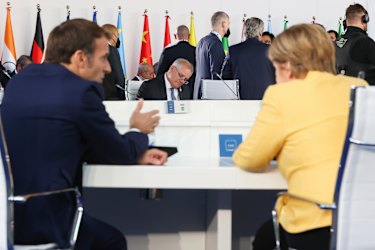
Prime Minister Scott Morrison sits across the table as Emmanuel Macron chats with German Chancellor Angela Merkel at the G20 in Rome.

Fighting Fake News with REAL 1/11/21 Every Picture Tells a Story; Morrison’s real photoshoot; The LNP car crash was waiting to happen;

BBC: Leaks Show Saudis Pressuring UN to Downplay Danger of Fossil Fuels as UN Warns G20 is putting $300 bn into Sector

Angus Taylor’s $240bn is doing Australia’s share in the dirty lifting

The report notes, “G20 countries have directed around USD 300 billion in new funds towards fossil fuel activities since the beginning of the COVID-19 pandemic — more than they have toward clean energy.” The only way to cap the temperature increase at a sweltering but perhaps not catastrophic 2.7F would be to slash those investments in half. In other words, if they stay on their current path, the richest 20 nations are making a laughingstock of themselves with their CO26 pledges next month.

Source: BBC: Leaks Show Saudis Pressuring UN to Downplay Danger of Fossil Fuels as UN Warns G20 is putting $300 bn into Sector

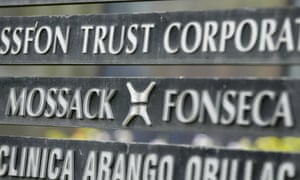
Panama papers: neither major Australian party will outlaw shell companies | News | The Guardian

Neither Liberals nor Labor plan to act, despite 800 Australians being on files of Mossack Fonseca and contrary to pledges at Brisbane G20 meeting in 2014

Source: Panama papers: neither major Australian party will outlaw shell companies | News | The Guardian

Cringing

Tom Switzer, former editor of Spectator Australia magazine, yesterday urged his readers on the Guardian’s website to look deeper at Prime Minister Tony Abbott’s performance over the G20 weekend. What might have seemed to many observers “defensive, embarrassing, insular, cringeworthy” was for Switzer evidence of Abbott’s “down-to-earth quality”, of his charming and unpolished bluntness.

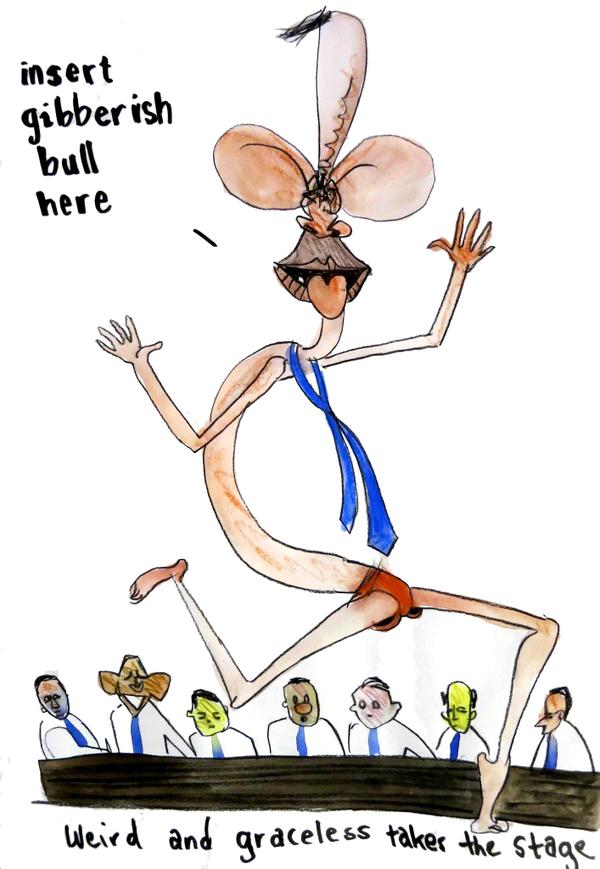
The focus of the “cringe critique” to which Switzer takes exception was an eight-minute talk Abbott delivered, without notes, to open a discussion at a G20 “leaders’ retreat”. Bill Shorten described it afterwards as “weird and graceless”, though he didn’t elaborate. Does Switzer have a point? It was a significant speech, delivered when the world was watching, so it is worth examining in depth.

“We are meeting in the Legislative Council chamber of the Queensland state Parliament,” Abbott began, “and back in the 1920s, the Queensland government abolished the Legislative Council because it was too much of a restriction on the power of the then premier, who was in the Legislative Assembly. So, this room symbolises the limitations on our power.”

The logic doesn’t follow. More plausibly, the room symbolises what Abbott would like to do to the current Senate, which is creating enormous difficulties for his policy program. Abbott’s frustration spilled over into his address to the G20 leaders:

“If I could kick off very briefly by saying that when I was elected – my government was elected – 14 months ago, I made four promises to the Australian people. First, that I would repeal the carbon tax, and that’s gone. Second, that I would stop the illegal boats that were coming to our country, and they have, thank God, stopped. Third, that we would start building roads in particular which had been long neglected in this country. Fourth, I said I would get the budget under control.”

This paragraph is the main focus of the “cringe critique”. It was a strange thing to say to a group of international leaders – especially when many of them agree with carbon pricing and see Australia as shirking its responsibilities under the Refugees Convention. Surely few could be expected to care about specific electoral promises Abbott had made from opposition.

But Abbott, as always, even in the midst of the political leaders of 20 of the most economically powerful states, was talking solely to his domestic audience. The speech was filmed, distributed publicly, and transcribed on his website. All this suggests that the speech was meant for wide public consumption.

The alternative explanation – that Abbott genuinely expected that the other 19 leaders present would respond positively to his presentation of himself as a kind of conviction politician, determined to deliver what he’d promised – doesn’t really bear thinking about. If true, it suggests powerful delusion on Abbott’s part.

“Now, I have to say this has proven massively difficult – massively difficult,” Abbott continued, referring to his efforts to get the budget under control, “because it doesn’t matter what spending program you look at, it doesn’t matter how wasteful that spending program might appear, there are always some people in the community who vote, who love that program very much.”

Ostensibly, Abbott wanted a 100-minute discussion about the problems of getting “important economic reforms” through the Senate. If he wanted tips, it’s unlikely he would have got anything useful from Vladimir Putin, an autocrat, or from Xi Jinping, the president of a one-party state.

No. What Abbott wanted was for his domestic audience to see him discussing deeply unpopular domestic policies at the world’s premier economic forum. He spoke of two issues in particular – his government’s planned deregulation of the university sector, which would mean “less central government spending and effectively more fees that students will have to pay”, and the $7 GP co-payment. For Abbott, the policies are good and right. What’s wrong is the way they’re being perceived. As with any problem of perception, what’s needed is a good rhetorical play.

The rhetorical trick of the speech was all about framing. Since the May budget, Abbott has always justified these and other policies in economic and fiscal terms. What better opportunity to drive home that message than at the G20, when presumably only serious economic issues of world importance would be discussed? And by mentioning those policies without seeking to justify them on first principles, Abbott hoped to create the illusion that their economic credentials, at least for “the most powerful and influential people in the world” (as he described them), were self-evident and uncontroversial. “In most countries this is not unusual,” Abbott said about the need to inject a “price signal” into primary health care, making eye contact with others in the room as if gathering global support for a so-called “reform” that would obliterate the central tenets – bulk-billing and universality – of Medicare, in Abbott’s mind a thoroughly Labor policy.

“I don’t have any magic answers to the problems we face,” Abbott went on. “But the more gatherings like this can affirm the importance of good policy.” Having all but exhausted his domestic options short of a double dissolution, which on current poll numbers he would lose, the global play is a last-ditch effort to win domestic support for policies that the public rejects not because they’re “harsh but necessary”, but because they’re harsh and unnecessary.

For a man whose worldview is not all that dissimilar to the DLP’s half a century ago, Abbott made a very grave error when he allowed his economic policies to be outsourced to the right-wing think tanks (like the Institute of Public Affairs, with which Switzer is associated). It’s meant that on both social and economic issues, Abbott is for middle Australia a kind of extremist, albeit one who seems pleasant and blokey enough in person.

Tom Switzer is just one of an army of right-wing commentators whose function is to protect Abbott and his government from too much negative interpretation, to insulate him from it by building around him a fortress of bullshit. Most of them are at News Corp, an entity whose writers go to extraordinary lengths to present Abbott as “statesmanlike” in his international dealings.

There’s an irony to their efforts. A statesman – according to dictionaries a “disinterested promoter of the public good”, a political leader who “exhibits great wisdom and ability” – is precisely the opposite of what Abbott is: yet another insular, domestically focused political leader who sees foreign policy and international engagement as a way to earn cheap domestic points. He’s the type of leader Peter Hartcher laments in his book The Adolescent Country. If we weren’t so deeply in the thrall of the free market, one might be forgiven for seeing something of the old Soviet spin in Team Abbott’s methods.

But in the end, Abbott’s attempt to co-opt the G20 for domestic ends didn’t work. His delivery, all Midnight Oil hands and missed beats, was truly cringeworthy. And it came among too many gaffes. His incorrigible Anglophilia (his words) had displaced his domestic radar during David Cameron’s visit on the Friday, and he fell again into the trap of lauding the achievements of the British in Australia without acknowledging the destruction and devastation it wrought on those who were already here in 1788 – and generations of their descendants. His bizarre threat to shirt-front Putin – a mixture of playing for domestic points and genuine brain-snap – overshadowed the whole G20 preparation period in the tabloid media, and made him look full of piss and wind when he couldn’t follow it through. His stubborn insistence that his Direct Action policy – conceived as a purely political counterpoint to the Gillard government’s carbon price – is more effective than the market-based schemes elsewhere, and that environmental issues should be kept separate from economic ones, looks stupider and stupider as the world grinds forwards, if far too slowly, on climate change. By the end of the weekend he’d managed to confuse China with Tasmania.

No, Tom Switzer and the “Kelly gang” at News Corp: statesmen don’t behave like this.

G20 leaders slap down embarrassing Abbott and the COALition

The G20 delivered a stinging riposte to the Abbott Government, which is now seen around the world as little more than an arm of the fossil fuel industry. Lachlan Barker reports.

MUCH HAS ALREADY BEEN WRITTEN about the gut-wrenching embarrassment that all Australians suffered watching our prime minister talking with world leaders at the G20.

My favourite was from LA Times journalist Robyn Dixon who described Tony Abbott as:

‘The shrimp of the school yard’.

This perfectly encapsulated how we all felt as we listened to Tony Abbott’s speech to, frankly, bemused world leaders, as he told them of how his Government had stopped the boats and how none of us ungrateful Australians could see why it was so important to pay $7 to go see a doctor.

It was really embarrassing stuff; I struggle to think of a way it could have been worse.

As if Angela Merkel and all the rest could care less about a $7 payment that….

Actually, I can’t even go on, it’s too hard to revisit it in written form.

Of course here in the environment section, the real issue and that is an exact description, believe me, was climate change. Australia, sorry, Tony Abbott, didn’t even want it discussed but, thankfully, U.S. President Barack Obama wasn’t having that and he made a speech ‒ direct in its nature ‒ to the Australian people, talking of the effects of climate change, warning of “drought, wildfires, flood and storm damage,” as well as saying:

“… the incredible natural glory of the Great Barrier Reef is threatened.”

Obama added that he wished to be able to return with his daughters and see the Reef, and:

“I want them to be able to bring their daughters or sons to visit and I want that there 50 years from now.”

Of climate change’s effects he said:

“No nation is immune, and each nation must play its part.”

It was a genuinely world leading stuff from a genuine world leader, and so much at variance to the pint-sized utterings of our embarrassment of a prime minister.

Thankfully, the world leaders that were there, did get climate change discussed, and a communiqué was released, which one leader’s aide described as trench warfare to get done. Tony Abbott fought tooth and nail against world sentiment to downplay the effects of coal on the world’s climate as part of this process.

Away from climate change, one thing that was on the G20’s agenda was two per cent economic growth, and that is fair enough, as it is in essence an economic forum. However, even this modest outcome was largely shown to be pointless by Professor John Kirton, co-director of the G20 Research Group at the University of Toronto’s Munk School of Global Affairs, who appeared on ABC TV’s Insiders program on Sunday, 16 November.

Professor Kirton quoted Angel Gurria, the Secretary-General of the OECD, and, said professor Kirton:

“Angel Gurria has said that if we don’t do something right here, right now, to control climate change, the economic cost if going to be a minus six per cent hit on GDP, it rather makes the plus two percent that we are struggling to get here rather small in comparison.”

He then added:

“… so simply if you want a summit that is focussed on generating on global economic growth you have to look at both sides of the balance sheet, I think every business person knows that, not just trying to get two more, but also stopping the loss of the six per cent.”

So arguing for economic growth in isolation of environmental destruction is once again shown to be a genuine waste of time.

However, one of the main proponents of this two per cent growth goal, Treasurer Joe Hockey, did show (finally) some grasp of reality in the run up to the G20.

Hockey said in an interview with Fran Kelly on Radio National:

“70 per cent of Australia’s economy is services, but it’s only 17 per cent of our exports. So what we’ve got to do is lift our export in services and then we can supplement the massive export growth that we have in resources.”

So it’s good that at least the Treasurer has finally caught up with the rest of us, who have been saying for a long time that services are indeed 70 per cent of the economy and are a damn sight less polluting thing to export than mining products.
So why is Joe saying this now?

Well it seems that he has understood that resources exporting is in severe decline and it’s time to back a more sustainable horse in this race: services. It seems from his statement that a big part of the two per cent growth he is looking for will come, not from mining, but from services — education, health and finance are three examples.

Welcome to the twenty first century Joe.

But if the Treasurer is starting to orbit sanity, our prime minister continues to delve deeper into the mire is nuttiness, as part of his lunatic backing of coal against world sentiment, the prime minister said:

“The point I made in the G20 and perhaps it wasn’t the most popular point I made, is coal is very important, it’s an important part of the Australian economy, it’s an important part of the world’s energy supply and it will be for decades to come.”

Well, Tony, one seriously questions the use of the plural (decades) in that statement.

Turns out that coal may be an important part of the world’s energy supply for a lot less time than that and here’s why.

Glencore, one of Australia’s largest miners, have recently announced that they are temporarily closing all their coal mines in Australia ‒ shuttering, it’s called ‒ for three weeks in December. This is due to the world oversupply of thermal coal, used in power generation.  This is reflected in the spot price of coal, which dropped another 3.11 per cent last month to $US68.45 a tonne, and is therefore now US$6 below the profitable line for coal production in Australia.

One bank, ANZ, has predicted that the supply overhang will clear, possibly as early as 2016 or 2017, thus making the mining of thermal coal profitable again. However, the supply overhang has to be cleared for the price to go up again, and this is hardly likely if Australia continues to bring new coal mines on line, as in the Galilee basin in Queensland, which will clearly only add to the oversupply problem.

Added to which there is a nexus of disaster for Australia’s coal exporting looming, to wit: the above mentioned supply overhang coinciding with China’s massive investment in renewable power. China has already halved its coal imports, and with its avowed goal of creating 1.3 gigawatts of power from renewable sources, a week, for the next fifteen years, it could cease importing coal altogether.
India are going the same way, RenewEconomy tells us:

‘… in a landmark announcement that has caught the global coal industry totally by surprise, India’s Energy Minister, Piyush Goyal has announced an ambitious target that could see India cease thermal coal imports within two to three years.’

This of course shows once more the insanity, the environmental and fiscal lunacy of the Carmichael Coal Mine in Queensland. That mine is a massively destructive thing, with deleterious effects on the nearby agricultural land, the Great Artesian Basin, Australia’s greenhouse emissions and the Great Barrier Reef and all to dig up unprofitable coal for India, which, as RenewEconomy has now shown, India doesn’t really want.

All of the above allows us to paraphrase the great Oscar Wilde:

“Economically speaking, the only thing worse than fighting climate change, is not fighting climate change.”

And in answer to the prime minister’s assertion that coal will be important for decades to come, we can say that coal will be important for perhaps another decade — one.

Maybe.


Breaking news: P20 leaders’ summit cancelled due to lack of point. Written by: Sean Stinson

Image: Wikipedia

With all the fuss surrounding the storm in a teacup that was the G20, I’d just like to give a shout out to another notable recent non-event. While our very own treasurer Joe Hockey posed for photo ops with the leaders of the free market, talking up the need to ‘lift people out of poverty’ as the basis for boosting economic growth by 2% above normal growth expectations, the leaders of the world’s 20 poorest countries didn’t meet for multilateral discussions last week, mostly because they weren’t considered important enough get an invite, since they clearly had nothing to bring to the table, and probably could not afford the airfare anyway.

Nonetheless, in the spirit of fairness and equality, let’s take this opportunity to give an enthusiastic hoorah for the undefeated title holder of poorest country in the world, the Democratic Republic of the Congo, whose people Belgium’s King Leopold II is said never to have committed genocide against, killing 10 million.

In a close second place, let’s also raise a glass and a box of used condoms to Zimbabwe, ground zero for the HIV/AIDS epidemic which now affects 20% of its population. Of course this has nothing to do with WHO clinical trials involving human test subjects and a polio vaccine which had been cultured in the kidneys of rhesus monkeys, allowing the Simian Immunodeficiency Virus (SIV) to jump species – so let’s not talk about that.

Followed by a length and a half is Burundi whose economy consists solely of exporting coffee beans but has no sea ports and no direct access to markets so 80% of its population still live in poverty.

In fourth place is Liberia. A nation founded and colonized by freed slaves from America. Is this a dystopian nightmare on steroids? Or a social experiment gone badly, badly wrong? Liberia is still recovering from the civil war which raged through most of the 1980’s killing hundreds of thousands, and is now threatened by the Ebola pandemic.

At the time of writing the world’s fifth poorest country is Eritrea. Gatekeeper of the Suez Canal, in colonial times it was seen as a region of great geopolitical importance by the Italians who ransacked it first, and later the British. Since independence it’s been more or less constantly at war with neighbouring Ethiopia.

Coming up on the inside is the Central African Republic. This is more than likely where those diamonds in your pretty engagement ring come from. 62% of its population live on less than $1 a day.

Next is Niger and then Malawi. 80% of Niger is SAND. Malawi is another landlocked rural economy without access to trade.

In ninth place is Madagascar. If it’s not the exploitation of mineral wealth then it’s tourism which is the cornerstone of most third world economies. Home to some of the most diverse flora you’ll ever see. I should like someday to visit.

Afghanistan is the tenth poorest country in the world. It’s hard to believe that just 30 years ago was a burgeoning socialist economy.

In eleventh place is Mali and in twelfth place Togo, where things are looking slightly up – It’s reported that the average wage in Togo has risen from $1 a day to $1.25 in just under 10 years.

Bringing up the rear are Guinea, Ethiopia, Mozambique, Guinea-Bissau, Comoros, and South Sudan.

Second to last we have Nepal, the world’s 93rd largest country by land mass, with a population of approximately 27 million. Bordered by China and India it is home to the world’s tallest mountain peaks including Mount Everest. It’s also reportedly home to some of the happiest people on earth. Up until 1951 Nepal was an agrarian society, arguably oblivious to its lack of schools, hospitals, roads, telecommunications, electric power, industry or civil service for hundreds of years. Nowadays Nepal is “committed to a program of economic liberalization.” Thank God for progress.

In last place is Haiti, the world’s twentieth poorest country whose citizens are lucky enough to live on $2 a day. All but swept out to sea by a 7.0 Mw earthquake in 2010, despite the billions gifted to NGOs the rebuild infrastructure, there is no indication of economic recovery any time soon.

The global bumblebee fart which was the G20 summit will soon fade away into a cloud of coal dust, remembered most fondly by anyone who happened to catch a glimpse of president Obama, and for the $400m it cost to close down Brisbane for a week, plus whatever Putin’s mini bar bill comes to. Once again our beloved Prime Minister has taken the opportunity to make a complete dick of himself and the rest of us in front of the entire world, playing apologist for big mining in the face of falling iron ore prices and impending climate catastrophe, and whining to his newfound piers how sad it is that the democratic process will not allow him to pass his $7 GP tax or push through his plan to make university degrees less affordable.

Of course none of this should come as any surprise. Maybe we should cut the man some slack? Looking at the P20 it’s pretty clear that mining, agriculture and tourism have been the primary cash cows of some of the most-likely-to-succeed third world economies. I guess you need to see it from the point of view of a sociopathic bottom feeder to understand that old Tones is really doing the best he knows how. It may be another 40 years before Australia gets to play host to such an important event again. Given our current economic trajectory we may be lucky to attend future summits at all. It’s hard to imagine that we will number among the world’s 20 strongest economies for long if we continue on our current path. Still, given the choice between the indignity of poverty and the embarrassment of Abbott’s pointless posturing, this may be for the better.

Inside Story G20 summit: Is Putin being frozen out? Russian president given a frosty reception in Brisbane over his Cold War-style stand-off with the West.

http://aje.me/11qYGvm

Inside Story

G20 summit: Is Putin being frozen out?

Russian president given a frosty reception in Brisbane over his Cold War-style stand-off with the West.

Russian President Vladimir Putin has been branded a bully with imperialistic ambitions at the G20 summit in Brisbane.

Australian Prime Minister Tony Abbott accused the Russian leader of trying to recreate the lost glories of the old Soviet Union, and said he planned to “shirtfront” or physically confront Putin over Russia’s actions in Ukraine.

Britain’s Prime Minister David Cameron also warned that Russia faced further sanctions if it didn’t commit to resolving the conflict in Ukraine.

Putin was met at Brisbane airport by Australia’s assistant defence minister, in an apparent diplomatic snub.

Al Jazeera’s Andrew Thomas, reporting from Brisbane, said Putin was “isolated” at lunch on day one of the G20 summit on Saturday, “all but ignored by other world leaders”.

So is Putin being frozen out – or do world leaders need him more than he needs them?

 
Filed under:

Actions speak louder than words

joe

  • November 15, 2014
  • Written by:

Joe Hockey has been making noise about tax avoidance.

“They’re stealing from us and our community,” he told the Nine Network on Friday, labelling tax cheats as “thieves.”

Tony Abbott told us we should judge the Coalition on their actions rather than their words – sound advice considering their words bear no resemblance to what they actually do – so it would be timely to consider what they have done to address this growing problem.

While other countries are their closing their tax minimisation loopholes, the Abbott government has spent the past year opening them up.

One of Treasurer Joe Hockey’s first acts in office was to roll back Labor’s measures to tackle profit shifting and improving tax transparency – effectively handing back $1.1 billion to big global firms.

As it pushes for a G20 summit agreement this weekend to crack down on corporate tax evasion, the Abbott government has set a timetable for action that is about one year behind the biggest European economies including Britain, France and Germany.

The “early adopters” in the global program will begin exchanging information in September 2017, however, the exchange of information with Australian authorities will not take place until September 2018.

In March this year, the ATO announced an amnesty for offshore tax cheats.  For those who come forward before the end of the calendar year, there is a guarantee of no prosecution and only four years of offshore income is assessed with a maximum shortfall penalty of 10 per cent.

“For lots of people, their forebearers came from war-torn Europe”, tax lawyer Mark Leibler told the ABC’s AM program.  “They wanted to keep nest eggs overseas, not primarily in order to avoid or evade tax, but just as a measure of security.”

So these people and their families have been avoiding tax since they arrived here after the war but let’s not worry about that.

Around $150 million worth of assets is the most declared by one person so far. The money has come from 40 countries including Switzerland, the UK, Hong Kong, Israel and Singapore.

Australian Tax Office deputy commissioner, Greg Williams, said new migrants with limited knowledge of Australia’s tax system and people that have deliberately sent money offshore are also among those coming forward.

“You’ve got that whole gamut from old money, new money, recent migrants and people sending the money offshore,” he said.

These ‘people’ include our own government.

Australia’s Future Fund has revealed it has invested more than $20 billion through offshore tax shelters, including the Cayman Islands, warning of lower returns if it does not minimise its tax bill.

The $77bn fund for federal public-servant pensions has revealed that 14.4 per cent of its assets, worth about $11bn, are invested in subsidiaries based in the Cayman Islands (a tax haven in the Caribbean) and a further 1.3 per cent is in its subsidiaries in the British Virgin Islands and Jersey.

On top of this, the fund has tipped 12.6 per cent of assets, about $9.6bn, into private market vehicles based in these tax shelters and a small fraction is invested in a vehicle based in Luxembourg.

Answers to a Senate inquiry revealed that, at June 30, the fund held stakes in 15 tobacco manufacturers including a $55.4 million stake in British American Tobacco in Britain, $44.5m in Lorillard and a $44.9m investment in Philip Morris in the US.

Individuals within the government also embrace the benefits of tax “minimisation”.

In July, it was disclosed that Malcolm Turnbull, Australia’s second-richest parliamentarian, has invested in a ”vulture fund” based in the tax haven Cayman Islands.

Mr Turnbull, who has divested himself of shares and switched his investments to managed funds and hedge funds since being elected, updated the register of members’ interests on June 18.

The IPA, not surprisingly, is against any moves to tighten up the laws.

“Inspired by the sensationalist headlines, the emerging policy agenda for a clamp down on tax avoidance should be seen for what it truly is: a ploy by indebted countries, with overgrown public sectors, to hoover up more cash from productive people and enterprises, stifling tax competition in the process.”

You have to give them credit for never letting morality or ethics interfere.  They were no doubt impressed when their much-loved patron, Rupert Murdoch, single-handedly blew an almost billion dollar hole in our budget when the ATO chose not to appeal a court ruling condoning Murdoch’s tax avoidance practices.

In a 1989 meeting, four News Corp Australia executives exchanged cheques and share transfers between local and overseas subsidiaries that moved through several currencies.

They were paper transactions; no funds actually moved. In 2000 and 2001 the loans were unwound. With the Australian dollar riding high, News Corp’s Australian subsidiaries recorded a $2 billion loss, while other subsidiaries in tax havens recorded a $2 billion gain.

By last July that paper “loss”, booked against News Corp’s Australian newspaper operations, had become an $882 million cash payout.

Under a legal arrangement when the company was spun off last June, News was forced to pass all of the tax payout to Mr Murdoch’s 21st Century Fox.

News Corp said it had retained $A81 million because it faced income tax charges on the interest payments by the Tax Office. However it seems unlikely to actually pay these funds: News Corp Australia carried another $1.5 billion in tax deductions from a separate paper shuffle that it made when News reincorporated in the US.

The Australian Taxation Office says its $882 million loss to Rupert Murdoch’s News Corporation may just be the tip of the iceberg.

Tax Commissioner Chris Jordan and deputy Neil Olesen told a parliamentary inquiry the Tax Office has recently lost even more valuable cases against individual taxpayers.

“There are others bigger than this one,” Mr Olesen told a parliamentary hearing in March. “There were significant amounts at stake that we were also unsuccessful with through the courts.”

In a current case, Australian tax authorities allege multinational oil giant Chevron used a series of loans and related party payments worth billions of dollars to slash its tax bill by up to $258 million. The claim is now being heard before the Federal Court of NSW.

Despite growing pressure to crack down on multinationals reaping massive profits in Australia each year and paying little tax, the ATO has been scaling back its technical ability to force the “transnationals” to pay up.

After cuts of $189 million in the May budget, the ATO announced that they had to cut staff by 2,100 people by the end of October.

Community and Public Sector Union (CPSU) deputy national president Alistair Waters said “The tax office has provided evidence to the Senate that for every $1 spent on resources by the tax office, that collects $6 in tax revenue.  Obviously if you are pulling resources out of the tax office that makes it easier for people who might want to avoid paying their tax.”

Public servants with hundreds of years of combined technical know-how have left the ATO’s “Internationals’ Group” in recent years, with the process accelerated by the present massive cuts to the agency.

Private advisors hired by “transnationals” to minimise their tax payments know too much about internal workings of the ATO and are using their insider knowledge to profit their clients.

Case deadlines of 90 days imposed on audit teams by ATO bosses eager to increase the number of cases covered have allowed transnationals to simply “wait out” the Taxation Office or to have low-ball settlements accepted.

Swedish furniture giant IKEA paid just $7.7 million in tax in Australia in 2013-2014, despite banking an operating profit of $92 million for its Australian activities that year.

Even the government’s domestic decisions belie their stated willingness to crack down on tax rorting.

Repealing the legislation regarding novated car leases and FBT cost us $1.8 billion in revenue and the only people to benefit are those who fraudulently claim business usage of their car, and the salary-packaging industry that has sprung up to service this perk.

But what can you expect from a Prime Minister who keeps caucus waiting for an hour – his excuse being “he had to schedule an early morning visit to a cancer research centre in Melbourne on Tuesday so that he could justify billing taxpayers to be in the city for a “private function” the night before”.

Or a Treasurer who defended “his practice of claiming a $270-a-night taxpayer-funded travelling allowance to stay in a Canberra house majority-owned by his wife” as did the Communications Minister who “rented a house from his wife Lucy when in Canberra.”

In Canberra, MPs are not required to show a receipt to prove they stayed in a hotel because the blanket $270 rate applies whether you stay in a hotel or a house owned by yourself or another person.

Because of the rules, many MPs purchase property in Canberra to provide a base during parliamentary sittings and use their travel allowance to pay off their mortgage.

We also have our Prime Minister, Attorney-General, Foreign Minister and Agriculture Minister defending their practice to claim travel and accommodation costs to attend weddings whilst grudgingly refunding the money only after it was exposed in the press.  Attendance at sporting events apparently still constitutes official business.

Tony Abbott had promised to lead an honest government that would respect taxpayers’ money and end the age of entitlement.

Joe Hockey has “vowed to give the Tax Office whatever laws it needs” and is “determined to use all available resources to close tax loopholes.”

Sorry boys – your actions make me doubt your sincerity.

If Abbott wants Putin to leave Brisbane disrepecting the Australian government. If Abbott wants to initiate a cold war he’d be going about it the right way if only he was more important. Abbott however is ensuring the future of BRICS

http://aje.me/114OAiA

Abbott has gained a trade deal with China and has guranteed the end of one with Russia that’s his concept of commercial growth.

Leaders from the world’s strongest economies have gathered in the Australian city of Brisbane, commencing the G20 summit, with the crisis in Ukraine expected to take centre-stage.

The two-day summit, which began on Saturday, promises to be a showdown between Western leaders and Russian President Vladimir Putin, amid fresh reports of Russian troops pouring into eastern Ukraine.

At a news conference in Canberra on Friday, British Prime Minister David Cameron blasted Russia’s actions as “unacceptable”, warning they could draw greater sanctions from the United States and the European Union.

It is a large state bullying a smaller state in Europe, and we have seen the consequences of that in the past.

David Cameron, British Prime Minister

“It is a large state bullying a smaller state in Europe, and we have seen the consequences of that in the past,” Cameron said.

Russia denies sending troops and tanks into Ukraine, but increasing violence, truce violations and reports of unmarked armed convoys travelling from the direction of the Russian border have aroused fears that a shaky September 5 truce could collapse.

Security issues

The G20 leaders summit in Brisbane is focused on boosting world growth, fireproofing the global banking system and closing tax loopholes for giant multinationals.

But with much of the economic agenda agreed and a climate-change deal signed last week in Beijing between the United States and China, security concerns are moving to the forefront.

In addition to Ukraine, the crises in the Middle East are threatening to overshadow the economic agenda. British nationals who become foreign fighters abroad could be prevented from returning home under new laws to deal with fighters in conflicts such as Iraq and Syria, Cameron said in an address to the Australian parliament on Friday.

As host, Australia will continue pushing its growth agenda, despite growing security tensions, Prime Minister Tony Abbott said at the joint news conference with Cameron.

Australia is pushing for an increase in global growth targets of 2 percent by 2018 to create millions of jobs, and that goal appears on track. Over 1,000 policy initiatives proposed by G20 nations should add around 2.1 percent, the head of the Paris-based Organisation for Economic Co-operation and Development said.

The G20 is made up of 19 countries – Argentina, Australia, Brazil, Britain, Canada, China, France, Germany, India, Indonesia, Italy, Japan, Republic of Korea, Mexico, Russia, Saudi Arabia, South Africa, Turkey and the United States – and the 28-member European Union.

The group accounts for 80 per cent of world trade and 85 per cent of global economic production.

Brisbane: Can we please concentrate on the issues?

Brisbane: Can we please concentrate on the issues?. 53953.jpeg

There are those who would like to use the G20 Summit in Brisbane, Australia, to perpetuate a hackneyed West versus East approach, at a time when the world needs to pull together. This begins with a responsible media and competent political leaders, focusing on the issues at hand instead of chasing ghosts and sowing the seeds of conflict.

Predictably, David Cameron has used Brisbane as a stage to launch a set of snide remarks about Russia, just as the host, Australian Prime Minister Tony Abbott, did recently with puerile remarks about wishing to “shirtfront” Russian President Vladimir Putin over the MH17 air disaster over Ukraine. In fact the entire Western leadership has adopted a hypocritical, dishonest and groundless campaign against Russia, its partner in two world wars, over a question which was prepared, cooked and served in the west: Ukraine. Why doesn’t Abbott confront the Ukrainian President, Poroshenko? Why doesn’t he ask why the Ukrainians do not reveal the content of the ATC tapes seized by the authorities, why doesn’t he ask the Ukrainian President about the alleged sighting of fighter jets trailing flight MH 17?

They tried it before in 2008, in Georgia, when Georgian troops murdered South Ossetian citizens, massed their troops on the border with Abkhazia and then ran screaming along with their magnificent NATO advisors as Russia taught them a lesson or four in soldiery.

They tried again in 2014, in Ukraine, when an illegal Putsch was launched in Kiev to topple the democratically elected President, Yanukovich. The West, of course, applauded at this travesty of democracy and then had the audacity to claim the moral high ground and start blaming Russia, accusing Moscow of undemocratic behavior when President Putin has been elected multiple times with whacking majorities and approval ratings several times higher than those of Cameron, Obama and Abbott combined.

Nothing did they say about the shots fired from the sixth floor of Hotel Ukraine in Independence Square against the pro-rebellion demonstrators, to create a cause and blame Yanukovich. Nothing did they say about the Fascist massacres in which burning bodies of Russian-speaking Ukrainians were tossed out of windows by Fascists as the crowds below looked on, applauded and cheered, as was the case at Mariupol. And this is the side backed by Abbott, his master Cameron, and their master, Obama?


They are quick to blame Russia for the instability in Eastern Ukraine, and to point the finger without a shred of evidence that Russia is interfering. Google these days can practically pick up a matchbox. Where are the photographs of tanks rolling across the border? There aren’t any. Maybe the BBC would like to do a copy paste job again using pics from two decades earlier and another continent?

And now we are on to the blame game perhaps Mr. Cameron and Mr. Abbott would like to comment on their own countries’ recent history of war crimes in Iraq, the country which was invaded without any justified or justifiable casus belli, the sovereign nation which was totally destabilized, whose civilian infrastructures were strafed with military hardware, whose civilians were murdered. The entire Iraq campaign culminated in the most horrific war crimes – deploying cluster bombs in civilian areas, targeting civilian homes and leaving swathes of the country dangerous through the deployment of Depleted Uranium.

The direct result of the criminal interference of the United States of America, its chief poodle, the UK, in turn its ex-colony crawling around its legs, Australia and new willing bedboy, Poland, was thousands of cases of cancer and birth defects among Iraqi children in 300 known contamination sites. The USA, the UK, Australia and Poland, in participating in the illegal invasion of Iraq, have left a radioactive legacy for decades to come.

And here they are, the West, supporting terrorists in Syria against President Assad, interfering in Ukraine, overthrowing a democratically elected Government, then supporting the side that committed massacres.

So instead of using Brisbane to launch unfounded and insolent quips against Russia, suppose the West, for once, acted with responsibility in addressing the real issues facing humankind, and not perpetuating their lies to cover up their own criminal misconduct?

The issues at Brisbane’s G20 Summit on November 15-16 are the following:

Fostering the conditions to stimulate world trade, instead of stifling it through the illegal imposition of sanctions, job creation, stimulating the global economy by 2 per cent over five years and measures to combat tax evasion, now that climate change is not on the agenda. And who was responsible for keeping it off? Three guesses.

Let us hope Brisbane is about coming together, not driving a wedge between the G8 and its diminishing sphere of influence and the BRICS, the prototype of the new model which carries the hearts and minds of humankind.

Timothy Bancroft-Hinchey

Take the world’s hardest G20 quiz How well do you know Australia’s place in the world? Take our quiz to see if you can spot how Australia compares to G20 countries.

http://www.abc.net.au/news/2014-11-13/g20-quiz-brisbane-australia/5854436?WT.mc_id=Corp_News-Nov2014|News-Nov2014_FBP|abcnews

Filed under:

G20 Brisbane: Five corporate tax havens around the world and how the summit can crack down on them By Paul Donoughue, staff. By scacking 4700 experts in this area from the ATO

Bermuda beach

G20 Brisbane: Five corporate tax havens around the world and how the summit can crack down on them By Paul Donoughue, staff

Prime Minister Tony Abbott has nominated global tax avoidance as one of the key issues on the agenda for this weekend’s G20 summit in Brisbane.

Major companies including Google and Apple have faced strong criticism over their efforts to lower their tax bills by shifting profits to jurisdictions with low or non-existent corporate tax rates.

Mr Abbott told the World Economic Forum earlier this year taxes needed to be fair “in order to preserve the legitimacy of free markets”.

“For the leaders of the countries generating 85 per cent of the world’s GDP merely to agree on the principles needed for taxation to be fair in a globalised economy would be a big step forward.”

The Lowy Institute’s Mike Callaghan said the issue was a complex one that will not be resolved in a single leaders’ summit.

“But what you need to see in Brisbane is what I call a down payment – something that you can point to to say, ‘this is a demonstration that G20 is trying to respond to the way global companies operate’,” he told ABC News Online.

“And what they could agree to in Brisbane is this sharing of what’s called country-by-country reporting.”

Currently, the Australian Tax Office can only see the local tax bill of a multi-national company, he said. But G20 leaders will likely formalise an OECD plan for countries to share information on what companies are doing internationally in regards to their taxes.

“The ATO could have more information [if] this multinational doesn’t seem to make much profit in Australia but has very large payments to subsidiaries in low-tax jurisdictions [and] doesn’t seem to have any workers employed there or any investment there but has huge profit centres.”

In light of this, we take a look at some of the world’s tax havens and which companies are taking advantage of them.

United States

One of the worst-offending countries when it comes to facilitating tax avoidance is – surprisingly – the US, said University of Sydney senior lecturer in business Dr Antony Ting.

“The research shows the US government has been knowingly helping these multi-nationals to avoid foreign tax,” Dr Ting told ABC News Online.

“The government’s justification is ‘I want to help my companies be more competitive in the world’.”

In an attempt to draw corporations away from the major hubs of New York and New Jersey, the US state of Delaware has made it quick and easy to register a corporation.

A New York Times investigation in 2012 found more than 200,000 businesses – including major US tech companies – were registered at a single address.

However, the site was little more than a forwarding address for each firm. The idea, critics said, was to take advantage of the state’s low corporate tax rate.

Ireland

“The tax rule in Ireland is a perfect accompaniment to the US tax laws,” Dr Ting said.

Last year, Apple faced criticism after paying $193 million in tax on $26 billion in profits in Australia thanks to its creative accounting practices.

CEO Tim Cook was forced to face Congress and deny Apple was unfairly avoiding tax by using a method known as the “double Irish”.

It involves a company based in the US or elsewhere setting up an Irish subsidiary, which usually only exists on paper.

That subsidiary, however, while registered in Ireland, is allowed under locals laws to be taxed in another jurisdiction.

In many cases, that is somewhere like the Cayman Islands or Bahamas, which have corporate tax rates of 0 per cent.

“You can set up a company that will not be taxed anywhere in the world,” Dr Ting said.

“Most of the profits Apple generates in Australia [are] never taxed anywhere in the world.”

Forbes has rated Ireland as one of the top 10 tax havens of the world, though the country is seeking to close these kinds of loopholes.

Bermuda

Bermuda, a British dependency, is one of several small jurisdictions – many of them islands – that does not have a corporate tax rate.

Along with the Cayman Islands and the Isle of Man, it has become an attractive destination for off-shore banking and financial services firms.

However, Bermuda denies it is a tax haven. Writing in The Guardian, MP Walton Brown said instead of collecting tax from companies, Bermuda charges customs duties.

“Over the last 15 years, when the OECD and the Financial Action Task Force began its continuing commentary on ‘harmful tax regimes’, Bermuda signed 42 tax information exchange agreements with countries seeking information about their citizens and companies,” he said.

“We signed the first tax agreement with our largest trading partner, the United States, in 1988. All a signatory country has to do is submit the tax request and Bermuda responds.”

Luxembourg

Luxembourg is a landlocked country in western Europe with a population of about 500,000. It is one of the smallest sovereign nations in Europe, and has one of the highest GDPs per capita in the world.

Major international firms, including Pepsi, IKEA and FedEx, have sought deals with Luxembourg to lower their tax bill, according to emails obtained by the International Consortium of Investigative Journalists.

In light of those revelations, there have been calls this week for Jean-Claude Juncker, head of the European Commission, to step down, given he was the leader of Luxembourg when the deals were allegedly reached.

Mr Juncker is attending the G20 summit this week.

Members of the European parliament have meanwhile called for a probe into tax avoidance in the EU and the laws that facilitate it.

A 2011 report found Luxembourg was the easiest country in the EU in which to pay your company taxes: it takes just 59 hours, or a little over one full-time employee’s working week, compared to 616 in Bulgaria.

Cayman Islands

The Cayman Islands, a British Overseas Territory in the Caribbean Sea near Cuba and Jamaica, collects no corporate tax.

The island, with a population of just over 50,000 and a GDP per capita of about $50,000, is considered a global hub for off-shore banking.

Hundreds of international banks have branches there and the banking sector is one of the largest in the world.

This development brought the scrutiny of the OECD, and in 2009 US president Barack Obama singled the Cayman Islands out as a significant tax shelter.

In 2011, advocacy group the Tax Justice Network labelled the state the fourth safest tax haven in the world.

Filed under:

National Police Freedom Laws are in place

G20 police from outside Queensland will be exempt from local investigations

It will be ‘close to impossible’ to resolve complaints against 1,500 police brought into Brisbane for the G20, lawyer says

The 1,500 New Zealand and interstate police sent to bolster G20 security in Brisbane will be exempt from local investigation of public complaints.

Any allegations of mistreatment by those officers, who will make up a quarter of the largest peacetime security force in Australian history, would instead have to be pursued with oversight bodies in Auckland, Sydney and elsewhere.

While outside officers are slated to play a background role, lawyers say their legal status affords them virtual immunity from disciplinary action over any involvement in rogue policing that, along with violence from protesters, marred previous summits.

The NZ and interstate police, who will don G20 police caps while retaining their own respective uniforms, will be sworn in temporarily as Queensland police.

But it is understood those contingents will carry their own officers to handle public complaints while in Queensland, with the state’s Crime and Corruption Commission (CCC) retaining oversight “in limited circumstances”.

A CCC spokesman said this could include scenarios where “their conduct adversely affects the performance of functions or exercise of powers of the Queensland police service or a QPS officer”.

“The CCC understands that interstate and New Zealand police jurisdictions will have officers in Queensland to manage any complaints that may arise which could affect seconded officers,” he said.

A spokeswoman for the Independent Police Conduct Authority (IPCA) in NZ said it would “retain jurisdiction over any New Zealand police officers for scrutiny of their conduct in the G20”.

“Members of the public wishing to pursue a complaint about any alleged misconduct by an NZ officer seconded to the QPS could complain to the IPCA,” she said.

A prominent Queensland criminal defence solicitor, Michael Bosscher, who is admitted to practice in four other states and territories, said the prospect of resolving a complaint against outside police was “close to impossible”.

“Trying to follow through a complaint in relation to a non-Queensland police officer, either interstate or internationally, would be an onerous task and unlikely to generate a reasonable outcome,” he said.

“Any person operating as a law enforcement officer in Queensland, regardless of where they come from, should be subject to the same scrutiny and oversight as a Queensland police officer or an Australian federal police officer.”

Legal observers are critical of the wide-ranging powers given to police under the G20 security act. Officers can declare assemblies unlawful if they disrupt the summit or if one person in a crowd commits a property crime, such as graffiti.

This raises another concern about the lack of scrutiny of the lawfulness of arrests of people who might be released without charge, or receive notices excluding them from the city centre without having to appear before a magistrate.

Bosscher said police had been given “unprecedented powers under this piece of legislation and as is nearly always the case, the necessary checks and balances that accompany those types of powers have not been put in place”.

“This leaves members of the public open to wrongful arrest with no right of recourse and heavy-handed tactics and abusive actions by police not subject to disciplinary proceedings,” he said.

A team of 60 Queensland solicitors has undergone training to act as independent legal observers, in part to head off a repeat of scenes during Toronto and London G20 summits when police removed identification during clashes with protesters to evade complaints.

The Queensland Council for Civil Liberties has raised concerns that lack of awareness of the depth of police powers during G20 could lead to arrests of peaceful protesters and ordinary citizens.

Many of the 1,100 people arrested in Toronto in 2010 were held for periods of up to 17 hours before being released without charge.

The Toronto Star documented complaints ranging from heavy-handed arrests of uninvolved people caught on the fringe of protest scenes to alleged rape threats made to an independent journalist.

In Brisbane, as in Toronto, judicial oversight will only extend those who are charged and appear via videolink before magistrates working 24-hour shifts from 10 to 17 November.

The chief magistrate, Ray Rinaudo, has ordered that arrangements be made for televising proceedings via videolink while the courts are physically closed to the public from 15 to 17 November.

His office has not yet released details of how proceedings will be viewed remotely.

The assistant police commissioner Katarina Carroll, who is overseeing police operations for G20, has said authorities want those arrested “processed and in front of a magistrate as soon as possible”.

She told the Courier-Mail on Tuesday the 24-hour courts were set up “so that those arrested are not detained for longer than is necessary.”

Carroll also revealed this week that at least two people would be banned from the “declared area” in Brisbane’s city centre. The “prohibited persons” have the option of appealing against the decision.

But under the G20 act, police may choose not to reveal the reasons for their decision if that would threaten national security, the safety of informants, relations with another country or break Australian laws.

If police cannot locate those they have banned, they are permitted under the act to circulate their names and photographs to media for publication.

After all the public shellacking Abbott gave Putin now they will meet face to face…Abbott Watch is about to begin What will Peta Credlin do?

Consider the number of shouts and whispers we heard after MH17 went down.

First the crime, then the cover-up. The criminals will be brought to justice. Putin will be held personally responsible for this act of evil. The worst peacetime atrocity in modern history. Putin ‘not welcome’ in Brisbane. Putin to be denied permission to come to Australia. Putin, if he comes here, will be ‘brought to justice’. Hundreds of millions to be spent ‘bringing them home’. A war should be suspended so we can recover the bodies. Hundreds of millions spent while we wait for the war to be suspended. A national day of mourning. A multi-faith service in a Melbourne cathedral for the innocent dead.

None of this, after Gaza, ISIS and Ebola, seems very proportionate any more.

What was clear from the start, that it was an unintended shooting down of a plane that was foolishly in air space over a war zone and mistaken for another plane, seems the case now, like a six-car pile-up on New Year’s Eve, or a Mediterranean ferry sinking in a storm.

And now we have Putin coming to Brisbane. How will he be treated? As a murderous neo-Communist dictator the ICC should put on trial for crimes against humanity? Or as what he is, the world’s most powerful man, one we should treat pretty gingerly?

The politics of the exclamation mark make it difficult for us either to greet him or to shun him. Did he personally order the shooting down of the plane? Of course not. Is his war on Ukraine illegal? Absolutely. Was his takeover of Crimea constitutional? Possibly. Will we be selling him our uranium and beef again soon? Of course we will.

So…?

Abbott and Newman are in a fix of their own making. They are accustomed to dealing with semi-fictional enemies — the wicked people-smuggler, the homegrown crucifying terrorist, the furtive criminal unionist, the heinous Kevin Rudd who personally sent boys into roofs where they were electrocuted — and faced with actual, complex, powerful humans with agendas of their own, they are at a loss as to what to do or say, lest the bad guy … answer back.

It is not beyond the bounds of likelihood that Putin will want to debate Abbott in a public place and Abbott will flee from the encounter. It is not beyond the outskirts of possibility that he will persuade some delegates that Kiev did the shooting-down and doubts will be officially articulated on this score.

But because Abbott, who deals only in menacing fictions, is unprepared for the real Putin and not just a huffing muppet he wanted not to come here, Abbott, the hyperbolist, will have no words to deal with him face to face, as Bob Carr might have done, and engage him in actual conversation. And will look, as he usually does, a fool.

The Abbott adventure gets worse and worse. Kobane will fall and Abbott will be shown to have been forbidden by Baghdad to send help there. Baghdad will fall and ISIL command the former Mesopotamia. The Budget will be rejected and Palmer demand that Hockey be sacked before any more negotiation take place. Abbott will be too weak to sack him and Turnbull will move against him.

It is no joke to say, as I have every other day for eighty-four days, that this is the worst free-elected government in a thousand years on this planet.

And, daily, it gets worse and worse.

How can this government be serious about corporate revenue collection if 3000 senior ATO wereforced to take redundancy packages

Illustration: John Spooner.
Date
September 30, 2014 – 12:15AM

After the G20 Corporations will go on their merry way transfer-pricing and their big-swinging tax lawyers and accountants will keep ripping out huge fees for the most slippery advice on how to skive out of paying tax (while sanctimoniously preaching to government about tax reform and the finer points of budget management).

“Morale is down and 3000 of our most senior ATO staff have recently taken redundancy package,” said one former officer. “There was also an absurd clear out of senior transfer pricing staff about two years ago, so there is very little likelihood of the ATO ‘manning-up’ on multinationals any time soon. Corporate lobbyists smuggly tell us is such a minimal issue amongst the top 200 companies.

“The big firms can afford to attract the best brains while the ATO has to get by on a few well-meaning but outgunned do-gooders,”

The sources grumbles that the focus in the ATO is now to to “facilitate business”.

“The general impression among senior ATO officers is that we are supposed to give the big firms what they want and to usher the revenue out the door. The News decision is symptomatic of that and a lot of staff were pissed we caved on that case.”

The source was referring to the decision by the ATO not to appeal a case against Rupert Murdoch’s News Corporation. News, an infamous tax minimiser, won an $880 million rebate last year for a transaction which harked back to 1989.

If it had the political will, the government could enact laws right away to remove the secrecy around tax.

“Lack of transparency of settled disputes with multinationals can, in my opinion, promote questionable back-room tax deals, if not corruption … where litigation is discouraged, settlement encouraged, a ‘light touch’ approach promulgated and where the appointment of senior executive staff (SES) to positions in a handful of large, multinational-specialist, tax advisory firms, and vice versa, has increasingly become a revolving door,” the source said.

This secrecy plays directly into the hands of the corporations dodging tax, not to mention their advisers at the big four accounting firms and their tax lawyers.

The government could move to make the tax laws and regulation more transparent tomorrow and the corporate regulator could insist on companies publishing general purpose financial statements. The tools are there to bring in billions in tax, all that is needed is some fair dinkum government.

 
Real Media, Alt News, Politics, Critical Thought, War, Global events, Australia, Headlines,