 Menulog won plaudits for its promise to trial an “employment model”, yet in the wake of the Senate inquiry the battle to find consensus over what constitutes fair work in the gig economy remains in full swing. Workers – or “partners” as Uber calls them – still earn less than the minimum wage for employees not covered by an award or registered agreement and they receive no benefits or legal protections. Luke Stacey reports.
Tag: Gig Economy
Whereas future clarifications of definitions around casual workers and the “better off overall test” may be required, the ACTU takes a long-range view that whatever the State of Victoria may engineer – as was recently the case with its anti-wage theft law – the federal government should consider adopting.
“The Commonwealth is responsible for Australia’s national system of workplace laws. It was the universal view of those participating in the Inquiry that any change should be led nationally. Reforms confined to a single state risk creating yet more complexity and inconsistency and could impose an unnecessary regulatory burden on national businesses,” the text added.

In a multi-university survey commissioned by the Victorian state government, workers in the gig economy – to the surprise of no one, really – are worse off in their compensation than regular casual workers are, and certainly versus those in secure employment.
While the report revealed that while nearly two-thirds of all Australians use gig economy delivery services, its workers are exploited in a manner even more shocking than originally assumed.
Some of the statistics, among roughly 14,000 respondents:

via The inhumanity around gig economy jobs – » The Australian Independent Media Network

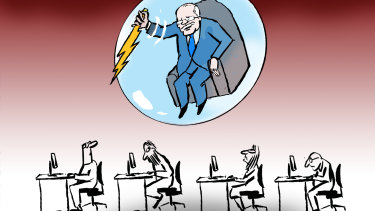
The need to unionize against the modern slavery of piece work and piece jobs without benefits. (ODT)
The growth in secondary jobs has not just been confined to professionals. The economy experienced its strongest secondary jobs surge since June 2014 last year – driving the number of people with two jobs to 891,000, up from 779,000 in 2010.
More than 50,000 were added between March and September 2017 alone, according to Tuesday’s figures, which for the first time showed the volatile growth in secondary jobs by industry on a quarterly basis

The corporate elites, which have seized control of ruling institutions including the government and destroyed labor unions, are re-establishing the inhumane labor conditions that characterized the 19th and early 20th centuries. When workers at General Motors carried out a 44-day sit-down strike in 1936, many were living in shacks that lacked heating and indoor plumbing; they could be laid off for weeks without compensation, had no medical or retirement benefits and often were fired without explanation. When they turned 40 their employment could be terminated. The average wage was about $900 a year at a time when the government determined that a family of four needed a minimum of $1,600 to live above the poverty line.

 olddogthoughts