“We are now in truly uncharted territory and as the climate keeps warming, we are bound to see new records being broken in future months and years,” one expert said.
We must ask ourselves, do we want a planet teeming with life or do we want lifeless industrial wastelands interspersed with monocultures grown for food & timber, in desperate states due to climate change and loss of insect pollinators, with global famines and other aspects of a ghastly future (82) just around the corner, and remnant wildlife populations of selected species incarcerated as breeding populations in zoos, being bred for release into habitat which no longer exists. The billionaires and their proxies in media and governments and environmental and climate NGOs clearly want the latter.
The global energy transition is the race of this century. The rewards are enormous. The risks too. This is an edited version of the submission by Tim Buckley and Blair Palese of the Climate Capital Forum on how Australia can tackle the race to electrification and a clean economy.
The COP27 talks in Egypt have been billed as an opportunity for countries to “showcase unity” against the existential threat of climate change, but an analysis released Thursday shows there are more fossil fuel lobbyists attending the conference than representatives of the 10 nations most affected by the crisis, heightening concerns that industry influence will water down any agreements reached at the event.
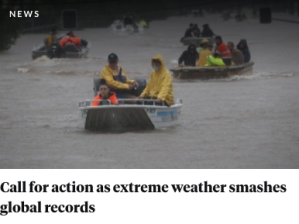
Extreme weather events have ravaged every continent on Earth since world leaders last gathered to address climate change.
It’s sobering reading as leaders prepare to meet again from Sunday, this time in the Egyptian city of Sharm el-Sheikh.
“Europe sweltered through its hottest summer on record. Parts of East Africa endured unrelenting drought while other parts of the continent suffered deadly floods,” says Climate Council senior researcher Simon Bradshaw, who wrote the report.
“Many parts of Asia suffered record heat waves, and Pakistan has suffered one of the world’s worst ever flooding disasters.
“Here in Australia, we are still in the midst of our costliest ever flood disaster, as affected communities anxiously look ahead to predictions of a wet summer.”
Over the last week, record rains have again caused flooding in Australia, this time impacting Victoria. Although the disaster was easy to predict, the authorities took few preventative measures, and now residents are expected to bear the costs.
Victoria’s claim to fame in disasters is that it’s the most bushfire-prone region in the world (followed by California and Greece).
Fire risk also comes from climate. Victoria’s temperate climate means dry summers and less rain than its northern counterparts – around 520 millimetres of rain a year falls on average in Melbourne, compared to 1175mm a year in Sydney and 1149mm in Brisbane. Up north, rain tends to fall intensely, whereas Victoria’s rain tends to fall more as drizzle.
What’s different this time? September was wetter and colder than usual in Victoria, which meant the ground was already saturated in many areas. Colder weather means less water evaporates. Together, that made the state primed for floods.
For a flood to happen, you need a high rate of run-off, where rain hits saturated soils and flows overland rather than sinking in, as well as intense rains in a short period.
Rain has fallen across almost all of Australia’s mainland in the last two weeks. Our rain events are usually regional – not national like this.
Opinion | China Suffers Through ‘Worst Heatwave Ever Recorded’ | Andy Rowell
In a year when climate records—from floods, fire, and drought—are being shattered daily like shards of glass, there is one country that bests them all: China. The country is experiencing a heatwave like no other.
It has lasted over seventy days, with record breaking temperatures at day and at night.
Over 100 million people are affected in an area covering 500,000 square miles of the country, experiencing record temperatures exceeding 104°F (40°C). To put this into perspective, this is equivalent to the size of Texas, Colorado and California combined.
Experts are calling it the “worst heatwave ever recorded in global history,” or “Worst heat wave known in world climatic history.”
However it’s no longer good enough when BP is the biggest controler of solar energy in the country.
“Personally, as the new Labor Government backed by the Greens and Teal Independents proceeds with the 43% climate target laws and invests heavily in renewables. I hold out hope that the new Environment Minister Tanya Plibersek who has just rejected a new mega coal mine proposal for Clive Palmer in North Qld that horrendous developments like the Toondah Harbour PDA will also be rejected as well. I for see a better horizon forward on environmental policy making.”
A “great reallocation” of spending is needed to achieve a net-zero economy by 2050, modelling by Deloitte Access Economics shows.Some $20 trillion in forecast investments by Australian governments and industry by 2050 needs to be spent differently to get to net-zero greenhouse gas emissions, according to a report released on Thursday.But it is a transformation that Australia can afford, the research commissioned by the National Australia Bank shows.
The Global Oceanic Environmental Survey, led by Edinburgh University marine biologist Howard Dryden at the university Roslin Innovation Centre had estimated that the plankton in the oceans had been halved in the past 40 years, and that all of it could be gone by 2040. Dryden and GOES were off by twenty years. Plankton is a blanket term for the billions of tiny sea organisms living close to the surface of the oceans, which are eaten by krill,
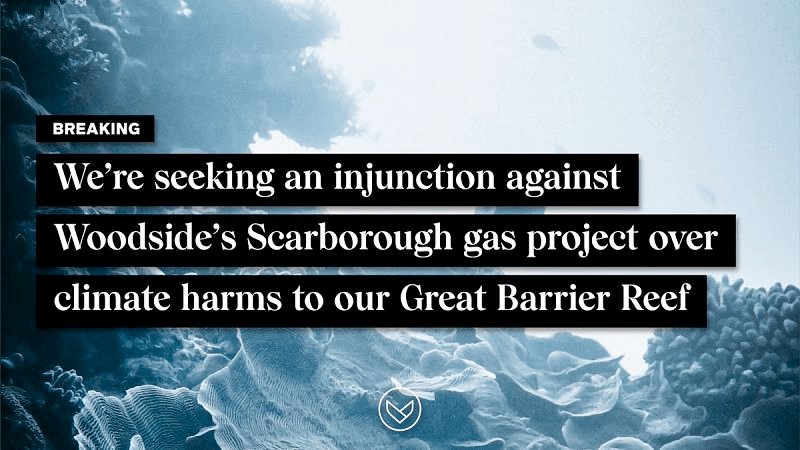
It is the first time the Federal Court has been asked to look at objective scientific evidence and find that the greenhouse gas impacts of a major offshore gas project are likely to significantly impact the Great Barrier Reef. The Scarborough Gas Project is a for-export LNG proposal off Murujuga/the Burrup Peninsula in Western Australia, which will result in the release of an estimated 878.02 million tonnes of carbon dioxide over its lifetime.
Good morning, early birds. The Morrison government’s plan for climate action will lead to nearly 4 degrees of global heating according to analysis, and Treasurer Josh Frydenberg and opponent Monique Ryan went head-to-head in a fiery debate yesterday. It’s the news you need to know, with Emma Elsworthy.
Who is Frydenberg doing it for if his policies are consistent with a 3C degree future hike in heat? He’s not listening to Kew, science or the rest of the world. Only his Party!
Over to you The scientific consensus is clear. Greenhouse gas emissions must peak by 2025 at the latest and plummet thereafter, to limit global warming to 1.5℃. Unless policies are substantially strengthened, Earth is set to hit 1.5℃ warming in the 2030s, and a future of at least 3℃ warming awaits. The onus is on the next parliament to protect Australians from climate catastrophe. On May 21, Australian voters have a chance to send a clear message about the kind of world we want to leave for future generations.
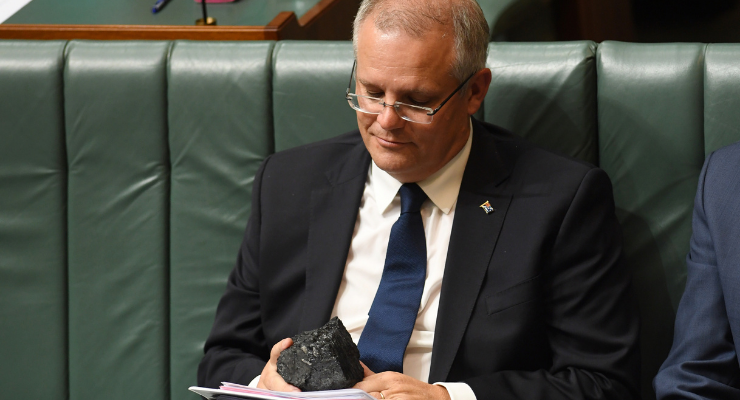
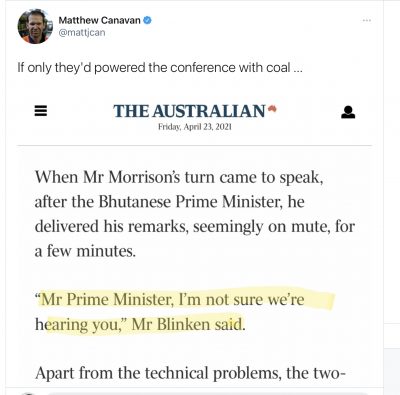
Morrison fled COP26 tail between his legs the rodent revealed is back home to the safety of Murdochland
But the agreement established a clear consensus that all nations need to do much more, immediately, to prevent a catastrophic rise in global temperatures. It outlined specific steps the world should take, from slashing global carbon dioxide emissions nearly in half by 2030 to curbing methane, another potent greenhouse gas. And it sets up new rules to hold countries accountable for the progress they make — or fail to make.
Scott Morrison has openly shown he is intent protecting the rich with his top down policies on fossil fuels.
Rich people have a carbon footprint 25 times the size of even the typical American. To tackle climate change, we need to start with fossil capital and the most affluent.
So much for AUKUS, CHUKUS seems a more apt term for this immediate agreement where China the UK, and the US are in step, Why? It’s patently clear. But not so for the A in AUKUS. However, given China hasn’t invaded anyone recently and the LNP has why are they acting as if China has? How embarrassing for Morrison whose been left out of the loop not advised of 30 secret meetings his besty has had. He will feel the sting of his do-nothing climate policy in the near future well before he gets any submarines. Because America China, and the UK will invest in climate cooperation which translates into much wider cooperation and they will leave the climate laggard, Morrison’s Australia, out in the wilderness.
The US-China competition is much more like European rivalries in the eighteenth and nineteenth century, as between France and Britain or Britain and Germany, where capitalist countries competed for entry into foreign markets on the most favorable terms and for diplomatic and military spheres of influence. Despite President Xi’s sabre rattling, China isn’t at the point where it has taken over other countries (as the US did most recently in Iraq and Afghanistan).
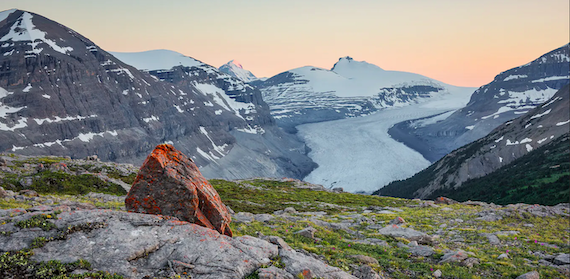
In particular, glacier mass loss over the past two decades in western North America has accelerated, with losses in the past decade that were four times greater than the decade before. This acceleration coincides with warm, dry conditions over some of the region’s largest icefields, namely those in the Southern Coast Mountains of British Columbia.
The Western U.S. is experiencing another severe fire season, and a recent study shows that even high mountain areas once considered too wet to burn are at increasing risk as the climate warms. With more than 5 million acres already burned by early September, the 2021 U.S. fire season is about on pace with the extreme fire season of 2020. This summer has been the hottest on record and one of the driest in the region, with 80% of the Western U.S. in severe to exceptional drought. That combination of heat and dryness is a recipe for disastrous wildfires.
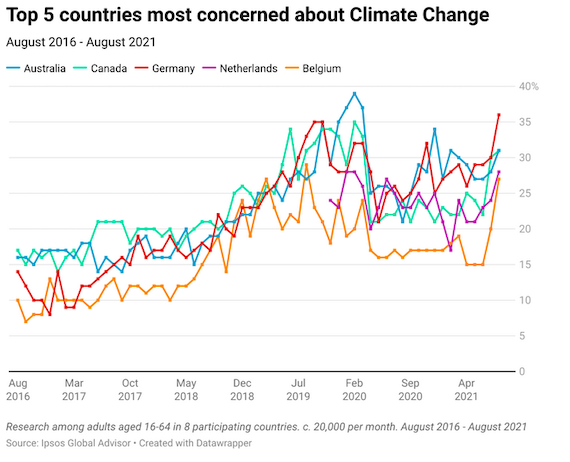
Australia is among the top 5 yet our government continues to ignore it for the sake of politics and power as it remains a marginal seat issue with which to wedge the opposition. Retaining power neither service, duty nor Democracy rate in the Morrison political drive
Germany is currently the country most concerned about climate change out of the 28 surveyed for the August update of the “What worries the world” study by market research and consulting firm Ipsos. Climate change is one of Germans’ top three concerns, with 36 percent selecting it as their main worry (six percentage points more than last month, and the highest Germany has recorded to date).
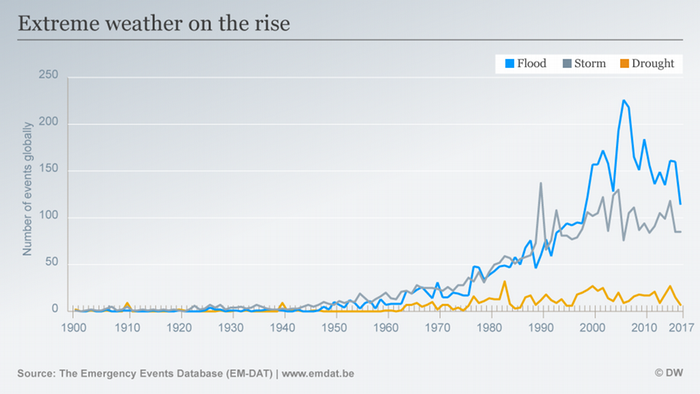
The World Meteorological Organization and the United Nations Office for Disaster Risk Reduction have issued a report finding that in the past 50 years, 11,000 droughts, storms, extreme temperature and other extreme weather events have accounted for 50 percent of all disasters and three-fourths of known economic losses, totaling $3.64 trillion. They killed over two million people. Scientists have found that the climate emergency from our burning coal, gasoline and natural gas has intensified droughts, superstorms, and heat waves and made droughts and heat waves more frequent. Droughts and hurricanes/ cyclones were the biggest killers, accounting for 650k and 577k deaths respectively. Most of these disasters, which aren’t natural any more given how much stronger human burning of fossil fuels has made them, have increased exponentially in their cost. In the 1970s, each such disaster used to cost about $50 million each day of the year. Today, the typical cost is $383 mn. per day.
More than 1000 people are missing in flood-stricken regions of western Germany and Belgium, where waters are still rising with the death toll exceeding 100 and communications in some areas cut.
By James Dyke, Robert Watson and Wolfgang Knorr | – Sometimes realisation comes in a blinding flash. Blurred outlines snap into shape and suddenly it all makes sense. Underneath such revelations is typically a much slower-dawning process. Doubts at the back of the mind grow. The sense of confusion that things cannot be made to fit together increases until something clicks. Or perhaps snaps. Collectively we three authors of this article must have spent more than 80 years thinking about climate change. Why has it taken us so long to speak out about the obvious dangers of the concept of
Whether this is true or not, I think we can all agree that it’s an amazing achievement by an Australian PM to have almost achieved the remarkable accomplishment of announcing a target for 2050. With the current rate of progress we may actually have one before the year itself!
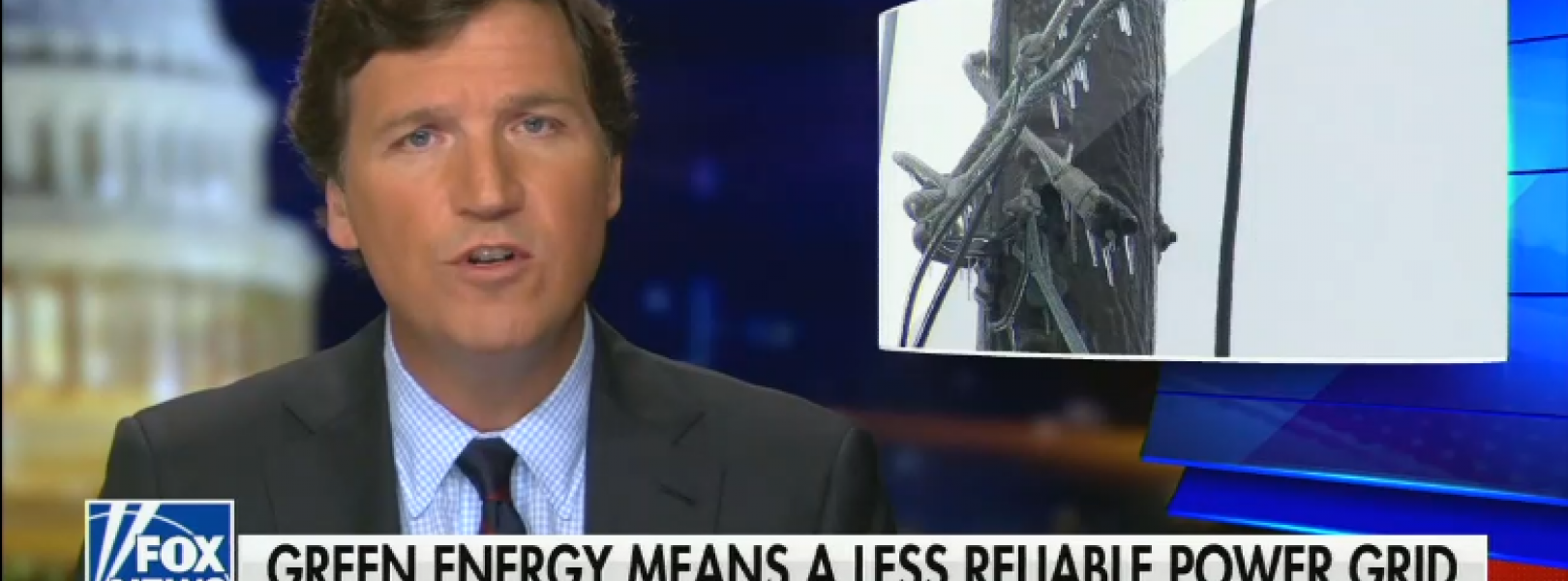
On the February 15 edition of Fox News’ Tucker Carlson Tonight, the host not only suggested that the freezing temperatures that hit Texas bring into question the very existence of global warming, but he also claimed that the state’s inability to keep the lights on was due to its “reckless reliance on windmills,” which he even acknowledged account for only “a quarter of the energy” makeup in Texas (with the majority of power coming from natural gas and coal). To discuss the outages, host Tucker Carlson invited climate denier and frequent Fox guest Marc Morano, who once claimed CO2 is not pollution because we exhale it.
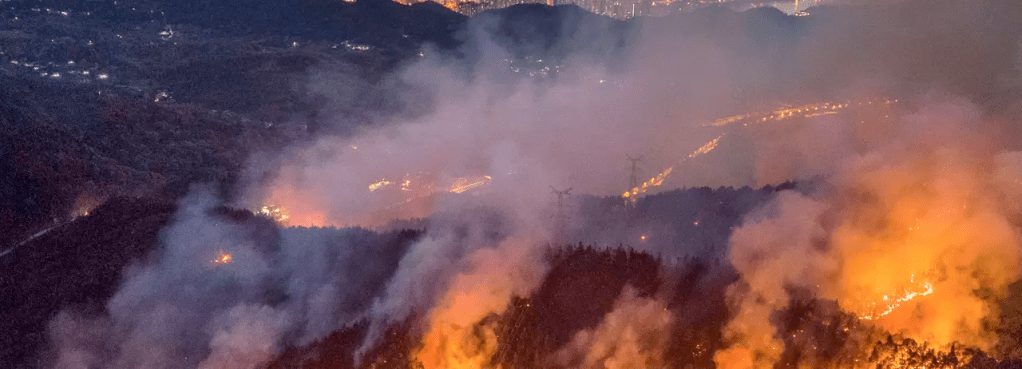
As bushfires rage and the demands for action on climate rise, the gas cartel is developing a suite of enormous fossil fuel projects destined to blow Australia’s commitments to the Paris Agreement to smithereens. Michael West reports on the push to frack new provinces; the propaganda and the reality.
Appearing on ABC’s “This Week” on Sunday just moments after President Donald Trump’s chief economic adviser and noted Wall Street stooge Larry Kudlow dismissed a new United Nations climate report showing that the world must cut carbon emissions in half by 2030 to avert global catastrophe, Sen. Bernie Sanders (I-Vt.) denounced the White House for its “dangerous” rejection of climate science and slammed Trump for working hand-in-hand with Big Oil to make “a bad situation worse.”
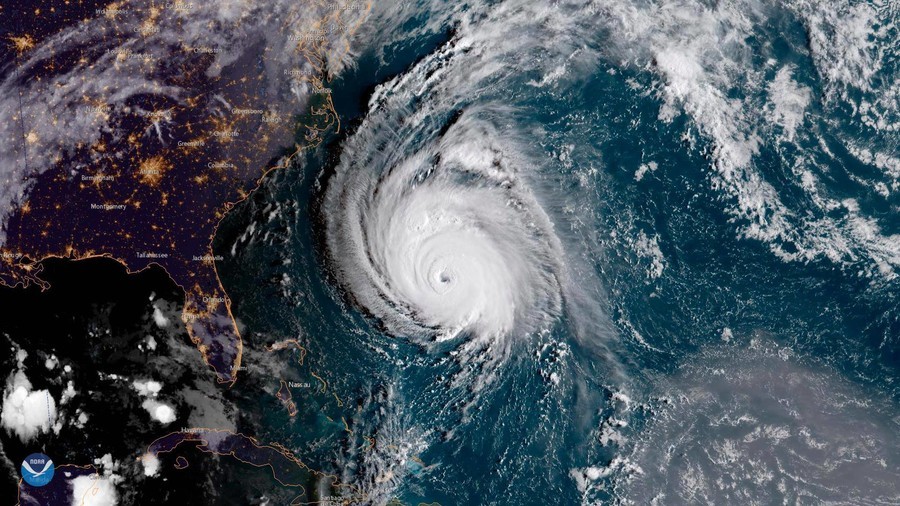
The world is facing a record number of storms raging through the Northern hemisphere at the same time. There are five tropical storms just this week, including a potentially “catastrophic” Hurricane Florence, meteorologists say.
Florence, a Category 2 hurricane that has already prompted massive evacuations in the US, is far from being the only one roaming through the Atlantic. Another hurricane, Helene, is devolving in the eastern part of the ocean and moving northeast towards Europe, the National Hurricane Center (NHC) says. However, this Category 1 hurricane is expected to lose steam before it actually arrives at Europe’s shores, as the scientists believe it will eventually come to the western part of the continent in a form of a storm early next week.
Building on actions that kicked off earlier this week, activists on Saturday hosted hundreds of #RiseForClimate demonstrations across all seven continents, drawing massive crowds “to demand our local leaders commit to building a fossil-free world that puts people and justice before profits.”
As of this writing there were more than 900 actions in 95 countries, according to the searchable database that enables those interested to locate protests in their area.
The main event was the Rise for Climate, Jobs, and Justice march in San Francisco, California, which is brought together some 30,000 people and is being hailed as the West Coast’s largest climate march ever.
The Earth is warmer now than at any time since reliable record-keeping began in 1880, and we’re continuing to warm at an accelerated rate. In fact, the Earth is warmer now than at any point in modern human civilization.
On Alaska’s West Coast, the feeble April sun is shining this week on a fresh spot of open water. The sea ice found there for ages every spring is gone.
Ice in the Bering Sea, the narrow body of water between Russia and Alaska, has dropped to its lowest springtime level since at least 1850. In all that time, no other year has come close. After a winter filled with unusually high temperatures, sea ice now sits at less than 10 percent of what could previously be considered “normal”.
“We’ve fallen off a cliff,” said Rick Thoman, a climatologist at the National Weather Service in Alaska, in a tweet.
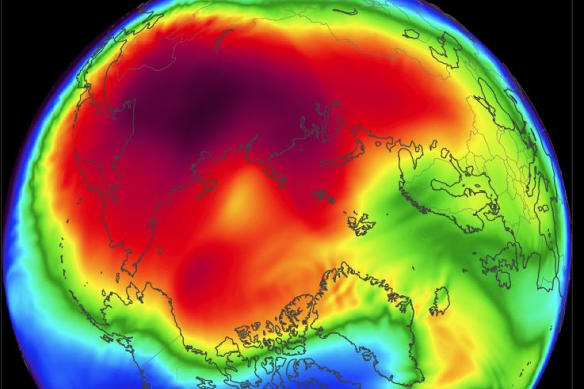
Climate scientists are used to seeing the range of weather extremes stretched by global warming but few episodes appear as remarkable as this week’s unusual heat over the Arctic.
Zack Labe, a researcher at the University of California at Irvine, said average daily temperatures above the northern latitude of 80 degrees have broken away from any previous recordings in the past 60 years.
What the scientists found is that five of the bears lost weight and four of them lost 2.9 to 5.5 pounds (1.3 to 2.5 kilograms) per day. The average polar bear studied weighed about 386 pounds (175 kilograms). One bear lost 51 pounds (23 kilograms) in just nine days.























 olddogthoughts
You must be logged in to post a comment.