
Iran’s attack on Israel was lawful self-defence carried out in compliance with international humanitarian law.
Source: Under UN Charter, Iran’s Attack Was a Legal Response to Israel’s Illegal Attack – ScheerPost
Source: Under UN Charter, Iran’s Attack Was a Legal Response to Israel’s Illegal Attack – ScheerPost

Was Hillary Clinton felled by a “whitelash” at the polls? Did a stealth surge of angry white voters fueled by an incendiary racial animus fool pollsters (not to mention Robby Mook, who ran 400,000 …
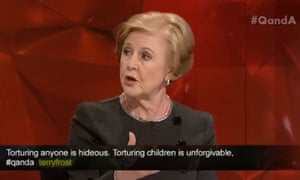
Human Rights Commission president tells Q&A treatment of teenagers at Darwin detention centre is a manifestation of wider acceptance of detention practices

OPINION: Envy is a deadly sin, but wanting your children to have a good education is nothing to be ashamed of. The politics of envy should not be confused with the politics of the fair go, writes Ian McAuley. Labor’s mildly redistributive proposals on superannuation, capital gains tax and negative gearing are already attracting theMore
Source: Wanting A Fair Society Has Nothing To Do With ‘Envy’ – New Matilda
 The resignation of Human Rights Commissioner Tim Wilson may well be regarded as his greatest contribution to human rights, writes Tess Lawrence.
Source: Tim Wilson’s resignation is his greatest contribution to human rights

The idea is that a child is brought up in a loving environment in a happy, functional family, in a triangular relationship in which role models show the way and pave the path for a happy future, complementing each other as they open windows for their offspring. The latest UN Report on the state of children is a revolting comment on Humankind 2015.
Maud de Boer, the UN Special rapporteur on the sale of children, child prosecution and child pornography has just made her first address to the UN Human Rights Council, in which she highlights the fact that millions of children every year are subjected to sexual abuse, sexual exploitation, are sold and trafficked for prostitution, are forced to work as slaves, are adopted illegally, and killed for their organs or are forced to become child soldiers.
She referred to “persisting and new forms of sale and sexual exploitation of children” which “continue to be a reality in all regions of the world”, adding that “There is an urgent need for all stakeholders, especially Member States, to take action to put an end to these endemic crimes”.
One of the main focuses of the delivery of the Report was new technologies, which are used by children to access information and further their studies, while “on the other hand, this new phenomenon is also easing the commission of crimes of sexual exploitation as well as new forms of exploitation behavior, such as online streaming of child abuse”.
The Internet is full of abusive images of children, even in unpaid sites which are easily accessible to the general public, who might stumble across an image or a video when researching something unconnected. How many people bother to complain about these, and what mechanisms are there to do something about it? In many cases, none. It should be a criminal offence to upload any image of any form of abuse of any person, under age or not, without this person’s consent when no longer a minor.
Ms. De Boer also underlined the need for accountability for those engaged in exploitation, requesting that Member States “establish clear and comprehensive legal frameworks to avoid protection gaps” and to ensure that there is a deterrent effect, and stressed the need to ratify the Optional Protocol to the Convention on the Rights of the Child, in national legislation.
“Member States need to develop detection, reporting and identification mechanisms to qualify the phenomena, identify the victims and track down the perpetrators,” she stated, suggesting that child helplines and hotlines could be a good first measure to register and communicate abuse.
As I have stated in this column before, all people should have regular psychological screening, starting at pre-school age and following through into adulthood, so that well-trained professionals can spot behaviors which point towards a situation of abuse, or else prevent anti-social behaviors from developing and avoiding huge social costs down the line.
If we cannot provide for our children, and if there are millions upon millions being abused in all geographical regions, this is a very sorry comment on Humankind, 2015. Yet another one.

The day after Tony Abbott’s “near-death experience”, federal Coalition MPs from South Australia were treated to a dose of the more consultative and collegial approach that was intended to define “good government” from that day forth.
Five MPs were invited to fly with Defence Minister Kevin Andrews on a VIP plane from Canberra to Adelaide to reassure constituents that the Adelaide-based defence shipbuilder, ASC, would be able to bid for a slice of one of the biggest defence contracts in history.
When they took their seats, they were careful to leave one vacant in the expectation that Andrews would want to join them and discuss how he intended to proceed.
 Defence Minister Kevin Andrews almost matched Prime Minister Tony Abbott in the baffling behaviour stakes this week. Photo: Andrew Meares
Imagine, then, their surprise when the minister chose to spend the 90-minute flight with an adviser in a separate section of the plane.
One of the parliamentarians, Senator Sean Edwards, had gone public before Liberal Party MPs voted on Monday’s motion to spill the Liberal leadership, declaring his support for Abbott was conditional on ASC being able to compete “on merit” for the right to build Australia’s next fleet of submarines. Convinced that Abbott had given him this assurance, Edwards joined 60 other MPs in opposing the spill motion, and helped save Abbott’s prime ministership from a brutal and early end. Thirty-nine of their colleagues voted for the motion.
But reports that Abbott supported an “open tender” raised a host of questions about whether this was a new position, and whether the PM had already assured his Japanese counterpart, Shinzo Abe, that Australia would buy the submarines designed and built in Japan without the work being put to a tender.
Andrews’ mission was to provide clarity; to end the confusion, flanked by South Australian MPs concerned about jobs against the backdrop of the ASC (formerly the Australian Submarine Corporation) shipyard, northwest of Adelaide.
What followed was one of the more bizarre media conferences in recent memory. Andrews insisted those wanting a share of the submarine action would be subject to a “competitive evaluation process”, but could not explain what this term meant. As my colleague Tony Wright expressed it, he took 2000 words to say nothing that made any sense at all.
On the return flight, the minister again sat with his adviser, away from the MPs.
What was baffling was why Abbott and Andrews did not simply explain that the process that stalled under Labor would follow the template successfully used in other major defence contracts, such as the building of the Anzac frigates or the minehunters. Why didn’t they say it would begin with a “project definition study” where designer-builders in countries that are acceptable to Australia on security grounds (such as Japan) are funded to pitch for the first batch of submarines on the basis that they will be built in Australia with a fixed price? After all, such an approach would also be consistent with the Coalition’s pre-election promise that “work on the replacement of the current submarine fleet will centre around the South Australian shipyards”.
While this is the process that is likely to emerge (assuming Abe has not been given a nod and a wink), the failure to articulate it over four days is one of three reasons why Abbott’s survival prospects have dipped since the spill motion.
Abbott’s problem is that the number of MPs who have grave doubts about his capacity to recover is much bigger than the 39 who backed the spill motion. While there is a consensus that he will be given every opportunity to turn around his fortunes, there is an expectation that Malcolm Turnbull will take over if the polls do not improve.
This should mean Abbott can focus on the preparation of the two policies he expects to change perceptions – on families and small business – as well as the budget, without worrying about receiving a delegation, but it does not guarantee it. Some suggest the issue could be revisited on March 2.
The second failure this week concerns Abbott’s promise of a more consultative approach, a promise underpinned by a commitment to meet regularly with the 17 chairs of backbench committees, to give them direct access to the cabinet and to personally answer phone calls from all Coalition MPs. This was in large part a response to a backlash against the influence of Abbott’s chief of staff, Peta Credlin, in meddling in appointments, controlling access to information and the PM, and generally making life harder for ministers and backbenchers.
In December, Abbott described Credlin as “the fiercest political warrior I’ve ever worked with”, but the qualities that make for a fierce political warrior – and they include a capacity for vindictiveness – are not the ones that ensure a smoothly running office and a happy team.
To improve morale, Credlin has adopted a lower profile by not attending cabinet meetings, not sitting in the advisers’ box during Question Time inParliament and not, we are told, vetoing appointments in other offices.
So why, ask some MPs, did she slip in the back of the room and sit through Abbott’s first post-spill heart-to-heart meeting with the chairs of his backbench committees?
The final reason Abbott’s prospects have deteriorated is his performance in the Parliament on Thursday, where he clearly decided the best way of shoring up support in the Liberal party room (and especially the right) was to revert to the attack mode that has delivered him most success.
In a single question time, he launched a scathing (and mightily unfair) attack on the Human Rights Commission and its report on children in immigration detention; likened job losses under Labor to the Holocaust (before apologising); said much more than seemed prudent about the case against two terrorism suspects (prompting warnings he could prejudice a future trial); and added to the confusion on submarines by accusing Labor of putting “the defence of our country at risk by promising submarines built in Australia”.
Another element of the aggression-at-all-costs strategy involved putting bipartisan consensus on national security at risk, with Immigration Minister Peter Dutton suggesting that Labor’s failure on border protection was the reason the two terrorism suspects were able to come to Australia.
If all this buoyed the troops, the question is whether it will improve or damage Abbott’s standing in the electorate. After all, this is where the troops will look for guidance as they weigh up whether to stick with Tony in the weeks ahead.

Self-harm, hunger strikes, sexual assault: Gillian Triggs’ The Forgotten Children report finds prolonged detention ‘profoundly negative’
More than 300 children committed or threatened self-harm in a 15-month period in Australian immigration detention, 30 reported sexual assault, nearly 30 went on hunger strike and more than 200 were involved in assaults, a damning report from the Australian Human Rights Commission has found.
The long-awaited inquiry into children in immigration detention report, The Forgotten Children, found detention was inherently dangerous for children, and that “prolonged detention is having profoundly negative impacts on the mental and emotional health and development of children”.
“At the time of writing this report, children and adults had been detained for over a year on average.”
There are 257 children in Australian immigration detention, including 119 on Nauru. More than 100 children, previously held on Christmas Island, have been released into the community on the mainland on bridging visas over the past fortnight.

children detention
Facebook Twitter Pinterest
The Forgotten Children report, by the president of the Australian Human Rights Commission, Professor Gillian Triggs, said despite “the best efforts” of immigration department staff and contractors to properly care for children, detention was damaging children’s mental health, making them physically, sometimes chronically, sick, and cruelling their educations.
“It is the fact of detention, particularly the the deprivation of liberty and the high numbers of mentally unwell adults, that is causing emotional and developmental disorders amongst children,” the report said.
“Children are exposed to danger by their close confinement with adults who suffer high levels of mental illness. Thirty per cent of adults detained with children have moderate to severe mental illnesses.”
Between January 2013 and March 2014, children in immigration detention were involved in:
128 incidents of actual self-harm;
171 incidents of threatened self-harm;
33 reports of being sexual assaulted;
27 cases of voluntarily starvation or hunger strike.
Under international and Australian law, children are supposed to be detained only as a measure of “last resort”.
Advertisement
Australia is the only country in the world that mandatorily detains all unlawful non-citizens, including children.
Australia also holds children in indefinite detention if a parent has an adverse Australian Security Intelligence Organisation (Asio) security finding made against them.
“Some children have been detained for longer than 19 months because at least one of their parents has an adverse security assessment by Asio,” the report said. “The indefinite detention of these children raises special concerns for their physical and mental health, and their future life opportunities.”
The report raised particular concern about children on Nauru.
“Children on Nauru are suffering from extreme levels of physical, emotional, psychological and developmental distress. The commission is concerned that detention on Nauru is mandatory for children and there is no time limit on how long they will be detained.”
Triggs’ report cited evidence to the commission from the then immigration department secretary, Martin Bowles, who told an inquiry hearing the damaged caused to children by detention was known to the department.
“There is a reasonably solid literature base which we’re not contesting at all which associates a length of detention with a whole range of adverse health conditions.”
In 2004 the Human Rights Commission launched A Last Resort?, a three-year inquiry into children in detention. In the aftermath of that report, the Howard government released all children from immigration detention.
In the current report, Triggs expressed disappointment that Australia had since regressed in its treatment of asylum seeker children.
“At the time of the previous national inquiry, the number of children in detention peaked at 842 children. In July 2013, just before the change of government, a record number of 1,992 children were in detention.”

average days detainees
Facebook Twitter Pinterest
Triggs condemned both Labor and Coalition governments for ignoring their stated commitments and legal obligations to protect children in their care.
“How had the gains that were so hard-fought at the time, and of which the Howard government were so rightly proud, disappear?
“How did we move so far away from the explicit guarantee … that ‘a minor shall only be detained as a measure of last resort’? How had we reached the situation where prime minister Rudd declared that any person (including children) who arrived by boat would enjoy ‘no advantage’ and never be settled in Australia?”
Triggs also said her commission was subject to “intense scrutiny and hostility” for conducting the inquiry: “The government at the time was initially dismissive of its findings.”
Immigration department statistics list 257 children in detention, including 119 on the island of Nauru.
There are also 28 unaccompanied child refugees, who have been released from detention to live in the community on Nauru.
Some children in detention over recent years have turned 18 and are no longer counted among child detention statistics, but are still detained.
More than 100 children, previously held on Christmas Island, have been released from detention in the last fortnight, part of the deal the government struck with Senate crossbenchers in return for their support for temporary protection legislation, passed in December.
ChilOut’s campaign coordinator, Claire Hammerton, said the report demonstrated a “dramatic failure” by successive governments to protect children in their care.
“The report confirms so many of our worst fears about the impact of detention on children. Disproportionately high rates of severe mental illness, high rates of self-harm, young children denied access to medical treatment such as hearing aids and glasses for prolonged periods. This is nothing short of state-sanctioned abuse.”
Hammerton said she was particularly concerned by children still detained on Nauru and those released to live unaccompanied in the community there.
“These children have been stripped of all hope as a result of their indefinite detention, and the findings of the Australian Human Rights Commission make it very clear that the most basic needs of these children – including access to drinking water and basic hygiene – are not being met. It is unconscionable that any government could allow children to live under these conditions, particularly when both sides of government have acknowledged that detention is not a deterrent.”
The Reverend Elenie Poulos, the national director of Uniting Justice Australia, said the findings of the report were a national disgrace.
“The report describes how children are woken every day at 11pm and 5am by guards shining a torch light in their faces as they conduct headcounts. Children are being toilet trained in filthy conditions.”
She said the living conditions on Christmas Island – where families were housed in shipping containers – were grossly inadequate.
“Dozens of children with physical disabilities and mental illness have received inadequate care and 100 children on Christmas Island had no education for over one year. Over 30% of children and parents interviewed described themselves as ‘always sad and crying’,” Poulos said.
“A family in which both parents and their child are profoundly deaf were denied hearing aids for seven months, so the parents couldn’t hear the cries of their child.”
Unicef Australia said mandatory and indefinite detention of children exposed them to sexual violence and abuse, as well as causing significant mental and physical illness and developmental delays.
“The findings of the Australian Human Rights Commission report are expected to confirm what is already known globally: detention is a dangerous place for children and can cause life-long harm,” Unicef’s Amy Lamoin said.


 olddogthoughts