You don’t have to be a religious person to find the study of religious texts thought-provoking. I have had many a philosophical debate about, for example, why women can’t be priests or the reason for the immaculate conception story.
They also help formulate a moral and ethical code for living in an ever-more crowded society. Considering when they were written, they do a pretty good job of this if you ignore the smiting bits.
Considering the preponderance of God-fearing Christians in our current Parliament, I thought it might be timely to remind them of some fundamental tenets of their faith.
In the Book of Proverbs 6:16-19, among the verses traditionally associated with King Solomon, it states that the Lord specifically regards “six things the Lord hateth, and seven that are an abomination unto Him”, namely:
A proud look
A lying tongue
Hands that shed innocent blood
A heart that devises wicked plots
Feet that are swift to run into mischief
A deceitful witness that uttereth lies
Him that soweth discord among brethren
That struck me forcibly as it seems a fairly accurate description of Tony Abbott and some of his colleagues. Reading further only made the comparison more apt.
The seven deadly sins have been used since early Christian times to educate and instruct Christians concerning fallen humanity’s tendency to sin. The sins are usually given as wrath, greed, sloth, pride, lust, envy, and gluttony. Each is a form of Idolatry-of-Self wherein the subjective reigns over the objective.
Lust is an intense desire. Lust could be exemplified by the intense desire for money, food, fame, power, or sex.
Gluttony is the over-indulgence and over-consumption of anything to the point of waste. Gluttony can be interpreted as selfishness; essentially placing concern with one’s own interests above the well-being or interests of others.
Greed is, like lust and gluttony, a sin of excess. Greed is an inordinate desire to acquire or possess more than one needs, especially with respect to material wealth.
Like greed and lust, Envy is characterized by an insatiable desire. Envy is similar to jealousy in that they both feel discontent towards someone’s traits, status, abilities, or rewards. The difference is the envious also desire the entity and covet it.
Sloth can entail different vices. While sloth is sometimes defined as physical laziness, spiritual laziness is emphasized. Sloth has also been defined as a failure to do things that one should do. By this definition, evil exists when good men fail to act.
Wrath may be described as inordinate and uncontrolled feelings of hatred and anger. Wrath, in its purest form, presents with self-destructiveness, violence, and hate that may provoke feuds that can go on for centuries. Dante described vengeance as “love of justice perverted to revenge and spite”.
Pride is considered the original and most serious of the seven deadly sins, and the source of the others. It is identified as believing that one is essentially better than others, failing to acknowledge the accomplishments of others, and excessive admiration of the personal self.
According to the Catechism of the Catholic Church, a mortal or deadly sin is believed to destroy the life of grace and charity within a person and thus creates the threat of eternal damnation, so at this stage I was getting quite worried for Tony Abbott who is so obviously doomed. But fear not.
Luckily, through the Sacrament of Penance and Reconciliation (commonly called Confession, Reconciliation or Penance), the faithful obtain divine mercy for the sins committed against God and neighbour and are reconciled with the community of the Church. By this sacrament Christians are freed from sins committed after Baptism. The sacrament of penance is considered the normal way to be absolved from mortal sins which, it is believed, would otherwise condemn a person to Hell.
We have overcome our isolation but we are still caught in two worlds, Europe and Asia. Events have transpired that have fed into changes that create their own momentum. Technology have brought us closer to the rest of the world and there is nothing any amount of conservative opposition can do to stop it. The tyranny of distance has been resolved.
When one looks back on these post war years there is much to like. Australians by nature are optimistic and forward-looking. It has been that optimism that has propelled us forward. Our immigration programme was hugely successful. ‘’She’ll be right’’ became the catchcry of the Snowy Mountain Scheme’’ meaning we could overcome any adversity. It was a Labor idea carried out by Menzies but either way it commenced our expansion as a nation.
We are now the world’s 12th largest economy with a GDP larger than Saudi Arabia, Turkey, Spain, and Indonesia. In the 2008 GFC we were the only western nation to avoid a recession. We have experienced 23 years of economic growth. The only country to do so and people under the age of 30 have never experienced a recession.
So why the political negativity?
Our cities continually win ‘’The Best Place to Live’’ awards and the OEDCs better life index of national happiness. We are top of the world’s tourist destinations edging out the Maldives, Hawaii and France. Our science restaurants, design, creativity and our business acumen enjoy a world reputation.
We have a multi-cultural population of 22.5 million of which one million are at any given time traveling the world. Our education system has produced international managers of McDonalds, Ford, Pizza Hut, British Airways and the World Bank. The Times of London even urged our ex pats not to return home because they were considered so valuable to the English economy.
So why the political negativity?
Despite a downturn in prices we still have the world’s largest supply of minerals and next year we may well become the world’s largest exporter of natural gas. We are still huge exporters of wheat and agricultural products. In fact the overall opportunities for export growth are enormous.
Westfield is the biggest shopping mall owner in the world.
Our international and diplomatic reputation has never been higher. We are privy to the ear of any nation. We have, for many years enjoyed a succession of foreign ministers, on both sides of politics who have served us well.
The Prime Minister of the day walks easily at the side of Presidents. Such is our world standing. Bob Hawke was instrumental in the formation of APEC, while Paul Keating elevated it into a leader’s forum. Peter Costello was the chief architect of the G20. We are now one of only ten non- permanent members of the UN Security Council.
So why the negativity?
In the arts we have overcome our cultural cringe. Hollywood is alive with Australian actors. Our authors are amongst the worlds most popular. Our popular music is constantly in demand. The Australian ballet tours continuously. Aboriginal art, dance and culture is recognised. Consider the success of Tropfest which from humble beginnings has become the world’s biggest short film festival. Our culture is now exported and in demand without the need for validation. People like Clive James, Robert Hughes and Germaine Greer who had to leave the country to find recognition were trail blazers. Nowadays they can live anywhere and retain our public esteem. Our intellectuals are no longer ostracised or shunned. Our prosperity, our achievements and future possibilities are reported in the world’s great publications. In short we are better known internationally now, than we have ever been.
Lastly, in sport our reputation, despite a 10th in the London Olympics remains untarnished. Whatever the sport you will more than likely find an Australian on the leader board.
So why the political negativity?
Other than becoming a republic Australia in my lifetime has come of age. There are many factors outside of politics that have contributed to a bigger and better Australia. We have never had it better.
Prior to Whitlam we were an international backwater. His optimism opened our eyes to a brave new world full of opportunity. There was simply a before Whitlam and an after Whitlam. No amount of conservative negativity about his legacy will change that fact. Hawke, Keating, Gillard and Rudd sought to enhance his legacy and for a time positivity trumped all. Fraser and Howard despite their longevity of office achieved little in lasting major reforms except for Howards GST. If you count that as a positive.
Then came along the greatest relentlessly negative conservative spoiler, with a sad history of combative political behavior this country has ever seen. A man who walks and talks negativity. I suspect a man negative by nature all his life who came to power with it, only to find that leadership requires a degree of charisma and substance?
At a time when our nation needed a leader of foresight, of the Whitlam ilk, we elected a dud. When we needed a leader of character, with the moral fibre to face the growing threat of climate change, inequality in wealth and equality of opportunity in education we choose the most negative lying politician we have ever had. A Prime Minister whose words and actions bring into question the very essence of the word truth. Or he has at least devalued it to the point of obsolescence.
Remarkably, even after the unfair 2014 budget, and a litany of broken promises he has maintained with shameless effrontery that keeping promises is a priority for his government. It’s intriguing that he would be so cavalier with his credibility.
He is man who has spread negativity like rust through the community not only as Opposition Leader, but by habit as Prime Minister.
A man devoid of ideas with a dour cabinet depressingly in sync. A man with a past so incredibly negative that he now finds it impossible to be positive about anything. And it rubs off onto those around him.
The attempt at transforming Abbott from ultra-negative Opposition Leader to positive Prime Minister has been an unmitigated disaster. He is out of touch with today’s young who have adapted to technological change and the benefits it brings. Women in general see him as a palpably grubby individual not to be trusted. A man of the past who lacks any passion for fairness and the underprivileged.
We need a leader who can take on the gauntlet of Whitlam’s legacy and build on it with fresh ideas. One who has the sagacity to see the advantages of a new economy built around renewable energy. Someone who can put aside the politic and dare to dream of a future with policies conceived for the common good. Creative policies augmented with sound economic rational. In short a man with a vision for our future and a narrative to explain it.
One who can put our democracy back in order where debate is not of necessity about winning or taking down ones opponent. But rather an exchange of facts ideas and principles. Or in its purest form simply the art of persuasion.
A true democracy where the voice of the individual can still be heard over the political chatter. A democracy where policies need not of necessity be measured against our GDP but also how they enhance the welfare of the people. About how we react to each other in our social equity, our work, our play, our art, our poetry and wellbeing.
We will of course, because of our individual and collective confidence, continue to grow. Our natural optimism will create new ideas and change will make us richer. The opportunities are only narrowed by conservative negativity. However, wouldn’t it be nice if we had a government who shared our gregariously positive outlook instead of this pessimistic lot of political fools.
Whitlam as a leader was creative and positive, whereas Abbott is Captain Negative. Whitlam was the most constructive opposition leader Australia has known; Abbott the least constructive.
What might Bill Shorten turn out to be?
‘’If you think positively that’s what you will become and the same applies to negativity. As we think so we become”
I have just read the prologue of the book by Nick Bryant ‘’The Rise and Fall of Australia’’ – How a Great Nation Lost its Way. It is exquisitely written, summarising post war Australia, its growth its prosperity, its sport, its culture, its ingrained positivity and its politics.
Having been born in 1941 it is a period in time that I easily identify with. A time when as a boy poverty was a word experienced, if not understood. Where the loss of ration coupons on the way to the dairy invited a belting and living four to a room with a single gas burner was commonplace.
My political philosophy was born of Irish stubbiness on my mother’s side. Of unashamed idealism concerned about equality and the common good, with a strong sense of social justice, the value of things, and an appreciation of what a true democracy should be.
As a youth my home, Australia, was indeed ‘’a land downunder’’ Of little importance to the rest of the world. But along the way, almost in spite of ourselves, we have grown up, well almost. Certainly in spite of leaders like arch conservatives Menzies. Howard and now Abbott.
The three have one thing in common. They all embraced the American century but at the same time each had an instinctive yearning to re attach the umbilical cord with mother England.
As Bryant puts it ‘’in the national conversation, the idea of proximity had not yet dislodged the longstanding sense of isolation’’
Vladimir Putin is Making Things Awkward for Tony Abbott at APEC
Prime Minister Tony Abbott has had his first encounter with horse-riding bad boy and #swoleasfuck Russian Vladimir Putin at the APEC leaders’ summit and … it did not go very well.
Abbott recently made headlines promising that he would “shirtfront” Putin if necessary to get some answers on the downing of flight MH17, but various sources, including SBS News, report that he has since “softened” his stance.
He said that he is now simply “looking for an assurance” from Putin that Russia will bring the perpetrators of the crime to justice. Putin, however, does not seem interested, and reports indicate that he has denied Abbott a face-to-face meeting.
The only time the pair have thus far crossed paths is when they were placed near each-other in APEC’s traditional “family photo”, which itself is already being mocked across the internet for its Star Trek-like qualities.
Allegedly, after the photo was taken, Putin completely iced Abbott, walking away while chatting with Chinese president Xi Jinping.
The two world leaders will meet again at the G20 in Brisbane, at which point, shirtfronting may be back on the agenda.
On November 5th, the Ukrainian artillery in the southeast of Ukraine violated ceasefire regime 18 times, the press center of the militia forces said. As a result of the shelling, two teenagers were killed and four others were wounded in Donetsk. The children were playing football in the school yard, when Ukrainian shells exploded there.
Two 120-mm shells exploded on a school stadium with a difference of a few seconds. The first one struck the school building, while the second damaged the football field. There were nine teenagers playing on the school stadium at the time of the shelling. Only three of them were lucky to avoid injuries. Two died on the spot – a school graduate and an eighth-grader; four were wounded.
Donetsk is mourning the killed children on November 6 and 7, the head of the government of the People’s Republic of Donetsk, Alexander Zakharchenko said.
Seventeen-year-old Vitali is one of the wounded children. The explosions injured his legs and the groin.
School No. 63 in the Kuibyshev district of Donetsk is a modern, recently built building. The school is located near the railway station and the airport of Donetsk. However, the school had not been damaged during the fighting before. Children would often go to the stadium to play football. The day before, the Ukrainian military shelled the entire neighborhood near the school. Four shells at once struck a residential building located nearby.
Two of the four injured teenagers are still in intensive care; doctors say their lives are out of danger.
A surgeon, who operated the injured children, said that the patients had severe shrapnel wounds.
Russia’s Foreign Affairs Ministry demanded independent investigation should be conducted into the tragedy in Donetsk, Russia 24 TV Channel reports. Commissioner of the Ministry of Human Rights, Konstantin Dolgov, wrote on his page: “The killing of children is a grave crime! Perpetrators must be severely punished!”
Children’s ombudsman Pavel Astakhov, in turn, expressed his condolences to the families of the victims. According to him, Kiev is running an inhumane policy in Donbass. The Ukrainian military have repeatedly violated ceasefire regime in the south-east. Astakhov demanded full and impartial investigation be conducted into the schoolchildren’s deaths.
Russia’s Investigative Committee opened a criminal case into the shelling of the school in Donetsk, were the schoolchildren were killed. The case was qualified as an international crime, TASS reports.
According to Vladimir Markin, an official spokesman for the Investigative Committee of the Russian Federation, “the IC Central Directorate filed a criminal case into the shelling of the school in the city of Donetsk in accordance with Part 2 of Article 105, Paragraph 1 of Article 356 of the Criminal Code of the Russian Federation – murder committed in aggravating circumstances; the use of prohibited means and methods of warfare.”
The case was connected with the main criminal case about the use of prohibited means, methods of warfare, as well as genocide of civilians living in the breakaway People’s Republics of Donetsk and Luhansk.
“According to investigators, on November 5, at about 5 p.m., armed forces of Ukraine and the National Guard, following orders from commanders and officials of the Ministry of Defense of Ukraine, the Ukrainian Armed Forces and the National Guard of Ukraine, conducted artillery bombardment of School No. 63 located on Stepanenko Street in Donetsk. Two minors were killed and three local people suffered injuries of varying severity as a result of the attack,” said Markin.
“As suggested by investigation, the above-mentioned officials conducted the artillery bombardment of the school building to destroy a national group of Russian-speaking population living on the territory of the self-proclaimed People’s Republic of Donetsk. This came in violation of a number of international conventions, including the Convention on the Rights of the Child, and the protocol on the termination of the use of weapons in the south-east of Ukraine that was signed in Minsk in September,” said Markin.
No free lunch for WWII bomber brothers who won France’s highest honour
Two Western Australian World War II veterans who received honours for bravery have been invited to a lunch with the Australian and British prime ministers, but will have to pay their own way to Canberra and meet all expenses for the trip.
Now in their 90s, the brothers will need support from their wives to make Friday’s lunch, thrown in honour of Australian airmen who fought in Bomber Command and attended by Britain’s David Cameron and Australia’s Tony Abbott.
The expected cost of transporting each to the capital is $2,000.
Murray and Eric Maxton flew together in 460 Squadron in 1944, bombing Hitler’s factories in Nazi Germany.
They were the only brothers to fly combat missions in the same aircraft, a practice forbidden at the time but excused by RAAF Bomber Command because of a shortage of skilled air crew.
Their father and uncle served in World War I, with the uncle killed at Gallipoli.
The brothers had received no recognition or acknowledgement for their war service up until November this year, when the French Defence Minister presented them with his country’s highest honour for bravery, the French Legion of Honour.
The Maxtons received their medals during the Albany Convoy Commemorations, exactly 70 years to the month that they finished their tour of duty in Europe.
The Department of Veteran Affairs has been contacted for comment.
Parliamentary entitlements: Former MPs fight to keep lifetime ‘gold pass’ travel perks
Former federal MPs are fighting to keep hold of their lifetime “gold pass” travel perks, warning of a High Court challenge if the Government pushes ahead with changes.
The Association of Former MPs warns that retrospectively stripping members of that entitlement would be unconstitutional, because it amounts to “unjust” acquisition of property.
Labor backs moves to abolish pass another bipartisan move. So so unlike Abbott in opposition. So unlike Abbott tearing down the house.
Seating bitter political foes Julia Gillard and Kevin Rudd next to other was far too tactless to be accidentally done by a PM’s ceremonial and protocols mandarins, says Michael Galvin.
ON FORMAL OCCASIONS, seating arrangements are important. Anyone who has ever organised a wedding, or been to one, knows that.
You could probably count on the fingers of one hand the number of people in Australia who would make such a tactless and inappropriate decision if they were organising the event. It is wrong on so many levels only a fool would do this knowingly.
It is safe to assume public servants in the PM’s Department know this, so I think we can rule out the clumsy incompetence explanation some journalists have offered — although in the case of this Abbott Government, incompetence is not as implausible as might be normally assumed.
Why, therefore, did it happen?
I will offer three possible explanations. None of them reflect well on Tony Abbott.
If there is a more charitable explanation, I would like to hear it, because it makes me feel ill to know we have a PM of such a base nature.
The first possibility is that it was meant as a strategic political decision — a way of creating a story that would distract from the main event, to remind people just how bad Labor Governments can be.
Certainly, the objective of getting a major “negative” news story out of the ill-fated Gillard/Rudd rendezvous was achieved. If it was hoped that some of the gloss off Whitlam and his achievements, however, it failed — and the irony is that the speeches last week have probably shifted the historical record permanently in Whitlam’s favour.
The second option is more personal and visceral than this. It is that Abbott simply cannot pass up an opportunity to embarrass or humiliate Julia Gillard.
We know Abbott is pugnacious, but is he also the type of manic fighter who keeps on punching, long after his opponent has been knocked out? In short, did Abbott authorise this seating arrangement simply to enjoy seeing people he hates put in an embarrassing public situation? I hope not, but the frat boy prankster never feels far below the surface in the case of this man.
To readers who might find such an insinuation silly or far-fetched, universities are home to many professors who do this sort of thing to one another without a second’s thought, especially if they are real or imagined rivals.
The third possibility is that it was question of the culture of government under Abbott. After all, Abbott has made it clear that the public service is not there to do what it wants — it is there to do what his government wants.
About the last thing that would enthuse Abbott would be an event that honoured Gough Whitlam and all that he stood for. We know this from the boorish behaviour he displayed when Margaret Whitlam died. He had to put the boot into Gough, on probably the saddest and most devastating day in Gough’s life.
Not only is it likely that Abbott gave very little time or attention to this memorial service. This message probably went out to the mandarins organising it. Low priority; the boss is not keen. Like Murdoch’s lapdogs, they don’t need Rupert telling them what to write; they know the line and can parrot it quite well once they work it out for themselves.
In this context, which public servant was going to speak up and make sure this seating fiasco did not happen? Self-evidently, no-one did. Abbott would seem to have got the public servants he wants.
Some may say that I am making a mountain out of a molehill, but I believe it is the little things that often point to the bigger picture. Graciousness, or the lack of it, suggests far bigger issues.
Depressingly, what happened to Gillard and Rudd last week is a cameo that shows the true colours of this government — a variable mixture of incompetence, unceasing political warfare, boorishness, and the intimidation of others
Fear, uncertainty and doubt (“FUD”) is a strategy used in marketing, propaganda and politics that has its modern origins in precursors dating back to the 1920s. It is based upon the following principles:
• Know the people you are targeting.
• Feed them misinformation that will create in them a state of fear, uncertainty and doubt.
• Suggest that you, and you alone, have the solution.
the greatest FUD campaign of modern times must surely be the conjoined ‘Stop the Boats’ and ‘Our Borders Under Threat”. The LNP initially claimed that terrorists would choose the risky maritime option over the routinely safe arrival by aircraft. When the manifest stupidity of this claim became the object of public ridicule, the terrorist scare was replaced by the ‘uncontrolled hordes of queue-jumpers’ claim with more than a few dog-whistles to the still disadvantaged outer suburb voters. Of course there are no queues which do not measure their waiting list in years, and no places where people on those queues can survive while they wait. Typically, boat people have no travel documents because the governments from whom they seek refuge will not issue them. This means that they cannot travel by air and a leaky boat is their only option. They know they may die at sea, but they are prepared to take that risk in the certain knowledge that they will die if they return to their country of origin.
The ‘Stop the Boats’ part of this FUD is supported by both the LNP and ALP on the faux humanitarian claim that it will prevent drownings at sea. Both have aligned themselves with this FUD, in reality, for political reasons. Neither have addressed the issue of the fate of refugees who are forced back to their countries of origin. Neither have addressed the immorality of using the thinly disguised torture of children, women and men as a state sanctioned instrument of policy administration. Neither have addressed the option of regional cooperation using the money spent on ‘Stop the Boats’/’Sovereign Borders’/’Offshore Detention’ to fund additional resettlement programs for refugees in transit.
Of course, when a FUD works the way this one has, you will always find the main-chancer who will see it as a means to grasp even greater power and create an even greater empire. Scott Morrison is the exemplar. From the beginning of his tenure, his demeanour, language, and obsessive stair, conveyed an innate lack of empathy for the plight of the refugees whose suffering and fear had cause them to risk their lives in the pursuit of refuge and whom he now proposed to consign to the torture of indefinite detention in his makeshift tropical hellholes. This multilayered inhumane FUD constructed upon a fundamental abuse of human rights has enabled Scott Morrison to create his new, all-powerful, mega department. Should the ALP ever find a leader whose moral compass points at the principles of social justice rather than the last poll results, and should that leader one day hold the office of Prime Minister, it is to be hoped that Morrison’s most egregious breaches of human rights are investigated and if proved that his was the guiding hand, he is prosecuted to the limit of the law.
The recent death of Gough Whitlam, the State Funeral for him, Noel Pearson’s oratory, my personal recollections of the impressions Gough made upon me as a young man, what he stood for and fought for, and the sight of Tony Abbott in the front row of the Sydney Town Hall, sparked a memory of a particular English period at school. The richness of the language, it seemed to me and many in the class, was never more evident than in the word “bathos”: that English had a single word to convey such a complex, multi-layered concept applicable to such a multifarious range of human events. And my memory of the discovery of “bathos” was, of course, revived for me, as I’m sure it was for many, when we contrasted the sublime, FUD-free Whitlam and the political descent we must now endure to the ridiculous Abbott
Iraq says foreign military trainers welcome but “a little late”
Iraq said Saturday that foreign military trainers heading to the country are welcome but “a little late”, after US President Barack Obama unveiled plans to send 1,500 additional troops.
“This step is a little late, but we welcome it,” a statement from Prime Minister Haidar al-Abadi’s office said.
The Baghdad government had requested members of the US-led international coalition battling Islamic State group (IS) jihadists to help train and arm its forces, the statement said.
“The coalition agreed on that and four to five Iraqi training camps were selected, and building on that, they have now begun sending the trainers,” it said.
IS spearheaded a major military militant offensive that has overrun much of the country’s Sunni Arab heartland since June, and Iraqi federal and Kurdish forces backed by tribesmen and militiamen are fighting to regain ground.
Multiple Iraqi divisions collapsed in the northern province of Nineveh in the early days of the jihadist offensive, leaving major units that need to be reconstituted.
Experts say Iraqi security forces suffer from serious shortcomings in training and logistics, hampering their performance in the conflict
The US president authorises the doubling of troop levels in Iraq to 3,000, but PM says Australia’s plans have not changed. I thought he was under USA command not an independant. Don’t you just get the feeling that after 3 months no help to those who have been begging, Not wanted by those we call allies that Abbott is just doing it for himself?
Barack Obama’s approval of additional troops in Iraq is welcome but Australia’s current commitment remains, the prime minister, Tony Abbott, has said.
The US president has authorised the doubling of US troop levels in Iraq for the war against Islamic State (Isis) militants, further straining his pledge against “boots on the ground”.
Obama ordered an additional 1,500 troops to Iraq on Friday to bolster the performance of Iraqi and Kurdish forces fighting Isis in ground combat. The training, the Pentagon said, is expected to last the better part of a year, raising questions about when the Iraqis will be able to wrest territory away from Isis.
Speaking to reporters in Melbourne on Saturday, Abbott welcomed the US announcement but said there were no plans to change Australia’s commitment. The government announced in October it was sending special forces to Iraq and Australian war planes have led international air strikes, destroying key Isis targets.
“Obviously we work in very close partnership with the United States, with the United Kingdom, with a number of other countries,” Abbott told reporters. “This is a very broad coalition, it’s not just the United States. Isn’t it strange that Iraq government doesn’t rate a mention?
“Our commitment is clear, it’s up to eight Super Hornet strike aircraft … it’s up to 200 special forces. We have made a strong commitment to disrupting and degrading the ISIL death cult and we continue to talk with our partners and allies about how this is best achieved.” I guess sloganeering is one way.
The new US troops, the Pentagon emphasised, would not be used in a combat role, joining roughly the same number of “advisers” who have been performing a similar role in Iraq since June. Troop levels in Iraq will soon stand at about 3,000.
US warplanes will continue their near-daily bombardment of Isis targets from the air.
To finance the expanded effort, the White House has asked Congress for an additional $5.6bn, which will sustain operations like the air strikes and associated logistics. The money includes $1.6bn as a “train and equip fund” for Iraqi and Kurdish units to enable them to “go on the offensive”, said budget director Shaun Donovan.
An additional $3.4bn will be used “to support ongoing operations” including military advisers, intelligence collection and ammunition. The rest would go to the State Department to support diplomacy and to provide aid to neighboring countries including Lebanon and Jordan.
But the Pentagon said that none of the additional troops would arrive in Iraq unless and until Congress approves the funding package.
US officials rejected the assertion that the additional troops represented “mission creep”.
“Even with these additional personnel, the mission is not changing,” a senior administration official said. “The mission continues to be one of training, advising and equipping Iraqis, and Iraqis are the ones who are fighting on the ground, fighting in combat.”
Despite this the Australian Greens leader, Christine Milne, said the US decision to increase ground troops in Iraq confirmed her fears that Australia was involved in mission creep.
“It started off with a humanitarian response, then it moved to dropping weapons, then it moved to committing to air strikes and special forces,” she told reporters on Saturday. “Now we have the Americans significantly increasing their contribution of boots on the ground.”
Milne called on Abbott to rule out increasing the number of Australian special forces. “The effort has to go into cutting off [Isis’s] financial and other supplies,” Milne said.
THE CABIN ANTHRAX, MURPHY, N.C. (CT&P) – Dr. Ben Carson, former neurosurgeon and current right-wing kook will announce his intention to run for the Republican presidential nomination this weekend, according to his long-time aide and press secretary Igor.
At a press conference on the steps of Carson’s underground laboratory in rural Virginia, Igor told a group of reporters that Dr. Carson will release a 40 minute video that will outline his policy stances and beliefs so that voters will be able to “get to know him better.” Igor said that Carson hopes that those voters who are not taken aback, shocked, or downright terrified by what they see and hear on the video will go to the polls and support him during the Republican primaries.
Dr. Carson rose to fame within the batshit crazy wing of the Republican Party after an appearance at the National Prayer Breakfast during which he compared Obamacare to slavery, showing a grasp of American history roughly equivalent to that of an average house cat.
Dr. Carson, who does not believe in evolution, is a strong supporter of the group of raving lunatics who support “Young Earth” creationist theory, a concept with absolutely no scientific fact to back it up. Carson has also referred to abortion as “human sacrifice,” and has compared homosexuality with bestiality and pedophilia.
Carson also wants to abolish Medicare and Medicaid, replace welfare with private charity, and institute a flat income tax, presumably because Jesus was such a strong critic of the poor and less fortunate.
Times-Picayune reporter Bruce “The Coyote” Becker phoned Professor Toichi Hikita of the Banzai Institute in Holland Township, New Jersey for more insight into Dr. Carson’s troubled psyche.
“Anyone with a fully functional pre-frontal cortex will no doubt be shocked and disgusted with Carson’s vision of America,” said Hikita. “I really fail to understand how any respectable medical school would loose this madman on the American public. I mean, how can you actually graduate from university and medical school and not believe in something as obvious as evolution?”
Professor Hikita was even more perturbed by Carson’s insane ideas regarding the age of the earth.
“Dr. Carson is one of those ignorant twits that believes the earth is about 6,000 years old,” said Hikita. “That’s the same bunch of hucksters that want us to believe that Jesus and the disciples cruised around Palestine on the backs of dinosaurs. It’s insane. The next thing you know that creepy ass Ken Ham will be running for political office in Kentucky. It may be time to start making sure your passport is in order. If this group ever gains the White House civilization could grind to a halt overnight.”
Although most pundits give Carson roughly a snowball’s chance in Hell of being elected president, stranger things have happened. After all, the normally lucid citizens of Minnesota’s 6th District actually elected a barely functional android, Michele Bachmann, to represent them in Congress.
Australia’s original position was that the G20 meeting should focus solely on economic issues.Photograph: Lukas Coch/AAP
Australia is resisting a last-ditch push by the US, France and other European countries for G20 leaders at next week’s meeting in Brisbane to back contributions to the Green Climate Fund.
The prime minister has previously rejected the fund as a “Bob Brown bank on an international scale” – referring to the former leader of the Australian Greens.
The Green Climate Fund aims to help poorer countries cut their emissions and prepare for the impact of climate change, and is seen as critical to securing developing-nation support for a successful deal on reducing emissions at the United Nations meeting in Paris next year.
The US and European Union nations are also lobbying for G20 leaders to promise that post-2020 greenhouse emission reduction targets will be unveiled early, to improve the chances of a deal in Paris, but Australia is also understood to be resisting this.
As reported by Guardian Australia, Australia has reluctantly conceded the final G20 communique should include climate change as a single paragraph, acknowledging that it should be addressed by UN processes. Australia’s original position was that the meeting should focus solely on “economic issues”.
The text that has so far made it through the G20’s closed-door, consensus-driven process is very general, and reads as follows:
“We support strong and effective action to address climate change, consistent with sustainable economic growth and certainty for business and investment. We reaffirm our resolve to adopt a protocol, another legal instrument or an agreed outcome with legal force under the United Nations Framework Convention on Climate Change that is applicable to all parties at the 21st Conference of the Parties in Paris in 2015.”
Australia had previously insisted the G20 should discuss climate-related issues only as part of its deliberations on energy efficiency, but the energy efficiency action plan to be agreed at the meeting, revealed by Guardian Australia, does not require G20 leaders to commit to any actual action.
Instead it asks them to “consider” making promises next year to reduce the energy used by smartphones and computers and to develop tougher standards for car emissions.
But as the negotiations on the G20 communique reach their final stages, European nations and the US continue to argue strongly that leaders should back the need for contributions to the Green Climate Fund.
More than $2.8bn has been pledged to the fund so far – including $1bn by France and almost $1bn by Germany. More pledges are expected at a special conference in Berlin on 20 November. The UK has said it will make a “strong” contribution at that meeting.
It is understood the Department of Foreign Affairs and Trade, which leads Australia’s negotiating position, is considering whether Australia should make a pledge.
Asked about the fund before last year’s UN meeting, the prime minister said “we’re not going to be making any contributions to that”. It was reported that at one of its first cabinet meetings the Abbott government decided it would make no contributions to a fund that was described as “socialism masquerading as environmentalism”.
Abbott told the Australian newspaper at the time; “One thing the current government will never do is say one thing at home and a different thing abroad. We are committed to dismantling the Bob Brown bank [the Clean Energy Finance Corporation] at home so it would be impossible for us to support a Bob Brown bank on an international scale.”
Some people seem to think the passionate reaction to Abbott and Howard by the crowd outside the Whitlam memorial yesterday was inappropriate; Judy Crozier says that’s ridiculous.
MY MOTHER WOULD HAVE SAID the crowd’s reactions at Gough Whitlam’s State Memorial service were beyond the pale.
But then, my mother, bless her, was a conservative born in 1918 who may never have voted Labor in her life. Or she may have once — who knows? She kept how she voted a secret.
She was not consumed by a passion for left politics that reforms the social infrastructure of whole nations; she didn’t spend her life in a tension of hope for social transformation.
I watched the service from my couch, with a box of tissues next to me. The tears, strangely, first sprang up when ex-PM Howard arrived at Sydney’s Town Hall and was roundly booed before entering to take his seat.
Odd, I thought to myself, dabbing my eyes. Why now?
Because, I responded, this is visceral.
And I realised that even through the screen and from another state, I felt a bond with these men and women of Australia — who felt as I do, who had worked and fought probably for decades as I had, who have never felt that politics was any kind of game, who have never felt politics was anything other than welded to the very real business of life.
They were, as I was with them, at one with the Whitlam of our youth, who said:
“Maintain your rage and your enthusiasm…”
We knew well enough what would have been his reaction to the passion of the day, to the cheering of the heroes and the booing of the villains. We hold our passions dear.
These men and women were making this occasion their own, and across the nation most of us – true believers, participators and witnesses – understood that this was the case. We were present at Gough’s memorial and it was ours, as he was ours and we (most of us) were the workers for the Party that made this country great.
Once again, he and we were present for the making of Australian history.
Others since then have argued that that level of participation, the way these men and women asserted themselves and made their passionate statements of approval or disapproval, was wrong, was bad manners. But this is an absurdity for anyone who has slogged through rain and sun to go letterboxing, who has argued for hours in branch meetings or at policy committees, organised or attended all of those fundraisers.
Don’t be ridiculous.
Gough Whitlam believed in the assertion of passion and belief, equally for all.
The number of election commitments broken by the Abbott Government has jumped from eight to 12.
Since launching our election Promise Tracker in July, we’ve had requests from the audience – and the Prime Minister’s office – to examine more of the Coalition’s pre-election commitments.
We’ve added a dozen of the most popular requests into the mix, including Tony Abbott’s pledge to spend a week a year in an Indigenous community, the promise to send a Customs vessel to the Southern Ocean to monitor whaling, and the commitment to ensure the continuation of existing university funding arrangements.
Of the additions, one is delivered – the decision on Sydney’s second airport at Badgerys Creek; four are broken; two are stalled; and five are in progress.
But overall the Abbott Government is still delivering more than it’s breaking.
Here’s how the new promises change the tally: of the 78 promises now being tracked, 15 are delivered, 12 are broken, four are stalled and 47 are in progress.
In April 2014, Prime Minister Tony Abbott confirmed the Government would help fund a second airport for Sydney at Badgerys Creek, fulfilling its pre-election promise to announce a site for the airport and ending decades of debate.
Tony Abbott repeatedly promised to spend a week a year in an Indigenous community. In his first year in Government, he spent four days in Arnhem Land, breaking his promise.
The Coalition said it was committed to sending an Australian Customs vessel to act as a “cop on the beat”, after confrontations between anti-whaling group Sea Shepherd and Japanese whalers in 2013.
This year’s whaling season ended in March, with a plane – but not a vessel – being sent to monitor whaling in the Southern Ocean.
The Coalition vowed to publish a cost-benefit analysis before funding any infrastructure project over $100 million. It broke that promise, by paying $1 billion to Victoria for the second stage of the East West Link before any analysis was released.
Tony Abbott repeatedly promised he wouldn’t “move the goalposts” on superannuation and would make sure there were no more negative, unexpected changes to the system.
He broke that promise when increases to the superannuation guarantee were delayed until July 2021.
Part of the direct action plan the Coalition took to the election included rebates for an additional one million solar panels or hot water systems over 10 years.
Days before the election, then opposition environment spokesman Greg Hunt said the rebate had halved from $1,000 to $500. The 2014-15 budget contained no funds for the scheme.
The Coalition said growing higher education as an export industry – by increasing international student enrolments – would be a priority within the first six months of Government.
Three months after the election, enrolments were up 2 per cent, and by June 30 enrolments were up 11.5 per cent compared with the first six months of 2013.
PM Tony Abbott is using the centenary of WWI and the spirit of Anzac’ as a cynical propaganda exercise to build support for our latest foreign military adventure, writes
Young Australian men, their heads full of British, Australian and Empire propaganda rushed to the colours, much as young men are swallowing Islamic State propaganda and mistakenly rushing to the black flag. That is the fatal mix for young people — propaganda, emotion, a quest for adventure, dissatisfaction with current circumstances and off they go to meet the demands of cynical power brokers, who rarely fight.
Of the Australians who went overseas 150 in every 1,000 contracted venereal disease . The French averaged 83 cases per 1,000 and the Germans 110. The Australian rate was amongst the highest. Perhaps Abbott can weave that into one of his speeches?
WWI gives the lie to Christianity as a civilising influence.
For those at the front forced to endure days of high explosive shell fire ‒ to the point that they cried with terror, went temporarily or permanently mad, defecated and urinated involuntarily and then crawled out of trenches to face machine gun fire of between 500-700 rounds per minute ‒ it could be said that they were in Dante’s Inferno. Christianity failed to prevent the Armageddon of WWI and some might argue that it contributed to its onset.
The story of war, particularly the First World War should be told as it was and not as part of a propaganda exercise to get the Australian public to accept, yet again, the deployment of Australian forces to war on the sole discretion and authority of a prime minister who has not had the courage to send Australians overseas to fight Ebola in case they return with the disease and threaten his comfort zone.
THE RIVER STYX, HELL (CT&P) – At an early morning press conference just outside the gates of Hell, Satanic Press Secretary Lord Balthazar told reporters that Lucifer, Lord of the Underworld and Prince of Darkness, was “positively euphoric” over the results in yesterday’s midterm elections.
“His Majesty Lord Satan could not be happier,” said Balthazar. “Beelzebub believes that these results represent an overwhelming victory for the forces of darkness and will set the United States back decades on important issues such as racial hatred, fear of immigrants, climate change, health care, and women’s rights. With any luck, these fine new elected officials will be able to reverse the current progressive trends that have alarmed all of us down in Hades.”
Balthazar went on to say that Mephistopheles was hopeful that the archaic and draconian policies that the new officeholders support could be used to roll back recent gains made by supporters of gay marriage, enlightened drug policy, and intelligent foreign policy that has so far prevented another ground war in the Middle East.
“Lord Apollyon is literally on Cloud Nine,” said Balthazar. “He feels that the election results show once and for all that a well-financed campaign based on fear mongering and hateful rhetoric will sway an unenlightened electorate, just like we have always said it would. He told me in private that now money will surely edge out Ebola, ISIS, and wheat gluten to take its rightful place as the root of all evil in America.”
Lord Balthazar concluded the press conference by telling reporters that although the stars were not as favorably aligned for the 2016 election, Old Nick felt that if supplied with enough cash from earth-dwelling demons such as the Koch brothers, any one of the current GOP Neanderthal candidates for president could give Hillary a run for her money.
“We remain optimistic about 2016,” concluded Balthazar. “Propaganda is a powerful tool to use on an uneducated public, and as the master himself once said, we should ‘think of the press as a great keyboard on which the government can play.’ We feel that as long as our allies such as Fox News can keep their ratings up, there will be enough numbnut voters out there to get our candidate elected president in 2016.”
Rupert Murdoch will be 84 years old at his next birthday next March, but the old curmudgeon shows no signs that he wants to stop working and enjoy a quiet retirement.
But then, I am the same, if only a year and a half younger than he is. I want to keep going, too.
So I do have some understanding of the guy I knew so intimately half a century ago. The younger Rupert was, even then, a classic case of narcissistic nepotism — a condition usually reserved for dictators and conquerers.
There was an ancient Gaelic word for Murdoch: Mur (the sea) and Doch (invaders).
He was also good fun for a while when he needed you. But you knew the day would come when he didn’t need you.
His best friends at school, university and at the gambling tables in the Riviera all learned that. To know him was to soon recognise he was someone who believed himself be well above the ordinary earthling.
And Rupert was to prove it.
We are recognising today that the Islamic wars now raging in Syria, Iraq, Libya and their neighbouring countries have their origins in the earlier Iraq war, in which Rupert Murdoch was a secret but powerful influence.
The Iraq invasion was the consequence of decisions made by John Howard, Tony Blair and George W. Bush. Having been fed information that turned out to be totally wrong, they nevertheless manipulated the United Nations to support an invasion and Murdoch was standing behind them. The misleading and untrue headlines that followed were the height of his whole career and his influence on politicians.
The newspaper archives of those events still show that Rupert Murdoch was just as involved as the political leaders.
One could overlook many things that Rupert Murdoch did in his life, but the Iraq war will always haunt his reputation. No other newspaper proprietor in history can claim to have started a major war — except perhaps William Randolph Hearst.
In America, Rupert seems now to be seeking a kind of redemption.
Dishonoured in Britain for many reasons, including the nasty hacking business, at which he encouraged his staff to become expert peeping toms and nasty vilifiers of innocent celebrities, from royalty downwards.
There was something in his mentality that made him see everyone else as evil and only he totally blameless.
His visits to the UK now are strictly in-and-out as quick as you can. Equally short visits to his homeland Australia encourages the same kind of skullduggery that is now the signature style of his crumbling newspaper empire.
In America, where he seems now to have settled, he is clearly trying to promote his identity, which has never been as great there as in Britain and Australia. He wants to be a major player in a country that is loaded with major players in every aspect of life.
A real estate agent in New York’s Central Park area is advertising high-rise apartments with a message:
The higher the tower, the more each multimillion dollar apartment is worth.
Rupert is busy now trying to build a greater recognition of his brilliance in a country that has never paid him much attention before. Billionaires and posturers are thick on the ground. Every day, he attends every function hoping to be the prime centre of attraction.
He is playing a double game in U.S. politics.
A fervent Republican for many years, he is still courting Democrat heroes — mainly Bill and Hillary Clinton, while hanging out with some of the more prominent members of his own party. Hillary has been coy about the presidency, but there is no doubt she is a significant possible replacement for Obama next year.
Rupert often appears alone at the various functions he attends, but always in the background is a retinue of two armed bodyguards, a permanent doctor and nurse, some of his currently favoured employees and one of his sons.
Adding to his image are a series of modern playthings ‒ like the Amazon four-propeller drone he takes to one of the Californian beaches to learn how to fly it, happy to be photographed with it.
He has no plans to slow down any time soon. He will, no doubt, be continuing to formulate his plans for the world.
We can only wonder: does he have in store for Australia next?
The Abbott Government is now turning its ideologically blinkered eye towards ‘reforming’ the federation of states which underpins the Commonwealth of Australia.
“Then we had no national government. Then, as we’ve been reminded earlier this evening, we had six colonies, each of them with a prime minister…..
A hundred years ago the states were clearly responsible for funding and operating public schools, public hospitals, public transport, roads, police, housing and planning. Under our constitution, the states are still legally responsible for them…”
[Prime Minister Tony Abbott, Sir Henry Parkes Commemorative Dinner speech, 25 October 2014]
Oh dear, Australia had six prime ministers prior to Federation? Under the Australian Constitution the states are clearly responsible for funding public hospitals?
No, Mr. Abbott. The six colonies had six premiers, which headed governments with more limited power than a post-1901 federal government headed by a prime minister, because they were legally obliged to take direction from the British government of the day and a federal government is not so obliged.
I happened to be in London the day the British prime minister, David Cameron, recalled the House of Commons to request its support for British air strikes against Islamic State in Iraq. I went to listen to the debate, and although I missed the big beasts I caught the three-minute speeches of some of the backbenchers. One after the other, members got up and told the House why they would be supporting the government’s motion or, in some cases, voting against it.
A Conservative who had been a member in 2003 reflected ruefully on the naivety with which he had supported the invasion of Iraq that year. He had thought that once Saddam Hussein was removed liberal democracy would flourish, as if it were the natural state of a people. A Labour woman, a Muslim, spoke of the danger Islamic State posed to Muslims in the Middle East and the travesty of its carnage in the name of Islam. A Labour man who had voted against the invasion in 2003 was voting against the air strikes. Some members focused on strategic issues and international security, others on the domestic context; some focused on the present complexities of the Middle East, others on the historical paths that had led to the current situation.
All the speeches I heard were reasoned, articulate, disciplined, well informed and civil. There was no name-calling, no blaming for the mistakes of the past, no loony claims, and no dog-whistling about Muslims and immigrants. And there were members in the House to listen to them. The contrast with our jeering, sneering question time and the nearly empty chamber when a backbencher speaks was unsettling. Here were members of the political class seriously debating a complex and threatening international situation without trying to score political points. Their names and how they voted were recorded for all to see. There were not many opposed to the strikes, only 43 to 524 in favour, but they were from both sides of the House and from all parties, as party discipline for backbenchers is more relaxed in Britain than in Australia.
By tradition, foreign policy in Westminster parliamentary systems has been an executive prerogative, a hangover from the days when kings and queens wielded the power that prime ministers and cabinets have inherited. There has been no requirement that parliament be consulted about the gravest decision a government can take: when it should declare war and risk the lives of the members of its armed forces.
In Britain this is changing. The executive prerogative over foreign policy remains, in theory, but ever since Tony Blair allowed the House of Commons to debate Britain’s participation in the Coalition of the Willing against Iraq in 2003, a convention has emerged that the government will seek the consent of the House before it commits to the use of armed force. In Canada, too, Prime Minister Stephen Harper put before parliament a motion to authorise air strikes against Islamic State in Iraq.
Not so here. Tony Abbott announced cabinet’s authorisation of air strikes against Islamic State in Iraq at a short press conference. His announcement was followed by very brief statements from the defence minister, David Johnston, and the air chief marshal, Mark Binskin. Simple arguments supported the decision: Islamic State has declared war on the world and is a threat to Australia; Iraq needs our help; we will be part of a US-led coalition; it is essentially a humanitarian mission; it is in Australia’s national interest. Abbott warned us that the task was difficult, dangerous and could last a long time, while Johnston and Binskin reassured us that our armed forces were skilled and ready. That was it: a top-down decision defended with general arguments and with no reference to Australia’s previous engagements in the region and their less-than-optimal outcomes. Abbott also told us that he had briefed and consulted the Opposition leader, Bill Shorten, who supported cabinet’s decision.
The House of Commons spent a full day in thoughtful and nuanced debate; these three spoke for just six minutes before taking questions. There was little space for a national conversation, no recognition even that one might be possible. Our parliamentary representatives had no need to acquaint themselves with the political and strategic complexities of the contemporary Middle East, to reflect on the outcomes of past interventions in the region, to weigh possible effects on domestic cohesion against obligations to our allies. In short, our parliamentarians were not required to think hard about and face up to the responsibility for the decision.
This absence barely registered, although the Greens leader Christine Milne and the independent MP Andrew Wilkie did move unsuccessfully to have parliament debate the commitment. Greg Sheridan wrote in the Australian that “Tony Abbott has conducted a textbook mobilisation of political support, institutional evaluation and executive decision-making in the way he has gone about mounting the operation,” as if there were no other way it could have been done. In New Zealand, which at the time of writing was yet to make a decision about joining the international effort, there were calls for the government to take the decision to parliament.
How are we to explain this absence of debate?
One explanation is that many Australians are not very interested in international events and are quite happy to leave them up to the government. Nor do they have much interest in how the rest of the world sees the country. For them, politics is essentially a domestic matter of warring tribes, self-interest and occasional mild entertainment.
That there is no call for it to take responsibility in decisions of war might also be a sign of how far federal parliament has fallen in public esteem; we don’t trust its members to behave well and not to play politics. A recent survey by Newspoll for Griffith University’s Centre for Governance and Public Policy found that the federal government was the least trusted level of government.
In the same week that Abbott made his announcement, there was a completely unnecessary fracas about the non-existent threat of burqas at Parliament House. The causes of this are obscure. Was it a justified security concern, a paranoid overreaction, or a dog whistle gone wrong? Comments by Niki Savva suggest it may well have been a botched attempt by Abbott’s office to repair his relations with the backbench, and if she’s right it shows a worrying insularity.
Given how badly the government and the parliament handled this non-issue, perhaps it is just as well that the parliament did not get a chance to debate Australia’s decision to engage in air strikes against Islamic State. It is unlikely that Australian parliamentarians could have conducted themselves with the bipartisan civility of their British counterparts, or without at least one of them causing gross offence to Muslim and Middle Eastern Australians and so exacerbating an already very challenging situation.
And then there is the difficulty of criticising a government wrapping itself in the flag. One might be thought un-Australian, a deserter from Abbott’s Team Australia. Like John Howard when he took Australia into the Coalition of the Willing, Abbott appeals to nationalism, but compared with Howard’s his nationalism is curiously thin and lacking in content. As prime minister, Howard made innumerable orations about what it meant to be Australian: Australia Day and Anzac Day addresses, speeches to community organisations, and remarks at state occasions like the celebrations to mark the centenary of Federation in 2001. He praised Australians for their belief in the fair go, their practical mateship and ordinary decency, their unpretentiousness and informality, and their tolerance. This view of Australian virtues has a long history, though previously it had been Labor mates rather than Liberal patriots who had praised “the fair go”. Howard worked hard to give his nationalism experiential content beyond the simple black and white, Them and Us divisions to which it is so dangerously prone. He did not always succeed. His early rejection of multiculturalism and his refusal to condemn Pauline Hanson were bad beginnings, but his nationalism had a core as well as a border.
What is the core of Abbott’s Team Australia, the shared values and historical experiences that he wants the phrase to evoke? It’s hard to know. And Abbott can’t really talk about the fair go, when his government’s first budget is generally perceived as unfair. Team Australia seems like little more than an advertising slogan, a “captain’s pick” with no historical resonance and little content to stabilise it. Thus it can easily seem to be just about Them and Us, with Muslim Australians the Them, especially if they wear strange clothing.
Islamic State (IS) has executed another 85 members of the Albu Nimr tribe in Iraq in a mass killing campaign launched last week to further the militant group’s territorial advances, a tribal leader and security official say.
Sheikh Naeem al-Ga’oud, one of the tribe’s chiefs, said IS has executed more than 300 tribe members in the past few days.
He said the group had killed 50 members of Albu Nimr who were fleeing the militants on Friday. In a separate incident, a security official said 35 bodies were found in a mass grave.
Mr Ga’oud said he had repeatedly asked Iraq’s Shiite-led central government for weapons but his pleas had been ignored.
IS has been killing at will, with no sign the government will send armed forces to the rescue of Albu Nimr or other tribes under threat.
Members of the Albu Nimr tribe had held out for weeks under siege by IS fighters in Anbar province to the west of Baghdad, but finally ran low on ammunition, fuel and food.
Hundreds of tribal fighters withdrew and members of the tribe fled their main village Zauiyat albu Nimr.
IS rounded up many people, shot them at close range and dumped their bodies in mass graves.
Security officials and witnesses have confirmed that bodies of more than 200 people were found in mass graves on Tuesday and Wednesday.
The sustained bloodshed appears to demonstrate IS’s resilience to US airstrikes against militant targets in parts of Iraq and Syria it controls.
Terrorism and violence killed at least 1,273 people in October, compared to at least 1,119 in September, according to UN figures released on Saturday. The figures excluded the vast desert province of Anbar.
Kurdish Peshmerga arrive with weapons in Syria’s Kobane
Iraqi Kurdish forces arrived in the Syrian town of Kobane with heavy weapons to help Syrian Kurds fend off attempts by IS insurgents to seize the town and cement control in the Turkish border region.
Syrian Kurdish fighters welcomed the fighters who are known as Peshmerga, and said they could help tip the balance in a battle which has raged for more than 40 days.
The Peshmerga are expected to take part in the military action in Kobane in the next few hours, Kurdish officials said.
“What was lacking is the weapons and ammunition, so the arrival of more of it plus the fighters will help tip the balance of the battle,” Idris Nassan, deputy foreign minister of Kobane district, said.
“The whole issue is the weapons and ammunition, of course more fighters will help.”
The arrival of the 150 Iraqi fighters marks the first time Turkey has allowed ground troops from outside Syria to reinforce Syrian Kurds.
The Britain-based Syrian Observatory for Human Rights said at least 100 IS fighters had been killed in the past three days of fighting for the town.
The group said the deaths brought the total number of IS fighters killed in the ground battle for Kobane to 576 since clashes began on September 16.
Overall, 958 people have been killed in the battle for Kobane, including 361 Kurdish fighters and allied forces and 21 civilians, according to the Observatory.
Meanwhile, thousands of people took to the streets in Turkey on Saturday to show solidarity with those fighting for the mainly Kurdish Syrian town which has been besieged by jihadists.
Tensions are currently running high between the government and Turkey’s Kurds after pro-Kurdish protests last month left more than 30 people dead across the country.
Many Kurds in Turkey are angry over the government’s perceived lack of support for the Kurds fighting for Kobane against IS jihadists who have carried out a litany of atrocities including beheadings.
In a set-back on Saturday, Syria’s al-Qaeda linked Nusra Front seized Jabal al-Zawiya region, the last remaining stronghold of Western-backed rebels in Syria’s north-west province of Idlib after days of fighting
Carbon emissions, such as those from the Mehrum coal-fired power plant in Germany, will have to fall to zero to avoid catastrophic climate change, the IPCC says.Photograph: Julian Stratenschulte/Corbis
Most important assessment of global warming yet warns carbon emissions must be cut sharply and soon, but UN’s IPCC says solutions are available and affordable
Climate change is set to inflict “severe, widespread, and irreversible impacts” on people and the natural world unless carbon emissions are cut sharply and rapidly, according to the most important assessment of global warming yet published.
The stark report states that climate change has already increased the risk of severe heatwaves and other extreme weather and warns of worse to come, including food shortages and violent conflicts. But it also found that ways to avoid dangerous global warming are both available and affordable.
“Science has spoken. There is no ambiguity in the message,” said the UN secretary general, Ban Ki-moon, attending what he described as the “historic” report launch. “Leaders must act. Time is not on our side.” He said that quick, decisive action would build a better and sustainable future, while inaction would be costly.
Ban added a message to investors, such as pension fund managers: “Please reduce your investments in the coal- and fossil fuel-based economy and [move] to renewable energy.”
The report, released in Copenhagen on Sunday by the UN’s Intergovernmental Panel on Climate Change (IPCC), is the work of thousands of scientists and was agreed after negotiations by the world’s governments. It is the first IPCC report since 2007 to bring together all aspects of tackling climate change and for the first time states: that it is economically affordable; that carbon emissions will ultimately have to fall to zero; and that global poverty can only be reduced by halting global warming. The report also makes clear that carbon emissions, mainly from burning coal, oil and gas, are currently rising to record levels, not falling.
“We have the means to limit climate change,” said Rajendra Pachauri, chair of the IPCC. “The solutions are many and allow for continued economic and human development. All we need is the will to change.”
Lord Nicholas Stern, a professor at the London School of Economics and the author of an influential earlier study, said the new IPCC report was the “most important assessment of climate change ever prepared” and that it made plain that “further delays in tackling climate change would be dangerous and profoundly irrational”.
“The reality of climate change is undeniable, and cannot be simply wished away by politicians who lack the courage to confront the scientific evidence,” he said, adding that the lives and livelihoods of hundreds of millions of people were at risk.
Ed Davey, the UK energy and climate change secretary, said: “This is the most comprehensive and robust assessment ever produced. It sends a clear message: we must act on climate change now. John Kerry, the US secretary of state, said: “This is another canary in the coal mine. We can’t prevent a large scale disaster if we don’t heed this kind of hard science.”
Bill McKibben, a high-profile climate campaigner with 350.org, said: “For scientists, conservative by nature, to use ‘serious, pervasive, and irreversible’ to describe the effects of climate falls just short of announcing that climate change will produce a zombie apocalypse plus random beheadings plus Ebola.” Breaking the power of the fossil fuel industry would not be easy, McKibben said. “But, thanks to the IPCC, no one will ever be able to say they weren’t warned.”
Singapore shrouded by a haze as carbon emissions soar.Photograph: Roslan Rahman/AFP/Getty Images
The new overarching IPCC report builds on previous reports on the science, impacts and solutions for climate change. It concludes that global warming is “unequivocal”, that humanity’s role in causing it is “clear” and that many effects will last for hundreds to thousands of years even if the planet’s rising temperature is halted.
In terms of impacts, such as heatwaves and extreme rain storms causing floods, the report concludes that the effects are already being felt: “In recent decades, changes in climate have caused impacts on natural and human systems on all continents and across the oceans.”
Droughts, coastal storm surges from the rising oceans and wildlife extinctions on land and in the seas will all worsen unless emissions are cut, the report states. This will have knock-on effects, according to the IPCC: “Climate change is projected to undermine food security.” The report also found the risk of wars could increase: “Climate change can indirectly increase risks of violent conflicts by amplifying well-documented drivers of these conflicts such as poverty and economic shocks.”
Two-thirds of all the emissions permissible if dangerous climate change is to be avoided have already been pumped into the atmosphere, the IPPC found. The lowest cost route to stopping dangerous warming would be for emissions to peak by 2020 – an extremely challenging goal – and then fall to zero later this century.
The report calculates that to prevent dangerous climate change, investment in low-carbon electricity and energy efficiency will have to rise by several hundred billion dollars a year before 2030. But it also found that delaying significant emission cuts to 2030 puts up the cost of reducing carbon dioxide by almost 50%, partly because dirty power stations would have to be closed early. “If you wait, you also have to do more difficult and expensive things,” said Jim Skea, a professor at Imperial College London and an IPCC working group vice-chair.
The coal-fired Scherer plant in operation in Juliette, Georgia.Photograph: John Amis/AP
Tackling climate change need only trim economic growth rates by a tiny fraction, the IPCC states, and may actually improve growth by providing other benefits, such as cutting health-damaging air pollution.
Carbon capture and storage (CCS) – the nascent technology which aims to bury CO2 underground – is deemed extremely important by the IPPC. It estimates that the cost of the big emissions cuts required would more than double without CCS. Pachauri said: “With CCS it is entirely possible for fossil fuels to continue to be used on a large scale.”
The focus on CCS is not because the technology has advanced a great deal in recent years, said Jean-Pascal van Ypersele, a professor at the Université Catholique de Louvain in Belgium and vice-chair of the IPCC, but because emissions have continued to increase so quickly. “We have emitted so much more, so we have to clean up more later”, he said.
Linking CCS to the burning of wood and other plant fuels would reduce atmospheric CO2 levels because the carbon they contain is sucked from the air as they grow. But van Ypersele said the IPCC report also states “very honestly and fairly” that there are risks to this approach, such as conflicts with food security.
In contrast to the importance the IPCC gives to CCS, abandoning nuclear power or deploying only limited wind or solar power increases the cost of emission cuts by just 6-7%. The report also states that behavioural changes, such as dietary changes that could involve eating less meat, can have a role in cutting emissions.
As part of setting out how the world’s nations can cut emissions effectively, the IPCC report gives prominence to ethical considerations. “[Carbon emission cuts] and adaptation raise issues of equity, justice, and fairness,” says the report. “The evidence suggests that outcomes seen as equitable can lead to more effective [international] cooperation.”
These issues are central to the global climate change negotiations and their inclusion in the report was welcomed by campaigners, as was the statement that adapting countries and coastlines to cope with global warming cannot by itself avert serious impacts.
“Rich governments must stop making empty promises and come up with the cash so the poorest do not have to foot the bill for the lifestyles of the wealthy,” said Harjeet Singh, from ActionAid.
The statement that carbon emissions must fall to zero was “gamechanging”, according to Kaisa Kosonen, from Greenpeace. “We can still limit warming to 2C, or even 1.5C or less even, [but] we need to phase out emissions,” she said. Unlike CCS, which is yet to be proven commercially, she said renewable energy was falling rapidly in cost.
Sam Smith, from WWF, said: “The big change in this report is that it shows fighting climate change is not going to cripple economies and that it is essential to bringing people out of poverty. What is needed now is concerted political action.” The rapid response of politicians to the recent global financial crisis showed, according to Smith, that “they could act quickly and at scale if they are sufficiently motivated”.
Michel Jarraud, secretary general of the World Meteorological Organisation, said the much greater certainty expressed in the new IPCC report would give international climate talks a better chance than those which failed in 2009. “Ignorance can no longer be an excuse for no action,” he said.
Observers played down the moves made by some countries with large fossil fuel reserves to weaken the language of the draft IPCC report written by scientists and seen by the Guardian, saying the final report was conservative but strong.
However, the statement that “climate change is expected to lead to increases in ill-health in many regions, including greater likelihood of death” was deleted in the final report, along with criticism that politicians sometimes “engage in short-term thinking and are biased toward the status quo”.
Rupert Murdoch’s warning of the “inevitable social and political upheavals to come” might very well be spawned from the masses of underemployed youth who are left in Team Australia’s dust, writes Jonathan Green.
His somewhat counterintuitive observations on growing income inequality may have taken the headlines, but what exactly might Rupert Murdoch have had in mind when he spoke of the “inevitable social and political upheavals to come”?
A telling line there from his speech to G20 finance ministers, a reflection on the possible consequences of a generation of young people, from bereft and penniless pockets across the affluent West, left without jobs, prospects, hope or connection.
Whatever mayhem is in store will no doubt be grist for the inflated daily misanthropies of his tabloid press, so there’s a positive, but Murdoch seems genuinely alert to a deepening social divide and the gathering dysfunction that straddles it.
As Paul Kelly wrote in The Australian, reporting his proprietor’s address:
The lack of opportunity for the next generation was “especially troubling” along with the “inevitable social and political upheavals to come”. This was because the unemployment rate for people under 25 years in the US was 13 per cent and in the Eurozone was 23 per cent. It was twice as high in Spain and Greece and parts of France and Italy.
It found that 15 per cent of Australian 15-24-year-olds were underemployed: they had some work, but not as much as they either wanted or needed. The rate was the highest it has been since 1978, when the Australian Bureau of Statistics began compiling numbers around youth underemployment.
And actual joblessness? Among the 15-24-year-olds the rate is rattling pretty stubbornly at about the same level of 15 per cent. Combine the two, and according to the Brotherhood, “more than 580,000 young Australians are now either underemployed or unemployed. Overall, this represents more than a quarter of 15 to 24-year-olds in the labour market.”
According to the Government, this is an issue of industry and motivation. While they might dream of “lifting” the young un and underemployed are presumably “leaning” for the moment.
Social Services Minister Kevin Andrews may have ruled out drug testing them, but still wants them to work harder for their meagre unemployment benefit, a rate of benefit they won’t be able to access in full until the age of 25; never mind the six month wait for benefits and job search diaries that will fill libraries.
According to Treasurer Joe Hockey, “We need people under the age of 30 to earn or learn.”
“There isn’t a crisis,” says Education Minister Christopher Pyne.
Try fruit picking, says Employment Minister Eric Abetz:
There is no right to demand from your fellow Australians that just because you don’t want to do a bread delivery or a taxi run or a stint as a farmhand that you should therefore be able to rely on your fellow Australian to subsidise you.
Meanwhile, there are 580,000 young Australians with no good reason to get up in the morning.
They’re across the country, in regional centres stripped of life and purpose, in outer suburban sweeps detached from the jobs, infrastructure and resource lifeblood of the cities of which they are only nominally a part.
Is it here, in the great boondocks of welfare dependent apathy and creeping disdain that Mr Murdoch’s “inevitable social and political upheavals” will arise?
Will it be among a growing and increasingly hopeless underclass, a quarter of our young population who lack even the humdrum social connection of work, never mind an instinctive affinity with Team Australia.
The outcome? Some will turn to drugs. Some to crime. Some to simple indolence. Some will struggle desperately against a conspiracy of circumstances. Some will succeed. Some will be radicalised, their heads filled with talk of jihad and visions of violent glory.
National security legislation whistles through the parliament, unspecified foreign destinations are proscribed, the capacity of the media to reflect on the operations of our secret police is constrained … all of it deemed essential to subdue the threat of terror, particularly the challenge of the “lone wolf”.
Meanwhile, hundreds of millions of dollars are pulled from GP-based mental health programs. Program funding in youth psychosis services is cut or uncertain, the entire provision of mental health is a place of policy limbo pending review.
And what do we know about the most recent lone wolf, the man who ran amok in the Canadian parliament? That his actions were as likely the result of drug and mental health issues as radical Islam.
We’ve been asked to take the parallel to heart.
Stopping radicalised young Australians from boarding whatever flight it may be that runs direct to Damascus is one thing, nipping the deep social roots of radicalisation and disturbance is another.
It may be that these men act out their violence not because, as is so often argued, they hate the things we are … it could be because those things “we are” are applied with such inequality, or in some places not at all.
The result will be illness, anger, despair and perhaps jihad … but it might also be a broader sense of unrest and deep dislocated disturbance for a generation left in Team Australia’s dust.
The senior health adviser for the Red Cross in Sierra Leone says she is embarrassed by the Australian Government’s response to the Ebola crisis.
Australian Amanda McClelland runs the organisation’s treatment Centre in Kenema, and told The World Today she was surprised the Government was not sending medical teams into Sierra Leone, and by its blanket ban on issuing visas to people travelling from those countries.
“I am surprised … but more embarrassed, to be honest,” she said.
“It’s difficult to be here and sit with the Sierra Leone government and have them today ask me, ‘am I going to be allowed to come home?'”
She said it was particularly galling for her as she was desperately short staffed and was now calling on Ebola survivors to help.
“I’m asking taxi drivers and students to deal with Ebola, and the Australian Government is not sending doctors and nurses with 16 years of education,” she said.
“And to be honest, I’m a bit embarrassed that we don’t feel that our health system and our health personnel are qualified and professional enough to manage this.
“I mean, the Australian health care system is more than robust enough to respond quickly – if and when – a case came.
“And I think we have some of the best medical professionals in the world and experience in working in these types of environments.”
Ms McClelland was training Ebola survivors to help treat their country men and women with the deadly disease.
One of the nurses, Hawa Jollah, told The World Today she feared she would die when she caught the virus in June.
“I was vomiting profusely. I was having red eyes. I cannot recognise people. I can recognise you from your voice, but I cannot see you,” she said.
Survivors fighting spread of Ebola
Edwin Konuwa, an Ebola survivor and nurse, was working in the Kenema Ebola centre.
“Everybody was crying for me and were told I am dead. Overnight my condition changed and I could eat and have water,” Mr Konuwa said.
He said he was not scared of Ebola anymore and wants to help patients.
“It’s not difficult for me because I know procedures and my precautions.”
Amanda McClelland told The World Today 12 of the new trainees were former nurses, all of whom were Ebola survivors.
“And we’ve actually had several survivors, [who] are not nurses, come back to the unit in the last two days and ask if they could help as well.”
The great advantage of training survivors was that they had more immunity to the disease, and could help others, particularly the children of Ebola victims, without as much fear of infection.
“We had a terrible situation last week where we had a mother with two small children, there was no-one left in the family,” Ms McClelland said.
We had a large cluster of cases after an unsafe burial, and the whole family was sick or had already died. And no-one in the community would take these children.
Amanda McClelland
“We had a large cluster of cases after an unsafe burial, and the whole family was sick or had already died. And no-one in the community would take these children.
“The mother was dying and the children were in there. We saw the children were covered in their mother’s faeces, and we went straight in and we cleaned them up.
“The little boy is Ebola free – amazingly enough – which is a huge benefit for us morally and amazing for the kids involved.”
Ms McClelland had a full staff roster but that was a week-to-week proposition.
“To be honest, we’re ok for this week but we’re not ok for next week. And we’re definitely not ok as we get closer to Christmas,” she said.
The Sierra Leone and Liberian governments condemned the Australian Government for generating unnecessary panic about Ebola.
Ms McClelland said she was concerned at least three health professionals, who were due to fill her roster next week, may now not come.
But she said health professionals knew the science and were not put off by the scare-mongering, though their families were.
“I feel quite safe here. It’s not like Mogadishu or other places I’ve been. It’s not so much ‘brave’ as ‘just needs to be done’, I guess.”
SAS according to Abbott were waiting for the lawyers to start our war. Further we were to train the Iraqi army to fight not the Sunni tribes or the Iran backed Shiia militias who don’t even want us there. Now it seems we are there to train the most unreliable , corrupt rag bag army from the top down one could imagine. How long will that take? They are so unreliable the Sunni tribes and the Iran backed militias want nothing to do with them either as they can’t be trusted
It appears of the 300,000 only half can be found of those 11,000 were missing in action and 10.000 were known to have been killed. Even the country’s most vaunted Special Ops have 35% unaccounted for. So are we there to aid the Iran backed army or are we there just for Abbotts political ride.
When the northern city of Mosul fell to so-called Islamic State forces in June, the world wondered what had happened to the billions invested by the West in Iraq’s army. But it was what happened a few days later at a place called Camp Speicher that showed the true scale of the problem.
When hundreds of Iraqi officers fled Speicher to save their skins, thousands of terrified recruits left behind decided their best option was to open the gates and then to set out on foot for Baghdad, 180 kilometres to the south.
Leaderless and naive, they walked into the arms of IS forces who trucked them off to their death squads. IS boasted that it had massacred as many as 1700 of the young men, releasing gruesome video of some weeping and others begging to be spared before being gunned down in shallow desert trenches.
Yet in a cruel irony, when IS finally attacked the former US base at Speicher, the handful of officers and men who stayed on – including commanding officer Lieutenant-General Ali Furaji, 44 – fended off their attack.
The collapse of its military leaves Iraq at a crossroads.
Just as the democratic framework left by the US and its coalition partners, including Australia, is driven more by the imperatives of Shiite Islamist political parties, the defence of the country could now fall into the hands of the militias of those same parties, who take guidance and arms from neighbouring Iran and are already comfortable issuing orders at joint command meetings, according to a senior Iraqi intelligence source.
These militias are impatient with the Iraqi Army and with the air strikes by a new US-led coalition, again with Australia along for the ride. They complain the strikes are too casual and infrequent, and seemingly are more about surveillance than about dropping munitions that might repel IS.
Some of Iraq’s Sunni tribes have declared war on IS, but they hesitate to line up with the Iraqi authorities in Baghdad. When Mosul fell, Sunni tribal chief Sheikh Ali Hatem al-Suleiman al-Dulaimi told local reporters the tribes in western Anbar province “consider [former prime minister Nouri al-] Maliki more dangerous than IS”.
If the real battle against IS is to be waged by Shiite militias, how do Washington and other Western capitals finesse the reality that in fighting alongside those militias, they become de facto allies of Tehran, with which they are in bitter conflict on almost every key issue in the region? Is the Australian Defence Force going to war with a disciplined, professional military loyal to its government, or with an unruly, self-willed band of militias more aligned with the near-pariah state next door?
An army for the highest bidder
Analysts in Baghdad and other informed sources, including a recently retired army general who cannot be named for reasons of security, confirm that for many in the officer corps and the ranks, the army is a milch cow, not a fighting force.
During and after the collapse at Mosul, the army lost five of its 15 divisions and ceded huge stores of US-supplied weapons and equipment to IS. By the reckoning of analyst Hisham al-Hashimi, only half of the army’s 300,000 establishment can ever be counted as genuine “boots on the ground”.
“About 11,000 are missing in action, 10,000 were killed in action and most of the rest are simply absent without leave,” Dr Hashimi said. Even the country’s vaunted Special Operations forces were depleted by 35 per cent, he said.
Another source who had observed the Iraqi Army at close quarters for some years explained the concept of the military “alien”, a soldier who, even in the midst of a national security crisis such as that now facing Iraq, cuts a deal with his senior officers to split his salary in return for not having to front for duty.
In Anbar, the vast western province that IS is on the verge of capturing, the “alien” problem means the official strength of the army divisions in the fight is 60,000 – but only 20,000 men are actually on the ground.
Soldiers also buy days off duty, paying the equivalent of $US20-$US30 a day to their officers for permission to absent themselves.
Most senior officers pay $US1 million or more to buy their rank – and the opportunities for patronage and corruption that go with it. The retired general told me: “It’s like a market – supply and demand. You have something that hundreds want, so of course they’ll pay.”
Citing well-heeled areas of Baghdad like Mansour and Karrada, another source explained: “Competition for officer positions in wealthy areas is especially fierce. That’s where there are liquor stores, parking lots and many shops – they extort money from all. The operator of a parking lot could pay $US2000-$US5000 a month to have the military direct all vehicles into his lot; and the liquor seller pays just so that he won’t be harassed.”
These commanders-turned-entrepreneurs regularly set revenue targets that had to be met by their subordinates, which resulted in many in the ranks having to buy their own food. In the 50-degree heat of summer some soldiers got only two to four 500ml bottles of drinking water a day.
And the US had a hand in this state of affairs, too. In the early days of the occupation in 2003, the decision was made by US officials that all division commanders would have their own budget to acquire food and other necessities from local private enterprise. The officers soon worked out that highway checkpoints were readymade “toll stations”, at which truckers were forced to pay a levy to pass.
All this explains a litany of local reports of army bases around the country surrendering while besieged by IS, and troops complaining later that their pleas for food, water and ammunition went unanswered. “When’s the last time you heard of IS being surrounded by Iraqi forces and running out of ammunition?” one source quipped.
Retired US general Jim Dubik, who led the US effort to train Iraqi forces in 2007-08 and who is now with a Washington think tank, told Reuters in June: “Their leadership has eroded. If you’re a fighter and you think your side’s going to lose, you don’t fight until the last man. You save yourself.”
But Anthony Cordesman, with the Washington-based Centre for Strategic and International Studies, takes General Dubik’s training program to task: “The US tried to impose too many of its own approaches to military development on an Iraqi structure, and Iraq lacked the internal incentives, and checks and balances, necessary to make them function once US advisers were gone.
“As in Vietnam and Afghanistan, the US accomplished a great deal. But it tried to do far too much, too quickly with more emphasis on numbers than quality, and it grossly exaggerated unit quality in many cases … Successful force-building takes far longer than the US military was generally willing to admit, and US efforts to transform, rather than improve, existing military cultures and systems have often proved to be counterproductive and a waste of effort.”
The two generals who openly abandoned their troops in Mosul with hardly a shot fired were retired without charge and within days. One of them, Abboud Qanbar, shamelessly toasted the Baghdad establishment as he presided over a lavish wedding for his son at the Hunting Club in suburban Mansour. There are vocal calls for punishment, but none of the derelict officers has been formally charged, though many of Mr Maliki’s hundreds of personal appointments to the officer corps could be sidelined in a review of the military leadership promised by Iraq’s new Prime Minister, Haider al-Abadi.
The 2003 decision by Paul Bremer, Washington’s envoy to Iraq, to completely disband the military required that it be rebuilt from the ground up – a “reckless decision that had huge negative impact”, one militia leader told me.
Again and again I was told the training by US and other coalition countries for the new force was inadequate – “it was all too brief, it was not reinforced and the army was deployed for too long doing what essentially was police work – manning checkpoints and the like weakened their morale”.
On the prospects of rebuilding the force, the retired general ruefully asked: “Do you think you can rebuild in two years what previously took 80 years to build? An army has to rise above religion and party policy, but the government wants to work with the militias that agree with its ministers.”
The confidence men
At the Defence Ministry headquarters on the banks of the Tigris River, a visitor is struck more by indolence than a sense of urgency. But chief spokesman Brigadier-General Mohammad al-Askari speaks with confidence – he acknowledged much of the fight was being taken to IS by the militias and tribal fighters, but he insisted too that reports that the capital might soon fall to IS were wildly exaggerated.
“IS does have sleeper cells in Baghdad, but what is their size? If they have tens of people in a city of millions, it’s not the same as the city being surrounded. Baghdad is secure and we have more troops here than we need.”
General Askari argued Iraqi Army units were mounting a serious challenge to the IS rampage across Anbar, a vast desert expanse stretching west from Baghdad to the Jordanian and Syrian borders.
“We control three major bases and we’re slowly expanding our area of operations,” he claimed, despite reports of a more tenuous ebb and flow in the Anbar fight. “We still need more troops and a lot of international cooperation – logistics and air cover.
“But we’re better off than we were – we are on the offensive and things will start to improve.”
At the same time, he acknowledged that “Iraq was saved” in June when leading Shiite cleric Ayatollah Ali al-Sistani issued a fatwa urging Iraqis to volunteer to fight, thereby swelling the ranks of the militias more than those of the Iraqi Army.
“Everyone was abandoning the army, morale was in freefall, but the fatwa brought balance, nationalism and a sense of patriotism for the Shiites and Sunnis – our blood is mixed on the battlefield.”
Some battlefield success may bring a glimmer of hope. But in iconic contests, like the defeat in September of the IS siege of Amerli, 180 kilometres north of Baghdad, it was the banners of four militias, not that of the Iraqi Army, that were cheered by locals, and little was made of the US air cover that sealed the town’s relief.
Sheikh Abdul Hamid al-Juburi, described as being in control of all the Sunni tribes in central Salaheddin province, still has reservations. Over a grand tribal lunch, he told me: “The government troops are not up to this fight, they’re standard military fighting gangsters and because they don’t have sufficient numbers they disperse when they feel the heat.”
The sheikh, who has hundreds of his tribesmen fighting in wild clashes with IS across the province, likened the force of IS to water behind a dam, adding hopefully: “When we collapse the dam, there’s a huge gush of water, but then it becomes a small, manageable stream.”
The country has a new prime minister who is promising change and reform. But some Iraqi observers are not holding their breath. “The same players are there as he reshuffles the seats – and IS just carries on, like a professional boxer attacking a bunch of kids,” one said.
The Abbott Government has finally revealed what it has long denied: the Plan B to its savagely unfair Budget — raising the GST.
As I predicted in a remarkably prescient piece written within three days of the Abbott being elected, a rise in the GST was always coming. Despite being a clear broken election promise and still a vicious attack on the poor and underprivileged, it will nevertheless be used by Abbott as political camouflage as he works towards being re-elected in 2015.
But now Credlin has, almost mercifully, added a new act.
Now, in response to questions about the Government’s obvious plans to raise the GST, Tony Abbott has this week arisen to intone solemnly about the need for a new debate about “reforming the Federation”. Something this 56 year-old man child says should be done “constructively”, in a “mature and measured fashion” and in a “spirit of bipartisanship”.
Yes, anyone who saw Abbott as Opposition Leader knows just how constructive, mature and bipartisan he can be.
The truth is, this has nothing to do with the “future of our Federation” ‒ Abbott couldn’t give a rat’s clacker about states’ powers, except insofar as they limit his own ‒ but rather is a cynical ploy to raise revenue and put pressure on the Opposition.
It is passing ironic that a PM who, as opposition leader, derided the then Government for a carbon tax, which he described as a “great big tax on everything” ‒ and which was anything but, given it only applied to big polluters ‒ to hike up an actual great big tax on everything that was implemented by a government in which he was a cabinet minister.
To raise the GST, Abbott will first blame the Opposition for not passing the Budget. He will then gain the rubber stamp approval of the states – who will, of course, jump at any proposal to rescue their uniformly parlous financial positions – and which he will hide behind, claiming the decision was an act of inclusive “federalism”.
This proposal he will take this into the next election, claiming it is necessary to solve the debt that is ballooning under his profligate, war-hungry Government — but which he will, of course, all blame on the Opposition.
The tactics are fairly obvious.
And the electorate may well buy it at the next election, because a 2.5% rise may not seem to them so much — not when compared, say, against losing their dole, or paying a GP tax, or losing their disability support. And it will be accepted by Australia’s dull, complicit mainstream media and policy commentariat as the “least of all evils” and not a broken election promise at all.
The ADFIS officer told them it did not matter how the fingerprints were taken and that it would be acceptable to chop off the hands of the dead and bring them back to base for identification purposes.
The ABC understands it took three days for the senior command at Tarin Kowt to realise what had happened, but as soon as it was known an operation pause ( paws ) was put in place.
Article 15 of the Geneva convention states: “At all times, and particularly after an engagement, Parties to the conflict shall, without delay, take all possible measures to search for and collect the wounded and sick, to protect them against pillage and ill-treatment, to ensure their adequate care, and to search for the dead and prevent their being despoiled.”
After the publication of the initial story in August last year, the ABC was informed that an AFP investigation would be launched to identify the source of what was described as an unauthorised disclosure of information.
The Abbott Government has cleared out any advisors who might provide it with critical advice and replaced them with sycophants, flatterers and ideological fellow travellers. Ian McAuley from the University of Canberra comments (via The Conversation).
IN A DEMOCRACY governments cop criticism — that’s a rule of politics.
Opposition parties and politically-aligned organisations will always exploit opportunities to have a go at the government. But it is particularly irritating for a government when criticism comes from institutions noted for their political independence, and when some of its own agencies don’t seem to be fully on message.
In devaluing public institutions and in trying to quell voices of dissent, the government does itself no favour. It is tempting for Treasurer Hockey to take a swipe at the Bureau of Statistics when it’s rethinking seasonal adjustment. It would be so much more comfortable for the government to see the ABC reduced to broadcasting BBC crime dramas on TV and reports of livestock auction prices on radio. But cutting off bearers of bad news and dissenting voices provides a government no more than a short-term benefit, while entrenching a culture of “groupthink” and an overconfident feeling of infallibility.
Around now the processes leading up to the May 2015 budget will be cranking up. It may be a good time for Abbott and his ministers to get out their copies of Machiavelli’s advice to the Medici Princes. Don’t populate the court with flatterers; rather, listen to your critics — they may help you avoid making stupid decisions.
“If there is seen to be any potential conflict with his former role as minister, then the government will take responsibility for ensuring that it is not in any way misused. That scrutiny is the responsibility of government, not of Troy, so obviously within government there will be some caution about that.”
It is now almost impossible to avoid the conclusion that using high office for personal gain is now a core value of Australia’s Liberal Party.
What I’ve learned this week is that Labor leaders will always be more popular after their time in office. I think we’re already seeing this in the way that the public admire Gillard not very long after her opinion polls were as low as Gough’s. Because Labor reforms are enduring. They might not be perfect at the time, they might not go as far as the Greens would like them to, which is irrelevant when you consider the Greens don’t actually have to fight to turn ideas into policies. And of course Labor governments and oppositions will make mistakes and will be lambasted by their own supporters amongst others and will hopefully stick to their values in the end.
One thing I’ve learned about politics is that, like life, it’s complicated. I’m proud to stand by Labor while they keep fighting the good fight. Implementing good public policy isn’t about ideological purity. It’s about outcomes. Outcomes can be messy, ugly, and usually less than perfect and can make enemies of powerful people. Progress doesn’t often come about in a revolution – it can be just a preference over something worse. But any progress is better than no progress. And of course it’s preferential to be going forwards, however slowly, rather than backwards like we are under the Abbott government.
My support of the Labor Party isn’t about aligning my identity so closely to the party that the minute they do something I disagree with, my faith crumbles irrevocably and I turn my back forever on the movement and become bitter and twisted, and likely to lash out. I don’t hold the unobtainable expectation that the Labor party will be everything I want them to be all the time without fail. How is it even possible to be everything to everyone when everyone has different opinions about what this ideal looks like? Being a Labor supporter is about supporting progressive policies that align with my values. This means taking the good with the bad, disagreeing when you disagree and giving credit when credit’s due – all in equal measure.
I don’t think Gough got enough credit for his brilliant political career while he was in power, just as Labor gets no credit for their previous two terms, nor for the work they are doing in opposing Abbott. People always wait to say the nicest things about people after they’re dead – when it’s too late for them to appreciate the compliments. I keep this in mind while I watch in frustration modern Labor deal with the exact same situation. Gough supported Labor to the end. I’m happy to wait 30 years for Labor to get credit, as long as in the meantime, they keep reforming. Because it’s the progressive outcomes that are important. Far more important than what haters say today.
IS flags have also been seen at street rallies in Indian-administered Kashmir. The trend has been of growing concern to global powers struggling to keep up with the fast-changing nature of the international Islamist insurgency.
The Pakistani Taliban have been beset by bitter internal rivalries over the past year, with the influential Mehsud tribal faction of the group refusing to accept the authority of Mullah Fazlullah, who came to power in late 2013.
IS, in an effort to extend its global reach, could exploit these rivalries to its advantage, wading into a region ripe with fierce anti-Western ideology and full of young unemployed men ready to take up guns and fight for Islam.
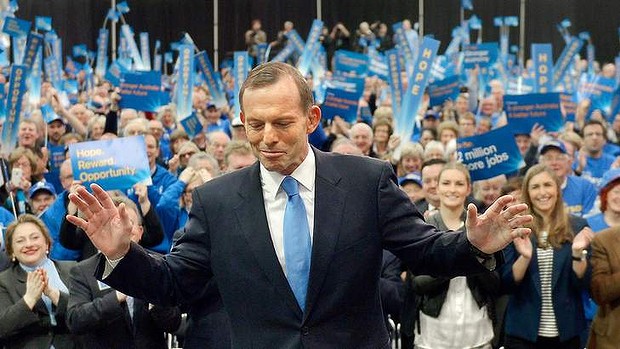


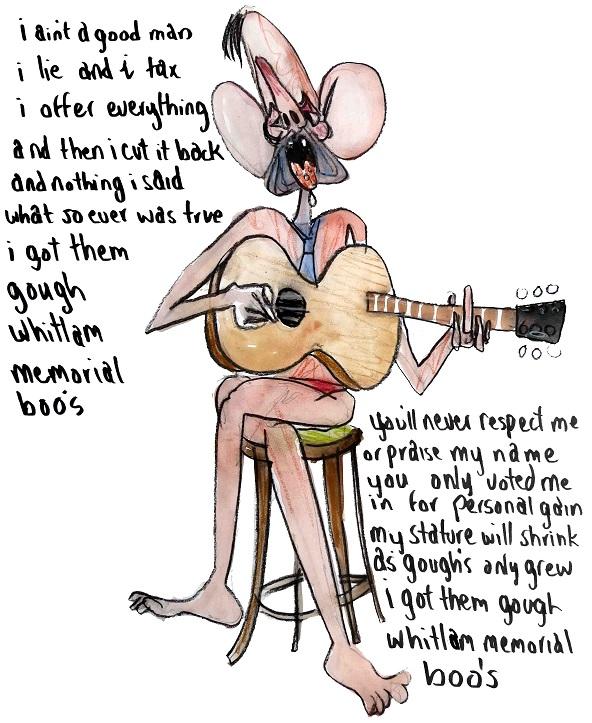


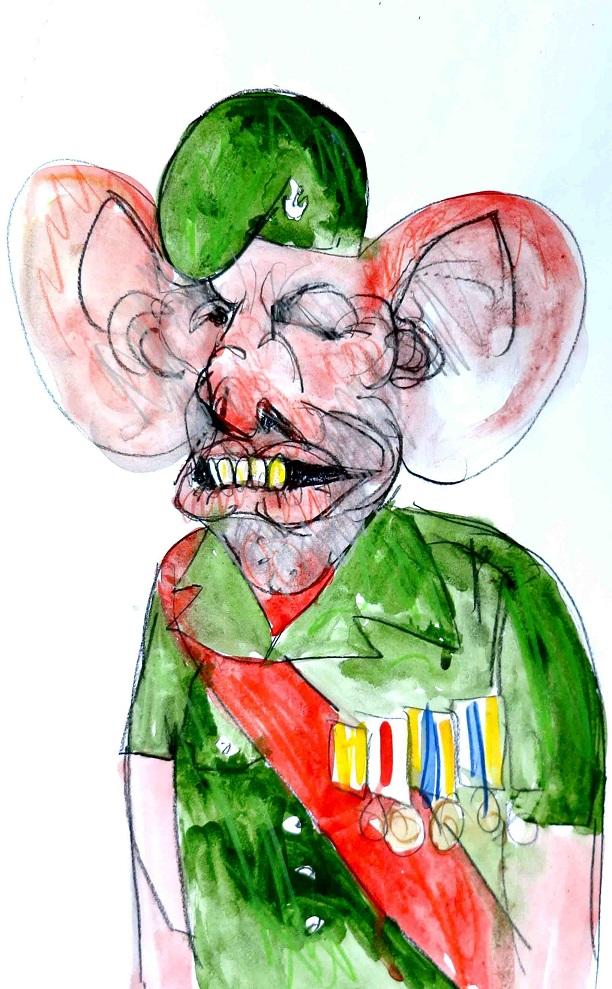





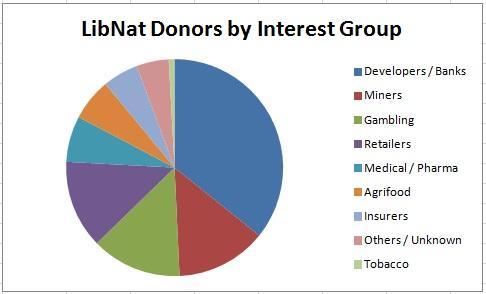


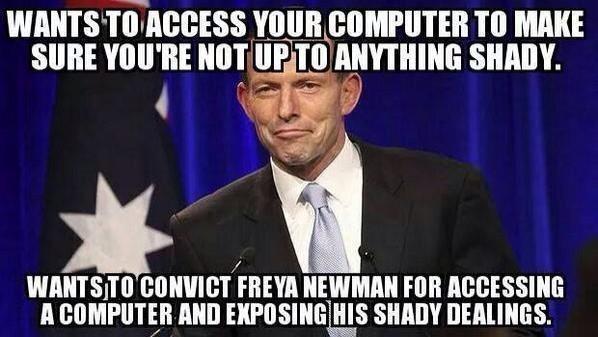
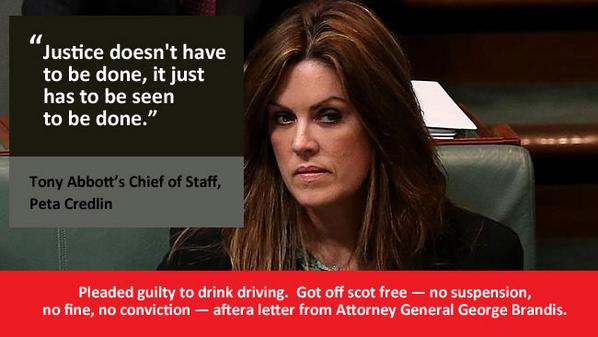
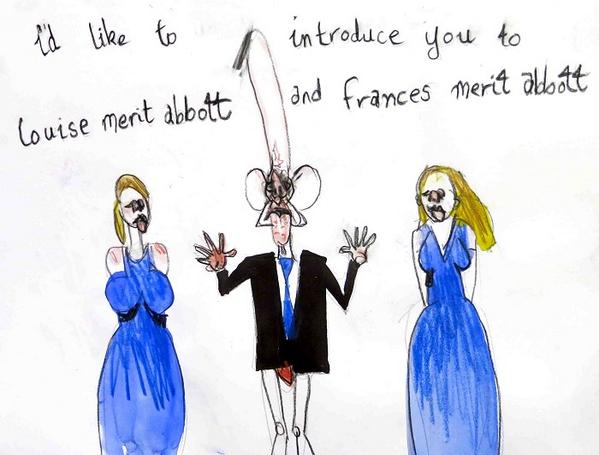


 olddogthoughts
You must be logged in to post a comment.