Tag: Revenue

News Corp walks a delicate line on COVID politics

Let’s not forget the LNP government is Newscorp’s biggest advertiser and influencer its biggest source of revenue. Alan Jones is just another cog in the machinery.

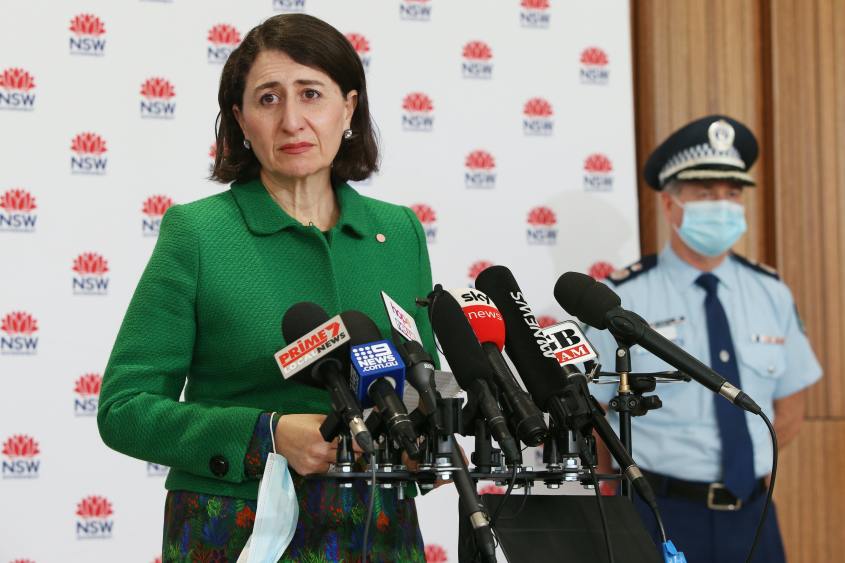
Elements within News Corporation are now fighting among themselves over how its platforms should position themselves in response to the worsening COVID crisis in New South Wales. This has become clear with the decision by the editor of News Corp’s Daily Telegraph, Ben English, to ditch Alan Jones as a columnist. Over the past few weeks, as the coronavirus outbreak got inexorably worse, the Telegraph ran a series of characteristically shrill columns by Jones attacking mask-wearing, lockdowns and NSW Premier Gladys Berejiklian. Yet Jones also promotes these opinions on News Corp’s Sky News, where his Sky-at-Night slot is undisturbed. Indeed, Jones makes a virtue of this, telling The Sydney Morning Herald:

Source: News Corp walks a delicate line on COVID politics

No, we don’t need income tax cuts – The Drum (Australian Broadcasting Corporation)

It has become accepted wisdom in political circles that income taxes should be cut, but the truth is there isn’t really an economic case to be made for such a move.

Source: No, we don’t need income tax cuts – The Drum (Australian Broadcasting Corporation)

Scott Morrison will no longer be able to claim there’s no revenue problem

Left unchecked, extraordinarily generous concessions on superannuation will land our tax system in danger.

Source: Scott Morrison will no longer be able to claim there’s no revenue problem

News Corp first quarter 2015 earnings fall 15% as advertising revenue tumbles | Media | The Guardian

Company’s newspaper division suffers 11% slide in revenue to $1.29bn, but digital listings business records strong performance to offset decline

Source: News Corp first quarter 2015 earnings fall 15% as advertising revenue tumbles | Media | The Guardian

Revenue, Profits Double After CEO Took 90% Pay Cut To Set $70K Minimum Wage

Revenue, Profits Double After CEO Took 90% Pay Cut To Set $70K Minimum Wage

Source: Revenue, Profits Double After CEO Took 90% Pay Cut To Set $70K Minimum Wage

Scott Morrison off to a jittery start as Treasurer

The Treasurer must accept we have a revenue problem as well as a spending problem.

Source: Scott Morrison off to a jittery start as Treasurer

To tax or not to tax – » The Australian Independent Media Network

taxes

To tax or not to tax – » The Australian Independent Media Network.

March Australia

Tax collection. Now there’s a moral crusade for the Tories . An Urgent advice for Abbott and Hockey which they won’t take. Aiding and abetting crime,

The star chamber is in session. Any foot-draggers in the cabinet are due to be hauled before it if they fail to offer up 25% or even 40% cuts in time for the mass slaughter of the public sector next month. A wail of pleas for mercy has gone up to at least stop shortsighted purging that will end up costing the state more.

The recent cut in teenage pregnancy prevention programmes will add to future spending. Cuts in early mental health treatment will lead to more florid cases arriving in hospital. Cutting home care for the frail will send more into costly care homes. The arts can prove how every £1 the Arts Council spends generates another £2. Everywhere you turn, there are compelling arguments for upfront investment to save money later. But the Treasury is implacable, fingers in ears, sceptical about future savings that have a habit of vanishing into their departments. Myopia is part of Treasury DNA, pessimism about putative paybacks hardwired into its circuit board – now, more than ever.

But the Treasury should heed the voice in its own backyard, Revenue & Customs, which brings in the money, cash in hand, here and now: it could bring in enough to deal with the deficit. The World Bank estimates £70bn a year goes missing in Britain’s shadow economy – and its last report found tax evasion rising.

On average a senior tax inspector on £50,000 brings in about £1.5m, while lower-level inspectors on £25,000 bring in £300,000 each – in all 10 times more than is recouped by Department for Work and Pensions fraud-chasers. Yet Revenue staff have already been cut by a third to 68,000. How can they now lose another 25%? Top brass is fighting hard to resist it, suggesting a state-financed “investment plan” to recover lost funds.

Revenue has been accused of going soft on using the law: the Association of Revenue and Customs union reports HMRC brought 200 cases last year, while the DWP brought 9,000 for considerably less lucrative benefit fraud. Three huge firms recently settled out of court, but critics said all three would have paid more if these cases had proceeded. Each handed over at least £1.25bn in unpaid tax: one had set aside nearly twice as much as a contingency. HMRC settled these cases at the door of the court as they had each already drained £12m from its diminished resources. Now they say only high-risk big businesses are targeted. Overt organised crime such as VAT carousel fraud and carbon-trading fraud have “hoovered up our resources”, so most big evaders are under-scrutinised.
Advertisement

“There is a tipping point where without enough investigation, more of the fiddlers think they can fiddle more,” senior officials warn Osborne. A culture of honesty soon evaporates without the constant threat of arrest. HMRC tells how a recent crackdown on doctors spread the word fast: 10% came forward and confessed to cheating. Now the HMRC says bluntly: “We need to send more people to jail so people recognise that it is not worth cheating.” The honesty tipping-point comes when too many people know someone who is getting away with cheating: why pay if no one else does? Research shows the deterrent effect: every £1 detected deters another £1 in potential fraud.

HMRC says it needs resources for urgent scrutiny of the wealthy who are converting their income into capital to avoid the 50% income tax rate: City law partners are among the many awaiting investigation. The big four accountancy and consulting firms are still devising avoidance schemes, although they are required to register each new loophole. An honest rich man called a top tax inspector last month to report an approach by a big four firm offering a complex new capital gains tax wheeze involving “rescindable contracts”.

A brisk official call sent the firm into a “flat spin”; it subsequently withdrew it. But the dangerous impression is that the taxman is always a plod behind, short of resources, depending on tip-offs and settling out of court to save money. The National Audit Office’s report says “lack of funding” is preventing efficient debt recovery, with a 17m backlog of PAYE cases. Some £26.1bn is owed in back PAYE, according to tax expert Richard Murphy: “They haven’t enough people to get on the phone and knock on the door to get the money in.”

The Guardian’s Tax Gap report showed the vast scale of corporation tax avoidance. Meanwhile, a meagre 100 HMRC inspectors do their best to police the entire country’s employers for compliance with the minimum wage.

Britain is historically a nation of relatively compliant taxpayers, but that is changing. Lord Oakshott, the Lib Dem Treasury spokesman, told the Lords: “Tax-dodging in Britain is a deep-seated, pervasive, pernicious disease … Highly organised, aggressive, abusive tax avoidance which used to be a marginal and rather spivvy operation, that was frowned on by the main banks and shunned by top accountants and lawyers who were mainly concerned with reputational risk, has now mushroomed out of all recognition.”

He questions why the government is willing to give the big four and City law firms state contracts while they earn fortunes helping to deplete the Treasury. Until its last year Labour turned a blind eye to tax havens and other dodges; can the coalition do better? The BBC’s Robert Peston points out in his blog that the Conservative party is exceptionally beholden to donors from high finance and hedge funds. Sir Philip Green’s bizarre appointment as an anti-waste tsar undermined the coalition’s promise to “actively examine tax avoidance”.

HMRC top brass fear George Osborne needs to prove he is cutting his own department as savagely as all others. But cutting any further on tax collection would show beyond doubt that government cuts are ideological and totemic, and not based on sound economics.

After the Institute for Fiscal Studies showed cuts falling hardest on the poor, the coalition could restore some credibility by ensuring at least that taxes are collected fairly from all, and not just paid by Leona Helmsley’s “little people”. Why not deny state contracts to the consultants who help the wealthy drain the Treasury? And strengthen HMRC so inspectors can put the fear of jail into tax-dodgers. Conservatives could find it easier than Labour to launch an unflinching moral assault on the greedy culture of evasion, avoidance, off-shoring and cheating that has become poisonously socially acceptable.

Royal Commission into tax evasion a must – The Drum (Australian Broadcasting Corporation)

generic picture of Australian bank notes


Royal Commission into tax evasion a must – The Drum (Australian Broadcasting Corporation).

First speaker in the mature debate

poke

Dear Mr Abbott,

I welcome your call for a mature debate on taxation. I too deplored the “screaming match” that surrounded the introduction of carbon pricing and am pleased you realise how counterproductive that sort of approach is to constructive governance.

As a concerned citizen I would like to make a few suggestions to get the ball rolling.

Your opening gambit is to increase the GST. This is a regressive tax which will, once again, disproportionately hit lower income earners.  Treasury modelling done for the previous government showed that even a modest increase in the rate to 12.5 per cent – along with removal of exempted items such as food, health, childcare, and school fees – could hit a two income two-child family by as much as $205 per fortnight.

Perhaps there is a better way.  For example:

Fossil fuel subsidies

The Australian Government is set to spend over $40 billion in the form of tax rebates and concessions, foregone revenue and expedited write downs of assets per year from 2013/14 to 2016/17. This assessment only includes tax measures, and does not include direct grants or State Government measures, which could add billions more to the annual totals.

The proposed replacement climate policy, the Emissions Reduction Fund, relies on paying companies as an incentive to reduce their emissions. A fundamental contradiction exists between such a policy and the continuation of a range of existing fossil fuel subsidies. Many subsidies significantly reduce the economic signal for companies to identify efficiency opportunities.

Polluter handouts are also highly inequitable. For instance, the mining industry receives a 32c per litre discount on fuels such as petrol and diesel for off‐road use. So while most Australians are paying full price for their fuel at the bowser, their taxes also cover the cost of a huge discount to the mining industry. In all, this handout costs Australian taxpayers $2 billion each year.

Australia, along with all other G20 nations, committed in 2009 to phase out inefficient fossil fuel subsidies over the medium term. In his recent State of the Union address, US President Barack Obama reiterated the need to phase out tax‐based fossil fuel subsidies. Other organisations like the International Monetary Fund, the World Bank, the United Nations and the International Energy Agency are also calling for nations to end fossil fuel subsidies.

In 2009, the Commonwealth Treasury identified $8 billion in annual savings that could be made if Australia fulfilled this commitment. This money could be used to fund a wide range of nation‐building projects, yet to date we continue to use these funds to line the pockets of polluting, and in many cases highly profitable, industries.

Prime Minister Abbott has said that there is to be an end to corporate welfare. Statements by Treasurer Joe Hockey have warned that “the age of entitlement is over,” and that “everyone in Australia must do the heavy lifting now.” It is critical that this rhetoric, if applied, is applied consistently.

Superannuation tax concessions

A study by the Australia Institute found the rate of growth of super tax concessions is greater than that of the pension despite the ageing population, meaning the cost of the tax concession will soon overtake the pension to become ”the single largest area of government expenditure,” by 2016-17.

”’The age pension currently costs $39 billion and superannuation tax concessions will cost the budget around $35 billion in 2013-14,” the study found.

It notes that the Commonwealth bill for these concessions is projected to rise at a staggering 12 per cent annually to be $50.7 billion in 2016-17.

”The overwhelming majority of this assistance flows to high-income earners,” the report finds.

”Low-income earners receive virtually no benefit. The combined cost of these two policies will be $74 billion in 2014 alone.”

Negative gearing

The Grattan Institute’s report, Balancing budgets: tough choices we need, included a section on abolishing negative gearing, which it claims would save the Budget around $4 billion per year initially, falling to a saving of around $2 billion per year over the longer term.

Grattan highlights a number of non-budget (social) benefits from reforming negative gearing, namely:

1.increasing home ownership rates by reducing returns at the margin for landlords relative to first homebuyers; and

2.increasing investment in other more productive assets.

The report also debunks claims that reforming negative gearing would raise rents, since “for every landlord that sells, there would be a renter that buys and becomes a home-owner. The supply of rental properties would fall at the same rate as the number of renters”. It also does not believe that the construction of dwellings would be materially affected, since “almost all of investment property loans are now for existing dwellings”.

Tax avoidance

A report by the Tax Justice Network – an international group focused on investigating tax avoidance – and the United Voice union says almost a third of companies listed on the ASX 200 pay 10 per cent or less in corporate tax.

This is substantially less than the statutory 30 per cent corporate tax rate.

Some companies, such as James Hardie and Westfield Retail Trust, pay zero tax.

Rupert Murdoch’s 21st Century Fox pays 1 per cent tax and casino group Echo Entertainment pays 5 per cent tax.

The report says the government is losing out on at least $8.4 billion in tax each year, which is substantial but may be the tip of the iceberg.

According to the research, 57 per cent of all ASX 200 companies have subsidiaries in tax havens.

Several big-name companies, such as 21st Century Fox, Westfield, Toll Holdings and Telstra, have more than 40 entities in well-known tax havens such as the Cayman Islands, Luxembourg, the British Virgin Islands and Bermuda.

Fourteen in the 20 top companies, including two of the country’s big banks, also hold entities in these locations, according to the report.

“Secrecy jurisdictions play a key role in multinational tax dodging and undermine the ability of democratically elected governments to levy taxes in a just and fair way,” the report’s authors say. “Corporate tax avoidance must be addressed.”

Financial transaction tax

Introduce a Financial Transactions Tax on various categories of financial transactions including: stocks, bonds and currency. If implemented on a global basis, its projected revenue could be as much as US$400 billion a year, depending on the size of the levy imposed, the size of the reduction in trading (if any), and the number of implementing countries/jurisdictions. In the US alone it has been estimated that annually, between US$177 and $353 billion could be raised.

A flat rate of 0.05% has been proposed on all financial market transactions, many experts actually advise vary rates (of between 0.01 and 0.5%) depending on the transaction (stocks, bonds, currency, commodities, swaps, derivatives, etc). The UK stock exchange, one of the largest in the world, already has a 0.5% tax on share transactions.

(1) An FTT will reduce the instability in the global financial system by reducing the volume of trading in financial markets, especially the sort of trading that increases market instability and has led to the turbulence in the financial markets over the last decade.

(2) An FTT will provide an effective way of raising revenues for both domestic purposes, such as assisting governments help pay for the costs of post-financial crisis bailouts, as well as for spending for international public goods, such as the funds needed for climate change adaptation, and to assist countries in meeting the Millennium Development Goals.

The tax is specifically designed to target high frequency traders, especially of securities, where the average holding period is often minutes or seconds. High-frequency traders currently account for 70% of US equity market trading and 30-40% of the volume of trading on the London Stock Exchange.

The tax will only affect financial institutions and funds to the extent that they are involved in this type of high-frequency trading.

Australia is a leading player in global finance in its own right: the Australian Securities Exchange (ASX) is the ninth largest stock exchange in the world. Australian support of the FTT would be a significant boost to the cause of the global campaign. Moreover, Australia is a G20 country and plays a significant role in the group whose endorsement would effectively make the FTT a reality.

You could always keep the mining tax and close the rorting of FBT car leases and…dare I say, bring back the carbon tax…if you are mature enough to admit when you are wrong.

So let’s have some mature debate on these issues Mr Abbott before we jump to charging pensioners more for their bread and single parents more for childcare and sick people more for their medicine.

Over to you……
Our Budget their Budget. For The Homeless Featuring Gym, Library, And Art Studio. California taxed the wealthy they didn’t leave.

The Star Apartments on Los Angeles' Skid Row, seen here during construction in 2013, will provide permanent housing to 102 homeless people and the county agency that works to end homelessness

Jerry Brown took California from a real finacial basket case to profit in 3 years.The coalition invented one  that didn’t exist and now are facing a self-fulfilling disaster and trying to blame Labour.

Los Angeles’ Skid Row has been home to thousands of homeless Angelenos for decades, but downtown development has started to squeeze the area one longtime resident described as “a giant outside insane asylum.” The city is hoping that a new 102-unit housing complex for the homeless that opened Wednesday can help alleviate the resulting tension between the area’s destitute outsiders and the new-money lofts and restaurants popping up nearby

At ground level, the Star Apartments building holds the new headquarters of the Los Angeles County Department of Health Services agency that works on homelessness issues, called the Housing for Health division. The building also holds a gym with a track, a library, a garden, and art studios for residents, according to the Los Angeles Times. Residents pay 30 percent of their income — meaning they pay nothing if they have no income — with city housing funds subsidizing the remainder of the rent cost.

102 prefabricated apartment units are stacked atop the Housing for Health headquarters like children’s blocks. The final product is a modern, eye-catching structure. Seen from the street, the apartments jut out at improbable-looking angles from the ground floor facilities. The interior facing views from the apartments look over a concrete valley strung with cable-edged staircases.

More important than the aesthetics is the good the facility will do for its residents and for Skid Row as a whole. It is three times more expensive to leave homeless people on the street than it is to simply give them housing. The stability that a home provides makes it far easier for homeless people to regain their footing socially, economically, and often medically or psychologically.

This approach to ameliorating homelessness is known among advocates as “permanent supportive housing.” The federal government has begun emphasizing permanent supportive housing in the formulas it uses to divvy up funding for state and local housing authorities, signalling that the largest financial player in the fight against homelessness is putting its weight behind the idea. But despite the evidence that permanent housing with supportive services is not only effective but a cost saver, many cities around the country continue to criminalize homelessness, raise ordinances that make it harder to help the homeless, and experiment with policies that simultaneously raise money for the homeless and push panhandlers out of downtown areas.

In Los Angeles, officials hope to further smooth the Star Apartments’ residents’ reintegration into society by locating key wraparound services directly below the beds where they will sleep and kitchens where they will cook for themselves.

With an estimated 5,000 people living on the streets in Skid Row, the Star Apartments have had to be selective over the past year since the building was ready for occupants. “We want to target the people who are costing the taxpayer the most by not being in housing,” Skid Row Housing Trust executive director Mike Alvidrez told Marketplace last year. That means people who are most prone to ending up in emergency rooms and jails.

The Times interviewed one Star Apartments tenant named Bill Fisher who ended up homeless thanks to health problems and “the death of his life partner” at the age when people with mailing addresses start to get flyers from the AARP. “If somebody had told me 10 years ago I’d lose everything and end up homeless, I’d have said you’re nuts,” Fisher told the paper. He has “decorated his studio apartment with art projects, including antique sheet music, his guitar collection and an orchid suspended from a palm frond.”

The promise the building holds for people like Fisher is not invulnerable, however. Even successful permanent supportive housing programs can be undermined by bureaucratic disputes over funding and jurisdictional lines, as a community of formerly homeless families at the border between Atlanta and Fulton County learned recently when they were forced to relocate by County officials.

Hockey died and we don’t know where we buried him. Yet he’s been caught out again by John Howard

Treasurer Joe Hockey has been caught out – by John Howard no less.

In 1998 the Howard Government passed the Charter of Budget Honesty Act. It required the Department of Finance to publish a “Final Budget Outcome” by September 30 each year.

In any event, the 2013-14 Final Budget Outcome has just been published. Of course, treasurers can put whatever spin they want on the document. In Hockey’s opinion the document is “a report card on the previous Government’s irresponsible fiscal and economic management”.

Well, Hockey is entitled to his own opinions, but he is not entitled to his own facts. The facts are different. So different, indeed, that the aura that conservative governments are better economic managers is now exposed as myth.

In Opposition, the Liberals carried on mercilessly about Labor’s spending blowouts and rising government debt. But what about the facts? The last report under Labor in August 2013 showed projected year-end debt of $178.1 billion. It remained the same for the next four months – the first four months of Coalition Government.

Then, in December 2013, it rose to $191.52 billion and stayed at that till rising in May 2014 to $197.85 billion. And now in September it is $202.5 billion – up 14 per cent on Labor’s debt level.

So now you have it, the Coalition is as bad at running up debt as Labor.

Yet this government abolished the mining and carbon taxes. It is absurd that we allow mainly foreign-owned mining companies to dig up and take our minerals paying virtually no company tax and very little royalties.

Smart countries like Norway taxed their main resource – North Sea oil – at 78 per cent and built up a vast sovereign fund. The tax did not deter the miners.

. Moreover, spending on the military and security has ballooned. But the problem is not government spending, it is the failure to gather the revenue to match it.

$8.4 billion a year is lost in company tax through evasion and minimisation, mainly by saddling up Australian arms of multinational companies with large interest payments on loans that are used worldwide. These companies should pay full Australian tax on their Australian revenue.

One of the most effective ways of making big companies and high-wealth individuals pay at least some tax is the GST. If you want to buy a fur coat from DJs, you pay the GST.

Australian workers and consumers must stop fearing an increase in the GST, because an increased GST could give income tax relief. Australians on quite modest incomes are now facing significant tax increases as inflation pushes them into higher tax brackets.

We should at least index the brackets. A far better solution – as a reader of this column has suggested – would be not to have the four big steps of tax brackets at $18,200, $37,000, $80,000 and $180,000.

It is manifestly unfair that the $1 earned after $37,000 (a very modest income) is taxed at 32.5 cents – the same rate as the $1 earned after $79,999 (a very comfortable income).

In these days of computerisation why not have a Cartesian scale? We could have the tax rate at zero for the marginal dollar after $18,200 gliding incrementally up to, say, 60 per cent on the marginal dollar after, say, $1 million. And then plateauing. That would be better than having these vicious steps.

And please ignore Hockey’s rubbish about the top 10 per cent of earners paying 46 per cent of total income taxes and the top 2 per cent of earners paying 26 per cent, whereas the bottom 20 per cent pay just 2.5 per cent.

The trouble with this is the definition of “earners”. These are ATO figures. The level of “earning” is based on DECLARED income. As the corporate figures suggest there must be a lot of individuals pulling in very, very large incomes but whose “declared” income is very modest indeed

It is indefensible that someone on just $37,000 will pay almost a third of the next dollar they earn in tax. So, let’s forget the hysteria about government spending and have a rational overhaul of revenue.

Government was warned that the ATO was not up to catching corporate tax avoiders. Yet it’s cutting 3000 staff. But Hockey is touting the G20 will close International tax loopholes

Understaffed: An independent report has raised serious concerns about an exodus of experienced staff from the ATO, creating difficulties in dealing with corporate tax avoidance.

The ATO  is DEREGULATED  REVENUE is now INVISIBLE

http://media.smh.com.au/news/federal-politics/tax-attack-5830375.html


Bill Shorten accuses the government during Tuesday’s question time of going soft on corporate tax avoidance; All Tony Abbott could say is  Labor did nothing in government. Is that his justifcation. Staff will be need to be increased to supervise his welfare cuts.

The Abbott government was warned that the Australian Tax Office was ill-equipped to tackle a potential multibillion-dollar international tax dodge as it prepared to cut 3000 ATO staff.At a time when Treasurer Joe Hockey is touting Australia’s efforts in conjunction with the G20 to close international tax loopholes, the Tax Office no longer has a dedicated team to fight the problem.

The irony of it all the ATO’s most experienced staff in tracking international profits have moved to the big four accounting firms, where they now advise the nation’s biggest companies on how to minimise their tax. Furthermore they have left without passing on their knowledge, Good one Mr Abbott

Mr Hockey has been accused of

“hectoring the ATO” to clamp down on multinational profit shifting and tax avoidance.

“But at the same time he has gutted the workforce that would actually deliver on that. By cutting over 3,000 tax officers, the Abbott government has allowed decades’ worth of experience in this highly specialised area of tax law to just walk out the door,” he said.

Read more: http://www.smh.com.au/federal-politics/political-news/government-warned-that-ato-not-up-to-catching-tax-avoiders-20140930-10oa22.html#ixzz3EqBpwucC

30% of our largest companies pay less than.10c in the dollar corporate tax. We have a revenue problem not a spending problem

Global crackdown on tax havens fails to sway Australian companies

There would be no deficit Mr Hockey. If you collected what Mr Murdoch and others have been allowed to forego: Murdoch alone $1.5billion.

How is it that I paid 35% income tax and 30% company tax throughout my working life and the largest companies pay less than 10% and you call them lifters.?????

forgohttps://public.tableausoftware.com/shared/58T5R89KM?:display_count=no


<i></i></p>

https://public.tableausoftware.com/shared/58T5R89KM?:display_count=no