
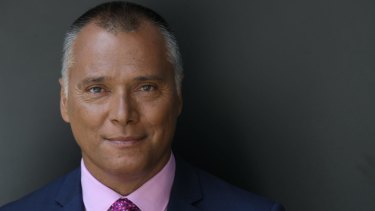
Mundine Means Business, which ran for two seasons on Sky in 2017 and 2018, was funded as part of the Coalition’s Indigenous Advancement Strategy.
Source: National Times – Calls for Voice audit may put Mundine-linked… | Facebook
Mundine Means Business, which ran for two seasons on Sky in 2017 and 2018, was funded as part of the Coalition’s Indigenous Advancement Strategy.
Source: National Times – Calls for Voice audit may put Mundine-linked… | Facebook
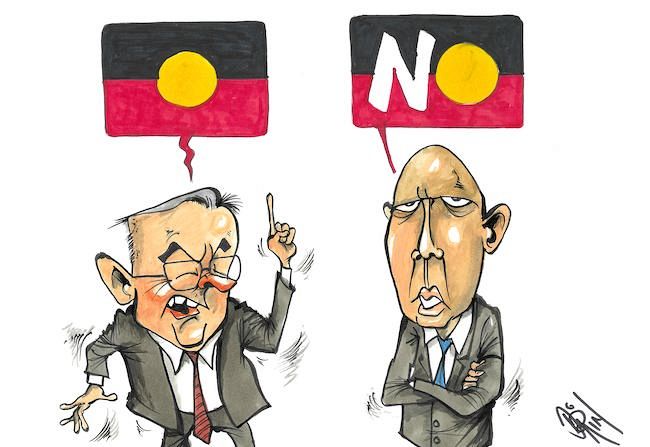
Dutton, Abbott and Howard advocate “Keep things as they are”
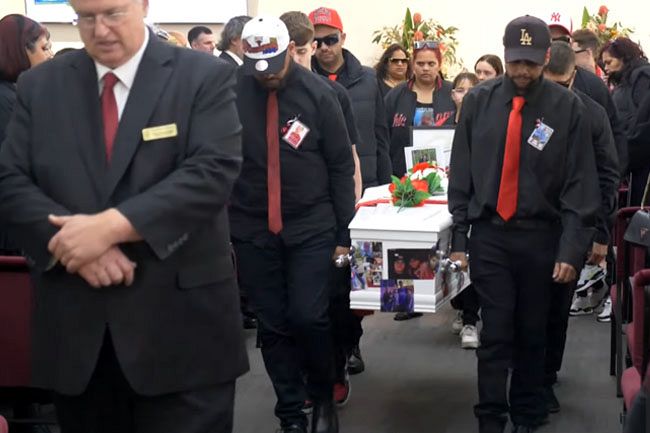
The growing number of First Nations suicides is an indication of a country that has turned its back on the unfortunate and those in need, writes Gerry Georgatos.
Source: Australia’s shame: First Nations suicides a growing problem
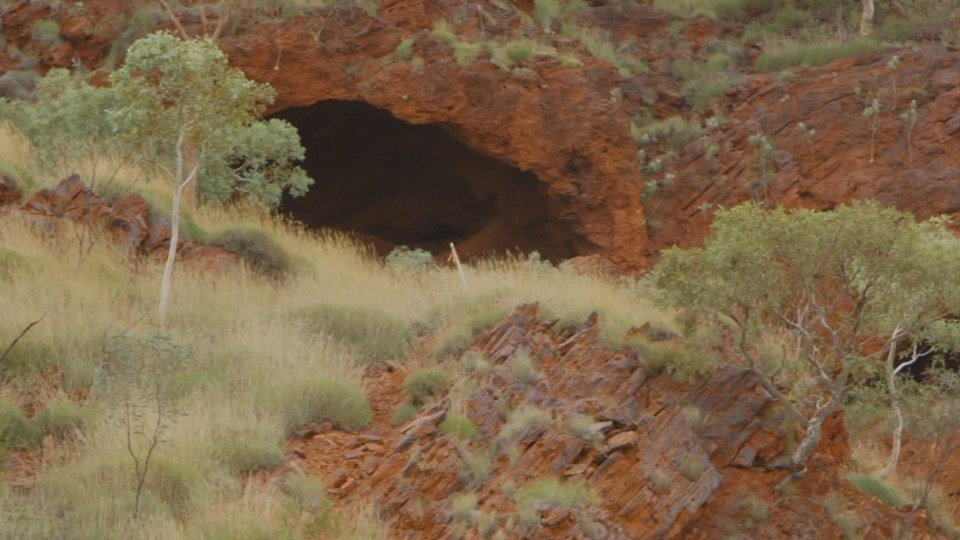
Little more than a month after they became law, Western Australia is reportedly set to scrap its controversial Indigenous cultural heritage laws.

Ben Fordham assists in promoting FACT or FICTION
In this case Tony Abbott hasn’t changed his spots it’s all FICTION
During a radio interview with 2GB’s Ben Fordham this week, former prime minister Tony Abbott also name-checked the NIAA, citing the “hundreds of people” working for the agency in Canberra as among the reasons a Voice was not needed.
He then claimed that the agency “disburses something like $30 billion a year on various Indigenous programs”.
Mr Abbott’s comments echo similar claims on social media that “dedicated Indigenous bodies” such as the NIAA were collectively “funded to the tune of 30 BILLION PLUS dollars”.
However, in a statement to CheckMate, a spokesman for the NIAA said it “has never administered funding of $30 billion per annum”.
Source: National Times – No, the NIAA doesn’t spend $30b a year on… | Facebook

Dutton says he’ll get it right if voted in. He just showed 10 years of failure to be his best
Australian governments are taking a “business as usual” approach to Indigenous policy and risk making disadvantage and discrimination worse.
Source: ‘Business as usual’: Closing the Gap efforts inadequate
Intentional confusion on the part of the fearmongering LNP seems to have gained some traction in Australia as far as the First Nation Peoples are concerned. Australia remains unique and behind the rest of the world in its resistance to what other nations have regarded as common sense for generations.
According to the latest Resolve Strategic poll for Nine media, support for a Yes vote in the upcoming referendum has fallen to 44%. Opposition has climbed eight points to 39%, while 18% are undecided.

Senator Price speaks for herself and is entitled to as any individual is. However, she doesn’t speak for Indigenous Australian Aborigines and Torres Strait Islanders peoples and ignores their place in the history of this Nation.
The very fact she’s an MP doesn’t make her special or guarantee that she is operating in the best interests of Australia. Her Voice will not only correct our history or improve it by resisting the necessary changes to the past 240 years of racist decision-making for and about the First Peoples of this Nation. Australia remains the only Colonial nation on this planet that fails to acknowledge the history and the people here before 1788.
The new coalition spokeswoman for Indigenous Australians says the voice referendum will divide Australians along racial lines in a new advertisement

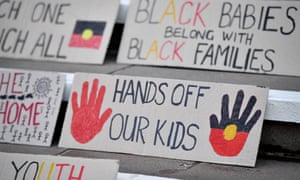
Today on Sorry Day, 13 years since the Apology, our Elders, families and communities still grieve these losses. And many families are being repeatedly traumatised by contemporary child removal practices. Aboriginal and Torres Strait Islander children are nearly 10 times more likely than non-Indigenous children to be in out-of-home care.
One of 66% of people that have managed to close the gap the 66% rarelytalked about. They hear “you can’t be Indigenous” from Australia (ODT)
Despite all the apologies and all the inquiries the NSW government is doubling down on the failed policies of the past
The NSW government has recently passed new laws, which expand the powers of family and community services to permanently remove children from their families. This has been done without any significant consultation or input from the Aboriginal community including from stolen generations survivors themselves. The reforms contained in the Children and Young Persons (Care and Protection) Amendment Bill 2018 make removals permanent, while dispensing with core safeguards and transparency.
Aboriginal children are only 5% of under 18s in NSW but they make up 37% of all young people in care.
Is our Envoy Abbott taking care of this?(ODT)
CDP work-for-the-dole program compulsory for unemployed people in remote areas, and they can be fined $50 a day for missing activities
Places with more Indigenous participants issued with more fines last year
Participants in one Aboriginal community fined estimated average 15 times last year


Speaking in parliament about his Closing the Gap Report 2015, Tony Abbott called for bipartisan support when it comes to improving the situation of Indigenous Australians.
When opposition leader Bill Shorten raised the half-a-billion dollars’ worth of cuts to Indigenous welfare programs by the government in his response, several Coalition MPs stood and walked out in protest. Personally, I wish to congratulate those members of parliament as it was probably the most honest representation of the government’s approach to Indigenous affairs I have seen since they took power 17 months ago.
The findings of the report came as little surprise to many Indigenous people. While it was noted that two initiatives – the halving of the gap in infant mortality rates within a decade and the halving of the gap in year 12 completions – were on track to meet their targets by 2018 and 2020 respectively, little gains have been made in most other areas. Things have actually gone backwards in the goal to halve the employment gap by 2018. In short, the 2015 Closing the Gap report card was almost an exact replica of the 2014 report card.
These findings come as little surprise to Indigenous people because we have, for the past 12 months, been witnessing the “efforts” of the federal government and they have given us little ground for optimism. Take, for example, the allegedly non-discriminatory “work for the dole” programs being implemented in remote communities this coming July.
Despite the government believing there is enough work for 30,000 people to be engaged in work 25 hours per week, and acknowledging that there are services which need to be provisioned, they do not seem to think providing these services is worth an actual wage and benefits for the workers. Many of these roles will be situated within councils, schools and aged care facilities. The ACTU has called upon the government to provide at least a minimum wage and benefits for work which, anywhere else, would be undertaken by actual employees. They have also called on the government to work with communities and ensure these workers have real long-term outcomes. If the government is truly committed to improving employment outcomes, properly employing Aboriginal workers providing essential public services in their communities, rather than making unpaid work a part of their unemployment benefits, might be a good start.
Advertisement
The gaps in life expectancy and health have barely shifted. The rate of suicide for Indigenous men is four times what the rate is for other Australian men. For Indigenous women, it is five times. Aboriginal boys between the ages of 10 and 14 are most at risk of taking their own lives. We may have more kids making it to the age of 5, according to the report, but we are also seeing many more choosing to end their own lives tragically.
While the rates of deaths from chronic disease declined, it was noted in the report that mortality rates from cancer had increased. Last year’s budget cuts included $534m worth of cuts to Indigenous programs. Of the funds cut, over a quarter were from Indigenous-specific health programs including targeted smoking cessation programs, mental health support and chronic disease initiatives. There have been calls to have this funding reinstated, but it remains to be seen whether the government will heed these calls.
Then there are the indicators regarding education. While more Indigenous students may be completing year 12, they are apparently doing so with little improvement in literacy and numeracy rates. Beyond school attendance officers, flexible literacy programs and some sports in education programs, the report doesn’t identify ways in which the government is improving the curriculum to make it more engaging and inclusive to the students. It appears we’re merely pushing more kids through a system which does not have adequate educational support systems in place. Only last week it was announced that the Fountain of Youth Charity was being forced into liquidation due to governmental budget cuts. It’s a charity that has delivered remarkable results in Indigenous children’s health and literacy since 2000. Without such services, I worry for the future destinations of Indigenous students.
Abbott and his government have many questions to answer when it comes to their real commitments to closing the gap between Indigenous and non-Indigenous Australia, yet it comes as no surprise that they leave the chamber when called upon to answer these questions. If the government truly wishes to change the situation for Indigenous people then perhaps they need to look at their attitudes almost as much as their exorbitant funding cuts to Indigenous programs. If they don’t then we’re destined to be back here in 12 months’ time having this exact same conversation.


 olddogthoughts
You must be logged in to post a comment.