Meanwhile, Murdoch media still promotes these events as “unprecedented” but no evidence of a warming planet due to human activity of burning fossil fuels. Is it coincidental that Murdoch is a heavy investor in Genie Oil?
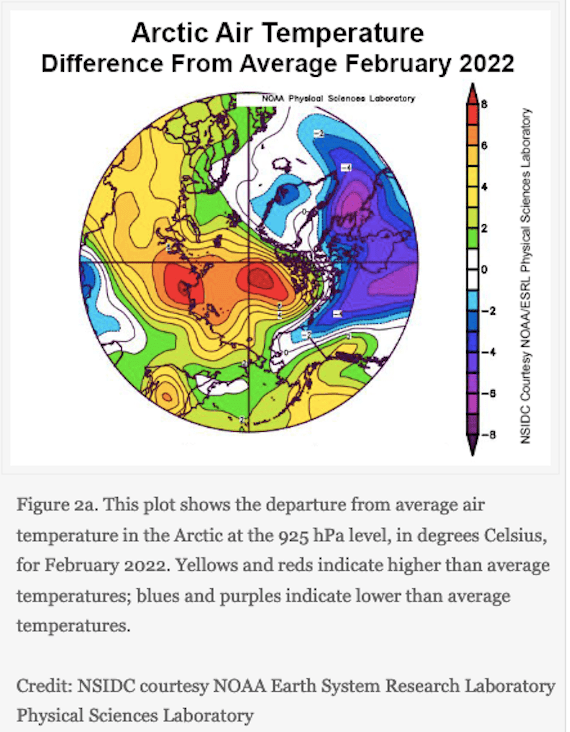
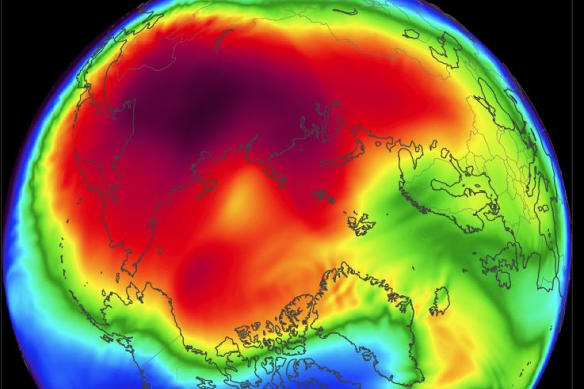
While it made headlines because it is freakish, that parts of Antarctica are 70 degrees F. warmer than usual may just be a fluke. Climate is a trend line you can see over 50 years of changes. Weather is what happens for a day or a week. The more alarming number is one that is slightly lower, which is 50 degrees F. warmer than usual, and it concerns the Arctic, the north pole, not the south. You see the red areas of the map below? They are seriously not supposed to be there, especially at a time when the Arctic is still plunged into the long winter night:
Climate scientists are used to seeing the range of weather extremes stretched by global warming but few episodes appear as remarkable as this week’s unusual heat over the Arctic.
Zack Labe, a researcher at the University of California at Irvine, said average daily temperatures above the northern latitude of 80 degrees have broken away from any previous recordings in the past 60 years.
This story originally appeared on Slateand is republished here as part of the Climate Desk collaboration.
Ever year around the end of February, after a long winter, Arctic ice reaches its maximum extent. This year that happened around Feb. 25, when it encompassed 14.54 million square kilometers of ice around the North Pole.
Ice extent (area covered at least 15 percent by ice) for 2015 (solid blue line) compared with 2012 (dashed) and the average from 1981–2010 (black line). Diagram by the NSIDC
The plot above shows the situation. The solid line shows the average ice extent over the year (measured from 1981–2010) and the gray area represents a statistical measure of random fluctuations; anything inside the gray is more or less indistinguishable from the average (in other words, an excursion up or down inside the gray area could just be due to random chance).
The dashed line was the extent in 2012, when unusual conditions created the lowest minimum extent in recorded history. The solid blue line is 2015 so far. As you can see, it’s already reached maximum, and it’s well below average. It’s also outside the gray zone, meaning it’s statistically significant. It’s the earliest the peak has been reached as well. Both these facts point accusingly at global warming—more warmth, and shorter winters.
At the other pole, Antarctic land ice is melting at a fantastic rate, and the slight increase in sea ice is not even coming close to making up for it. Deniers love to point at the sea ice, but that comes and goes every year and is roughly stable; the land ice is melting away at huge rates. Claiming global warming is wrong because Antarctic sea ice is increasing is like pointing toward a healing paper cut on your finger when your femoral artery has been punctured.
Arctic ice is like the fabled canary in a coal mine; it’s showing us very clearly what we’re in for. And what’s headed our way is a warmer planet, an even more disrupted climate, and a world of hurt if we do nothing about it.



 olddogthoughts
You must be logged in to post a comment.