Category: ISIL

No, Trump did not Defeat ISIL: He Executed Obama’s Plan

via No, Trump did not Defeat ISIL: He Executed Obama’s Plan

Why Aren’t Americans Celebrating fall of ISIL State? It is a bogeyman

Why Aren’t Americans Celebrating fall of ISIL State? It is a bogeyman

Why Aren’t Americans Celebrating fall of ISIL State? It is a bogeyman

Are ISIL recruits more street gang members than zealots? | Informed Comment

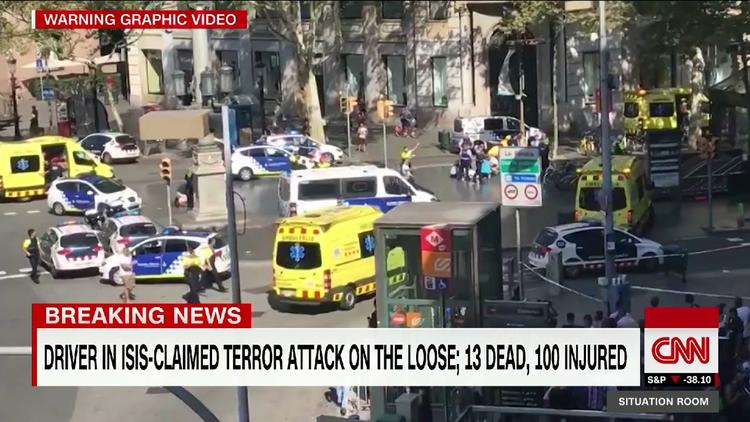
By James L. Gelvin | (The Conversation) | – – The recent terrorist attacks in Spain and Finland once again …

Source: Are ISIL recruits more street gang members than zealots? | Informed Comment

ISIL: Imbecilic Buffoon Trump leading America to Extinction | Informed Comment

By Juan Cole | (Informed Comment) | – – Disturbing signs emerged Tuesday that Donald J. Trump’s odd self-presentation and …

Source: ISIL: Imbecilic Buffoon Trump leading America to Extinction | Informed Comment

Can ISIL survive scenes of Sunni Muslims celebrating their Liberation from it? | Informed Comment

By James Miller | ( RFE/RL) What a difference a month makes.  At the start of August, the extremist group …

Source: Can ISIL survive scenes of Sunni Muslims celebrating their Liberation from it? | Informed Comment

FRANCE-ANALYSIS: Isil knows its priorities – and attacking Christians is one of them

Isil’s war in Europe will evolve in unpredictable and erratic ways, because the generals do not command the troops.

Source: FRANCE-ANALYSIS: Isil knows its priorities – and attacking Christians is one of them

Let’s Fight ISIL, but Without Help of Any Kurds: Turkey to US

Via TeleSur | – – Ankara is angered by Washington’s support for Kurdish fighters in Syria in the fight against …

Source: Let’s Fight ISIL, but Without Help of Any Kurds: Turkey to US

ISIL may be in crisis, but so is the coalition – Al Jazeera English

The group’s current battlefield losses will not automatically translate into meaningful victories for the coalition.

Source: ISIL may be in crisis, but so is the coalition – Al Jazeera English

Why ISIL/ Daesh attracts Convicts and Felons, not the Pious | Informed Comment

By Anne Aly | (The Conversation) | – – Media outlets were quick to note the criminal backgrounds of the …

Source: Why ISIL/ Daesh attracts Convicts and Felons, not the Pious | Informed Comment

Islamic State incites Saudis to kill their own relatives

Islamic State has been able to infiltrate Saudi Arabia through digital recruiting, and it has found devotees willing to kill fellow Sunnis, as well as Shiites, to destabilise the monarchy.

Source: Islamic State incites Saudis to kill their own relatives

Chris Hedges: We All Are Islamic State – Chris Hedges – Truthdig

Source: Chris Hedges: We All Are Islamic State – Chris Hedges – Truthdig

There’s method in the madness of Isis | Letters | World news | The Guardian

Letters: Acts of violence that target civilians are horrific, but the assumption that the architects of such violence are therefore irrational, insane and/or nihilistic is a different matter

Source: There’s method in the madness of Isis | Letters | World news | The Guardian

Why ISIL won’t be defeated – Al Jazeera English

John Mearsheimer speaks with Al Jazeera about the war on ISIL, the Israel lobby and the Palestinian question.

Source: Why ISIL won’t be defeated – Al Jazeera English

ISIL and the illusion of a clash of civilisations – Al Jazeera English

Counterintuitive as it may sound, ISIL is living proof that the clash of civilisations is a myth.

Source: ISIL and the illusion of a clash of civilisations – Al Jazeera English

Enemy of Enemies: The Rise of ISIL – Al Jazeera English

Al Jazeera explores the origins and evolution of the world’s most feared and powerful insurgent group – ISIL.

Source: Enemy of Enemies: The Rise of ISIL – Al Jazeera English

Brutal truths about ISIL victories

Displaced Iraqis from Ramadi gather at the Bzebiz bridge after spending the night walking towards Baghdad [AP]

Brutal truths about ISIL victories – Al Jazeera English.

Today’s Top 7 Myths About Islamic State

The self-styled ‘Islamic State’ Group (ISIS or ISIL), the Arabic acronym for which is Daesh, is increasingly haunting the nightmares of Western journalists and security analysts.  I keep seeing some assertions about it that strike me as exaggerated or as just incorrect.

1.  It isn’t possible to determine whether Daesh a mainstream Muslim organization, since Muslim practice varies by time and place.  I disagree.  There is a center of gravity to any religion such that observers can tell when something is deviant.  Aum Shinrikyo isn’t your run of the mill Buddhism, though it probably is on the fringes of the Buddhist tradition (it released sarin gas in the Tokyo subway in 1995).  Like Aum Shinrikyo, Daesh is a fringe cult.  There is nothing in formal Islam that would authorize summarily executing 21 Christians. The Qur’an says that Christians are closest in love to the Muslims, and that if they have faith and do good works, Christians need have no fear in the afterlife.  Christians are people of the book and allowed religious freedom by Islamic law from the earliest times.  Muslims haven’t always lived up to this ideal, but Christians were a big part of most Muslim states in the Middle East (in the early Abbasid Empire the Egyptian and Iraqi Christians were the majority).  They obviously weren’t being taken out and beheaded on a regular basis.  They did gradually largely convert to Islam, but we historians don’t find good evidence that they were coerced into it.  Because they paid an extra poll tax, Christians had economic reasons to declare themselves Muslims.

We all know that Kentucky snake handlers are a Christian cult and that snake handling isn’t typical of the Christian tradition.  Why pretend that we can’t judge when modern Muslim movements depart so far from the modern mainstream as to be a cult

2.  Daesh fighters are pious.  Some may be.  But very large numbers are just criminals who mouth pious slogans.  The volunteers from other countries often have a gang past.  They engage in drug and other smuggling and in human trafficking and delight in mass murder.  They are criminals and sociopaths.  Lots of religious cults authorize criminality.

3.  Massive numbers of fighters have gone to join Daesh since last summer.  Actually, the numbers are quite small proportionally.  British PM David Cameron ominously warned that 400 British Muslim youth had gone off to fight in Syria.  But there are like 3.7 million Muslims in the UK now!  So .000027 percent of the community volunteered.  They are often teens, some are on the lam from petty criminal charges, and many come back disillusioned.  You could get 400 people to believe almost anything.  It isn’t a significant statistic.  Most terrorism in Europe is committed by European separatist groups– only about 3% is by Muslims.  Cameron is just trying to use such rhetoric to avoid being outflanked on his right by the nationalist UKIP.  One of the most active Daesh Twitter feeds turns out to be run by an Indian worker in a grocery chain in Bangalore who lived in his parents’ basement and professed himself unable to volunteer for Syria because of his care giving chores.  Daesh is smoke and mirrors.

4.  Ibrahim Samarra’i’s ‘caliphate’ is widely taken seriously.  No, it isn’t.  It is a laughing matter in Egypt, the largest Arab country.  There are a small band of smugglers and terrorists in Sinai who declared for Samarra’i, but that kind of person used to declare for Usama Bin Laden.  It doesn’t mean anything.  Egypt, with 83 million people, is in the throes of a reaction against political Islam, in favor of nationalism.  It has become a little dangerous to wear a beard, the typical fashion of the Muslim fundamentalist.  Likewise, Tunisia voted in a secular government.

5.  Daesh holds territory in increasing numbers of countries, including Afghanistan and Pakistan.  But outside of Syria and Iraq, Daesh is just a brand, not an organization.  A handful of Taliban have switched allegiance to Daesh or have announced that they have.  It has no more than symbolic significance in Pakistan and Afghanistan.  These converts are tiny in number.  They are not significant.  And they were already radicals of some sort.  Daesh has no command and control among them.  Indeed, the self-styled ‘caliph’, Ibrahim Samarrai, was hit by a US air strike and is bed ridden in Raqqah, Syria.  I doubt he is up to command and control. The Pakistani and Afghan governments have a new agreement to roll up the radicals, and Pakistan is aerially bombing them.

Even in Syria and Iraq, Daesh holds territory only because the states have collapsed.  I remember people would do this with al-Qaeda, saying it had branches in 64 countries.  But for the most part it was 4 guys in each of those countries.  This kind of octopus imagery is taken advantage of by Daesh to make itself seem important, but we shouldn’t fall for it.

6.  Only US ground troops can defeat Daesh and the USA must commit to a third Iraq War.  The US had 150,000 troops or so in Iraq for 8 1/2 years!  But they left the country a mess.  Why in the world would anybody assume that another round of US military occupation of Iraq would work, given the disaster that was the last one?  A whole civil war was fought between Sunnis and Shiites that displaced a million people and left 3000 civilians dead a month in 2006-2007, right under the noses of US commanders.

In fact, US air power can halt Daesh expansion into Kurdistan or Baghdad.  US air power was crucial to the Kurdish defense of Kobane in northern Syria.  It helped the Peshmerga paramilitary of Iraqi Kurdistan take back Mt. Sinjar.  It helped an Iraqi army unit take back the refinery town of Beiji.  The US ought to to have to be there at all.  But if Washington has to intervene, it can contain the threat from the air.  Politicians should just stop promising to extirpate the group.  Brands can’t be destroyed, and Daesh is just a brand for the most part.

7.  Daesh is said to have 9 million subjects.  I don’t understand where this number comes from.  They have Raqqah Province in Syria, which had 800,000 people before the civil war.  But the north of Raqqah is heavily Kurdish and some 300,000 Kurds fled from there to Turkey.  Some have now come back to Kobane.  But likely at most Daesh has 500,000 subjects there.  Their other holdings in Syria are sparsely populated.  I figure Iraq’s population at about 32 million and Sunnis there at 17%, i.e. 5.5 million or so. You have to subtract the million or more Sunnis who live in Baghdad and Samarra, which Daesh does not control.  Although most of the rest Sunni Iraq has fallen to Daesh, very large numbers of Sunnis have fled from them.  Thus, of Mosul’s 2 million, 500,000 voted with their feet last summer when Daesh came in.  Given the massive numbers of refugees from Daesh territory, and given that they don’t have Baghdad, I’d be surprised if over all they have more than about 3-4 million people living under them.  And this is all likely temporary.  Plans are being made to kick them right back out of Mosul.

Is Jordan Facilitating ISIS’ Grand Strategy? | Alastair Crooke


JORDAN ISIS

Is Jordan Facilitating ISIS’ Grand Strategy? | Alastair Crooke.

Chris Hedges: ISIS—the New Israel – Chris Hedges – Truthdig


Chris Hedges: ISIS—the New Israel – Chris Hedges – Truthdig.

The Middle East: Gone as we know it

The tumultuous 2014 has brought major changes to the Middle East.

The Middle East has drastically changed in the past few years and 2014 alone has etched these changes even deeper into the fabric of the region. The effects of the Arab uprisings linger on as toppled dictators and crumbling civil-military regimes leave behind an expansive political void.

Borders are blurred, non-state actors are on the rise, and regional powers are changing and shifting their tactics. As we look back at 2014, the Middle East seems inevitably and irreversibly changed.

The Islamic State

The most radical reaction to the turmoil in the region was the rise of the Islamic State in Syria and the Levant (ISIL). For years the world stood silent as Shia death squads massacred Sunnis in Iraq and Bashar al-Assad’s forces killed over a hundred thousand in Syria. Little was said or done when Sunnis were tortured and humiliated in Abu Ghraib.

It should not come as a surprise that a decade of severe violence bore more violence in 2014. ISIL has proposed radically different solutions – brutal, destructive and outside the scope of the global political order, morals and norms. It is perhaps ISIL’s unforgiving, violent nature that appeals to disenchanted Muslim youth who, having lived through the trauma of violence, see no other opportunity to change their reality.

Inside Story – CIA torture: Who knew what?

ISIL has redrawn the map of the Middle East carving out huge chunks of Syria and Iraq and threatening other neighbouring states. Syria and Iraq will simply never be, even remotely, the same. These changes should not be solely attributed to the advent of ISIL; they are rooted in circumstances that came about prior to the Arab Spring and are more related to the aftermath of the US invasion of Iraq in 2003.

ISIL’s conquest of large swathes of territory has also accelerated and empowered Kurdish secessionism. Iraqi Kurdistan has, more than ever, started acting as a separate state within Iraq. It is unlikely that in the future the Kurds would willingly step back from their independence gains for the sake of Iraq’s unity.

Despite rearmament of the Iraqi army, coordinated offensives by Kurdish forces, and US-led air strikes, the militant group is not going to retreat or disappear. ISIL’s continuous destructive presence solidifies changes to the political map of the Middle East and makes it almost impossible for Iraq and Syria to reclaim their borders.

Decay of the nation state

The past year has accelerated the decline of the modern nation state in the Middle East. Decline in legitimacy still persists where states were formed on an illegitimate basis and were artificially imposed on the masses. Outdated methods of governance are no longer viable in the light of the expectations and popular aspirations which the Arab Spring ushered in. The lack of legitimacy is making it difficult for political regimes to govern their own people.

Many states in the Middle East are still failing miserably to properly manage their economies and improve the standards of living for their citizens. In 2014 the trend of deteriorating social and economic conditions continued. While in the past, the nation state had a comparatively smaller population to provide for with stronger social cohesiveness and social security networks, today they face a divided, impoverished and demanding population which is proving more difficult to control.

Another threat to the nation state is the fact that the ideological draw of the very idea of a unified nation has eroded. Today Middle Eastern states are in danger of fragmentation and disintegration in the face of growing ethnic and religious divides. The nation as a primary identity has given in to ethnic, tribal and religious loyalties, as people seek security and protection from sub-nation groups. This is increasingly the case in Syria, Iraq, Yemen, Libya and Lebanon and to a lesser extent in Egypt.

Regional power politics

A major shift in Middle East politics can be seen among its regional powers, namely with the emerging new leverage of Iran and changes in Turkey’s policies.

What will it take to defeat ISIL?

Iran has not only managed to enter into a dialogue and negotiations over its nuclear issue with the West, but has also become closer to Western powers. Iran and the West have engaged in more symbolic gestures of mutual acceptance and improving relations, going as far as the US secretary of state and Iranian minister of foreign affairs having an official meeting.

Iran has managed to utilise its improving relations with the West and translate this development to its advantage in the region, with hardly any resistance.

Iran has de facto influence on Iraq, Syria, Lebanon and lately Yemen. One cannot ignore Iranian MP Ali Zakani’s comments: “Three Arab capitals have today ended up in the hands of Iran and belong to the Islamic Iranian revolution”; he added that Sanaa has become the fourth. Furthermore, Iran has initiated rapprochement with Hamas after the fallout in 2011 over Syria.

Turkey has also positioned itself within the region very differently from previous years. Turkey is seeking to revive itself in a fashion more in line with its historical roots, lifting the hijab ban in educational institutions, seeking to revive the Ottoman language, and emphasising religious symbolism in domestic and international politics.

In 2014 Turkey continued to distance itself from Israel, and unwaveringly criticised it, while being supportive of the Palestinian cause. It has continued to be a strong supporter of the Arab Spring, which has antagonised some of its Arab neighbours. Although Ankara was traditionally close to the Assad regime, today it has become one of its enemies, supporting the Syrian opposition. Most importantly, Turkey has gone from being a staunch advocate of secularism to a country which Islamists in the region look up to and seek help from.

Looking back at 2014, it is increasingly clear that the changes that started with the Arab uprisings four years ago have persisted and produced lasting changes in the region. With collapsing nation states, the increasingly more powerful ISIL, blurred national borders, and transforming regional powers, the Middle East is simply gone as we know it.

Mustafa Salama is a political analyst, consultant and writer. He has extensive experience and an academic background in Middle East Affairs.

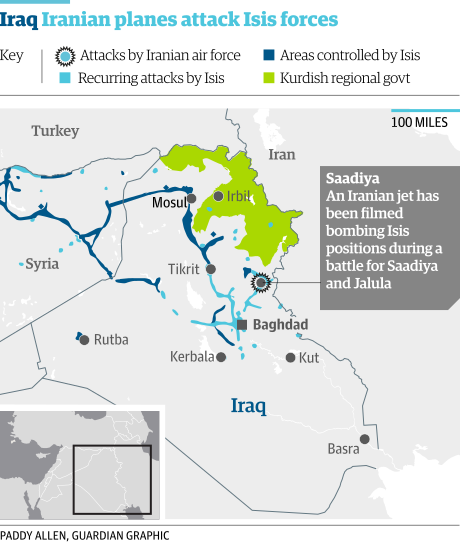
Iranian air force bombs Isis targets in Iraq, says Pentagon : When my enemy is your enemy

Washington and Tehran deny coordination as part of US-led coalition against Islamic State

Iran’s air force has attacked targets of Islamic State (Isis) in eastern Iraq, the Pentagon has said.

Tehran has denied carrying out raids and acting in coordination with the US, which is leading a western-Arab coalition to defeat the jihadi group.

The Pentagon said air strikes in Iraq’s Diyala province were the first since Isis captured the Iraqi city of Mosul in June.

Rear Admiral John Kirby, the Pentagon spokesman, insisted that the US has not coordinated military activities with Iran. He said the US continued to fly its own missions over Iraq and that it was up to the Iraqi government to avoid conflicts in its own airspace.

“Nothing has changed about our policy of not coordinating military activity with the Iranians,” Kirby told reporters in Washington.

A senior Iranian official said no raids had been carried out and Tehran had no intention of cooperating with Washington.

“Iran has never been involved in any air strikes against Daesh [Isis] targets in Iraq. Any cooperation in such strikes with America is also out of question for Iran,” the senior official told Reuters.

In Tehran, the deputy chief of staff of Iran’s armed forces, Brigadier-General Massoud Jazayeri also denied any collaboration. Iran considered the US responsible for Iraq’s “unrest and problems”, he said, adding that the US would “definitely not have a place in the future of that country”.

Kirby’s comments followed reports that American-made F4 Phantom jets from the Iranian air force had been targeting Isis positions in Diyala. Jane’s Defence Weekly identified al-Jazeera footage of a jet flying over Iraq as an Iranian Phantom.

It had earlier been reported that Iran sent three Su-25 fighter jets to Iraq designed for close support of ground troops and that Iranian pilots flew Iraqi aircraft on combat missions.

The anti-Isis campaign has raised the intriguing possibility that the US and Iran, enemies since the 1979 Islamic Revolution, might work together against a common foe. The model has been seen as their brief cooperation against al-Qaida in Afghanistan after the 9/11 attacks. Talks about Iraq have taken place in the margins of the so-far inconclusive international negotiations about Iran’s nuclear programme.

But the US has repeatedly denied coordinating with Iran. Last month, following a personal letter sent by President Barack Obama to Iran’s supreme leader, Ayatollah Seyed Ali Khamenei, the US national security adviser, Susan Rice, said that “we are in no way engaged in any coordination – military coordination – with Iran on countering Isil [another name for Isis]”.
Iranian F-4 fighter jets fly during a military parade in April. Iranian F-4 fighter jets fly during a military parade in April 2014. Photograph: Atta Kenare/AFP/Getty Images

The two countries remain at odds over the crisis in Syria, with the US calling for the removal of Bashar al-Assad and backing rebel forces. Iran, displaying far greater commitment, provides military and financial support for his regime. Tacit cooperation between Washington and Tehran over Iraq is seen as a classic example of the notion of “my enemy’s enemy becoming my friend”. Key US allies in the Middle East, especially Israel and Saudi Arabia, fear any kind of US-Iranian rapprochement.
Advertisement

The US has not invited Iran to join the coalition fighting Isis, and Iran has said it would not join in any case. The grouping includes the UK, France and Australia as well as Saudi Arabia, Jordan, the UAE and Bahrain – Sunni Arab states which are deeply suspicious of Iran’s regional ambitions.

Iran has been actively involved in supporting the Shia-led Baghdad government and in recent weeks has gradually raised the profile of its semi-covert presence in Iraq, especially the activities of General Qasim Suleimani, commander of the al-Quds force of the Revolutionary Guards Corps. Suleimani has coordinated the defence of Baghdad and worked with Shia miltias and Kurdish troops.

The US-led air campaign against Isis began on 8 August in Iraq and was extended into Syria in September. But several countries, including the UK, which operate in Iraq, refuse to do so in Syria – highlighting confusion about overall strategy.

News of Iran’s apparently widening role emerged as minsters from the coalition met at the Nato HQ in Brussels for a summit chaired by the US secretary of state, John Kerry.

Speaking at the summit, Kerry said the US-led coalition had inflicted serious damage on Isis, but that the fight against the militants could take years.

“We recognise the hard work that remains to be done,” Kerry said. “Our commitment will be measured most likely in years, but our efforts are already having a significant impact.”

“We will engage in this campaign for as long as it takes to prevail,” he added.

Talks are focusing on military strategy as well as ways to stem the flow of foreign fighters joining Isis and how to counter its slick propaganda, disseminated on social media. The meeting will discuss ways to send “counter-messages” to de-legitimise Isis, a senior US state department official told AFP.

Intel suggested Sunni tribes could be recruited against ISIL. It was reasonable to predict after the Maliki government the opposite was more likely and they have supported ISIL

Iraq, U.S. find some potential Sunni allies have been lost

By Ben Hubbard, NEW YORK TIMES
November 15, 2014

0

US News

BAGHDAD – When the militants of the Islamic State entered the Sunni Arab area of Al Alam, they gave its tribal leaders a message of reconciliation: We are here to defend you and all the Sunnis, so join us.

But after a group of angry residents sneaked out one night, burned the jihadists’ black banners and raised Iraqi flags, the response was swift.

“They started blowing up the houses of tribal leaders and those who were in the security forces,” Laith al-Jubouri, a local official, said. Since then, the jihadists have demolished dozens of homes and kidnapped more than 100 residents, he said. The captives’ fates remain unknown.

Manipulating tribes

In the Islamic State’s rapid consolidation of Sunni parts of Iraq and Syria, the jihadists have used a double-pronged strategy to gain the obedience of Sunni tribes. While using their abundant cash and arms to entice tribal leaders to join their self-declared caliphate, the jihadists have also eliminated potential foes, hunting down soldiers, police officers, government officials and anyone who once cooperated with the United States as it battled al-Qaida in Iraq.

Now, as the U.S. and the Iraqi government urgently seek to enlist the Sunni tribes to fight the Islamic State, also known as ISIS, they are struggling to undo the militants’ success in co-opting or conquering the majority of them.

ISIS succeeding

Officials admit little success in wooing new Sunni allies, beyond their fitful efforts to arm and supply the tribes who were already fighting the Islamic State – and mostly losing. So far, distrust of the Baghdad government’s intentions and its ability to protect the tribes has won out.

“There is an opportunity for the government to work with the tribes, but the facts on the ground are that ISIS has infiltrated these communities and depleted their ability to go against it,” said Ahmed Ali, an Iraq analyst at the Institute for the Study of War. “Time is not on the Iraqi government’s side.”

Much of the Islamic State’s success at holding Sunni areas comes from its deft manipulation of tribal dynamics.
|

Media at war, death by our side. Do we play by the Geneva convention? Iraq doing it for themselves.

http://aje.me/1uL1dg4

ISIL can be defeated

ISIL is not ISLAM

ISIL will be punished

ISIL is not the only group using the media as a weapon of war, with one anti-ISIL TV station also gaining ground in Iraq.

Al Jazeera’s Charles Stratford reports from northern Iraq.

USA 3000 AUS 200 the Devils Number 6.66% of our troops in Iraq. Only Baghdad

Australian troops ‘moving into locations’ in Iraq to assist with fight against Islamic State

Updated about an hour agoTue 11 Nov 2014, 10:56am

The Federal Government has left open the possibility of sending more troops to fight Islamic State (IS) militants, a day after confirming that special forces soldiers have begun moving into Iraq.

Australia sent a contingent of about 200 special forces to the defence base in the UAE in September, but they have been waiting there for a formal direction from the Iraqi government.

The troops have begun moving into the strife-torn country in the past week and will initially be placed in Baghdad in an “advise and assist” role.

US president Barack Obama said yesterday he is in talks with Australia and other coalition partners about how they can “supplement” their commitments.

Assistant Defence Minister Stuart Robert said no decision has been made about sending more troops and would not be made until the success of the current commitment could be gauged.

“The Prime Minister has not announced that and the Prime Minister has not made any statements to that effect – nor should we make any commitments further until we’ve actually bedded down what we’re putting into theatre right now,” he told NewsRadio.

“Our forces have now spent a number of days moving into locations. It will take more days to actually become effective in the advising and assisting.

“It will take weeks if not months for that training force to really come into effect.

“So let’s see what effect we can have on our ground before we jump further.”

Prime Minister Tony Abbott, who is in Beijing for the APEC summit, said yesterday that Australia continues to talk with its partners about fighting the terrorist group.

Isis: Tony Abbott welcomes extra US troops but says he won’t send more He hasn’t sent any yet they are in UAE

US Navy F-18E Super Hornets supporting operations against IS, after being refueled by a KC-135 Stato

The US president authorises the doubling of troop levels in Iraq to 3,000, but PM says Australia’s plans have not changed. I thought he was under USA command not an independant. Don’t you just get the feeling that after 3 months no help to those who have been begging, Not wanted by those we call allies that Abbott is just doing it for himself?

Barack Obama’s approval of additional troops in Iraq is welcome but Australia’s current commitment remains, the prime minister, Tony Abbott, has said.

The US president has authorised the doubling of US troop levels in Iraq for the war against Islamic State (Isis) militants, further straining his pledge against “boots on the ground”.

Obama ordered an additional 1,500 troops to Iraq on Friday to bolster the performance of Iraqi and Kurdish forces fighting Isis in ground combat. The training, the Pentagon said, is expected to last the better part of a year, raising questions about when the Iraqis will be able to wrest territory away from Isis.

Speaking to reporters in Melbourne on Saturday, Abbott welcomed the US announcement but said there were no plans to change Australia’s commitment. The government announced in October it was sending special forces to Iraq and Australian war planes have led international air strikes, destroying key Isis targets.

“Obviously we work in very close partnership with the United States, with the United Kingdom, with a number of other countries,” Abbott told reporters. “This is a very broad coalition, it’s not just the United States.  Isn’t it strange that Iraq government doesn’t rate a mention?

“Our commitment is clear, it’s up to eight Super Hornet strike aircraft … it’s up to 200 special forces. We have made a strong commitment to disrupting and degrading the ISIL death cult and we continue to talk with our partners and allies about how this is best achieved.” I guess sloganeering is one way.

The new US troops, the Pentagon emphasised, would not be used in a combat role, joining roughly the same number of “advisers” who have been performing a similar role in Iraq since June. Troop levels in Iraq will soon stand at about 3,000.

US warplanes will continue their near-daily bombardment of Isis targets from the air.

To finance the expanded effort, the White House has asked Congress for an additional $5.6bn, which will sustain operations like the air strikes and associated logistics. The money includes $1.6bn as a “train and equip fund” for Iraqi and Kurdish units to enable them to “go on the offensive”, said budget director Shaun Donovan.

An additional $3.4bn will be used “to support ongoing operations” including military advisers, intelligence collection and ammunition. The rest would go to the State Department to support diplomacy and to provide aid to neighboring countries including Lebanon and Jordan.

But the Pentagon said that none of the additional troops would arrive in Iraq unless and until Congress approves the funding package.

US officials rejected the assertion that the additional troops represented “mission creep”.

“Even with these additional personnel, the mission is not changing,” a senior administration official said. “The mission continues to be one of training, advising and equipping Iraqis, and Iraqis are the ones who are fighting on the ground, fighting in combat.”

Despite this the Australian Greens leader, Christine Milne, said the US decision to increase ground troops in Iraq confirmed her fears that Australia was involved in mission creep.

“It started off with a humanitarian response, then it moved to dropping weapons, then it moved to committing to air strikes and special forces,” she told reporters on Saturday. “Now we have the Americans significantly increasing their contribution of boots on the ground.”

Milne called on Abbott to rule out increasing the number of Australian special forces. “The effort has to go into cutting off [Isis’s] financial and other supplies,” Milne said.

U.S.-backed Syria rebels routed by fighters linked to al-Qaeda. Trained allies defected to Jabhat al-Nusra. Aussies watched on in Iraq and did nothing as well.

A fighter for the moderate Free Syrian Army sits in a shooting position behind sandbags during clashes with loyalist forces in Aleppo, Syria, on Nov. 2. Moderate rebels elsewhere in northern Syria were pushed back by Islamists over the weekend. (Hosam Katan/Reuters)

The Obama administration’s Syria strategy suffered a major setback Sunday after fighters linked to al-Qaeda routed U.S.-backed rebels from their main northern strongholds, capturing significant quantities of weaponry, triggering widespread defections and ending hopes that Washington will readily find Syrian partners in its war against the Islamic State.

Moderate rebels who had been armed and trained by the United States either surrendered or defected to the extremists as the Jabhat al-Nusra group, affiliated with al-Qaeda, swept through the towns and villages the moderates controlled in the northern province of Idlib, in what appeared to be a concerted push to vanquish the moderate Free Syrian Army, according to rebel commanders, activists and analysts.

Other moderate fighters were on the run, headed for the Turkish border as the extremists closed in, heralding a significant defeat for the rebel forces Washington had been counting on as a bulwark against the Islamic State.

Moderates still retain a strong presence in southern Syria, but the Islamic State has not been a major factor there.

A senior Defense Department official said the Pentagon “is monitoring developments as closely as possible” but could “not independently verify” reports from the ground. The official was not authorized to comment publicly and spoke on the condition of anonymity.

Jabhat al-Nusra has long been regarded by Syrians as less radical than the breakaway Islamic State faction, and it had participated alongside moderate rebels in battles against the Islamic State earlier this year. But it is also on the U.S. list of terrorist organizations and is the only group in Syria that has formally declared its allegiance to the mainstream al-Qaeda leadership.

A Jabhat al-Nusra base was one of the first targets hit when the United States launched its air war in Syria in September, and activists said the tensions fueled by that attack had contributed to the success of the group’s push against the moderate rebels.

“When American airstrikes targeted al-Nusra, people felt solidarity with them because Nusra are fighting the regime, and the strikes are helping the regime,” said Raed al-Fares, an activist leader in Kafr Nabel, in Idlib.

“Now people think that whoever in the Free Syrian Army gets support from the U.S.A. is an agent of the regime,” he said.

Fleeing rebel fighters said they feared the defeat would spell the end of the Free Syrian Army, the umbrella name used by the moderate rebel groups that the United States has somewhat erratically sought to promote as an alternative both to the Assad regime and the extremist Islamic State.

Among the groups whose bases were overrun in the assault was Harakat Hazm, the biggest recipient of U.S. assistance offered under a small-scale, covert CIA program launched this year, including the first deliveries of U.S.-made TOW antitank missiles. The group’s headquarters outside the village of Khan Subbul was seized by Jabhat al-Nusra overnight Saturday, after rebel fighters there surrendered their weapons and fled without a fight, according to residents in the area.

Hussam Omar, a spokesman for Harakat Hazm, refused to confirm whether American weaponry had been captured by the al-Qaeda affiliate because, he said, negotiations with Jabhat al-Nusra are underway.

Harakat Hazm, whose name means “Steadfastness Movement,” had also received small arms and ammunition alongside non-lethal aid in the form of vehicles, food and uniforms from the United States and its European and Persian Gulf Arab allies grouped as the Friends of Syria alliance. Scores of its fighters had received U.S. training in Qatar under the covert program, but it was also not possible to confirm whether any of those fighters had defected to the al-Qaeda affiliate.

Another Western-backed group, the Syrian Revolutionary Front, on Saturday gave up its bases in Jabal al-Zawiya, a collection of mountain villages that had been under the control of the pro-American warlord Jamal Maarouf since 2012. A video posted on YouTube showed Jabhat al-Nusra fighters unearthing stockpiles of weaponry at Maarouf’s headquarters in his home town of Deir Sunbul.

In a separate video, Maarouf, addressing the Jabhat al-Nusra leadership, said he fled along with those of his men who had not defected, “to preserve the blood of civilians, because you behead people and slaughter them if they do not obey you.”

The loss of northern Idlib province could prove a crippling blow to the moderate rebels, whose fight against Assad’s regime began in 2012 and has since been complicated by the rise of rival Islamist groups with goals very different from those of the original revolutionaries.

Idlib was the last of the northern Syrian provinces where the Free Syrian Army maintained a significant presence, and groups there had banded together in January to eject the Islamic State in the first instance in which Syrians had turned against the extremist radicals.

Most of the rest of northern Syria is controlled by the Islamic State, apart from a small strip of territory around the city of Aleppo. There the rebels are fighting to hold at bay both the Islamic State and the forces of the Assad government, and the defeat in Idlib will further isolate those fighters.

Perhaps most significant, it will complicate the task of finding Syrian allies willing to join the fight against the Islamic State, said Charles Lister of the Qatar-based Brookings Doha Center.

“The United States and its allies are depending very strongly on having armed organizations on the ground to call upon to fight the Islamic State, and now those groups have taken a very significant defeat,” he said.

Although some groups have already been receiving U.S. support, it was never sufficient to tilt the balance of power on the ground, Lister said. “This sends a message that Western support doesn’t equal success,” he added.

The limited assistance program already underway is expected to be supplemented by a bigger, overt, $500 million program to train and equip moderate rebels that was first announced by President Obama in June and that has become a central component of the U.S. strategy to confront the Islamic State.

But U.S. officials have said it could be months before the program starts, and longer before it takes effect, thereby giving an incentive to the moderates’ foes to challenge them before any significant help arrives.

Although the administration has long voiced its support for the rebel fighters, direct U.S. aid to them has been slow and scant, with weapons shipments and a CIA training program limited by the need to vet the fighters for any ties to militants.

More extensive aid to the rebels has also been withheld in the interest of promoting a negotiated political solution that would remove Assad from power while leaving Syrian institutions, including the military, intact.

In public remarks last week, national security adviser Susan E. Rice acknowledged that the U.S.-backed rebels “are fighting a multifront conflict, which is obviously taking a real toll on them.” The expanded military train-and-equip mission, Rice said, “is, in the first instance, going to enable them to fend off ISIL, but it is also designed and originated with the concept of trying to help create conditions on the ground that are conducive to negotiations. And that means helping them in their conflict against Assad as well.”

Meanwhile, the extension of the air war to Syria in September has drawn widespread complaints from moderate rebels that their goal of ousting the Assad regime is being shunted aside in the effort to fight the Islamic State, which is also known as ISIL. Anecdotal evidence that the airstrikes have indirectly aided the Assad government in its efforts to crush the rebellion has further fueled resentment.

Besides southern Syria, where the Islamic State has not established a significant foothold, moderate groups are also still fighting in scattered pockets around Damascus. But the U.S. campaign against the Islamic State is focused on the northern part of the country, where the group has entrenched itself across vast areas of territory for more than a year.

Our forgotten allies against Islamic State: Iraqi and Syrian women

Women and girls living in Syria and Iraq have been subject to gross sexual violence, economic strife and the psychological trauma of a war that, to them, seems endless. But women in these countries are not just victims of violence, they are also great agents for change. These women should be our best allies in the fight against Islamic State.

We have seen reporting on female Kurdish fighters; women who were university students, mothers and grandmothers. But women are not just taking up arms. Though missing from the news, women in Syria and Iraq are also working towards peace. For example, in the suburbs of Damascus, a women’s group negotiated a 40-day ceasefire between regime and opposition forces to allow the passage of essential supplies.

The US-led international coalition needs to go beyond seeing women as passive victims of this war. Instead, it needs to connect with these women, whose work is central to long-term stabilisation and peace in Syria and Iraq.

What is the world doing to help these women?

Nearly eight in ten of the 6.8 million people who have been displaced by the conflict in Syria are women and children. The United Nations has appealed for more than US$2.2 billion to meet critical humanitarian needs of displaced people, but the international community has committed only one-third of what is needed.

Gender concerns are being integrated into humanitarian planning and programming, but women and girls still face huge challenges.

The International Rescue Committee recently completed a large survey of Syrian women and girls. When asked “what are the biggest challenges you are facing?”, the most common responses related to the daily reality of sexual exploitation and harassment:

Constantly fearful, women and girls told us about extreme levels of harassment.

Islamic State is using sexual violence as a weapon of war. The United Nations in Iraq has said that:

… some 1500 Yazidi and Christian persons may have been forced into sexual slavery.

When sexual violence is used as a weapon of war, the social fabric needed to recover from conflict is threatened. Even the UN Security Council has stated in the past that sexual violence:

… can significantly exacerbate situations of armed conflict and may impede the restoration of international peace and security.

https://www.youtube.com/watch?feature=player_embedded&v=6ugKcwZjdxE

The women leaders we could be supporting

There is increasing acknowledgement that victory against Islamic State will take more than just dropping bombs. We know from recent experiences in Afghanistan that violent extremism thrives in places where governance and the rule of law are virtually non-existent. There, military analysts knew that coalition forces were being out-governed by the Taliban.

Local community leaders in Syria now fear that people will become radicalised in places where there is no employment, education or other opportunities. But there can be no stability if we do not address the security concerns of half the population.

October 31 marks the 14th anniversary of the landmark UN Security Council Resolution 1325 that formalised women’s participation and protection as a priority of international peace and security. It was the first in a suite of seven resolutions to acknowledge the disproportionate impact of conflict on women and girls.

Shatha Naji Hussein from the Iraqi organisation Women for Peace has won multiple global awards for her peace efforts. United Nations Assistance Mission for Iraq
Click to enlarge

That resolution obliges member states not just to protect women from sexual violence, but also to increase their participation in prevention, mitigation and resolution of conflict.

In Iraq, women like Shatha Naji Hussein work to secure the right for women to build a safer future. It’s a two-way process between civil society and government to empower women to bring about positive change in their communities. It’s women like this that the international community need to support in the fight against Islamic State.

Syrian radio talkshow host and producer Honey Al Sayed. Institute for Inclusive Security
Click to enlarge

We need to support women like Honey Al Sayed, who is promoting leadership and tolerance in Syria by communicating positive messages at the grassroots level, particularly to youth groups. She co-founded the online radio station Radio SouriaLi, which promotes civic engagement, community development and responsible citizenship, under the motto “Unity in Diversity”.

Only with local leadership can there be effective conflict resolution and transition. Women like Afra Jalabi, who started The Day After Project, have developed plans for a post-conflict, democratic Syria.

The Syrian Women’s League has conducted a comparative assessment of constitutions in the region to establish a set of guiding principles for a new Syrian constitution.

What Australia and our allies can do

At the Annual Civil Society Dialogue on Women, Peace and Security on September 23, Australia’s Minister Assisting the Prime Minister for Women, Senator Michaelia Cash, said:

… there are countless other women who have the skills and capabilities to participate in peace-building and peacekeeping. But they are denied the opportunity. This must be remedied.

Having made military commitments to the conflict with Islamic State, the Australian government now needs to prioritise the commitments made in the Australian National Action Plan on Women, Peace and Security 2012-2018. It is a whole-of-government policy, which has bipartisan support.

One of the strategies of the National Action Plan is to “take a co-ordinated and holistic approach” to women, peace and security.

Of course, Australia and our allies need to invest in the protection of women and girls affected by the conflict in Syria and northern Iraq. But as Cash rightly pointed out, women are not merely victims in this conflict: they also have vital skills and local knowledge.

To defeat Islamic State in the long run, the world needs to support Iraqi and Syrian women to be more actively involved in conflict mitigation, resolution and peace processes. Australia could be doing more – and we need to be pushing our allies to do the same.