Jeffrey Sachs regrets that the C.I.A.’s rogue operations did not end after the crimes exposed by the 1975 Church Committee.
Jeffrey Sachs regrets that the C.I.A.’s rogue operations did not end after the crimes exposed by the 1975 Church Committee.

American interference in Democracies
The paper trail is a stunning insight into how NED operates behind the scenes, from which obvious inferences can be drawn about its activities elsewhere, past and present. By the organization’s own reckoning, it operates in over 100 countries and disperses in excess of 2,000 grants every year. In Indonesia, these sums have helped extend the Endowment’s tendrils into various NGOs, civil society groups, and, most crucially, political parties and candidates across the ideological spectrum.
Source: LEAKED: CIA Front Preparing Color Revolution In Indonesia – scheerpost.com

America the Land exemplifying Freedom has the most incarcerated citizens on the planet. A business you can invest in on the stock exchange
By Kevin Gosztola / The Dissenter The Central Intelligence Agency and former CIA director Mike Pompeo notified a federal court in New York that they intend to push for the dismissal of a lawsuit that alleges that they were involved in spying against attorneys and journalists who visited WikiLeaks founder Julian Assange in Ecuador’s London […]
The filed complaint alleged that as visitors Glass, Goetz, Hrbek, and Kunstler were required to “surrender” their electronic devices to employees of a private company called UC Global that was contracted to provide security for the embassy. What they did not know was that UC Global “copied the information stored on the devices” and allegedly shared the information with the CIA, and Pompeo allegedly authorized and approved the action.
Security contractors required the attorneys and journalists to leave their devices with them, which contained “confidential and privileged information about their sources or clients.”
Source: CIA Pushes for Dismissal of Lawsuit Against Alleged Spying on Assange Visitors – scheerpost.com
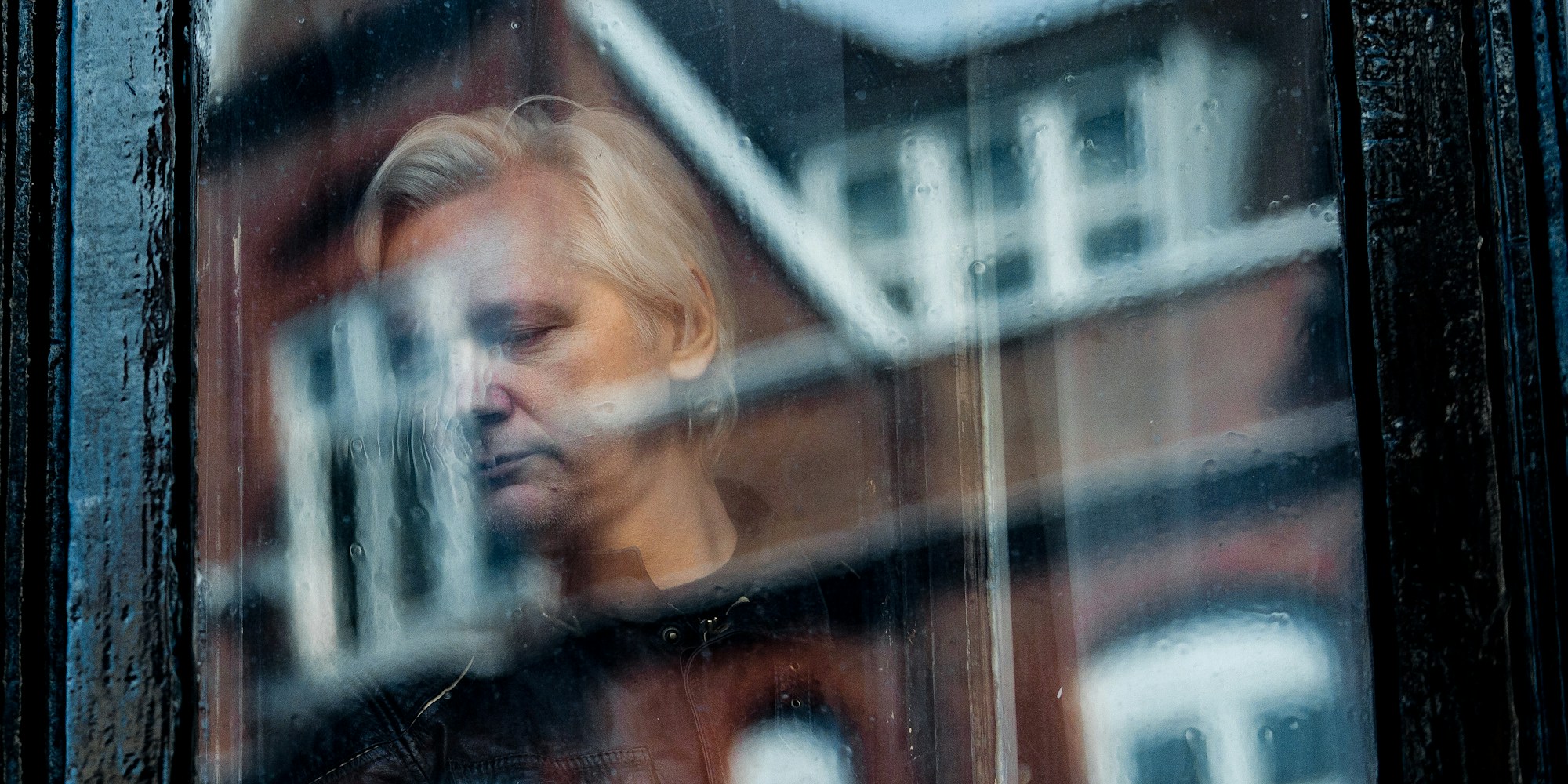
The CIA labeled WikiLeaks a “non-state hostile intelligence service” while entertaining plans to kidnap or assassinate its founder.
Source: Assange Kidnapping Plot Casts New Light on 2018 Senate Intelligence Maneuver

Forty-five years ago, under a cloak of secrecy, Operation Condor was officially launched: a global campaign of violent repression against the Latin American left by the region’s quasi-fascist military dictatorships. The US government not only knew about the program — it helped to engineer it.
The CIA’s Secret Global War Against the Left
Given these areas of mutual interest it is not surprising that since its inception the Central Intelligence Agency has been in permanent collusion with narco-traffickers, assisting their safe passage, protecting their activities, rewarding drug lords, hiring them for covert missions and using money derived from these operations for other activities. The fact that these drugs end up in American veins has never deterred the Agency and, given the hue of the skin often covering those veins, has perhaps even been seen as a positive outcome.
Below is a list and brief summary of the major CIA crimes and coups, many resulting in the deaths of millions of innocents. (This is only a partial summary of the U.S/CIA war crimes since 1947):
Source: American CIA Hegemony – » The Australian Independent Media Network
 Leak suggests CIA malware systems have targeted iPhones, Android systems, Microsoft software and Samsung smart TVs.
Source: WikiLeaks exposes alleged CIA hacking programme | USA News | Al Jazeera
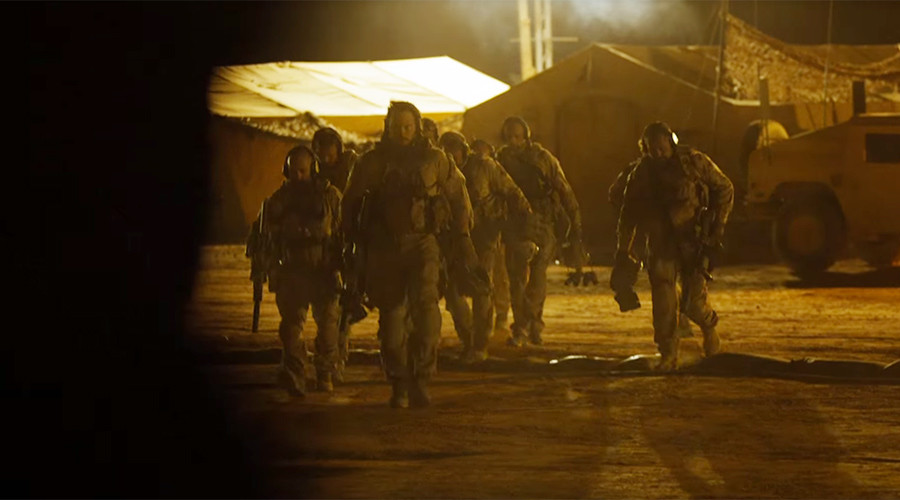
For years the influence of the CIA in Hollywood was hidden and unacknowledged. Now it’s more of an open secret; not publicized, but pretty easy to read up on if you care. Just ask the spy agency’s Entertainment Industry Liaison.
Source: Lights, camera, propaganda! US government anti-Russia campaign invades Hollywood — RT Op-Edge

The CIA inspector general’s office has said it “mistakenly” destroyed its only copy of a comprehensive Senate torture report, despite lawyers for the Justice Department assuring a federal judge that copies of the documents were being preserved. The erasure of the document by the spy agency’s internal watchdog was deemed an “inadvertent” foul-up by the inspector general, according to Yahoo News.
Source: CIA ‘mistakenly’ destroys copy of 6,700-page US torture report | Americas | News | The Independent

Back in the futuristic year 2000, the CIA convened a group of experts from outside the Agency. Their mission: to gaze into the near future and predict what 2015 would look like.
Source: Fifteen years ago the CIA tried to predict the world in 2015. Here’s what they got wrong

Gary David Davies Wow two shots in the head and its a suicide, sure that’s easy to do with your brain gone you pull the trigger again, of course he did

It’s been more than 50 years since Allen Dulles resigned as director of the CIA, but his legacy lives on. Between 1953 and 1961, under his watch, the CIA overthrew the governments of Iran and Guatemala, invaded Cuba, and was tied to the killing of Patrice Lumumba, Congo’s first democratically elected leader. We speak with David Talbot, author of “The Devil’s Chessboard: Allen Dulles, the CIA, and the Rise of America’s Secret Government,” about how Dulles’ time at the CIA helped shape the current national security state.
How many reports of clandestine actions by governments does it take before the excuse that it was the actions of rogue elements within the system and not the system iself does it take before we believe the Snowdens and Assanges of this world should be listened to and not destroyed. How many laws must we see changed at the expense of our freedoms to ensure government secrecy.
Who are the meglomaniacs Bush, Cheney Rumsfeld or Blair or those that tried to expose them?

It took years until the executive summary of the Senate Intelligence Committee’s torture report — which shows not only that the CIA’s torture regime was larger and more vicious than understood, but that the agency repeatedly lied about it to the White House and Congress — was finally released to the public. But it only took hours before President Obama was once again urging the nation to look forward, not back. “Rather than another reason to refight old arguments,” read a White House statement, “I hope that today’s report can help us leave these techniques where they belong — in the past.” When members of the media asked whether that meant the White House considered torture to be ineffective, as the report claims, an anonymous official said Obama would not “engage” in the ongoing “debate.” On the issues of rape, waterboarding and induced hypothermia, apparently, reasonable minds can differ.
Glenn Greenwald, the Intercept’s Pulitzer Prize-winning journalist and longtime critic of the war on terror, disagrees. “There’s no debate,” he told Salon. “Everything that we did,” he continued, “in terms of how we treated detainees, has [long] been viewed as morally vile and inexcusable and criminal.” Greenwald has little doubt, however, that Washington will turn torture into yet another partisan squabble. It’s the go-to move, he says, when America’s political and media elite decide they’d rather look the other way. “That’s just the ritual Washington engages in,” Greenwald said.
Speaking with Salon from his home in Brazil (or at least we assumed as much, given the barking in the background) Greenwald discussed what surprised him about the summary, what we still don’t know, why expressions of shock and horror from Congress are disingenuous, how President Obama is culpable, too, and why America’s leaders are “sociopathic.” Our conversation is below and has been edited for clarity and length.

Washington’s part in the overthrow of the Ukrainian Government would surprise few, writes John Pilger, however its secret role in toppling the Australian Government in 1975 is still not widely known.
The great game of dominance offers no immunity for even the most loyal U.S. “ally”.
This is demonstrated by perhaps the least known of Washington’s coups — in Australia. The story of this forgotten coup is a salutary lesson for those governments that believe a “Ukraine” or a “Chile” could never happen to them.
Australia’s deference to the United States makes Britain, by comparison, seem a renegade.
During the American invasion of Vietnam ‒ which Australia had pleaded to join ‒ an official in Canberra voiced a rare complaint to Washington that the British knew more about American objectives in that war than its antipodean comrade-in-arms.
The response was swift:
“We have to keep the Brits informed to keep them happy. You are with us come what may.”
This dictum was rudely set aside in 1972 with the election of the reformist Labor government of Gough Whitlam.
Although not regarded as of the left, Whitlam ‒ now in his 98th year ‒ was a maverick social democrat of principle, pride, propriety and extraordinary political imagination. He believed that a foreign power should not control his country’s resources and dictate its economic and foreign policies. He proposed to “buy back the farm” and speak as a voice independent of London and Washington.
On the day after his election, Whitlam ordered that his staff should not be “vetted or harassed” by the Australian security organisation, ASIO — then, as now, beholden to Anglo-American intelligence.
When his ministers publicly condemned the Nixon/Kissinger administration as “corrupt and barbaric”, Frank Snepp, a CIA officer stationed in Saigon at the time, said later:
“We were told the Australians might as well be regarded as North Vietnamese collaborators.”
Whitlam demanded to know if and why the CIA was running a spy base at Pine Gap near Alice Springs — ostensibly a joint Australian/U.S. “facility”.
Pine Gap is a giant vacuum cleaner which, as the whistleblower Edward Snowden recently revealed, allows the U.S. to spy on everyone.
In the 1970s, most Australians had no idea that this secretive foreign enclave placed their country on the front line of a potential nuclear war with the Soviet Union.
Whitlam clearly knew the personal risk he was taking, as the minutes of a meeting with the U.S. ambassador demonstrate. “Try to screw us or bounce us,” he warned, “[and Pine Gap] will become a matter of contention“.
Victor Marchetti, the CIA officer who had helped set up Pine Gap, later told me:
“This threat to close Pine Gap caused apoplexy in the White House. Consequences were inevitable… a kind of Chile was set in motion.”
The CIA had just helped General Augusto Pinochet to crush the democratic government of another reformer, Salvador Allende, in Chile.
In 1974, the White House sent Marshall Green to Canberra as ambassador.
Green was an imperious, very senior and sinister figure in the State Department who worked in the shadows of America’s “deep state”. Known as the “coupmaster”, he had played a central role in the 1965 coup against President Sukarno in Indonesia, which cost up to a million lives.
One of Green’s first speeches in Australia was to the Australian Institute of Company Directors, which was described by an alarmed member of the audience as
“… an incitement to the country’s business leaders to rise against the government.”
Pine Gap’s top-secret messages were de-coded in California by a CIA contractor, TRW.
One of the de-coders was a young Christopher Boyce, an idealist who, troubled by the “deception and betrayal of an ally”, became a whistleblower. Boyce revealed that the CIA had infiltrated the Australian political and trade union elite and referred to the Governor-General of Australia, Sir John Kerr, as “our man Kerr”.
In his black top hat and medal-laden morning suit, Kerr was the embodiment of imperium. He was the Queen of England’s Australian viceroy in a country that still recognised her as head of state. His duties were ceremonial; yet Whitlam ‒ who appointed him ‒ was unaware of or chose to ignore Kerr’s long-standing ties to Anglo-American intelligence.
The Governor-General was an enthusiastic member of the Australian Association for Cultural Freedom, described by Jonathan Kwitny of the Wall Street Journal in his book, The Crimes of Patriots, as:
‘… an elite, invitation-only group … exposed in Congress as being founded, funded and generally run by the CIA ….
‘[The CIA] paid for Kerr’s travel, built his prestige [while]… Kerr continued to go to the CIA for money.’
In 1975, Whitlam discovered that Britain’s MI6 had long been operating against his Government.
He said later:
“The Brits were actually de-coding secret messages coming into my foreign affairs office.”
One of his ministers, Clyde Cameron, told me:
“We knew MI6 was bugging Cabinet meetings for the Americans.”
In interviews in the 1980s with the American investigative journalist Joseph Trento, executive officers of the CIA disclosed that the “Whitlam problem” had been discussed “with urgency” by the CIA’s director, William Colby, and the head of MI6, Sir Maurice Oldfield, and that “arrangements” were made.
A deputy director of the CIA told Trento:
“Kerr did what he was told to do.”
In 1975, Whitlam learned of a secret list of CIA personnel in Australia held by the Permanent Head of the Australian Defence Department, Sir Arthur Tange — a deeply conservative mandarin with unprecedented territorial power in Canberra.
Whitlam demanded to see the list. On it was the name, Richard Stallings who, under cover, had set up Pine Gap as a provocative CIA installation. Whitlam now had the proof he was looking for.
On 10 November, 1975, Whitlam was shown a top secret telex message sent by ASIO in Washington. This was later sourced to Theodore Shackley, head of the CIA’s East Asia Division and one of the most notorious figures spawned by the Agency. Shackley had been head of the CIA’s Miami-based operation to assassinate Fidel Castro and Station Chief in Laos and Vietnam. He had recently worked on the “Allende problem”.
Shackley’s message was read to Whitlam. Incredibly, it said that the prime minister of Australia was a security risk in his own country.
The day before, Kerr had visited the headquarters of the Defence Signals Directorate, Australia’s NSA, whose ties to Washington were ‒ and reman ‒ binding. He was briefed on the “security crisis”. He had then asked for a secure line and spent 20 minutes in hushed conversation.
On 11 November ‒ the day Whitlam was to inform Parliament about the secret CIA presence in Australia ‒ he was summoned by Kerr. Invoking archaic vice-regal “reserve powers”, Kerr sacked the democratically elected prime minister.
The problem was solved.

Email Danny Casolaro and Michael Hand tip-offs to nuganhand@live.com
Sunday, November 21, 2010
By John Jiggens
Protest in support of Gough Whitlam after the constitutional coup, Sydney. Photo: Qu1j0t3/Flickr
Rumours (which turned out to be true) that Kerr was moving to call out the army.
Former Australian prime ministers Robert Menzies, Howard Holt, John Gorton, Bob Hawke and John Howard all compliantly sent Australian troops to fight US wars. But in the early 1970s, Whitlam’s government had the courage to bring Australian soldiers home from the US war in Vietnam.
For this audacious action, Labor would never be forgiven by then-US president Richard Nixon, the CIA, Rupert Murdoch, the CIA, and corrupt conservative premiers Bob Askin (NSW) and Joe Bjelke-Petersen (Queensland) — who all hated Whitlam as though he were Che Guevara.
Whitlam’s election in 1972 began a short-lived era in which the stated aims of the new Labor government were to promote equality and involve the people in decision-making processes.
Within two weeks of Whitlam’s election, conscription was abolished and draft resisters released from jail. Voting rights were extended to all Australians over 18, and university fees abolished.
Whitlam’s youth constituency also gained community radio stations, and the Whitlam government intended to decriminalise marijuana. Aborigines were granted land rights in the Northern Territory.
Whitlam was less subservient than his Liberal predecessors to Washington’s foreign policy directions. He took a more critical line in foreign policy, condemning Nixon’s 1972 bombing offensive against North Vietnam and warned he might draw Indonesia and Japan into protests against the bombing.
The People’s Republic of China was recognised and the Whitlam government spoke up in the United Nations for Palestinian rights. The French were condemned for testing nuclear weapons in the South Pacific, and refugees fleeing the CIA-backed coup in Chile were welcomed.
Nixon and the CIA found such independence intolerable. After Whitlam was re-elected in 1974, and Jim Cairns became his deputy, Nixon ordered the CIA to review US policy towards Australia. Although the CIA’s response to Nixon has never been released, it seems it began a covert operation to destabilise the Whitlam government began then.
The puppet masters who led the coup were Ted Shackley and Marshal Green. Nixon appointed Green as US Ambassador to Australia in 1973. Nick-named “the coup-master”, Green had been involved in several countries where the CIA had masterminded coups, such as Indonesia (1965) and Cambodia (1970).
Green’s goals were to maintain US bases in Australia and to protect US economic interests.
Green let it be known that if the Labor government honoured one of its key election pledges to reclaiming ownership of oil refineries and mining industries, the US would respond. Green carefully cultivated the Fairfax, Murdoch and Packer dynasties that controlled the Australian media.
Ted Shackley, known as the “Blond Ghost”, joined the CIA in 1951. Over the next two decades, he emerged as the agency’s “dirty tricks” specialist, directing the CIA’s campaign against Cuba and Fidel Castro’s government in 1962.
In 1966 he became Chief of Station in Laos and directed the US secret war there — earning his other nickname, “the Butcher of Laos”.
In 1971, he became head of the CIA’s Western Division (covering North and South America) where he plotted the overthrow of Allende. In 1974, Shackley became head of the Eastern Division of the CIA, covering Asia and Australia.
Shackley’s speciality was financing black operations through the drug trade and he learned the dark art of running drug armies during the secret war in Laos. One of his foot soldiers in Laos was Michael Hand, co-founder of the Nugan Hand bank.
Michael Hand helped forge documents used by the media to discredit the Whirtlam government, while his partner Frank Nugan was the conduit for CIA money to the Liberal Party. Millions of dollars flowed to the conservative parties via Nugan Hand.
Shackley played a key role in the security crisis of November 1975, which revolved around the US military base at Pine Gap. Whitlam had threatened that if the US tried to “bounce” his government, he would look at the presence of US bases in Australia.
The lease for Pine Gap was due for renewal in December 1975. On 10 November 1975, the day before Whitlam was sacked, Shackley sent an extraordinary cable from the CIA to ASIO’s director general, threatening to remove ASIO from the British-US intelligence agreement because he considered Whitlam a security threat.
The cable was published by the Financial Review in 1977 and has been widely reprinted. It shows Shackley’s involvement in the security crisis.
Shackley was furious that Whitlam had accused the CIA of funding the opposition conservative parties and had claimed CIA money was being used to influence domestic Australian politics. In particular, Whitlam was asking questions about the close relationship between Richard Stallings, who ran the so-called joint facility at Pine Gap, and National Party leader Doug Anthony.
“The CIA has grave concerns as to where this type of public discussion may lead”, Shackley’s cable said.
In his 1977 speech calling for a royal commission into the activities of the CIA in Australia, Whitlam called Shackley’s cable “a clear example of the attempted deception of the Australian Government by the American intelligence community … The message was offensive in tone, deceitful in intent and sinister in its implications.”
For the Australian media, the message of Remembrance Day 2010 was clear: sleeping dogs must be allowed to lie. There could be nothing nobler to aspire to than the service of our imperial overlords, and to remind the Australian people that these imperial overlords had subverted a democratically elected government was well off message.
[John Jiggens has been involved in civil liberties and anti-corruption campaigning for many years. He is the author of a number of books, including the recently released The Killer Cop & the Murder of Donald Mackay, about the drug trade, Nugen Hand Bank and the overthrow of the Whitlam government.]


 olddogthoughts
You must be logged in to post a comment.