
Juan Cole on March 30
The rise of the Houthi movement in Yemen, the militias of Iraq, Hezbollah in Lebanon and even the Syrian Arab Army of Bashar al-Assad are being configured by many analysts as evidence of a wide-ranging Iranian Shiite incursion into the Middle East. The Saudi bombing campaign in Yemen, Israel’s recent bombing of Hezbollah bases in southern Syria, and Gulf Cooperation Council unease about Iraq’s Tikrit campaign are all a result of this theory of “the Shiite Crescent,” a phrase coined by King Abdallah II of Jordan. But is Iran really the aggressor state here, and are developments on the ground in the Middle East really being plotted out or impelled from Tehran?
It is an old fallacy to interpret local politics through the lens of geopolitics, and it is a way of thinking among foreign policy elites that has led to unnecessary conflicts and even wars. Polarized analysis is only good for the military-industrial complex. The United States invaded Lebanon in 1958, ostensibly on the grounds that Druse shepherds protesting the government of Camille Chamoun were Communist agents. A retired State Department official once confessed to me that many in Washington were sure that the overthrow of the Shah of Iran in 1979 by Ayatollah Khomeini was planned out in Moscow. On the other hand, I met a Soviet diplomat at a conference in Washington, DC, in 1981 who confessed to me that his country simply could not understand the Islamic Republic of Iran and was convinced that the CIA must be behind it. I would argue that Israel’s Benjamin Netanyahu and many Saudi and Gulf analysts have fallen victim to this “geopolitics fallacy.”
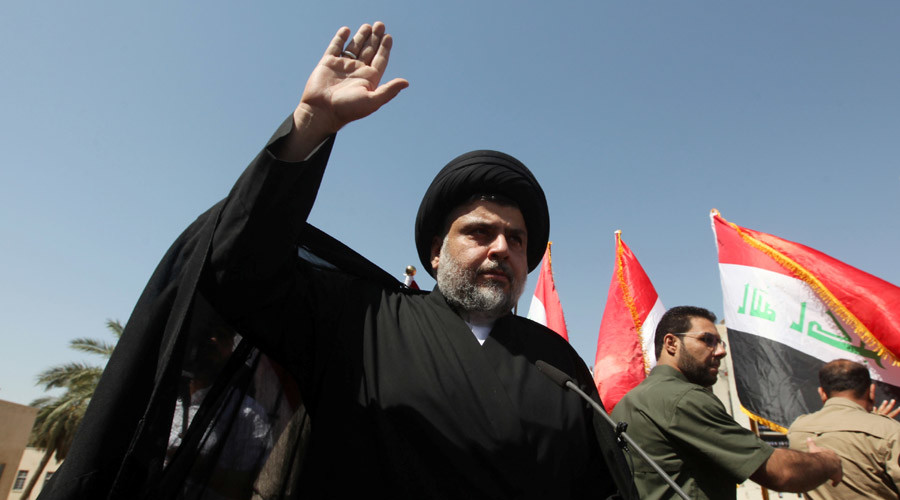
Iraqi Shiite militias can’t be read off as Iranian instruments. The Peace Brigades (formerly Mahdi Army) of Muqtada al-Sadr are mostly made up of Arab slum youth who are often suspicious of foreign, Persian influences. They became militant and were made slum-dwellers as a result of US and UN sanctions in the 1990s that destroyed the Iraqi middle classes and then of the US occupation after 2003. The ruling Dawa Party of Iraqi Prime Minister Haider al-Abadi does not accept Iran’s theory of clerical rule, and in the 1980s and ’90s many Dawa Party stalwarts chose to live in exile in London or Damascus rather than accept Iranian suzerainty. At the moment, Iraq’s Shiite parties and militias have been thrown into Iran’s arms by the rise of ISIL, which massacres Shiites. But the alliance is one of convenience and can’t just be read off from common Shiism.
Lebanon’s Hezbollah is strongly aligned with Iran. But it was formed around 1984 under the tutelage of the Iraqi Dawa Party in exile, and its main project was ending the Israeli occupation of 10 percent of Lebanon’s territory, which began in 1982. Its rival, the Amal Party, was more middle-class and less connected to Iran, even though it was also made up of Shiites. Exit polling suggests that some half of voters who vote for Hezbollah among Lebanese Shiites are nonreligious; they are supporting it for nationalist reasons and seeking self-defense against Israeli incursions. Lebanon is a country of only 4 million, and the Twelver Shiites are only about a third of the population, some 1.3 million, most of whom are children. The way in which Hezbollah has been built up in the Western imagination as a major force is a little bizarre, given that they have only a few thousand fighters. At the moment, they have a strong alliance with Lebanese Christians and Druze because all three generally support the government of Bashar al-Assad in neighboring Syria. But Lebanese politics are kaleidoscopic, and that political dominance could change abruptly. Lebanese Shiites are no more cat’s paws of Iran than are Lebanese Christians, many of them now allied with the Shiites and Alawites as well.
In the case of Syria, the Baath regime of Assad is a coalition of Alawite Shiites, secular Sunnis, Christians and other religious minorities. It has no ideological affinity with Iran’s right-wing theocracy. Even religious Alawites bear little resemblance to Iranian Twelver Shiites, having no mosques or ayatollahs and holding gnostic beliefs viewed as heretical in Tehran. But the question is moot, since those high in the regime are secular-minded. Iran has sent trainers and strategists to help Damascus against hard-line Salafi Sunni rebels, and is accused of rounding up some Afghan and other mercenaries for Damascus. Syria’s geopolitical alliance with Iran came about because of Syria’s isolation in the Arab world and need for an ally against nearby threats from Israel, Iraq and Saudi Arabia.
In neither Iraq nor Syria has Iran invaded or even sent infantry, rather supplying some special operations forces in aid of local Iraqi and Syrian initiatives, at government request. In both countries, Iran has Sunni clients as well as Shiite ones. In both countries, local forces reached out to Iran for patronage in the face of local challenges, not the other way around.
In Yemen, as well, the Zaydi Shiites, about a third of the population, bear no resemblance to Iran’s Twelvers. It is like assuming that Scottish Presbyterians will always support Southern Baptists because both are forms of Protestantism. The rise of the Houthi movement among Yemeni Zaydis involved a rural, tribal revolt against an authoritarian nationalist government and against the attempts by Saudi Arabia to proselytize Zaydis and make them into hard-line Sunnis, called Salafis. The Houthi family led a militant counter-reformation in favor of renewed Zaydi identity. Since the nationalist government of deposed president for life Ali Abdullah Saleh got crucial foreign aid from the Saudis, he gave the Saudis carte blanche to influence Yemeni religious culture in the direction of an intolerant form of Sunnism. The nationalist government also neglected the Zaydi Saada region in the north with regard to services and development projects. Yemeni tribes in any case do not necessarily foreground religion when making alliances; many Sunni tribes have joined the Houthis politically. While Netanyahu and the Saudis, along with deposed president number-two Abdu Rabbu Mansour Hadi, accuse Iran of fomenting the Houthis, they are a local movement with local roots, and there is no reason to think that that their successes owe anything to Iran. Indeed, most of their success since last summer apparently derives from a decision by former president Saleh to ally with them and direct elements of the Yemeni army to support them or stand down in the face of their advances. To turn around and blame these developments on distant Iran is absurd.
The motley crew of heterodox forms of Shiite Islam, Arab socialist nationalists of the old school, rural tribal good ol’ boys and slum-dwelling youth that are shaking the Middle East status quo are not evidences of Iranian influence, or, in Netanyahu’s words, “conquest.” In each case, these local forces have reached out to Iran for patronage, and perhaps there was some broad, vague, Shiite soft power involved. As noted, however, Iran also has many Sunni clients, from the Iraqi Kurds to Hamas in Gaza.
From the 1970s forward, the Egyptian nationalist regime under Anwar El Sadat turned conservative and allied with the United States and Saudi Arabia, promoting political Islam culturally and unregulated markets economically. Thereafter, a status quo prevailed in the Arab world of nationalist presidents for life and monarchs and emirs, most of them US clients and amenable to neoliberal economic policies stressing the market and distributing wealth upward from the working classes. Either explicitly or implicitly, they gave up opposition to Israeli expansionism. They crushed formerly powerful socialist, Communist and labor movements, and used oil money to bribe the public into quiescence or deployed secret police to torture them into going along. That status quo was latently Sunni, in that most elites were drawn from that branch of Islam, including the president of Iraq and the prime minister of Lebanon—neither of which are Sunni-majority societies.
Please support our journalism. Get a digital subscription for just $9.50!
In the past decade, that cozy order has broken down, in part at the hands of a new generation of Arab millennials unwilling to put up with it, but also at the hands of working-class grassroots movements. It also broke down internally. On the one hand, the nationalists in the Arab world are increasingly suspicious of the Saudi fondness for promoting Salafi fundamentalism. Thus, the Algerian and Egyptian officers are not as enthusiastic about the rebellion in Syria as are the sheikhs. And even the Americans, big champions of anti-Communist fundamentalism from Eisenhower to Reagan, have now drawn a line at Al Qaeda and ISIL, finding even Iran preferable. On the other hand, disadvantaged insurgents have risen up from below. The most important thing about these challengers is probably not that many have a Shiite coloration but that they reject the condominium of the Egyptian officer corps and the Saudi monarchs, with their American security umbrella, their free-market policies and their complaisance toward Israeli militarism (though, not all the pro-Iran movements have all of these concerns—Syria went neoliberal in the past two decades, for example). Iran is being entrepreneurial in supporting these insurgents against the prevailing order. It hasn’t conquered anything. If it has become more influential, that is an indictment of the old Sadat status quo.


 olddogthoughts