
Joshua Dale
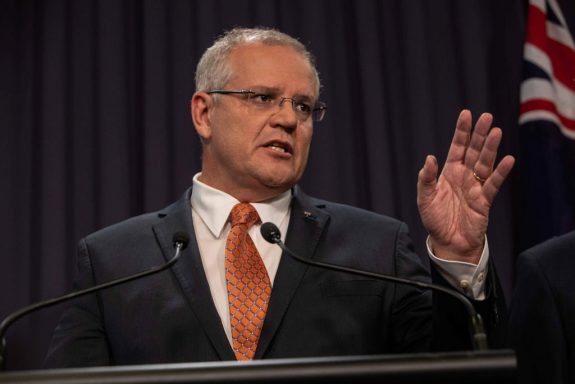
Prime Minister Tony Abbott dismisses a damning Human Rights Commission report into children in refugee detention, saying he feels no guilt about their plight whatsoever. Human rights lawyer Joshua Dale says there needs to be complete overhaul of attitudes amongst Australia’s politicians and their constituents.
IT IS with sadness, that one must now accept that the rights of children in Australia, particularly so far as it concerns Australia’s immigration policies, have fallen by the wayside.
There is now a common theme amongst Australian governments to dismiss human rights issues when it concerns Australia’s detention facilities and the treatment of their occupants.
Recently, the Australian Human Rights Commission under the guidance of its president, Gillian Triggs, has engaged in a national inquiry into children in immigration detention. The report has now been released, making 16 recommendations, including that all children should be released from detention in the next four weeks and that a Royal Commission into the treatment and detention of children should be convened.
This report has been met with strong opposition by the Abbott Government.
The Federal Government’s current approach to ensuring Australia’s international obligations are upheld is by delegating authority to the Australian Human Rights Commission to investigate and advise.
Outside of the Human Rights Commission’s recent findings, there remains the question of how children or minors accused of people smuggling are affected by current Government policies.
You may recall reports in 2012 and also 2013 where young Indonesian children, accused with people smuggling crimes, were detained in Silverwater Prison.
Many of these children came from impoverished backgrounds, in which they were forced into operating vessels on the high seas where they risked death, all for the purpose of being able to return what can only be described as a dismal income to their families. Evidence submitted to a Senate Inquiry suggested that many of these individuals had very little knowledge as to whether or not they were, in fact, committing a crime.
When detained in Australia, many of these minors did not have any identification or birth documents in their possession. In the absence of identification data, their age was determined by the performance of a wrist X-ray, which would then be examined for certain levels of deterioration in the wrist, which could then estimate age of the minor.
Various studies had been in existence prior to the implementation of law that allowed for age testing with the use of X-ray. These anthropological studies concluded that there existed a significant variation in findings and concluded that unreliable results concerning bone ages had arisen. The conclusions generally were that the testing methods did not accurately represent multi ethnic child populations.
For example, a study conducted in 2001 [Mora Et Al, “Skeletal Age Determinations in Children of European and African Decent; Applicability of the Greulich and Pyle Standards”, Paediatric Research (2001) 50, pp624-628] indicated that African American children had a greater bone age than those of European decent. The testing standards made no allowances for differences in genetic make up in so far as it affected bone age. As a result, the study rejected the adequacy of the testing method and determined that new standards were thus required.
Despite this, the Australian Government continued to apply this testing. Indeed, from September 2008 to January 2012, 208 people detained as members of smuggling crews who claimed to be minors had been detained. After the result of X-ray testing, 86 of these persons were determined to be adults, despite truly being minors. This means, in effect, that Australia’s Government was advocating and allowing the detention of children in adult prisons based on testing that, anthropologically speaking, had been rejected almost a decade prior.
A Senate inquiry ensued and a number of recommendations were made. Whilst the Government generally accepted the recommendations arising out of the majority report, it disagreed with all further recommendations made by the Senate Committee, except for the funding of Government funded legal agencies, such as Legal Aid, to assist Indonesian minors detained and accused of people smuggling to return to Indonesia in order to substantiate their age.
Of most concern regarding the outcome is that it took until 2013 before any amendments to crime regulations were made removing the use of x-ray testing for age. Furthermore, the Human Rights Commission was not consulted prior to implementing x-ray testing for age despite this avenue being available to them.
There have remained ongoing issues arising from these events and this inquiry.
For example, there remains a significant issue for children detained in circumstances where their age is not known, so far as legal representation is concerned, particularly in relation to any criminal proceedings arising from minors being detained on people smuggling charges. Depending on how they plead to criminal offences, this can also affect other recovery actions against the Government should there be untoward treatment, such as detaining a minor in an adult prison and any subsequent injury.
Furthermore, there is an ongoing fear that anyone pleading guilty to such offences are doing so without adequate advice, legal representation, or proper knowledge and understanding of the crimes in which they are charged. Without ensuring this advice and access to a proper defence it is clear that Australia will continue to advocate for laws that allow for breaches of international treaties and procedural fairness.
The point here is that there should be no excuse for delaying the implementation of comprehensive rights based laws that advocate for the rights of children. Nor should there be any politically motivated attack on a commission charged with protecting Human Rights in Australia.
What history confirms is that the current political landscape looks to solve immigration and people smuggling policies with short term fixes without implementing a longstanding agenda that creates a system whereby Australia maintains its Human Rights obligations, yet maintains a tough stance on people smuggling and national security issues.
Despite what the current government would have you think with their mantra and partisan stance of “stop the boats”, this can be achieved by ongoing consultation with Human Rights based groups, including the Human Rights Commission.
From an international perspective, policies need to be shifted to create a more collaborative approach internationally to shut down illegal people smuggling operations. And more importantly, greater education needs to be provided to the regions where the operators of the boats that come to Australia are recruited.
Domestically, it seems that Australia is crying out for human rights based legislation to be enacted to ensure that breaches of international human rights are recognised at their earliest stage, not only by our government when making laws, but also so that they are actionable should they be breached.
It is clear there needs to be a complete overhaul of attitudes amongst not only our members of Parliament but also their constituents. There needs to be current and ongoing checks and balances and there needs to be an underlying concern and motivation to ensure change not only to minors held in detention centres but any minor that finds themselves at the mercy of Australia’s current immigration policies.



 olddogthoughts