Category: hockey

Three not so wise men

wise men

Written by:

Firstly, Tony Abbott. As if he had not embarrassed himself enough during this year, the latest but not necessarily the last effort was his astonishing suggestion that removing the carbon tax was his greatest achievement in 2014.

“Well, you know, it is very important to do the right thing by families and households,” Abbott said. “As many of us know, women are particularly focused on the household budget and the repeal of the carbon tax means a $550 a year benefit for the average family.”

What a comment bereft of inspiration!

Then, when questioned about the number of women in cabinet he said, “The challenge for all of us is to get more women into public life, more women into the parliament, once we have got more women in the parliament we will have more women in the ministry and more women in the cabinet.”
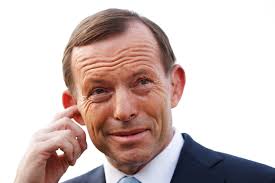
abbottWhy is it a challenge? Does he mean that there is no one of sufficient competence or that the challenge is for him to overcome his own difficulties relating to women? One would think that there are plenty to pick from already; many of whom would clearly outshine some of the male deadwood he has there now. So, do we conclude that he is the problem, not the women?  Or should we just let Anthony Albanese have the last word? “There is no issue too big for Tony Abbott to show how small he is as a thinker,” Mr Albanese told Fairfax Media.

Now let’s look at Joe Hockey. If ever we needed proof that his budget measures and his actions since were creating a defence line for his elite, excessively wealthy neo liberal support base, we have it with what we read on page 117 of his MYEFO statement.

In short, his broken promise to impose new tax avoidance rules to stop multinational companies from loading debt on their Australian subsidiaries, says it all.

It was the Gillard government that planned legislation to abolish section 25/90 of the Income Tax Assessment Act 1997 that enabled tax minimisation deductions for global corporations.

hockeyIn November 2013, Joe Hockey announced that the government would not proceed with the package but instead would introduce a targeted anti-avoidance option after consultation with the participants involved.

In this month’s MYEFO statement we find hidden way back on page 117 the following announcement: “The government will not proceed with a targeted anti-avoidance provision to address certain conduit arrangements involving foreign multinational enterprises, first announced in the 2013-14 MYEFO.”

The reason? That it would cause, “unreasonable compliance costs on Australian companies” with subsidiaries offshore. “That means more revenue flowing out the door to multinationals, which means worse services and higher taxes for Australians,” according to Andrew Leigh, Shadow Assistant Treasurer.

What a pathetic cop-out by Hockey. How hard would it be to exempt Australian owned companies from the legislation?

On his Facebook page, Wayne Swan says, “This decision leaves open a huge loophole that will bleed our tax revenue for years and is yet another example of how this Government is reneging on essential structural reforms required to make our budget sustainable.”

Swan concludes by saying, “Joe Hockey’s deceptive rhetoric about all Australians needing to pay their fair share is yet again exposed by this decision to give further tax breaks to large multinational corporations.”

Then there is Scott Morrison whose actions as Minister for Immigration and Border Protection betray his self-professed Christian principles of standing up for the truth, standing up for justice, standing on the side of the poor and the hungry, the homeless and the naked.

Contrast this with the circumstances on Manus Island that led to the death of Reza Berati, with the recent transfer of Sri Lankans at sea, with blackmailing the Senate cross benches promising to release children in detention on Christmas Island in return for the reintroduction of Temporary Protection Visas.
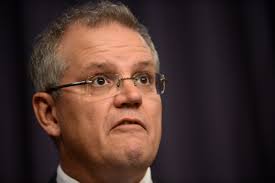
morrisonMany politicians cloak themselves with so-called Christian principles when describing themselves publicly, so in that sense Morrison is not alone. And it is easy to recall such obvious contradictions in one’s words with one’s actions as we can with most of them. So we should not be surprised when so-called Christian principles employed to win votes are quickly dispensed with in favour of pragmatism.

Now he had been given the Social Services Ministry as a reward for stopping the boats, as if stopping the boats was an achievement; as if engaging a nation’s Navy to stop a handful of desperate people trying to find a safe haven was considered clever.

However, he may well find treating Australian citizens similarly is a different kettle of fish. We shall see if his belief in standing up for the truth, standing up for justice, standing on the side of the poor and the hungry, the homeless and the naked continue to conflict with pragmatism. If it does, he might well find himself and his government in a different kind of struggle.

So, what is left to say about 2014 that hasn’t been said? The ongoing incompetence and absurdity of the Abbott government has provided a rich canvas for political commentators. We can only hope they keep providing us with similar material in 2015. I certainly expect they will.
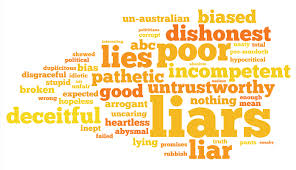
liarsThis constant harping on about removal of the carbon tax, the mining tax and stopping the boats only serves to highlight the absence of any vision for the future. They represent an ideas vacuum; a government that won by default, that was never prepared for what lay ahead and doesn’t know how to move forward.

Meanwhile the world will face some pretty ominous challenges in 2015 and there’s not a lot of confidence that those who lead us will manage those challenges well.

Behold! Joe Hockey’s Myefo has arrived!

firstdog myefo

Myefo winners: more funds for Asio and school chaplaincy program maintained

security in front of parliament house in Canberra

Increasing security at parliament house in Canberra will cost $200m. An additional $88m will go towards boosting security in commonwealth parliamentary offices and enhancing the AFP’s close personal protection capacity. Photograph: Lukas Coch/AAP Image

Spending increases have been unveiled in the mid-year economic and financial outlook, including $200m towards beefing up security at parliament house, $300m to Operation Okra and $140m to fund a rise in Australia’s humanitarian intake

The mid-year economic and financial outlook (Myefo) is not all savings measures and slashed budgets. Spending is increasing in a number of areas.

Guardian Australia looks at some of the Myefo winners.

  • The government is providing an extra $650m over four years for counter-terrorism funding. Of that money, $139m will go to Asio, $107m to the Australian Secret Intelligence Services and $72.3m to the Australian federal police (AFP)
  • $406m will go to the national partnership agreement between states and the commonwealth on universal access to early childhood education over four years
  • Operation Okra, the military operation to stop the advancement of Isis in Iraq and Syria, will receive nearly $300m over three years
  • $300m will go towards the addition of new drugs to the pharmaceutical benefits scheme over the forward estimates period
  • Beefing up security at parliament house in Canberra will cost $200m over forward estimates. An additional $88m will go towards boosting security in commonwealth parliamentary offices and enhancing the AFP’s close personal protection capacity
  • A structural adjustment fund, to help providers of higher education prepare for reforms in the sector, will cost the government $100m over three years
  • The government will provide $95m over four years to implement the work-for-the-dole scheme in remote areas

The headline on this story was amended on 16 December. Funding for the school chaplaincy program is being continued, but not increased.

Upside down downunder

downunder

We sure do things upside down downunder.

Tony Abbott’s chief business adviser first tells us we are unprepared for global cooling, followed by lashing out at the UN response to the Ebola outbreak and labelling the world body a “refuge of anti-western authoritarians bent on achieving one-world government”.

Newman wrote an opinion piece for the Australian newspaper in which he said the UN’s “leanings are predominantly socialist and antipathetical to the future security and prosperity of the west”.

“The philosophy of the UN is basically anti-capitalist,” he writes. “Countries that pay the most dues, mostly rich Anglo countries, are those to which the world body shows the greatest disdain.”

Is he suggesting that we should receive foreign aid in thanks for using up all of the world’s resources while killing the planet?

Aside from Maurice Newman’s bizarre ravings, our inaction on climate change, our inadequate response to the Ebola crisis, the chief executive of Whitehaven Coal telling us that coal “may well be the only energy source” that can address man-made climate change, and the sheer bastardry of cutting real wages and entitlements to defence personnel as we send them off to war…..we are also ignoring the call from the rest of the world to take action to address income inequality.

Despite being one of the richest nations on earth, one in seven Australians are living in poverty.  Thirty per cent of Australians who receive social security payments live below the poverty line, including 55 per cent of those on unemployment benefits. Fifteen per cent of aged pensioners live in poverty.

So it seems unfathomable as to why these people would be targeted when the government is looking for savings.

Since 1980, the richest 1 percent increased their share of income in 24 out of 26 countries for which the IMF have data.

In the US, the share of income taken home by the top one percent more than doubled since the 1980s, returning to where it was on the eve of the Great Depression. In the UK, France, and Germany, the share of private capital in national income is now back to levels last seen almost a century ago.

The 85 richest people in the world, who could fit into a single London double-decker, control as much wealth as the poorest half of the global population– that is 3.5 billion people.

With facts like these, it is no wonder that rising inequality has risen to the top of the agenda—not only among groups normally focused on social justice, but also increasingly among politicians, central bankers, and business leaders.

Our politicians are telling us that they want to provide the opportunity for each person to be their best selves but the reality is that we do not have equal opportunity. Money will always buy better-quality education and health care, for example. But due to current levels of inequality, too many people in too many countries have only the most basic access to these services, if at all. Fundamentally, excessive inequality makes capitalism less inclusive. It hinders people from participating fully and developing their potential.

Disparity also brings division. The principles of solidarity and reciprocity that bind societies together are more likely to erode in excessively unequal societies. History also teaches us that democracy begins to fray at the edges once political battles separate the haves against the have-nots.

A greater concentration of wealth could—if unchecked—even undermine the principles of meritocracy and democracy. It could undermine the principle of equal rights proclaimed in the 1948 Universal Declaration of Human Rights.

Redistributive policies always produce winners and losers. Yet if we want capitalism to do its job—enabling as many people as possible to participate and benefit from the economy—then it needs to be more inclusive. That means addressing extreme income disparity.

One way to address this is through a progressive tax system but instead, our government is looking at regressive measures like increasing the fuel excise and the GST. These will impact far more greatly on low income earners.

Another avenue is to expand access to education and health but instead, our government is cutting needs-based education funding, making the cost of tertiary education prohibitive, and introducing a co-payment to discourage people from seeing the doctor.

Abbott, Hockey and Cormann assure us that if we make the rich richer we will all benefit. Everyone from the Pope to Rupert Murdoch knows this is rubbish.

Two weeks ago In Washington, in a speech to the world’s most powerful finance ministers and central bankers, Rupert Murdoch accused them of making policies to benefit the super rich.

In it, he blamed the leaders for increasing inequality, said the ladder of generational progress was now at risk, and warned that a moment of great global reckoning had arrived.

I note that his criticism of poor policy does not stop him from taking advantage of said policies. “I’ll only be as good as you make me be” seems to be the prevailing principle.

Hockey’s response to Murdoch’s barrage was interesting.

“Certainly, as he says, loose monetary policy has helped people who own a lot of assets to become richer, and that’s why loose monetary policy needs to be reversed over time, and we’ll get back to normal levels of monetary policy, normal levels of interest rates,” Mr Hockey told AM’s presenter Chris Uhlmann.

“Governments, on the other hand, have also run out of money and can’t keep spending money – particularly on the credit card – to try and stimulate growth.

“So, if loose monetary policy is not available and actually makes the rich get richer, and governments have run out of money, how are we going to get growth going in the world economy over the next few years? And the only way to do it is through structural changes that make us better at what we do.”

The structural changes suggested by Mr Hockey will increase inequality and send more people into poverty which is indeed what Coalition governments are good at doing.

Pope Francis recently tweeted “Inequality is the root of social evil.”

In last autumn’s essay, Evangelii Gaudium, Francis wrote that: “Just as the commandment ‘Thou shalt not kill’ sets a clear limit in order to safeguard the value of human life, today we also have to say ‘Thou shalt not’ to an economy of exclusion and inequality. Such an economy kills … Today everything comes under the laws of competition and the survival of the fittest, where the powerful feed upon the powerless. As a consequence, masses of people find themselves excluded and marginalised: without work, without possibilities, without any means of escape. Human beings are themselves considered consumer goods to be used and then discarded.”

The claim that human beings have an intrinsic value in themselves, irrespective of their usefulness to other people, is one that unites Christianity and socialism. But if you think the market is the real world, it makes no sense at all, since in the market, value is simply the outcome of supply and demand.

A recent article by Lissa Johnson discusses decades of research into political psychology.

“Another ubiquitous finding is that conservatism is inversely related to the pursuit of social and economic equality. Conservatism correlates strongly with a preference for fixed social hierarchies entailing inequality between social groups, along with punitive attitudes towards marginalised and/or non-conforming members of society, who are seen as destabilising elements that threaten social cohesion.”

Australia is indeed a wondrous place where coal will save us from climate change, where helping the rich to get richer will make us all happier, and where the poor will be asked to pay off the nation’s debt.