Tag: Wall st

Wall Street Bonuses Continue to Soar Compared to Worker Wages | The Smirking Chimp

After a historic 22 percent spike in 2021, the average annual bonus for New York City-based securities industry employees fell 26 percent in 2022, according to just-released New York State Comptroller data. But the rate of increase in average Wall Street bonuses since the 2008 crash is still far higher than wage increases for ordinary workers, according to Institute for Policy Studies analysis of comptroller and BLS data.

Source: Wall Street Bonuses Continue to Soar Compared to Worker Wages | The Smirking Chimp

Inside the “weird” world of DWAC, Trump’s already soaring social media SPAC | Salon.com

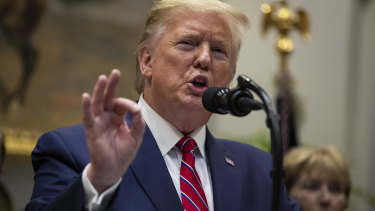
US President Donald Trump arrives for a campaign rally at Pittsburgh International Airport in Moon Township, Pennsylvania on September 22, 2020. (MANDEL NGAN/AFP via Getty Images)

To be precise Trump has done Nothing and Wall St Wolves have done everything. The numbers he cited $1.7 billion are huge for a company without any apparent cash flow. Like ” a lot of things that happen with Trump are not great with details and formalities, it’s perhaps not surprising.” However it’s not the norm in SPACs.”

 Classic Scam Warning

For many investors, it apparently doesn’t matter that former President Donald Trump’s new media venture has yet to create, well, anything.

DWAC is what’s known as a “SPAC,” or special purpose acquisition company. The strategy, which has become popular in recent years as a way to sidestep the typically onerous regulatory process of taking a company public, typically occurs when a non-public company merges with a shell company that is already public. In this case, DWAC is set to merge with “Trump Media & Tec

It’s also important to note that a key feature of SPAC deals are the unique incentives that protect company insiders while other investors bear much of the risk if a deal fails to garner expected returns.

Trump’s last publicly traded venture, a casino company called Trump Entertainment Resorts, also ended in heartbreak for investors after it lost hundreds of millions of dollars in just over a decade, a period during which it filed for bankruptcy numerous times. Though if the past is any indication, Trump will likely come out on top — Fortune Magazine reported at the time that he earned more than $82 million from the company before it went bust.

Source: Inside the “weird” world of DWAC, Trump’s already soaring social media SPAC | Salon.com

The Response to the GameStop Fiasco Shows It’s Still Wall Street’s Economy

Now that hedge funds are losing billions to Redditors buying stocks like GameStop, Wall Street wants heavy-handed intervention into the market, and brokerages have clamped down on the upstarts. It’s a reminder that there’s no such thing as “people’s capitalism” or “shareholder democracy” — the capitalist economy is structured to do what’s best for the business elite.

The Response to the GameStop Fiasco Shows It’s Still Wall Street’s Economy

Wall Street opens its wallets for Biden

Executives from the likes of Blackstone, Bain Capital and Soros Fund Management are among those donating to Biden.

More than $US50 million ($71 million) has been ploughed into the Democratic challenger’s campaign coffers by the finance industry with executives from the likes of Blackstone, Bain Capital and Soros Fund Management among those donating to Biden’s party, according to the non-partisan Centre for Responsive Politics. By comparison, the US finance industry has raised just under $US30 million for Donald Trump, marking only the second time during an election or midterm year since 1992 that Democrats have gained more donations from the executives.

Wall Street opens its wallets for Biden

Wall Street dives as Trump orders halt to stimulus talks until after election

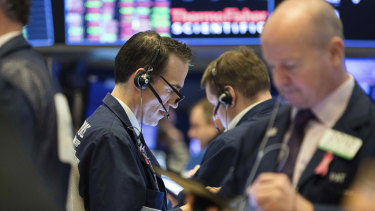
Wall Street fell sharply after Trump's announcement.

Wall St dives Trump tweets the reverse (ODT)

Wall Street took a nosedive late in the session on Tuesday (US time), reversing solid gains to close deep in negative territory after President Donald Trump announced he was calling off talks on coronavirus relief legislation until after the November 3 election.

Wall Street dives as Trump orders halt to stimulus talks until after election

‘Looting on Wall Street’: RT’s Keiser Report digs into bankrupt companies’ stock rallies — RT Business News

‘Looting on Wall Street’: RT’s Keiser Report digs into bankrupt companies’ stock rallies

via ‘Looting on Wall Street’: RT’s Keiser Report digs into bankrupt companies’ stock rallies — RT Business News

Wall Street Titans Fund Alexandria Ocasio-Cortez Challenger

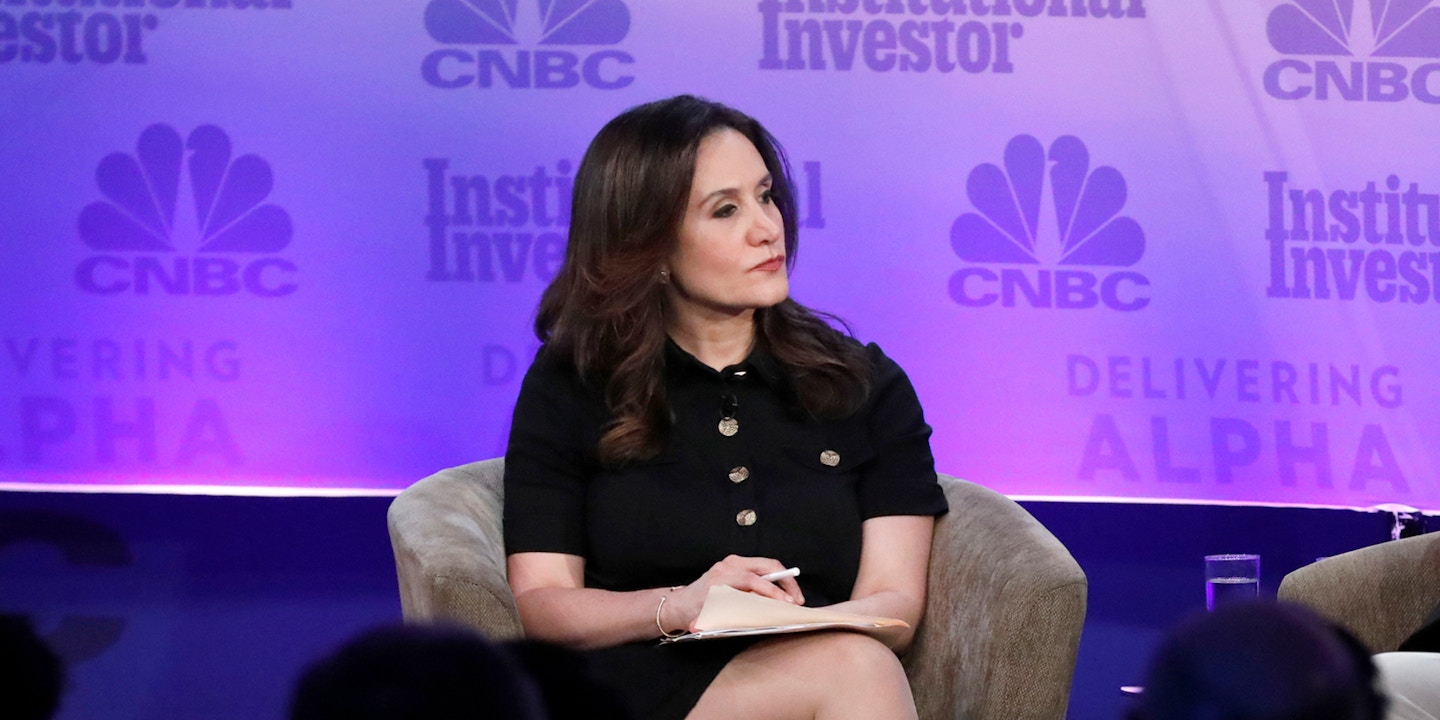
DELIVERING ALPHA -- CNBC?s Michelle Caruso-Cabrera interviews Steve Bannon, Former White House Chief Strategist and Chief Executive Officer of the Trump Campaign, at the CNBC Institutional Investor Delivering Alpha conference July 18th in NYC. (Seated left to right: Michelle Caruso-Cabrera, Chief International Correspondent and Co-Anchor, "Power Lunch," CNBC, and Stephen K. Bannon, Former White House Chief Strategist and Chief Executive Officer of Trump Campaign ) -- (Photo by: Heidi Gutman/CNBC/NBCU Photo Bank/NBCUniversal via Getty Images)

AOC the rising star in NY politics has now got to face Wall St she’s too good (ODT)

via Wall Street Titans Fund Alexandria Ocasio-Cortez Challenger

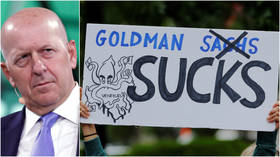
At least someone’s doing well: Goldman Sachs gives CEO 20% raise as it forecasts coronavirus crash for America — RT Business News

At least someone’s doing well: Goldman Sachs gives CEO 20% raise as it forecasts coronavirus crash for America

via At least someone’s doing well: Goldman Sachs gives CEO 20% raise as it forecasts coronavirus crash for America — RT Business News

The Trump share rally is good, but still lags Obama and Clinton

The stock market is doing well and is expected to continue doing so in 2020, or so Donald Trump and the rest of us hope.

Trump stock market rally is far outpacing past US presidents,” and he vowed that the “BEST IS YET TO COME!” Trump is making the economy and stock market a key focus on his re-election campaign. He often likes to claim this is the “best” or an “unprecedented” scenario, even when that is not the case.

via The Trump share rally is good, but still lags Obama and Clinton

Trump and Wall Street fear Warren and Sanders – they speak for the people | Robert Reich | Opinion | The Guardian

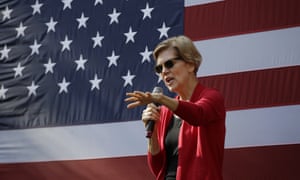
Elizabeth Warren speaks in New Hampshire.

via Trump and Wall Street fear Warren and Sanders – they speak for the people | Robert Reich | Opinion | The Guardian

Did we blame the wrong villain for the 2008 financial crisis? Perhaps the real culprit is capitalism itself – Salon.com

Experts obviously point fingers at Wall Street for the collapse, but some things just don’t add up

Source: Did we blame the wrong villain for the 2008 financial crisis? Perhaps the real culprit is capitalism itself – Salon.com

US jail system stacked against poor, ill nonviolent offenders: Land of the Free

Reuters/Tony Gentile

US jail system stacked against poor, ill nonviolent offenders – report — RT USA.

Why the Trans-Pacific Partnership Agreement is a Pending Disaster

Republicans who now run Congress say they want to cooperate with President Obama, and point to the administration’s Trans-Pacific Partnership, or TPP, as the model. The only problem is the TPP would be a disaster.

If you haven’t heard much about the TPP, that’s part of the problem right there. It would be the largest trade deal in history — involving countries stretching from Chile to Japan, representing 792 million people and accounting for 40 percent of the world economy – yet it’s been devised in secret.

Lobbyists from America’s biggest corporations and Wall Street’s biggest banks have been involved but not the American public. That’s a recipe for fatter profits and bigger paychecks at the top, but not a good deal for most of us, or even for most of the rest of the world.

First some background. We used to think about trade policy as a choice between “free trade” and “protectionism.” Free trade meant opening our borders to products made elsewhere. Protectionism meant putting up tariffs and quotas to keep them out.

In the decades after World War II, America chose free trade. The idea was that each country would specialize in goods it produced best and at least cost. That way, living standards would rise here and abroad. New jobs would be created to take the place of jobs that were lost. And communism would be contained.

For three decades, free trade worked. It was a win-win-win.

But in more recent decades the choice has become far more complicated and the payoff from trade agreements more skewed to those at the top.

Tariffs are already low. Negotiations now involve such things as intellectual property, financial regulations, labor laws, and rules for health, safety, and the environment.

It’s no longer free trade versus protectionism. Big corporations and Wall Street want some of both.

They want more international protection when it comes to their intellectual property and other assets. So they’ve been seeking trade rules that secure and extend their patents, trademarks, and copyrights abroad, and protect their global franchise agreements, securities, and loans.

But they want less protection of consumers, workers, small investors, and the environment, because these interfere with their profits. So they’ve been seeking trade rules that allow them to override these protections.

Not surprisingly for a deal that’s been drafted mostly by corporate and Wall Street lobbyists, the TPP provides exactly this mix.

What’s been leaked about it so far reveals, for example, that the pharmaceutical industry gets stronger patent protections, delaying cheaper generic versions of drugs. That will be a good deal for Big Pharma but not necessarily for the inhabitants of developing nations who won’t get certain life-saving drugs at a cost they can afford.

The TPP also gives global corporations an international tribunal of private attorneys, outside any nation’s legal system, who can order compensation for any “unjust expropriation” of foreign assets.

Even better for global companies, the tribunal can order compensation for any lost profits found to result from a nation’s regulations. Philip Morris is using a similar provision against Uruguay (the provision appears in a bilateral trade treaty between Uruguay and Switzerland), claiming that Uruguay’s strong anti-smoking regulations unfairly diminish the company’s profits.

Anyone believing the TPP is good for Americans take note: The foreign subsidiaries of U.S.-based corporations could just as easily challenge any U.S. government regulation they claim unfairly diminishes their profits – say, a regulation protecting American consumers from unsafe products or unhealthy foods, investors from fraudulent securities or predatory lending, workers from unsafe working conditions, taxpayers from another bailout of Wall Street, or the environment from toxic emissions.

The administration says the trade deal will boost U.S. exports in the fast-growing Pacific basin where the United States faces growing economic competition from China. The TPP is part of Obama’s strategy to contain China’s economic and strategic prowess.

Fine. But the deal will also allow American corporations to outsource even more jobs abroad.

In other words, the TPP is a Trojan horse in a global race to the bottom, giving big corporations and Wall Street banks a way to eliminate any and all laws and regulations that get in the way of their profits.

At a time when corporate profits are at record highs and the real median wage is lower than it’s been in four decades, most Americans need protection – not from international trade but from the political power of large corporations and Wall Street.

The Trans Pacific Partnership is the wrong remedy to the wrong problem. Any way you look at it, it’s just plain wrong.