“The solution is right before our eyes. Solar energy and wind are already cheaper than fossil fuels and they work at the scales that are required. If we take real action soon, we might still be able to avoid catastrophic climate change
Some 78% of dangerous greenhouse gases are put into the atmosphere every year by the G20, the twenty countries with the highest gross domestic product. That’s right. There are 195 countries in the world, but just 20 of them put out most of the carbon dioxide.
A survey of executives in high-emitting industries such as mining and electricity generation suggests they are not engaging with the government’s flagship policy to cut greenhouse emissions.
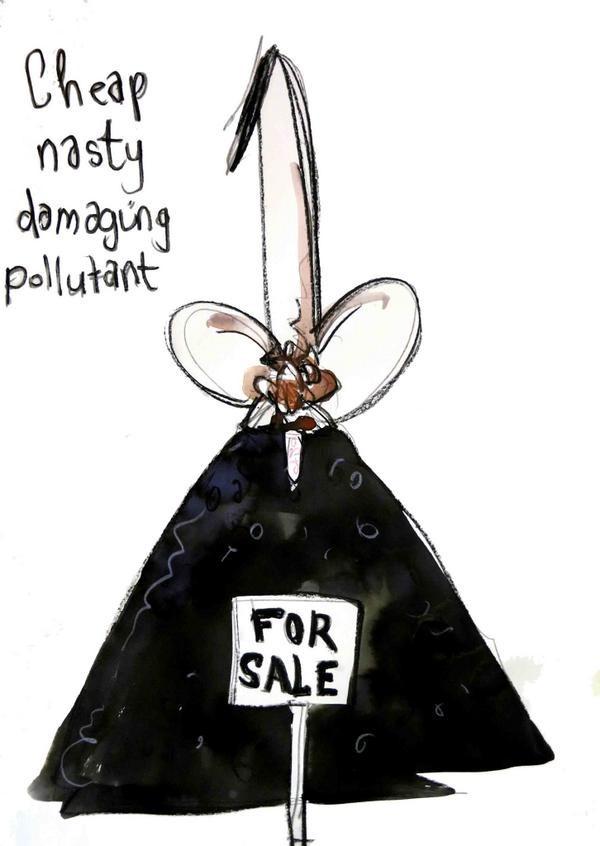
Following a report released at international negotiations in Peru that names Australia the “worst-performing industrial country in the world on climate change”, Prime Minister Tony Abbott announced that Australia would be declassified as a country. “In the eventuality that we can’t compete on an environmental platform, we will delete Australia as a country completely,” Abbott explained. “It’s easier this way.”
“By officially ceasing to be a nation, the world would just have to accept that the enormous carbon emissions exactly where ‘Australia’ used to be are now just naturally occurring,” the prime minister continued. “Sure, we’d become a nationless collective of vagrants, but it’s better than being constantly reminded I’m personally responsible for smothering future generations with a carbon pillow. I hope everyone will get on board with Team Nowhere.”
ABC Managing Director Mark Scott is said to be relieved, as it will no longer be possible for the ABC to be un-Australian. Former citizens of Australia are advised, if challenged by foreigners pointing to Australia on world maps, to explain that it is simply a patch of land-coloured ocean. “Hopefully this will also send a strong message to boat people trying to get to Australia illegally,” said Immigration Minister Scott Morrison. “Now that Australia doesn’t exist, it’s hard to imagine what reason anybody might have to come here.”
In other news:
Scott Morrison Begins Disembowelling the Weak and Vulnerable After Senate Grants Him New Powers
In Bid To Cease Promotion of Violence, ‘Target’ Changes Its Own Name
News Corp Poll Finds Minus 37% of People Support Renewable Energy
Australia Institute data challenges claims coal industry drives economic growth, is a key element of alleviating worldwide ‘energy poverty’ and improves quality of life. Kieran Cooke from the Climate News Network reports.
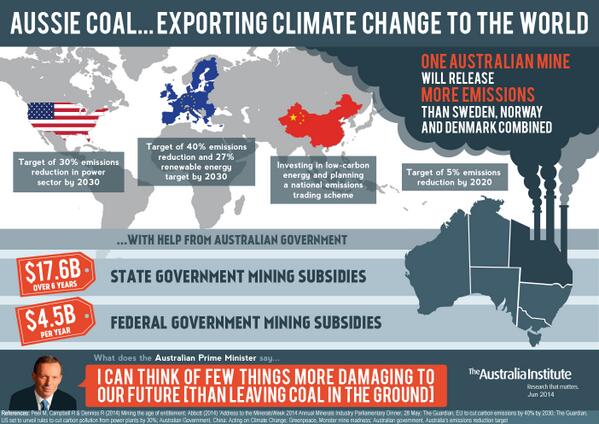
THE COAL INDUSTRY has many friends in high places and none more so than Tony Abbott — prime minister of one of the world’s major producers of a fuel that earns the country billions from exports.
As Prime Minister Abbott said recently:
“Coal is vital for the future energy needs of the world. So let’s have no demonisation of coal — coal is good for humanity.”
But a new report by researchers in Australia seeks to debunk what it considers to be myths promulgated by the powerful worldwide coal industry and its allies.
The report by the Australia Institute, an independent public policy thinktank, says claims by lobbyists that coal is a main driver of economic growth are false.
Slower growth
Data shows that coal use has grown much slower than global economic growth, says the report:
‘All Talk and No action: The Coal Industry and Energy Poverty’.
It points out that
‘…developed countries have reduced coal use while economic growth has been unaffected. Developing countries are now the major users, but with alternatives becoming cheaper, they are likely to reduce coal use much earlier in their development.’
The report also attacks industry claims that coal use increases life expectancy and quality of life:
‘On the contrary, coal use is often associated with lower life expectancy due to health impacts of indoor and outdoor air pollution and the global health impacts of climate change.’
The study says that, although access to electricity might initially improve quality of life, once basic electricity facilities are in place there is little correlation between increased electricity uptake and improved living conditions.
Talk in the coal industry about tackling energy poverty is just public relations spin, says the report, and it questions whether the coal industry itself believes its own claims.
It is significant, the study says, that coal concerns that choose to become involved in electricity and poverty alleviation schemes in poorer parts of the world support projects connected with solar technology or small hydro and gas-fired facilities, rather than with far more expensive coal-fired power installations.
Polluting gases
The report also takes issue with claims by the coal industry that coal is becoming cleaner. What is meant by clean coal varies widely: although many power plants and other enterprises have reduced coal-related emissions of sulphur oxide and nitrogen oxide, coal still releases into the atmosphere enormous amounts of CO2 — by far the most polluting of greenhouse gases.
Meanwhile, progress on carbon capture and storage (CCS) – the process through which emissions from coal-powered plants and other industrial concerns are captured and stored deep below the Earth’s surface – has been slow.
There are only 13 such projects in operation and, together, they are capable of sequestering only 25 million tonnes of carbon dioxide per year — less than one per cent of the world’s total annual emissions.
To put this in perspective, the report says, 33,376 million tonnes of CO2 were emitted worldwide in 2011, with the United States emitting 5,420 million tonnes, and Australia – which has a much smaller population − emitting 400 million tonnes.
The report concludes:
‘Addressing the challenges of energy poverty will become even more difficult if public relations campaigns are able to influence government policies away from genuine solutions towards spending that benefits the coal industry. The real solutions to energy poverty do not focus on coal.’


 olddogthoughts