Category: Foreign AID

Indonesia: how Australia’s biggest and closest neighbour uses our aid – Michael West

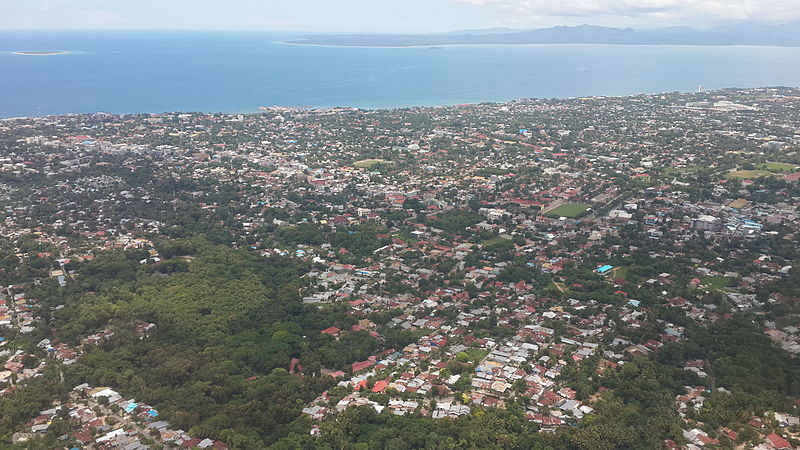
Kupang, Timor

Repairing the damage done

Government funding Overall, Australia’s foreign aid as a proportion of our Gross National Income is 0.2%, well below the OECD average of 0.32%. This ranks the Lucky Country 21 out of 29 donors.

The heaviest cuts were last decade under Coalition PM Tony Abbott.

There’s been some repair. In this year’s budget, taxpayers are giving slightly more aid to Indonesia – up from $307.3 million to $326.1 million, or about 6%.

Source: Indonesia: how Australia’s biggest and closest neighbour uses our aid – Michael West

Abbott policies reduced effectiveness of foreign aid to combat climate change | Australia news | The Guardian

Tropical Cyclone Pam rips through Kiribati in 2015.

Why the Chinese are so welcomed(ODT)

The Abbott government cut foreign aid by a total of $11bn over the medium term, reducing Australia’s aid program to the lowest levels since the creation of a formal aid program more than 40 years ago.

via Abbott policies reduced effectiveness of foreign aid to combat climate change | Australia news | The Guardian

Sally Zou: The Chinese mining magnate who paid workers with a bag full of cash – ABC News (Australian Broadcasting Corporation)

Sally Zou tweet about AusGold

Sally Zou: The Chinese mining magnate who paid workers with a bag full of cash – ABC News (Australian Broadcasting Corporation)

The World Bank admits that the vast bulk of foreign investment in Africa doesn’t help the continent’s people, with aid and agricultural support often a smokescreen for multinationals looting nations’ wealth.

ABOVE AND BELOW: The Omo Valley in Ethiopia... vast tracks of land have been sold off almost without consultation with the Kara people. IMAGE Marc Veraart, Flickr

The Global Land Grab: Giving With One Hand And Taking Everything With The Other

Shrinking Australia’s Aid Budget Is Selfish And Self-Defeating: Ben Eltham

By hacking away at aid we’re not only at risk of becoming a Scrooge, we’re also hurting our self-interest, writes Ben Eltham.

There was a funny moment yesterday in Parliament, when cameras caught Julie Bishop rolling her eyes while Joe Hockey was speaking. Later she put her head in her hands.

What was Australia’s Foreign Minister reacting to? It might have been reports that surfaced yesterday morning that the Expenditure Review Committee – the government’s notorious razor gang – had recommended yet more cuts to the foreign aid budget.

You could be forgiven for feeling a little sympathy for Bishop. She had just returned from Vanuatu, where Cyclone Pam had wreaked a trail of destruction across the island chain. And yet no-one had bothered to inform her of these latest cuts to her foreign aid budget, a key item in any foreign minister’s toolkit.

The rather pointed gestures from the foreign minister highlighted ongoing tensions in the federal cabinet. The government’s best performing minister by some margin, Bishop has constantly surpassed expectations since taking office. The contrast with Hockey, whose performance in the key role of Treasurer has been dismal, is stark.

There is considerable injustice, then, in the fact that Bishop’s portfolio has time and again been asked to carry the bulk of the pain of Joe Hockey’s faltering efforts at budget repair. Of course, Bishop is only the responsible minister. The true victims of the foreign aid austerity are the poorest and neediest people in Australia’s region – precisely those who most deserve our support.

Australian voters have a somewhat ambivalent attitude to foreign aid. If you ask them which part of the budget should be slashed to help consolidate the deficit, foreign aid typically tops the list. Populist sentiment often reflects the old saw of charity beginning at home. Maverick Tasmanian Senator Jacqui Lambie has been a vocal critic of the foreign aid budget, preferring to see such largesse expended in her own impoverished island home.

But foreign aid can sometimes be popular. When disaster strikes, Australians can be remarkably generous – as our warm-hearted response to the 2004 tsunami showed. Already, we’ve seen a beneficent response to Vanuatu’s devastation.

The real problem for foreign aid is that it has no strong lobby group or noisy affected industry to complain when funding is cut. Governments have responded by making foreign aid their first port of call whenever spending cuts are mentioned.

The rot set in under Labor. Kevin Rudd began his government with bold plans to lift Australia’s foreign aid spending to 0.5 per cent of our gross national income, in line with the UN’s Millennium Development Goals that we’d signed up for. By the time Julia Gillard became prime minister, the 0.5 per cent target was a distant dream, and foreign aid became a huge target for a government desperate to claim a balanced budget.

Joe Hockey continued the trend. In fact, he cut even deeper. $7.6 billion deeper. More than a fifth of all the 2014 budget savings came from foreign aid.

In December 2014, Hockey did it again. The Mid-Year Economic and Fiscal Outlook cut a further $3.7 billion from foreign aid. On some analyses, that takes Australia’s foreign aid down to its lowest level since 1954.

Australia's foreign aid budget has been declining for years, but recent cuts under the Abbott government have been the largest yet. Image: DevPolicyBlog / Stephen Howes and Jonathan Pryke

Australia’s foreign aid budget has been declining for years, but recent cuts under the Abbott government have been the largest yet. Image: DevPolicyBlog / Stephen Howes and Jonathan Pryke

The upshot is that Australia is in danger of becoming a Scrooge. As we get richer, we are getting more miserly. Our economy continues to grow, meaning we are wealthier than ever. But our generosity seems to be declining in direct opposition to our wealth.

As the ANU’s Stephen Howes and Jonathan Pryke noted back in December, the cuts will play havoc with existing aid programs. “How do you cut another quarter from an already-pruned aid program?” they ask. “The aid program that emerges from the resulting slash-and-burn will be a very different beast.”

It already is.

The abolition of AusAID in 2013 was welcomed by many in the aid sector, arguing that the organisation had a mixed record and was often inefficient in its use of government funding. Unfortunately, the big cuts since have made it impossible to judge whether the Department of Foreign Affairs and Trade is handling its new responsibilities any better. An environment where bureaucrats are scrambling to work out how to slash $1 billion from a $5 billion in just six months is hardly a recipe for good governance.

Figures like this should give us all pause for thought. Australia faces significant challenges in our region in future decades, and we won’t improve our chances of managing them by slashing aid to the less developed countries in our neighbourhood.

When governments fall and states fail, the cost of responding rapidly outstrips anything we spend in aid. One recent estimate put the total cost of Australia’s RAMSI intervention in the Solomon Islands at $2.6 billion. Prevention is always cheaper than cure.

The nightmare scenario is the disintegration of Papua New Guinea, our nearest neighbour and a country with massive development and governance challenges. Yet in recent times Australian relations with PNG have been focused on entirely selfish motivations, like the need to secure a jail site for seaborne asylum seekers.

As the Lowy Institute’s Jenny Haywood-Jones wrote in her assessment of the RAMSI intervention, “even if Australia does not make another large-scale intervention in the Pacific Islands region, the need of Papua New Guinea and Pacific Island countries for external assistance for a variety of governance, economic and security challenges is unlikely to disappear.”

But you won’t hear much about Australia’s regional future in the current debate on budget priorities. The ABC yesterday framed the story as a personal tiff between Bishop and Hockey, essentially ignoring the policy angle altogether.

By coincidence, Vietnamese Prime Minister Nguyen Tan Dung was in Canberra yesterday, appearing alongside Tony Abbott in a media conference. Someone at least asked Abbott about Australia’s foreign aid cuts, forcing Abbott to admit that, yes, they had happened.

When asked about Australia’s foreign aid cuts, Prime Minister Dung remained silent. Perhaps he thought the less said, the better.
Malcolm Turnbull: the man to put Australia on the map

Original thinker: If Malcolm Turnbull becomes prime minister, expect the unexpected.


Malcolm Turnbull: the man to put Australia on the map.

No way Australia is a leading reducer of Foreign Aid. We don’t give without string attached Aid for Trade. What do kids trade?

Julie Bishop and the empathy deficit: What are you going to cut to save only your political arse Julie? Abbot’s your team leader

Illustration: Andrew Dyson.

Julie Bishop and the empathy deficit.

MYEFO: Foreign aid slashed again, budget deficits to balloon in mid-year update

Joe Hockey and Mathias Cormann

Treasurer Joe Hockey will slash foreign aid and reveal a massive blowout in this year’s deficit when he hands down his mid-year budget update today.

The ABC’s AM program understands the aid budget will be reduced to Howard-era levels and more than $3 billion will be cut over the next four years.

The cuts in today’s Mid-Year Economic and Fiscal Outlook (MYEFO) come on top of a $7.6 billion cut to the aid budget in May.

Some of the money will be redirected to fund new spending decisions, such as a $630 million boost to national security and the deployment of troops to the Middle East.

This year’s budget deficit, which was forecast to be $29.8 billion in May, is now set to exceed $40 billion as “global headwinds” continue to batter the Australian economy.

“We remain on a believable and responsible path to surplus, but we will get there slightly less quickly than we would have liked,” Finance Minister Mathias Cormann said.

Shadow Treasurer Chris Bowen has criticised the cut to foreign aid.

“They just treat our foreign aid, our overseas development, as their ATM,” he told Radio National.

“It is just their cut of first resort on every occasion.”

Senator Cormann told AM Senate compromises and delays, as well as falling commodity prices, would hit the budget hard over the next four years.

“There’s been a significant drop in revenue on the back of a sharp fall in terms of trade and also on the back of wages growth being lower than expected,” Senator Cormann said.

“We are not going to chase down the fall in revenue.

“There’s been a decision to participate in efforts in Iraq … and then finally there’s been some decisions in the Senate where there have been either delays or outcomes of various negotiated arrangements where there was a cost to the budget from that as well,” he said.

But Labor argued that any measures held up in the Senate are still on the budget books and therefore cannot be counted towards the ballooning deficit figure.

Government sources said the MYEFO contains the steepest fall in the nation’s terms of trade in more than 50 years.

Any hope coalition MPs had of a return to surplus before 2017-18 has now been abandoned.

Budget shows ‘Hockey’s hypocrisy’, Opposition says

But “economic headwinds” also plagued former Labor treasurer Wayne Swan, and in Opposition Mr Hockey had little sympathy.

Last year, he said: “Old Swanny likes to blame everyone else.”

“The trouble is he gets his numbers wrong in the first place and again if you were a company director you would go to jail.”

Labor’s finance spokesman Tony Burke said the budget update shows the Treasurer is a “complete hypocrite”.

“If Peter Costello could deal with an Asian financial crisis, if Wayne Swan could deal with the Global Financial Crisis then surely Joe Hockey should be able to deal with commodity prices,” Mr Burke said.

But Senator Cormann insisted the Abbott Government’s situation was “quite different”.

“[Last year] Labor was saying we were deliberately taking a too pessimistic view to make the numbers look worse than what they were and of course as it turns out we weren’t aggressive enough in downgrading the revenue assumptions that we inherited from Labor,” he said.

“Furthermore, when revenue was starting to fall under the previous Labor Government they decided to ramp up expenditure further to unsustainable levels whereas we are making the difficult but necessary decisions to get spending under control.”