Category: Economy

The MSM asleep at the Wheel.

MSM

Last week Mainstream Media (MSM) political commentators were united in their condemnation and their mockery of PM Tony Abbott following his bizarre announcement that HRH Prince Phillip would become an Australian Knight.

They also seemed equally united in their condemnation of Abbott’s overall performance and the prospect of an imminent leadership challenge  following the Queensland election. Better late than never, I suppose.

In fact, the media’s unity on these two issues is similar to their united front on Labor’s economic prowess, particularly between 2010 and 2013. At the time, they gave Tony Abbott and Joe Hockey unquestioning prominence while the two amigos recklessly hacked away at Labor’s economic record.

The only difference is that they were dead wrong about the two amigos and also about Labor’s grasp of the issues.
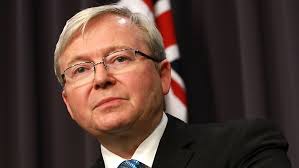
ruddWhen Kevin Rudd became Prime Minister in 2007 he inherited a gross ‘debt’ of $58 billion; quite trivial by today’s standards. At the time, he and Labor were treated lightly by the media until the GFC exploded and suddenly, the big question was: what would they do about it?

But up until this time, the media had been asleep at the wheel unaware of what really had  been going on. For the ten years or so prior to 2007 they had been happy to drink the wine of what they perceived as good fiscal management by Peter Costello who had been delivering surplus budgets year in, year out.

But they should have known that in a national economy, the three principal sectors of management, i.e. government, private and external, the respective balances of each will always play against each other, while their aggregate total must balance when combined. If two are in surplus, one must be in deficit. If two are in deficit one must be in surplus and the net result must always equal zero.

A simple formula expresses this as follows:
(I – S) + (G – T) + (X – M) = 0
where I is Investment, S is Savings, G is Govt. Spending, T is Taxes, X is Exports and M is Imports.

During Costello’s time no one ever queried that up until 2007, while he bathed in the glory of government surpluses, external income was in deficit, and private debt, particularly household debt was skyrocketing.
costello

Costello’s surpluses were made possible because of the availability of easy credit, e.g. home equity based loans, banks offering credit cards to anyone breathing, and even some who had stopped breathing. Costello took advantage of the ignorance of the MSM and the people with his surpluses and actually gained their admiration in the process.

As we all remember, soon after the GFC struck, the Rudd government announced a stimulus program, one much criticised by the then LNP opposition, which put the budget into deficit. This created excess reserves in the banking system necessitating the issuing of bonds to ensure the central bank could control the overnight cash rate.

This necessary monetary process was misconstrued and presented as borrowing to finance the government’s spending when it was nothing of the sort. It quite falsely became the “debt and deficit myth” the LNP used so effectively to discredit Labor.

Following that stimulus, the external sector (trade) remained in deficit but the private sector (business) stopped borrowing and began paying down debt.

Fast forward to today and we find that household debt has remained at its historic high. Meanwhile, the business sector have been using accumulated profits to reduce debt and buffer themselves from deflationary forces in the absence of attractive investment opportunities.
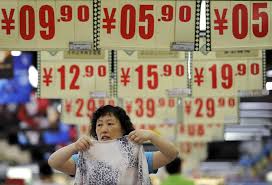
chinaAt the same time, successive years of deficit budgets caused by China’s economic slowdown coupled with an over-valued Australian dollar has had the effect of limiting further deterioration in unemployment.

That’s the good news. Now for the bad news. Joe Hockey’s austerity budget threatens a seismic shift in these balances.

The move to austerity will actually force the private sector towards higher indebtedness (deficit) by running down savings because there won’t be the flow of money to enable current levels of saving.

If the household part of the private sector starts saving and/or begins to pay down household debt (credit card and mortgages), the economy generally will begin to contract, business will slow, unemployment will grow and the deficit will also grow from further reduced revenues. The December 2014 inflation rate announced last week confirms this trend.

This means that the private sector will bear the burden of balancing the economy on a scale that will drive the country into a horrible and prolonged recession.

This is exactly what is happening at the moment in Europe.
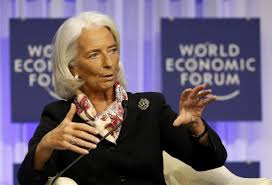
davos

This is why the European Central Bank has decided to issue $1 trillion euros of fiat currency to be deposited into the reserves of the member banks. This is why austerity doesn’t work, at least in these circumstances.

The question arises therefore, why is it that the Australian MSM economic experts are not pointing out this fact? Are they once more asleep at the wheel? Or, is it just too hard for them to acknowledge Labor’s better understanding of the way the economy works?

It is my opinion that neither they, Joe Hockey nor Mattias Cormann understand any of this.

The world is turning against austerity. Now it’s Queensland’s turn

queensland protest

The rapid decline in Campbell Newman’s popularity is a symptom of Australia’s growing discontent with neoliberal economic policy

Seven years after the economic crises of 2008, there are signs that one response to them is reaching its limits. Austerity economics, grounded in an “Old Testament theory of the business cycle”, is not only meeting electoral rejection, but is corroding the political legitimacy of its proponents and undermining political arrangements that have long been taken for granted. This is most obvious in the success of leftwing populists in Greece and Spain, and the growth of previously marginal leftwing parties in the UK and elsewhere. But it’s also evident in places where no viable radical alternative yet exists. Which brings us to Queensland.

Despite the weirdness of Campbell Newman running for premier from outside the parliament in 2012, his government began its work in a familiar, austerian manner. He won in large part because he was not Anna Bligh. Conscious of the damage she had done herself by moving to privatise rail assets, his campaign carefully played down his real intentions. Once he was in the harness, he appointed former federal Liberal treasurer Peter Costello to head a commission of audit on the state’s finances. Its findings legitimised a program of cuts, and licensed war on the public sector and its unions (or so Newman hoped).

Armed with dire warnings of fiscal disaster, the government applied punitive “remedies” to an economy already unwinding at the end of the resources boom. He sacked thousands of public servants in every corner of the state. He attacked public health, taking on doctors and nurses. He moved to privatise public infrastructure via the boondoggle of “long term leases”. And in a attempt at compensatory populism, he used authoritarian state power to crack down on a handy folk devil, bikie gangs, which were touted as a greater threat to law and order than his own actions, like appointing a mate as chief justice, or weakening the state’s corruption watchdog.

Like all such programs of destruction, Newman’s was badged as “reform”. As the philosopher Jacques Rancière points out, this is a word which in recent decades has simply become a way for the powerful to “mark the distance between what is good for the people and what they desire”. “Reform” in the modern sense of liquidating public property, weighting industrial relations in favour of employers, and crippling public services has never been popular.
Advertisement

Commissions, whether temporary (like Costello’s) or permanent (like the Productivity Commission) are efforts to depoliticise economic decision-making, allowing politicians to argue that they are guided by the science of experts when they implement neoliberal orthodoxy. It’s a well worn strategy. Newman’s commission replicated the one employed in Western Australia in 2008, in Victoria and New South Wales in 2011, and in the Northern Territory in 2012. And in turn, Tony Abbott replicated it in 2013, appointing the head of the Business Council of Australia, Tony Shepherd, to oversee a review of the national accounts.

Like Newman, Abbott used the findings as a pretext for reversing his election pledges. Like Abbott, Newman is finding out that the electorate no longer quite buys it. His party may scrape home, but it will be far closer than it ought to have been after one term which began with a crushing majority. If the polls are right, Newman won’t win his own seat of Ashgrove. After leading a parliamentary party he wasn’t a member of into government, he’ll now possibly lead them to a narrow victory he’ll have no further part in.

Should we end up with a Newman-less LNP government, his successor will struggle to convince the electorate of their basic legitimacy, let alone of the wisdom of the agenda that destroyed Newman’s standing. If the LNP is wiped out in Brisbane, it will strengthen the premiership claims of unpopular old Nationals like two-time loser Lawrence Springborg. After only three years, the LNP’s prospects are bleak.

Part of the problem is that it is not delivering the promised results: Queensland’s growth and employment figures are worse than when Newman assumed office, even as he has spent the term throwing more workers onto the economic scrap-heap. As Lenore Taylor pointed out, Queensland’s unemployment rate of 6.5% is now the same as Tasmania’s. But the picture is worse in the provincial cities of Australia’s most decentralised state: unemployment is running at 7.8% in Townsville, and 8.2% in Cairns. The real wage growth of low-paid workers has fallen below the rate of inflation. Austerity has translated into a direct assault on the economy and living standards, with no improvement in sight.

But beyond this, the LNP has attacked bedrock institutions which are not only integral parts of Queensland communities, but highly valued in and of themselves as “public things”. Hospitals and schools, railways and ports are not just infrastructure, but repositories of collective memory and achievement. Clean groundwater and the reef are not cesspits in which to dump our externalities, but things worthy of preservation. After decades in which market liberalism has triumphed, we have not only learned that we are permanently worse off when assets are privatised and economies liberalised, but that we lose a little more of our purchase on the world.

Labor may be the beneficiaries of an austerity backlash in Queensland, but it’s not because they have renounced economic orthodoxy, or sought to oppose its consequences. Just as Newman was elected because he was not Bligh, Annastacia Palaszczuk is relying on disaffection with the incumbent. All over Australia, the electoral see-saw is accelerating, with short or nonexistent honeymoons, and more governments in trouble within a single term.

Politicians and large sections of the media are still desperately trying to pretend that this does not signal a deeper problem. Australia may not be deep enough into its own version of economic crisis to produce a radical alternative party of government. But there are signs to suggest that here, as in other parts of the world, the idea that the era in which we could imagine no alternative to doctrinaire economic liberalism is coming to an end.

• On 1 February 2015 this article was amended to correct a misspelling of the Labor leader’s name.

Going backwards: Australia’s renewable energy investment bucks world trend: Abbott’s economic success story

Going backwards: Australia’s renewable energy investment bucks world trend.

Low 10-year bond rates are the deal of the century but Abbott’s not at the table :

<i>Illustration: Kerrie Leishman </i>

Peter Martin

With 10-year bond rates at an all-time low, the time is ripe to get some visionary projects off the drawing board.

Who’d say no to the deal of a lifetime? Tony Abbott would, and it’s our tragedy.

The 10-year bond rate is the rate at which the government can borrow for 10 years at a fixed rate of interest. Right now it’s just 2.55 per cent, an all-time low.

It’s rare to be offered money for nothing. All we would need is confidence in the worth of our ideas.

By way of comparison in the 1970s it exceeded 10 per cent, in the 1980s it passed 16 per cent, in the 1990s it passed 10 per cent, in the 2000s 5 per cent, and until now in this decade it has usually been above 3 per cent. It dived below 3 per cent at the end of last year and is now just 2.55 per cent, the lowest in living memory.

If Australia was to borrow, big time, for important projects that took the best part of a decade to complete, it would have no risk of ever having to fork out more than 2.55 per cent a year in interest. The record low rate would be locked in for 10 years.

Australia’s inflation rate is currently 2.3 per cent. Although it will almost certainly fall in the wake of the collapse in oil prices when it is updated next week, the Reserve Bank has a mandate to keep the rate centred at about 2.5 per cent. That means that right now our government is being offered billions for next to nothing, billions for scarcely more than the expected rate of inflation.

If Abbott was the chief executive of a company with good prospects he’d grab the money and borrow as many billions as he could without impairing his credit rating.

In Australia’s case that’s probably an extra $100 billion. That’s enough to build the long-awaited Brisbane to Sydney to Melbourne high-speed rail line, or to build Labor’s original national broadband network, or Sydney’s $11 billion WestConnex road project plus Melbourne’s $11 billion metro rail project plus Melbourne’s $16 billion East West Link plus something big in each of the other states.

And it would cost next to nothing. All each of these projects would need is a positive real rate of return (which several of those listed above lack) and we would get ahead.

All we would need is confidence in the worth of our ideas.

It’s rare to be offered money for nothing.

It’s happening because interest rates in the rest of the world have dropped to near zero. Japan’s 10-year bond rate is 0.24 per cent, Germany’s is 0.40 per cent, Britain’s 1.54 per cent. Even in the United States, where the economy is improving, the 10-year bond rate is just 1.81 per cent. Without the ability to earn decent returns in the nations to our north, investors are flocking here and buying our government bonds. In order to get them they are prepared to bid down the rates we have to pay them to all-time lows.

It mightn’t last. In October, Reserve Bank assistant governor Guy Debelle warned of a “relatively violent” correction in bond markets. He said as soon as it looks as if interest rates will climb, the purchasers of bonds will demand much higher rates in order to cover themselves for what’s likely over the next 10 years. The opportunity will vanish.

If we are prepared to grasp it, there’s no shortage of projects that would set us up for decades to come. In education, in health, in the delivery to railway lines into suburbs that are at present barely accessible – in all of these areas there are projects whose benefits would exceed their costs and exceed them by more than enough to pay the minimal rate of interest being demanded.

Some are visionary. Bank of America Merrill Lynch economist Saul Eslake says if Australia was to get serious about reducing its dependence on coal it would consider paying coal producers to close, and speeding up the commercialisation of battery technologies that would allow Australians with the next wave of solar panels to live off the grid.

The risk is that bad projects would be chosen over good ones and the money wasted. Abbott himself provides reason for concern. Despite promising during the election to “require all Commonwealth-funded projects worth more than $100 million to undergo a cost-benefit analysis by Infrastructure Australia” his first budget funded scores of road projects without such approval. Some of the cost-benefit studies weren’t even published, in others the figures were massaged to make them look better than they were.

The Grattan Institute’s John Daley suggests setting up an independent statutory authority along the lines of the Reserve Bank to vet proposals for spending big money. Its members would be appointed by the Governor-General for terms of five to seven years, it would report directly to parliament and would publish of all of its findings, complete with the assumptions behind them. He says even cheap money should be spent well.

Could the Coalition grab the opportunity before it vanishes? There are some good signs. With help from the Greens it axed Labor’s debt ceiling. Since taking office it has run up an extra $78 billion in debt. But it is unorganised, behind in the polls and a prisoner of some of the silly things it said about debt while in opposition.

We have a once-in-a-lifetime opportunity. It’ll slip through our fingers.

Peter Martin is economics editor of The Age.

Joseph Stiglitz: Thomas Piketty gets income inequality wrong.

Joseph Stiglitz: Thomas Piketty gets income inequality wrong

Joseph Stiglitz: Thomas Piketty gets income inequality wrong – Salon.com.

Economists are refuting the three big picture claims made by the government:

Tony Abbott achieves the impossible: unity among economists<br />
Economists are refuting the three big picture claims made by the government: 1) We have a budget emergency 2) We have a debt crisis and 3) The carbon tax was ruining the economy #notfittogovern #LNPSociopaths #greenlabor #auspol #votebairdlast<br />
There’s a joke about economists: if you ask five economists the same question you’ll get six different answers. Granted, it's not a very good joke, but it’s a fair call. Ours is a complex field, and a growing number of economists are acknowledging that the theory sitting behind mainstream economics is mostly rubbish. As a result, it’s very difficult to find consensus on real world events.</p>
<p>But that's where Abbott and Hockey have achieved what many thought impossible: a true consensus. Unfortunately for the coalition government, the consensus is entirely against them. The Abbott government’s agenda has been driven by three major claims, all of them economic in nature. Let’s see how economists view these three themes:</p>
<p>1) There is a budget emergency<br />
Number of economists who agree: zero</p>
<p>2) The federal government has a debt crisis<br />
Number of economists who agree: zero</p>
<p>3) Carbon pricing is an economic wrecking ball<br />
Number of economists who agree: zero</p>
<p>The above represents a very slight exaggeration. You can find people with some economics qualifications who agree with the government but, without exception, they either work for the Coalition or for some entity with ideological motives (like the IPA or News Corp).</p>
<p>While most would agree that there are serious structural problems with the budget, none would call it an emergency. Chris Richardson, economist and partner at Deloitte Access Economics, said:</p>
<p>We don’t need a surplus tomorrow, we don’t even necessarily need it in five years’ time. I’m more than happy with us getting back to sustainable fiscal finances over the long term. The politics would tend to suggest moving earlier rather than later but on the economics there’s no rush.</p>
<p>Saul Eslake, chief economist at Bank of America Merrill Lynch, said that to call the Australian debt situation a crisis was “to abuse the English language.”</p>
<p>Similarly, Nobel prize winning US economist Joseph Stiglitz used terms such as “absurd”, “crazy” and “a crime” to describe some of Hockey’s budget measures, and dismissed the perceived debt and deficit problems, noting that any Australian who worries about debt “must be out of their mind.” Richard Holden, professor of economics at the Australian School of Business, put it this way: “First, Australia does not have a debt crisis. Or, to put it another way, Australia does not have a debt crisis.”</p>
<p>It doesn't stop here. The Age recently conducted its annual economics survey of 25 prominent economists. They select economists from a broad range of backgrounds across the spectrum of economics and their views vary widely on almost all issues. None of them agreed with the government on any of the above three topics.</p>
<p>This unique consensus among economists makes it clear that the entire government agenda is based on false premises. How has this exposure affected the Coalition's agenda or their messaging? Not at all. Not one bit. Not one iota. Let’s be clear about this. We know they’re not being honest about their real motives for policy. They know we know, too. They don’t care.</p>
<p>As I’ve explained previously, the Abbott and Hockey budget, if fully implemented, would have taken us a long way towards the free market social and economic model of the US, and away from the social democracy model of much of Europe. But the question remains as to why they would do this. Who benefits from a US style free market system where government minimises its involvement?</p>
<p>The answer of course is the wealthy and those who already wield power. The greatest beneficiaries of Abbott and Hockey’s policies are their largest financial backers, including the financial industry, the mining and energy industries, gambling interests and real estate companies.</p>
<p>For all the talk about this being the most ideologically driven government in living memory, the reality is something much simpler and more familiar. This government is simply delivering to big money what big money wants.</p>
<p>One of the clearest examples of this is the winding back of the Labor government’s Future of Financial Advice (FoFA) reforms. We know that many financial advisors have been preying on their clients. They make use of clients’ lack of understanding of complex investing and other financial options to direct them to financial products that are not in their interest, but rather in the interests of the advisor. This has been costing consumers huge sums of money, which primarily flow into the hands of the banks.</p>
<p>Labor’s reforms were aimed at making such conflicts of interest for advisors illegal in order to address this complex problem. The Coalition have wound back Labor’s changes and have provided not one defensible reason for doing so. Compliance costs and red tape have actually increased, so that cannot be used as the excuse. Meanwhile, we allow the banks to continue to profit from ripping off their customers.</p>
<p>The same is at play when you examine climate policy. You can't find an independent economist who thinks the government’s "direct action" plan for tackling climate change is more efficient or effective than a carbon tax or trading scheme. Who likes direct action? The polluters of course. Instead of paying to pollute, they get paid not to pollute. Here's the real con: one argument we are given is that the carbon tax was too big a burden on consumers. Who's going to pay the polluters to reduce pollution? The government. Where do they get the money? From all of us. Consumers pay anyway.</p>
<p>The clarity of these examples reveals the sad reality of this government. They are not ideologues, they are just puppets dancing to the tune of those pulling their strings.<br />
http://www.theguardian.com/commentisfree/2014/jul/23/tony-abbott-achieves-the-impossible-unity-among-economists<br />
The Real News Channel Australian Labor Party NSW Labor The Australian Greens  The ANTI- Antibogan wordpress The real "Team Australia" Independent Australia GetUp! Destroy the Joint https://www.facebook.com/TheAustraliaInstitute

Tony Abbott achieves the impossible: unity among economists
Economists are refuting the three big picture claims made by the government: 1) We have a budget emergency 2) We have a debt crisis and 3) The carbon tax was ruining the economy ‪#‎notfittogovern‬ ‪#‎LNPSociopaths‬ ‪#‎greenlabor‬ ‪#‎auspol‬ ‪#‎votebairdlast‬
There’s a joke about economists: if you ask five economists the same question you’ll get six different answers. Granted, it’s not a very good joke, but it’s a fair call. Ours is a complex field, and a growing number of economists are acknowledging that the theory sitting behind mainstream economics is mostly rubbish. As a result, it’s very difficult to find consensus on real world events.

But that’s where Abbott and Hockey have achieved what many thought impossible: a true consensus. Unfortunately for the coalition government, the consensus is entirely against them. The Abbott government’s agenda has been driven by three major claims, all of them economic in nature. Let’s see how economists view these three themes:

1) There is a budget emergency
Number of economists who agree: zero

2) The federal government has a debt crisis
Number of economists who agree: zero

3) Carbon pricing is an economic wrecking ball
Number of economists who agree: zero

The above represents a very slight exaggeration. You can find people with some economics qualifications who agree with the government but, without exception, they either work for the Coalition or for some entity with ideological motives (like the IPA or News Corp).

While most would agree that there are serious structural problems with the budget, none would call it an emergency. Chris Richardson, economist and partner at Deloitte Access Economics, said:

We don’t need a surplus tomorrow, we don’t even necessarily need it in five years’ time. I’m more than happy with us getting back to sustainable fiscal finances over the long term. The politics would tend to suggest moving earlier rather than later but on the economics there’s no rush.

Saul Eslake, chief economist at Bank of America Merrill Lynch, said that to call the Australian debt situation a crisis was “to abuse the English language.”

Similarly, Nobel prize winning US economist Joseph Stiglitz used terms such as “absurd”, “crazy” and “a crime” to describe some of Hockey’s budget measures, and dismissed the perceived debt and deficit problems, noting that any Australian who worries about debt “must be out of their mind.” Richard Holden, professor of economics at the Australian School of Business, put it this way: “First, Australia does not have a debt crisis. Or, to put it another way, Australia does not have a debt crisis.”

It doesn’t stop here. The Age recently conducted its annual economics survey of 25 prominent economists. They select economists from a broad range of backgrounds across the spectrum of economics and their views vary widely on almost all issues. None of them agreed with the government on any of the above three topics.

This unique consensus among economists makes it clear that the entire government agenda is based on false premises. How has this exposure affected the Coalition’s agenda or their messaging? Not at all. Not one bit. Not one iota. Let’s be clear about this. We know they’re not being honest about their real motives for policy. They know we know, too. They don’t care.

As I’ve explained previously, the Abbott and Hockey budget, if fully implemented, would have taken us a long way towards the free market social and economic model of the US, and away from the social democracy model of much of Europe. But the question remains as to why they would do this. Who benefits from a US style free market system where government minimises its involvement?

The answer of course is the wealthy and those who already wield power. The greatest beneficiaries of Abbott and Hockey’s policies are their largest financial backers, including the financial industry, the mining and energy industries, gambling interests and real estate companies.

For all the talk about this being the most ideologically driven government in living memory, the reality is something much simpler and more familiar. This government is simply delivering to big money what big money wants.

One of the clearest examples of this is the winding back of the Labor government’s Future of Financial Advice (FoFA) reforms. We know that many financial advisors have been preying on their clients. They make use of clients’ lack of understanding of complex investing and other financial options to direct them to financial products that are not in their interest, but rather in the interests of the advisor. This has been costing consumers huge sums of money, which primarily flow into the hands of the banks.

Labor’s reforms were aimed at making such conflicts of interest for advisors illegal in order to address this complex problem. The Coalition have wound back Labor’s changes and have provided not one defensible reason for doing so. Compliance costs and red tape have actually increased, so that cannot be used as the excuse. Meanwhile, we allow the banks to continue to profit from ripping off their customers.

The same is at play when you examine climate policy. You can’t find an independent economist who thinks the government’s “direct action” plan for tackling climate change is more efficient or effective than a carbon tax or trading scheme. Who likes direct action? The polluters of course. Instead of paying to pollute, they get paid not to pollute. Here’s the real con: one argument we are given is that the carbon tax was too big a burden on consumers. Who’s going to pay the polluters to reduce pollution? The government. Where do they get the money? From all of us. Consumers pay anyway.

The clarity of these examples reveals the sad reality of this government. They are not ideologues, they are just puppets dancing to the tune of those pulling their strings.
http://www.theguardian.com/…/tony-abbott-achieves-the-impos…
The Real News Channel Australian Labor Party NSW Labor The Australian Greens The ANTI- Antibogan wordpress The real “Team Australia” Independent Australia GetUp! Destroy the Joint https://www.facebook.com/TheAustraliaInstitute

Real Media, Alt News, Politics, Critical Thought, War, Global events, Australia, Headlines,