Despite significant budgetary constraints, the Australian government announced in Tuesday’s budget that it will invest a further A$450 million in counter-terrorism strategies.
The arrest of several young Australians, who were allegedly planning attacks on Anzac Day and Mothers’ Day, seems to have convinced most Australians that these expensive counter-terrorism measures are essential for national security.
A public expenditure of around A$1.2 billion a year, we are told, is justified in order to prevent the sorts of terror attacks that have been perpetrated in Boston, Sydney, Paris and Copenhagen.
In order to thwart domestic terror attacks, therefore, the vast majority of this money will will be devoted to military deployment in Iraq, and funding for intelligence, surveillance, policing systems and information programs at home.
Various aspects of these counter-terrorism strategies and programs have been questioned by civil rights lawyers and activists, particularly in terms of data retention and journalistic freedom.
Questions have also been raised about the actual cost-benefit and effectiveness of many security measures, particularly around airport and aviation security. According to Professor Mark Stewart, full passenger body scans are expensive, time-consuming and of marginal security value, while hardened cockpit doors are of optimal cost-benefit.
There’s a reason for the “catch-all” approach of such measures. The cost of close surveillance of a single individual who may be at risk of committing a terrorist act is estimated at around A$8 million per year.
If security agencies were to conduct close scrutiny of the 200 individuals most likely to commit a terror act in Australia, the bill would be well over A$1.5 billion.
If the net were to widen far enough to include people such as Man Monis, a middle-aged Iranian refugee, who was not regarded as a high security risk ahead of perpetrating Sydney’s Martin Place siege earlier this year, then the cost would incalculable.
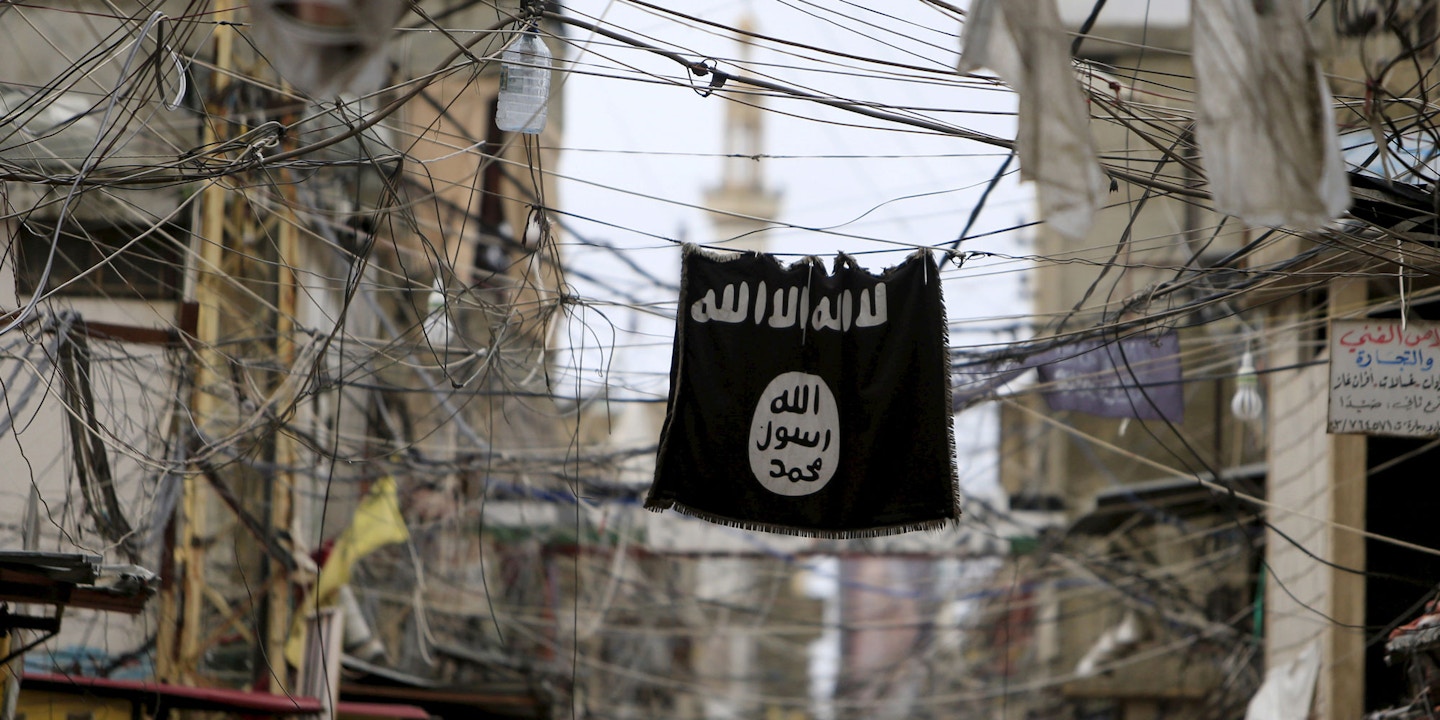
For that reason, if nothing else, western governments are investing in early intervention counter-radicalisation programs. The Australian government, specifically, is investing in programs that will generate and distribute “counter-narratives” which will be designed to halt the allure and propaganda of ISIS, al-Qa’ida in the Arabian Peninsula (AQAP) and other Islamist terror groups.
While there are few details about these programs, it is most likely that they will be structured around advertising and social marketing models which target youth audiences.
The problem here, of course, is that the individuals who may be susceptible to the influence of radical and militant Islam are an extremely diverse group. The terrorist profiling which has been produced by security psychologists bears little resemblance to a group which includes Man Monis, Jake Bilardi (a bright but disturbed adolescent convert to Islam), the Chechen Tsarnaev brothers who attacked the Boston marathon, and the Kouachi brothers – second-generation Algerian migrants who attacked Charlie Hebdo.
This diversity is further confounded by the sorry story of young Australian women – such as Amira Karroum – who become radicalised as much through love and desire, as through religious devotion.
In fact, we cannot even say that these radicalised individuals are unquestionably devout, uneducated or poor, making any kind of conventional mass-media program unlikely to connect with a given target audience.
A focus on social media might have greater traction, particularly if designers are able to tag their counter-narratives to militant groups’ websites and Twitter feeds. Unfortunately, and as overseas experience has demonstrated, these sites and feeds are chameleon-like, changing their character, title and URLs as they are constantly closed down by site managers and security agencies.
Moreover, users and followers are themselves extremely adept at moving with the messages and creating their own support networks which continually escape scrutiny. The western adolescents, who have become increasingly wooed by the ISIS imagery and ideas, have appeared to enjoy the cat-and-mouse game as they explore and exploit the limits of public and government authority.
Thus, while security agencies and social marketers may lumber around the internet in search of susceptible adolescents, their target audiences have already moved on.
The greater problem, in fact, is the very nature of the radical Islamist appeal to young western Muslims. ISIS, in particular, has conjured a heroic and ultra-masculinist imagining. This imagining shapes their attack on western global domination into a dark and erotic politics of the body.
The potency of their appeal to receptive adolescents is extremely difficult for state authorities to understand, let alone counter. Paradoxically, this is partly because ISIS has enlisted much of the violent erotica which is a feature of western media culture – a fact the west simply won’t acknowledge.
Rather, western governments deny the parallel, invoking the rationalism and authority which they claim to be their point of difference and enmity.
This denial also affects the ways in which the Australian government is approaching the problem of radicalisation. While paying lip service to the idea of community engagement, there has been far less serious investment in this approach as a primary counter-terrorism strategy.
In particular, there has been far too little attention paid to the nature of adolescence and the ways in which ISIS and others conjure themselves in the imaginary of young people.
This is particularly important as these adolescents seek to consolidate themselves and their identity through their emerging adulthood. These growing pains are especially potent in a modern western world that fetishises freedom and choice as markers of adulthood and sexual maturity.
The internet opens those choices to even broader scales of possibility, including the possibility of self-realisation in radical ideas and an erotic violence which is inscribed by mortal risk.
ISIS provides adolescents and young adults with an identity that heroises this mortal risk. Like drug use, drag-racing or street violence, this heroic aggression proves an irresistible choice for some.
To this end, parents and family remain the critical factor for managing adolescents and their choices. If community engagement means anything, it is surely that there needs to be strong interaction and trust between families, religious bodies, education institutions and government agencies.
It seems essential that parents create a family culture in which young people feel safe enough to discuss their perturbations, politics, ideas and feelings. Where parents sense the radical or militant disaffection of their adolescents, there needs to be a safe space in which they can trust public authorities and systems to provide genuine support and assistance.
This needs to take place before the disaffection becomes amplified as criminal action.
Sadly, this trust is continually strained as security agencies seem to prefer arrest to negotiated family engagement and crime prevention. This is despite the quite simple fact that many adolescents drift away from radicalisation far more often than it evolves as militant action.
In short, governments need to focus their counter-terrorism strategies on strengthening community relations and trust. This is far more than simply controlling the hate speech of rogue Imams.
It’s about addressing the complexities of culture and encouraging a whole-of-society approach to managing our tensions and uncertainties.


 olddogthoughts